
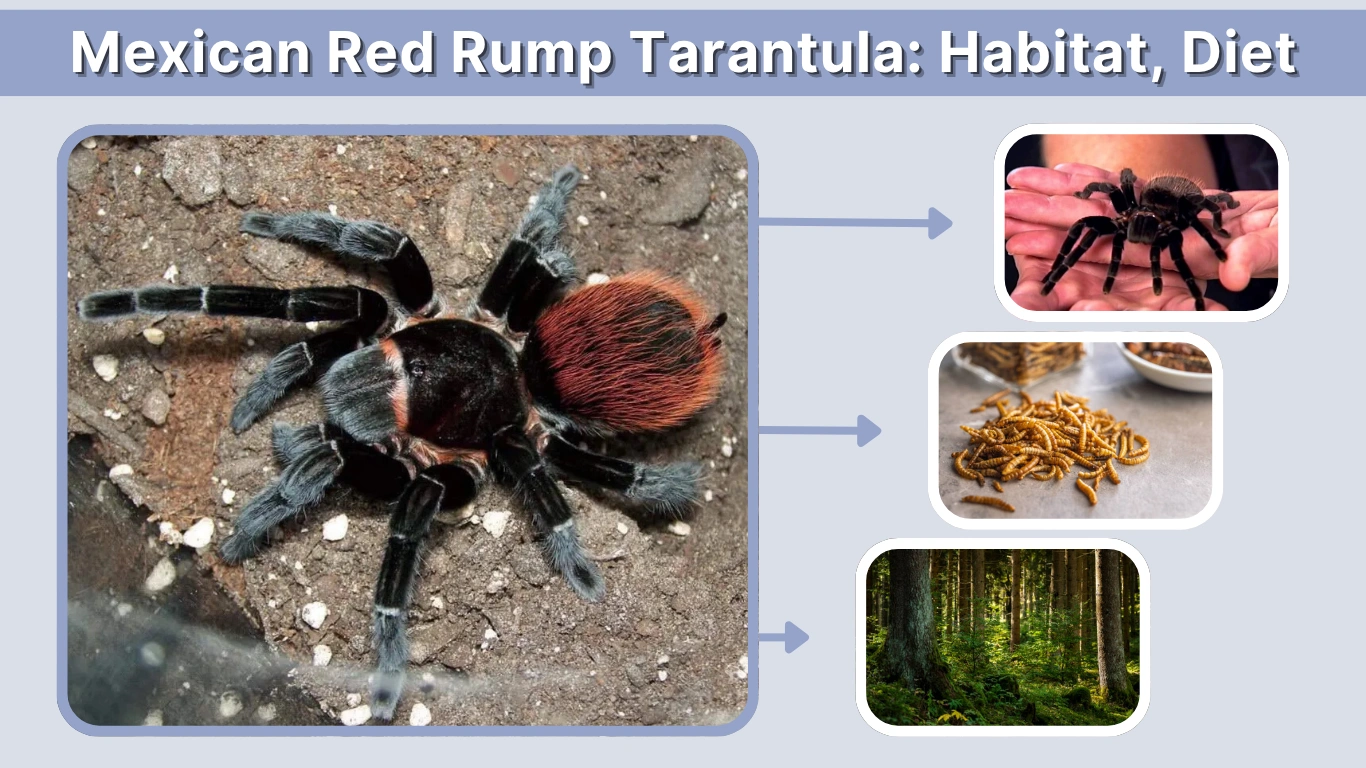
The Mexican red rump tarantula is one of the most popular pet tarantulas thanks to its striking appearance and easy care requirements. Known for its black body and vibrant reddish abdomen, this species is both visually impressive and beginner-friendly. Native to Mexico and Central America, it thrives in simple setups and has a calm, manageable temperament.
In this guide, you’ll learn everything you need to know about the Mexican red rump tarantula, including its size, lifespan, diet, enclosure setup, and behavior. Whether you’re a first-time owner or an experienced keeper, this article will help you provide the best care possible.
What Is a Mexican Red Rump Tarantula?
The Mexican red rump tarantula, scientifically known as Tliltocatl vagans, is a terrestrial species native to Mexico and Central America. It is widely recognized for its contrasting black body and reddish hairs. Due to its resilience and simple care requirements, it has become a favorite among pet tarantula enthusiasts.
- Scientific name: Tliltocatl vagans
- Also called Mexican golden red rump tarantula
- Terrestrial and ground-dwelling species
- Popular in the pet trade
Mexican Red Rump Tarantula Facts
This species has several interesting characteristics that make it unique among tarantulas. It is known for its calm nature, slow growth, and defensive behavior when threatened. These traits make it both fascinating to observe and relatively easy to manage in captivity.
- Native to Mexico and parts of Central America
- Mostly nocturnal and active at night
- Uses urticating hairs for defense
- Lives in burrows or hidden shelters
Mexican Red Rump Tarantula Appearance and Size

The Mexican red rump tarantula stands out due to its bold coloration and medium-to-large size. Its body is mostly black, with a distinct reddish or orange patch on the abdomen. This contrast makes it easy to identify and highly attractive to collectors and hobbyists.
- Black body with bright red abdominal hairs
- Thick legs with a hairy appearance
- Medium to large tarantula species
- Color becomes more vivid with age
How Big Do They Get?
These tarantulas reach a moderate size compared to other species. Their leg span and body size make them manageable yet visually impressive in a home enclosure.
- Average leg span: 4–6 inches
- Females are larger and heavier
- Males are slimmer with longer legs
Mexican Red Rump Tarantula Habitat and Natural Environment

In the wild, Mexican red rump tarantulas live in warm, dry environments. They prefer areas where they can dig burrows and stay hidden during the day. Their natural habitat influences how they should be kept in captivity to ensure proper health and behavior.
- Found in dry forests and scrublands
- Prefer warm and stable temperatures
- Live in underground burrows
- Avoid excessive moisture
Mexican Red Rump Tarantula Temperament and Behavior
Mexican red rump tarantulas are generally calm but can become defensive if they feel threatened. They are not aggressive by nature but will protect themselves using specific behaviors. Understanding their temperament helps prevent stress and ensures safer interaction.
- Usually calm and slow-moving
- Flick urticating hairs when disturbed
- May retreat into burrows for safety
- Prefer minimal handling
Can You Handle a Mexican Red Rump Tarantula?
Handling is possible but not recommended for beginners. These tarantulas can become stressed easily, and defensive reactions may occur if they feel unsafe.
- Can be handled occasionally with care
- Risk of hair flicking or biting
- Handling may stress the tarantula
Are Mexican Red Rump Tarantulas Poisonous?
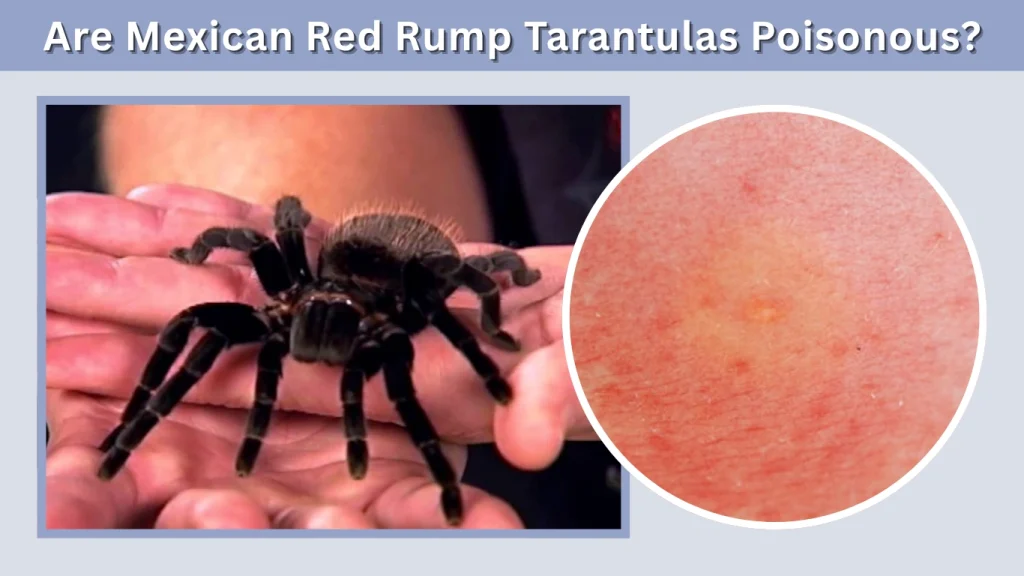
Mexican red rump tarantulas are venomous, but their venom is mild and not dangerous to humans. They rely more on their defensive hairs than biting. Most bites are rare and occur only when the tarantula feels threatened or cornered.
- Venom is mild and not medically significant
- Bite feels similar to a bee sting
- Rarely bites unless provoked
- Uses hairs as primary defense
What Happens If It Bites?
If a bite occurs, symptoms are usually mild and temporary. Serious reactions are extremely rare, but proper care is still recommended.
- Mild pain and swelling
- Redness around the bite area
- Rare allergic reactions
Mexican Red Rump Tarantula Lifespan
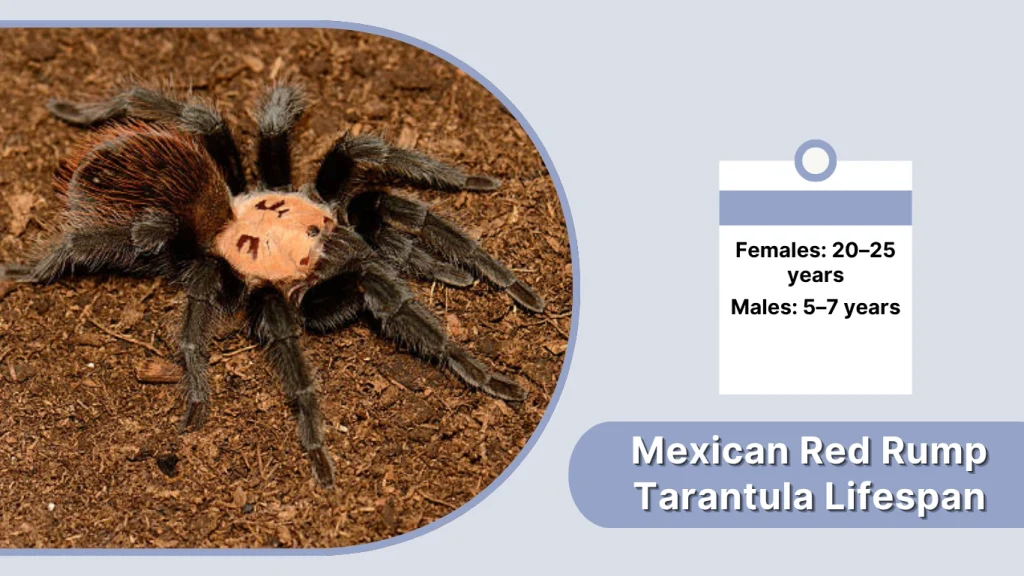
One of the most important considerations when choosing this species is its lifespan. Mexican red rump tarantulas, especially females, can live for decades. This makes them a long-term commitment but also a rewarding pet for dedicated owners.
- Long lifespan compared to many pets
- Females live significantly longer than males
- Requires long-term care planning
Male vs Female Lifespan
There is a significant difference in lifespan between male and female tarantulas. Understanding this helps when selecting a pet.
- Females: 20–25 years
- Males: 5–7 years
- Males mature faster and live shorter lives
Mexican Red Rump Tarantula Care
Caring for a Mexican red rump tarantula is relatively simple, making it ideal for beginners. With proper setup and routine maintenance, they thrive in captivity. Their hardy nature allows them to tolerate minor environmental fluctuations better than more sensitive species.
- Easy to care for and beginner-friendly
- Requires stable temperature and humidity
- Needs minimal daily maintenance
- Benefits from a quiet environment
Care Sheet Overview
Providing the right environmental conditions ensures your tarantula remains healthy and stress-free. A simple care setup is usually sufficient.
- Temperature: 24–28°C
- Moderate humidity levels
- Soft substrate for burrowing
- Access to fresh water
Mexican Red Rump Tarantula Enclosure and Setup
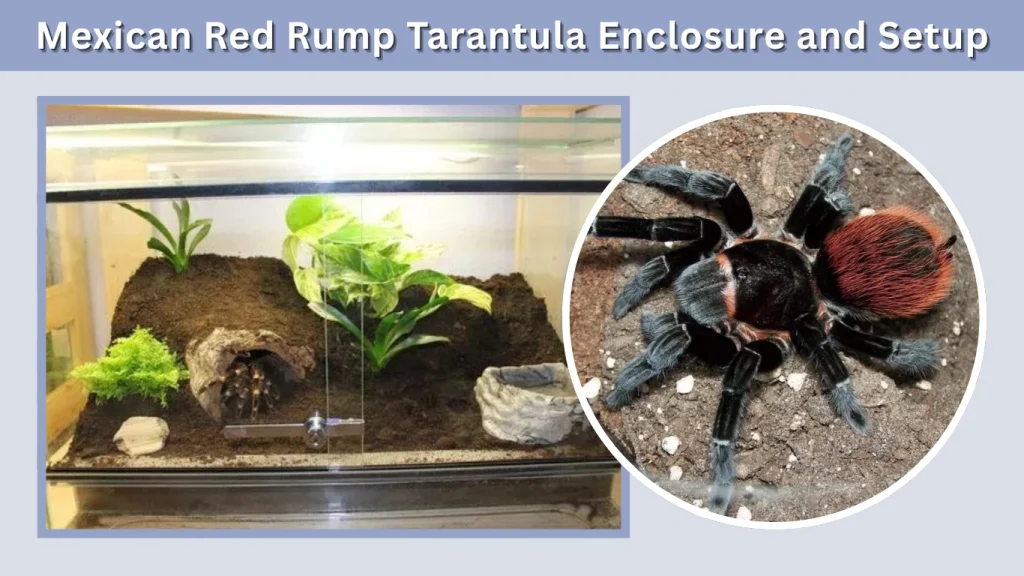
A proper enclosure is essential for keeping a Mexican red rump tarantula healthy and stress-free. Since this species is terrestrial, it requires more floor space than height. The setup should mimic its natural burrowing environment while providing security and easy maintenance.
- Use a secure tank with good ventilation
- Provide deep substrate for burrowing
- Include a hide or shelter
- Keep the enclosure simple and uncluttered
Best Cage Setup
Creating a suitable habitat helps your tarantula feel safe and behave naturally. A basic setup is enough if the key elements are present.
- 5–10 gallon tank for adults
- Coconut fiber or soil substrate
- Small water dish
- Stable, warm environment
Mexican Red Rump Tarantula Feeding and Diet

Mexican red rump tarantulas are carnivorous and feed mainly on insects. Their diet is simple and easy to manage in captivity. Feeding schedules depend on age, with younger tarantulas eating more frequently than adults.
- Eats live insects like crickets and roaches
- Juveniles eat more often than adults
- Remove uneaten food promptly
- Avoid overfeeding
What Do Mexican Red Rump Tarantulas Eat?
Providing a varied diet ensures proper nutrition and healthy growth. Most commonly available feeder insects are suitable.
- Crickets
- Dubia roaches
- Mealworms
- Occasional superworms
Growth Rate and Molting
Mexican red rump tarantulas grow slowly compared to other species. They molt regularly to shed their old exoskeleton and grow larger. Molting is a sensitive time, and proper care is essential to ensure a successful process.
- Slow growth rate overall
- Molting allows size increase
- More frequent molts in young tarantulas
- Adults molt less often
Baby (Sling) Care and Molting
Young tarantulas, known as slings, require extra attention. They molt more frequently and are more delicate than adults.
- Molt often during early stages
- Do not disturb during molting
- Keep humidity slightly higher
- Remove food during molt
Mexican Red Rump Tarantula Male vs Female Differences
Male and female Mexican red rump tarantulas differ in size, lifespan, and behavior. These differences are important when choosing a pet or planning long-term care. Females are generally preferred due to their longer lifespan.
- Females are larger and bulkier
- Males are slimmer with longer legs
- Males mature faster
- Females live significantly longer
How to Tell Male or Female
Identifying the sex of a tarantula can be challenging, especially when young. However, some physical and behavioral clues can help.
- Males have longer legs and smaller bodies
- Females appear heavier and more robust
- Mature males develop special features
Price and Availability
Mexican red rump tarantulas are widely available in the pet trade. Their affordability and ease of care make them a popular choice for beginners. Prices vary depending on age, size, and gender.
- Commonly available from breeders and pet stores
- Slings are more affordable
- Adults cost more due to maturity
- Females are usually more expensive
How Much Does It Cost?
The price depends on several factors, including rarity and age. Buyers should consider long-term care, not just initial cost.
- Slings: low cost
- Juveniles: moderate price
- Adult females: highest price
Is It Endangered?
The Mexican red rump tarantula is not currently considered critically endangered, but habitat loss can impact wild populations. Responsible pet ownership and captive breeding help reduce pressure on wild specimens.
- Not critically endangered
- Habitat loss may affect numbers
- Captive breeding is common
- Avoid wild-caught specimens
Common Issues and Behavior
Like all pets, Mexican red rump tarantulas can show certain behaviors that may concern owners. Understanding these behaviors helps prevent unnecessary worry and ensures proper care.
- May refuse food occasionally
- Can become defensive when stressed
- Flicks hairs when threatened
- Spends time hiding
Why Won’t My Tarantula Eat?
Refusing food is common and usually not a sign of illness. Several normal factors can explain this behavior.
- Preparing for molting
- Stress from environment changes
- Not hungry or overfed
FAQs
What color is a Mexican red rump tarantula?
The Mexican red rump tarantula has a mostly black body with bright reddish-orange hairs on its abdomen. This striking contrast gives it its common name and makes it one of the most visually recognizable tarantula species in the pet trade.
Are Mexican red rump tarantulas good pets?
Yes, they are considered excellent beginner pets due to their hardy nature and simple care requirements. They are generally calm, require minimal maintenance, and adapt well to captivity, although they are not ideal for frequent handling.
Can you keep a Mexican red rump tarantula in Florida or Texas?
Yes, they can be kept in warm regions like Florida or Texas, as the climate is similar to their natural habitat. However, it’s important to maintain proper enclosure conditions and check local laws regarding exotic pet ownership.
How often should you feed a Mexican red rump tarantula?
Juveniles should be fed two to three times per week, while adults typically eat once every seven to ten days. Feeding schedules may vary depending on the tarantula’s size, health, and whether it is preparing to molt.
Conclusion
The Mexican red rump tarantula is a hardy, low-maintenance species that makes an excellent pet for beginners and experienced keepers alike. With its long lifespan, simple care needs, and striking appearance, it remains one of the most popular tarantulas in captivity. Proper care and understanding ensure a healthy and fascinating companion.