
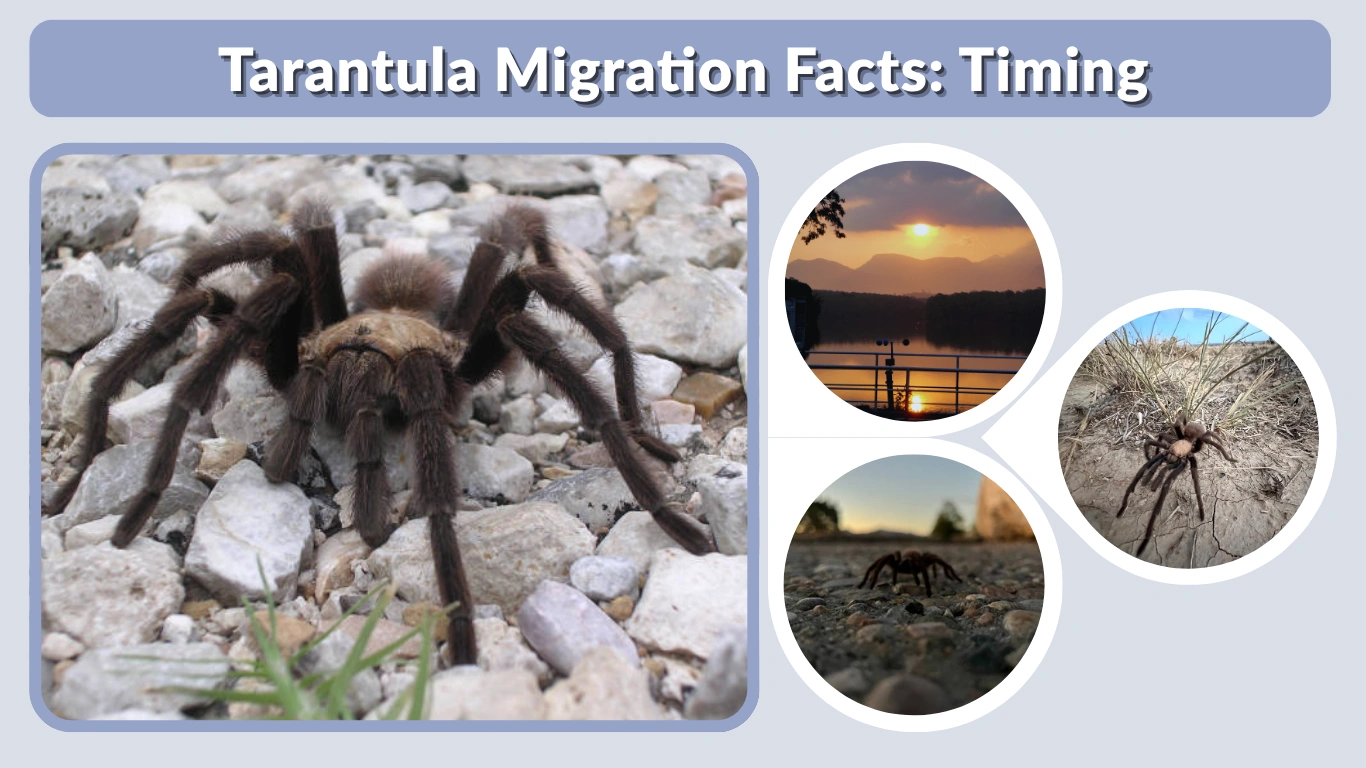
Tarantula migration is one of nature’s most unusual seasonal events, drawing attention across parts of the United States every year. Despite the name, it’s not a true migration but a large-scale movement of male tarantulas searching for mates. This phenomenon is most visible in states like Colorado, Texas, and Arizona, where hundreds can be seen crossing roads and open landscapes. Understanding when, where, and why it happens helps both curious travelers and nature enthusiasts experience it safely and meaningfully.
What Is Tarantula Migration?
Tarantula migration refers to the seasonal movement of mature male tarantulas as they leave their burrows in search of females. This behavior usually occurs in late summer and early fall, creating the impression of a mass migration. However, unlike birds or mammals, tarantulas are not traveling long distances for survival or climate reasons.
Instead, this movement is purely driven by reproduction. Male tarantulas wander across fields, roads, and grasslands, often exposing themselves to predators and environmental risks. Because many males begin this journey at the same time, people often witness what appears to be a coordinated migration, even though each spider is moving independently.
Why Do Tarantulas Migrate?
The primary reason behind this behavior is mating. Male tarantulas spend most of their lives hidden in burrows, but once they reach maturity, their focus shifts entirely to reproduction.
- Males leave their burrows to search for females
- The journey is often their final life stage
- Environmental cues like temperature and rainfall trigger movement
This seasonal activity creates the illusion of a mass event. In reality, each tarantula is acting alone, guided by instinct rather than group coordination.
When Do Tarantulas Migrate?
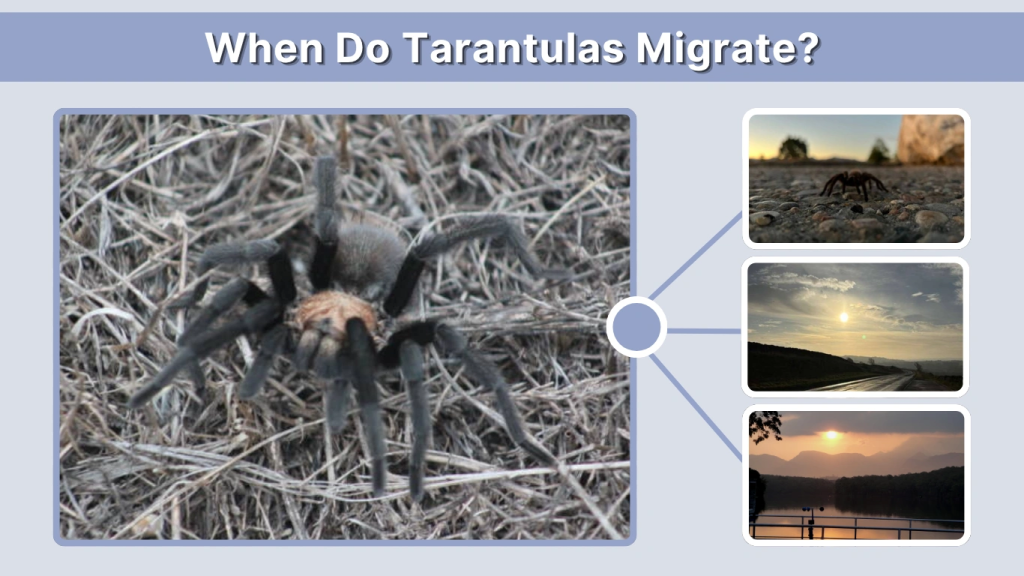
Tarantula activity typically peaks between August and October, depending on the region. Warm temperatures and favorable weather conditions play a major role in determining when they emerge.
- Late summer marks the beginning of movement
- September is usually the peak month
- Early fall continues activity until temperatures drop
Best Time of Day to See Tarantulas
Tarantulas are most active during cooler parts of the day, which increases the chances of spotting them.
- Late afternoon offers good visibility
- Evening hours are ideal for movement
- Cooler temperatures encourage activity
Where Does Tarantula Migration Occur?
Tarantula migration is most commonly observed in the southwestern United States. The region’s dry climate, open terrain, and suitable habitats make it ideal for these spiders. Grasslands, deserts, and lightly vegetated areas provide the perfect environment for burrowing and movement.
States like Colorado, Texas, Arizona, New Mexico, and California regularly report sightings during migration season. Among these, southeastern Colorado stands out as one of the most popular and reliable locations. The landscape there supports large populations, making sightings more frequent and easier to observe compared to other regions.
Tarantula Migration in Colorado
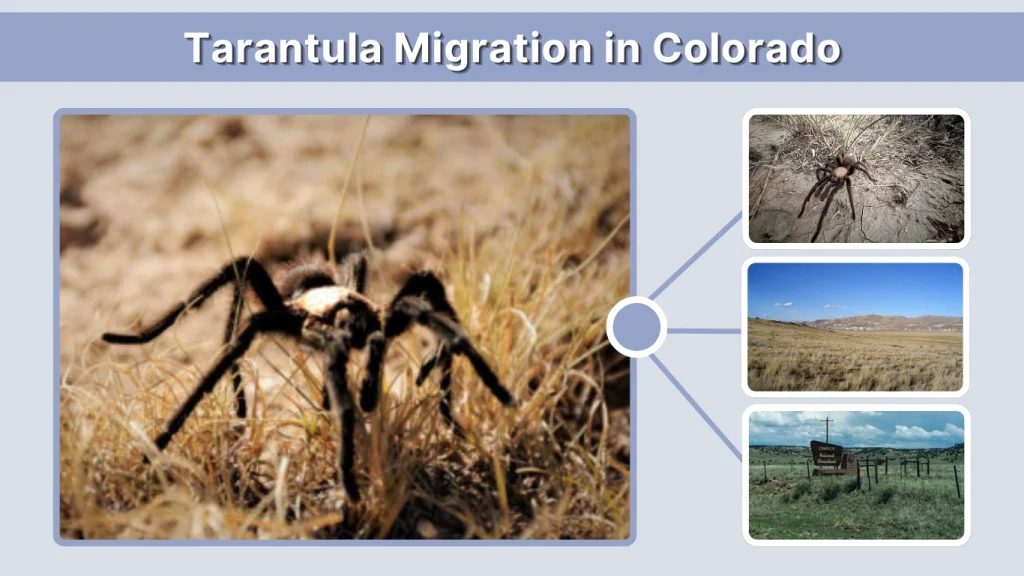
Colorado is widely known as the best place to witness tarantula migration, especially in its southeastern plains. The combination of climate, terrain, and population density makes it a hotspot for this natural event.
Why Colorado Is Famous
The region offers ideal conditions for tarantulas to thrive, and the open landscape makes them highly visible during their movement. Unlike densely vegetated areas, Colorado’s plains allow observers to spot tarantulas more easily, even from a distance.
Best Places to See Tarantulas
Several locations in Colorado are known for consistent sightings during migration season.
- La Junta and surrounding areas
- Pueblo and nearby grasslands
- Comanche National Grassland
These areas provide the best opportunities for viewing tarantulas in their natural habitat without disturbing them.
Tarantula Migration in Other States
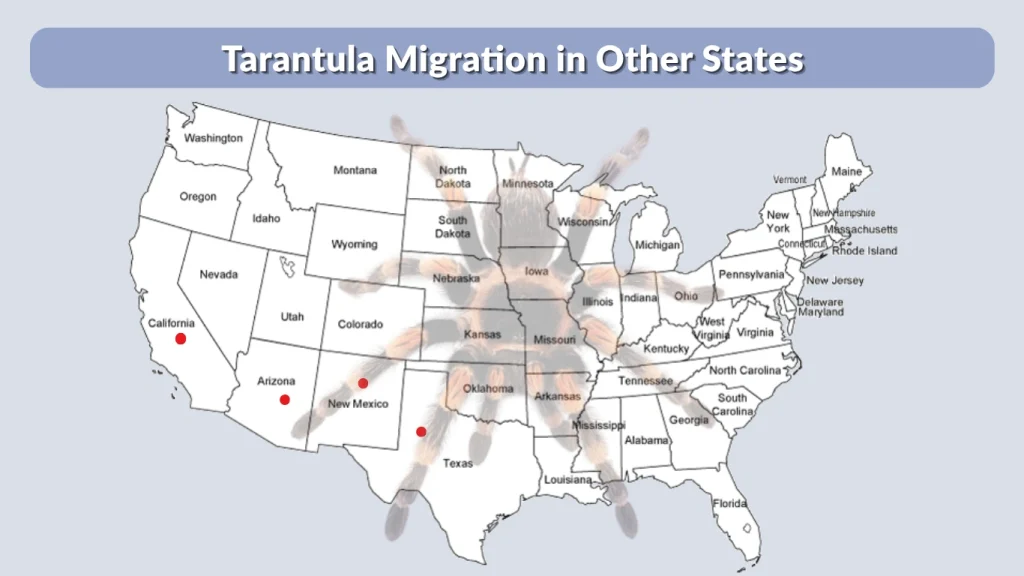
While Colorado gets most of the attention, several other states also experience noticeable tarantula activity during the same season. These regions share similar climates and landscapes, making them suitable habitats for these spiders.
Texas
- West Texas is a major hotspot for sightings
- Tarantulas are often seen crossing rural highways
- Warm evenings increase activity levels
Arizona and New Mexico
- Desert environments support large populations
- Movement is common in open, dry terrain
- Sightings often occur near roads and trails
California
- Mount Diablo is a well-known location
- Southern California also sees seasonal activity
- Migration timing may vary slightly due to climate differences
Do Tarantulas Migrate in Groups or Swarms?
One of the biggest misconceptions about tarantula migration is that these spiders travel in organized groups or swarms. In reality, tarantulas are solitary creatures and do not move together in coordinated patterns. What people often interpret as a swarm is simply a large number of individual males moving at the same time due to shared environmental triggers.
Because mating season begins simultaneously for many tarantulas, their activity overlaps, creating the illusion of mass movement. This can lead to dramatic scenes where dozens or even hundreds appear in one area, especially near roads or open fields. However, each tarantula is acting independently, guided by instinct rather than group behavior.
How Far Do Tarantulas Travel?

Tarantulas do not travel extremely long distances, but their journey can still cover a surprising range as they search for mates. The distance depends on environmental conditions, availability of females, and obstacles along the way.
- Most travel short to moderate distances from their burrows
- Movement can span several miles over time
- Many males do not survive long after mating
Challenges During Travel
- Exposure to predators like birds and mammals
- Risk of dehydration in dry environments
- Danger from vehicles when crossing roads
Is Tarantula Migration Dangerous?
Tarantula migration may look intimidating, but it is generally harmless to humans. These spiders are not aggressive and prefer to avoid confrontation whenever possible. Their primary goal during this time is to find a mate, not to interact with people.
Although tarantulas can bite if provoked, such incidents are rare and usually not medically serious. In most cases, their bite is comparable to a mild bee sting. Observing them from a safe distance ensures there is no risk involved. For drivers, the main concern is staying alert, as tarantulas are often seen crossing roads during peak season.
Tips for Watching Tarantula Migration Safely
If you plan to observe tarantula migration, following a few simple guidelines can help protect both you and the spiders.
General Safety Tips
- Keep a respectful distance and avoid touching them
- Do not disturb or block their path
- Stay cautious while driving in active areas
Photography Tips
- Use natural lighting during late afternoon or evening
- Avoid flash to prevent stressing the spiders
- Capture images without interfering with their movement
Best Places to See Tarantula Migration in the U.S.
Tarantula migration can be observed in several states, but some locations offer better visibility and more frequent sightings.
- Southeastern Colorado (La Junta and Pueblo)
- West Texas rural highways
- Arizona desert regions
- Mount Diablo in California
FAQs
Do tarantulas really migrate?
Tarantulas do not migrate in the traditional sense. What people observe is a seasonal movement of male tarantulas searching for mates. This activity happens annually and creates the appearance of migration, even though each spider moves independently.
When is the best time to see tarantula migration?
The best time to see tarantula activity is from late August through October. September is often the peak month, especially in regions like Colorado and Texas, where sightings are more frequent during warm evenings.
Are tarantulas dangerous to humans?
Tarantulas are generally harmless and not aggressive. They rarely bite, and even when they do, the effects are usually mild. Observing them from a safe distance makes the experience completely safe for humans.
Why do tarantulas cross roads during migration?
Male tarantulas travel across large areas in search of females, and roads often cut through their natural habitats. This leads to frequent sightings of tarantulas crossing highways, especially in rural regions during peak season.
Which state is best for seeing tarantula migration?
Colorado is widely considered the best place to observe tarantula migration due to its large populations and open landscapes. Areas like La Junta and Pueblo offer some of the most reliable and visible sightings each year.