
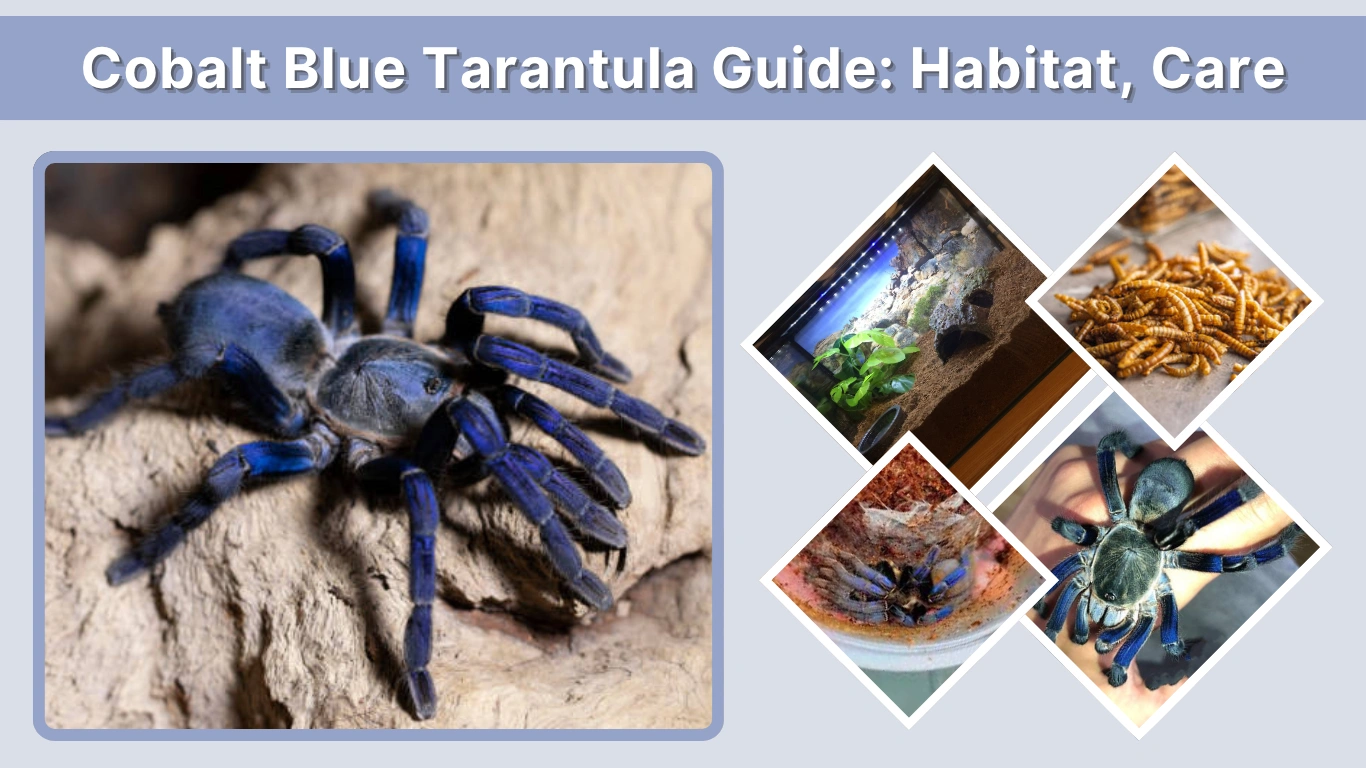
The cobalt blue tarantula is one of the most visually stunning spiders in the world, known for its vivid metallic blue legs and dark body. Native to Southeast Asia, this species has become highly popular among experienced tarantula keepers. However, its beauty comes with challenges, including a defensive temperament and specific care needs. Understanding its behavior, habitat, and care requirements is essential before keeping one as a pet. This guide covers everything from size and temperament to proper enclosure setup and feeding habits.
What Is a Cobalt Blue Tarantula?
The cobalt blue tarantula, scientifically known as Cyriopagopus lividus, is an Old World species found in tropical regions of Southeast Asia. It is famous for its striking blue coloration, which becomes more vibrant under proper lighting.
Unlike many beginner-friendly tarantulas, this species is known for its secretive and defensive nature. It spends most of its time hidden in burrows, making it less visible compared to other tarantulas. Despite this, its unique appearance makes it highly desirable among collectors and enthusiasts.
Cobalt Blue Tarantula Size and Appearance
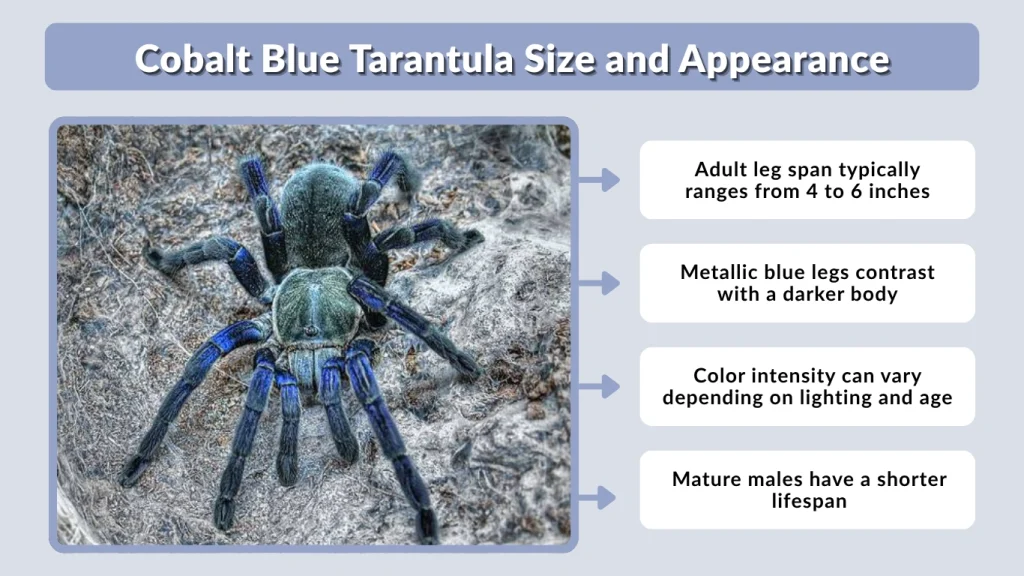
The cobalt blue tarantula is a medium-sized species, but its vivid coloration makes it appear larger and more dramatic.
- Adult leg span typically ranges from 4 to 6 inches
- Metallic blue legs contrast with a darker body
- Color intensity can vary depending on lighting and age
Male vs Female Differences
- Females are larger and live longer
- Males are slimmer with longer legs
- Mature males have a shorter lifespan
These physical differences become more noticeable as the tarantula reaches adulthood, especially after several molting cycles.
Cobalt Blue Tarantula Temperament and Behavior
The cobalt blue tarantula is widely known for its defensive and unpredictable behavior. It is not considered a beginner-friendly species due to its speed and tendency to react quickly when disturbed.
- Highly defensive and quick to strike
- Prefers hiding rather than interacting
- Rarely suitable for handling
This tarantula relies heavily on its burrow for safety. When threatened, it may either retreat instantly or display defensive behavior. Because of this, it is best observed rather than handled.
Cobalt Blue Tarantula Care Guide
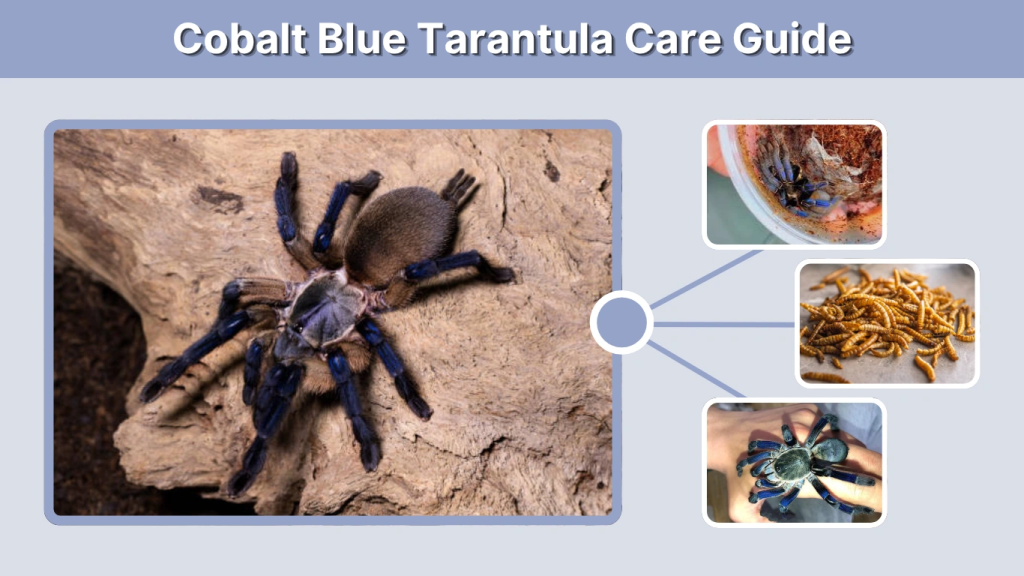
Providing proper care is essential for maintaining the health and well-being of this species. It requires a stable environment that mimics its natural habitat.
Basic Care Requirements
- Warm and humid conditions are essential
- Best suited for experienced keepers
- Requires a secure and low-disturbance enclosure
Diet and Feeding
- Feeds on insects such as crickets and roaches
- Strong and aggressive feeding response
- Feeding frequency depends on age and size
Molting and Growth
- Juveniles molt more frequently than adults
- Molting requires a stress-free environment
- Avoid handling during molting periods
Cobalt Blue Tarantula Enclosure Setup and Habitat

Creating the right enclosure is critical for a cobalt blue tarantula because of its burrowing nature and sensitivity to environmental changes.
Enclosure Type
The enclosure should provide enough depth for burrowing, as this species naturally creates underground tunnels. A secure lid is important, as cobalt blue tarantulas are fast and capable of escaping if given the opportunity.
Habitat Conditions
- High humidity levels are required
- Temperature should remain between 75–82°F (24–28°C)
- Proper ventilation prevents mold and excess moisture
Substrate and Setup
- Use deep substrate such as soil or coconut fiber
- Provide hiding spots or allow natural burrow creation
- Keep the environment slightly moist but not waterlogged
A well-designed enclosure helps reduce stress and encourages natural behaviors, which are essential for the tarantula’s long-term health.
Cobalt Blue Tarantula Lifespan and Life Cycle
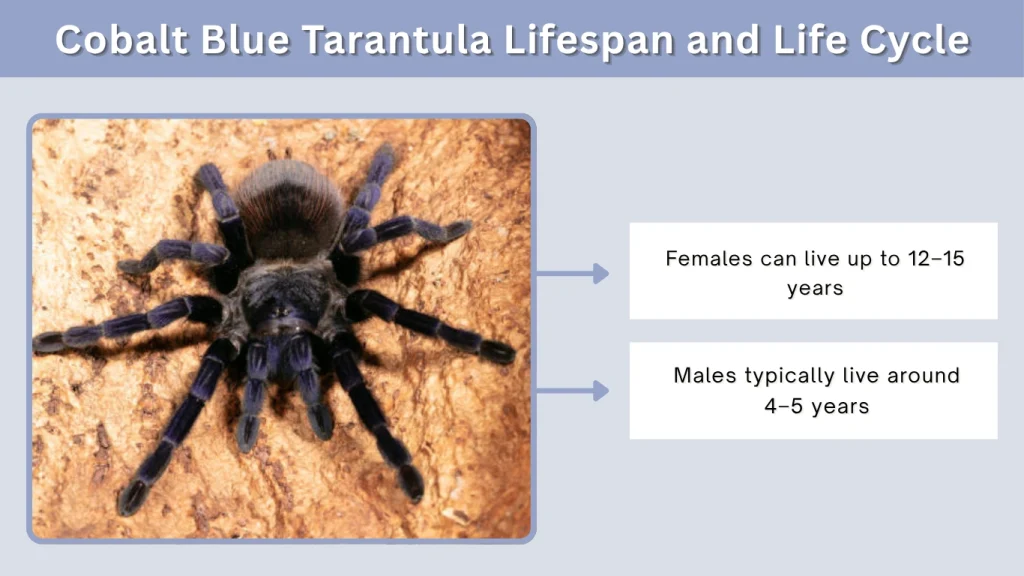
The cobalt blue tarantula has a moderate lifespan compared to other tarantula species, with females living significantly longer than males. Its life cycle progresses through several stages, from a small spiderling to a fully mature adult.
How Long Do They Live?
- Females can live up to 12–15 years
- Males typically live around 4–5 years
- Lifespan depends on care, diet, and environment
Growth Stages
- Spiderling (sling): rapid growth and frequent molts
- Juvenile: steady development and increasing size
- Adult: slower growth with less frequent molting
Is the Cobalt Blue Tarantula Dangerous?
The cobalt blue tarantula is considered more defensive than many other species, mainly because it belongs to the Old World group. These tarantulas rely on their bite rather than hair flicking for defense. While it is not deadly to humans, its venom is stronger than that of many New World tarantulas and can cause significant discomfort.
A bite may result in pain, swelling, muscle cramps, or nausea, depending on the individual’s reaction. Because of this, handling is strongly discouraged. With proper respect and careful enclosure maintenance, the risk can be minimized, making it safe to keep as a display pet.
Cobalt Blue Tarantula Price and Availability
Cobalt blue tarantulas are widely available in the exotic pet market, though their price can vary depending on size, age, and sex.
Price Range
- Spiderlings are the most affordable option
- Juveniles cost more due to established growth
- Adult females are the most expensive
Where to Buy
- Reputable online breeders
- Exotic pet shops
- Reptile expos and events
Are Cobalt Blue Tarantulas Good Pets?
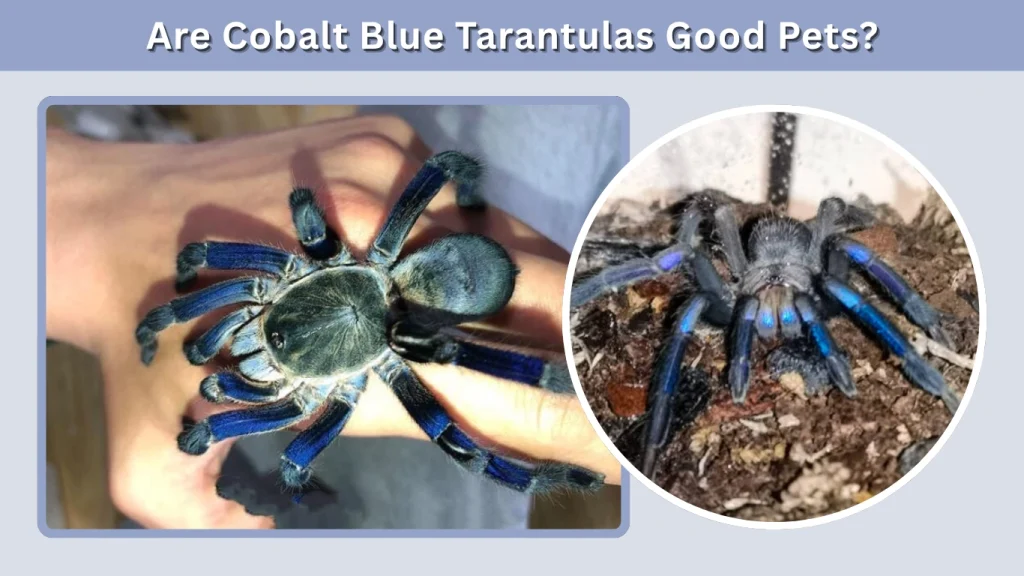
Choosing this species as a pet depends largely on your experience level and expectations. While it is undeniably beautiful, it is not the easiest tarantula to care for due to its temperament and behavior.
Pros
- Stunning electric blue coloration
- Fascinating burrowing behavior
- Long lifespan in females
Cons
- Highly defensive and fast
- Not suitable for handling
- Often stays hidden in its burrow
Interesting Facts About Cobalt Blue Tarantulas
The cobalt blue tarantula is one of the most unique species in the tarantula hobby, admired for both its appearance and behavior. It is rarely seen out in the open, as it spends most of its time inside its burrow. This secretive lifestyle makes sightings more exciting for keepers.
Unique Characteristics
- One of the most vividly colored tarantulas
- An Old World species with stronger venom
- Builds deep, complex burrow systems
FAQs
Are cobalt blue tarantulas aggressive?
Cobalt blue tarantulas are considered highly defensive rather than truly aggressive. They react quickly when threatened and may bite if provoked, which is why they are not recommended for handling or beginner keepers.
Can a cobalt blue tarantula kill you?
No, a cobalt blue tarantula cannot kill a healthy human. However, its bite can be painful and may cause symptoms such as swelling, muscle cramps, or nausea due to its relatively stronger venom.
What do cobalt blue tarantulas eat?
They mainly eat insects like crickets, roaches, and mealworms. Larger individuals may take bigger prey, and they are known for their fast and aggressive feeding response.
Are cobalt blue tarantulas venomous?
Yes, cobalt blue tarantulas are venomous. They inject venom through their bite, but it is not life-threatening to humans. Still, caution is necessary due to the potential for painful reactions.
Where do cobalt blue tarantulas live?
They are native to Southeast Asia, especially in countries like Thailand and Myanmar. They prefer humid environments where they can dig burrows and remain hidden for most of their lives.