
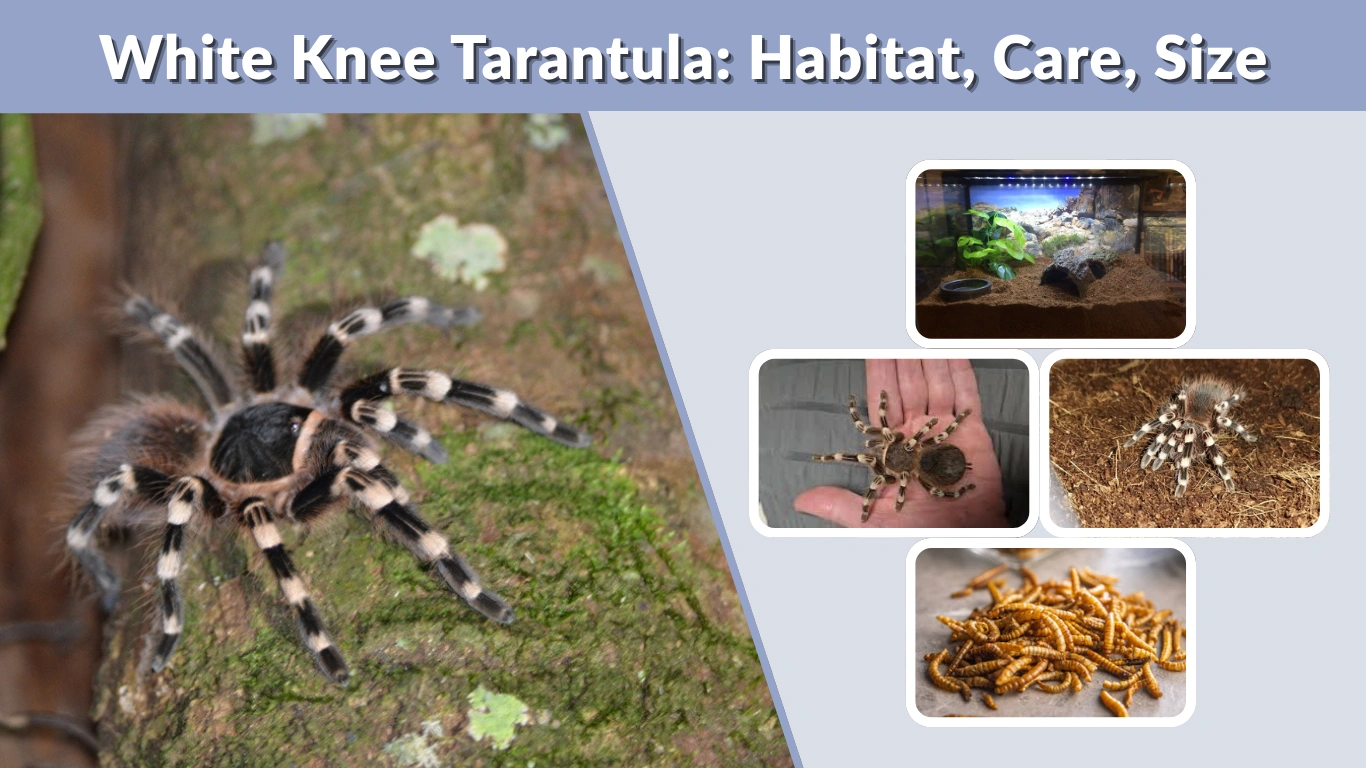
The Brazilian white knee tarantula is one of the most striking and popular species in the pet tarantula world. Known for its bold black body and bright white leg bands, it stands out among other tarantulas. Native to Brazil, this species is favored for its impressive size, strong feeding response, and relatively hardy nature. Whether you are a beginner or an experienced keeper, understanding its care, behavior, and habitat needs is essential to keeping this fascinating spider healthy and thriving.
What Is a White Knee Tarantula?
The Brazilian white knee tarantula, scientifically known as Acanthoscurria geniculata, is a terrestrial species native to the tropical regions of Brazil. It is often recognized by its contrasting black body and white-striped legs, giving it a bold and eye-catching appearance.
This species is commonly referred to by several names, including black and white knee tarantula or giant white knee tarantula. It is widely available in the pet trade due to its popularity and ease of care compared to more delicate species. Despite its intimidating look, it is generally kept as a display pet rather than one meant for frequent handling.
White Knee Tarantula Size and Appearance
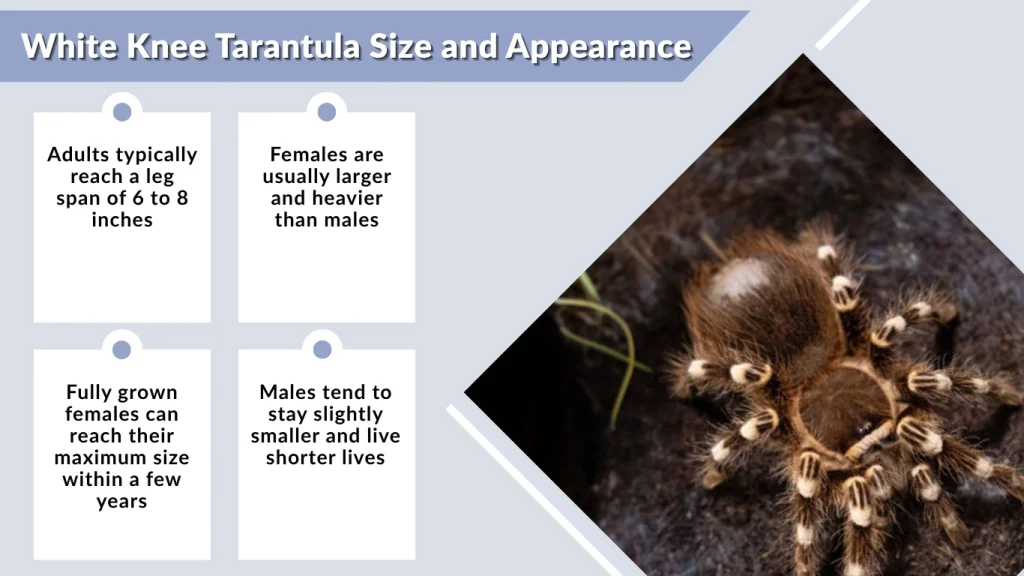
The Brazilian white knee tarantula is considered a large species, making it highly appealing to enthusiasts who prefer bigger spiders.
- Adults typically reach a leg span of 6 to 8 inches
- Females are usually larger and heavier than males
- Juveniles (slings) start small but grow quickly
How Big Do They Get?
- Fully grown females can reach their maximum size within a few years
- Males tend to stay slightly smaller and live shorter lives
- Giant white knee tarantulas are simply well-fed, mature specimens
Their bold coloration becomes more pronounced as they mature, with sharp white bands contrasting against their dark body, making them one of the most visually impressive tarantulas available.
White Knee Tarantula Temperament and Behavior
The Brazilian white knee tarantula has a reputation for being defensive rather than aggressive. It is known for its strong feeding response and quick movements, which can surprise new owners.
- Often prefers to stand its ground rather than flee
- May flick urticating hairs when threatened
- Not ideal for regular handling
This species is best observed rather than handled. While it rarely bites, its defensive behavior and speed make it more suitable for keepers who are comfortable maintaining a respectful distance.
White Knee Tarantula Care Guide

Providing proper care is essential to ensure a healthy and long-lived tarantula. Fortunately, this species is relatively hardy when its basic needs are met.
Basic Care Requirements
- Requires moderate humidity and stable temperatures
- Thrives in a calm, low-disturbance environment
- Suitable for beginner to intermediate keepers
Feeding and Diet
- Eats crickets, roaches, and other insects
- Known for an aggressive feeding response
- Feeding frequency depends on age and size
Molting and Growth
- Juveniles molt frequently as they grow
- Adults molt less often but still require proper conditions
- Avoid disturbing the tarantula during molting
White Knee Tarantula Enclosure Setup and Habitat
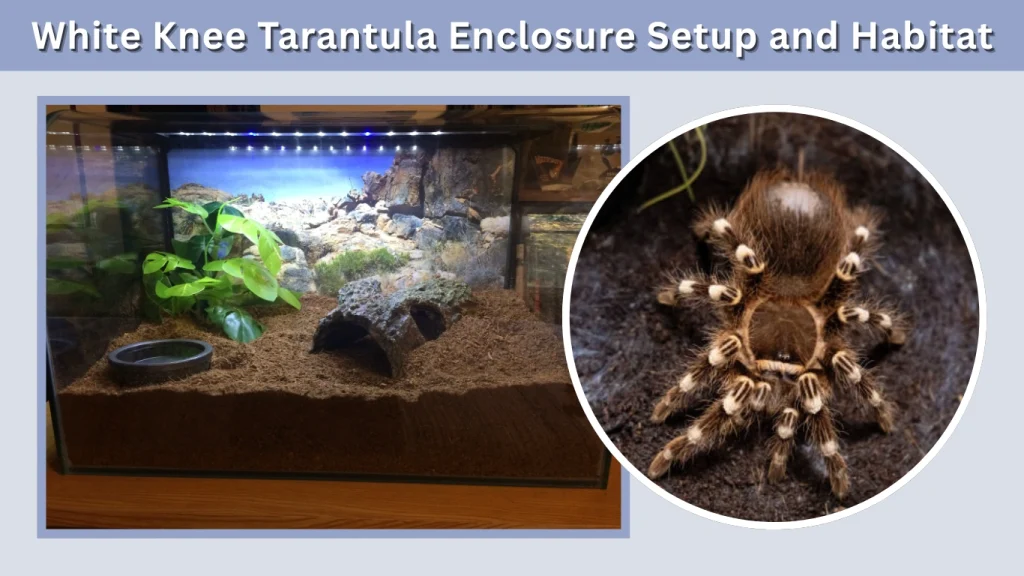
Creating the right enclosure is crucial for replicating the tarantula’s natural environment and keeping it comfortable.
Ideal Enclosure Size
The enclosure should provide more floor space than height, as this is a ground-dwelling species. A secure terrarium with proper ventilation is essential to prevent stress and escape.
Substrate and Environment
- Use a soil or coconut fiber substrate
- Maintain adequate humidity without over-wetting
- Provide a hide for security
Temperature and Lighting
- Keep temperatures between 75–82°F (24–28°C)
- No special lighting is required
- Avoid direct sunlight exposure
A well-maintained enclosure helps reduce stress and supports natural behaviors, making it easier for the tarantula to thrive in captivity.
White Knee Tarantula Lifespan and Growth Cycle

The Brazilian white knee tarantula has a relatively long lifespan compared to many other invertebrates, especially females. Growth begins from a tiny sling and progresses through multiple molts until adulthood. During this time, proper care, feeding, and environmental conditions play a major role in overall health.
How Long Do They Live?
- Females can live 15 to 20 years with proper care
- Males typically live 4 to 6 years
- Lifespan depends on diet, habitat, and stress levels
Growth Stages
- Sling stage: rapid growth and frequent molting
- Juvenile stage: steady development and increasing size
- Adult stage: slower growth with less frequent molts
Is the White Knee Tarantula Dangerous?
The Brazilian white knee tarantula may look intimidating due to its size and bold appearance, but it is not considered dangerous to humans. Like most tarantulas, it prefers to avoid conflict and will only defend itself if it feels threatened. Its venom is mild and not medically significant for most people, though reactions can vary.
A more common defense is hair flicking. The tarantula releases tiny barbed hairs from its abdomen, which can cause irritation if they come into contact with skin or eyes. Because of this behavior, it is best to observe rather than handle this species. With proper respect and distance, keeping this tarantula is safe and manageable.
White Knee Tarantula Price and Availability
The Brazilian white knee tarantula is widely available in the pet trade, making it accessible for hobbyists at different experience levels. Prices vary depending on size, age, and source.
Price Range
- Slings are the most affordable option
- Juveniles cost more due to established growth
- Adult females are the most expensive
Where to Buy
- Online tarantula breeders
- Reptile expos and specialty events
- Exotic pet stores
Pros and Cons of Keeping a White Knee Tarantula
Before choosing this species, it’s helpful to understand both its advantages and potential challenges.
Pros
- Striking black and white appearance
- Hardy and adaptable species
- Strong and reliable feeding response
Cons
- Defensive temperament
- Frequent hair flicking
- Not suitable for handling
Final Thoughts on White Knee Tarantula Care
The Brazilian white knee tarantula is an excellent choice for those who want a visually impressive and relatively hardy pet. While it may not be ideal for handling, its bold appearance and active feeding behavior make it a fascinating species to observe. With the right enclosure, proper feeding, and minimal disturbance, this tarantula can thrive for many years and become a rewarding addition to any collection.
FAQs
Is the Brazilian white knee tarantula good for beginners?
Yes, it can be suitable for beginners who are willing to follow proper care guidelines. However, due to its defensive nature and tendency to flick hairs, it is better for those comfortable with minimal handling and observation-based care.
How big does a white knee tarantula get?
A full-grown Brazilian white knee tarantula typically reaches a leg span of 6 to 8 inches. Females are usually larger and bulkier than males, making them more popular among long-term keepers.
Does a white knee tarantula bite?
Bites are rare and usually occur only when the tarantula feels threatened. Its venom is mild and not dangerous to humans, though it may cause minor discomfort similar to a bee sting.
What does a Brazilian white knee tarantula eat?
They mainly eat insects such as crickets, roaches, and mealworms. Larger individuals may take bigger prey. They are known for their strong appetite and quick feeding response.
How long do white knee tarantulas live?
Females can live up to 15–20 years with proper care, while males have a shorter lifespan of around 4–6 years. Proper habitat, diet, and low stress help maximize their lifespan.