
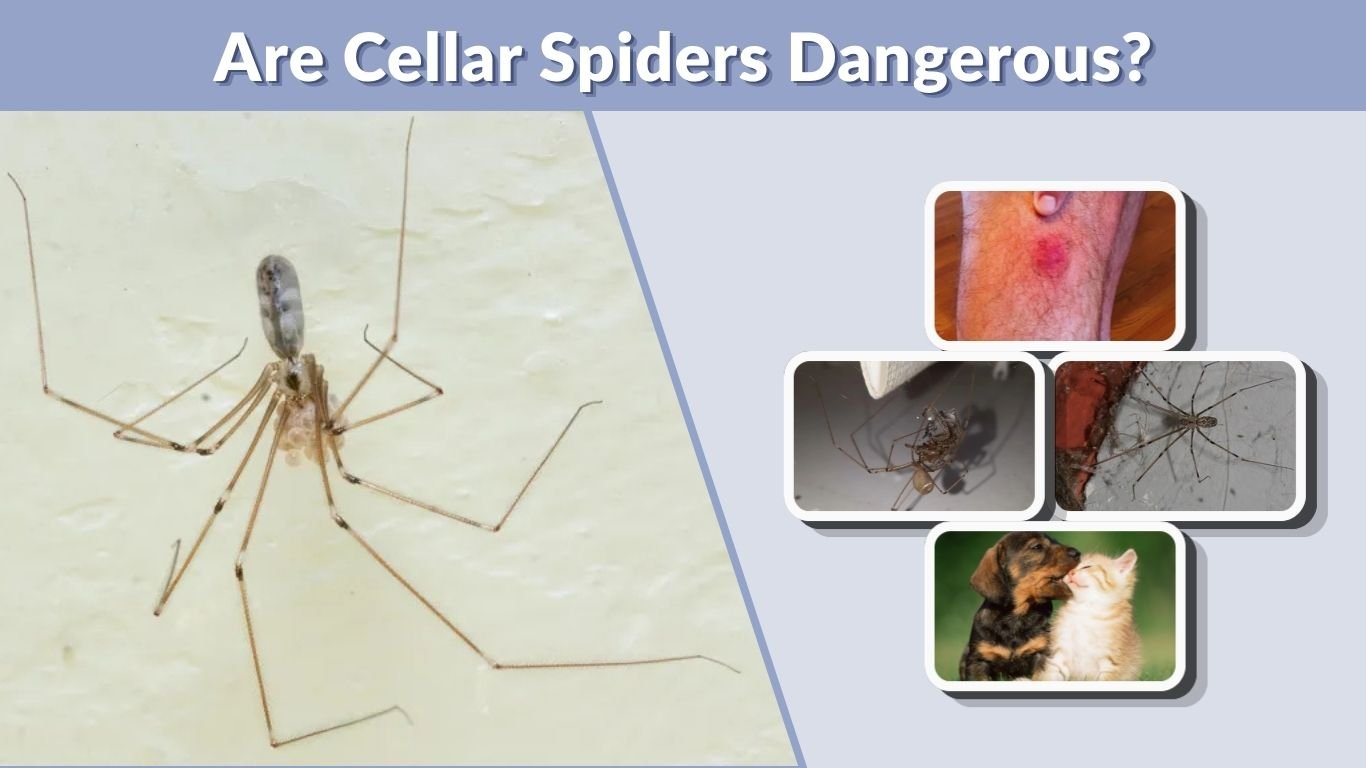
Cellar spiders are common long-legged spiders found in basements, garages, bathrooms, ceilings, and dark corners. They are often called daddy longlegs spiders, which creates confusion with harvestmen. Although they look fragile and sometimes scary, cellar spiders are not considered dangerous to humans. They can build messy webs and may become a nuisance indoors, but their bite risk is very low. The bigger concern is usually web buildup, not venom or aggression.
Are Cellar Spiders Dangerous to Humans?
Cellar spiders have a scary reputation, but most of it comes from myths. They are true spiders with venom glands, yet they are not considered medically important to people.
The Simple Safety Answer
Cellar spiders are generally not dangerous to humans. University of Maine Extension notes that cellar spiders can form large indoor populations, but they are not harmful or dangerous to humans. They are mainly nuisance pests because of the amount of webbing they produce.
| Question | Answer |
| Are cellar spiders dangerous? | No, not medically dangerous |
| Are they venomous? | Yes, but not dangerous to people |
| Are they poisonous? | No |
| Do they bite humans? | Rarely |
| Main indoor issue | Messy webs |
| Best response | Clean webs and reduce insects |
Are Cellar Spiders Venomous or Poisonous?
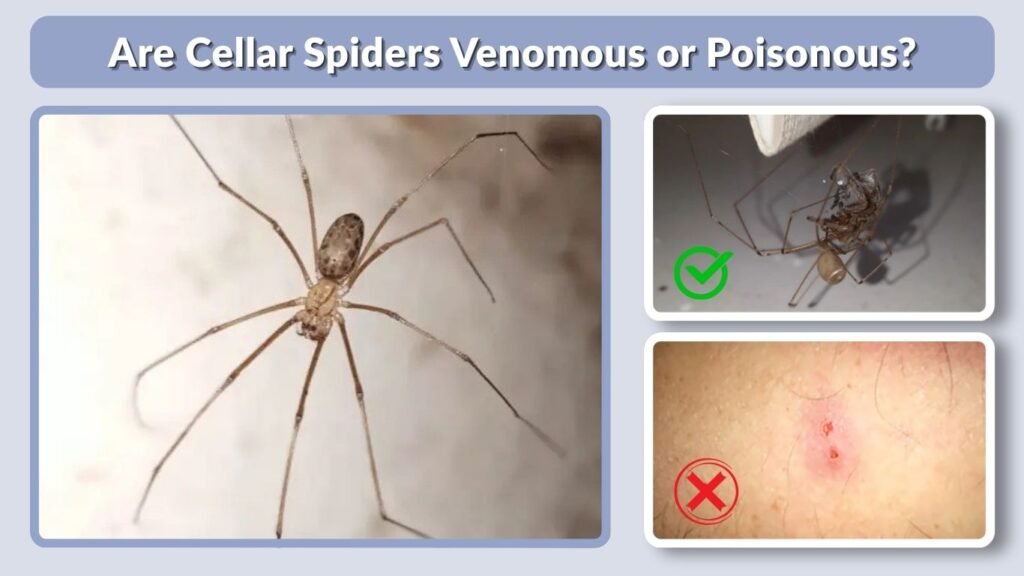
Many people use “poisonous” and “venomous” the same way, but they mean different things. This matters when discussing cellar spiders.
Venom vs Poison
Cellar spiders are venomous, because they use venom to subdue small prey. They are not poisonous, because they are not harmful simply from being touched or accidentally eaten. UC Riverside explains that cellar spiders are true spiders with fangs, venom ducts, and venom glands, but the common claim that they are highly venomous to humans is false.
Their venom is useful against tiny insects and other spiders, not large mammals. A scientific review on pholcid spiders also notes that documented human bites typically cause only a mild sting with no long-lasting effects.
Do Cellar Spiders Bite?
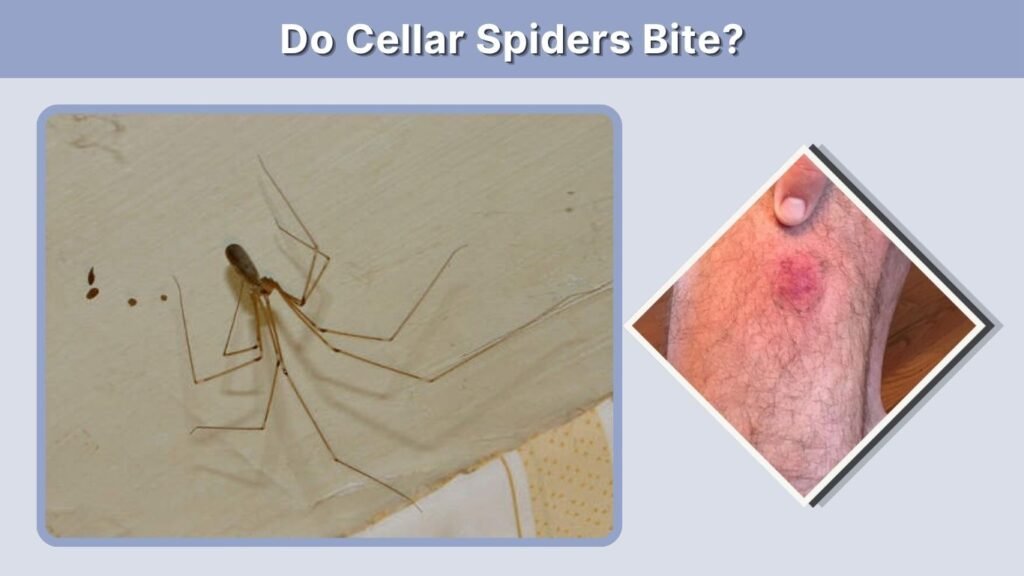
Cellar spider bites are uncommon. These spiders usually hide, hang in webs, or vibrate rapidly when disturbed instead of attacking.
Cellar Spider Bite Symptoms
If a cellar spider bite happens, it is usually minor. Based on documented reports, the typical result is mild stinging without long-term effects.
Possible mild symptoms may include:
- Tiny red spot
- Mild stinging
- Slight itching
- Minor swelling
- Temporary irritation
Seek medical help if a bite causes severe pain, spreading redness, breathing issues, dizziness, or signs of infection. Those symptoms are not typical for cellar spiders, but they should always be taken seriously after any suspected bite.
Are Long-Bodied Cellar Spiders Dangerous?
The long-bodied cellar spider is one of the most common species found indoors. Its scientific name is Pholcus phalangioides.
Long-Bodied Cellar Spider Safety
Long-bodied cellar spiders are not known to be harmful. Penn State Extension states that although these spiders can develop large populations in protected locations, they are not known to be harmful.
They may look alarming because of their extremely long legs, but they usually stay in loose webs and wait for prey. They are more helpful than harmful because they eat flies, mosquitoes, moths, gnats, and other small arthropods.
Are Cellar Spiders Dangerous to Cats and Dogs?
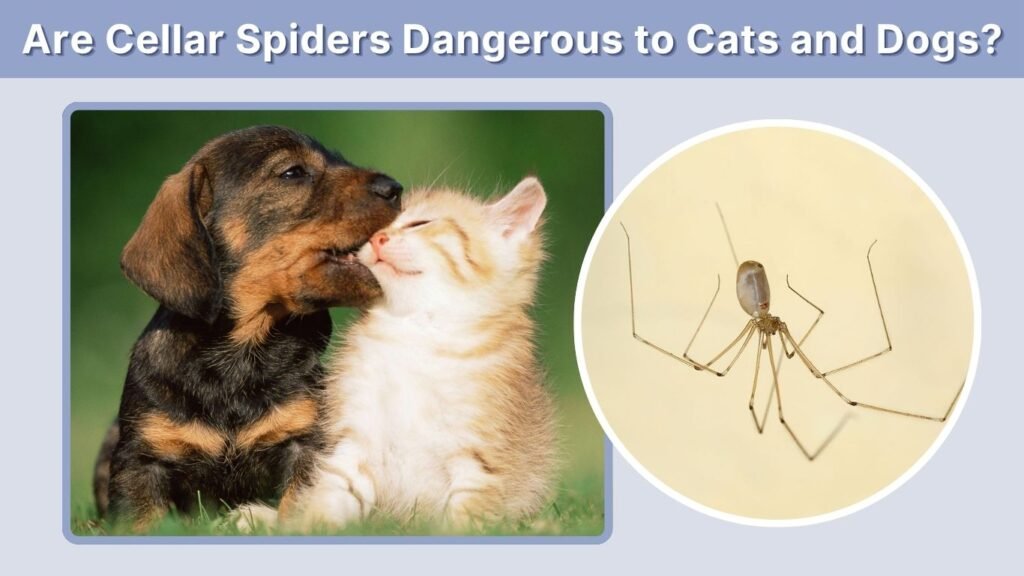
Pet owners often worry when cats or dogs chase, paw at, or eat cellar spiders. In most cases, cellar spiders are not treated as a serious pet danger.
Safety for Pets
There is no strong evidence that common cellar spiders are dangerous to cats or dogs. Since their venom is not considered medically important to humans and documented bites are mild, they are usually considered a low-risk household spider.
Still, pets can react differently to bites, insect contact, or irritation. Call a vet if your cat or dog shows swelling around the face, vomiting, drooling, weakness, breathing problems, or repeated scratching after contact with any spider.
Why Cellar Spiders Are Often Misunderstood
Cellar spiders are often confused with harvestmen and other “daddy longlegs.” This makes people believe myths about their venom.
Daddy Longlegs Confusion
The name “daddy longlegs” may refer to cellar spiders, harvestmen, or crane flies. UC Riverside explains that only cellar spiders are true spiders among these commonly confused animals. Harvestmen do not have fangs or venom glands, while crane flies are insects and many cannot bite.
This nickname confusion is one reason people ask whether cellar spiders are deadly. In reality, cellar spiders are not among dangerous household spiders.
How to Identify Cellar Spiders
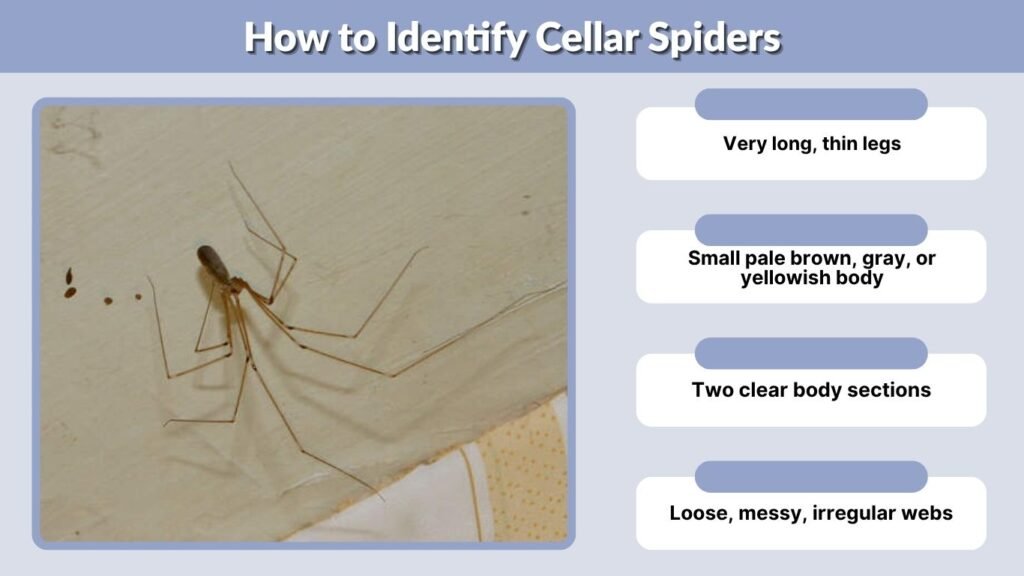
Cellar spiders are easy to recognize once you know their body shape, web style, and behavior.
Identification Signs
Look for these features:
- Very long, thin legs
- Small pale brown, gray, or yellowish body
- Two clear body sections
- Loose, messy, irregular webs
- Often hangs upside down
- Common in basements, garages, bathrooms, and ceiling corners
- Vibrates quickly in the web when disturbed
- Does not have the thick body of wolf spiders or house spiders
Should You Remove Cellar Spiders?
You do not always need to remove cellar spiders. A few can help reduce small insects, but large numbers may make a home look dirty because of web buildup.
Home Control Tips
The safest control method is cleaning and prevention. Remove webs with a vacuum, seal gaps around windows and doors, reduce clutter, and limit insects around the home. Since cellar spiders depend on prey, fewer flies and small insects usually means fewer spiders.
Useful steps include:
- Vacuum webs and egg sacs
- Clean ceiling corners and basement areas
- Seal cracks and entry points
- Reduce outdoor lights that attract insects
- Fix screens and door gaps
- Keep storage areas organized
- Control other household insects
FAQs
Are cellar spiders dangerous to humans?
No, cellar spiders are not considered dangerous to humans. They may look creepy because of their long legs, but they are mainly nuisance spiders. Their webs can become messy indoors, yet they are not known to cause serious medical problems.
Can cellar spiders bite you?
Cellar spiders can technically bite, but bites are rare. When documented bites happen, the usual result is a mild sting with no long-lasting effects. They are not aggressive and usually prefer to hide or shake in their web when disturbed.
Are cellar spiders dangerous to cats?
Cellar spiders are not generally considered dangerous to cats. A cat may chase or eat one without a serious problem. However, contact a vet if your cat shows swelling, vomiting, weakness, breathing issues, or unusual behavior after interacting with any spider.
Are cellar spiders dangerous to dogs?
Cellar spiders are usually low-risk for dogs. They are not known as medically important spiders. Still, a dog could have irritation or a reaction after contact with any small arthropod, so watch for swelling, drooling, vomiting, or breathing trouble.
Should I kill cellar spiders in my house?
You do not have to kill cellar spiders unless they are causing a nuisance. They can help catch small insects, but their webs may look messy. Vacuuming webs, removing clutter, sealing gaps, and reducing indoor insects are better long-term control methods.