
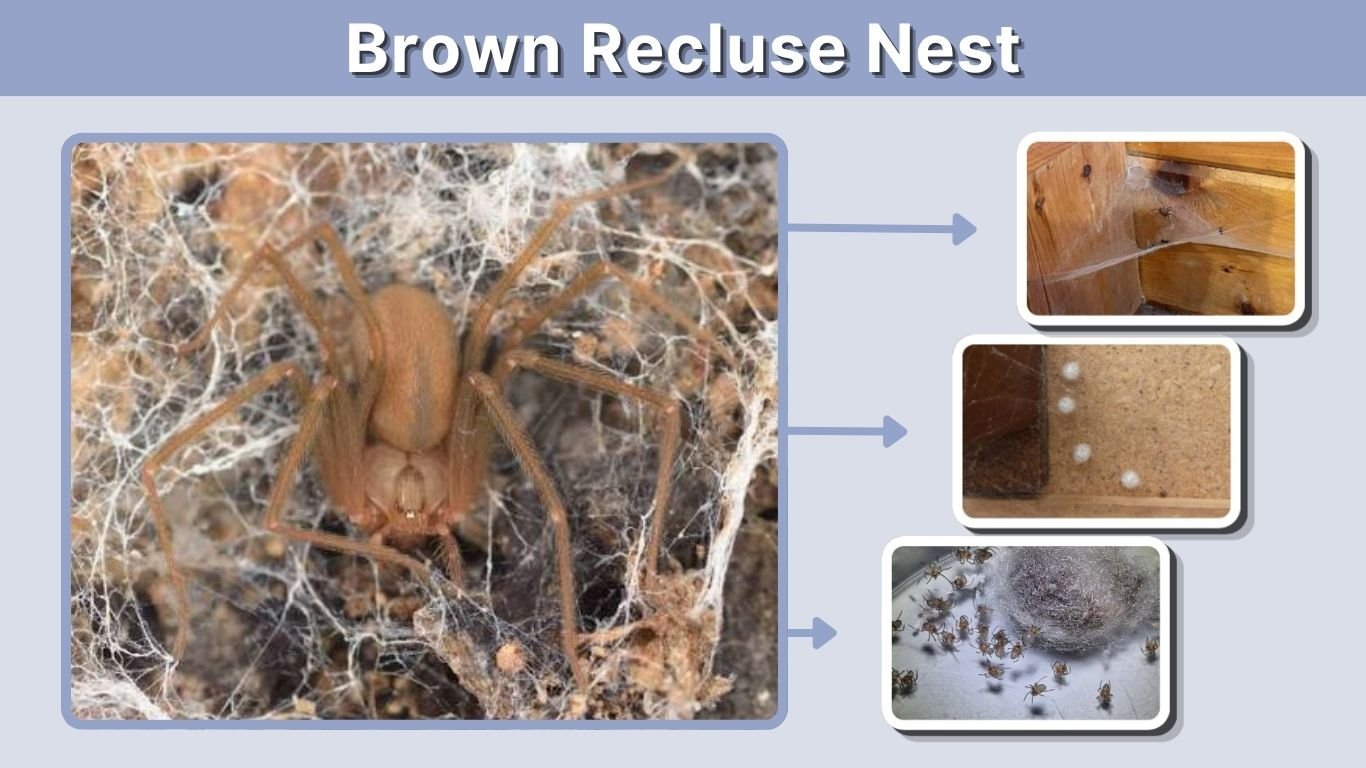
A brown recluse nest is not a neat round nest like a bird nest or a large web like an orb-weaver web. Brown recluse spiders make loose, irregular silk retreats in dark, quiet, undisturbed places. They use these retreats for hiding during the day, protecting egg sacs, and resting between nighttime hunting trips. If you find a brown recluse nest in the house, it is usually in storage areas, closets, basements, attics, boxes, furniture, or other cluttered spaces.
Do Brown Recluse Spiders Have Nests?
Brown recluse spiders do not have “nests” in the social insect sense. They do not build a colony nest like ants, wasps, or termites. Instead, each spider may use a hidden silk retreat, and females may place egg sacs in protected areas. Brown recluse spiders are active hunters at night and do not use webs to catch prey; their webs are mainly daytime hiding places and egg-sac protection.
A brown recluse “nest” usually means one of these things:
- A loose, messy web retreat
- A hidden spider hiding place
- A female guarding an egg sac
- Several spiders using the same undisturbed area
- Old webbing, shed skins, and egg sacs in storage clutter
This is why people may find several brown recluse spiders in the same room even though they are not living like a true colony.
What Does a Brown Recluse Nest Look Like?
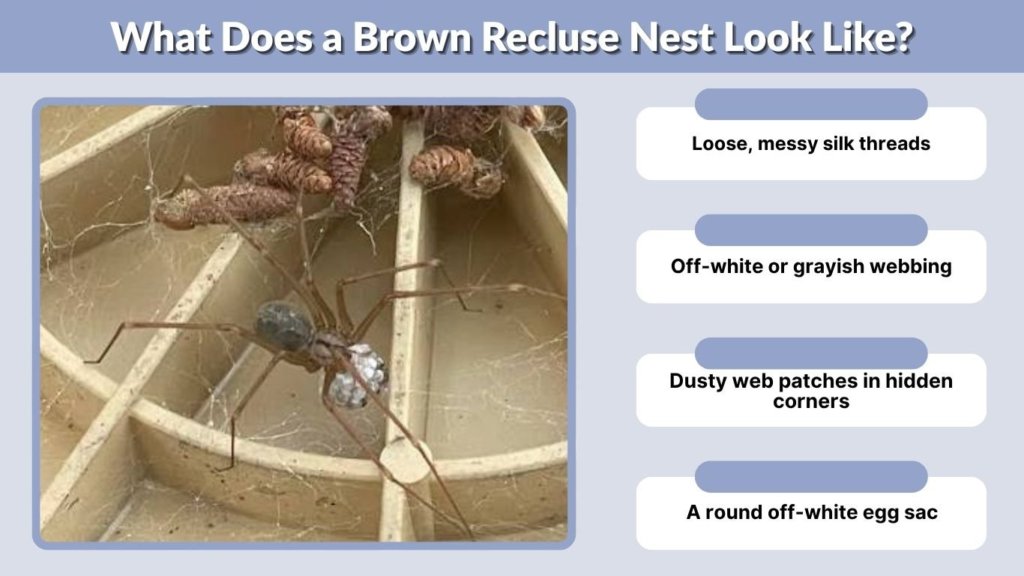
A brown recluse nest usually looks like a small, messy, off-white or grayish silk patch. It may be flat, loose, dusty, and hidden in a corner or under an object. It is not a beautiful circular web. It may look like irregular webbing attached to cardboard, wood, fabric, furniture, or stored items.
Cornell Cooperative Extension describes the brown recluse web as a loose, irregular web of very sticky off-white to grayish threads, used as the spider’s daytime retreat rather than a prey-catching web.
Common Visual Signs
A brown recluse nest or retreat may include:
- Loose, messy silk threads
- Off-white or grayish webbing
- Dusty web patches in hidden corners
- A round off-white egg sac
- Shed skins from growing spiderlings
- Dead insects or prey remains
- A brown spider hiding nearby
If you are looking at “brown recluse nest pictures,” remember that many online images may show egg sacs, retreats, or other spider webs, not a true nest.
Brown Recluse Egg Nest and Egg Sacs
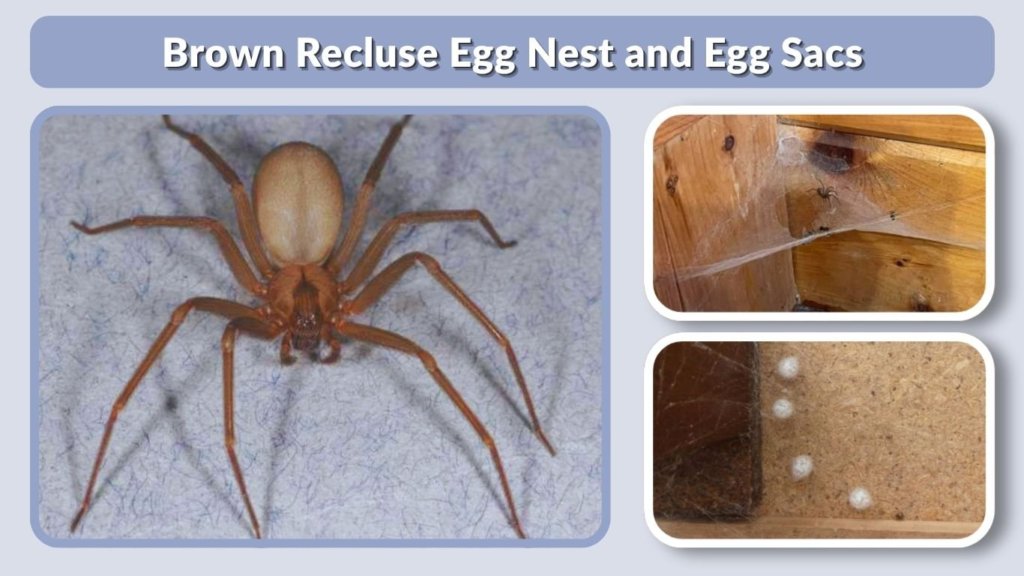
Many searches for “brown recluse egg nest” are really about egg sacs. Brown recluse eggs are placed inside small off-white silken sacs. Oklahoma State University says brown recluse females deposit about 40 to 50 eggs in off-white, round, 1/4-inch silken cases, usually in dark sheltered places.
The University of Tennessee Extension reports that each egg sac normally contains 20 to 50 eggs, and a female may construct up to five egg sacs. Spiderlings can emerge from the egg sac in about three to five weeks.
| Feature | Brown Recluse Egg Sac |
| Color | Off-white to pale cream |
| Shape | Round or slightly flattened silk sac |
| Size | About 1/4 inch wide |
| Egg count | Often 20–50 eggs |
| Location | Dark, sheltered hiding areas |
| Season | Often spring through summer |
| Female behavior | Female may guard egg sac |
If you find an off-white silk sac in a dark storage area, do not crush it with bare hands. Use gloves, a vacuum, or professional help if brown recluse spiders are common in your area.
Where Do Brown Recluse Spiders Nest in a House?
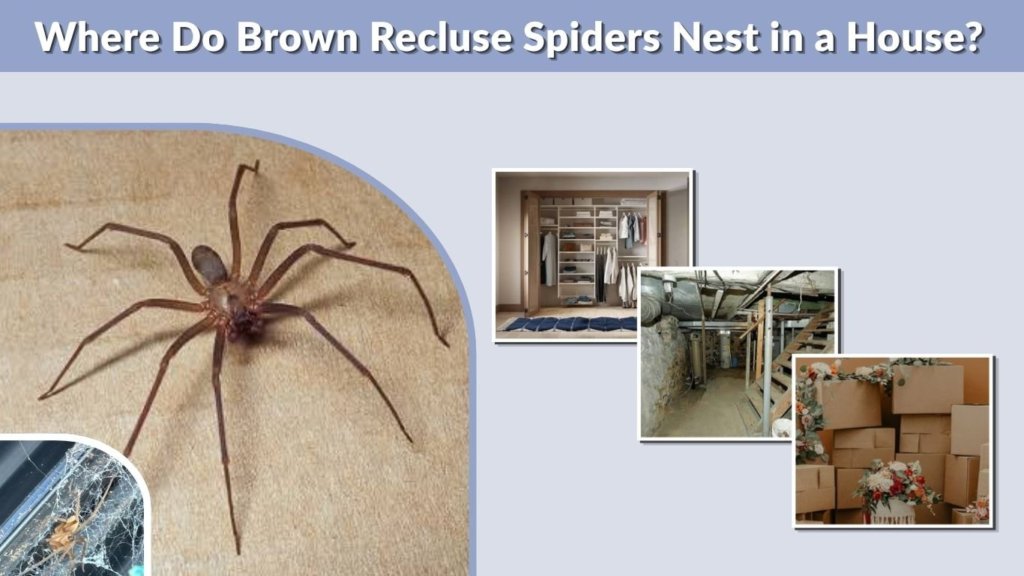
Brown recluse spiders prefer dark, dry, quiet, undisturbed places. Oklahoma State University lists indoor hiding places such as bathrooms, bedrooms, closets, basements, cellars, attics, under furniture, old clothes, shoes, behind pictures, storage boxes, paper stacks, the undersides of tables and chairs, behind baseboards, and corners or crevices.
Common Nesting Areas Indoors
Check these places carefully:
- Closets
- Basements
- Attics
- Garages
- Storage rooms
- Cardboard boxes
- Shoe boxes
- Old clothing piles
- Behind furniture
- Under tables and chairs
- Behind baseboards
- Crawl spaces
- Wall voids and cracks
- Stacks of paper
- Unused bedding or linens
Brown recluse spiders often remain hidden during the day and roam at night. If you see one crossing the floor, the retreat may be nearby, but it may also be traveling from another hidden area.
Brown Recluse Nest Outside
Outdoors, brown recluse spiders hide under protective objects. Colorado State University says they live under rocks, logs, wood piles, and other protected areas. Oklahoma State University also notes outdoor areas such as under rocks and bark, barns, storage sheds, and garages.
Outdoor Hiding Places
A brown recluse nest outside may be found in:
- Wood piles
- Rock piles
- Leaf piles
- Under bark
- Old boards
- Sheds
- Barns
- Garages
- Stored lumber
- Outdoor boxes
- Debris piles
Keeping firewood, lumber, and debris away from the foundation can reduce the chance of spiders moving indoors.
How to Find a Brown Recluse Nest
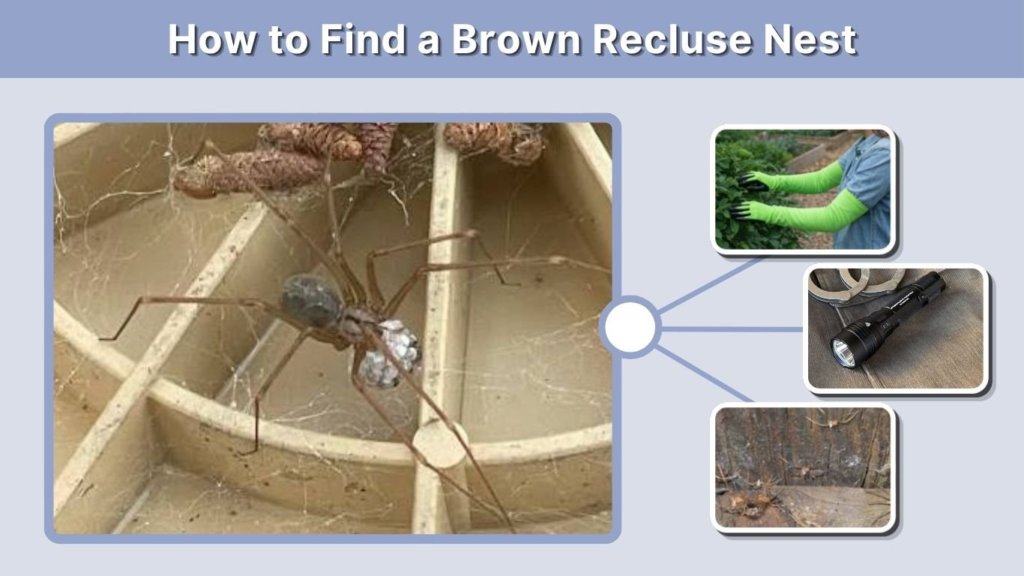
Finding a brown recluse nest requires careful inspection. Do not reach blindly into dark spaces. Wear gloves, long sleeves, and shoes before moving boxes, old clothes, stored furniture, or firewood.
Oklahoma State University says careful inspection of attics, exposed rafters, ceiling joists, basements, closets, boxes, and household goods may reveal old and active infestation sites. It also notes that shed skins in or around residences may indicate infestations.
Safe Inspection Steps
Use these steps:
- Wear gloves and long sleeves.
- Use a flashlight.
- Pull stored items away from walls.
- Inspect under furniture before lifting it.
- Check boxes, shoes, clothing, and paper stacks.
- Look for loose webbing, egg sacs, and shed skins.
- Use sticky traps along walls and corners.
- Avoid placing hands into blind gaps or dark corners.
Sticky traps are useful because they show where spiders are traveling. Place them along baseboards, behind furniture, near closets, and in storage areas.
Brown Recluse Web Nest vs Other Spider Webs
A brown recluse web nest is usually messy and hidden. It is not an orb-shaped web, funnel web, or large cobweb in an open room. Brown recluse spiders are hunters, so they do not depend on a prey-catching web like many other spiders.
| Web Type | Likely Spider |
| Loose hidden grayish silk | Brown recluse retreat possible |
| Round wheel-shaped web | Orb-weaver |
| Sheet or funnel web | Funnel weaver or grass spider |
| Large messy cobweb in open corner | Cobweb spider or widow-type spider |
| Egg sac carried by mother | Wolf spider |
| Brown recluse-like silk with egg sac | Possible recluse retreat |
Because many webs look similar, the web alone is not enough for identification. The spider, location, egg sac, and hidden retreat style all matter.
Brown Recluse Nest in Wall, Closet, or Furniture
Brown recluse spiders can hide in wall cracks, baseboard gaps, closets, and furniture. They are often found under furniture and on the undersides of tables and chairs. They may also hide in stored clothing or shoes, which is why many bites occur when people put on items that were sitting undisturbed.
If you suspect a nest in furniture, do not sit on or move the item without inspection. Use a flashlight to check seams, undersides, folds, and hidden corners. Vacuuming cracks and crevices can remove spiders, webbing, shed skins, and egg sacs.
Do Brown Recluse Spiders Nest Together?
Brown recluse spiders are not social spiders, but many can live in the same building if conditions are favorable. They tolerate dry, undisturbed indoor environments and can survive long periods without food or water. Cornell Cooperative Extension notes that in favorable habitats, brown recluse populations can be dense and that they thrive in human-altered environments.
So, finding many spiders does not mean they share one organized colony nest. It usually means the home has many good hiding places, prey insects, clutter, and low disturbance.
Brown Recluse Baby Nest and Spiderlings
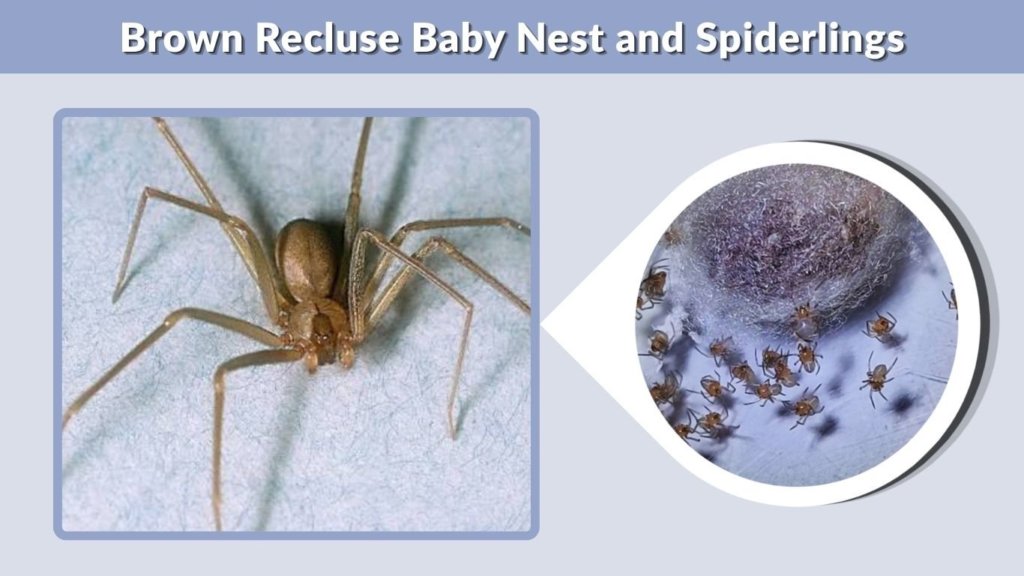
A “baby brown recluse nest” usually means spiderlings have emerged from an egg sac. Oklahoma State University says spiderlings emerge from egg cases in 24 to 36 days in summer, molt once before leaving the egg case, and then develop slowly depending on food and conditions.
Baby brown recluse spiders look like smaller, lighter versions of adults. They are difficult to identify without magnification. Shed skins near egg sacs, retreats, or storage clutter may suggest a breeding population.
Brown Recluse Nest Myths
Some keyword searches mention brown recluse spiders nesting in hair, skin, buttocks, or body openings. Brown recluse spiders do not make nests inside people. They are shy spiders that hide in dark spaces and may bite only when trapped or pressed against skin. Missouri Extension notes that brown recluse spiders cannot bite humans without some form of counterpressure, such as being trapped against the skin.
If someone has a wound, swelling, infection, or painful skin lesion, it should be evaluated by a medical professional rather than assumed to be a spider nest. Many skin problems are misidentified as spider bites.
How to Get Rid of a Brown Recluse Nest
Getting rid of a brown recluse nest requires removing spiders, egg sacs, hiding places, and prey. For a single visible web or egg sac, use a vacuum with a hose attachment and immediately empty the vacuum contents into a sealed bag. Wear gloves and avoid direct contact.
Oklahoma State University says brown recluse spiders can be extremely difficult to control, and if they are commonly seen, a pest control firm should be employed for thorough treatment. Control may require more than one treatment.
Home Control Steps
Use these steps to reduce brown recluse hiding places:
- Remove clutter from closets, garages, basements, and attics
- Store items in sealed plastic bins instead of cardboard boxes
- Vacuum cracks, baseboards, corners, and under furniture
- Shake out shoes, gloves, clothes, and bedding before use
- Seal cracks around doors, windows, and baseboards
- Use sticky traps along walls and storage areas
- Move firewood and debris away from the house
- Reduce insects that spiders eat
- Call pest control for repeated sightings or egg sacs
Avoid spraying random pesticides around living areas without reading the label or getting professional advice. Sprays alone may not reach hidden retreats or egg sacs.
Brown Recluse Nest Safety Tips
Brown recluse spiders are medically important, but they are not aggressive. The Missouri Department of Conservation says the brown recluse bite may be medically significant, though it is almost never fatal. It also notes that bites may cause swelling, redness, tenderness, and in some cases slow-healing ulceration.
How to Avoid Bites
To reduce bite risk:
- Wear gloves when cleaning storage areas
- Shake out shoes and clothing
- Do not leave clothes on the floor
- Check bedding in infested rooms
- Keep beds away from walls if spiders are common
- Remove bed skirts touching the floor
- Use sticky traps under furniture
- Do not reach into boxes blindly
- Hire a professional for heavy infestations
If you suspect a brown recluse bite, seek medical advice, especially if the wound worsens, becomes painful, darkens, or develops an open sore.
FAQs
What does a brown recluse nest look like?
A brown recluse nest usually looks like loose, messy, off-white or grayish silk in a dark hidden place. It may contain an egg sac, shed skins, dead insects, or a spider hiding nearby. It is not a neat circular web.
Where do brown recluse spiders nest in a house?
They hide in dark, quiet, undisturbed areas such as closets, basements, attics, garages, storage boxes, shoes, old clothes, under furniture, behind pictures, behind baseboards, and corners.
Do brown recluse spiders make egg nests?
They make off-white silken egg sacs, not true nests. Each sac may contain about 20 to 50 eggs, and females may produce multiple egg sacs during their lifetime.
How do I find a brown recluse nest?
Use gloves, a flashlight, and sticky traps. Inspect attics, basements, closets, boxes, furniture undersides, paper stacks, baseboards, and stored clothing. Do not reach into dark spaces with bare hands.
How do you get rid of a brown recluse nest?
Vacuum visible webbing and egg sacs, reduce clutter, seal cracks, replace cardboard storage with plastic bins, use sticky traps, and call pest control if you see repeated brown recluse activity. Brown recluse control can be difficult and may require more than one treatment.