

Giant house spiders are among the largest spiders found indoors, often startling people with their size and speed. But are they dangerous? Do they bite? Why are they in your house? In this guide, we answer 15 of the most asked questions about giant house spiders, covering their appearance, venom, lifespan, and what attracts them inside. Whether you’re curious or concerned, here’s everything you need to know about these misunderstood home-dwellers.
Identification & Habitat
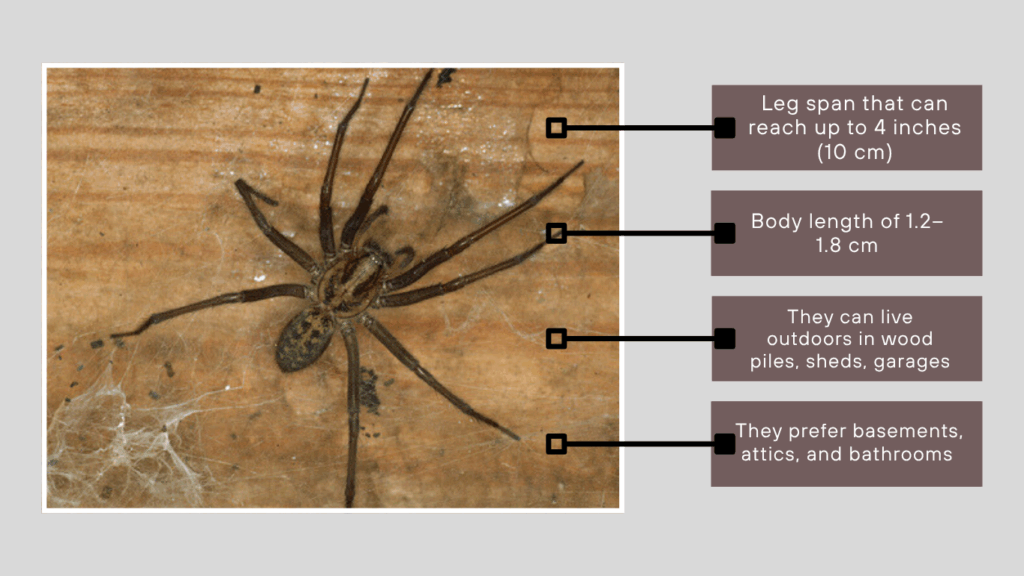
What is a giant house spider?
The giant house spider (Eratigena atrica) is one of the largest spiders commonly found in homes across Europe and North America. It has a dark brown body, hairy legs, and a leg span that can reach up to 4 inches (10 cm). Though intimidating in appearance, it is not aggressive toward humans.
How big are giant house spiders?
Adult giant house spiders typically have a body length of 1.2–1.8 cm, with a leg span of up to 10 cm (4 inches). Males tend to have longer legs, while females have a bulkier body.
Do giant house spiders live outside?
Yes, they can live outdoors in wood piles, sheds, garages, and under rocks, but they often move indoors during colder months in search of warmth and shelter. Inside homes, they prefer basements, attics, and bathrooms where it’s dark and quiet.
Why do spiders live in houses?
Spiders, including giant house spiders, move into houses because they offer:
- Stable temperatures
- Abundant prey (flies, moths, insects)
- Dark hiding spots for shelter and web-building
Why are spiders in my house?
Spiders often enter homes through cracks, vents, and open doors. They’re not seeking humans but are drawn by warmth and insect activity. In late summer and fall, males also wander more in search of mates, which increases indoor sightings.
What causes spiders in homes?
Key causes include:
- Insect presence (a reliable food source)
- Openings in walls or windows
- Storage clutter providing hiding spots
- Seasonal changes, especially as cold weather arrives
Behavior & Lifespan

How long do giant house spiders live?
Giant house spiders live for:
- Males: up to 1 year (often die shortly after mating)
- Females: 2 to 3 years or longer in ideal conditions
Females often stay in the same web location for extended periods, while males are more mobile during mating season.
What do house spiders do?
House spiders spin webs to catch insects, hide from predators, and lay eggs. Most house spiders:
- Are not aggressive
- Spend their lives in one corner or crevice
- Help reduce insect populations indoors
Biting & Venom

Do giant house spiders bite?
They can bite, but it’s rare. Giant house spiders are timid and non-aggressive, and they typically run away when disturbed. Bites usually occur only if they’re trapped or feel extremely threatened.
Can giant house spiders bite?
Yes, their fangs are capable of piercing human skin, but they rarely choose to do so. If a bite does happen, it may cause minor symptoms like:
- Redness
- Mild swelling
- Itching or irritation
Symptoms usually subside without medical treatment.
Are giant house spiders dangerous?
No, they are not considered dangerous. Their bite is not medically significant, and they are not aggressive toward humans or pets.
Are giant house spiders venomous?
Yes, like most spiders, they are venomous to their prey, but their venom is harmless to humans. It is used to immobilize insects, not for defense against larger animals.
Are giant house spiders poisonous?
No. “Poisonous” refers to being harmful if touched or ingested. Giant house spiders are not poisonous and are safe to have in homes.
4. Diet
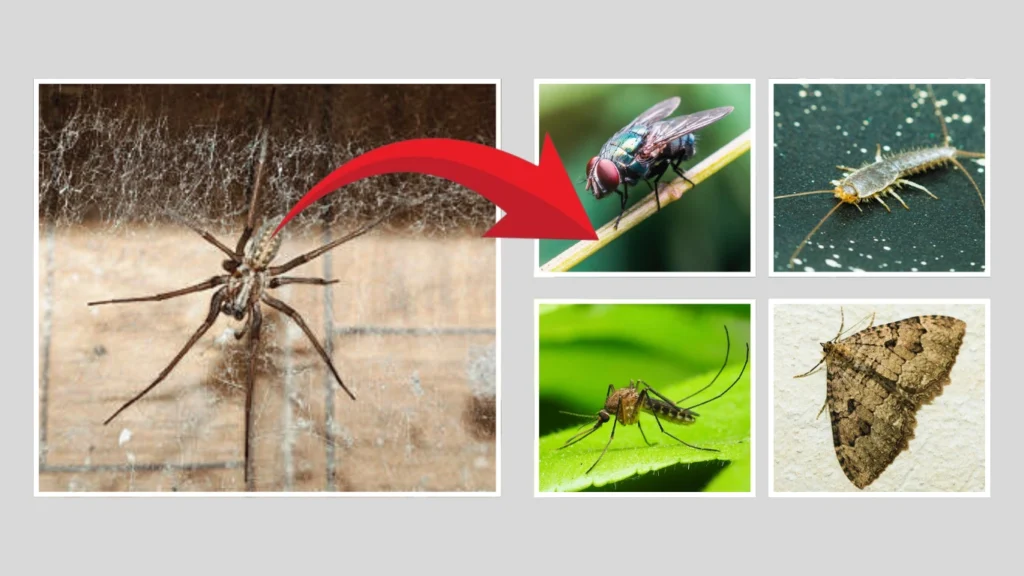
What do giant house spiders eat?
They are insectivores, feeding on:
- Flies
- Mosquitoes
- Moths
- Silverfish
- Other small arthropods
Giant house spiders build flat, sheet-like webs with a funnel retreat and wait for vibrations to ambush prey. They are helpful for pest control inside homes.