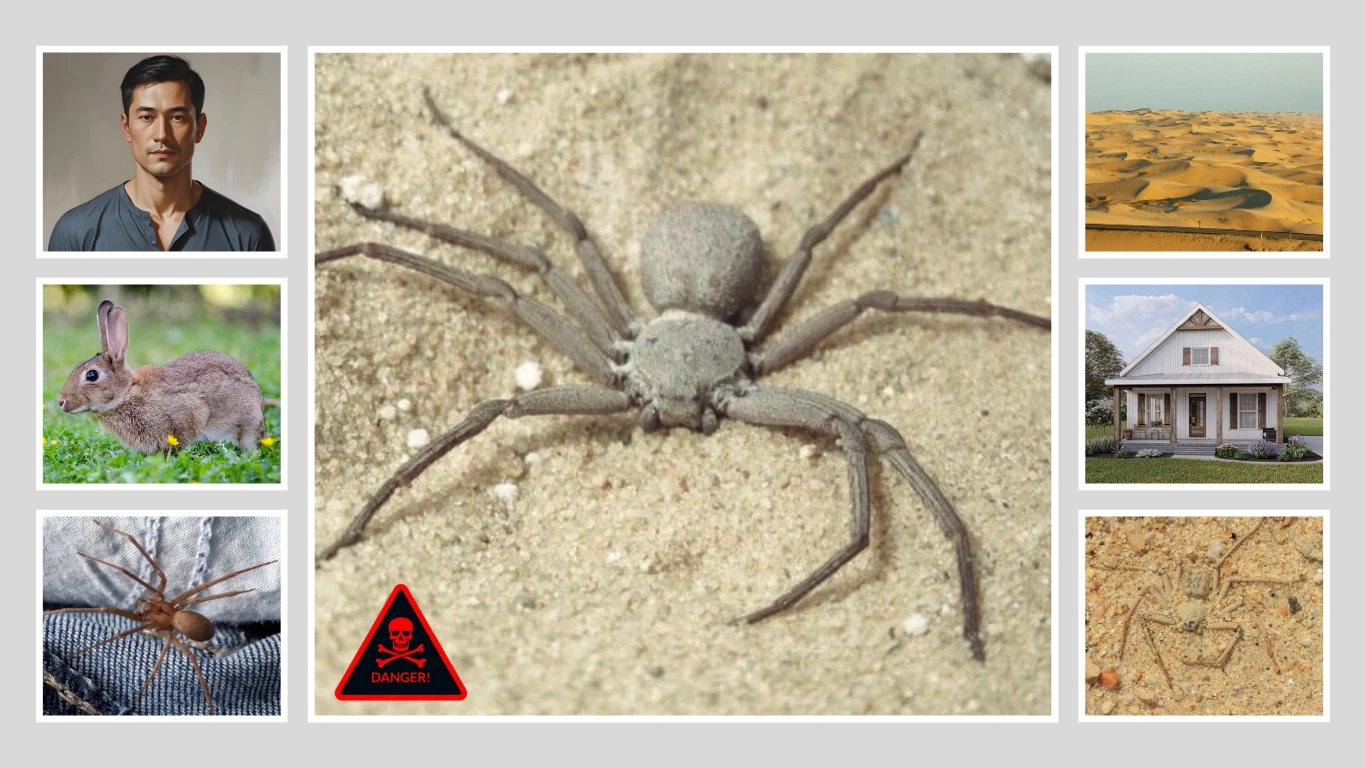
The six-eyed sand spider (Sicarius spp.) is one of the most feared yet misunderstood spiders in the world. Found in the deserts of southern Africa, this elusive arachnid is often portrayed as deadly due to its potent venom and camouflaged hunting tactics. But how much of that fear is justified?
Are six-eyed sand spiders really dangerous to humans, or is their reputation exaggerated? Let’s break it down with facts, science, and real-world evidence.
What Is the Six-Eyed Sand Spider?

Basic Profile
- Scientific Genus: Sicarius
- Family: Sicariidae (same family as the brown recluse)
- Eyes: 6 (hence the name), arranged in three pairs
- Habitat: Southern Africa’s deserts, including Namibia and South Africa
- Behavior: Nocturnal, shy, and well-camouflaged
- Web: None—they are ambush predators, not web builders
Six-eyed sand spiders live buried just beneath the sand’s surface, waiting silently for prey. Their flat bodies and sandy coloring make them almost invisible to both predators and humans.
Are Six-Eyed Sand Spiders Dangerous to Humans?

Technically, Yes—But Practically, No
Yes, six-eyed sand spiders have highly potent venom that contains cytotoxins and hemolytic agents—meaning it can destroy tissue and blood cells in laboratory tests.
However, real-world bites are extremely rare, and there are no confirmed deaths or serious medical cases in humans caused by this spider.
So, while they are theoretically dangerous based on venom composition, they pose very little practical threat to humans due to their behavior and habitat.
How Potent Is Their Venom?

In lab experiments:
- The venom has caused necrosis (flesh destruction) and internal bleeding in small animals like rabbits.
- It shares venom traits with the brown recluse spider, but in some studies, it appears even more powerful.
However, venom strength alone doesn’t determine how dangerous a spider is to humans—it also depends on:
- How often it bites people (almost never)
- The amount of venom delivered (usually small)
- Whether the venom reaches blood vessels (rare in surface bites)
Because the spider rarely bites, the real-life risk remains theoretical rather than proven.
Why Are Human Bites So Rare?
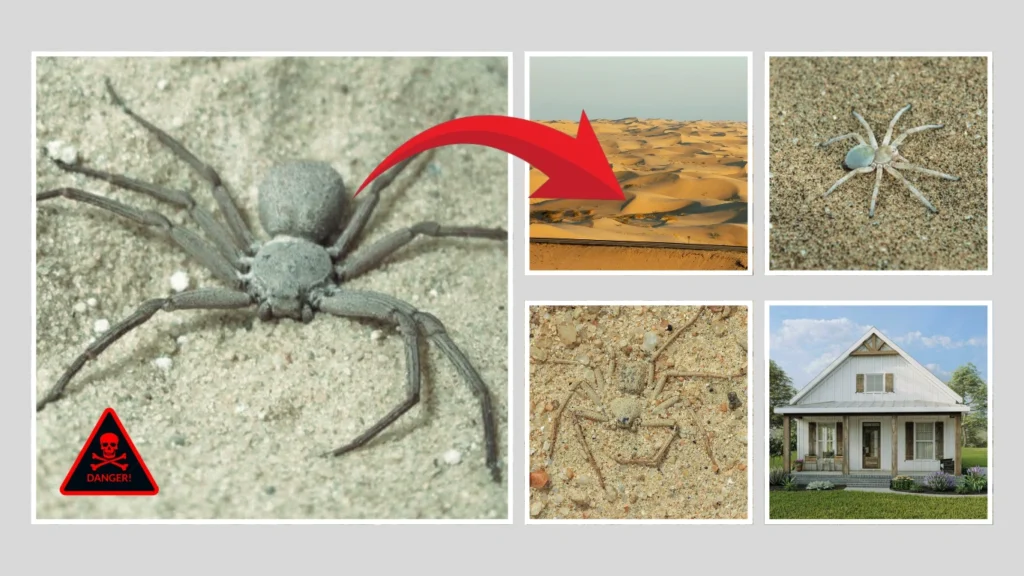
- Remote habitat: They live in desert regions far from cities and people.
- Shy nature: These spiders avoid confrontation and rarely come out in the open.
- Buried behavior: They spend much of their lives under sand, often remaining motionless for days.
- No attraction to homes: Unlike house spiders, they do not enter buildings or live near human settlements.
Most people who live near six-eyed sand spiders will never see one, let alone be bitten.
What Happens If a Bite Does Occur?
There are no medically confirmed human envenomation cases, but if a bite were to occur, it might result in:
- Pain, redness, and swelling at the site
- Tissue damage in severe cases (like brown recluse bites)
- Potentially systemic effects like fever, headache, or nausea if a large dose of venom is injected deep into tissue
In most cases, though, the spider likely delivers a dry bite or no bite at all, especially since it is not aggressive.
Comparison: Six-Eyed Sand Spider vs. Other Spiders
| Feature | Six-Eyed Sand Spider | Brown Recluse | Black Widow |
| Venom Type | Necrotic & hemolytic | Necrotic | Neurotoxic |
| Aggressiveness | Very shy | Shy | Defensive |
| Confirmed Human Bites | None | Common | Common |
| Lethality | No human deaths | Very rare | Very rare |
| Habitat | Remote deserts | Indoors/outdoors | Sheds, homes |
Do They Pose a Threat to Pets or Livestock?
Unlikely. Because they live in arid, sparsely populated areas, domestic animals rarely come into contact with them. In theory, a bite could be harmful to small animals, but no documented cases exist. Larger animals like goats or cattle would not be affected unless bitten multiple times, which is extremely unlikely.
Should We Be Afraid of the Six-Eyed Sand Spider?
Not at all. Despite sensational headlines and scary photos, this spider:
- Does not seek out humans
- Will not bite unless severely provoked
- Is more endangered by humans than the other way around
Its danger lies more in myth and laboratory data than real-world experience. In truth, the six-eyed sand spider is one of the least encountered and most misunderstood spiders in the world.
FAQs
1. Has anyone ever died from a six-eyed sand spider bite?
No. There are no confirmed human deaths from six-eyed sand spider bites. Most of what we know about its venom comes from animal testing in labs. Human bite cases are unverified or anecdotal. Its reclusive nature makes it highly unlikely to ever bite someone.
2. Is the six-eyed sand spider aggressive?
Not at all. It is extremely shy and relies on camouflage to stay hidden. If disturbed, it typically buries itself deeper in the sand or remains motionless. Biting is a last resort behavior and not part of its regular defense.
3. Where do six-eyed sand spiders live?
They live in desert regions of southern Africa, particularly in:
- Namibia
- South Africa
- Parts of Angola and Botswana
They prefer dry, sandy environments, where they can stay hidden and undisturbed.
4. What does a six-eyed sand spider eat?
They are ambush predators, feeding on:
- Insects (beetles, ants, termites)
- Small arthropods
- Occasionally other spiders or soft-bodied prey
They wait under the sand until prey approaches, then strike quickly using their long front legs.
5. Should six-eyed sand spiders be protected?
Possibly. While not endangered, these spiders are vulnerable to habitat disturbance, especially from:
- Off-road driving in desert areas
- Mining operations
- Climate change affecting sand structure or prey
Because they are poorly studied and slow to reproduce, conservationists recommend further research and potential habitat protection, especially in regions with high sand spider diversity.