

The Texas Brown Tarantula (Aphonopelma hentzi) is one of the largest and most common tarantula species in the United States. Often spotted in Texas, Oklahoma, and surrounding states, this spider is known for its gentle nature despite its intimidating size. It is a terrestrial species that prefers open grasslands and dry areas, where it lives in burrows and hunts at night. Because of its calm temperament and fascinating life cycle, it has become a popular tarantula for enthusiasts and educational displays.
This guide explores everything you need to know about the Texas Brown Tarantula, including identification, scientific details, size, lifespan, habitat, care, and unique behaviors.
General Identification & Names
The Texas Brown Tarantula is also referred to as:
- Brown Tarantula Texas
- Brown Texas Tarantula
- Tarantula Texas Brown
- The Texas Brown Tarantula
These common names describe its overall brown coloration and association with Texas, though the species can be found in other states as well. Adult tarantulas are typically dark brown to black, with lighter shades on the carapace and legs. Their large, hairy bodies give them a striking appearance, often making them the most recognizable tarantula in the southern United States.
Scientific Classification & Facts

- Scientific name: Aphonopelma hentzi
- Family: Theraphosidae
- Distribution: Central and southern United States
This species is considered one of the hardiest tarantulas, adapted to hot climates and long periods of drought. They are nocturnal hunters that rely on ambush rather than web-building to catch prey. Despite their size, they are generally shy and avoid confrontation.
Fun fact: Texas Brown Tarantulas play an important ecological role by controlling insect populations, especially grasshoppers and beetles. Their fangs are strong enough to subdue larger prey, though their venom is mild to humans.
Size, Lifespan & Growth

The Texas Brown Tarantula is among the larger tarantula species found in North America.
- Size: Adults typically measure 4–5 inches (10–13 cm) in leg span, with some reaching up to 6 inches.
- Weight: Around 30 grams on average, though females can be heavier.
- Growth rate: They grow slowly, taking several years to reach full maturity.
Lifespan differences:
- Females live significantly longer, often reaching 15–25 years in captivity and slightly less in the wild.
- Males usually live only 5–10 years and often die soon after mating.
Because of this vast difference, many hobbyists prefer females for long-term care.
Male vs Female Differences
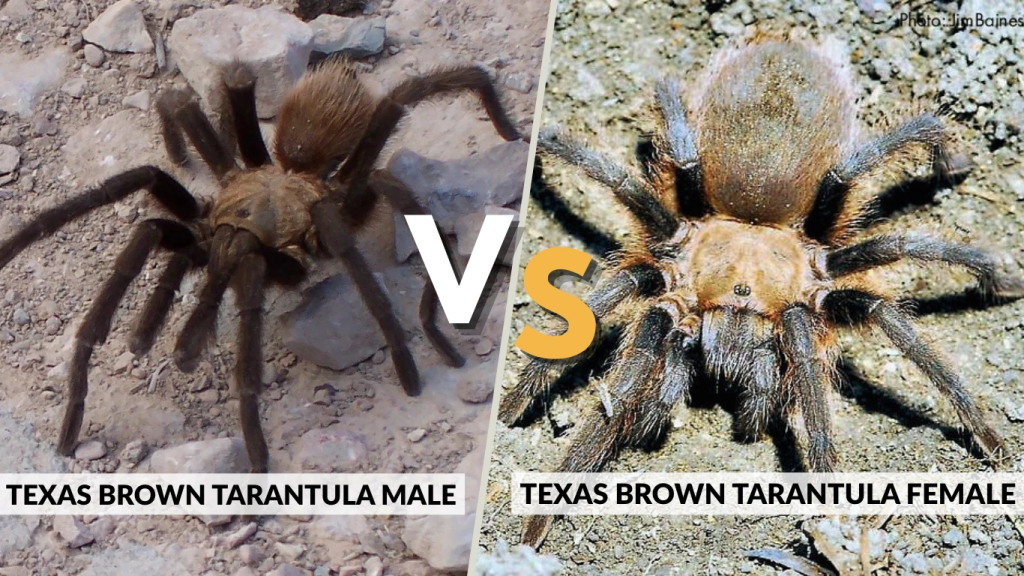
Sexing a Texas Brown Tarantula can be challenging for beginners, but several differences stand out.
Males:
- Tend to have longer, thinner legs.
- Mature males develop tibial hooks and bulbous pedipalps for mating.
- Live shorter lives, often dying within a year after reaching sexual maturity.
Females:
- Stockier build with a larger abdomen.
- Longer lifespan, sometimes exceeding two decades.
- More sedentary, spending most of their lives in or near burrows.
Sexing can also be done by examining molts, where females show spermatheca structures used for storing sperm. This is the most reliable method for keepers.
Habitat, Range & Migration

The Texas Brown Tarantula is native to the southern and central United States.
- Range: Texas, Oklahoma, Kansas, Missouri, Arkansas, and northern Mexico.
- Preferred habitats: Open grasslands, prairies, and scrub areas with dry soil suitable for burrows.
- Burrows: They dig or occupy abandoned burrows for shelter, lining them with silk to detect vibrations from prey.
Migration behavior: During late summer and early fall, males are often seen wandering in large numbers in search of mates. This migration frequently leads to encounters with humans, though the spiders are harmless if left undisturbed.
Diet & Feeding

Texas Brown Tarantulas are opportunistic hunters that primarily eat insects. In the wild, their diet consists of grasshoppers, beetles, crickets, and other small arthropods. They wait near the entrance of their burrows and ambush passing prey with a quick strike.
In captivity, they thrive on:
- Crickets
- Roaches
- Mealworms or superworms (as occasional treats)
Feeding frequency:
- Juveniles should be fed 2–3 times weekly.
- Adults require only one feeding every 7–10 days.
Overfeeding should be avoided, as tarantulas can become obese. Remove uneaten prey within 24 hours, especially if the tarantula is close to molting.
Care, Enclosure & Pet Ownership

Despite their intimidating appearance, Texas Brown Tarantulas are hardy and relatively easy to keep.
Enclosure size: A 5–10 gallon terrarium is ideal for an adult. Floor space is more important than height since they are terrestrial.
Substrate: Use 3–5 inches of dry substrate such as coconut fiber, soil, or peat moss for burrowing.
Temperature & humidity:
- Temperature: 70–80°F (21–27°C)
- Humidity: 50–65%
- Provide a shallow water dish and avoid oversaturation of the substrate.
Hiding: Include at least one hide such as cork bark, a clay pot, or artificial decor.
Pet suitability: They are calm but not ideal for frequent handling, as falls from even short heights can be fatal. These spiders are best admired in their enclosures.
Biting, Venom & Safety

Texas Brown Tarantulas often look intimidating but are generally docile.
Bites:
- They rarely bite, preferring to retreat or flick urticating hairs as a defense.
- If a bite does occur, symptoms are mild—similar to a bee sting.
Venom:
- Not medically significant to humans.
- Pain, redness, or swelling may occur but usually subsides quickly.
Are they dangerous?
No. They are not considered dangerous and pose little threat to humans. Most reported encounters end without incident.
Reproduction & Life Cycle
Texas Brown Tarantulas reproduce during the late summer and fall mating season.
- Mating: Mature males wander in search of females. They use special hooks to hold the female’s fangs while transferring sperm via pedipalps.
- Egg sac: A female may lay an egg sac containing up to 1,000 eggs, which she guards inside her burrow.
- Spiderlings: Hatch after 6–8 weeks and disperse after their first molt.
Male vs female lifespans:
- Males die soon after mating.
- Females may live decades, continuing to produce offspring throughout their adult lives.
Predators & Threats
Despite their size, Texas Brown Tarantulas have several natural predators.
- Birds, especially hawks and owls
- Mammals such as raccoons and skunks
- Other arachnids like scorpions
- Tarantula hawk wasps, which paralyze tarantulas and lay eggs inside them
Human activity such as habitat destruction and road traffic during migration also pose risks.
FAQs
1. Where do Texas Brown Tarantulas live?
They are commonly found in Texas, Oklahoma, Kansas, Missouri, Arkansas, and northern Mexico. They prefer dry, open areas such as grasslands and prairies, where they dig burrows or use abandoned holes for shelter.
2. How big do Texas Brown Tarantulas get?
Adults typically reach 4–5 inches in leg span, with some larger females growing up to 6 inches. They are among the largest tarantulas in North America, though not as massive as South American species.
3. Are Texas Brown Tarantulas poisonous?
No. Their venom is mild and not considered dangerous to humans. A bite may feel like a bee sting, causing minor swelling and irritation, but serious medical reactions are rare.
4. How long do Texas Brown Tarantulas live?
Females live significantly longer than males. In captivity, females can live 15–25 years, while males usually survive only 5–10 years and die shortly after mating.
5. Can Texas Brown Tarantulas be kept as pets?
Yes, they are popular among hobbyists due to their calm temperament and hardiness. They require a simple enclosure, occasional feeding, and minimal maintenance. However, they are not recommended for frequent handling since falls can be deadly.
Conclusion
The Texas Brown Tarantula is a fascinating, gentle giant of the American South. With its impressive size, long lifespan, and easy care requirements, it is one of the most beginner-friendly tarantulas to keep. By providing a secure enclosure, proper diet, and respect for its natural behaviors, enthusiasts can enjoy observing this remarkable spider for many years.