
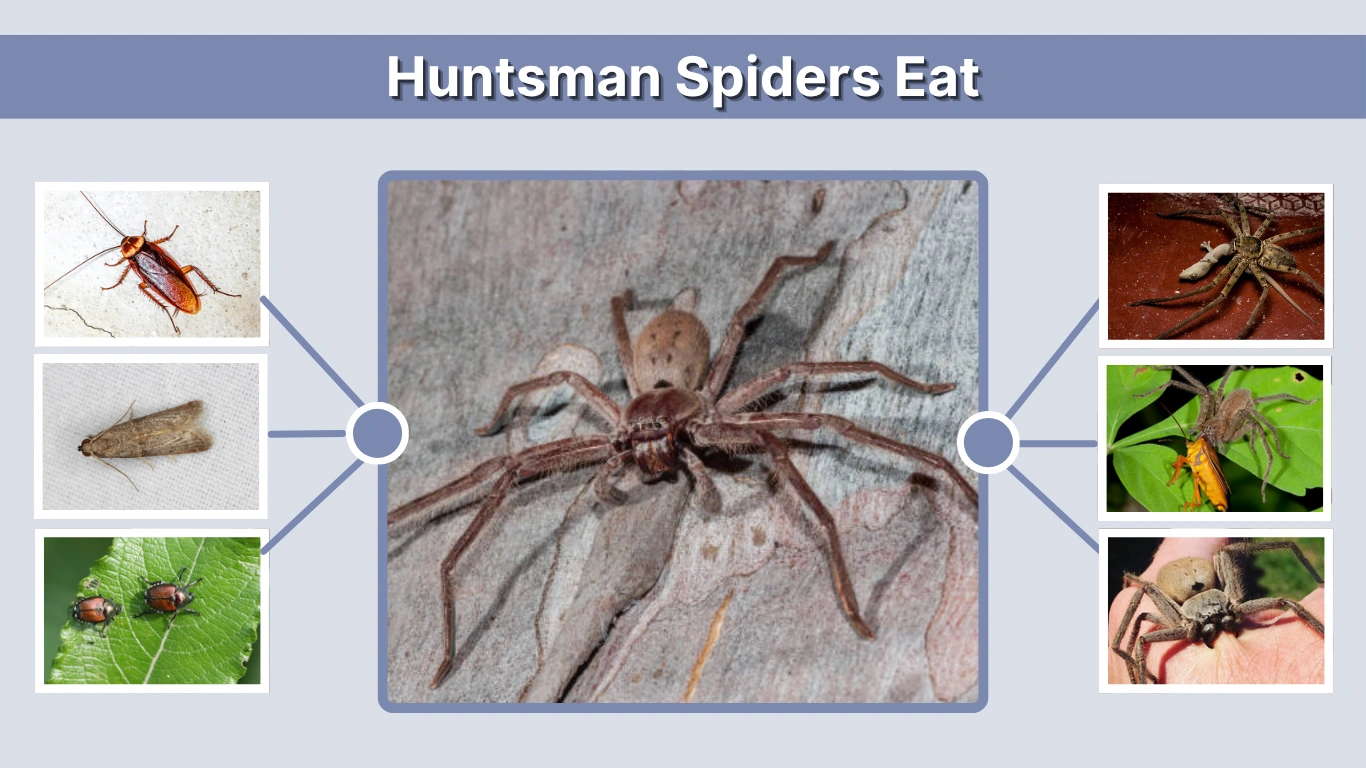
Huntsman spiders are some of the most fascinating arachnids in the world. With their long legs, lightning speed, and surprisingly varied diet, they often spark both fear and curiosity. While most spiders are associated with small insect prey, huntsman spiders have been seen tackling animals far larger than expected, from lizards to tiny mammals. This article explores what they eat, how they hunt, and the remarkable cases that have gone viral worldwide.
General Diet of Huntsman Spiders

Huntsman spiders are primarily insectivores, which means their usual meals consist of common insects found in their natural environment. They rely on speed and ambush rather than webs to capture their prey, making them skilled hunters.
Insects – Their Main Source of Food
The most common diet of huntsman spiders includes cockroaches, moths, beetles, and crickets. These creatures are easy targets, and the huntsman’s speed allows them to pounce with precision. In households, they are often seen chasing cockroaches, which makes them surprisingly beneficial to humans despite their intimidating size.
Do They Eat Other Spiders?
Huntsman spiders occasionally eat other spiders, including redback spiders. They are not strictly cannibalistic but may prey on smaller spiders if food is scarce. This adaptability helps them survive in competitive environments where many predators overlap.
Larger Prey Huntsman Spiders Can Take Down

Although insects make up the majority of their diet, larger huntsman spiders are capable of hunting bigger prey. Their size, strength, and venom allow them to overpower creatures far beyond what most people expect from a spider.
Huntsman Spiders Eating Possums
One of the most shocking viral stories involves a giant huntsman spider devouring a pygmy possum in Australia. A couple discovered the scene and shared the images, sparking worldwide astonishment. While this event is rare, it highlights just how powerful these spiders can be when faced with small mammals.
Other Small Mammals and Reptiles
Beyond possums, huntsman spiders have been observed eating small mice, lizards, and even bats. Their ability to immobilize these animals comes from their fast strike and strong grip, followed by venom that begins the digestive process. Though unusual, these cases show that huntsman spiders are opportunistic feeders capable of taking advantage of any meal that presents itself.
Birds and Unusual Prey
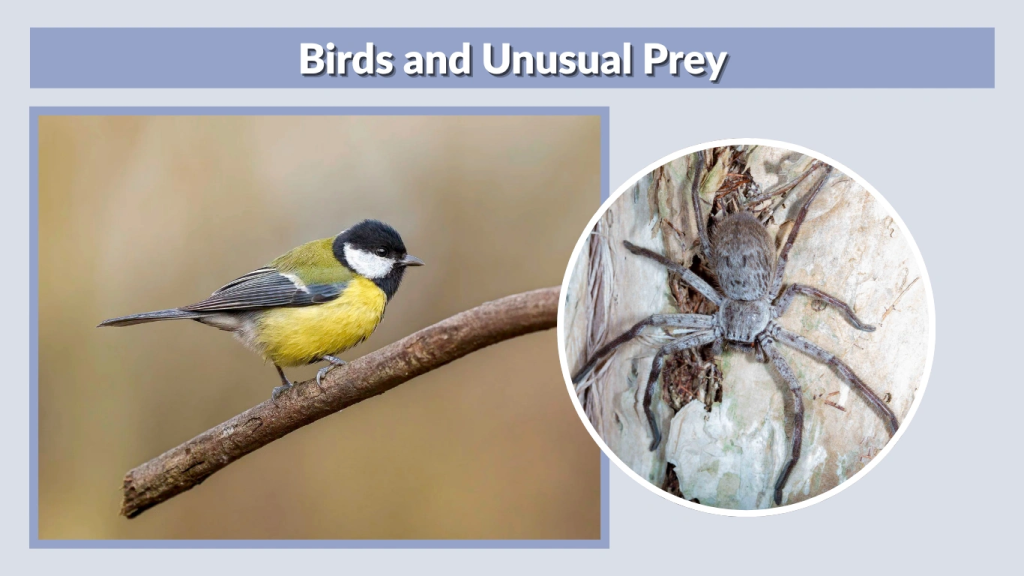
Another surprising aspect of the huntsman’s diet is their ability to capture small birds. Though this is not common, there have been cases where huntsman spiders managed to ambush and feed on them. Unlike tarantulas, which are often called “bird-eating spiders,” huntsman spiders do not regularly target birds, but their sheer size allows them to succeed in exceptional situations.
Such cases often fuel myths and exaggerations. While huntsman spiders can kill small birds, it is not part of their natural or frequent diet. These rare encounters simply demonstrate their adaptability as hunters.
How Huntsman Spiders Eat

Huntsman spiders use a hunting strategy that relies on speed rather than webs. They pounce on their prey, deliver venom through their fangs, and then release digestive enzymes that break down the food. Instead of chewing, they suck up the liquefied tissue, which is how most spiders consume meals.
Can Huntsman Spiders Eat Snakes?
In rare but real cases, huntsman spiders have been spotted eating small snakes. These events are not common and usually involve juvenile snakes that can be subdued quickly. While shocking to witness, it follows the same process as with other prey: immobilize, inject venom, and consume slowly.
How Often Do They Eat?
The frequency of feeding depends on size, environment, and food availability. Huntsman spiders can go days or even weeks without eating after consuming a large meal. Their efficient digestive system allows them to survive on infrequent but substantial catches.
Giant Huntsman Spider – The Viral Predator
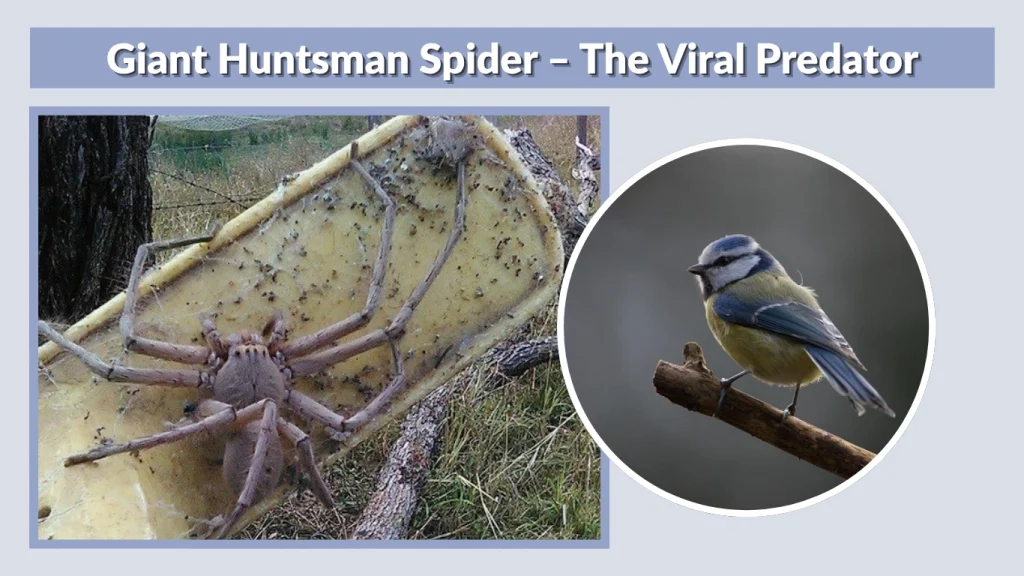
Among all huntsman spiders, the giant huntsman spider (Heteropoda maxima) has drawn the most attention. Found in Laos, it is known for having the largest leg span of any spider, reaching up to 12 inches across. This enormous size makes it an intimidating predator with greater hunting capabilities than its smaller relatives.
Difference Between Giant Huntsman and Goliath Bird-Eating Spider
The giant huntsman spider is often compared to the goliath bird-eating tarantula. While the goliath is heavier and bulkier, the giant huntsman outmatches it in leg span. Diet-wise, both are capable of taking down small mammals, but their methods differ: the tarantula relies on ambush burrows, while the huntsman uses speed and agility.
These comparisons often spark debates over which is more dangerous. In reality, both play vital ecological roles, and neither poses a significant threat to humans beyond mild bites.
Huntsman Spiders vs Natural Predators

Despite their size and speed, huntsman spiders are not at the top of the food chain. They have several natural predators that keep their populations balanced.
Birds, geckos, and larger spiders often prey on huntsman spiders, but the most fascinating predator is the spider wasp. These wasps paralyze huntsman spiders with a sting, then drag them into a burrow to serve as living food for their larvae. Cases of hawk wasps and giant hornets overpowering huntsman spiders highlight that even large arachnids have enemies in the insect world.
This natural competition is essential in maintaining ecosystem balance, ensuring huntsman spiders do not grow unchecked despite their powerful hunting abilities.
Humans and Huntsman Spiders

The relationship between humans and huntsman spiders is often complicated. While they play a beneficial role by controlling pests, their size and appearance can be intimidating.
Can Humans Eat Huntsman Spiders?
In survival situations, people have eaten huntsman spiders. For example, survivalist Bear Grylls consumed one on his television show to demonstrate adaptability in the wild. In some cultures, eating spiders is not unusual, but huntsman spiders are not commonly consumed compared to tarantulas in regions like Cambodia.
Do Huntsman Spiders Eat Humans? (Myth Busted)
Despite many online myths, huntsman spiders do not eat humans. Stories about huntsman spiders eating human kidneys or attacking people are pure exaggerations. Their venom is not potent enough to kill humans, and they are more likely to flee than attack. While their bite may cause pain or swelling, they are not considered medically dangerous.
Strange and Viral Cases
In recent years, viral photos and videos have amplified the huntsman spider’s reputation. Images of a giant huntsman eating a pygmy possum or dragging a mouse up a wall have shocked millions online. These events are real but rare, representing extreme cases rather than everyday behavior.
Social media often exaggerates or misinterprets such encounters, spreading myths about huntsman spiders eating pets, livestock, or even humans. The reality is that huntsman spiders remain primarily insectivores, with larger prey being unusual exceptions.
FAQs
What does a huntsman spider mainly eat?
Huntsman spiders mainly eat insects such as cockroaches, crickets, beetles, and moths. Their speed and stealth make them highly effective hunters of common pests. While larger meals like lizards or small mammals are possible, insects remain their primary and most frequent food source.
Can a huntsman spider eat a possum?
Yes, though extremely rare, huntsman spiders have been documented eating pygmy possums in Australia. These small marsupials are light enough for a large huntsman to subdue. However, such events are not common and do not represent their usual diet.
Do huntsman spiders eat snakes or birds?
On rare occasions, huntsman spiders have been observed feeding on small snakes and tiny birds. These instances usually involve particularly large spiders with the strength to immobilize unusual prey. While possible, it is far from a regular occurrence in their diet.
Are huntsman spiders dangerous to humans?
Huntsman spiders are not dangerous to humans. Their venom is mild, and bites are uncommon. Most people encounter them inside homes, where they are more likely to hunt cockroaches than cause harm. They may look frightening, but they are generally harmless.
Can humans eat huntsman spiders?
Yes, humans can eat huntsman spiders, but it is not common. In survival shows, huntsman spiders have been consumed for demonstration, and in some regions, other spiders are part of traditional diets. For most people, however, huntsman spiders remain predators, not prey.
