


The red-breasted toucan is one of the most striking and colorful members of the toucan family. Recognized by its deep red chest, glossy black feathers, and long, brightly colored beak, this species is native to the forests of South America. Like other toucans, red-breasted toucans play an important ecological role by spreading seeds and supporting forest regeneration. Their bold appearance and fascinating behaviors make them a favorite among birdwatchers and wildlife researchers alike.
What Is a Red-Breasted Toucan?
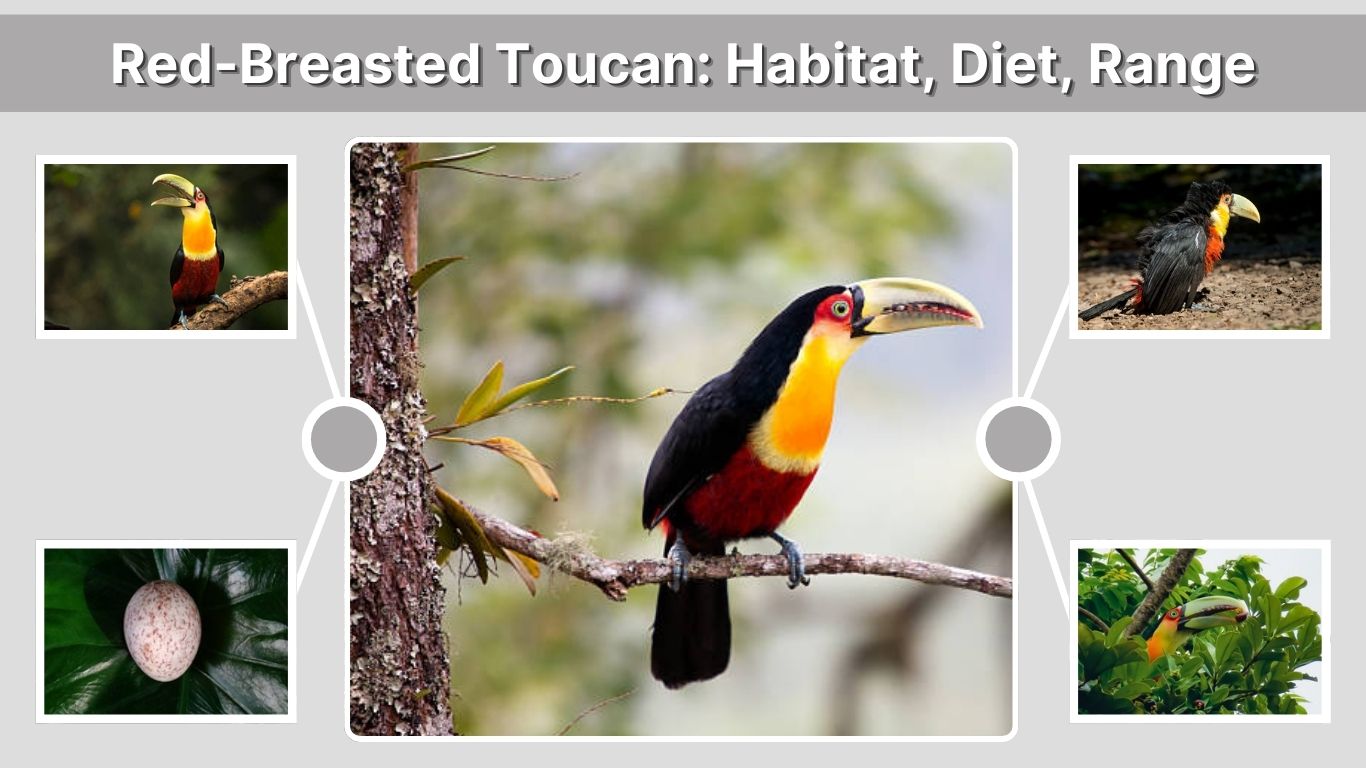
The red-breasted toucan (Ramphastos dicolorus) is a medium-sized toucan species best known for the vivid red coloring on its chest and belly. Its plumage is mostly black, with a white throat that transitions into a bright red breast. The beak is large and slightly curved, typically yellowish with darker markings, and appears heavy but is actually lightweight due to its hollow structure.
Among notable red breasted toucan facts is that this species is sometimes confused with other similar toucans, such as the channel-billed toucan. However, the distinctive red breast sets it apart. Adults can reach lengths of up to 19 inches, including the beak, making them slightly smaller than some other toucan species.
Red-Breasted Toucan Habitat and Natural Environment
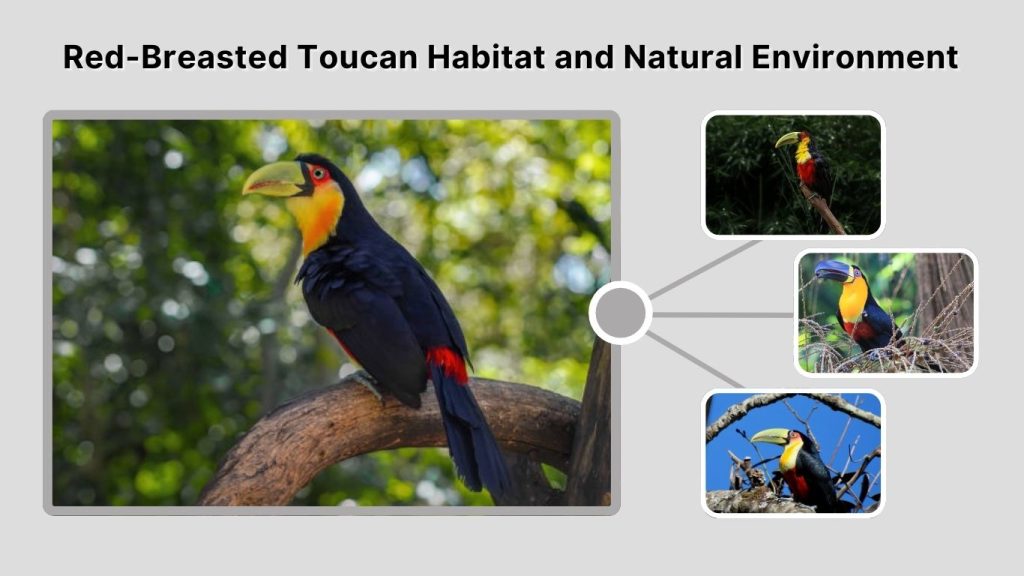
The red breasted toucan habitat is closely associated with the Atlantic Forest and other humid tropical forests of southeastern South America. These birds prefer dense forests with tall trees, where they can find abundant fruit and suitable nesting cavities. They spend most of their time in the upper canopy, rarely descending to the forest floor.
A typical red breasted toucan location includes mature forest areas with minimal disturbance. Because they rely on large trees for nesting and feeding, red-breasted toucans are particularly sensitive to habitat loss. Deforestation and forest fragmentation in the Atlantic Forest have significantly reduced available habitat, posing a major threat to the species.
Red-Breasted Toucan Range and Geographic Distribution
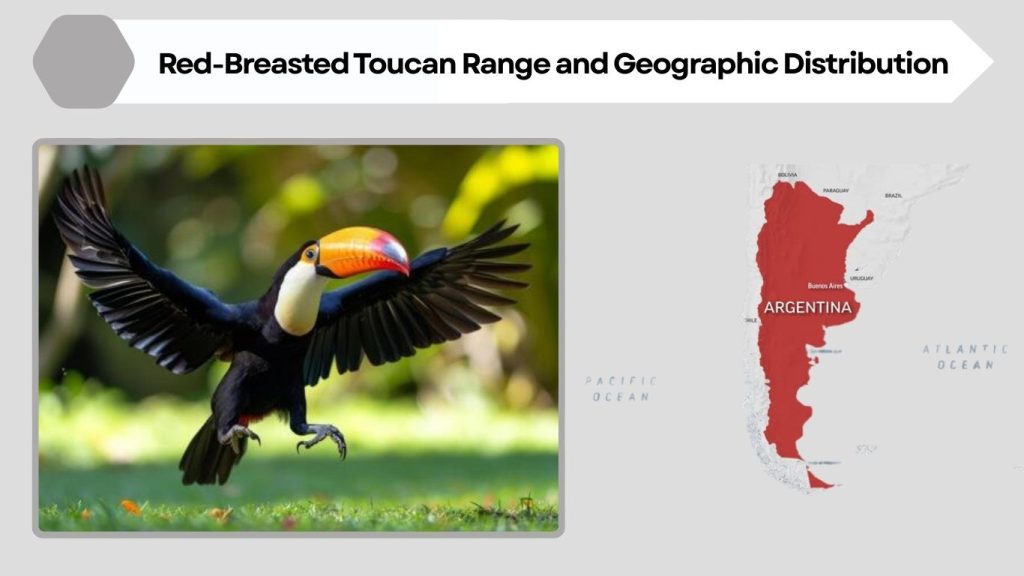
The red breasted toucan range is relatively limited compared to some other toucan species. It is found primarily in southeastern Brazil, eastern Paraguay, and northeastern Argentina. This restricted range makes the species more vulnerable to environmental changes and habitat destruction.
Within this range, red-breasted toucans are most commonly observed in protected forest reserves and national parks, where large tracts of native forest remain intact. Their presence often indicates a healthy forest ecosystem with sufficient food resources and nesting opportunities.
Red-Breasted Toucan Diet and Feeding Behavior
The red breasted toucan diet is mainly composed of fruit, including figs, berries, and palm fruits. These birds use their long beaks to reach fruit on thin branches that would not support their body weight. They often toss food into the air before swallowing it whole.
In addition to fruit, red-breasted toucans also consume insects, small reptiles, bird eggs, and nestlings. This varied diet provides essential nutrients and protein. By moving between feeding areas, they disperse seeds throughout the forest, playing a crucial role in maintaining plant diversity and supporting forest regeneration.
Red-Breasted Toucan Lifespan and Survival
The red breasted toucan lifespan in the wild typically ranges from 15 to 20 years. Survival depends largely on habitat quality, food availability, and predation pressure. Natural predators include birds of prey, snakes, and arboreal mammals that target nests and young chicks.
Habitat loss is the greatest threat to the species. Continued deforestation of the Atlantic Forest reduces nesting sites and food sources, making conservation efforts essential for the long-term survival of red-breasted toucans.
Red-Breasted Toucan Eggs, Babies, and Breeding Behavior
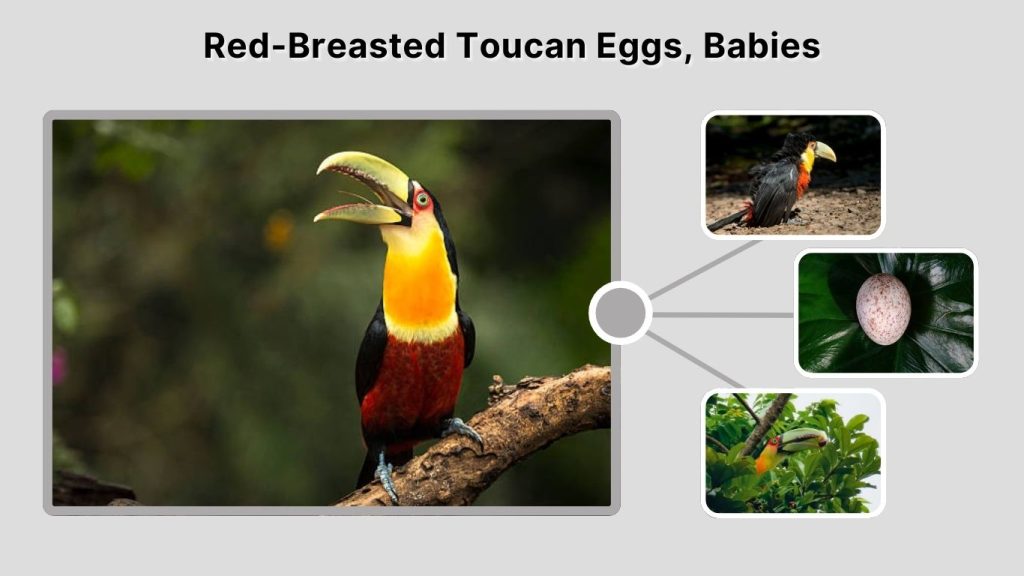
Red-breasted toucans do not build traditional nests. Instead, they use natural tree cavities or abandoned woodpecker holes located high in the forest canopy. These nesting sites offer protection from predators and environmental threats during the breeding season.
Red-Breasted Toucan Eggs
The female typically lays two to four red breasted toucan eggs, which are white and oval-shaped. Both parents share incubation duties, which last about 16 to 18 days. This cooperative behavior increases hatching success and ensures that the eggs remain well protected.
Red-Breasted Toucan Baby Development
A red breasted toucan baby hatches blind and featherless, relying entirely on its parents for warmth and food. During the first few weeks, the chicks grow quickly and develop thick pads on their heels to protect their feet from the hard nest surface. Parents feed the chicks regurgitated fruit and small prey. After about eight to nine weeks, the young toucans leave the nest and begin exploring nearby branches.
Male and Female Red-Breasted Toucan Differences
Male and female red-breasted toucans look very similar, making them difficult to distinguish in the wild. The red breasted toucan female is usually slightly smaller and may have a shorter beak than the male. These differences are subtle and often only noticeable when a pair is seen together. Both sexes share responsibilities such as incubating eggs, feeding chicks, and defending the nesting site.
Can Red-Breasted Toucans Fly?
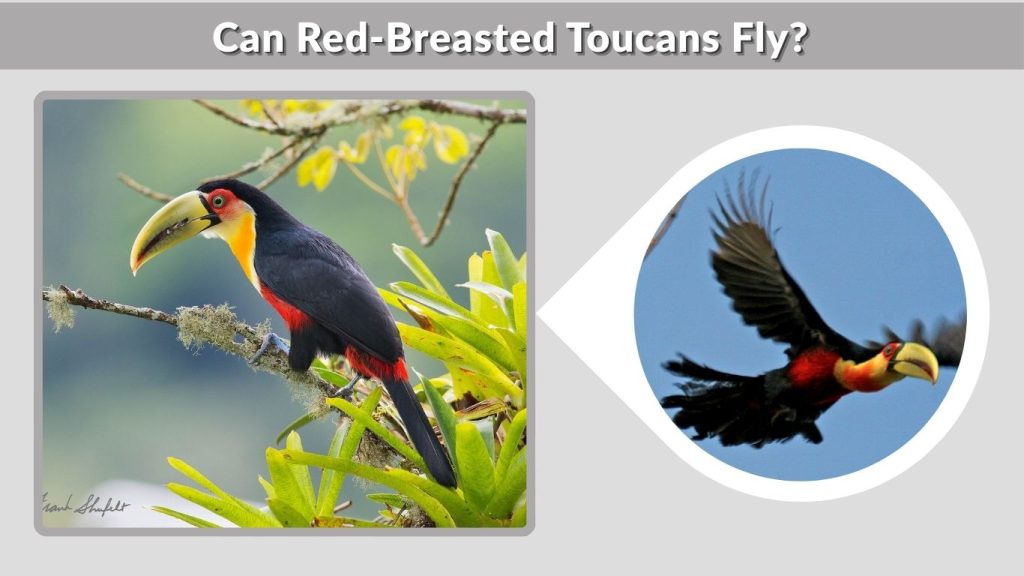
Despite their large beaks, red breasted toucan flying ability is well adapted to life in the canopy. They can fly but usually travel short distances between trees. Their flight pattern consists of quick wingbeats followed by brief glides, allowing them to move efficiently through dense forest environments. On the ground, red-breasted toucans are less agile and prefer hopping rather than walking.
Interesting Red-Breasted Toucan Facts
There are many fascinating red breasted toucan facts that highlight the unique adaptations of this species. Their beaks help regulate body temperature by releasing excess heat through blood vessels near the surface. The beak is also used in social interactions, such as displays and gentle tapping during courtship.
Red-breasted toucans are social birds and are often seen in pairs or small groups. They communicate using loud croaking calls that echo through the forest. Another interesting behavior is how they sleep: they tuck their beaks under their wings and curl their tails over their backs, allowing their bodies to fit comfortably inside narrow tree cavities.
Why the Red-Breasted Toucan Matters
The red-breasted toucan plays an essential role in maintaining healthy forest ecosystems. By dispersing seeds across wide areas, these birds help regenerate forests and support plant diversity. Because their habitat is increasingly threatened, protecting the forests they depend on is critical for their survival.
Conservation efforts focused on preserving the Atlantic Forest not only benefit red-breasted toucans but also countless other plant and animal species. Ensuring the protection of these habitats helps safeguard one of South America’s most visually striking and ecologically important birds.
FAQs
Where do red-breasted toucans live?
The red-breasted toucan habitat includes humid tropical forests, especially the Atlantic Forest of South America. They are mainly found in southeastern Brazil, eastern Paraguay, and northeastern Argentina.
What do red-breasted toucans eat?
The red-breasted toucan diet consists mostly of fruit such as figs and berries. They also eat insects, small reptiles, bird eggs, and nestlings, which provide important protein and nutrients.
How long do red-breasted toucans live?
The average red-breasted toucan lifespan is around 15 to 20 years in the wild. In captivity, they may live longer due to consistent food and protection from predators.
Can red-breasted toucans fly?
Yes, red-breasted toucan flying ability is well developed. They usually fly short distances between trees using quick wingbeats followed by brief glides, which suits their canopy-dwelling lifestyle.
Are male and female red-breasted toucans different?
Male and female red-breasted toucans look very similar. The red-breasted toucan female is typically slightly smaller and may have a shorter beak, but the differences are subtle and hard to notice.