




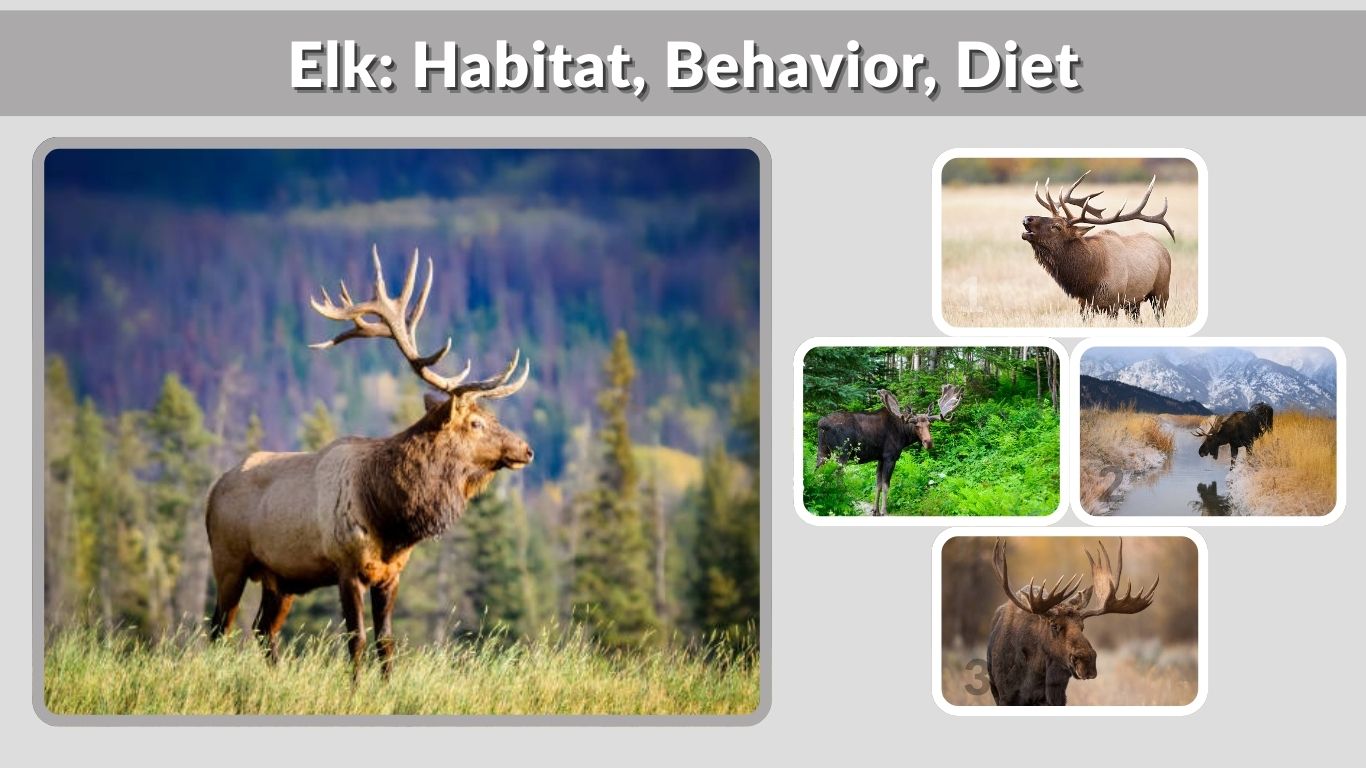
Elk are among the largest and most recognizable members of the deer family, known for their impressive antlers, powerful build, and haunting bugling calls. Found mainly in North America and parts of Eurasia, elk play a vital role in maintaining healthy ecosystems by shaping vegetation and supporting predator populations. Over centuries, they have also held cultural, economic, and ecological importance for humans. This article explores what elk are, how they live, where they thrive, and what makes them such a fascinating and significant wildlife species.
What Is an Elk?
An elk is a large herbivorous mammal belonging to the deer family, Cervidae. Its scientific name is Cervus canadensis, and it is also commonly known as wapiti, a word derived from Indigenous languages meaning “white rump.” Elk are second only to moose in size among deer species, making them one of the most dominant grazing animals in their habitats.
Elk are highly adaptable animals that can survive in a wide range of environments, from mountain meadows to dense forests. They are social creatures, often living in herds that vary in size depending on the season. Their intelligence, strong survival instincts, and mobility have helped them persist despite environmental changes and human expansion.
Elk vs Deer vs Moose
Although elk are often confused with deer or moose, there are clear differences among them. Elk are significantly larger than most deer species, with adult males weighing between 700 and 1,100 pounds. Moose, however, are even larger, with longer legs, heavier bodies, and broader, palm-shaped antlers.
Elk antlers are long, slender, and pointed, whereas deer antlers are smaller and more compact. Moose antlers are wide and flattened. Behaviorally, elk are more social than moose, which are mostly solitary. These distinctions make elk unique both in appearance and lifestyle.
Physical Characteristics of Elk
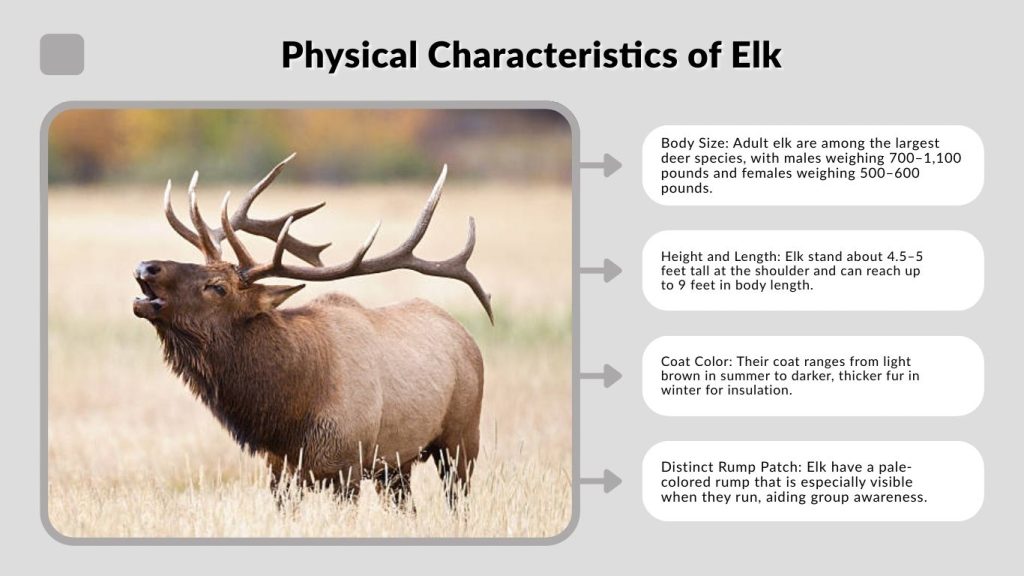
Elk are large, powerful members of the deer family, built for endurance, speed, and survival in diverse environments. Their physical features help them travel long distances, withstand harsh weather, and compete during the breeding season. Below are the key physical characteristics that define elk.
- Body Size: Adult elk are among the largest deer species, with males weighing 700–1,100 pounds and females weighing 500–600 pounds.
- Height and Length: Elk stand about 4.5–5 feet tall at the shoulder and can reach up to 9 feet in body length.
- Coat Color: Their coat ranges from light brown in summer to darker, thicker fur in winter for insulation.
- Distinct Rump Patch: Elk have a pale-colored rump that is especially visible when they run, aiding group awareness.
- Antlers: Only males grow antlers, which can span up to 4 feet and are shed and regrown annually.
- Legs and Hooves: Long, strong legs and sharp hooves allow elk to run fast, climb steep terrain, and defend themselves.
- Neck and Mane: Males develop a thick neck and mane, particularly noticeable during the mating season.
- Senses: Elk have excellent hearing and smell, which help them detect predators from long distances.
Elk Habitat and Distribution
Elk thrive in a variety of habitats, including forests, grasslands, alpine meadows, and mountainous regions. They prefer areas that offer a mix of open spaces for grazing and wooded cover for protection. Access to water is also essential, especially during warmer months.
Historically, elk ranged across much of North America, Europe, and Asia. Due to overhunting and habitat loss, their numbers declined sharply in the 19th century. Conservation efforts have since helped restore many populations.
Where Do Elk Live Today?
Today, elk are most commonly found in the United States and Canada, particularly in the Rocky Mountains, Pacific Northwest, and parts of the Midwest. Smaller populations exist in Europe and Central Asia, where they have been reintroduced or protected in designated areas.
National parks and wildlife reserves play a critical role in preserving elk habitats and maintaining stable populations.
Elk Behavior and Social Structure
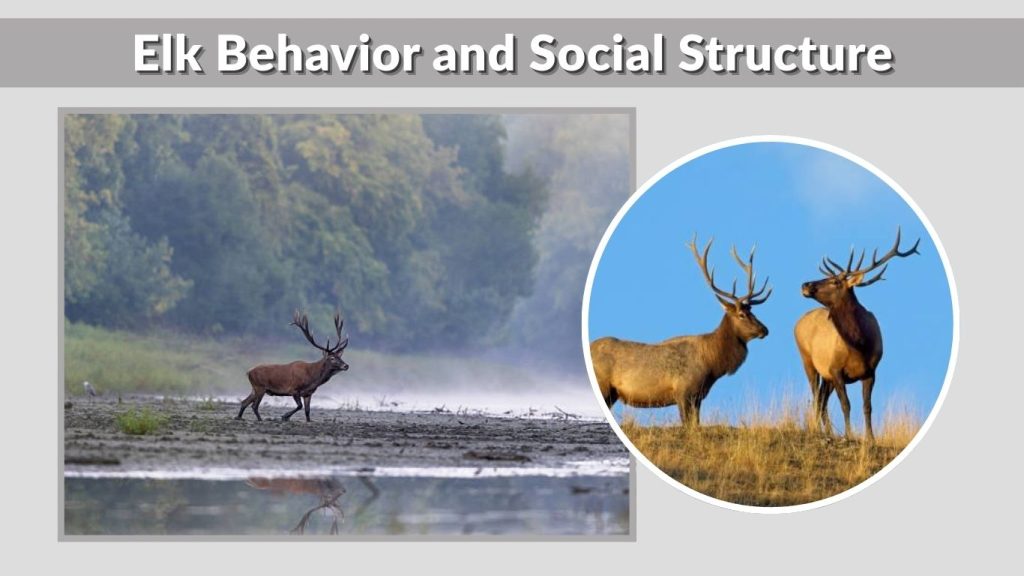
Elk are social animals whose behavior changes throughout the year. Outside the mating season, females and calves typically form large herds, while males may live alone or in small bachelor groups. This separation helps reduce competition and conserve energy.
Elk are most active during early morning and late evening, spending much of the day resting or ruminating. Their movement patterns often change seasonally as they migrate between summer and winter ranges.
What Do Elk Eat?
Elk are herbivores with a diet that consists mainly of grasses, shrubs, leaves, and bark. They are both grazers and browsers, allowing them to adapt to different food sources depending on availability.
In spring and summer, elk primarily feed on grasses and flowering plants, which provide essential nutrients for growth and antler development. During colder months, when fresh vegetation is scarce, they rely more on woody plants, twigs, and tree bark to survive.
Seasonal Diet Changes
Elk adjust their feeding habits throughout the year to match seasonal availability of plants. During spring and early summer, they consume nutrient-rich grasses, sedges, and forbs that support muscle growth and, in males, antler development. As autumn approaches, elk begin increasing their intake to build fat reserves for winter.
In winter, food becomes scarce, forcing elk to rely on dried grasses, shrubs, twigs, and tree bark. They often migrate to lower elevations where snow cover is thinner and forage is more accessible. This seasonal flexibility plays a crucial role in their survival across diverse climates.
Elk Life Cycle and Reproduction
Elk reproduction is closely tied to seasonal patterns and food availability. The mating season, known as the rut, typically occurs in early fall. During this time, male elk compete intensely for access to females, displaying their strength through vocalizations and physical confrontations.
After mating, females experience a gestation period of about eight and a half months. Calves are usually born in late spring or early summer, when food is abundant and weather conditions are favorable. This timing increases the chances of survival for newborns.
Calving and Early Survival
Female elk give birth to one calf, though twins are rare. Newborn calves are born with a spotted coat that helps them blend into their surroundings. For the first few weeks, calves remain hidden in vegetation while their mothers graze nearby.
As calves grow stronger, they gradually join the herd. Maternal care is critical during this stage, as mothers are highly protective and will aggressively defend their young from threats. Within a few months, calves are capable of keeping pace with the herd and begin grazing alongside adults.
Predators and Natural Threats
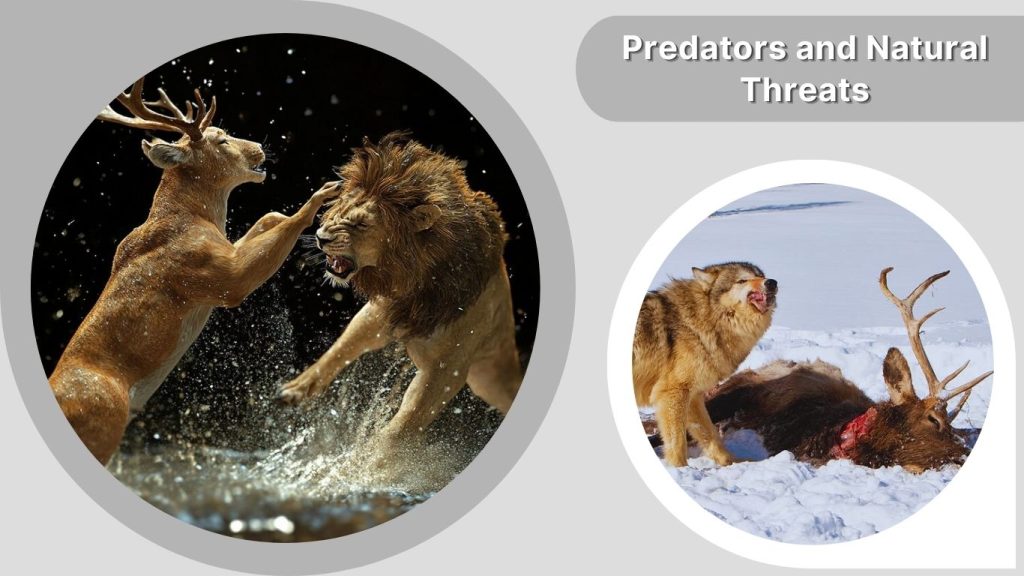
In the wild, elk face several natural predators, including wolves, mountain lions, bears, and coyotes, especially targeting calves or weakened individuals. Predation helps maintain healthy elk populations by removing the sick or elderly.
Human activity presents additional challenges. Habitat fragmentation, vehicle collisions, and climate change have increased pressure on elk populations in some regions. However, regulated hunting and wildlife management programs often help balance elk numbers with available resources.
How Elk Defend Themselves
Elk rely on a combination of physical ability and group behavior to protect themselves. Their strong legs allow them to run at speeds of up to 45 miles per hour, making escape their primary defense.
Living in herds also increases vigilance, as multiple individuals can detect danger early. When threatened, elk may use their size and sharp hooves to defend themselves, particularly females protecting calves.
Elk Conservation and Population Status
Elk populations have made a remarkable recovery in many areas thanks to conservation efforts. Once nearly extinct in parts of North America, elk have been successfully reintroduced into protected habitats and national parks.
Wildlife agencies closely monitor elk numbers to prevent overpopulation, which can lead to habitat degradation. Conservation strategies include habitat preservation, migration corridor protection, and scientifically managed hunting programs.
Human Role in Elk Conservation
Humans play a critical role in the long-term survival of elk. Protected areas such as national parks and wildlife refuges provide safe habitats free from excessive human disturbance. Regulated hunting also contributes to conservation funding and helps maintain ecological balance.
Public education and coexistence strategies, such as reducing vehicle collisions and limiting habitat encroachment, further support healthy elk populations.
Elk and Humans
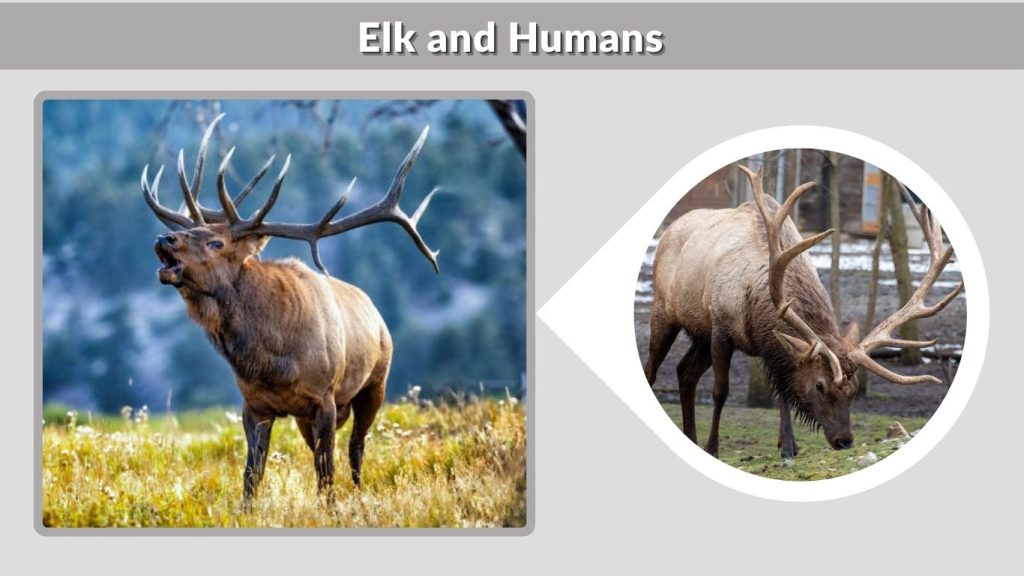
Elk have been important to human societies for thousands of years. Indigenous communities relied on elk for food, clothing, and tools, while also honoring them in spiritual traditions. Today, elk continue to attract attention through wildlife tourism and outdoor recreation.
In many regions, elk viewing generates significant economic benefits. National parks are popular destinations during the rutting season, when visitors gather to hear elk bugling and observe their behavior in the wild.
Elk Meat and Sustainable Hunting
Elk meat is considered a lean and nutritious protein source, rich in iron and low in fat. Sustainable hunting practices ensure that elk populations remain healthy while providing food and economic value.
Ethical hunting, guided by strict regulations, supports conservation programs and promotes responsible interaction with wildlife.
Conclusion
Elk are powerful, adaptable animals that play an essential role in the ecosystems they inhabit. From shaping plant communities to supporting predator populations, their presence contributes to ecological balance. Their cultural significance and successful conservation story highlight the importance of responsible wildlife management. By protecting habitats and promoting coexistence, humans can ensure that elk continue to thrive for generations to come.
FAQs
How big are elk compared to other deer?
Elk are much larger than most deer species. They are second only to moose in size, with adult males weighing over 1,000 pounds and standing around five feet tall at the shoulder.
Do female elk have antlers?
No, only male elk grow antlers. Female elk, called cows, do not develop antlers at any stage of their lives.
How often do elk shed their antlers?
Male elk shed their antlers once a year, usually in late winter or early spring. New antlers begin growing again in spring and fully develop by late summer.
Why do elk have a light-colored rump?
The light-colored rump patch helps elk communicate visually with other herd members, especially when running or fleeing from predators.
How fast can elk run?
Elk can run at speeds of up to 45 miles per hour, using their long legs and strong muscles to escape danger quickly.