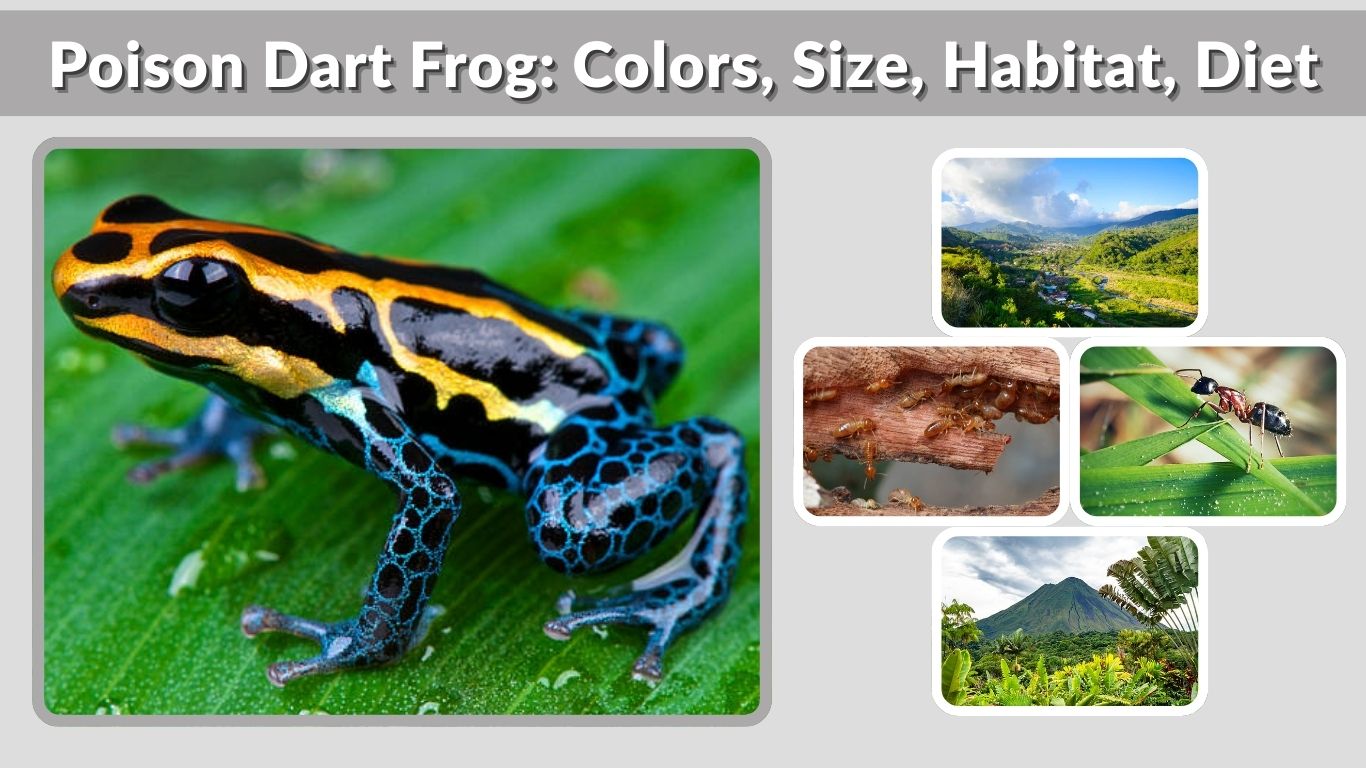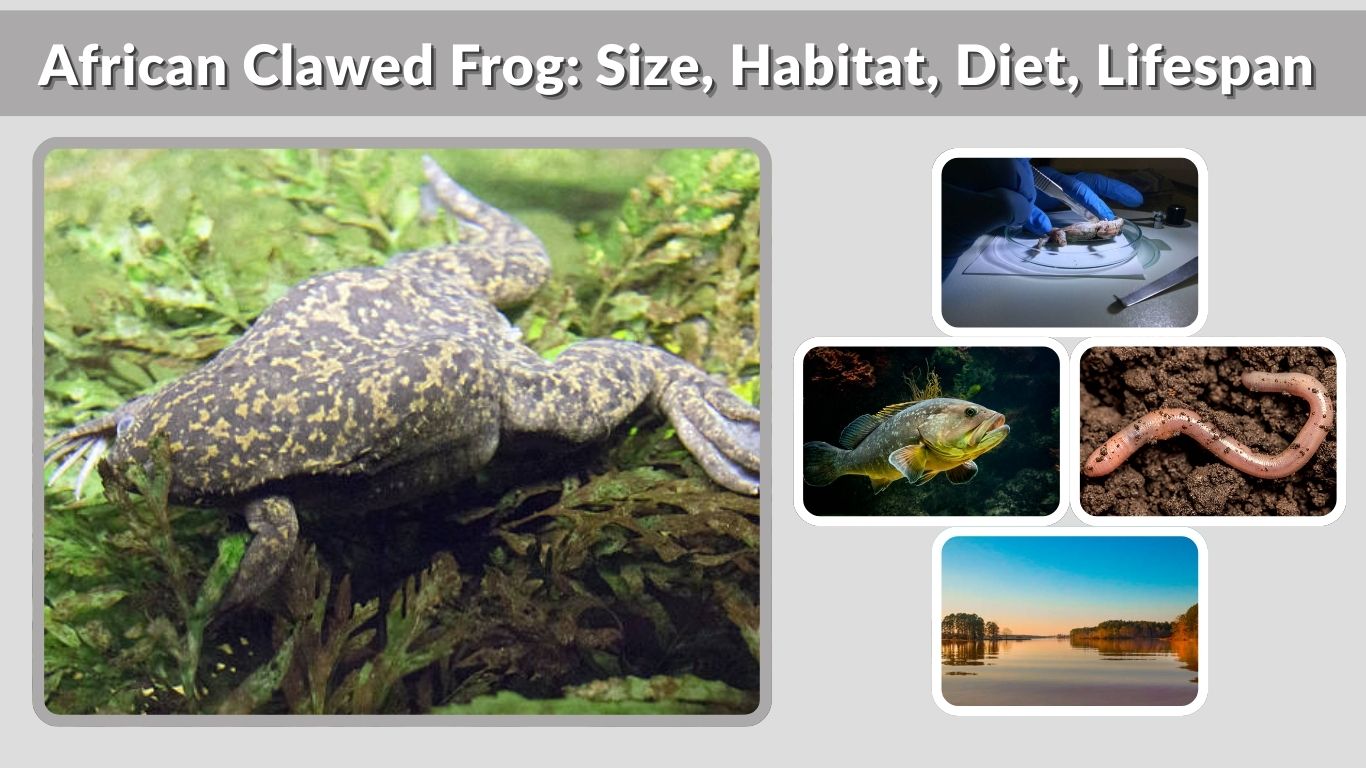





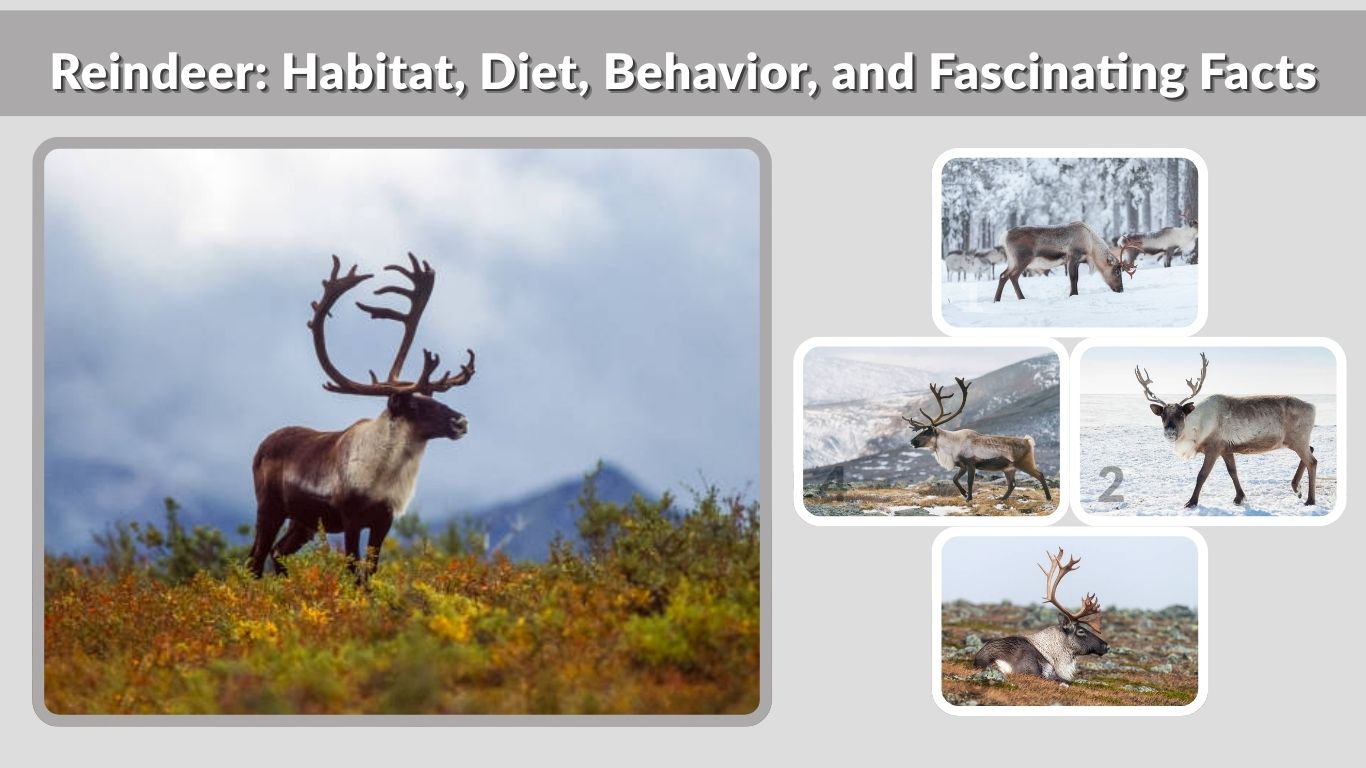
Reindeer are one of the most recognizable animals of the Arctic and sub-Arctic regions, known for their strong association with cold climates and winter traditions. Scientifically classified as Rangifer tarandus, reindeer are unique among deer species because both males and females grow antlers. Beyond their cultural fame, reindeer play a vital ecological role in northern ecosystems and have supported human communities for thousands of years. Their remarkable adaptations allow them to survive extreme cold, long migrations, and scarce food resources, making them a fascinating subject of study.
What Is a Reindeer?
A reindeer is a medium to large-sized member of the deer family (Cervidae) adapted to life in cold environments. The scientific name Rangifer tarandus applies to all reindeer and caribou populations worldwide. Reindeer are herbivorous mammals with sturdy bodies, long legs, and wide hooves that help them move across snow, ice, and soft ground.
Reindeer can be either wild or domesticated. Wild populations roam freely across northern landscapes, while domesticated reindeer are herded by indigenous peoples in parts of Europe and Asia. Despite differences in lifestyle, both types share the same physical traits and survival instincts shaped by harsh climates.
Reindeer vs Caribou
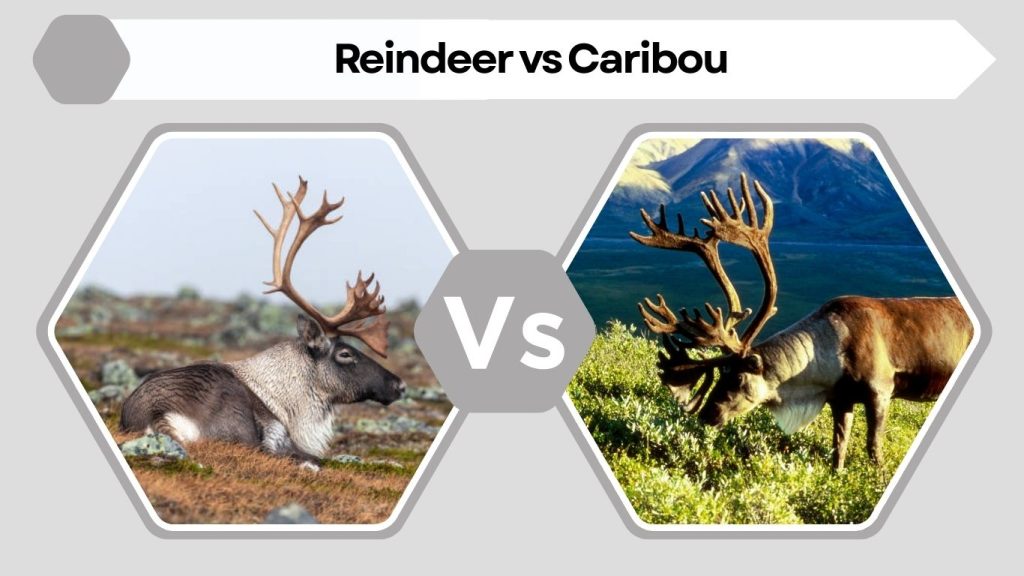
The terms “reindeer” and “caribou” often cause confusion, but they refer to the same species. The difference lies mainly in geography and cultural usage. In Europe and Asia, the animal is commonly called a reindeer, while in North America, wild populations are usually known as caribou.
Scientists do not separate reindeer and caribou into different species. Instead, they recognize several subspecies based on region, size, and behavior. Domesticated animals are almost always called reindeer, whereas large migratory herds in Canada and Alaska are typically called caribou. Despite the naming difference, they share the same biological characteristics.
Where Do Reindeer Live?
Reindeer live across the Arctic and sub-Arctic regions of the Northern Hemisphere. Their range includes northern parts of Europe, Asia, North America, and Greenland. Countries such as Norway, Sweden, Finland, Russia, Canada, and the United States (Alaska) all support reindeer or caribou populations.
These animals prefer tundra and boreal forest habitats, where temperatures are low and vegetation is limited. During warmer months, reindeer often move to higher latitudes or elevations where insects are fewer and food is more abundant. Their ability to thrive in such challenging environments highlights their impressive adaptability.
Seasonal Migration of Reindeer
Many reindeer populations are highly migratory, traveling long distances each year in search of food and suitable breeding grounds. Some herds migrate hundreds or even thousands of kilometers annually, making reindeer migrations among the largest land-based animal movements on Earth.
Migration helps reindeer avoid deep snow in winter and reach nutrient-rich grazing areas in summer. These seasonal movements are essential for survival, especially in regions where food availability changes drastically throughout the year.
Physical Characteristics of Reindeer
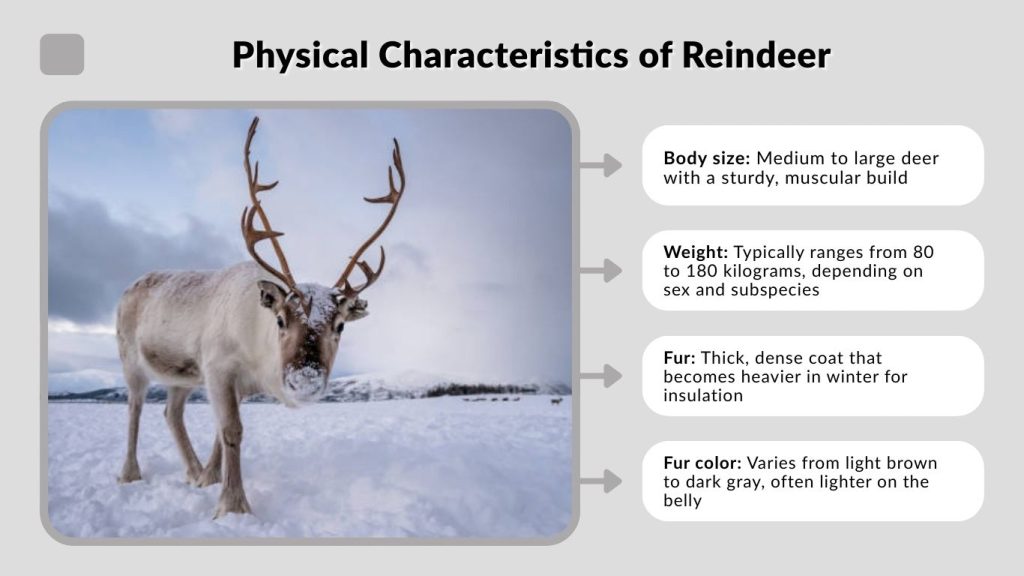
Reindeer have a strong, compact body designed for endurance in cold and challenging environments. Their physical features allow them to travel long distances, withstand extreme temperatures, and move efficiently across snow, ice, and uneven terrain. Each characteristic plays a key role in survival, especially in Arctic and sub-Arctic regions.
Key physical characteristics of reindeer include:
- Body size: Medium to large deer with a sturdy, muscular build
- Weight: Typically ranges from 80 to 180 kilograms, depending on sex and subspecies
- Fur: Thick, dense coat that becomes heavier in winter for insulation
- Fur color: Varies from light brown to dark gray, often lighter on the belly
- Hollow hairs: Trap air to retain heat and improve buoyancy in water
- Hooves: Wide, sharp-edged hooves adapted for snow, ice, and soft ground
- Seasonal hooves: Harder in winter for traction, softer in summer for grip
- Antlers: Grown by both males and females, unlike most deer species
- Neck and shoulders: Strong and muscular to support digging through snow
- Sense of smell: Highly developed to locate food beneath snow layers
What Do Reindeer Eat?
Reindeer are herbivores with a diet adapted to seasonal availability. During spring and summer, they feed on grasses, leaves, herbs, and shrubs. This period allows them to build fat reserves needed to survive the long winter months.
In winter, reindeer rely heavily on lichens, a unique combination of algae and fungi that grows beneath the snow. Lichens are rich in carbohydrates and are a crucial food source when other vegetation is unavailable.
How Reindeer Find Food Under Snow
To access food in winter, reindeer use a behavior known as “cratering.” They dig through snow using their hooves to uncover buried lichens and plants. Their strong sense of smell also helps them locate food beneath deep snow layers, ensuring survival even in extreme conditions.
Adaptations That Help Reindeer Survive Extreme Cold
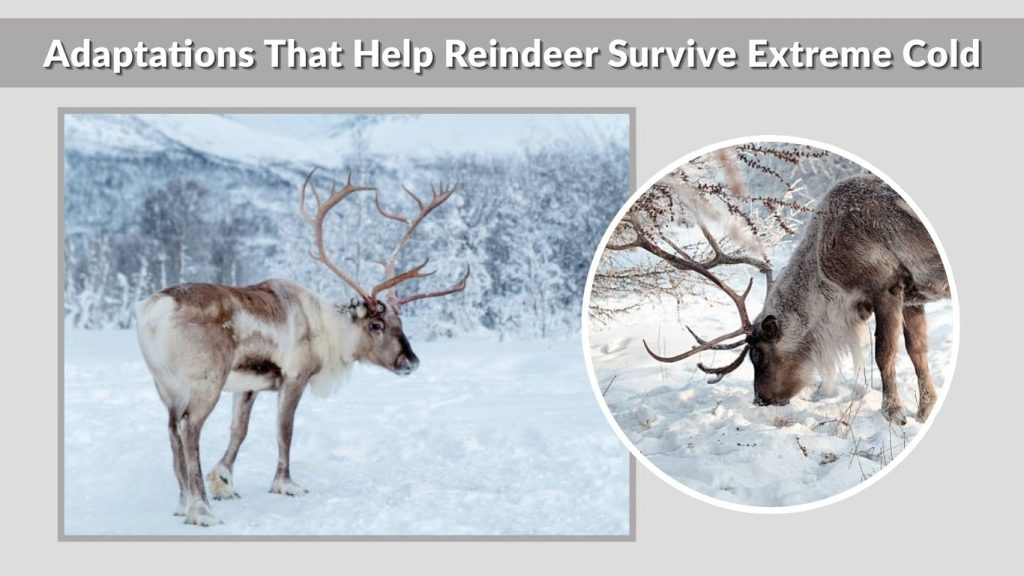
Reindeer are exceptionally well adapted to some of the coldest environments on Earth. One of their most important adaptations is their thick fur, which consists of dense underwool and longer hollow guard hairs. The hollow structure traps air, providing insulation and even helping reindeer float when swimming across rivers and lakes.
Their noses are another remarkable feature. Reindeer have specialized nasal passages that warm incoming cold air before it reaches the lungs, reducing heat loss. During winter, they also rely on fat reserves built up during warmer months to maintain body temperature and energy levels when food is scarce.
Reindeer Behavior and Social Structure
Reindeer are social animals that typically live in herds. Herd size can vary greatly, from small family groups to massive migratory herds numbering in the thousands. Living in groups offers protection from predators such as wolves and bears and helps individuals locate food more efficiently.
Communication within a herd involves body language, vocal sounds, and even subtle movements. Reindeer are also known for a clicking sound produced by tendons in their legs, which may help herd members stay together during poor visibility conditions like snowstorms or dense fog.
Reproduction and Lifespan of Reindeer
The reindeer mating season, known as the rut, occurs in early autumn. During this time, males become more aggressive and compete with one another using their antlers to gain access to females. After mating, females carry their calves for about seven to eight months.
Calves are usually born in late spring, a time when food becomes more plentiful. Newborn reindeer can stand and walk within hours of birth, an important survival trait in predator-rich environments. In the wild, reindeer typically live between 10 and 15 years, though some may live longer in protected or managed conditions.
Are Reindeer Domesticated?
Reindeer are among the few large mammals that have been partially domesticated by humans. Indigenous peoples of northern Europe and Asia, such as the Sámi, have herded reindeer for thousands of years. These animals provide transportation, meat, milk, hides, and antlers, making them central to traditional lifestyles.
Unlike fully domesticated animals, reindeer still retain many wild instincts. Domesticated herds often migrate seasonally, guided by herders, reflecting the close relationship between humans and reindeer shaped by the northern environment.
Reindeer in Culture and Mythology
Reindeer hold a strong place in cultural traditions, especially in regions where they have long supported human survival. In folklore and mythology, reindeer often symbolize endurance, guidance, and connection to nature.
In popular culture, reindeer are famously associated with Santa Claus and holiday traditions. While the idea of flying reindeer is purely mythical, it has contributed to the animal’s global recognition and charm, especially among children.
Conservation Status and Modern Threats
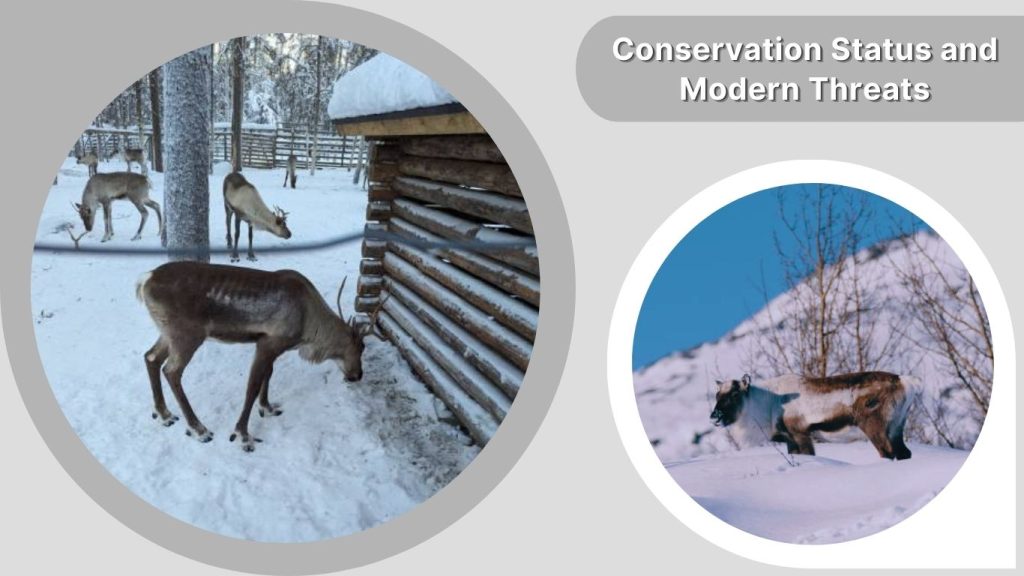
The conservation status of reindeer varies by region. While some populations remain stable, others have experienced significant declines. Climate change poses one of the greatest threats, as warming temperatures affect snow conditions, vegetation growth, and migration routes.
Human activities such as industrial development, road construction, and habitat fragmentation also disrupt traditional grazing and migration patterns. Protecting reindeer populations requires careful land management and cooperation with indigenous communities who have long depended on them.
Interesting and Lesser-Known Reindeer Facts
Reindeer have several surprising abilities that set them apart from other animals. They can see ultraviolet light, which helps them detect predators and food against snowy landscapes. Their specialized hooves change with the seasons, becoming harder in winter and softer in summer for better traction.
Despite their heavy build, reindeer are excellent swimmers and can cross wide rivers during migration. These unique traits further highlight their adaptability and resilience.
Conclusion
Reindeer are extraordinary animals shaped by some of the harshest environments on the planet. From their physical adaptations and migratory behavior to their cultural significance and ecological role, reindeer demonstrate remarkable resilience. Understanding and protecting these animals is essential, not only for preserving Arctic ecosystems but also for supporting the human cultures that have relied on reindeer for generations.
FAQs
What makes reindeer different from other deer species?
Reindeer are unique because both males and females grow antlers. They are also specially adapted to cold climates, with thick fur, wide hooves, and the ability to survive on limited winter food sources like lichens.
Do reindeer really have antlers all year?
No, reindeer shed and regrow their antlers every year. Males usually lose their antlers after the mating season, while females often keep theirs through winter to help protect feeding areas.
How do reindeer walk on snow without sinking?
Reindeer have wide, flat hooves that spread their weight evenly across the snow. In winter, their hooves harden, providing better traction and preventing them from sinking into deep snow.
Can reindeer survive extremely cold temperatures?
Yes, reindeer are well adapted to extreme cold. Their thick fur, hollow hairs, and specialized nasal passages help conserve body heat even in freezing Arctic conditions.
Are reindeer and caribou physically different?
Physically, reindeer and caribou are the same species. Any differences are usually related to habitat, behavior, or domestication rather than body structure.