




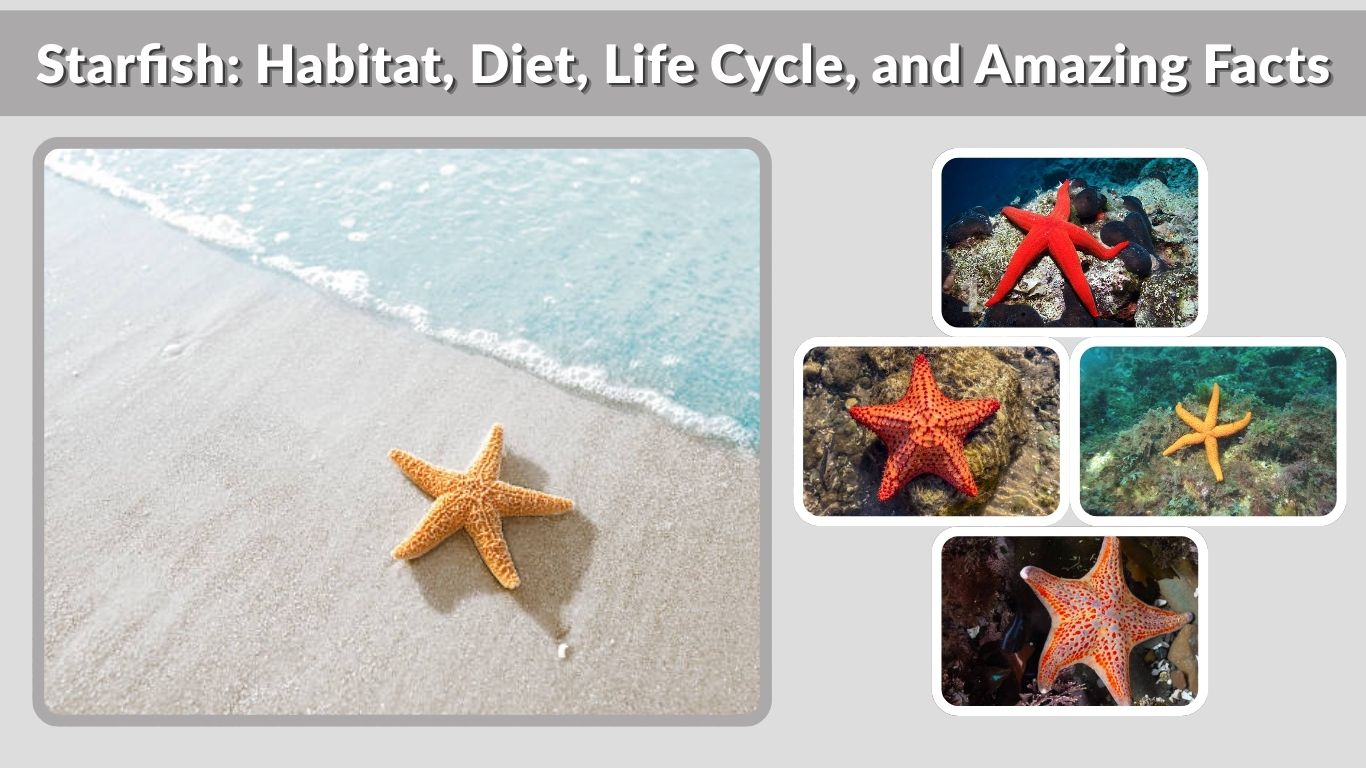
Starfish, also known as sea stars, are fascinating marine animals found in oceans all over the world. Recognized for their star-shaped bodies and slow, graceful movement, starfish play an important role in maintaining healthy marine ecosystems. Although they may look simple, starfish have unique feeding habits, diverse habitats, and remarkable survival abilities. This article explores where starfish live, what they eat, and how their habitat supports their lifestyle, offering a deeper understanding of these intriguing sea creatures.
What Is a Starfish?
A starfish is a marine invertebrate belonging to the class Asteroidea. Despite their name, starfish are not fish at all. They are echinoderms, a group that also includes sea urchins and sand dollars. Most starfish have five arms arranged around a central disc, although some species can have many more.
Starfish have radial symmetry, meaning their body parts are arranged evenly around a central point. They do not have a brain or blood. Instead, they rely on a water vascular system that helps them move, feed, and breathe. Their tube feet, located on the underside of each arm, allow them to grip surfaces and capture prey.
Starfish Habitat
Starfish inhabit a wide range of marine environments, making them one of the most widely distributed sea creatures.
Where Do Starfish Live?
Starfish live in oceans and seas across the globe, from tropical waters to cold polar regions. They can be found along coastlines, in shallow tide pools, and even in the deep sea. While many species prefer shallow waters, others thrive thousands of meters below the surface.
Types of Starfish Habitats
Starfish are highly adaptable and can live in several types of habitats. Coral reefs provide shelter and abundant food, while rocky shorelines offer hiding places from predators. Sandy and muddy seabeds are home to burrowing species, and deep-sea starfish are adapted to low light and high pressure conditions.
Environmental Conditions Starfish Prefer
Starfish require saltwater environments and are sensitive to changes in salinity and temperature. Most species prefer stable water conditions and rely on clean, oxygen-rich water to survive. Sudden environmental changes can be harmful and may lead to population declines.
Starfish Diet
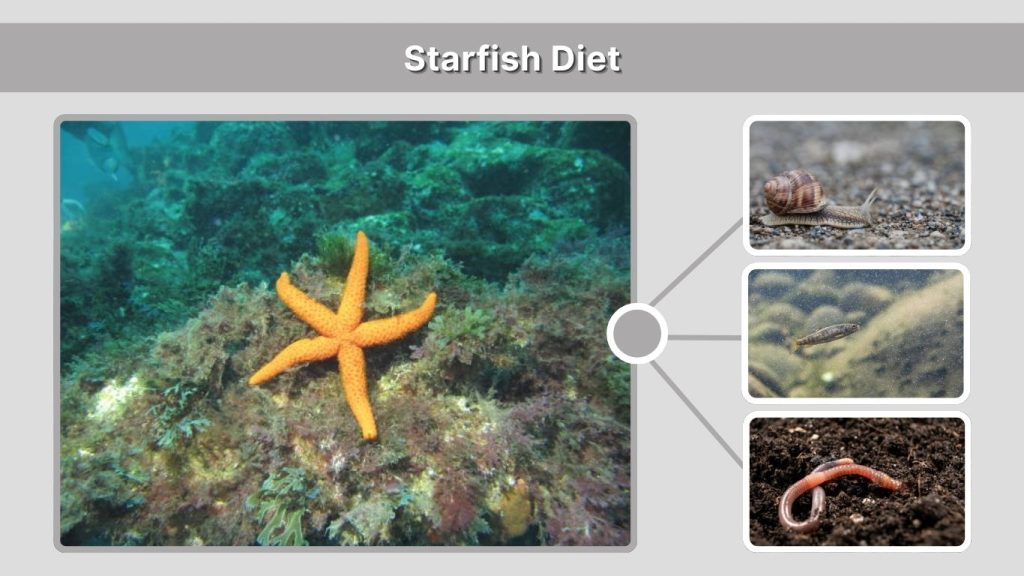
Starfish are carnivorous predators, although some species also consume plant material and organic debris.
What Do Starfish Eat in the Wild?
In the wild, starfish commonly feed on mollusks such as clams, mussels, and oysters. They also eat snails, small fish, worms, and other invertebrates. Some species graze on algae or scavenge dead organisms on the ocean floor.
Starfish are slow movers, but their feeding strategy allows them to catch prey that cannot easily escape. Their diet helps control populations of shellfish and maintains balance within marine ecosystems.
How Starfish Eat Their Food
Starfish use their tube feet to pry open the shells of their prey. Once a small gap is created, the starfish pushes its stomach out through its mouth and into the shell. Digestive enzymes break down the soft tissues, allowing the starfish to absorb nutrients before pulling its stomach back inside.
This unusual method of external digestion is one of the most fascinating aspects of starfish biology and allows them to consume prey larger than their mouths.
Starfish Life Cycle
The starfish life cycle is complex and includes several distinct stages, allowing these marine animals to adapt to different ocean environments.
Reproduction in Starfish
Most starfish reproduce sexually, with separate male and female individuals. During the breeding season, starfish release eggs and sperm into the water in a process known as spawning. Fertilization occurs externally, and timing is critical to ensure successful reproduction.
Some starfish species can also reproduce asexually through fragmentation, where a part of the body breaks off and regenerates into a new individual. This ability increases their chances of survival in changing environments.
Starfish Larval Stages
After fertilization, the eggs develop into free-swimming larvae. These larvae drift with ocean currents and feed on plankton as they grow. Over time, the larvae undergo metamorphosis, transforming into juvenile starfish with a recognizable star-shaped body.
This larval stage helps starfish spread across wide areas, contributing to their global distribution.
Growth, Aging, and Regeneration
As starfish mature, they continue to grow and can live for many years, depending on the species and environmental conditions. One of their most remarkable traits is regeneration. Starfish can regrow lost arms, and in some cases, an entire new starfish can form from a single arm if part of the central disc is attached.
Regeneration helps starfish survive predator attacks and environmental stress.
Interesting and Surprising Starfish Facts
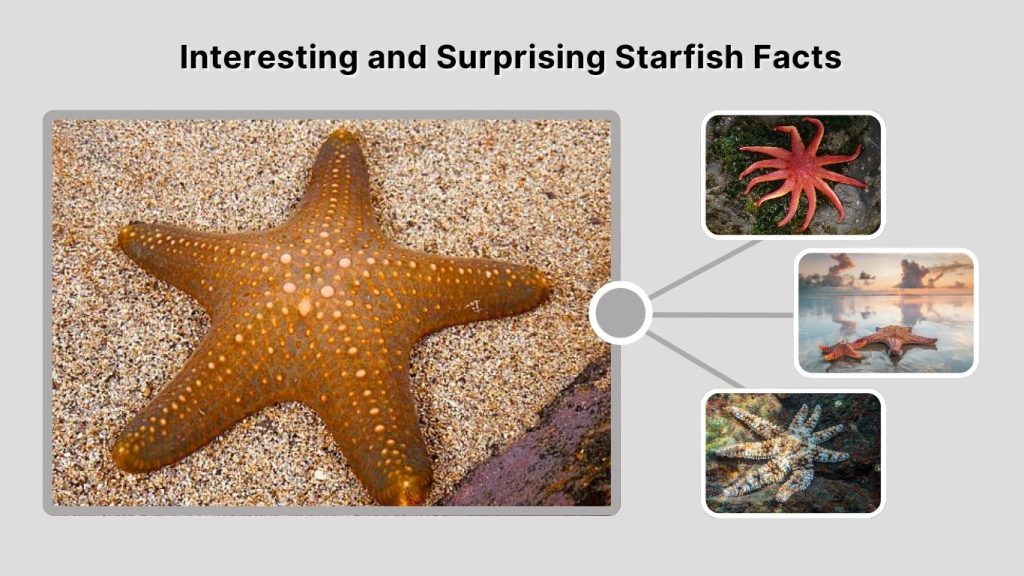
Starfish possess many unusual characteristics that make them stand out among marine animals.
Starfish Have No Brain or Blood
Starfish lack a centralized brain. Instead, they have a simple nerve ring that coordinates movement and responses to their environment. They also do not have blood; nutrients and oxygen are transported through their water vascular system.
Not All Starfish Have Five Arms
While five arms are common, some starfish species can have ten, twenty, or even more arms. The number of arms often increases with age and varies by species.
Starfish Can Sense Light and Smell
Starfish have light-sensitive eye spots at the tip of each arm. These simple eyes help them detect light and dark, allowing them to navigate their surroundings and locate suitable habitats.
Role of Starfish in Marine Ecosystems
Starfish play a vital role in maintaining the balance of marine ecosystems. As predators, they help control populations of shellfish and other invertebrates. Without starfish, certain prey species could overpopulate and disrupt local habitats.
Some starfish are considered keystone species because their presence has a disproportionately large impact on ecosystem health. Their feeding habits contribute to biodiversity and stability within coral reefs and seabed communities.
Threats to Starfish and Conservation Efforts

Starfish face several threats, many of which are linked to human activity. Climate change has led to rising ocean temperatures, which can cause disease outbreaks such as sea star wasting syndrome. Pollution and coastal development also degrade habitats and reduce water quality.
Conservation efforts focus on protecting marine habitats, reducing pollution, and monitoring starfish populations. Public awareness and responsible tourism can also help ensure their long-term survival.
FAQs
Where do starfish live?
Starfish live in oceans around the world, from shallow coastal waters to deep-sea environments. They are commonly found on coral reefs, rocky shores, and ocean floors.
What do starfish eat?
Starfish mainly eat mollusks such as clams and mussels, along with small fish, worms, and other invertebrates. Some species also feed on algae and organic debris.
How does the starfish life cycle work?
The starfish life cycle begins with external fertilization, followed by free-swimming larval stages. After metamorphosis, juveniles settle on the seabed and grow into adult starfish.
Are starfish dangerous to humans?
Most starfish are harmless to humans. However, a few species have venomous spines that can cause pain if handled.
Can starfish survive out of water?
Starfish cannot survive long out of water. Exposure to air can damage their tissues and interfere with their ability to breathe.
Conclusion
Starfish are remarkable marine animals with unique feeding methods, diverse habitats, and complex life cycles. Their ability to regenerate, adapt, and maintain balance within marine ecosystems highlights their importance in ocean environments. By understanding starfish habitat, diet, and life cycle, we gain greater appreciation for these fascinating creatures and the need to protect the marine ecosystems they depend on.