




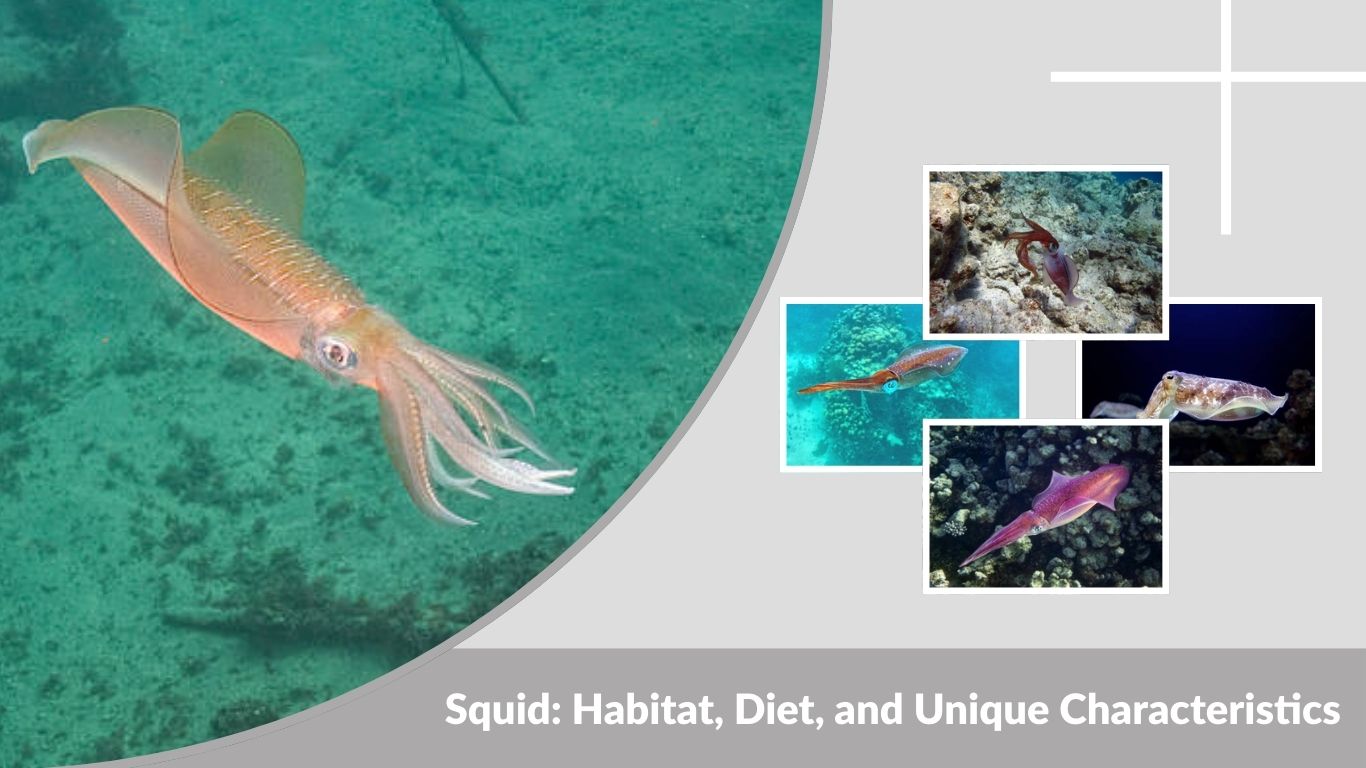
Squid are among the most fascinating creatures in the ocean, known for their speed, intelligence, and unusual appearance. Often mistaken for fish, squids actually belong to a completely different group of marine animals. From their ink-based defense systems to their role in ocean ecosystems, squids display remarkable adaptations that help them survive in both shallow and deep waters. People are also curious about squid facts and how squids differ from octopus, as the two animals look similar at first glance. This article explores what squids are, whether squid are fish, their anatomy, habitat, and feeding habits, setting the stage for a deeper comparison later.
What Is a Squid?
A squid is a marine invertebrate that belongs to the mollusk family, specifically within the cephalopod group. Cephalopods are known for their advanced nervous systems, complex eyes, and flexible bodies. Squids are closely related to octopus, cuttlefish, and nautilus, but they have unique features that set them apart.
Unlike fish, squids do not have scales, backbones, or bones of any kind. Instead, they have soft bodies supported by a structure called a pen, which provides limited internal support. Their streamlined shape allows them to move quickly through the water, making them effective hunters and skilled escape artists.
Scientific Classification of Squid
From a biological perspective, squids belong to the class Cephalopoda, which means “head-footed.” This name reflects how their arms and tentacles extend directly from their head. Squids share this classification with octopus and cuttlefish, but they differ in body structure, limb arrangement, and lifestyle. These differences become especially important when comparing squid vs octopus.
Is Squid a Fish?
Despite common usage, squid are not fish. The term “squid fish” is widely used in markets and casual conversation, but it is scientifically inaccurate. Fish are vertebrates with backbones, while squids are invertebrates with soft bodies.
One reason for this confusion is that squids live in water and swim using fins, much like fish. However, their internal biology is entirely different. Squids breathe through gills like fish, but their circulatory system, nervous system, and method of movement place them firmly in the mollusk category.
Squid vs Fish – Key Differences
Fish rely on fins and tail movement to swim, while squids use jet propulsion by forcing water out of their mantle. Fish have scales and skeletons, whereas squids have smooth skin and no bones. These differences explain why squids behave more like intelligent predators than typical fish.
Squid Anatomy and Physical Characteristics
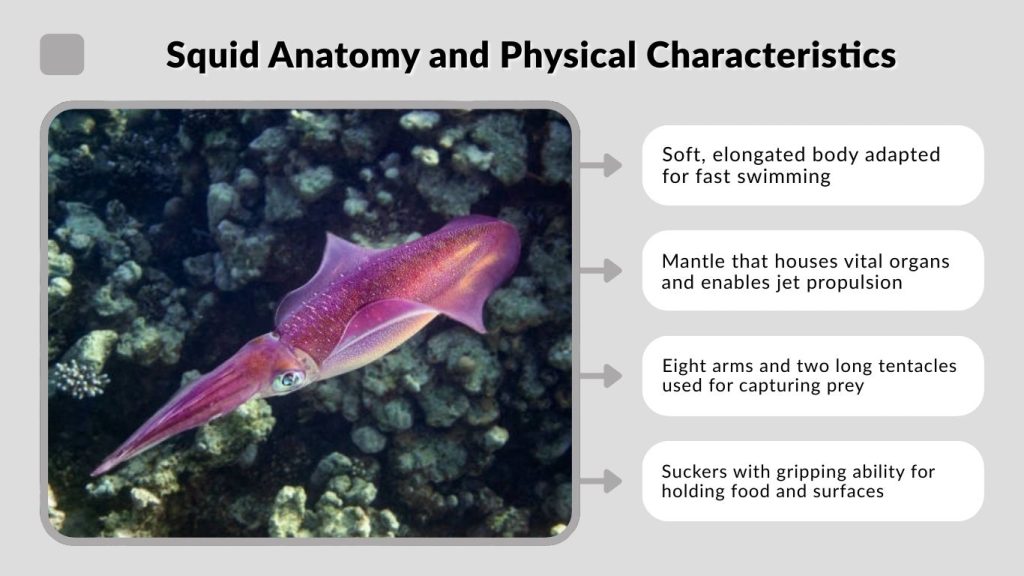
Squids have a highly specialized body designed for speed, flexibility, and survival in open water. Their anatomy allows them to move quickly, capture prey efficiently, and escape predators with ease. Unlike fish, squids lack bones and scales, relying instead on a soft, streamlined body that supports rapid movement and complex behavior. Each physical feature plays a specific role in hunting, defense, or navigation within the ocean environment.
Key physical characteristics of squid include:
- Soft, elongated body adapted for fast swimming
- Mantle that houses vital organs and enables jet propulsion
- Eight arms and two long tentacles used for capturing prey
- Suckers with gripping ability for holding food and surfaces
- Sharp beak capable of tearing prey into smaller pieces
- Large, well-developed eyes for excellent underwater vision
- Ink sac used as a defense mechanism against predators
- Fins on the mantle that help with balance and steering
- Internal pen that provides structure without restricting movement
- Color-changing skin cells that allow camouflage and communication
Where Do Squids Live?
Squids are found in oceans all over the world, from shallow coastal waters to the darkest depths of the deep sea. Different species are adapted to different environments, allowing squids to occupy a wide range of habitats.
Coastal Squids
Coastal squids tend to live in warmer, shallower waters and are more commonly encountered by humans. These species are often involved in commercial fishing and are an important food source.
Deep-Sea Squids
Deep-sea squids live in extreme conditions with low light and high pressure. Some species have developed bioluminescent features to survive in these dark environments.
What Do Squids Eat?
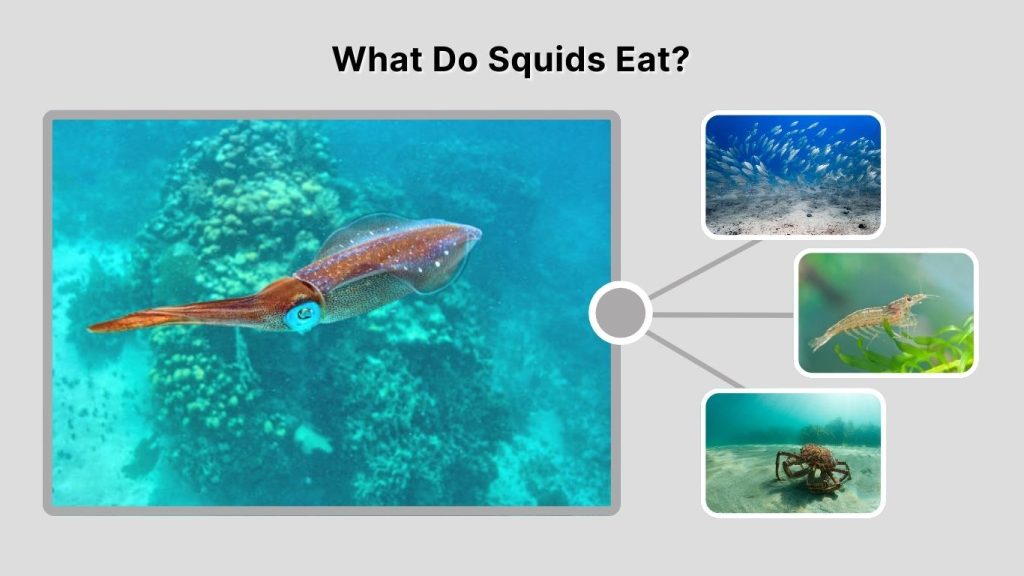
Squids are carnivorous predators that feed on a variety of marine animals. Their diet typically includes fish, shrimp, crabs, and even other squids. They use their speed, sharp vision, and tentacles to ambush prey efficiently.
How Squids Hunt
Squids rely on stealth and sudden bursts of movement when hunting. They often change color to blend into their surroundings before striking, making them highly effective hunters in open water.
Squid Lifespan and Growth
Most squid species have surprisingly short lifespans compared to other marine animals. On average, squids live between one and five years, depending on the species. Some smaller squids may survive for only a year, while larger species, such as the giant squid, can live longer.
Squids grow very rapidly, especially during their early life stages. This fast growth helps them avoid predators and reach reproductive maturity quickly. Their life cycle usually ends after reproduction, making squids an example of animals that invest heavily in growth and breeding rather than longevity.
Types of Squid
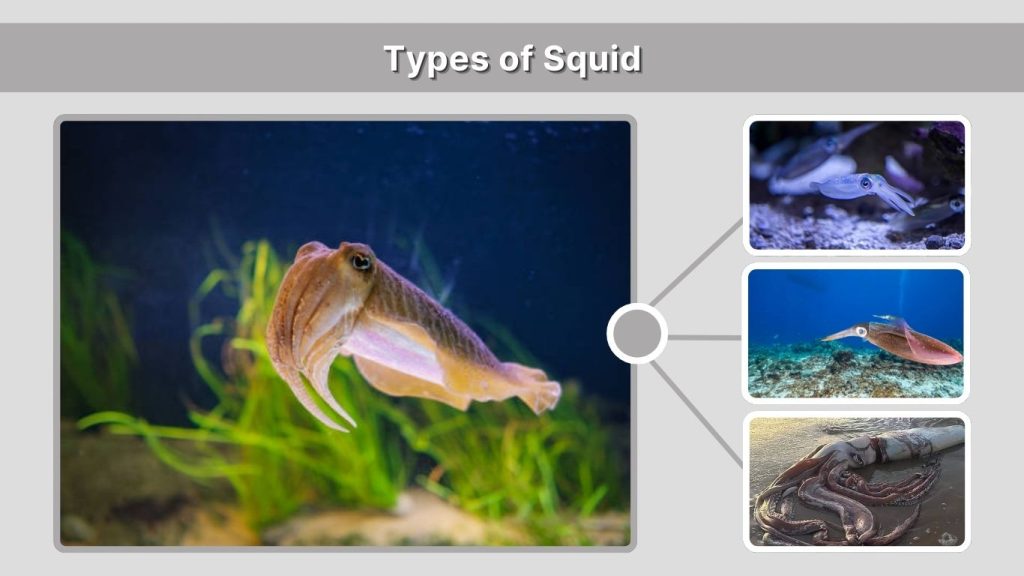
There are more than 300 known species of squid, ranging from small, shallow-water varieties to massive deep-sea giants. These species differ in size, habitat, and behavior.
Common Squid
Common squids are typically found in coastal waters and are the species most often encountered by humans. They are medium-sized, fast swimmers and play an important role in commercial fishing industries around the world.
Giant Squid
The giant squid is one of the most mysterious creatures of the deep ocean. It can grow up to 43 feet long, including its tentacles. Due to its deep-sea habitat, sightings are rare, which has contributed to myths and legends surrounding this species.
Colossal Squid
The colossal squid is even heavier than the giant squid and is considered the largest invertebrate on Earth. Unlike the giant squid, it has thicker limbs and large, rotating hooks on its tentacles, making it a powerful predator.
Interesting Squid Facts
Squids possess several remarkable traits that set them apart from most marine animals. One fascinating squid fact is that they have three hearts—two pump blood to the gills, while one circulates blood to the rest of the body. Their blood is blue due to a copper-based protein called hemocyanin.
Squids also have highly developed eyes, some of the largest in the animal kingdom relative to body size. Many species can change color almost instantly using specialized skin cells called chromatophores. This ability helps them communicate, camouflage themselves, and confuse predators. Despite their short lifespan, squids are considered intelligent animals capable of complex behavior.
Squid vs Octopus – Key Differences
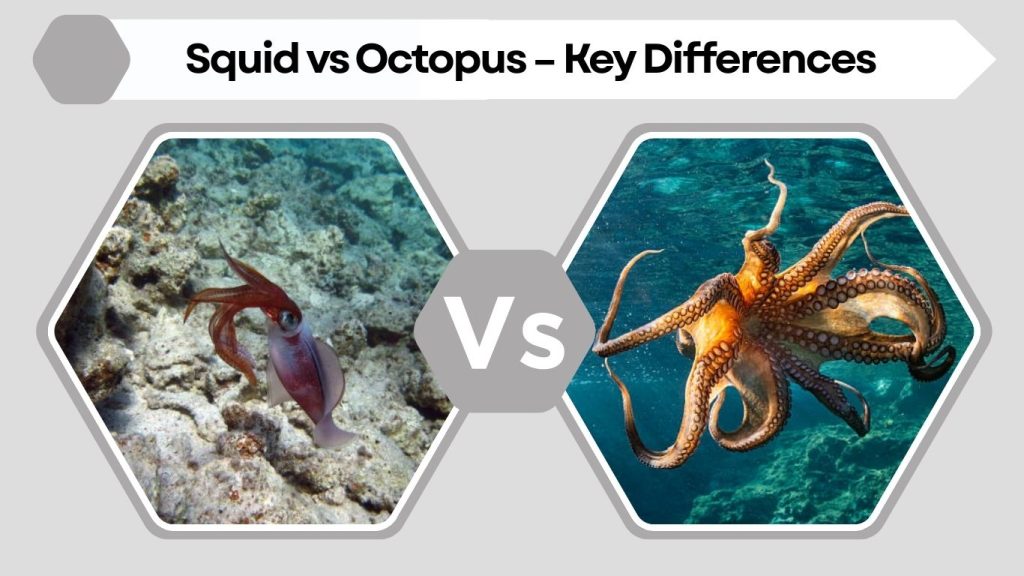
Squids and octopus are often confused because they belong to the same cephalopod family, but they differ in many important ways. Understanding these differences helps clarify why they occupy different roles in marine ecosystems.
Body Shape and Movement
Squids have long, streamlined bodies designed for fast swimming in open water. Octopus, on the other hand, have rounder bodies and prefer crawling along the ocean floor. Squids rely on speed, while octopus depend on flexibility and stealth.
Arms and Tentacles Comparison
One of the clearest differences between squid vs octopus is the number of limbs. Squids have ten limbs—eight arms and two long tentacles—while octopus have only eight arms. Squid tentacles are used specifically for capturing prey at a distance.
Habitat and Lifestyle
Squids generally live in open water, either near the surface or in deep-sea environments. Octopus are bottom-dwellers, often hiding in rocks, coral reefs, or burrows. This difference influences how each animal hunts and avoids predators.
Intelligence and Behavior
Octopus are widely regarded as more intelligent, known for problem-solving and tool use. Squids, while still intelligent, rely more on group behavior and speed than complex manipulation.
Are Squids Dangerous to Humans?
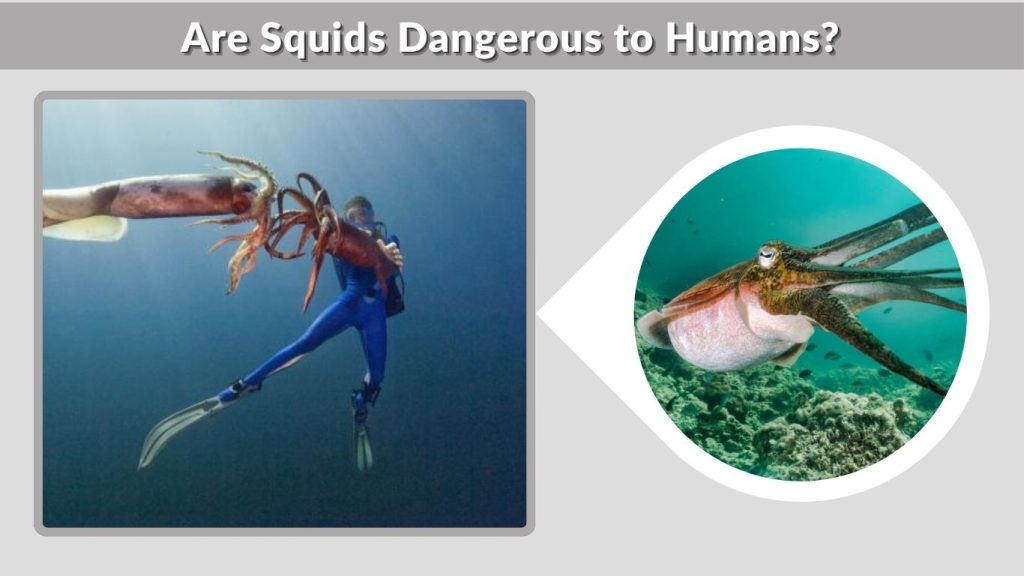
Squids are not considered dangerous to humans. They are shy animals that prefer to flee rather than fight. While larger species can defend themselves if threatened, attacks on humans are extremely rare. Most encounters occur during fishing or deep-sea exploration and do not result in serious injury.
Importance of Squid in the Ocean Ecosystem
Squids play a vital role in maintaining balance in marine ecosystems. They serve as both predators and prey, feeding on smaller marine animals while providing food for whales, sharks, seabirds, and large fish. Their presence helps regulate population levels throughout the food chain.
Economically, squids are also important to global fisheries and are widely consumed as seafood in many cultures. Their ecological and commercial value makes them a key species in ocean environments.
Conclusion
Squids are extraordinary marine animals with unique biology, impressive hunting abilities, and important ecological roles. Although often mistaken for fish, squids are intelligent invertebrates closely related to octopus. From their short lifespans to their color-changing skills and deep-sea giants, squid facts reveal just how complex these creatures are. Understanding the differences between squid and octopus helps highlight the diversity of life beneath the ocean’s surface.
FAQs
Is squid a fish or an animal?
Squid is an animal, not a fish. It belongs to the mollusk family and is classified as a cephalopod. Unlike fish, squids do not have backbones, scales, or bones, which clearly separates them from true fish species.
Why do people call squid a “squid fish”?
The term “squid fish” is commonly used in markets and everyday language because squid live in water and are eaten like fish. However, this is not scientifically correct, as squids are invertebrates, not fish.
How many hearts does a squid have?
Squids have three hearts. Two hearts pump blood to the gills for oxygen, while the third heart circulates oxygenated blood to the rest of the body. This system supports their high-energy lifestyle.
Do squids have bones or skeletons?
No, squids do not have bones or an external skeleton. Instead, they have a flexible internal structure called a pen, which provides limited support while allowing fast movement.
How big can a squid grow?
Most squid species are relatively small, measuring a few feet long. However, giant squids can grow over 40 feet in length, while colossal squids are the heaviest invertebrates on Earth.