




Moray eels are among the most recognizable and misunderstood creatures of the ocean. Often seen peering out from rocky crevices with their mouths open, they are frequently mistaken for aggressive predators. In reality, moray eels are secretive, highly adapted fish that play an important role in marine ecosystems. Found mainly in coral reefs and rocky coastal areas, these eels are skilled hunters with unique physical and behavioral traits. This article explores what moray eels are, where they live, how they hunt, and why they are far more fascinating than their fearsome reputation suggests.
What Is a Moray Eel?
A moray eel is a type of marine fish belonging to the family Muraenidae. Despite their snake-like appearance, moray eels are not true eels. They differ from freshwater eels in several anatomical features, including their lack of pectoral and pelvic fins. Moray eels have elongated, muscular bodies designed for navigating tight spaces within coral reefs and rocky seabeds.
Unlike many fish, moray eels have thick, leathery skin that lacks visible scales. This skin is coated in a layer of mucus, which helps protect them from parasites and infections. Their bodies are built for ambush rather than speed, making them perfectly suited for a life spent hiding and striking from concealment.
Physical Appearance and Unique Features
- Long, eel-shaped body adapted for narrow reef crevices
- Thick, scaleless skin coated with protective mucus
- Wide mouth lined with sharp, backward-curving teeth
- Powerful jaws designed to grip slippery prey
- Second set of pharyngeal jaws used to pull food into the throat
- Small eyes with a stronger reliance on smell than vision
- Highly flexible spine for twisting and striking in tight spaces
- Color patterns ranging from green and brown to spotted and banded
- Camouflage that blends with coral, rocks, and sand
- Size varies widely, from under 30 cm to over 3 meters in large species
Moray Eel Habitat and Distribution
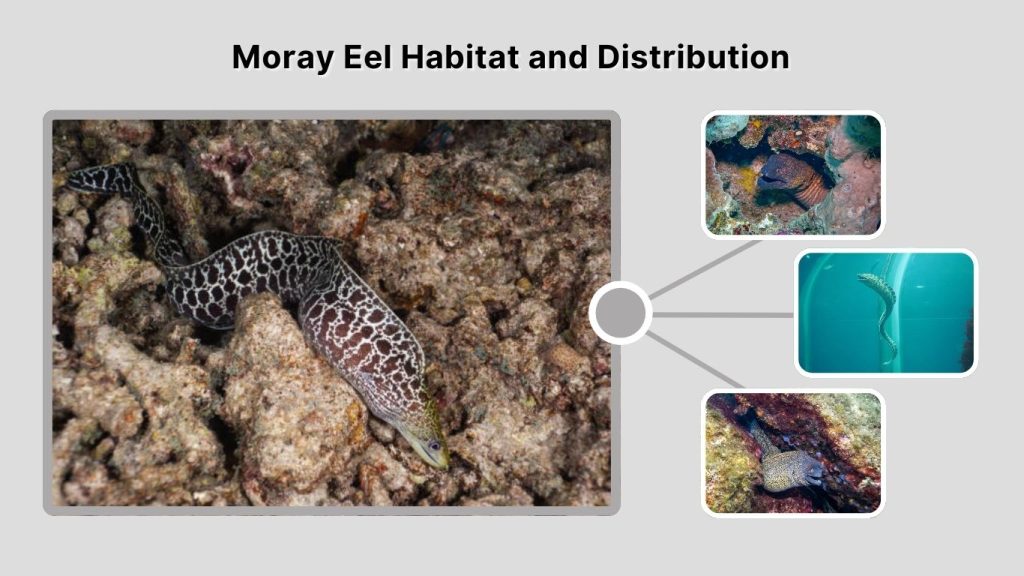
Moray eels are found in oceans around the world, particularly in tropical and subtropical regions. They are most commonly associated with coral reefs, but many species also inhabit rocky coastlines, lagoons, and underwater caves. A smaller number of species can be found in temperate waters, although they are less diverse in cooler environments.
These eels typically remain close to the ocean floor, where shelter is readily available. Their distribution is closely tied to the presence of hiding spaces, as moray eels rely on crevices and holes for protection and hunting.
Where Moray Eels Live in the Wild
In the wild, moray eels spend most of their time concealed within reef cracks, rock formations, or coral heads. Only their heads are usually visible, allowing them to watch for prey while remaining hidden from predators. This behavior reduces energy use and increases their hunting success.
Moray eels can be found at varying depths, from shallow waters just a few feet deep to depths exceeding several hundred feet. While some species venture out at night to hunt, many remain close to their shelter at all times. Their preference for confined spaces explains why they are rarely seen swimming freely in open water.
Diet and Feeding Behavior of Moray Eels
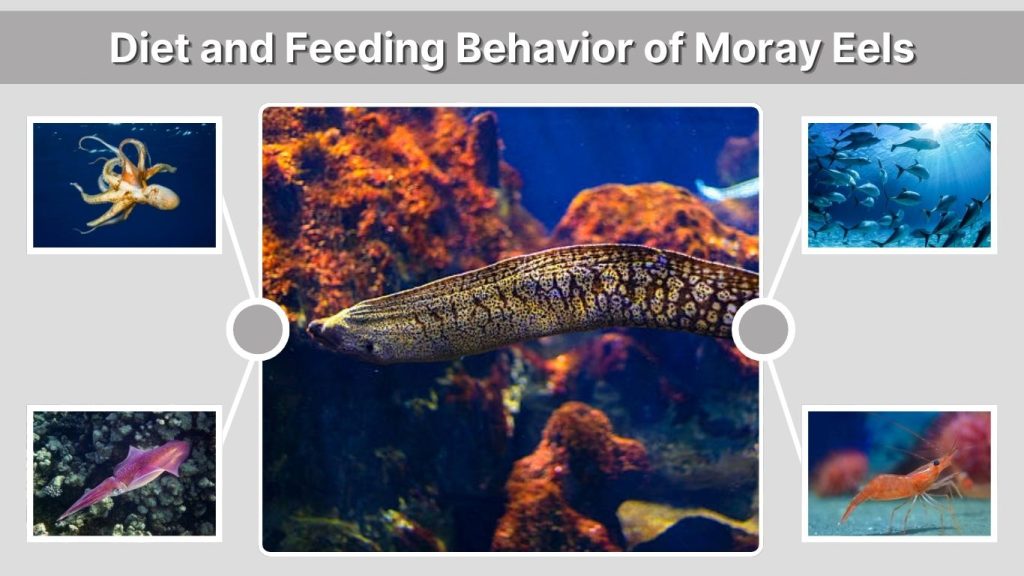
Moray eels are carnivorous predators with a diet that includes fish, crustaceans, octopus, squid, and occasionally smaller eels. Their feeding habits are primarily nocturnal, although some species hunt during the day if food is readily available.
Rather than chasing prey, moray eels rely on patience and surprise. Their excellent sense of smell allows them to detect prey even in low-visibility conditions, making them effective hunters in dark crevices and murky waters.
How Moray Eels Hunt Their Prey
Moray eels use an ambush hunting strategy, remaining motionless until prey comes within striking distance. When the moment is right, they lunge forward with remarkable speed, seizing the prey in their jaws. Once captured, escape is nearly impossible due to the eel’s strong bite and gripping teeth.
In some reef environments, moray eels have been observed cooperating with groupers during hunts. The grouper flushes prey from open areas, while the moray eel captures animals that flee into reef crevices. This rare example of interspecies cooperation highlights the intelligence and adaptability of moray eels.
Why Moray Eels Have Two Sets of Jaws
One of the most fascinating adaptations of moray eels is their second set of jaws, known as pharyngeal jaws. Unlike most fish, moray eels use these inner jaws to pull prey deeper into their throat after it has been captured.
This adaptation allows moray eels to feed effectively in tight spaces where suction feeding is impossible. The pharyngeal jaws move forward to grasp prey and drag it back, ensuring a secure swallow. This unique mechanism is a key reason moray eels are such successful reef predators.
Moray Eel Behavior and Adaptations
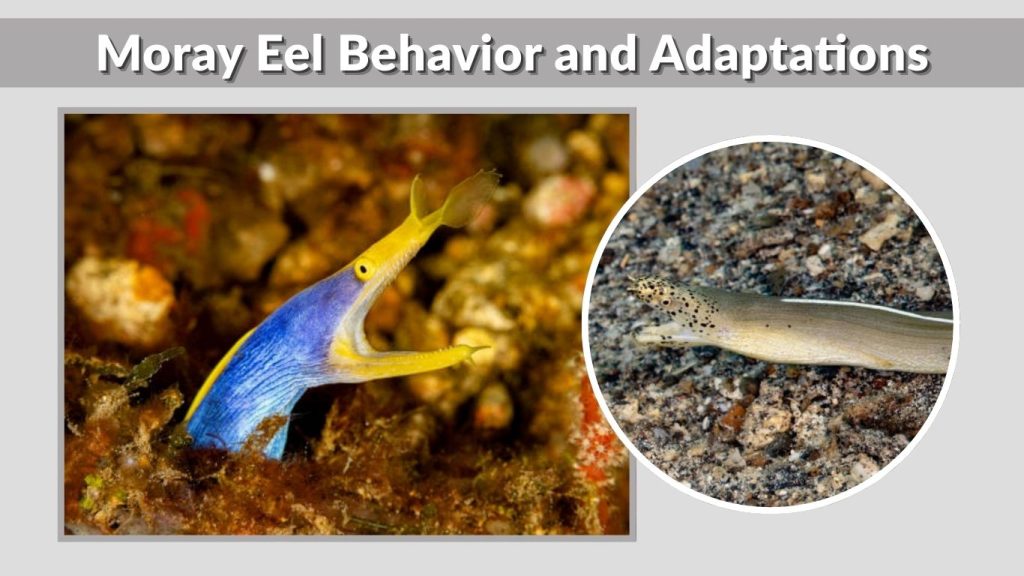
Moray eels are generally solitary and highly territorial animals. Most species establish a specific shelter and defend it from intruders, especially other moray eels. While they may appear aggressive, their behavior is primarily defensive. When threatened, a moray eel is more likely to retreat into its crevice than attack.
These eels rely heavily on body language to communicate. Opening the mouth wide, shifting position, or lunging forward slightly are warning behaviors meant to deter potential threats. Moray eels are not social fish, but they are intelligent and capable of learning, particularly in environments where food availability varies.
Why Moray Eels Keep Their Mouths Open
A common misconception is that moray eels keep their mouths open as a sign of aggression. In reality, this behavior is related to respiration. Moray eels have relatively small gill openings, so opening and closing their mouths helps pump water over the gills and allows them to breathe efficiently.
This constant mouth movement, combined with visible sharp teeth, gives moray eels a fierce appearance. However, unless provoked or handled, they rarely pose a threat to humans. Understanding this behavior helps dispel the myth that moray eels are naturally hostile.
Types and Species of Moray Eels
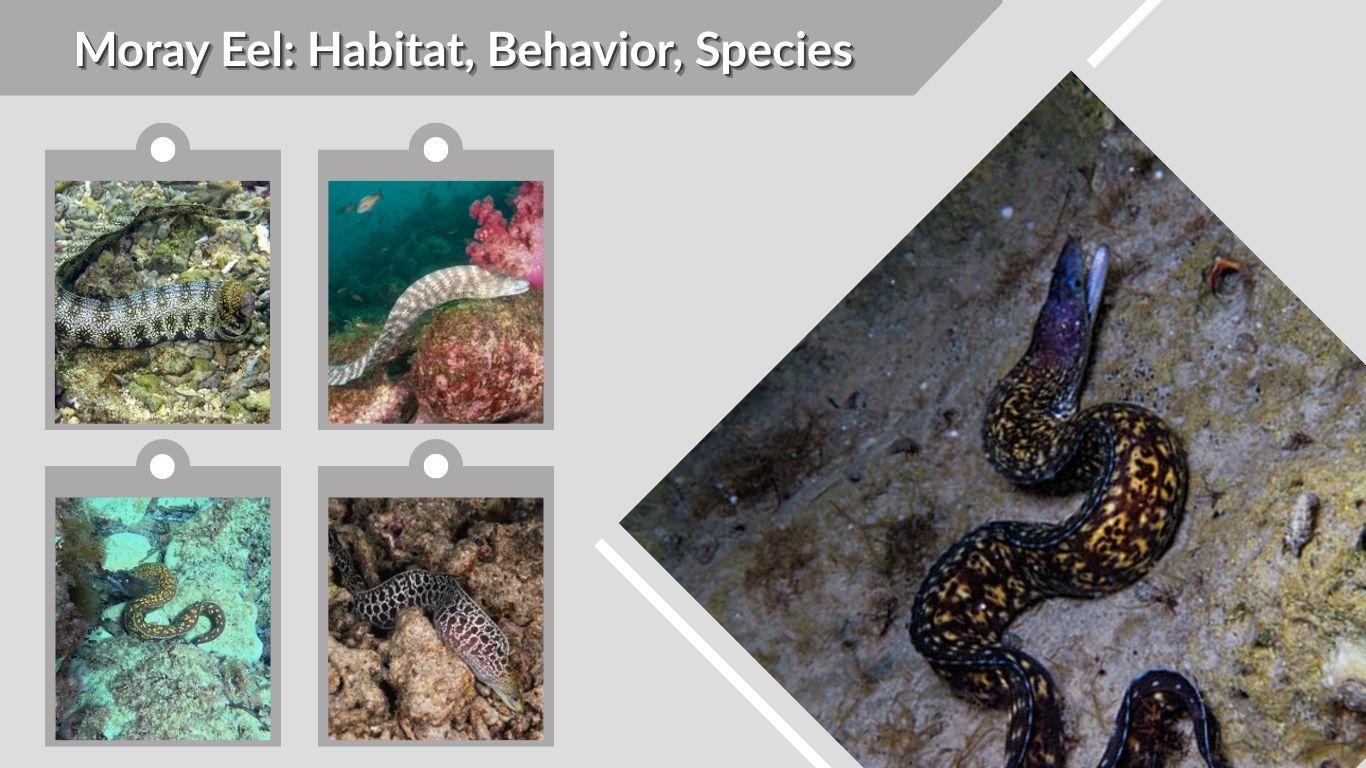
The moray eel family includes more than 200 known species, making it one of the most diverse groups of marine eels. These species vary widely in size, coloration, habitat preference, and behavior. Some moray eels are small and secretive, while others grow large enough to dominate their reef environments.
Despite their differences, all moray eels share common traits such as elongated bodies, strong jaws, and a preference for sheltered habitats. Their diversity allows them to occupy many ecological niches across the world’s oceans.
Common Moray Eel Species
The giant moray eel (Gymnothorax javanicus) is the largest species and can grow over ten feet long. It is typically found in Indo-Pacific reefs and is known for its impressive size and powerful bite. The green moray eel, common in the western Atlantic, is famous for its bright green appearance, which is actually caused by yellow mucus covering blue-gray skin.
Another well-known species is the snowflake moray eel, easily recognized by its white, snow-like spots. This species often feeds on crustaceans and is sometimes kept in large marine aquariums due to its striking appearance and manageable size.
Color Variations and Size Differences
Color variation among moray eels serves an important survival function. Camouflage helps them blend into coral reefs, rocks, or sandy environments, making it easier to ambush prey and avoid predators. Size differences also influence behavior, with larger species tending to be more dominant within reef systems.
Reproduction and Life Cycle
Moray eels reproduce through external spawning, releasing eggs and sperm into the water column. After fertilization, the eggs hatch into transparent, ribbon-like larvae known as leptocephali. These larvae drift with ocean currents for several months before settling into reef habitats.
Moray Eel Larvae and Growth
During the larval stage, moray eels feed on plankton and gradually develop the body shape of adult eels. As they grow, they move into sheltered environments where they adopt a more secretive lifestyle. In the wild, moray eels can live for several decades, depending on the species and environmental conditions.
Moray Eels and Human Interaction

Moray eels frequently encounter humans through diving and snorkeling activities. Most incidents involving bites occur when eels are provoked, fed by hand, or mistaken for food. Poor eyesight can cause a moray eel to bite accidentally if fingers resemble prey.
Are Moray Eels Dangerous to Humans?
While moray eel bites can be painful, they are rare and usually not life-threatening. Moray eels do not hunt humans and prefer to avoid confrontation. Respecting their space and avoiding direct interaction greatly reduces any risk.
Ecological Role and Conservation Status
As apex and mid-level predators, moray eels help regulate fish and invertebrate populations within reef ecosystems. They contribute to ecological balance by preventing overpopulation of certain species.
Threats Facing Moray Eels
Habitat destruction, coral reef degradation, pollution, and climate change pose increasing threats to moray eel populations. Protecting reef environments is essential for their survival.
Conservation Efforts
Marine protected areas and reef conservation initiatives indirectly support moray eels by preserving their habitats. Increased awareness and responsible diving practices also play a role in their protection.
Conclusion
Moray eels are complex, highly adapted predators that play a vital role in marine ecosystems. Despite their intimidating appearance, they are not the aggressive animals they are often believed to be. By understanding their behavior, habitat, and ecological importance, we can better appreciate these remarkable creatures and the delicate reef systems they call home.