


Parrotfish are some of the most colorful and fascinating fish found on tropical coral reefs. Known for their beak-like teeth and vibrant scales, these reef dwellers play a crucial role in maintaining marine ecosystems. From their algae-based diet to their surprising ability to change sex, parrotfish are full of remarkable traits. In this guide, you’ll learn how to identify parrotfish, where they live, what they eat, and how long they typically survive in the wild.
What Is a Parrotfish?
Parrotfish belong to the family Scaridae, a group of marine fish primarily found in tropical and subtropical oceans. There are around 90 recognized species of parrotfish, each varying in size, coloration, and habitat range.
They get their name from their parrot-like beak, which is formed by tightly fused teeth. This strong dental structure allows them to scrape algae from coral and rocky surfaces. Parrotfish are considered essential reef fish because their feeding habits help maintain the balance between coral and algae growth.
Without parrotfish, algae could quickly overgrow coral reefs, blocking sunlight and preventing coral from thriving. Their daily grazing keeps reefs healthier and more resilient.
Parrotfish Identification Guide
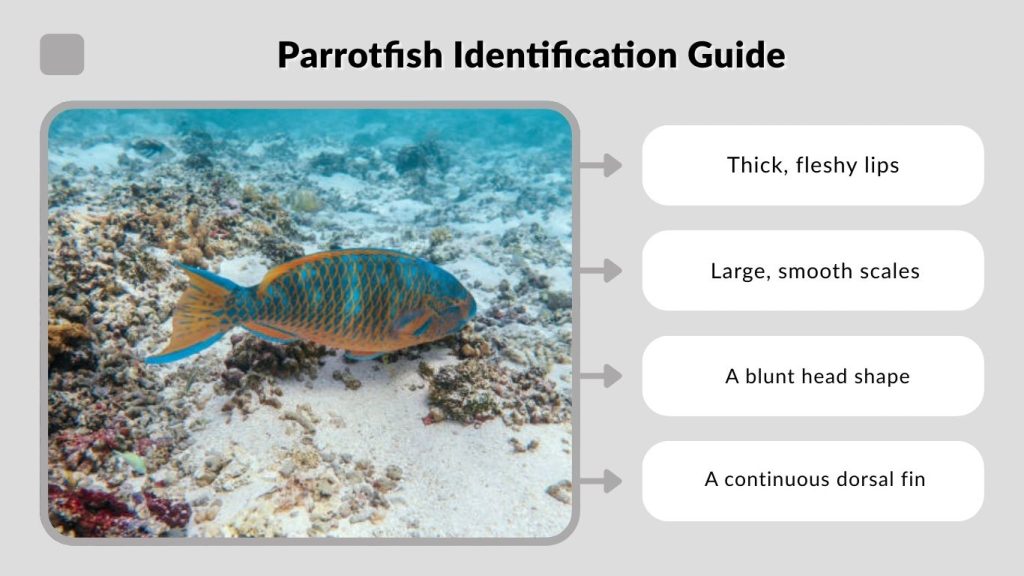
Identifying a parrotfish is relatively easy once you know what to look for. Their distinctive mouth and bright coloration make them stand out among reef fish.
Physical Characteristics
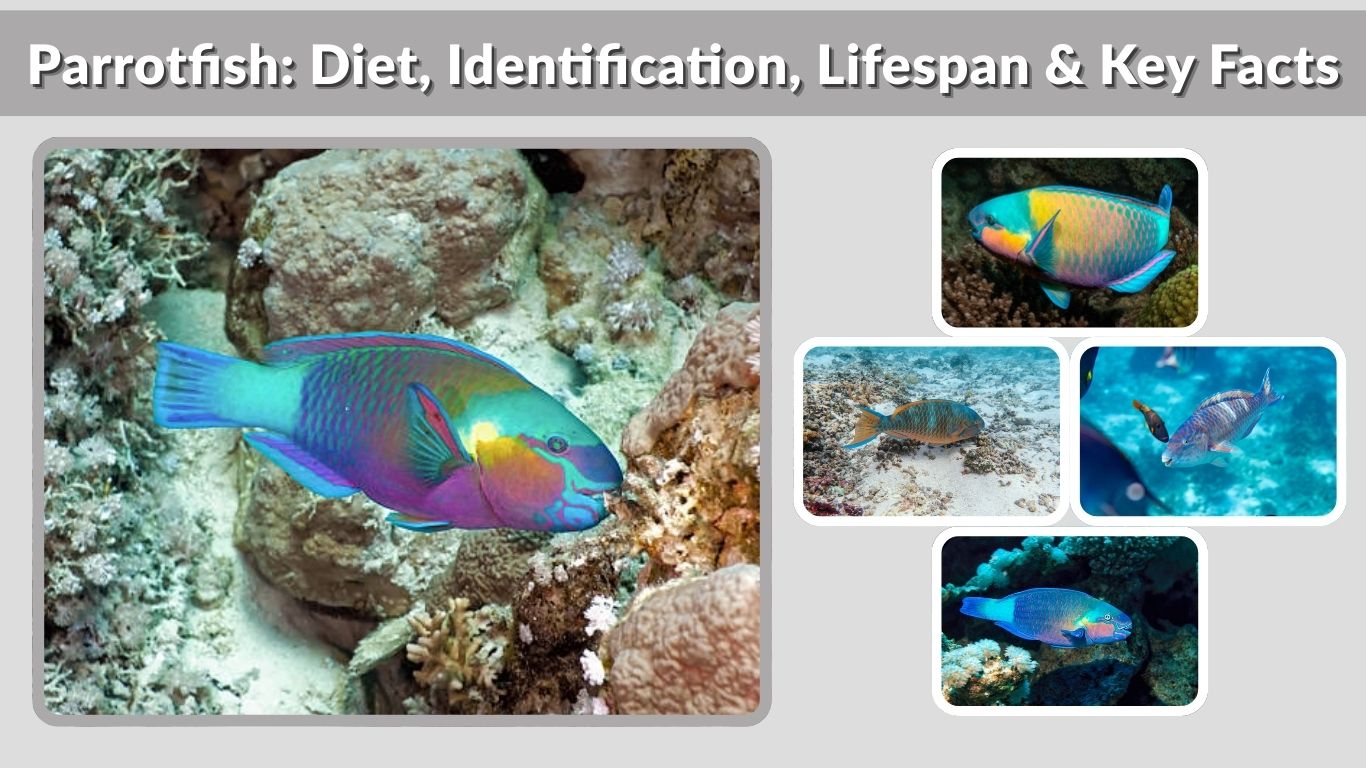
The most defining feature of a parrotfish is its beak-like mouth. Unlike most fish, parrotfish have fused teeth that form a hard, parrot-shaped beak. Behind this beak are specialized throat teeth (called pharyngeal teeth) used to grind food.
Other key physical features include:
- Thick, fleshy lips
- Large, smooth scales
- A blunt head shape
- A continuous dorsal fin
Their bodies are typically oval and laterally compressed, helping them maneuver easily through coral reefs.
Size and Weight
Parrotfish size varies significantly depending on the species. Smaller species may grow to about 1 foot (30 cm) long, while larger species, like the bumphead parrotfish, can reach up to 4 feet (1.2 meters) in length.
Most common reef parrotfish fall within the 12–24 inch range. Weight can range from less than a pound in smaller species to over 40 pounds in larger varieties.
Color Variations and Gender Differences
Parrotfish are famous for their vibrant colors. They can display shades of blue, green, pink, yellow, and even purple. Interestingly, their coloration often changes as they mature.
Many species experience different life phases:
- Juvenile phase – Usually duller or striped for camouflage
- Initial phase – Can include females and some males
- Terminal phase – Brightly colored dominant males
Parrotfish are sequential hermaphrodites, meaning some individuals can change sex during their lifetime. In many species, females transition into males when social conditions require it. This unique adaptation helps maintain balanced breeding populations on reefs.
Where Do Parrotfish Live?
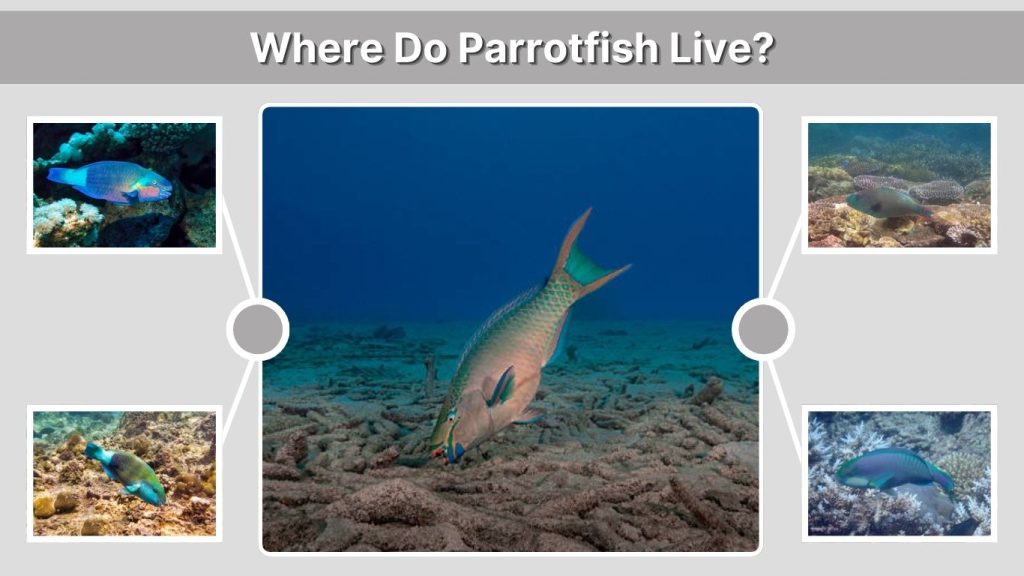
Parrotfish are primarily found in warm, tropical waters around the world. They thrive in environments where coral reefs are abundant.
Geographic Distribution
You can find parrotfish in:
- The Caribbean Sea
- The Indo-Pacific region
- The Great Barrier Reef
- The Red Sea
- Coastal regions of Southeast Asia
- Parts of the western Atlantic Ocean
They prefer areas with stable water temperatures and plenty of reef structures for feeding and shelter.
Preferred Habitat
Parrotfish are closely associated with coral reef ecosystems. They are commonly seen in:
- Shallow reef flats
- Lagoons
- Seagrass beds near reefs
- Rocky coastal areas
They rely heavily on reefs not just for food, but also for protection from predators. The complex coral formations provide hiding spots and sleeping areas.
Depth Range
Most parrotfish species inhabit shallow waters ranging from 3 to 100 feet deep. However, some species may venture deeper depending on food availability and environmental conditions.
Because they depend on sunlight-driven algae growth, they typically remain in well-lit areas where algae thrive.
Parrotfish Diet Explained
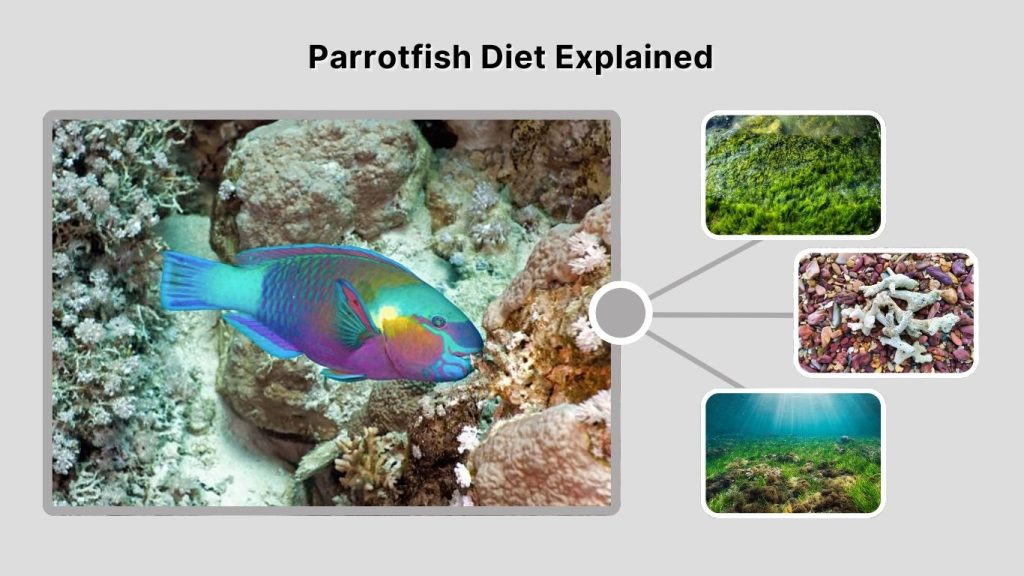
One of the most interesting aspects of parrotfish behavior is their feeding strategy. Their diet plays a vital role in coral reef health.
What Does a Parrotfish Eat?
Parrotfish primarily eat algae that grow on coral and rocks. Their diet includes:
- Algae (main food source)
- Small bits of coral
- Seagrass
- Tiny invertebrates found within algae
Although they consume coral material, they are not true coral predators. Instead, they target algae growing on coral surfaces.
How Parrotfish Feed
Using their powerful beak, parrotfish scrape algae from coral structures. While doing so, they often ingest small amounts of coral rock. Inside their throat, specialized pharyngeal teeth grind the material into fine particles.
This feeding process produces sand as a byproduct. After digestion, the ground coral is excreted as fine white sand. In fact, a single large parrotfish can produce hundreds of pounds of sand each year, contributing significantly to tropical beaches.
Their constant grazing prevents algae from overwhelming coral reefs, allowing coral polyps to receive adequate sunlight and nutrients.
Parrotfish Lifespan and Growth
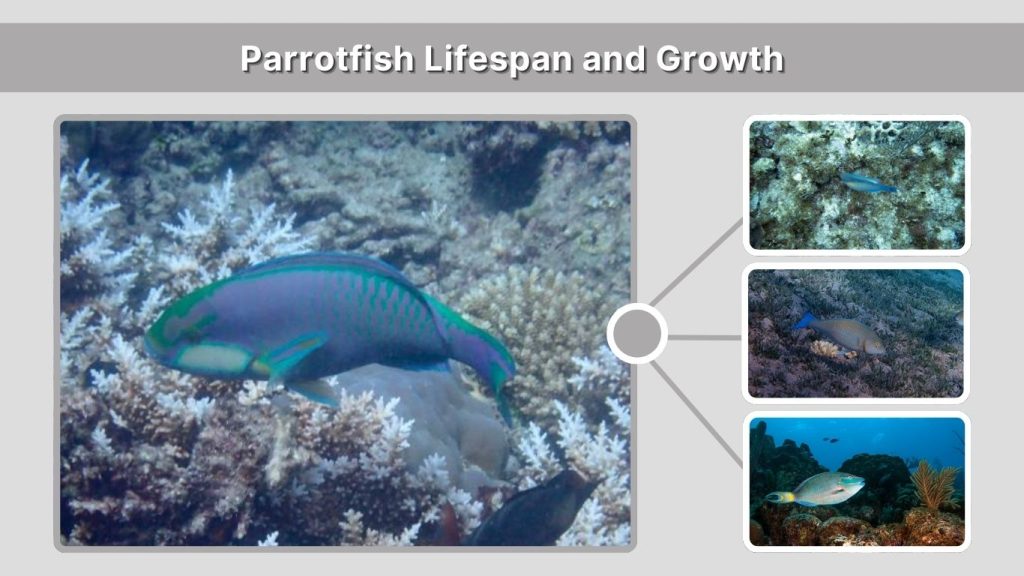
Parrotfish lifespan varies depending on species, habitat quality, and environmental pressures. While some smaller species live only a few years, larger species can survive for decades under the right conditions.
Average Lifespan
Most parrotfish species live between 5 and 20 years in the wild. Smaller reef species tend to have shorter lifespans, while larger varieties like the bumphead parrotfish may live 30 years or more.
Their lifespan depends heavily on reef health, predator presence, and fishing activity. In protected marine reserves, parrotfish populations often grow larger and live longer.
Growth Stages
Parrotfish go through several distinct life phases:
- Juvenile phase – Small, often dull-colored for camouflage
- Initial phase – Includes females and non-dominant males
- Terminal phase – Dominant males with bright coloration
One of the most fascinating aspects of parrotfish biology is their ability to change sex. In many species, females transition into males if the dominant male disappears. This process helps maintain reproductive stability within reef communities.
Factors Affecting Lifespan
Several factors influence how long parrotfish live:
- Natural predators like sharks, groupers, and moray eels
- Overfishing in tropical regions
- Coral reef destruction
- Ocean warming and climate change
Healthy reef systems significantly improve their survival rate.
Fascinating Parrotfish Facts
Parrotfish are full of surprising traits that make them unique among reef fish.
One of their most famous characteristics is sand production. Because they grind coral rock while feeding, the indigestible material passes through their system and becomes fine white sand. Some scientists estimate that a single large parrotfish can produce up to 700 pounds of sand per year.
Another unusual behavior is their mucus cocoon. At night, certain species secrete a protective mucus bubble around their bodies before sleeping. This cocoon may help mask their scent from predators such as moray eels.
Parrotfish are also known for the loud crunching sound they make while feeding. Divers often hear this distinct noise as the fish scrape algae from coral surfaces.
Additionally, their continuous grazing plays a major role in reef balance. Without parrotfish, algae could quickly dominate coral ecosystems, reducing biodiversity.
Triggerfish vs Parrotfish: What’s the Difference?
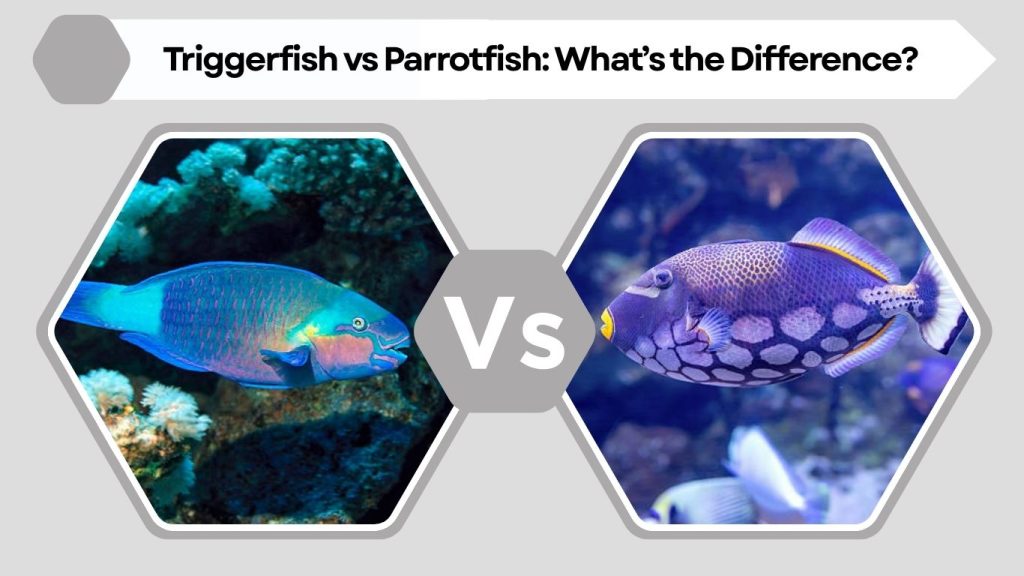
Although both fish live on coral reefs, triggerfish and parrotfish differ significantly in appearance, diet, and behavior.
Physical Differences
Parrotfish are easily recognized by their beak-like fused teeth and bright, smooth coloration. Their bodies are generally oval-shaped with large scales.
Triggerfish, on the other hand, have smaller, sharp teeth and a more angular body shape. They also possess a distinctive dorsal spine, or “trigger,” which can lock into place as a defense mechanism.
Diet Differences
Parrotfish are mostly herbivorous, feeding primarily on algae. Their grazing supports reef health.
Triggerfish are typically carnivorous. They feed on:
- Sea urchins
- Crustaceans
- Mollusks
- Small fish
Their strong jaws allow them to crush hard shells.
Behavior and Temperament
Parrotfish are generally peaceful and focused on grazing. They rarely display aggression toward humans.
Triggerfish, however, can be territorial and aggressive, especially during nesting season. Divers are more likely to experience defensive behavior from triggerfish than from parrotfish.
Ecological Importance of Parrotfish
Parrotfish are considered keystone species in coral reef ecosystems. Their feeding behavior helps prevent algae from overtaking coral colonies.
By constantly scraping algae, they:
- Improve coral growth
- Increase reef resilience
- Promote biodiversity
- Contribute to sand formation
Healthy parrotfish populations are often a sign of a thriving reef system.
Are Parrotfish Dangerous to Humans?
Parrotfish are not considered dangerous to humans. They are non-aggressive and typically ignore divers and snorkelers.
While their beaks are strong enough to scrape coral, they rarely show defensive behavior unless severely threatened. Most encounters involve observing them calmly grazing along reef surfaces.
Conservation and Threats
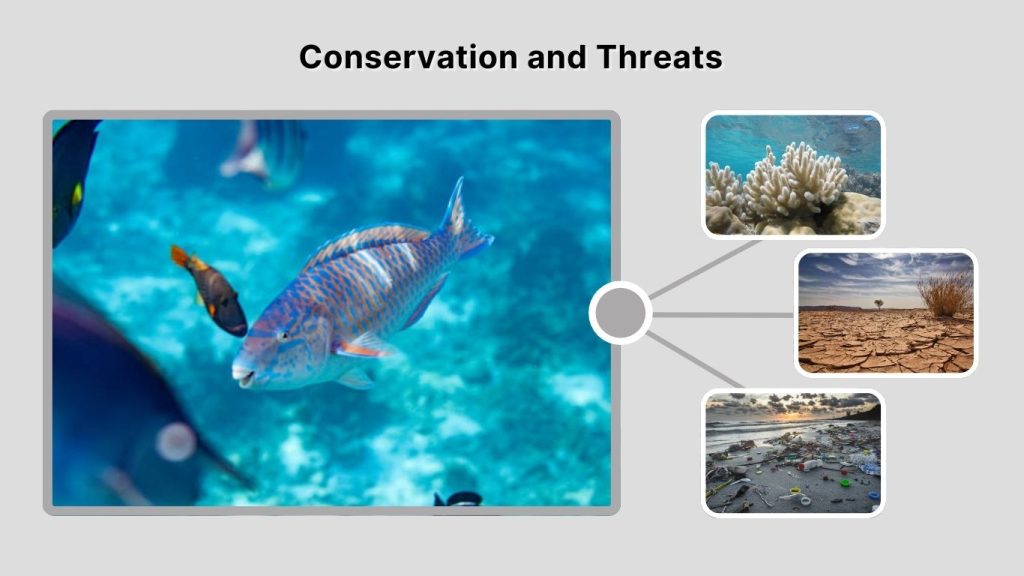
Despite their ecological importance, parrotfish face several modern threats.
Overfishing is one of the biggest concerns. In some regions, parrotfish are heavily targeted for food markets. Removing large numbers of parrotfish can lead to algae overgrowth and reef decline.
Other major threats include:
- Coral bleaching
- Habitat destruction
- Coastal pollution
- Climate change
Marine protected areas (MPAs) have proven effective in preserving parrotfish populations. Sustainable fishing regulations and reef conservation efforts are critical for maintaining healthy ecosystems.
FAQs
What does a parrotfish eat?
Parrotfish primarily eat algae that grow on coral and rocks. While feeding, they may accidentally consume small bits of coral and tiny invertebrates. Their algae-based diet helps prevent reef overgrowth and supports coral health.
Where do parrotfish live?
Parrotfish live in tropical and subtropical oceans worldwide. They are commonly found in coral reefs across the Caribbean, Indo-Pacific region, Red Sea, and Great Barrier Reef, typically in shallow, sunlit waters.
How long do parrotfish live?
Most parrotfish species live between 5 and 20 years, depending on size and environmental conditions. Larger species can live even longer, especially in protected reef areas with minimal fishing pressure.
How can you identify a parrotfish?
Parrotfish are easy to identify by their beak-like fused teeth, bright tropical colors, thick lips, and oval-shaped bodies. Their constant grazing behavior on coral reefs is also a strong identifying trait.
What is the difference between triggerfish and parrotfish?
Parrotfish are mostly herbivorous and have fused beak-like teeth for scraping algae. Triggerfish are carnivorous, have sharp individual teeth, and can be territorial or aggressive, especially during nesting periods.