



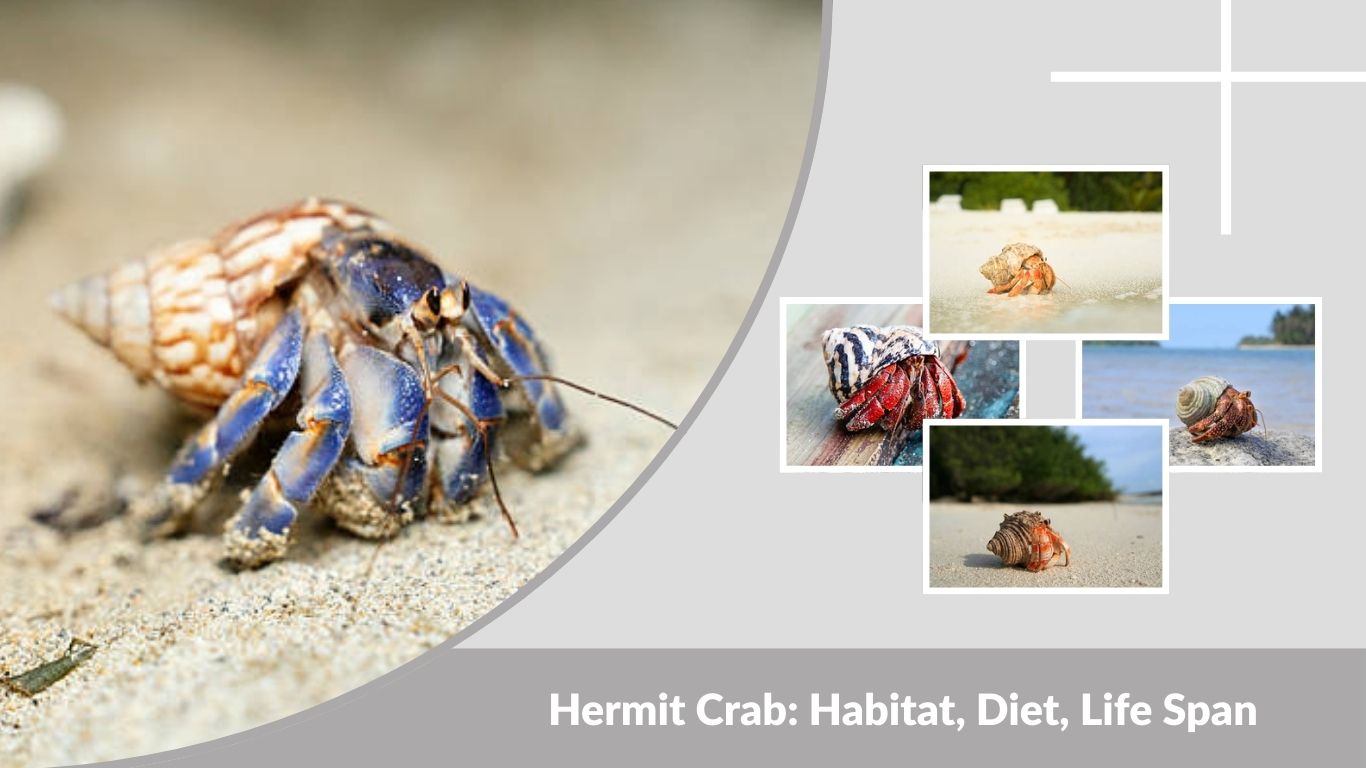
Hermit crabs are small crustaceans best known for carrying borrowed shells on their backs. Unlike true crabs, they have soft, vulnerable abdomens that require protection, which is why they rely on empty snail shells for survival. Found in tropical coastal regions around the world, hermit crabs are both important scavengers in the wild and popular pets in homes. In this guide, you’ll learn what a hermit crab is, where hermit crabs live, what they eat, and how long hermit crabs live.
What Is a Hermit Crab?
A hermit crab is a type of crustacean belonging to the order Decapoda, the same group that includes lobsters and shrimp. Despite their name, hermit crabs are not true crabs because their abdomens are soft rather than fully protected by a hard shell.
To protect this soft abdomen, hermit crabs occupy empty shells left behind by snails. As they grow, they must find larger shells to move into. This behavior is one of the most distinctive hermit crab facts and plays a crucial role in their survival.
There are over 800 species of hermit crabs worldwide. Some are fully marine and live underwater, while others are land-dwelling species that live near shorelines but still require access to saltwater.
Hermit Crab Identification Guide
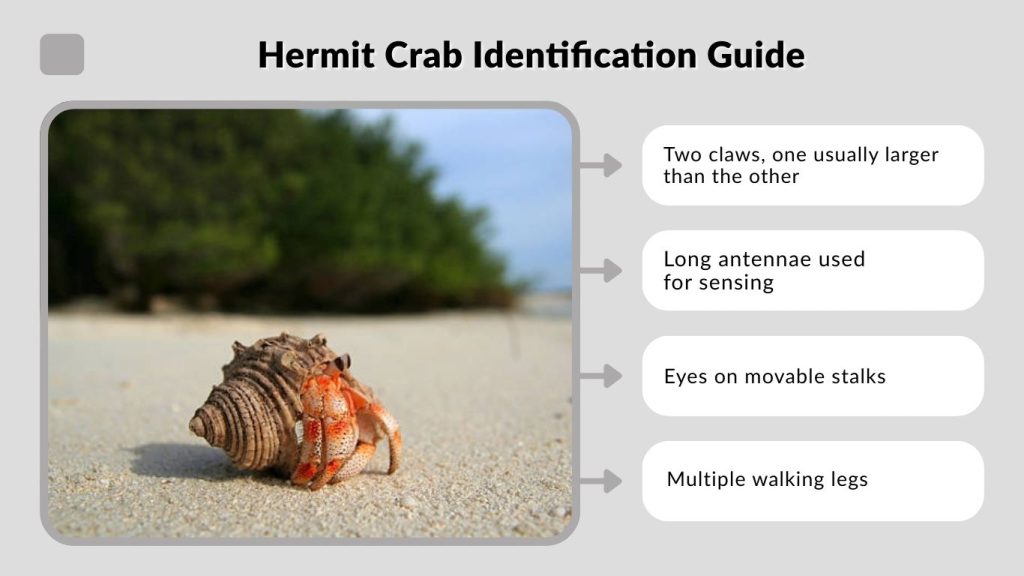
Hermit crabs have a unique body structure that sets them apart from other crustaceans.
Physical Characteristics
Hermit crabs have a hard exoskeleton covering the front part of their body, including their claws and legs. However, their abdomen is soft and curved, allowing it to fit snugly inside a spiral shell.
Other key features include:
- Two claws, one usually larger than the other
- Long antennae used for sensing
- Eyes on movable stalks
- Multiple walking legs
The larger claw is often used for defense and can block the entrance to their shell when they feel threatened.
Size and Color Variations
Hermit crabs vary in size depending on species. Pet species typically grow between 1 and 4 inches, while some marine species can grow much larger.
Their colors range from red and purple to tan, brown, and even bright blue in certain tropical species. Color often depends on species and habitat.
Why Hermit Crabs Change Shells
One of the most interesting hermit crab facts is their shell-swapping behavior. As hermit crabs grow, their old shells become too small. They must search for larger shells to accommodate their increasing size.
Sometimes, multiple hermit crabs gather and form a “shell exchange line,” where they line up from smallest to largest. When a suitable shell becomes available, each crab quickly moves into the next size up in an organized chain reaction.
This cooperative behavior helps reduce competition and increases survival chances.
Hermit Crab Habitat
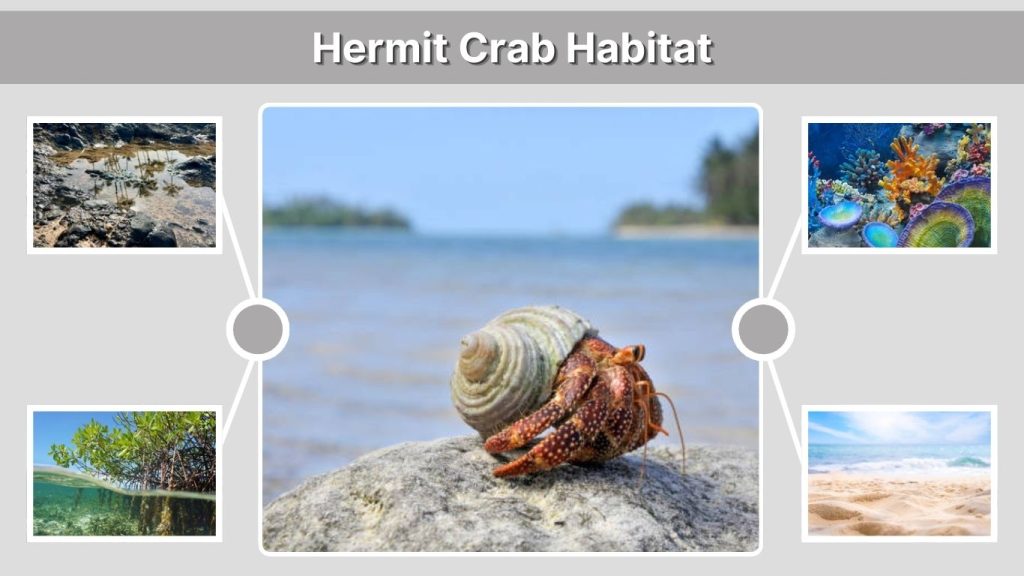
Hermit crab habitat varies depending on whether the species is marine or terrestrial.
Where Do Hermit Crabs Live?
Hermit crabs are commonly found in:
- Tropical and subtropical coastal regions
- Coral reefs
- Sandy beaches
- Tide pools
- Mangrove areas
Marine species live entirely underwater, while land hermit crabs spend most of their time on land near the ocean.
Marine vs Land Hermit Crab Habitat
Marine hermit crabs inhabit shallow coastal waters, often hiding among rocks and coral reefs. They depend completely on seawater.
Land hermit crabs, on the other hand, breathe through modified gills that require moist air. They cannot survive underwater for long periods but must stay in humid environments to prevent dehydration.
Because of this, land hermit crabs are usually found near shorelines where humidity levels are high.
Habitat Requirements for Pet Hermit Crabs
For those keeping hermit crabs as pets, proper habitat setup is essential. They require:
- Warm temperatures between 75–85°F
- High humidity levels (around 70–80%)
- Deep, moist substrate for burrowing
- Access to both fresh water and saltwater
Without proper humidity and temperature, hermit crabs can become stressed and unhealthy.
Hermit Crab Diet Explained
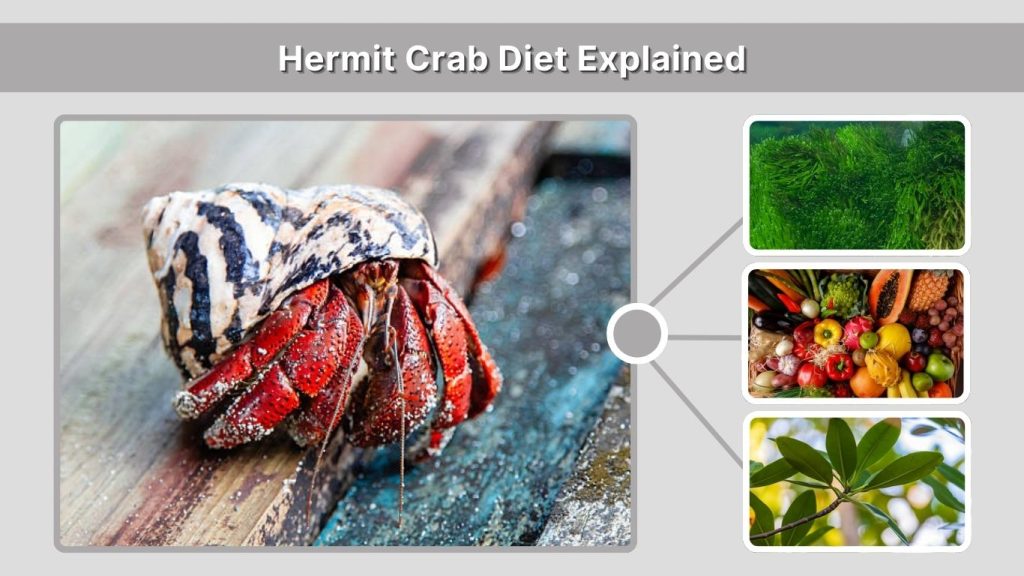
Hermit crabs are omnivorous scavengers, meaning they eat a variety of plant and animal matter.
What Do Hermit Crabs Eat?
In the wild, hermit crabs eat:
- Algae
- Fruits
- Leaves
- Small insects
- Dead fish and other decaying animals
They play an important ecological role by cleaning up organic debris in coastal environments.
Hermit Crab Diet in the Wild
Hermit crabs forage mostly at night. They use their antennae and claws to search for food along beaches, reefs, and forest floors.
As scavengers, they help recycle nutrients back into the ecosystem. This feeding behavior makes them valuable members of coastal food chains.
Feeding Pet Hermit Crabs
Pet hermit crabs require a varied and balanced diet. Suitable foods include:
- Fresh fruits and vegetables
- Unsalted nuts and seeds
- Dried shrimp or fish
- Calcium sources like cuttlebone
Avoid processed, salty, or sugary foods, as these can harm their health.
Hermit Crab Life Span and Growth
Hermit crab life span varies greatly depending on species and living conditions. While many people assume they live only a few years, some species can live surprisingly long lives.
How Long Do Hermit Crabs Live?
In the wild, many hermit crabs live 10 to 30 years, and some species may live even longer under ideal conditions. Unfortunately, hermit crabs kept in poor captivity conditions often survive only a short time due to improper care.
With correct habitat setup, diet, and humidity, pet hermit crabs can live for decades. Their long life span makes them a long-term commitment rather than a short-term pet.
Molting Process
Molting is essential for hermit crab growth. Because their exoskeleton does not grow with them, they must shed it periodically to increase in size.
During molting:
- The crab buries itself in the substrate
- It sheds its old exoskeleton
- A new, soft exoskeleton forms and hardens
This process can take weeks and is a vulnerable time for the crab. They must not be disturbed during molting, as stress can be fatal.
Molting frequency decreases as hermit crabs age. Younger crabs molt more often because they grow more rapidly.
Factors That Affect Lifespan
Several factors influence how long hermit crabs live:
- Proper humidity and temperature
- Balanced diet
- Access to both fresh and saltwater
- Low stress levels
- Safe molting environment
Poor conditions can significantly shorten their lifespan.
Fascinating Hermit Crab Facts
Hermit crabs may be small, but they have some remarkable traits.
- They are not true crabs because their abdomens lack a hard shell.
- They can make chirping or clicking sounds by rubbing body parts together.
- Some species are excellent climbers and enjoy climbing branches and decor.
- They often line up in groups to exchange shells efficiently.
- Certain species can live for several decades with proper care.
These hermit crab facts highlight their intelligence and adaptability.
Hermit Crab Behavior and Social Life
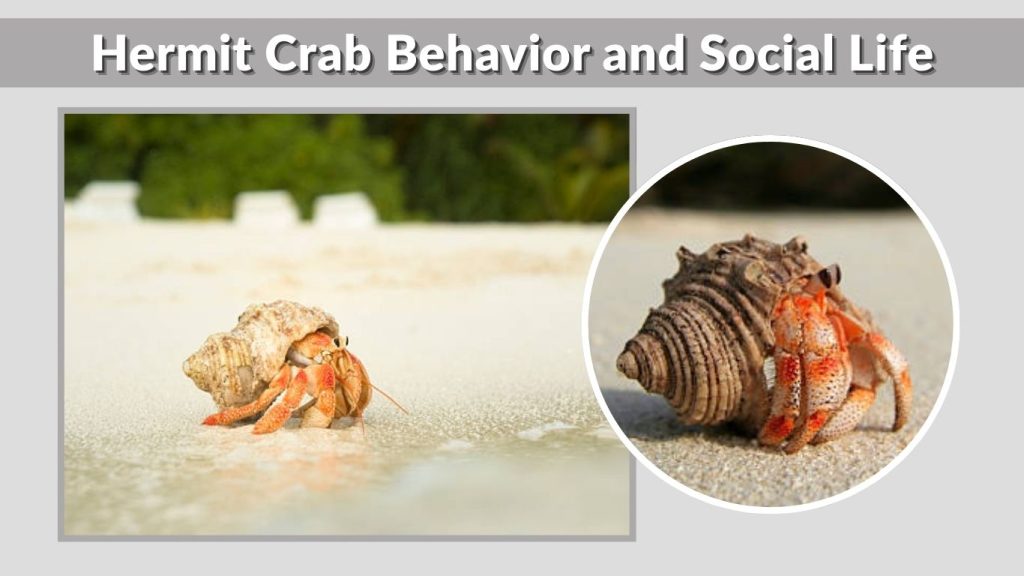
Hermit crabs are more social than many people realize.
Are Hermit Crabs Social?
Hermit crabs prefer living in groups. In the wild, they often gather in large colonies. Keeping multiple hermit crabs together in captivity helps reduce stress and promotes natural behaviors.
Communication Methods
Hermit crabs communicate using:
- Antenna tapping
- Body movements
- Chirping or clicking sounds
These signals may help establish dominance, attract mates, or coordinate shell exchanges.
Activity Patterns
Most hermit crabs are nocturnal, meaning they are most active at night. During the day, they often hide in shells or burrow beneath the substrate.
Burrowing is especially important during molting or when they feel threatened.
Common Myths About Hermit Crabs
There are several misunderstandings about hermit crabs, especially as pets.
Are They Easy, Low-Maintenance Pets?
While they are small, hermit crabs require specific humidity, temperature, diet, and molting conditions. Without proper care, they can become stressed and unhealthy.
Do They Only Need One Type of Water?
Hermit crabs need access to both freshwater and saltwater. Saltwater is essential for maintaining proper body chemistry and molting health.
Can They Live Alone?
Hermit crabs are social animals and generally do better in groups. Keeping a single crab alone may cause stress over time.
FAQs
What do hermit crabs eat?
Hermit crabs eat a variety of foods, including algae, fruits, vegetables, dead fish, insects, and plant matter. In captivity, they need a balanced diet with added calcium sources.
Where do hermit crabs live?
Hermit crabs live in tropical and subtropical coastal regions. Marine species live underwater, while land hermit crabs live near beaches in humid environments.
How long do hermit crabs live?
Hermit crabs can live 10 to 30 years or more, depending on species and care conditions. Proper habitat setup greatly improves their life span in captivity.
Do hermit crabs need new shells?
Yes, hermit crabs must change shells as they grow. They rely on finding larger empty shells to protect their soft abdomens.
Are hermit crabs good pets?
Hermit crabs can make interesting pets if their habitat and care requirements are properly met. However, they require specific humidity, diet, and social conditions to thrive.