





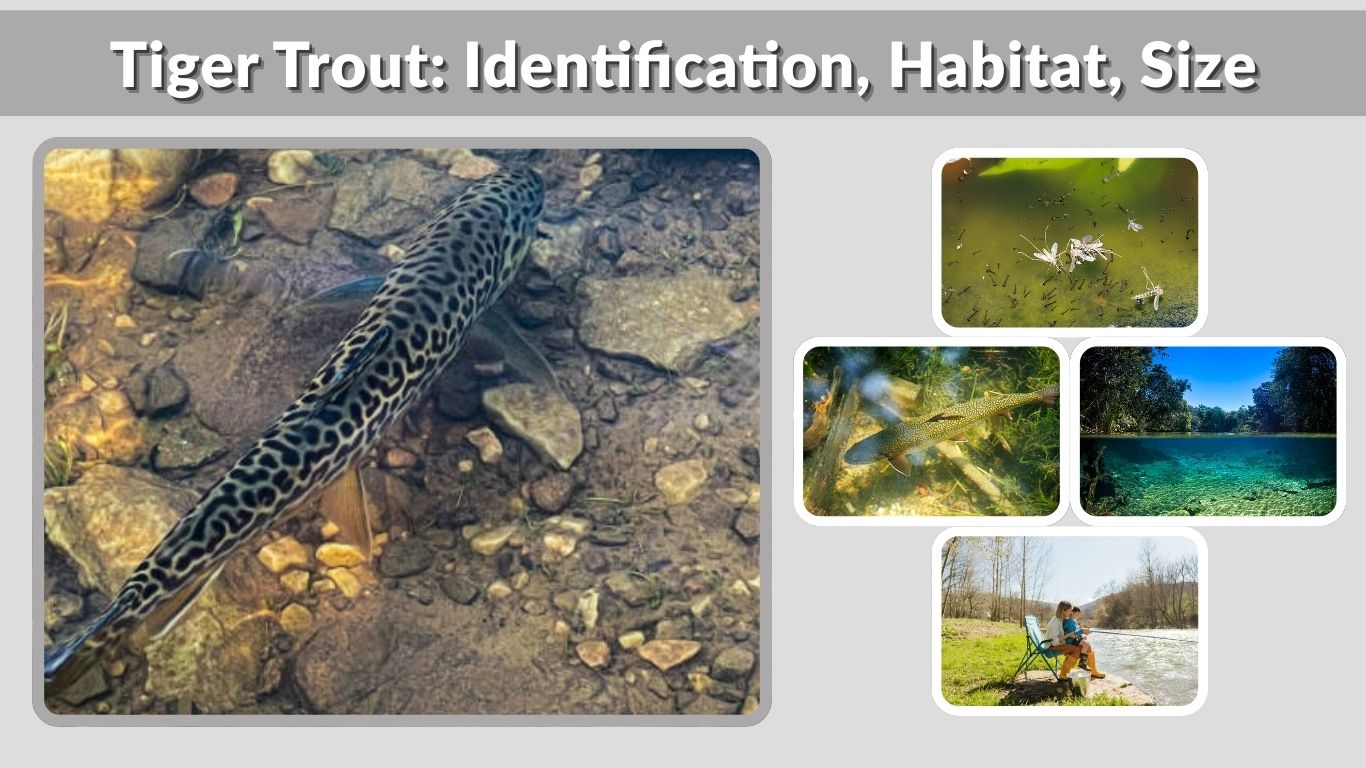
Tiger trout are one of the most visually striking freshwater fish found in North America. Known for their bold, maze-like patterns and aggressive feeding behavior, tiger trout are a hybrid created by crossing brook trout with brown trout. Although rare in nature, they are commonly produced in hatcheries and stocked in lakes and rivers for sport fishing. Their fast growth rate, predatory instincts, and unique appearance make them a favorite among anglers. Understanding their origin, habitat, and characteristics helps explain why tiger trout are so popular in managed fisheries.
What Is a Tiger Trout?
A tiger trout is not a separate species but a hybrid fish. It is the result of breeding a female brown trout (Salmo trutta) with a male brook trout (Salvelinus fontinalis). Because the two parent species belong to different genera, tiger trout are considered an intergeneric hybrid.
Tiger trout inherit traits from both parents, combining the aggressive feeding behavior of brown trout with the bold markings of brook trout. The result is a fast-growing, hard-fighting fish with a highly distinctive appearance.
Unlike naturally reproducing trout species, tiger trout are typically sterile. This means they cannot reproduce in the wild, which makes them particularly useful for fisheries management.
How Tiger Trout Are Created
In rare cases, tiger trout can occur naturally where brook trout and brown trout share the same waters. However, natural hybridization is uncommon because the two species spawn at slightly different times and prefer different spawning habitats.
Most tiger trout are produced intentionally in hatcheries. Fisheries managers carefully cross female brown trout eggs with male brook trout milt under controlled conditions. The fertilized eggs are then raised and later stocked into selected lakes and rivers.
One advantage of hybrid fish is a phenomenon known as hybrid vigor, or heterosis. Tiger trout often grow faster than either of their parent species, especially in productive waters with abundant food sources. This rapid growth contributes to their appeal as a sport fish.
Are Tiger Trout Sterile?
Yes, most tiger trout are sterile. Because they are hybrids between two different genera, their chromosomes typically do not align properly for successful reproduction. As a result, they are unable to produce viable offspring.
Sterility provides several management benefits:
- Prevents uncontrolled population growth
- Reduces competition with native trout
- Allows fisheries to control stocking levels
- Minimizes genetic impact on wild trout populations
Since tiger trout cannot reproduce, their numbers depend entirely on stocking programs.
How to Identify a Tiger Trout
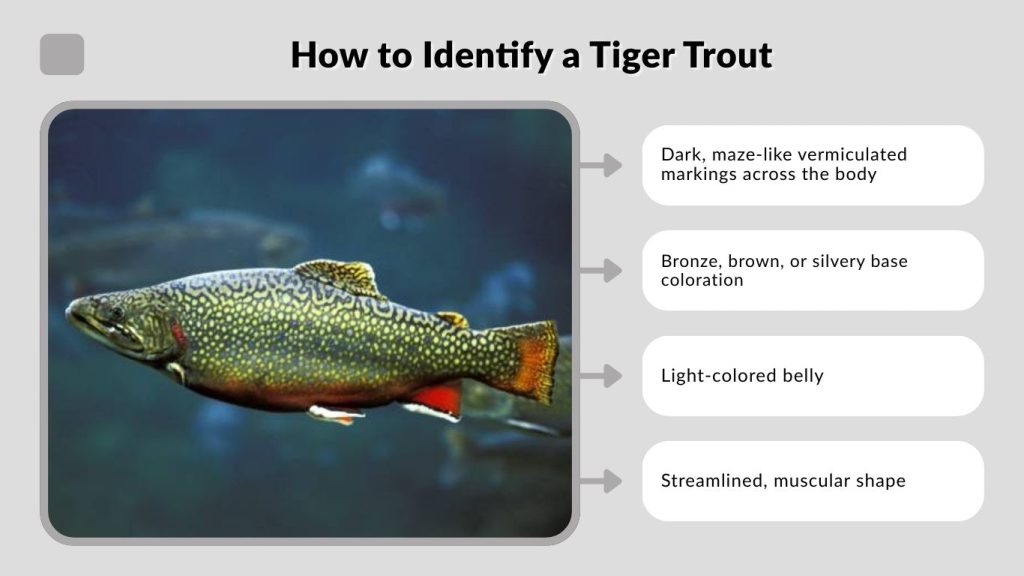
Tiger trout are easy to recognize once you know what to look for. Their bold, swirling body pattern resembles tiger stripes, which is how they earned their name.
They generally have a streamlined body similar to brown trout, but their markings are darker and more dramatic.
Key Physical Characteristics
- Dark, maze-like vermiculated markings across the body
- Bronze, brown, or silvery base coloration
- Light-colored belly
- Streamlined, muscular shape
- Few or no bright red spots
The intricate, worm-like pattern covers most of the body and is far more pronounced than the subtle markings seen on brook trout. The pattern often appears black or very dark against a lighter bronze background.
Tiger trout also tend to have a slightly elongated head and strong jaw, reflecting their predatory nature.
Tiger Trout vs Brook Trout
Because brook trout are one of the parent species, tiger trout may share some similarities. However, there are clear differences:
- Pattern: Brook trout have red spots surrounded by blue halos and lighter worm-like markings on their backs. Tiger trout lack the haloed red spots and display bold, dark maze patterns instead.
- Coloration: Brook trout often show more vibrant orange and blue coloration, especially during spawning season. Tiger trout typically appear more bronze or silvery.
- Overall Appearance: Tiger trout look more aggressive and sharply patterned compared to the softer, speckled look of brook trout.
Tiger Trout vs Brown Trout
Brown trout have scattered black and red spots along their sides. In contrast:
- Tiger trout usually lack prominent red spotting.
- Their markings are continuous and maze-like rather than dotted.
- Brown trout have a more uniform body color without the dramatic striping effect.
When viewed side by side, tiger trout stand out immediately due to their intense and complex pattern.
Tiger Trout Habitat and Distribution
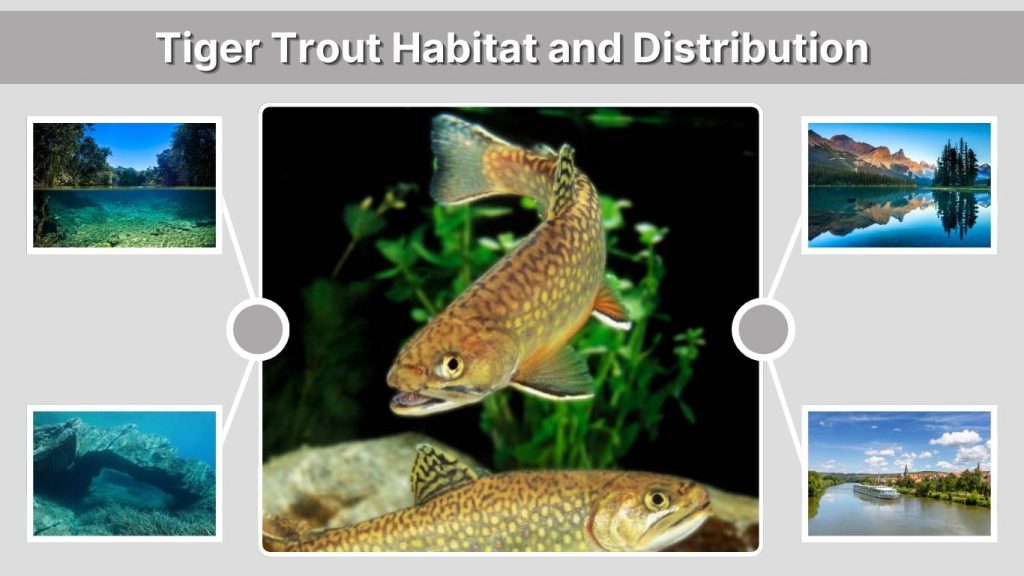
Tiger trout are cold-water fish, just like their parent species. They thrive in clean, well-oxygenated freshwater systems and are most commonly found in stocked lakes and reservoirs.
Because they are sterile, tiger trout populations are maintained through fisheries programs rather than natural reproduction.
Ideal Habitat Conditions
Tiger trout prefer:
- Cold water temperatures
- Clear lakes and reservoirs
- Rivers with moderate current
- High oxygen levels
- Areas with underwater structure
They are often found near drop-offs, submerged logs, rocky shorelines, and weed beds where prey fish are abundant. Like brown trout, tiger trout are ambush predators and use cover to strike passing prey.
While they tolerate slightly warmer water than brook trout, they still perform best in cooler environments.
Where Tiger Trout Are Found
Tiger trout are most commonly stocked in the western United States. States known for tiger trout fisheries include:
- Utah
- Colorado
- Wyoming
- Idaho
Some Midwestern states also stock tiger trout in select waters. Outside North America, their presence is limited and usually associated with specific stocking programs.
Because they cannot reproduce, their distribution depends entirely on management decisions. This controlled stocking allows fisheries to introduce tiger trout into waters where they can enhance recreational fishing without permanently altering native ecosystems.
Tiger Trout Size and Growth Rate
Tiger trout are widely known for their rapid growth, especially when compared to brook trout. Thanks to hybrid vigor, they often grow faster and more aggressively than either parent species under the right conditions.
Average Size
In most stocked waters, tiger trout typically reach:
- 10–18 inches in length
- 1–5 pounds in weight
Growth rates vary depending on food availability, water temperature, and stocking density. In lakes with abundant forage fish, tiger trout can grow quickly within just a few seasons.
Maximum Size
Under ideal conditions, tiger trout can grow much larger:
- Over 20 inches long
- Occasionally exceeding 10 pounds
Large reservoir systems with strong forage bases tend to produce the biggest individuals. Because they cannot reproduce, stocked populations often have less competition from younger generations, which can allow some fish to reach trophy size.
Why Tiger Trout Grow Quickly
Several factors contribute to their impressive growth:
- Hybrid vigor: Crossbreeding can enhance growth performance.
- Aggressive feeding behavior: They actively pursue prey.
- Predatory diet: Fish-based diets promote faster growth.
- Stocking strategy: Lower competition in managed waters.
This combination makes tiger trout especially appealing to anglers seeking larger fish.
What Do Tiger Trout Eat?
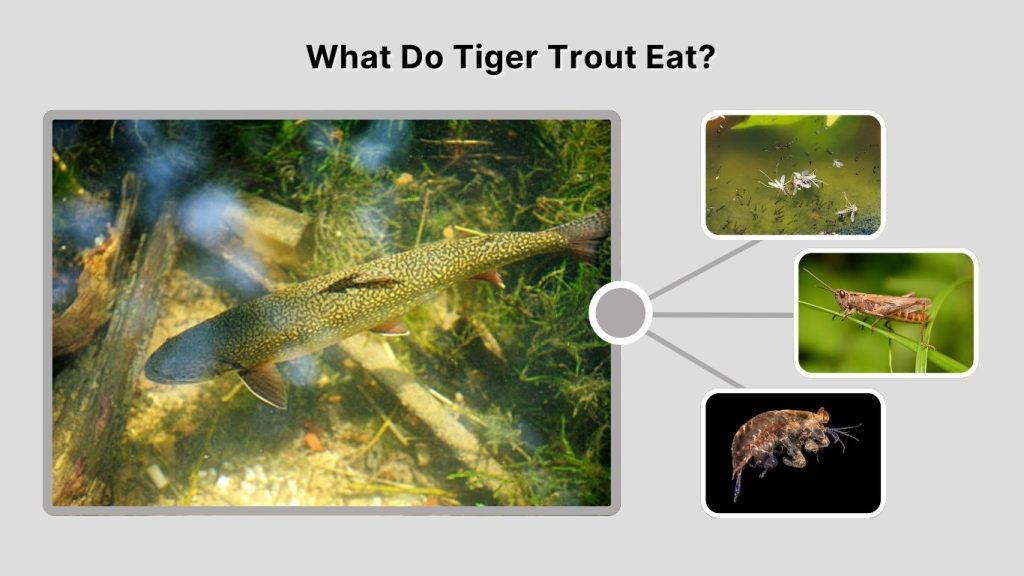
Tiger trout are carnivorous predators throughout their lives. As they grow, their diet shifts from small aquatic organisms to larger prey.
Juvenile Diet
Young tiger trout primarily feed on:
- Aquatic insects such as mayflies and caddisflies
- Small invertebrates
- Zooplankton
During this stage, they rely heavily on healthy insect populations, similar to other trout species.
Adult Diet
As tiger trout mature, they become increasingly piscivorous (fish-eating). Adult diets may include:
- Small fish such as minnows and juvenile trout
- Crayfish
- Frogs
- Large aquatic insects
Their willingness to strike larger prey makes them aggressive hunters. In many stocked lakes, they help control populations of smaller fish species.
Feeding Behavior
Tiger trout are often described as more aggressive than brook trout and sometimes even brown trout. They are known to:
- Strike hard at lures
- Chase prey over short distances
- Hold near structure and ambush passing fish
This bold behavior contributes to their popularity as a sport fish.
Tiger Trout Behavior and Lifespan
Tiger trout combine behavioral traits from both parent species. They are strong, territorial predators that often dominate smaller fish in stocked systems.
Typical Lifespan
Because tiger trout are sterile and stocked for recreational purposes, their lifespan usually ranges from:
- 5 to 7 years
Lifespan can vary depending on habitat quality, predation pressure, and fishing activity. In heavily fished waters, fewer individuals survive to older ages.
Behavioral Traits
Tiger trout are:
- Territorial
- Aggressive feeders
- Structure-oriented
- Strong fighters when hooked
They often patrol drop-offs, submerged logs, and weed edges. Their aggressive nature sometimes makes them easier to catch than more cautious trout species.
Why Fisheries Stock Tiger Trout
Fisheries managers use tiger trout strategically for both ecological management and recreational enhancement.
Controlling Fish Populations
One major reason for stocking tiger trout is population control. Because they are sterile and predatory, they can:
- Reduce overpopulation of smaller fish species
- Control invasive fish populations
- Prevent overcrowding in certain waters
Since they cannot reproduce, managers can adjust stocking levels without worrying about long-term overpopulation.
Recreational Value
Tiger trout are highly valued by anglers for several reasons:
- Unique and striking appearance
- Fast growth
- Trophy potential
- Strong fighting ability
Their bold markings also make them a memorable catch, which adds to their appeal in managed fisheries.
Tiger Trout Fishing Tips
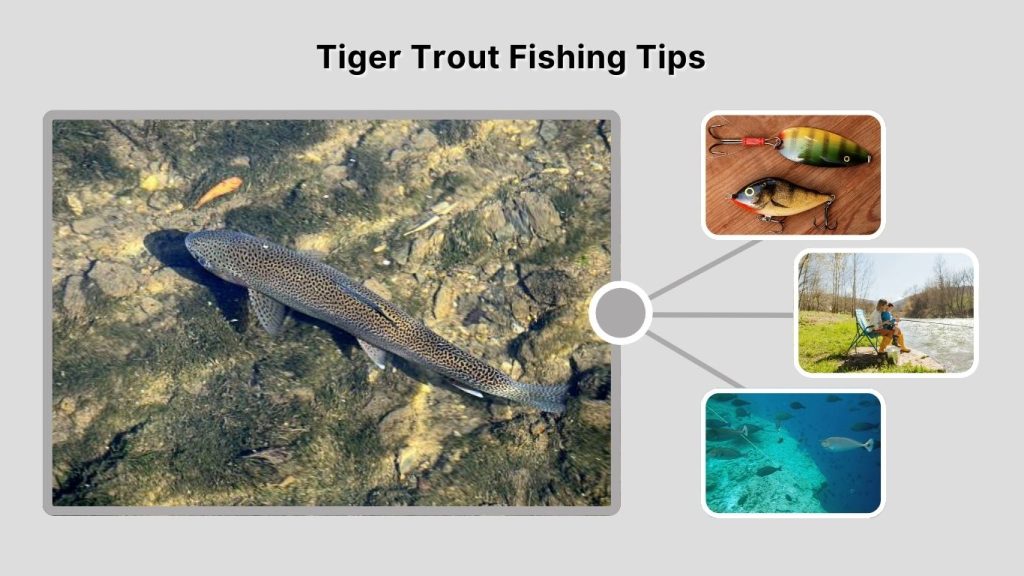
Tiger trout are considered exciting game fish due to their aggressive feeding style. Anglers who understand their habits often find success.
Best Lures and Bait
Effective options include:
- Streamers (for fly fishing)
- Spinnerbaits
- Crankbaits
- Soft plastic swimbaits
- Live bait where regulations allow
Because tiger trout are predatory, lures that imitate small fish often work best.
Best Time to Fish
Tiger trout are most active during:
- Spring
- Fall
- Early mornings
- Late evenings
Cooler water temperatures generally improve feeding activity.
Effective Techniques
To increase success:
- Target areas near structure
- Fish along drop-offs and weed lines
- Use steady retrieves with occasional pauses
- Match lure size to local forage
Patience and attention to water temperature can significantly improve results.
FAQs
What is a tiger trout?
A tiger trout is a hybrid fish created by crossing a female brown trout with a male brook trout. It is not a separate species and is usually produced in hatcheries for stocking.
Are tiger trout sterile?
Yes, most tiger trout are sterile and cannot reproduce. This makes them useful for fisheries management and controlled stocking programs.
How big do tiger trout get?
Tiger trout commonly grow 10–18 inches, but in productive waters they can exceed 20 inches and occasionally reach over 10 pounds.
Where can you find tiger trout?
Tiger trout are primarily found in stocked lakes and rivers in the western United States, including Utah, Colorado, Wyoming, and Idaho.
What do tiger trout eat?
They eat insects when young and shift to fish, crayfish, and amphibians as adults. They are aggressive predators.
Are tiger trout good for fishing?
Yes, tiger trout are popular among anglers because they grow quickly, fight hard, and have a striking appearance.
Conclusion
Tiger trout are a fascinating hybrid that combines the best traits of brook trout and brown trout. With their dramatic markings, fast growth, and aggressive feeding habits, they have become a prized sport fish in many stocked waters. Because they are sterile, fisheries managers can use them strategically to enhance recreation and manage fish populations. Whether you are an angler or simply interested in freshwater species, tiger trout stand out as one of the most unique and visually impressive trout found in North America.