



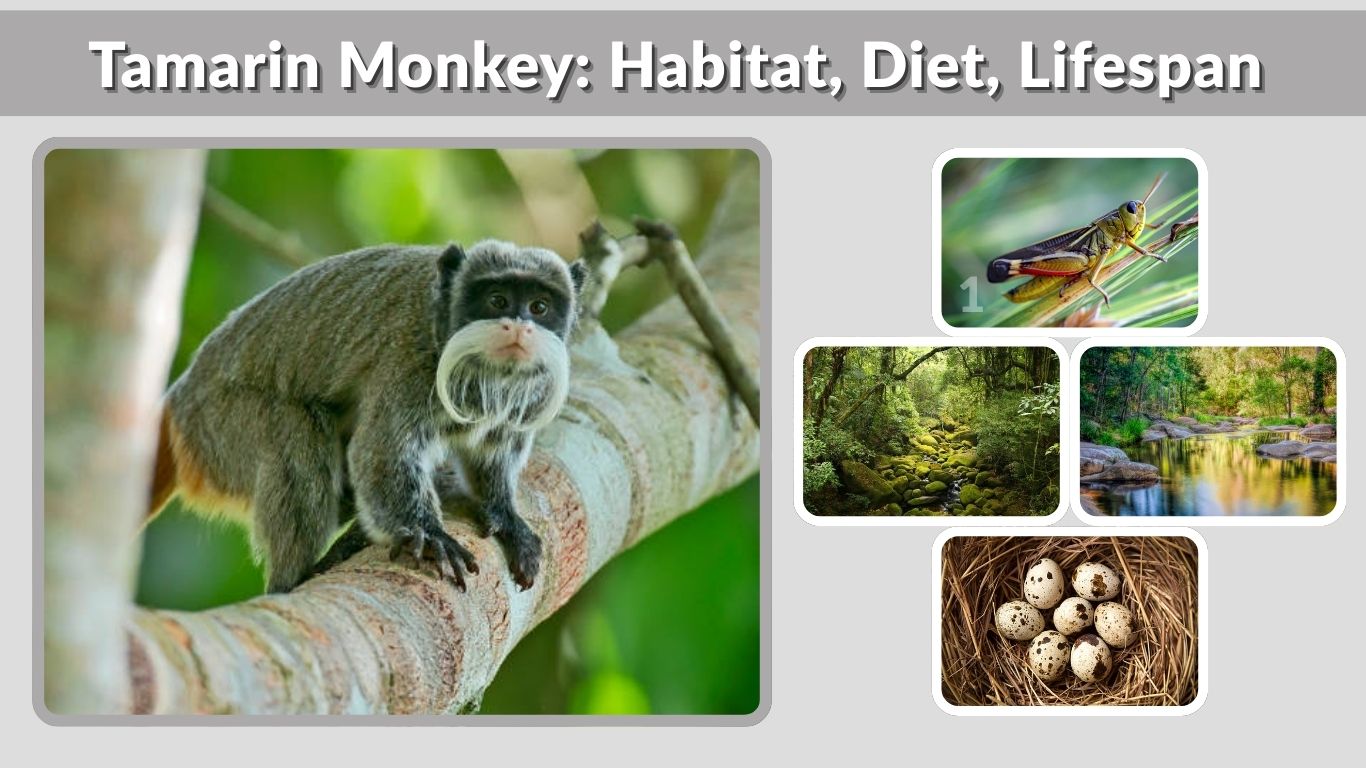
Tamarin monkeys are small, energetic primates known for their expressive faces, long tails, and distinctive facial hair. These tiny monkeys live in the tropical forests of Central and South America, where they spend most of their lives moving through trees in search of food. Despite their small size, tamarins are highly social animals that live in family groups and communicate using a variety of vocal calls and body signals. In this guide, we will explore tamarin monkey habitat, diet, size, lifespan, and interesting facts about these fascinating primates.
What Is a Tamarin Monkey?
A tamarin monkey is a small New World monkey belonging to the genus Saguinus. These monkeys are part of the Callitrichidae family, which also includes marmosets. Tamarins are known for their small bodies, long tails, and claw-like nails that help them climb trees easily.
Scientific Classification
Tamarin monkeys belong to the following scientific classification:
- Kingdom: Animalia
- Phylum: Chordata
- Class: Mammalia
- Order: Primates
- Family: Callitrichidae
- Genus: Saguinus
There are several species of tamarin monkeys, each adapted to different forest regions across Central and South America.
Types of Tamarin Monkeys
Some of the most well-known species include:
- Emperor tamarin (Saguinus imperator)
- Cotton-top tamarin (Saguinus oedipus)
- Golden lion tamarin (Leontopithecus rosalia)
- Saddle-back tamarin (Saguinus fuscicollis)
Many tamarin species are easily recognized by their distinctive facial hair. For example, the emperor tamarin has long white whiskers that resemble a mustache.
Key Physical Characteristics
Tamarin monkeys have several unique physical features that help them survive in forest environments.
- Small body size that allows them to move easily on thin branches
- Long tail used mainly for balance
- Claw-like nails instead of flat fingernails
- Distinct facial hair patterns depending on the species
These adaptations make tamarin monkeys excellent climbers and allow them to move quickly through dense forest vegetation.
Where Do Tamarin Monkeys Live?
Many people wonder where tamarin monkeys live. These small primates are native to Central and South America, where tropical forests provide ideal living conditions.
Geographic Range
Tamarins live in warm regions with dense vegetation and abundant food sources. Their distribution stretches across several tropical countries where rainforests dominate the landscape.
Countries Where Tamarins Are Found
Tamarin monkeys can be found in countries such as:
- Brazil
- Peru
- Colombia
- Bolivia
- Ecuador
- Panama
In these regions, they live in forests that provide plenty of fruit, insects, and safe places for resting.
Distribution in Tropical Forests
Tamarins usually inhabit lowland tropical forests, especially areas with thick tree cover and complex vegetation. These environments allow them to travel easily through branches while staying hidden from predators.
They often move in groups through the forest canopy while searching for food during the day.
Tamarin Monkey Habitat
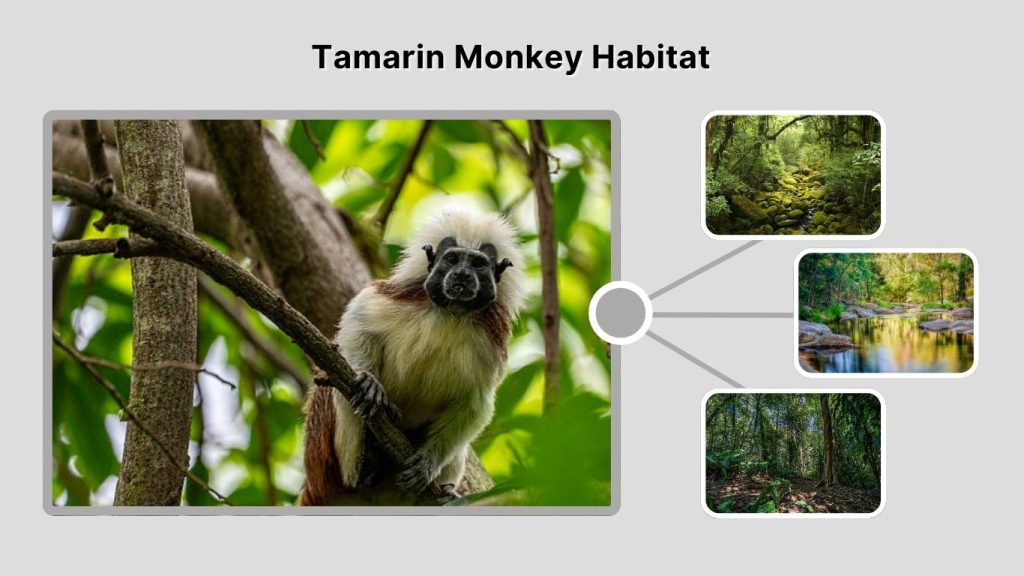
The tamarin monkey habitat mainly consists of dense tropical forests where trees provide shelter and food.
Preferred Environments
Tamarin monkeys commonly live in:
- Tropical rainforests
- River forests
- Secondary forests
- Dense jungle vegetation
These habitats offer many fruiting trees and insects, which are important parts of their diet.
Arboreal Lifestyle
Tamarins are arboreal animals, meaning they spend most of their lives in trees. They rarely come down to the ground. Instead, they move through branches using quick jumps and agile climbing movements.
Living in the canopy offers several advantages:
- Protection from many predators
- Easy access to fruits and insects
- Safe places for resting and sleeping
Habitat Adaptations
Tamarin monkeys have developed several adaptations that help them thrive in tree habitats.
First, their small and lightweight bodies allow them to move easily along thin branches. Second, their claw-like nails provide a strong grip when climbing. Finally, their excellent balance helps them jump quickly between branches.
These traits make tamarin monkeys highly skilled climbers in dense forest environments.
Tamarin Monkey Size and Physical Characteristics
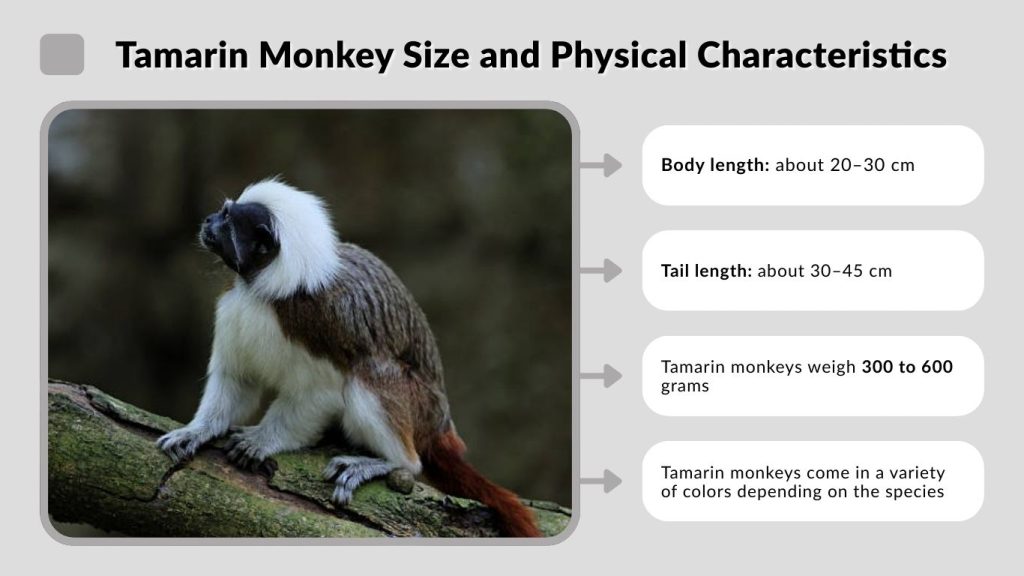
The tamarin monkey size is quite small compared to many other primates. However, their small bodies allow them to move quickly and efficiently through forest canopies.
Body Size
On average, tamarin monkeys have the following measurements:
- Body length: about 20–30 cm (8–12 inches)
- Tail length: about 30–45 cm (12–18 inches)
Their tails are usually longer than their bodies and help maintain balance while climbing.
Weight
Most tamarin monkeys weigh between 300 and 600 grams, making them among the smallest primates in the world.
Appearance and Fur Patterns
Tamarin monkeys come in a variety of colors depending on the species. Their fur may be:
- Brown
- Black
- Golden
- White
Some species also have unique facial hair patterns. For example, emperor tamarins have long white whiskers that resemble a mustache, while cotton-top tamarins have a striking white crest on their heads.
What Do Tamarin Monkeys Eat?
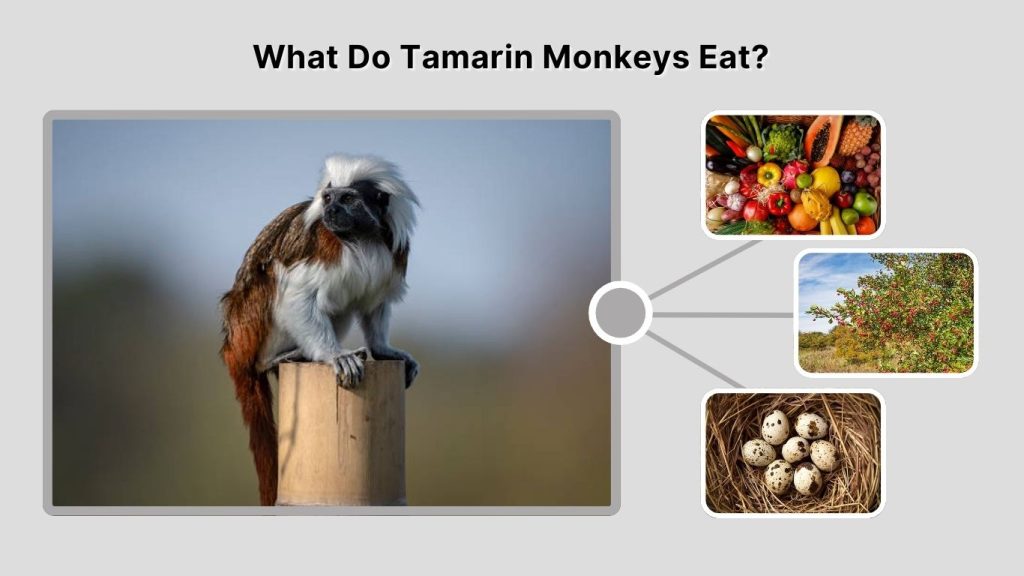
A common question is what do tamarin monkeys eat. These primates have a varied diet that includes both plant and animal foods.
Main Foods
Tamarin monkeys commonly eat:
- Fruits
- Berries
- Nectar
- Tree sap
Fruits provide energy for their active lifestyle in the forest canopy.
Animal Food Sources
In addition to plants, tamarins also eat protein-rich foods such as:
- Insects
- Spiders
- Small reptiles
- Bird eggs
These foods help provide essential nutrients needed for growth and survival.
Foraging Behavior
Tamarin monkeys spend a large part of their day searching for food. They move quickly through branches, carefully inspecting leaves, bark, and tree cavities for insects and fruits.
Their agility and sharp eyesight make them efficient foragers in the dense forest canopy.
Tamarin Monkey Diet
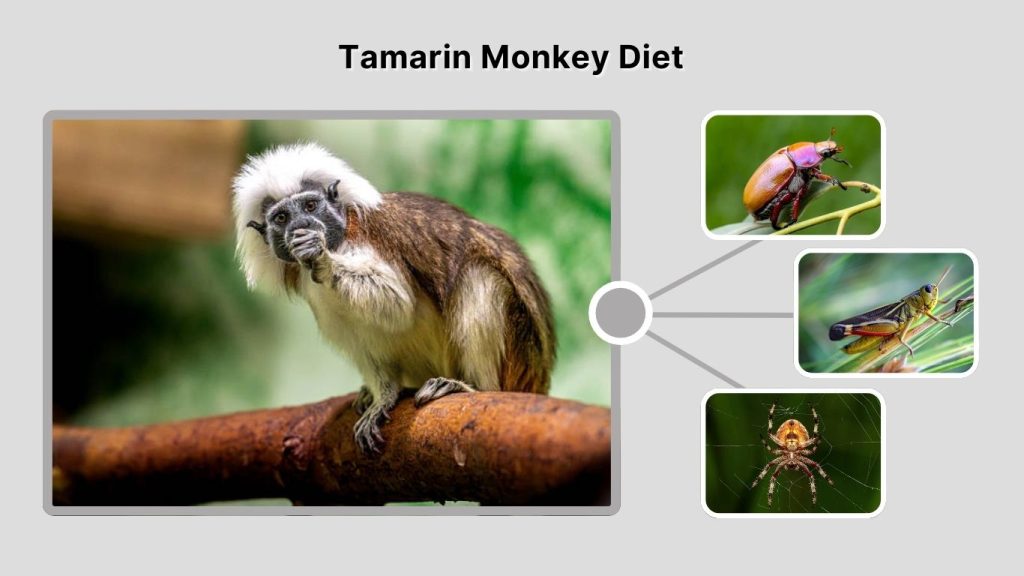
The tamarin monkey diet is considered omnivorous, meaning these primates eat both plant and animal foods. Their flexible diet helps them survive in the diverse environments of tropical forests.
Omnivorous Feeding Habits
Tamarin monkeys eat a wide variety of foods depending on what is available in their habitat. Their diet usually includes fruits, insects, nectar, and small animals. This balanced diet provides the energy and nutrients they need for their active lifestyle.
Importance of Insects
Insects are an important part of the tamarin diet because they provide protein. Tamarins often search under leaves, tree bark, and small crevices to find insects such as:
- Beetles
- Grasshoppers
- Spiders
- Caterpillars
These foods help support their growth and overall health.
Seasonal Diet Changes
Food availability changes throughout the year in tropical forests. When fruit is abundant, tamarin monkeys eat more fruit. During times when fruit is scarce, they rely more heavily on insects, tree sap, and other small food sources.
Social Behavior and Group Life
Tamarin monkeys are highly social animals that usually live in small family groups. Living in groups helps them stay safe from predators and makes it easier to find food.
Living in Small Groups
A typical tamarin group usually consists of 4 to 15 individuals. These groups often include parents, offspring, and sometimes other related members.
Group members travel together through the forest while searching for food and resting in the trees.
Communication
Tamarins communicate using several methods, including:
- High-pitched vocal calls
- Facial expressions
- Body movements
These signals help group members stay connected and warn others about potential dangers.
Cooperation in Raising Young
One interesting feature of tamarin social life is cooperative parenting. In many species, males and other group members help carry and care for babies. This teamwork increases the chances of survival for young tamarins.
Baby Tamarin Monkey

A baby tamarin monkey depends heavily on its family during the early stages of life.
Birth and Infant Care
Female tamarins usually give birth to twins, which is unusual among primates. After birth, the babies cling to their parents and other group members.
Fathers often carry the infants on their backs, bringing them to the mother only when it is time to nurse.
Appearance of Newborns
Newborn tamarins are tiny and covered with soft fur. Their eyes are open at birth, and they quickly develop the strength to hold onto their caregivers.
Learning Survival Skills
As baby tamarins grow older, they begin exploring branches and playing with other young monkeys. Through observation and play, they learn important skills such as:
- Climbing and jumping
- Finding food
- Communicating with group members
These skills prepare them for life as adult tamarin monkeys.
Tamarin Monkey Lifespan
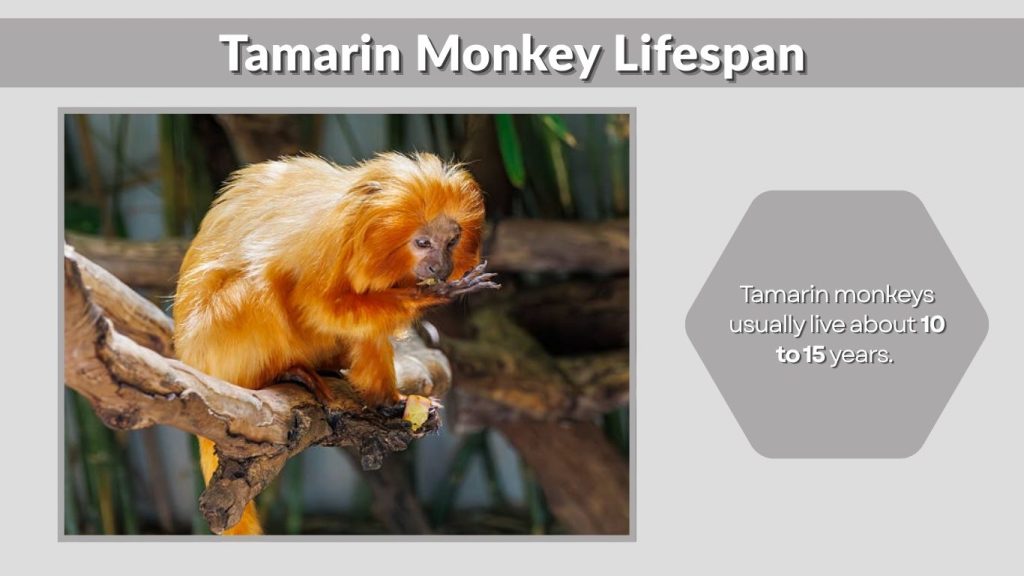
The tamarin monkey lifespan varies depending on environmental conditions and whether the monkeys live in the wild or captivity.
Lifespan in the Wild
In their natural habitat, tamarin monkeys usually live about 10 to 15 years. Survival depends on food availability, predators, and habitat conditions.
Lifespan in Captivity
In zoos or protected environments, tamarins may live up to 18 to 20 years due to regular food supply and medical care.
Factors Affecting Lifespan
Several factors influence tamarin longevity, including:
- Habitat quality
- Availability of food
- Predators
- Human activities such as deforestation
Protecting forest habitats is important for ensuring healthy tamarin populations.
Tamarin Monkey Facts
There are many fascinating tamarin monkey facts that make these primates unique.
- Tamarin monkeys are among the smallest primates in the world.
- Many species have distinctive facial hair, such as the emperor tamarin’s mustache.
- Tamarins often give birth to twins, which is rare among monkeys.
- They communicate using a wide variety of vocal calls.
- Tamarins are extremely agile climbers and move quickly through tree branches.
These remarkable traits make tamarin monkeys one of the most interesting primates in tropical forests.
Predators and Threats
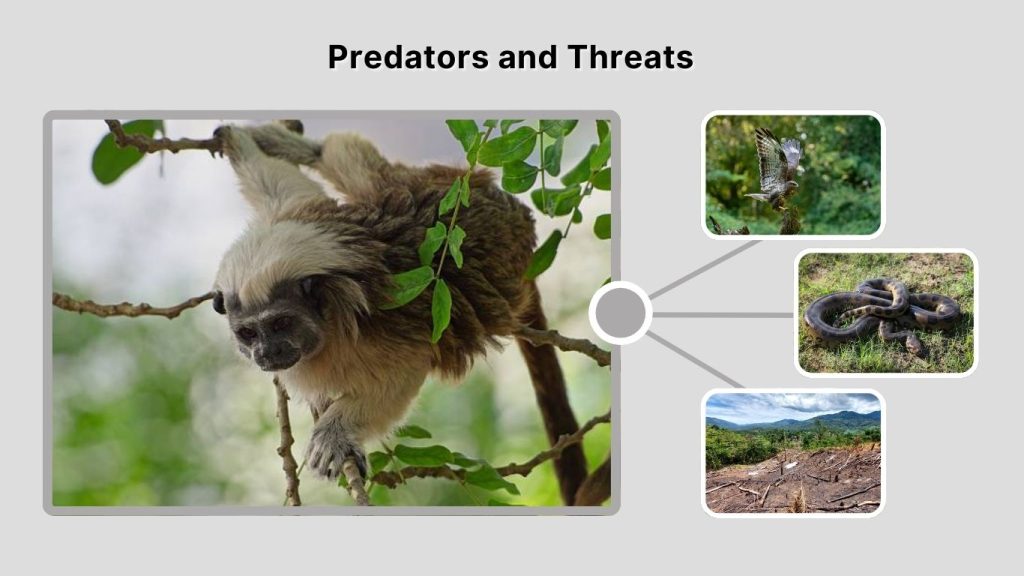
Tamarin monkeys face several threats from both natural predators and human activities.
Natural Predators
Common predators include:
- Birds of prey such as hawks and eagles
- Snakes
- Wild cats
Living in groups helps tamarins detect predators quickly and warn other members.
Human Threats
Human activities are one of the biggest dangers to tamarin populations. These threats include:
- Deforestation
- Habitat loss
- Illegal pet trade
As forests are cleared for agriculture and development, tamarin habitats continue to shrink.
Conclusion
Tamarin monkeys are small but fascinating primates known for their agility, intelligence, and strong social bonds. Living in the tropical forests of Central and South America, they rely on trees for food, shelter, and protection. Their diet, group behavior, and unique parenting strategies make them remarkable animals within the primate world. By protecting their natural habitats and supporting conservation efforts, we can help ensure that tamarin monkeys continue to thrive in the forests where they belong.