




The southern elephant seal is the largest seal species on Earth and one of the most extraordinary marine mammals in the Southern Ocean. Known for its massive size and the male’s distinctive trunk-like nose, this species is a powerful deep-sea diver and long-distance traveler. Found mainly on sub-Antarctic islands, southern elephant seals play a vital role in marine ecosystems. In this article, we’ll explore their diet, habitat, lifespan, life cycle, and other fascinating facts.
What is a Southern Elephant Seal?
Scientific Classification
The southern elephant seal’s scientific name is Mirounga leonina. It belongs to the family Phocidae, commonly known as true seals. These seals lack external ear flaps and are highly adapted for life in cold ocean environments.
This species is closely related to the northern elephant seal but is significantly larger and lives in the Southern Hemisphere.
Physical Description
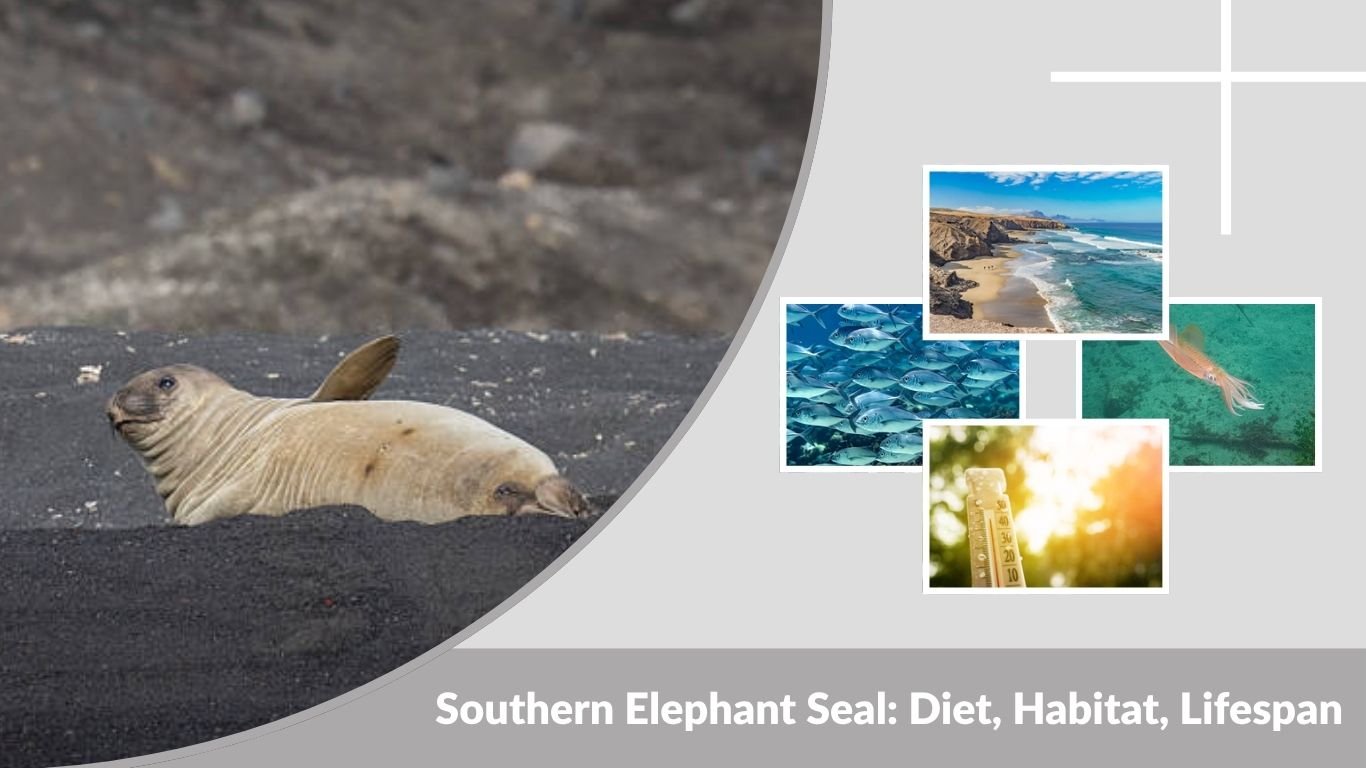
Southern elephant seals are the largest of all seal species. Adult males, called bulls, are enormous and can grow much larger than females, showing extreme sexual dimorphism.
Males develop a large proboscis, or trunk-like nose, which is used to produce loud calls during the breeding season. These calls help establish dominance and intimidate rival males.
Their bodies are thick and covered in blubber, providing insulation against freezing temperatures. Their skin appears wrinkled, and their coloration ranges from gray to brown.
Southern Elephant Seal Size and Weight
How Big Are Southern Elephant Seals?
Southern elephant seals are truly giants of the marine world. Adult males can reach lengths of up to 5 to 6 meters (16 to 20 feet), making them the largest pinnipeds on Earth.
Females are much smaller, typically measuring around 2.5 to 3 meters (8 to 10 feet). This dramatic size difference plays a key role in their breeding behavior.
Weight Range
Male southern elephant seals can weigh between 2,500 and 4,000 kilograms, with some exceptionally large individuals exceeding this range.
Females are significantly lighter, usually weighing between 400 and 900 kilograms. This difference in weight allows males to dominate breeding territories and compete for mates.
Why Are They So Large?
Their massive size serves several important purposes. A thick layer of blubber helps them retain heat in icy waters and acts as an energy reserve during long periods without food.
Large body size also supports their incredible diving abilities, allowing them to reach great depths and stay underwater for extended periods.
Southern Elephant Seal Habitat
Where Do Southern Elephant Seals Live?
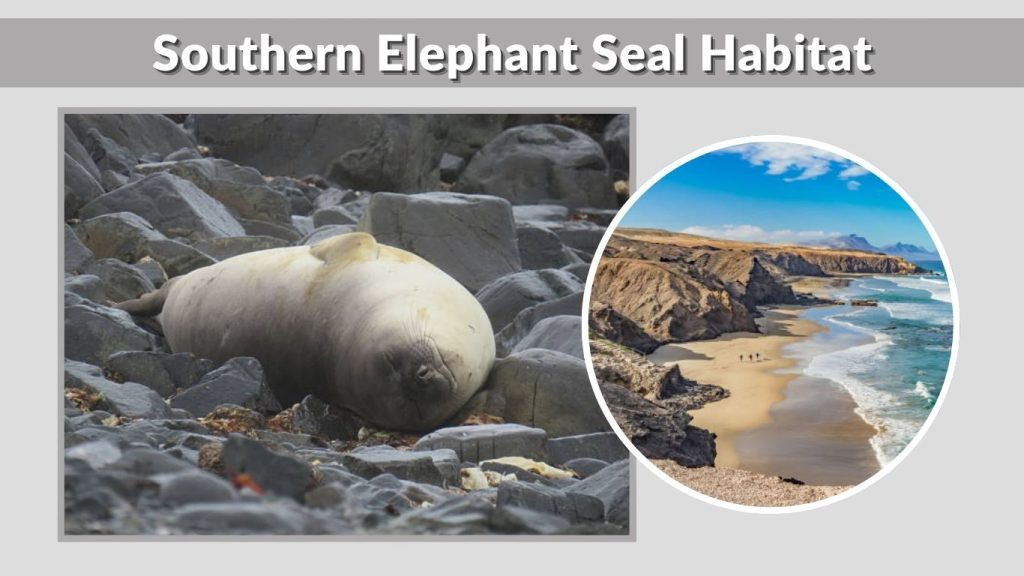
Southern elephant seals are found throughout the Southern Ocean, particularly around sub-Antarctic islands such as South Georgia, the Falkland Islands, and Macquarie Island.
They spend most of their lives in the open ocean but come ashore during specific times of the year for breeding and molting.
Habitat Preferences
These seals prefer remote, cold environments where human disturbance is minimal. Breeding takes place on sandy or rocky beaches, often in large colonies.
At sea, they inhabit deep ocean waters where food is abundant. Their ability to travel vast distances allows them to explore different feeding grounds.
Migration Patterns
Southern elephant seals are known for their long migrations. After breeding and molting, they travel thousands of kilometers across the ocean in search of food.
They spend the majority of their lives at sea, returning to land only for breeding and molting seasons. Despite these long journeys, they often return to the same beaches each year.
Southern Elephant Seal Diet
What Does a Southern Elephant Seal Eat?
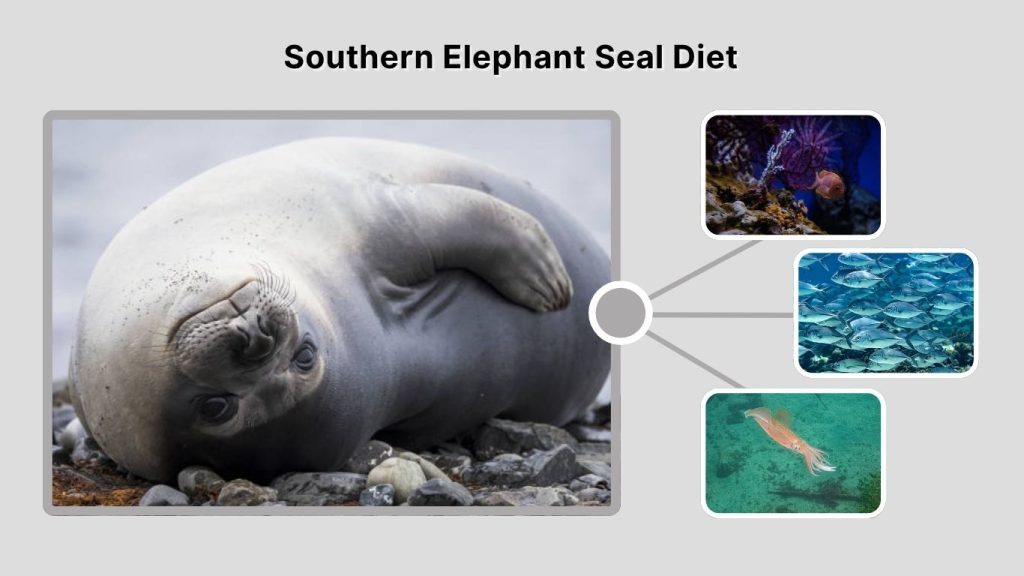
Southern elephant seals are carnivorous and mainly feed on fish, squid, and other deep-sea organisms. Squid is a particularly important part of their diet.
They hunt prey that lives far below the ocean surface, making them deep-sea predators.
Hunting Behavior
One of the most remarkable traits of southern elephant seals is their ability to dive to extreme depths. They can dive over 1,500 meters (nearly 5,000 feet) and stay underwater for up to two hours.
They spend most of their time diving continuously while searching for food. This constant foraging behavior allows them to efficiently locate prey in deep ocean environments.
Feeding Adaptations
Southern elephant seals have several adaptations that make them exceptional divers. They can store large amounts of oxygen in their blood and muscles, allowing them to remain underwater for long periods.
Their heart rate slows during dives, conserving oxygen and enabling them to explore deep waters where food is plentiful.
Southern Elephant Seal Facts
Record-Breaking Size
Southern elephant seals are not only the largest seals but also among the largest carnivorous mammals in the world. Their size gives them a major advantage in survival and competition.
Deep Diving Ability
These seals are among the deepest-diving mammals on Earth. Their ability to dive for long durations and reach extreme depths allows them to access food sources unavailable to many other predators.
Social Behavior
Southern elephant seals display dramatic social behavior during the breeding season. Dominant males establish territories and control groups of females known as harems.
These males engage in intense battles, using their size, strength, and loud vocalizations to compete for dominance.
Predators
Despite their massive size, southern elephant seals are not completely safe from predators. The main threats come from killer whales (orcas) and large sharks, especially great white sharks.
Young seals and females are more vulnerable, particularly when they are near the surface or close to shore. Adult males are less frequently targeted due to their enormous size, but they can still fall prey to powerful predators in certain situations.
Southern Elephant Seal Baby (Pups)
Breeding Season
Southern elephant seals breed during the winter months, typically between August and November, depending on the location. During this time, large colonies gather on beaches across sub-Antarctic islands.
Dominant males arrive first and establish territories, competing fiercely with rivals for control of groups of females.
Appearance of Pups
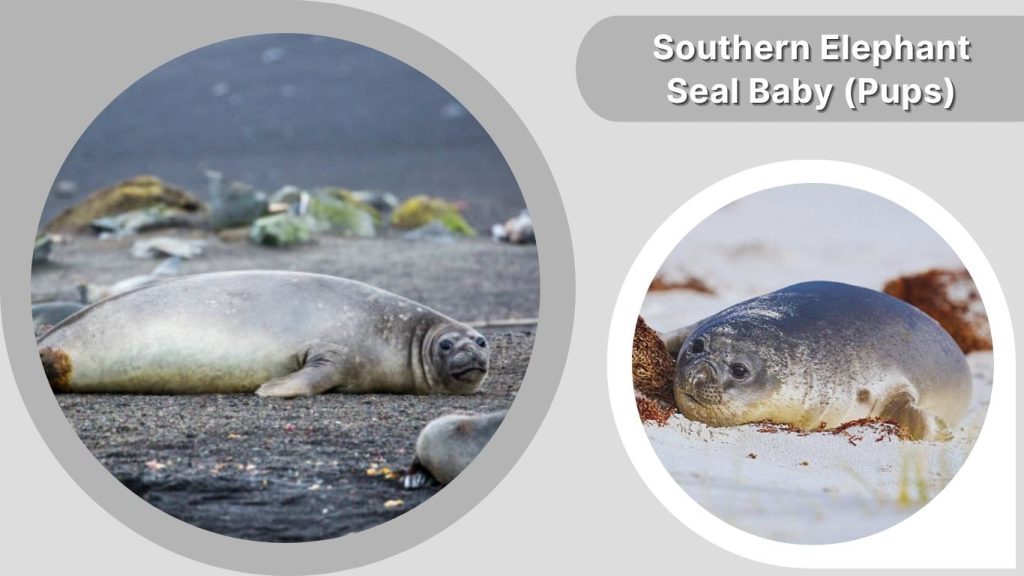
Newborn pups are covered in a thick black coat, which helps protect them during their early days on land. Because of this, they are often referred to as “black pups.”
As they grow, they shed this dark coat and develop the lighter coloration typical of adult seals.
Maternal Care
Mother southern elephant seals provide intense care for their pups over a short period of about three to four weeks. During this time, the mother produces rich, high-fat milk that allows the pup to gain weight rapidly.
By the time they are weaned, pups can weigh several times their birth weight. After weaning, the mother returns to the ocean, leaving the pup to survive independently using its stored fat reserves.
Southern Elephant Seal Life Cycle
Birth Stage
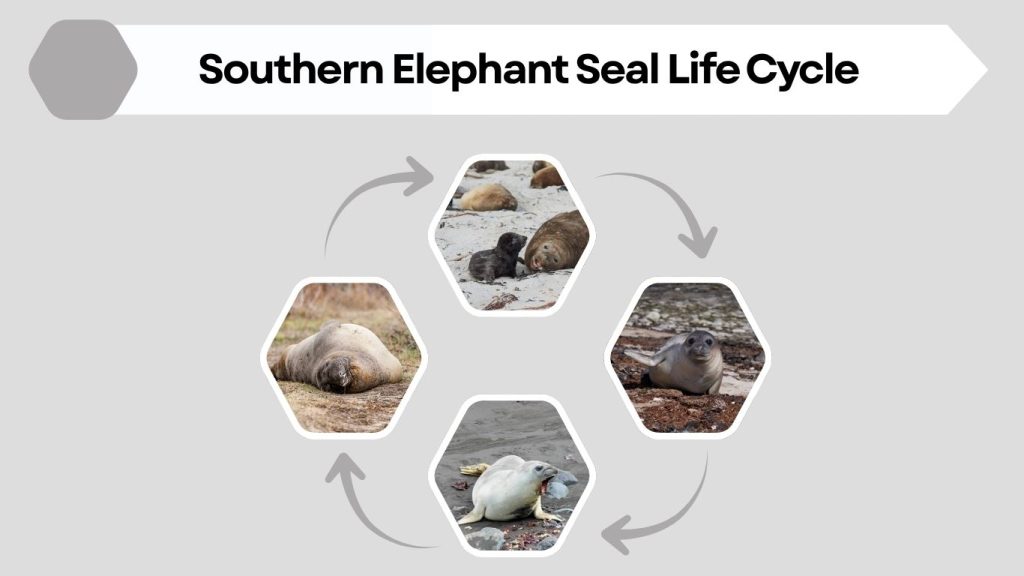
The life cycle begins when pups are born on land during the breeding season. At this stage, they are completely dependent on their mothers for nourishment and protection.
Juvenile Stage
After weaning, young seals enter the juvenile stage. They begin learning to swim and hunt, gradually developing the skills needed to survive in the ocean.
This is a challenging phase, as they must adapt quickly to a harsh environment and avoid predators.
Adult Stage
As they mature, southern elephant seals become powerful ocean predators. Adult males grow much larger and compete for breeding opportunities, while females focus on reproduction and raising pups.
Adults spend most of their lives at sea, returning to land only for breeding and molting.
Aging Process
With age, seals continue to grow and develop, especially males, which can increase significantly in size over time. Older males often dominate breeding areas due to their strength and experience.
Southern Elephant Seal Lifespan
Average Lifespan
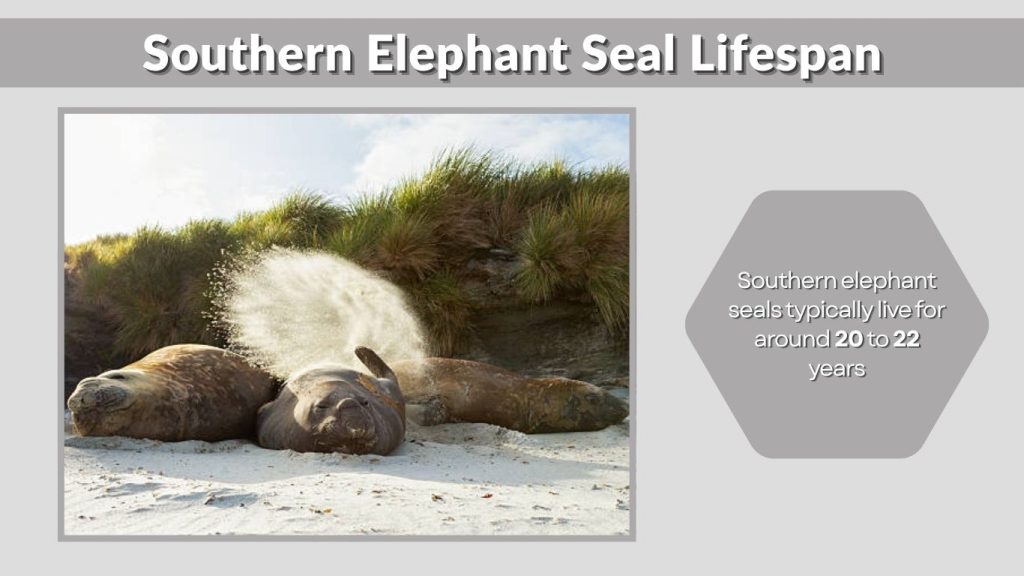
Southern elephant seals typically live for around 20 to 22 years, although some individuals may live longer under favorable conditions.
Lifespan Differences
Females generally live longer than males. This is mainly because males face higher risks due to intense competition and physical fights during the breeding season.
Factors Affecting Lifespan
Several factors influence lifespan, including predation, environmental conditions, and food availability. Changes in sea temperature and prey distribution can also impact survival rates.
Role in the Ecosystem
Southern elephant seals play an important role as top predators in the Southern Ocean ecosystem. By feeding on fish and squid, they help regulate marine populations and maintain ecological balance.
They are also part of the food chain, serving as prey for apex predators like killer whales and sharks. This interaction contributes to a stable and functioning marine ecosystem.
Threats and Conservation
Historical Threats
In the past, southern elephant seals were heavily hunted for their blubber, which was used to produce oil. This led to a significant decline in their population during the 19th century.
Modern Threats
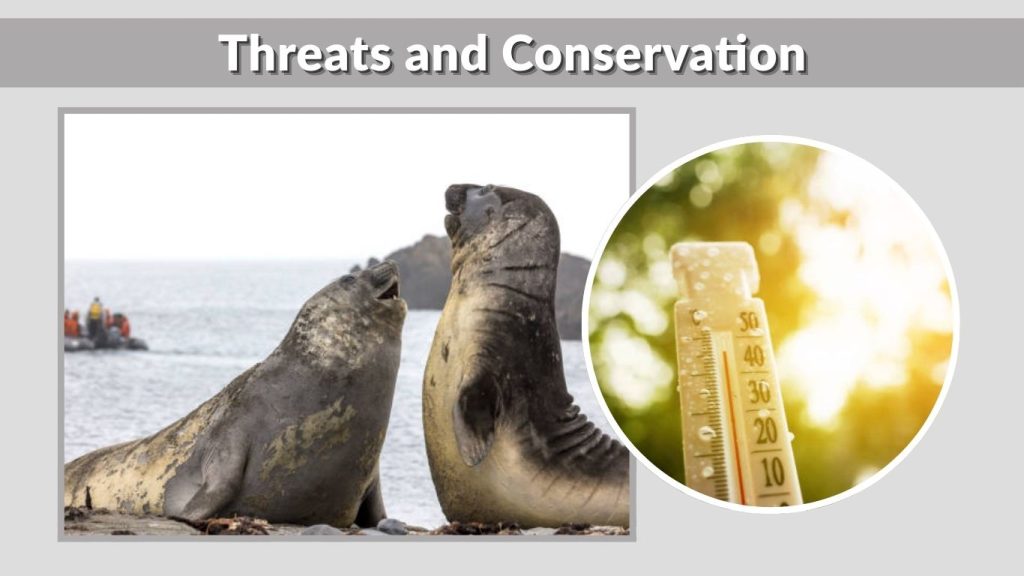
Today, the biggest threats come from environmental changes. Climate change is affecting sea temperatures and ocean ecosystems, which may impact food availability.
Pollution and human activity can also pose risks, although many populations are located in remote areas with limited human interference.
Conservation Status
Southern elephant seals are currently classified as “Least Concern.” However, some populations have shown declines in certain regions, making continued monitoring important.
Conservation efforts and protected areas help ensure their long-term survival.
Interesting Facts About Southern Elephant Seals
- They are the largest seal species in the world.
- Males can weigh up to 4,000 kilograms or more.
- They can dive deeper than most marine mammals.
- They spend most of their lives at sea.
- Males use their large noses to produce loud sounds during breeding season.
FAQs
How deep can southern elephant seals dive?
Southern elephant seals can dive over 1,500 meters (about 5,000 feet) and stay underwater for up to two hours, making them some of the deepest-diving mammals.
Why do male southern elephant seals have a large nose?
The large nose, called a proboscis, helps males produce loud sounds to attract females and warn off rival males during the breeding season.
How much do southern elephant seals eat?
They consume large amounts of fish and squid during long feeding trips, building up fat reserves that help them survive during fasting periods on land.
Do southern elephant seals migrate?
Yes, they migrate long distances across the Southern Ocean, traveling thousands of kilometers between feeding areas and breeding beaches.
What happens to southern elephant seals after molting?
After molting, they return to the ocean to feed and rebuild their energy reserves before the next breeding season.
Conclusion
The southern elephant seal is a true giant of the marine world, combining immense size with incredible diving abilities and fascinating behavior. From its dramatic breeding battles to its deep-sea hunting skills, this species plays a vital role in the Southern Ocean ecosystem. Although currently not endangered, environmental changes could impact its future. Protecting these remarkable animals is essential for maintaining the balance of marine life and preserving one of the ocean’s most extraordinary species.