




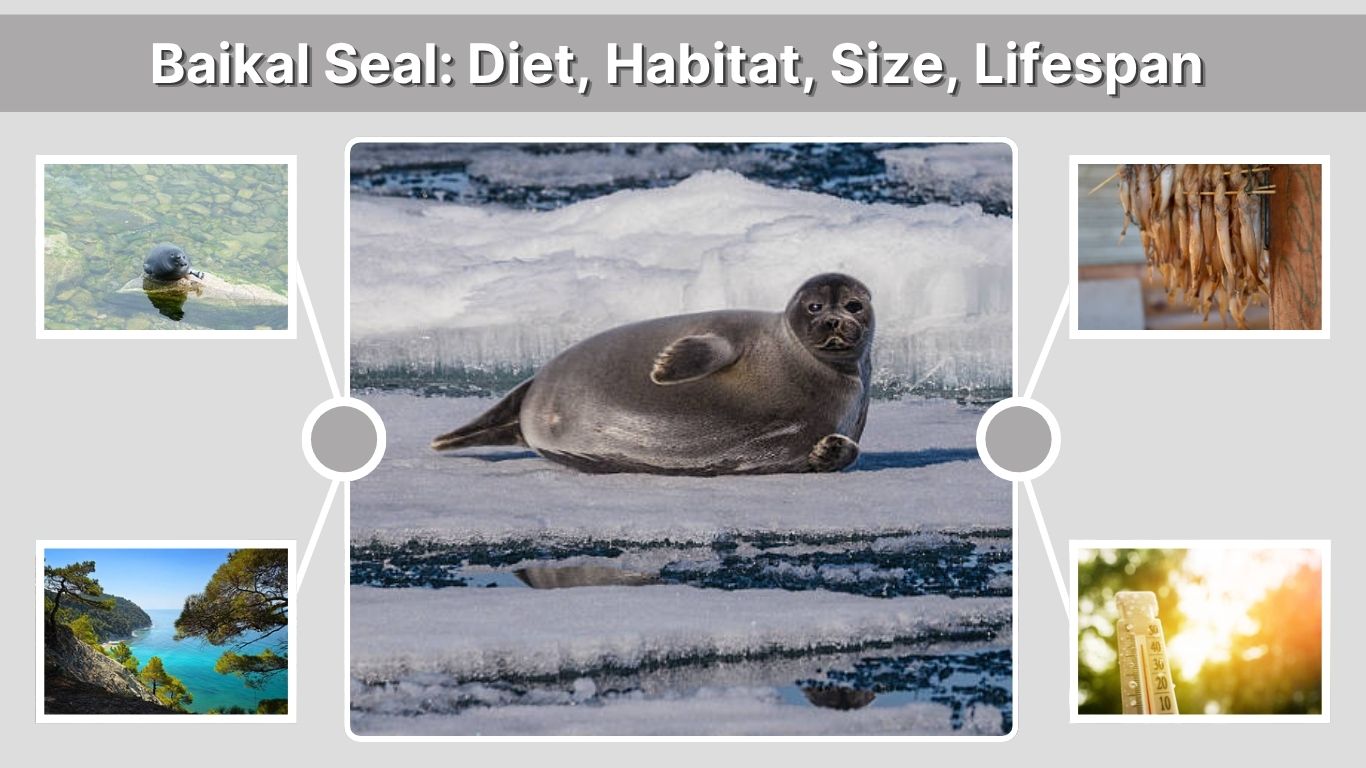
The Baikal seal, also known as the nerpa, is one of the most unique seal species in the world. Unlike other seals that live in oceans, the Baikal seal is the only seal species that spends its entire life in freshwater. It is found exclusively in Lake Baikal in Siberia, Russia—the deepest and oldest lake on Earth. With its round face, large eyes, and remarkable adaptations to icy conditions, the Baikal seal is both fascinating and important to its ecosystem.
What is a Baikal Seal?
Scientific Classification
The Baikal seal’s scientific name is Pusa sibirica. It belongs to the family Phocidae, also known as true seals. Like other true seals, it does not have external ear flaps and is highly adapted for aquatic life.
Scientists believe that Baikal seals are closely related to Arctic ringed seals and may have migrated into Lake Baikal thousands of years ago, eventually adapting to freshwater conditions.
Physical Description
Baikal seals are relatively small compared to many marine seal species. They have a rounded body, short flippers, and a distinctive “dog-like” face with large, expressive eyes.
Their fur is usually dark gray or brown on the back and lighter on the underside. A thick layer of blubber helps them survive in the cold waters of Lake Baikal, especially during winter when the lake is covered with ice.
Their large eyes are adapted for seeing in low-light conditions underwater, which is essential for hunting in deep water.
Baikal Seal Size and Physical Traits
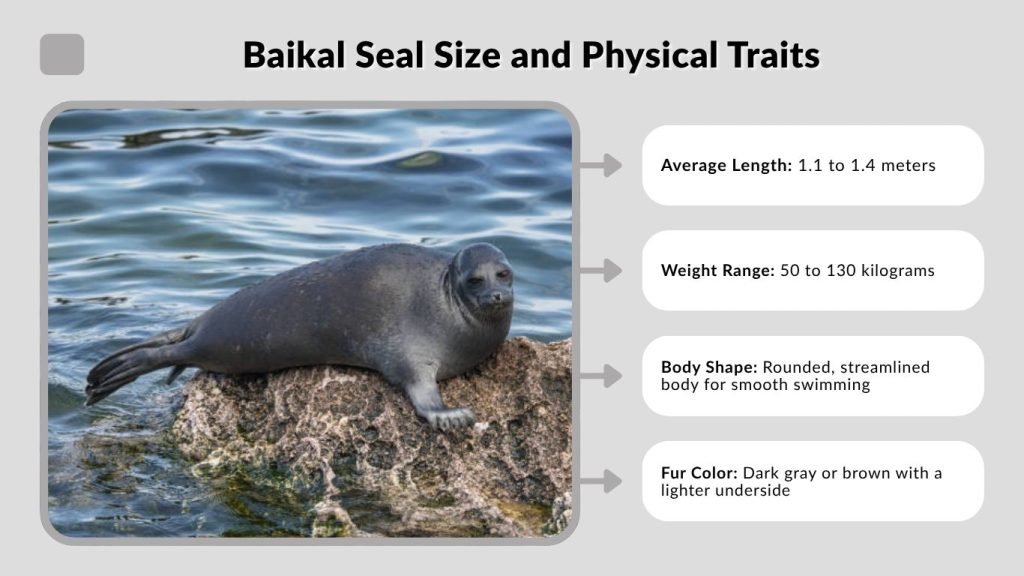
The Baikal seal is a compact and well-adapted freshwater seal, perfectly suited for life in the cold waters of Lake Baikal. Although smaller than many ocean-dwelling seals, its body is designed for efficient swimming, insulation, and survival in icy conditions. Its physical traits reflect a balance between agility, endurance, and cold-weather adaptation.
Key Size and Physical Traits
- Average Length: 1.1 to 1.4 meters (3.5–4.5 feet)
- Weight Range: 50 to 130 kilograms
- Body Shape: Rounded, streamlined body for smooth swimming
- Fur Color: Dark gray or brown with a lighter underside
- Blubber Layer: Thick fat layer for warmth and energy storage
- Head Shape: Rounded “dog-like” face with large eyes
- Eyes: Large and adapted for low-light underwater vision
- Flippers: Short but strong, ideal for maneuvering in water
- Whiskers (Vibrissae): Highly sensitive for detecting prey
- Adaptation: Built to survive in cold freshwater and under ice
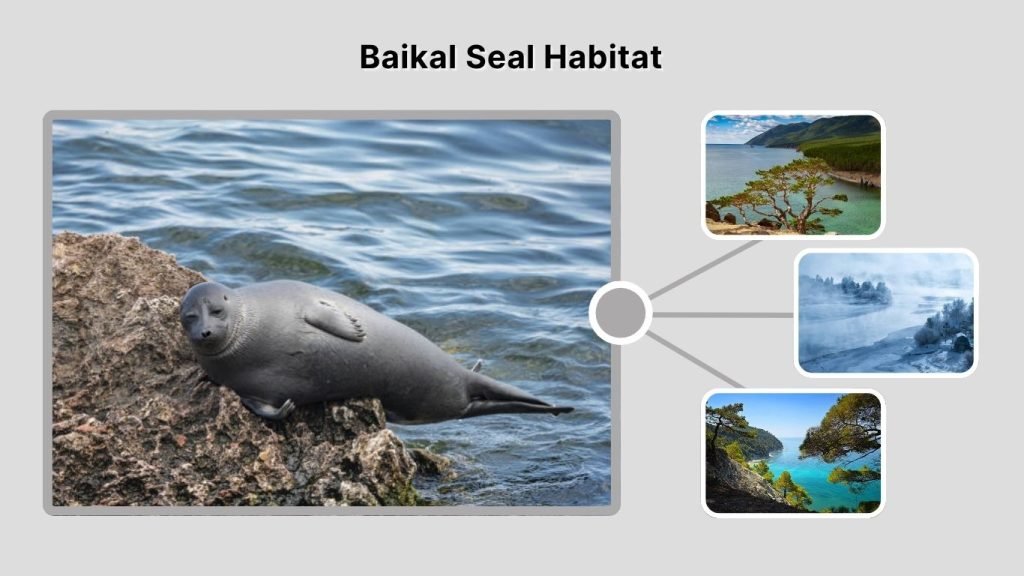
Baikal Seal Habitat
Where Do Baikal Seals Live?
Baikal seals are found only in Lake Baikal, located in Siberia, Russia. This lake is the deepest and one of the oldest freshwater lakes in the world, making it a unique habitat for wildlife.
Unlike other seal species that travel across oceans, Baikal seals spend their entire lives within this single lake.
Habitat Characteristics
Lake Baikal is known for its crystal-clear water, extreme depth, and rich biodiversity. It reaches depths of over 1,600 meters, providing a vast environment for the seals to explore and hunt.
During winter, the lake freezes over, creating thick ice sheets. Baikal seals rely on this ice for resting, breeding, and raising their young.
Ice and Seasonal Behavior
In winter, Baikal seals maintain breathing holes in the ice using their strong claws and teeth. These holes allow them to surface for air while spending most of their time underwater.
They also build snow-covered dens on the ice, which provide protection for pups from harsh weather and predators.
As the ice melts in spring and summer, the seals become more active in open water, focusing on feeding and rebuilding energy reserves.
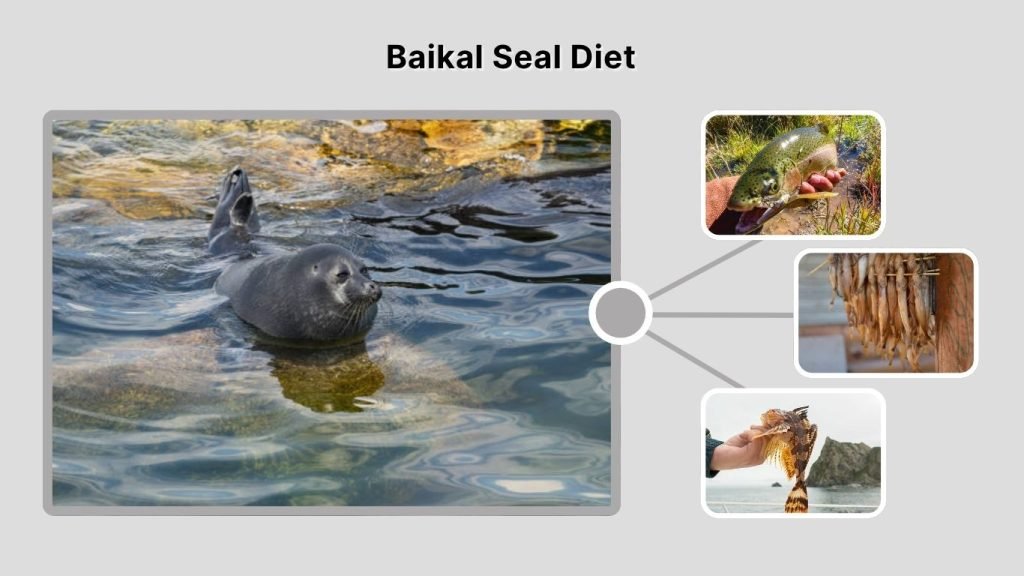
Baikal Seal Diet
What Does a Baikal Seal Eat?
Baikal seals are carnivorous and mainly feed on fish found in Lake Baikal. Their diet primarily includes species such as golomyanka and sculpins, which are abundant in the lake.
These fish are rich in nutrients and provide the energy needed for survival in cold conditions.
Hunting Behavior
Baikal seals are skilled hunters that dive deep into the lake to catch prey. They often hunt under ice during winter, using their excellent vision and sensitive whiskers to locate fish.
They are capable of long dives and can remain underwater for extended periods while searching for food.
Feeding Adaptations
Baikal seals have sharp teeth that help them catch slippery fish. Their whiskers detect vibrations in the water, making it easier to find prey even in low visibility.
Their strong swimming ability and diving skills make them highly effective predators in the freshwater environment.
Baikal Seal Facts
Unique Freshwater Species
The Baikal seal is the only seal species in the world that lives exclusively in freshwater. This makes it one of the most unique marine mammals on Earth.
Population and Distribution
The population of Baikal seals is estimated to be around 100,000 individuals, making them relatively stable compared to many other seal species.
They are widely distributed throughout Lake Baikal, although they are more commonly found in areas with suitable ice conditions during winter.
Behavior
Baikal seals are generally calm and curious animals. They can be seen resting on ice or swimming gracefully in the lake. While they are often solitary, they may gather in small groups, especially in areas with good food availability or suitable ice conditions.
They are known to be playful and agile in the water, frequently diving and resurfacing. Their behavior changes with the seasons, with more time spent on ice during winter and increased activity in open water during warmer months.
Predators
Baikal seals have very few natural predators due to their isolated freshwater habitat. Occasionally, large birds of prey or terrestrial animals may pose a threat to pups, but adult seals are generally safe.
This lack of predators has allowed the Baikal seal population to remain relatively stable compared to many marine seal species.
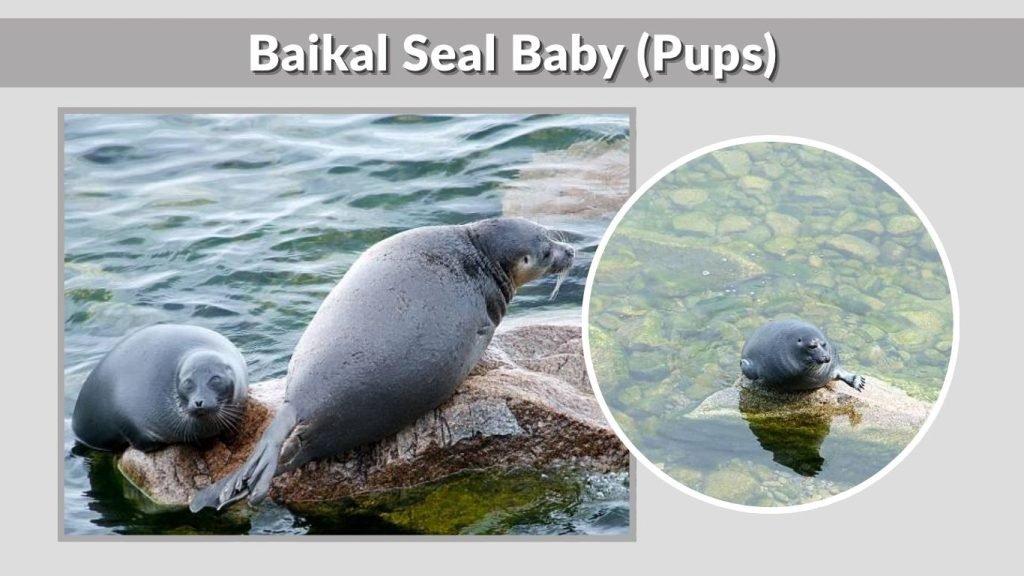
Baikal Seal Baby (Pups)
Breeding Season
Baikal seals typically give birth during late winter, around February to March, when the lake is covered in ice. This timing provides a stable and protected environment for raising pups.
Breeding usually takes place on the ice, often in sheltered areas.
Appearance of Pups
Newborn pups are covered in a soft, white fur that helps them blend into the snowy environment. This camouflage is important for protection during their early days.
As they grow, they shed this white coat and develop the darker coloration seen in adults.
Maternal Care
Mother Baikal seals care for their pups in ice dens, which provide shelter from harsh weather. The pups are nursed with rich milk, allowing them to grow quickly.
The nursing period lasts several weeks, after which the pup begins to explore the water and learn basic survival skills.
Baikal Seal Lifespan
Average Lifespan
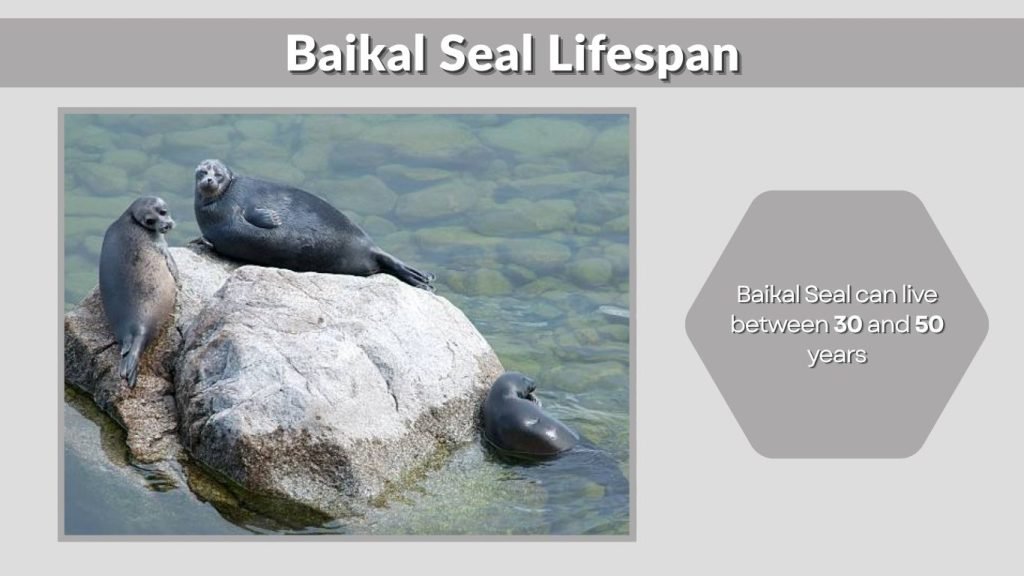
Baikal seals are known for their relatively long lifespan. They can live between 30 and 50 years, which is longer than many other seal species.
Factors Affecting Lifespan
Their lifespan is influenced by environmental conditions, food availability, and overall health. Because they have few predators, natural mortality is lower compared to ocean-dwelling seals.
However, environmental changes and human activities can still impact their survival.
Life Cycle of Baikal Seal
Birth Stage
The life cycle begins with the birth of pups in winter. At this stage, they are fully dependent on their mother for food and protection.
Juvenile Stage
After weaning, young seals enter the juvenile stage. They begin learning to swim, dive, and hunt for fish. This stage is critical for developing survival skills.
Adult Stage
As adults, Baikal seals become skilled hunters and spend most of their time in the water. They return to the ice during breeding season to reproduce.
Role in the Ecosystem
Baikal seals are top predators in Lake Baikal. By feeding on fish, they help regulate fish populations and maintain ecological balance.
They are also an important part of the lake’s unique ecosystem, which includes many species found nowhere else in the world.
Threats and Conservation
Natural Threats
Baikal seals face very few natural threats due to their isolated habitat. This has contributed to their relatively stable population.
Human Threats
Human activities pose the greatest risks to Baikal seals. Pollution from industrial waste can affect water quality and harm the seals’ food sources.
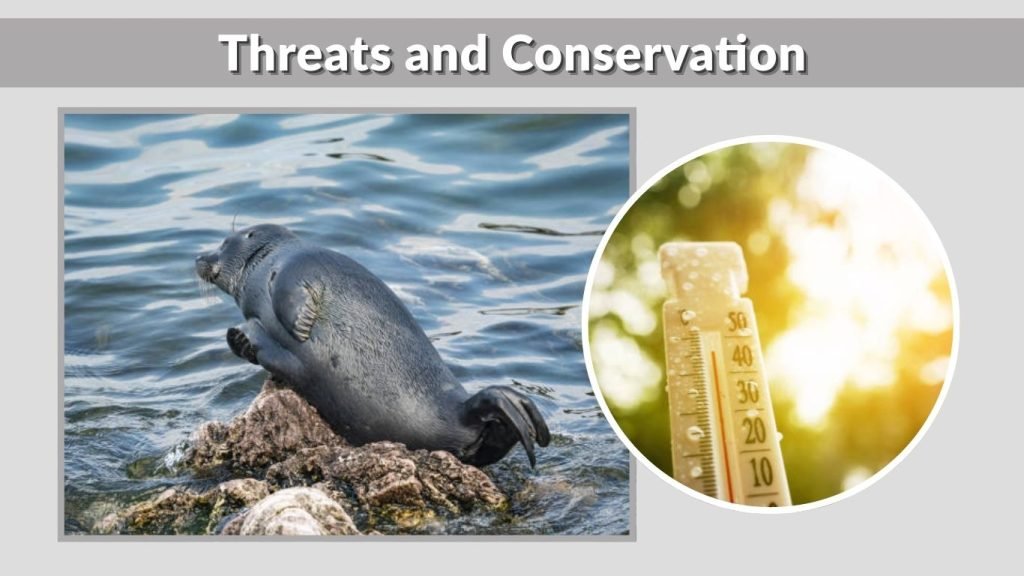
Climate change is also a concern, as it can reduce ice cover, which is essential for breeding and resting.
Fishing activities may also impact their food supply and increase the risk of accidental entanglement.
Conservation Status
Baikal seals are currently not considered endangered, but they are closely monitored due to their limited habitat and sensitivity to environmental changes.
Efforts to protect Lake Baikal and reduce pollution are crucial for ensuring the long-term survival of this unique species.
Interesting Facts About Baikal Seals
- They are the only freshwater seal species in the world.
- They live exclusively in Lake Baikal, the deepest lake on Earth.
- They can create and maintain breathing holes in thick ice.
- Their large eyes help them see in deep, dark water.
- They can live up to 50 years in the wild.
FAQs
Why is the Baikal seal called a freshwater seal?
The Baikal seal is called a freshwater seal because it lives entirely in Lake Baikal and does not inhabit oceans like other seal species.
How do Baikal seals breathe under ice?
They maintain breathing holes in the ice using their claws and teeth, allowing them to surface for air even when the lake is frozen.
How deep can Baikal seals dive?
Baikal seals can dive to depths of around 200 meters (650 feet) and stay underwater for up to 30–40 minutes.
Do Baikal seals live alone or in groups?
They are mostly solitary but may gather in small groups, especially during resting or breeding periods.
What makes Lake Baikal special for Baikal seals?
Lake Baikal is the deepest and one of the oldest freshwater lakes in the world, providing a unique and isolated habitat rich in food for the seals.
Conclusion
The Baikal seal is a truly unique species, perfectly adapted to life in a freshwater environment. From its ability to survive icy winters to its role as a top predator in Lake Baikal, it stands out among all seal species. While its population remains stable, environmental threats highlight the need for continued conservation efforts. Protecting Lake Baikal ensures not only the survival of the Baikal seal but also the preservation of one of the world’s most extraordinary ecosystems.