


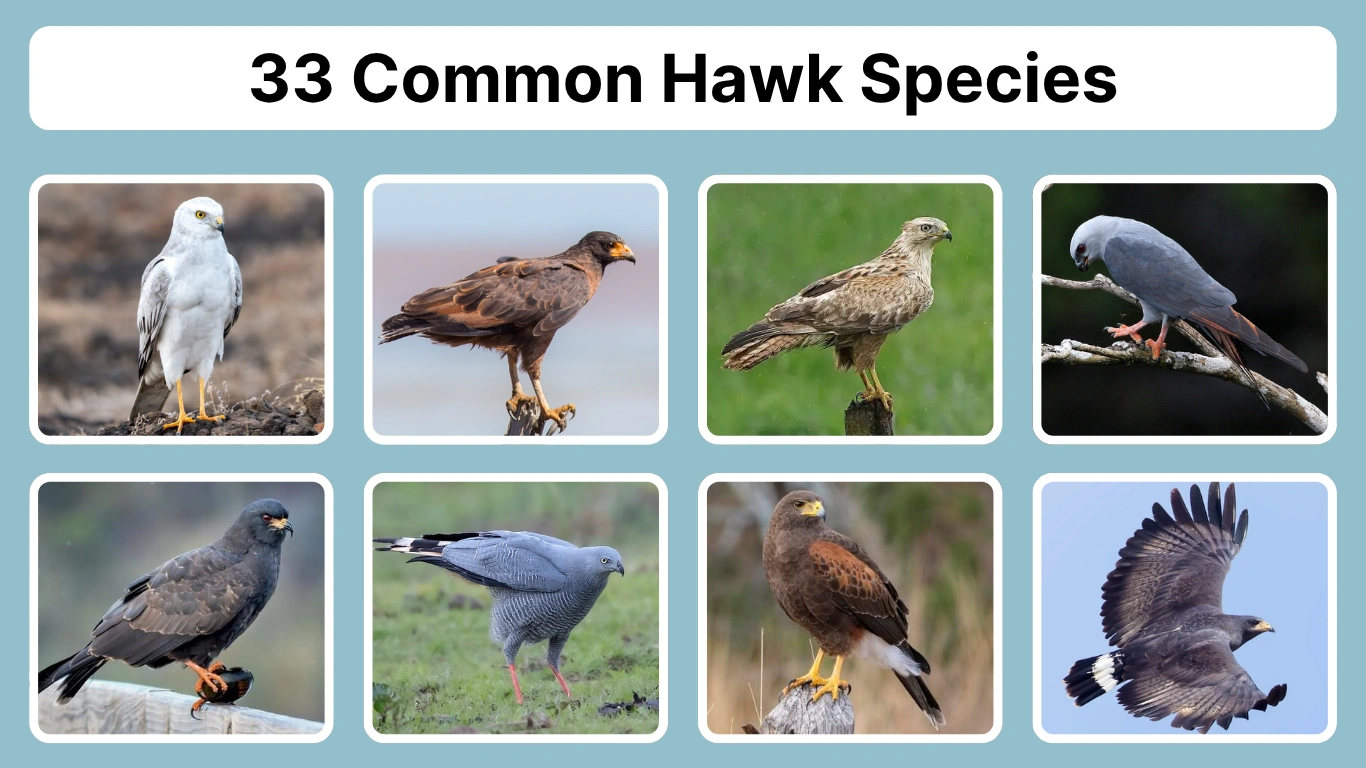
Hawks are among the most impressive and diverse birds of prey, found in nearly every corner of the world. From forest-dwelling hunters to open-country fliers, each species comes with unique traits, behaviors, and adaptations. This article explores 33 common hawk species—from the well-known Red-tailed Hawk to tropical specialists like the Snail Kite—detailing their appearance, habitat, and natural habits. Whether you’re a birdwatcher, nature enthusiast, or simply curious, this list offers a comprehensive look at the incredible variety of hawks around the globe.
1. Red-tailed Hawk

The Red-tailed Hawk (Buteo jamaicensis) is one of the most widespread and recognizable hawks in North America. Known for its broad wings and striking red tail, it is often seen soaring in wide circles over open fields or perched along highways. These birds are adaptable, found in a variety of habitats including deserts, grasslands, forests, and even urban areas.
Identification
- Large hawk with a wingspan of 45–52 inches
- Rich brown upperparts with pale undersides
- Distinctive reddish-brown tail, especially in adults
- Dark bar on the leading edge of the underwing
- Hooked yellow beak and yellow legs
- Juveniles have brown tail with narrow dark bands
Habitat and Range
Red-tailed Hawks are found throughout most of North America, from Alaska and Canada to Panama. They prefer open country and high perches, such as trees, poles, and fence posts, making it easy to spot them.
Diet and Hunting Behavior
They primarily feed on small mammals such as mice, rabbits, and squirrels, but they will also take birds, reptiles, and carrion. These hawks use their excellent vision to spot prey from great heights before diving swiftly to capture it.
Breeding and Nesting
Red-tailed Hawks are monogamous and often reuse the same nest year after year. Nests are typically built high in tall trees or on cliff ledges. The female usually lays 2–3 eggs, and both parents help raise the chicks.
2. Cooper’s Hawk
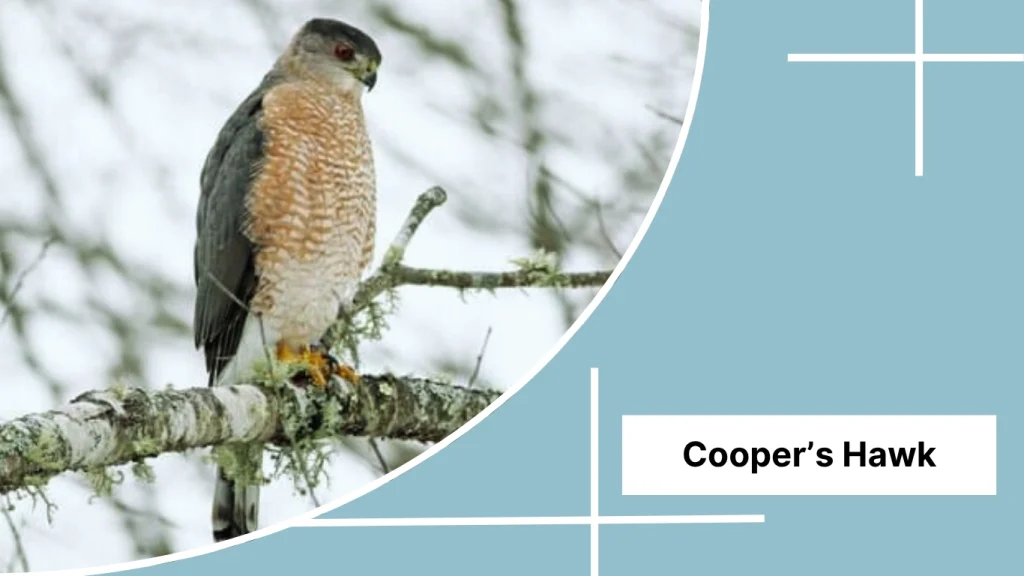
Cooper’s Hawk (Accipiter cooperii) is a medium-sized forest hawk known for its speed and agility. It primarily hunts birds and is often seen darting through wooded areas or zipping across backyards in pursuit of prey. Sometimes mistaken for the smaller Sharp-shinned Hawk, Cooper’s Hawk has a larger head and more robust body.
Identification
- Medium-sized hawk with a wingspan of 24–36 inches
- Blue-gray upperparts and pale, finely barred underparts
- Long, rounded tail with dark bands and a white tip
- Red eyes in adults, yellow in juveniles
- Rounded wings and large head that juts forward in flight
- Juveniles are brown above with streaked underparts
Habitat and Range
Found across most of North America, Cooper’s Hawks prefer forests, woodlands, and urban areas with tree cover. They’re increasingly common in suburban settings where bird feeders attract prey.
Behavior and Diet
Cooper’s Hawks feed primarily on small to medium-sized birds like robins, starlings, and doves, but also take rodents and reptiles. They hunt with swift, stealthy flight, often surprising their prey.
3. Sharp-shinned Hawk
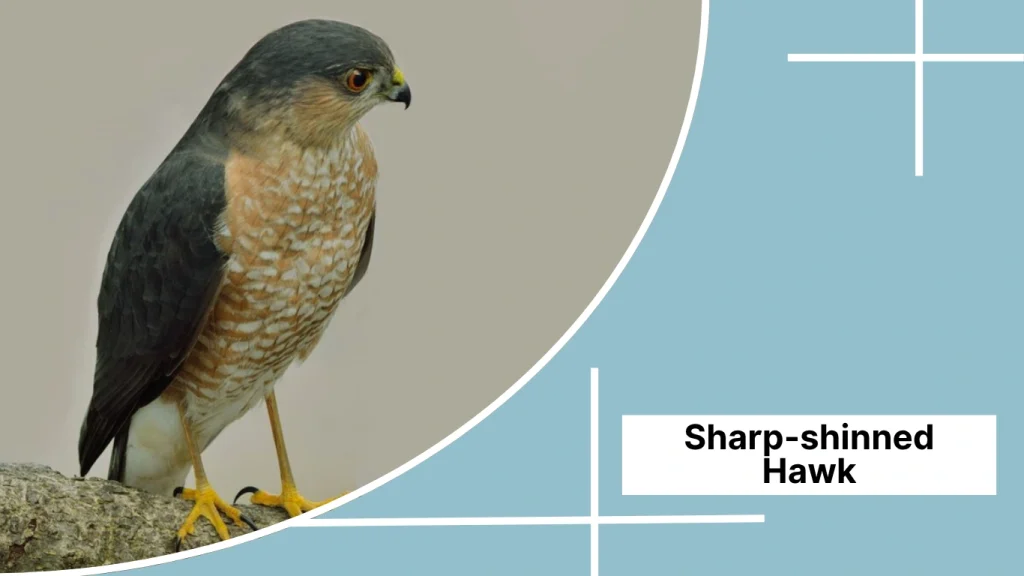
The Sharp-shinned Hawk (Accipiter striatus) is the smallest hawk in North America. It’s a fast and agile flyer, often seen darting through dense vegetation in pursuit of songbirds. Despite its size, it’s a fierce predator with excellent maneuverability.
Identification
- Small hawk with a wingspan of 17–23 inches
- Blue-gray back and wings with a pale, barred chest
- Long, narrow tail with squared-off tip and dark bands
- Small, rounded head and short, rounded wings
- Juveniles are brown above with heavy streaking below
- Legs are long and thin compared to other hawks
Habitat and Range
Sharp-shinned Hawks breed in dense forests across Canada, the northern U.S., and mountainous regions. In winter, they migrate to southern parts of the U.S., Mexico, and Central America.
Behavior and Hunting
These hawks are bird specialists, ambushing prey with rapid flight. They’re often seen near backyard feeders during migration seasons, using cover to launch surprise attacks on small birds.
4. Ferruginous Hawk
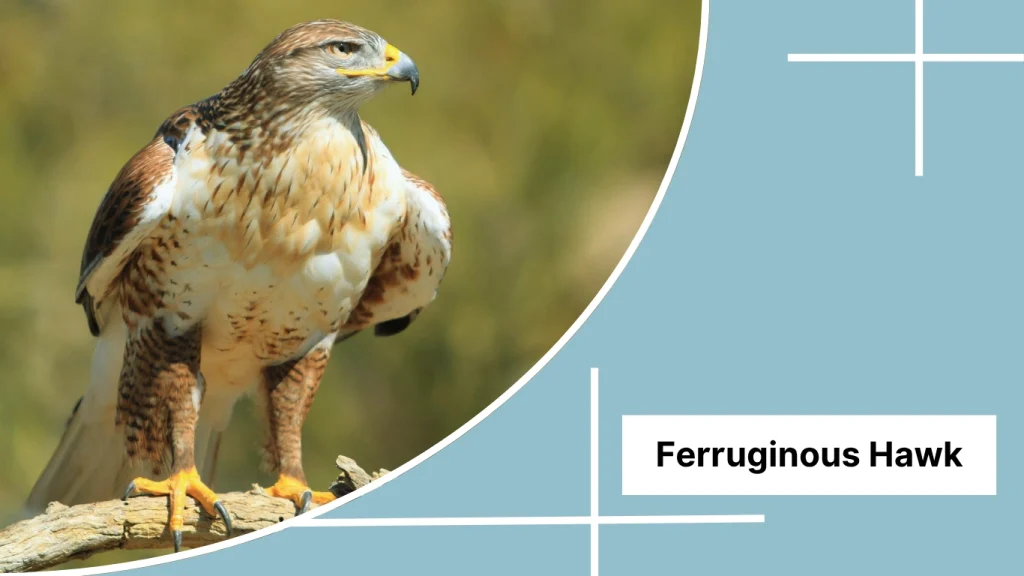
The Ferruginous Hawk (Buteo regalis) is the largest of the North American hawks and is known for its pale coloring and feathered legs. Native to the open landscapes of the western U.S. and parts of Canada, it prefers wide-open spaces like prairies and grasslands where it can soar and spot prey with ease.
Identification
- Large hawk with a wingspan of 52–56 inches
- Rusty brown (ferruginous) upperparts and pale underparts
- Broad, white tail and white head with light streaks
- Feathers extend down the legs to the feet (booted hawk)
- Two color morphs: light (most common) and dark
- Yellow legs and gape line with a large, robust bill
Habitat and Range
Ferruginous Hawks inhabit open country—prairies, shrublands, and deserts—mainly across the Great Plains and the intermountain West. They avoid heavily forested areas and urban environments.
Diet and Hunting Style
Their diet mainly consists of ground-dwelling mammals such as prairie dogs, rabbits, and ground squirrels. They hunt from elevated perches or by soaring and often use a low, fast flight to ambush prey.
5. Swainson’s Hawk
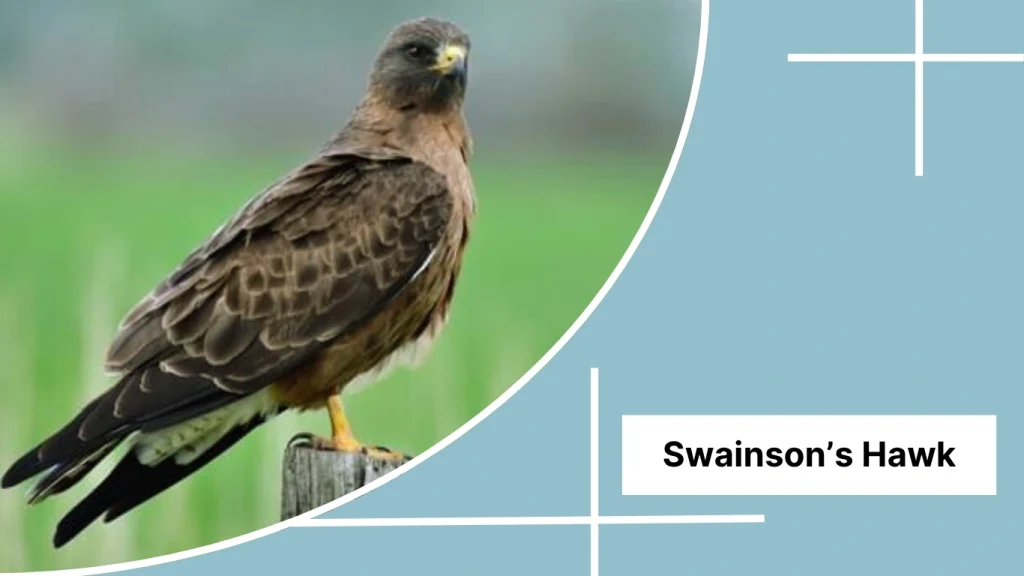
Swainson’s Hawk (Buteo swainsoni) is a long-distance migrator known for its elegant flight and seasonal journeys between North and South America. It’s commonly seen in the open western U.S. during the summer and spends winters in Argentina, covering thousands of miles annually.
Identification
- Medium to large hawk with a wingspan of 46–54 inches
- Dark chest band contrasting with light belly
- Brown upperparts with pale throat and facial area
- Long, pointed wings and relatively small beak
- Two color forms: light (most common) and dark morph
- Dark trailing edge on the underside of wings in flight
Habitat and Range
Prefers open grasslands, prairies, and agricultural fields during the breeding season. Migrates in massive flocks known as “kettles” through Central America to reach its South American wintering grounds.
Behavior and Prey
Swainson’s Hawks primarily feed on insects like grasshoppers and dragonflies, especially during migration. In breeding season, they also take rodents, reptiles, and small birds. They’re social and often roost in groups.
6. Rough-legged Hawk
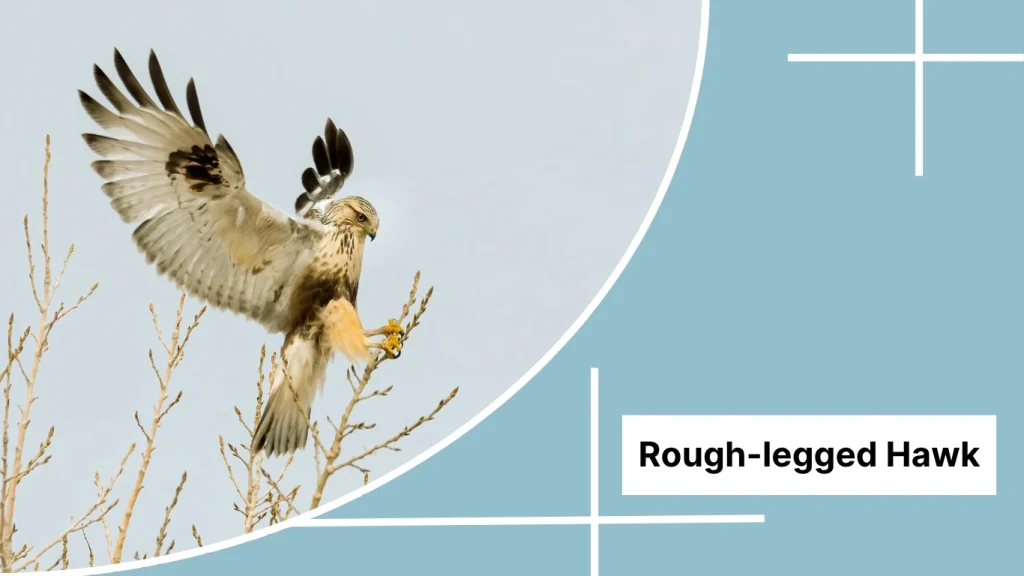
The Rough-legged Hawk (Buteo lagopus) is a large Arctic-breeding raptor that migrates south during winter. It’s named for its feathered legs, an adaptation for cold climates. These hawks are most often seen hovering over open fields or perched on poles during migration and winter months.
Identification
- Large hawk with a wingspan of 52–54 inches
- Feathered legs down to the toes
- Light and dark morphs; light morphs have pale underparts with a dark belly band
- Dark wrist patches on the underside of wings
- Long, white tail with a dark terminal band
- Small beak and long wings relative to body size
Habitat and Range
They breed in the tundra of northern Canada and Alaska and migrate south into the U.S. during winter, especially favoring open fields, marshes, and grasslands.
Hunting and Feeding
Rough-legged Hawks mainly hunt voles, lemmings, and other small mammals. They often hover while scanning the ground or use low perches to watch for movement.
7. Broad-winged Hawk
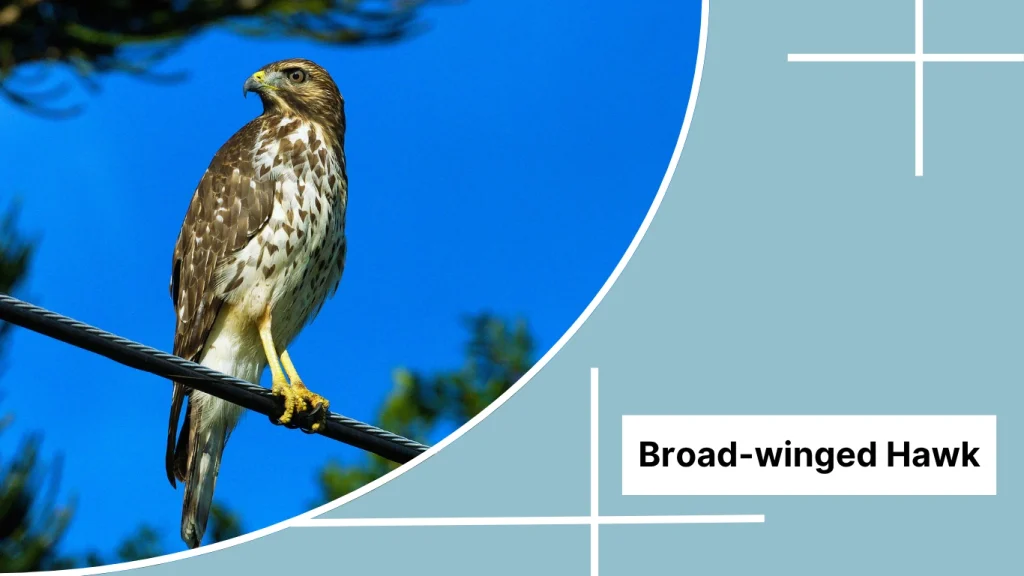
The Broad-winged Hawk (Buteo platypterus) is a compact forest-dwelling hawk known for its spectacular migratory flocks called “kettles,” where thousands can be seen circling thermals during fall migration.
Identification
- Medium-sized hawk with a wingspan of 32–39 inches
- Broad, rounded wings and short tail
- Brown upperparts with pale underparts and fine barring
- Bold black and white bands on the tail
- Small head compared to body
- Dark morphs are rare but exist
Habitat and Range
Breeds in deciduous or mixed forests across eastern North America. Winters in Central and South America. During migration, it follows ridgelines and coastlines, often passing over hawk-watching hotspots.
Diet and Behavior
Feeds on small mammals, frogs, snakes, and insects. Often hunts from perches, scanning the forest floor for movement. Outside of migration, they are secretive and hard to spot.
8. Northern Harrier
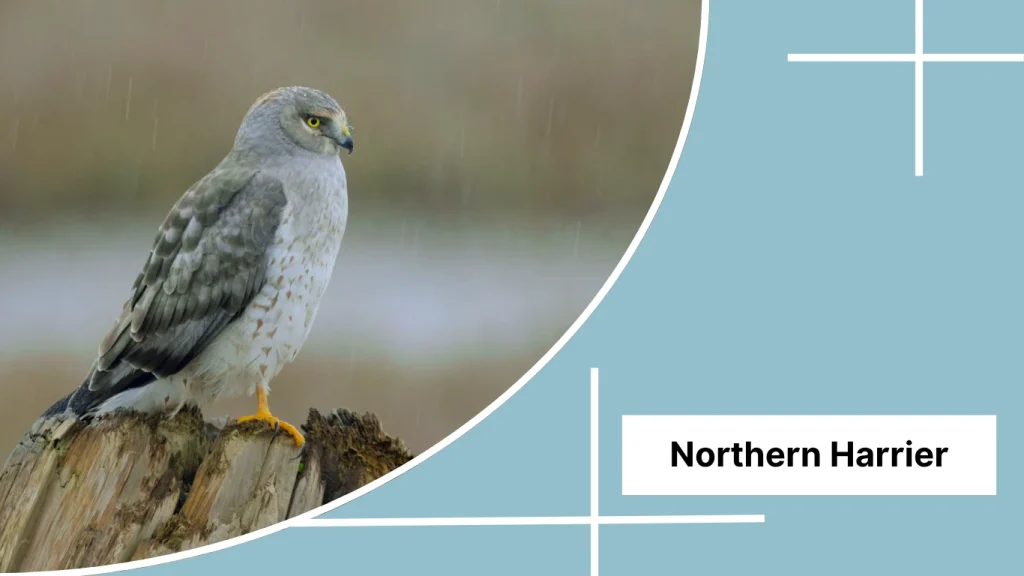
The Northern Harrier (Circus hudsonius) is a slender, long-tailed hawk often seen gliding low over fields with its wings held in a distinctive V-shape. It’s one of the few raptors that rely heavily on hearing as well as sight to hunt.
Identification
- Medium-sized hawk with a wingspan of 40–46 inches
- Long wings and long, rounded tail
- Males are pale gray above with whitish underparts; females and juveniles are brown
- Distinctive white rump patch visible in flight
- Owl-like facial disk
- Slim body and low, buoyant flight pattern
Habitat and Range
Prefers open wetlands, marshes, and grasslands across North America. Breeds in northern areas and migrates south for winter.
Diet and Hunting Behavior
Feeds on small mammals, birds, and amphibians. Hunts by flying low over the ground and listening for prey, aided by its facial disk that helps direct sound to the ears.
9. Northern Goshawk
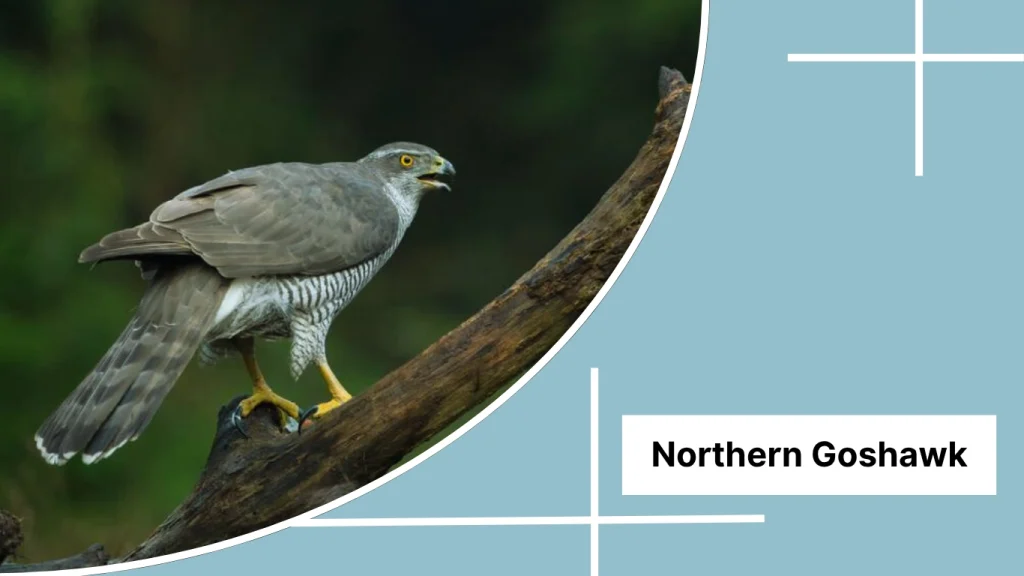
The Northern Goshawk (Accipiter gentilis) is a powerful, secretive forest raptor known for its strength and fierce defense of its territory. It’s the largest member of the Accipiter genus in North America.
Identification
- Large hawk with a wingspan of 40–46 inches
- Slate-gray upperparts and finely barred gray underparts
- Bold white eyebrow (supercilium) above red or orange eyes
- Long tail with dark bands
- Broad wings and thick body
- Juveniles are brown above with streaked underparts
Habitat and Range
Found in mature forests across the northern U.S., Canada, and mountainous regions. It prefers dense woodlands and is rarely seen in open areas.
Behavior and Diet
A fierce predator of birds, rabbits, and squirrels. It flies swiftly through trees, using agility and strength to catch prey in mid-flight or on the ground.
10. Common Black Hawk

The Common Black Hawk (Buteogallus anthracinus) is a stocky raptor of tropical and subtropical habitats, most commonly found along rivers, streams, and mangroves. It’s known for its loud, whistling calls and preference for hunting near water.
Identification
- Medium to large hawk with a wingspan of 50–52 inches
- Uniformly black plumage with broad white band on tail
- Short, broad wings and broad tail
- Yellow legs, face, and cere
- Juveniles are mottled brown with streaked underparts
- Soaring flight shows fingers on wingtips and slightly upturned wings
Habitat and Range
This hawk resides mainly in Central America and parts of the southwestern U.S., including Arizona, New Mexico, and Texas. It’s usually found in riparian woodlands, mangrove swamps, and tropical river corridors.
Behavior and Feeding
Feeds on aquatic prey such as crabs, frogs, small fish, and reptiles. Hunts from perches near water or while soaring. It is territorial and will vocally defend its nesting area.
11. Harris’s Hawk
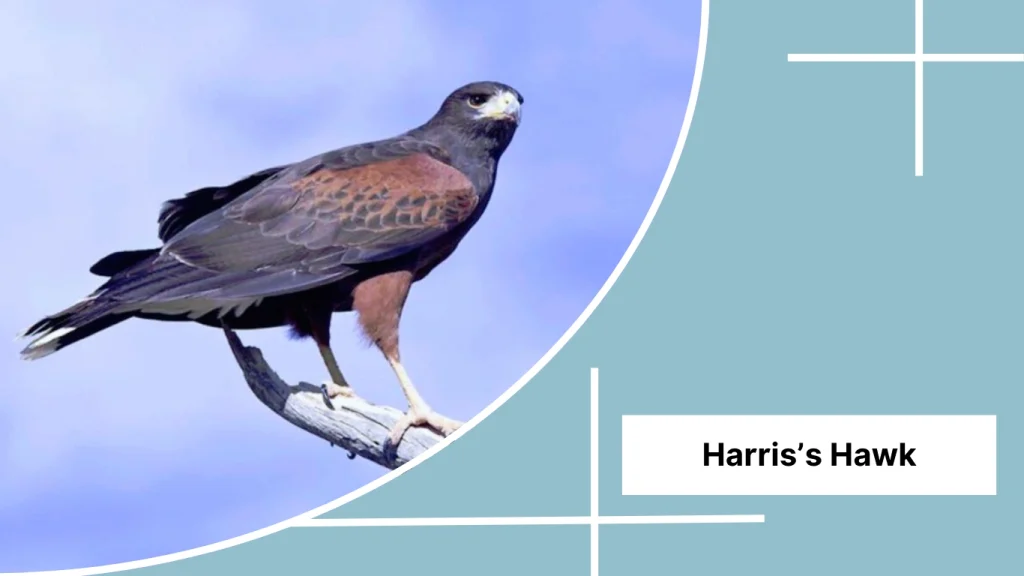
Harris’s Hawk (Parabuteo unicinctus) is unique among raptors for its social hunting behavior. Unlike most hawks, Harris’s Hawks often hunt cooperatively in small family groups, which increases their success in capturing prey.
Identification
- Medium to large hawk with a wingspan of 40–47 inches
- Dark brown body with chestnut-red shoulders and thighs
- White-tipped tail and white rump
- Long yellow legs and cere
- Bold, upright posture and confident stride on ground
- Juveniles are paler with more mottling
Habitat and Range
Native to the arid southwestern U.S., Mexico, and parts of Central and South America. Found in deserts, scrublands, and savannas, often near cacti or open thorny vegetation.
Hunting and Social Structure
Hunts in packs of 2–6 individuals, often taking turns flushing out prey. Diet includes rabbits, rodents, lizards, and birds. The group behavior includes cooperative nesting and territory defense, making it one of the most intelligent hawks in the Americas.
12. Zone-tailed Hawk
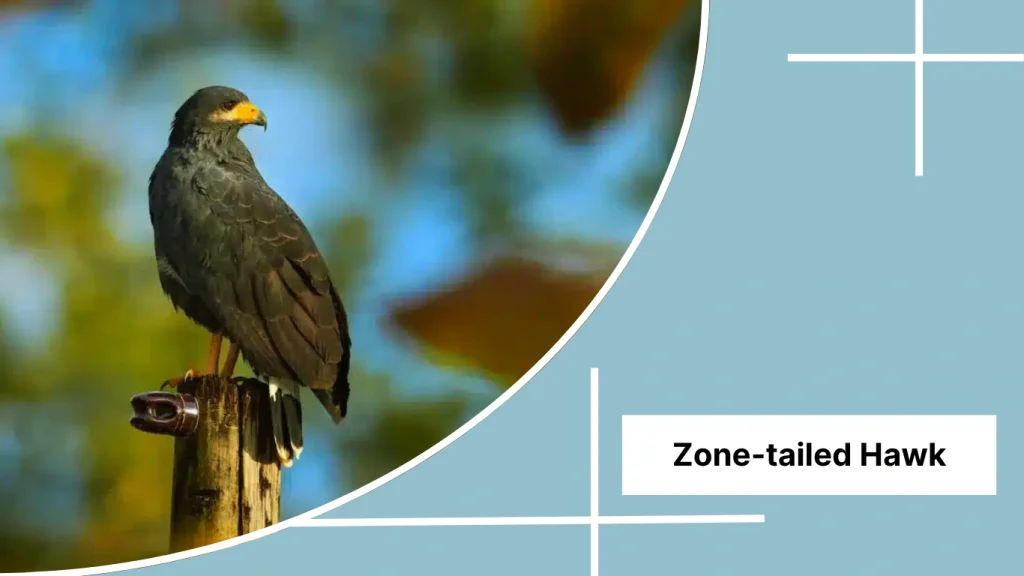
The Zone-tailed Hawk (Buteo albonotatus) is often mistaken for a Turkey Vulture due to its flight pattern and coloration, which may help it sneak up on unsuspecting prey. This mimicry allows it to soar among vultures unnoticed.
Identification
- Medium-sized hawk with a wingspan of 46–55 inches
- Mostly black plumage with white bands on the tail (“zones”)
- Long, broad wings with barred flight feathers
- Yellow legs and cere
- Tail has three to four pale bands with a bold terminal band
- Juveniles are browner and more streaked than adults
Habitat and Range
Found in the southwestern U.S., Mexico, and Central America. Prefers canyons, deserts, dry woodlands, and river valleys. Often seen soaring in circles like vultures over open country.
Behavior and Diet
Feeds on small mammals, birds, reptiles, and amphibians. It flies low and suddenly drops on prey with surprise, often taking advantage of its vulture-like disguise. Pairs may hunt together during nesting season.
13. Gray Hawk

The Gray Hawk (Buteo plagiatus), also known as the Mexican Goshawk, is a small, elegant hawk found near riparian areas and forest edges. It is especially known for its high-pitched, whistling call and acrobatic flight.
Identification
- Small hawk with a wingspan of 30–36 inches
- Pale gray upperparts and finely barred gray-and-white underparts
- Black-and-white banded tail
- Long yellow legs and yellow cere
- Short, rounded wings and a relatively long tail
- Juveniles are brown with streaked underparts and banded tails
Habitat and Range
Primarily found in the southern tip of Arizona, parts of Texas, Mexico, and Central America. Inhabits riparian woodlands, mesquite groves, and dry forests near water.
Feeding and Nesting Behavior
Diet consists mainly of lizards, small snakes, and insects. Hunts from a low perch, flying down to snatch prey. Builds stick nests high in trees and is monogamous. Known for its musical call, especially during breeding season.
14. Red-shouldered Hawk
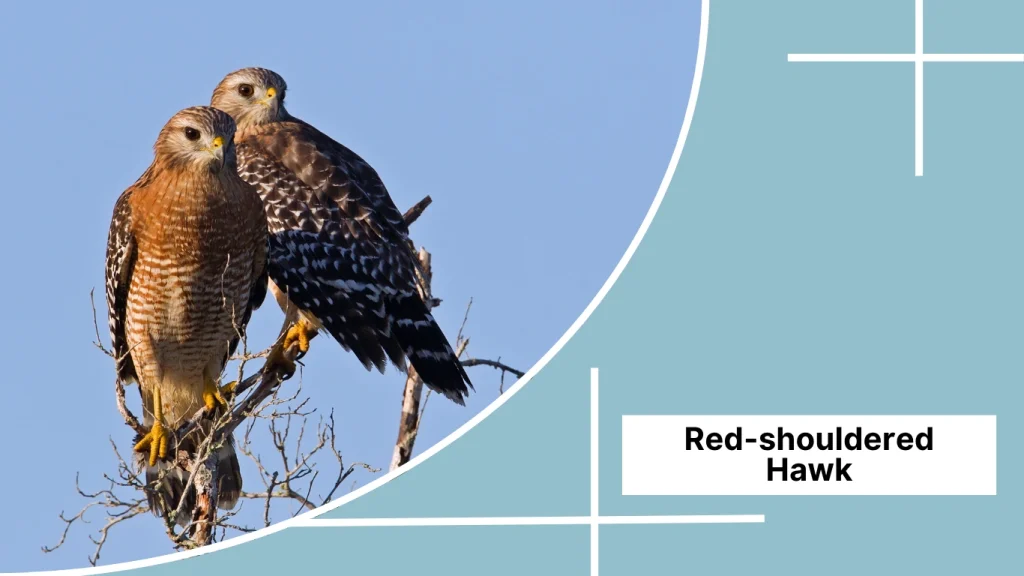
The Red-shouldered Hawk (Buteo lineatus) is a medium-sized raptor known for its striking plumage and loud, whistled calls. It thrives in wooded habitats near water and is frequently seen gliding through the canopy or calling from a perch.
Identification
- Medium-sized hawk with a wingspan of 37–43 inches
- Reddish chest and shoulders with black-and-white checkered wings
- Long tail with narrow white bands
- Pale crescent-shaped windows on wingtips in flight
- Juveniles are brown with streaked underparts and lack the reddish color
- Strong, broad wings and yellow legs
Habitat and Range
Common in the eastern U.S. and along the California coast. Prefers mature forests, especially near rivers, swamps, and wetlands. Often nests in tall hardwood trees.
Diet and Behavior
Feeds on small mammals, amphibians, reptiles, and occasionally birds. Hunts from a perch and drops quickly onto prey. Its loud “kee-ahh” call is a signature sound in eastern woodlands.
15. White-tailed Hawk
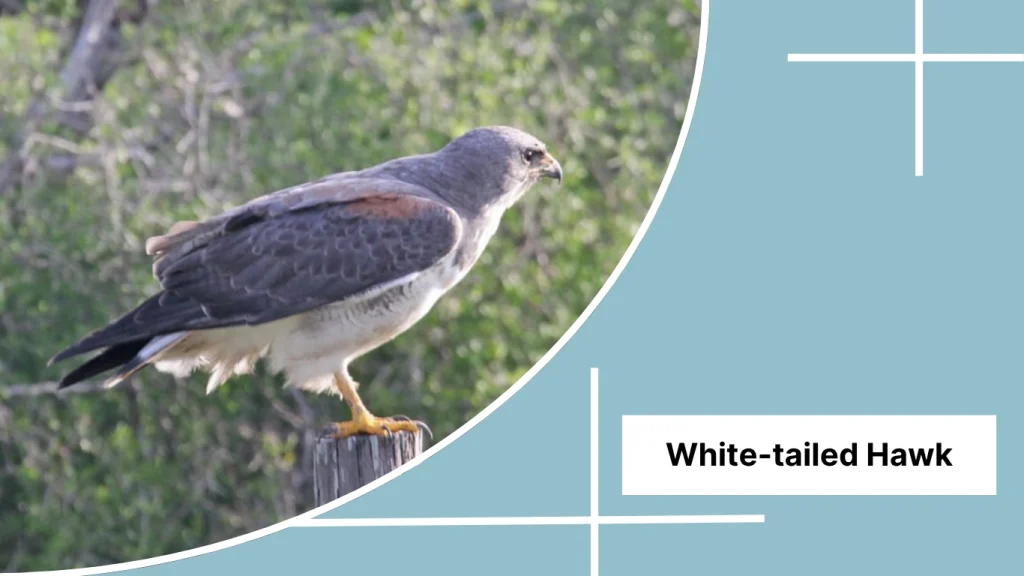
The White-tailed Hawk (Geranoaetus albicaudatus) is a striking hawk of open, arid regions. It is well adapted to the hot climates of southern Texas, Mexico, and Central and South America.
Identification
- Large hawk with a wingspan of 46–56 inches
- Gray upperparts and white underparts
- Distinct pure white tail with a bold black subterminal band
- Reddish shoulders (most visible in flight)
- Long legs and broad wings with black trailing edges
- Juveniles are mottled brown and streaked below
Habitat and Range
Found in open savannas, grasslands, scrub, and coastal prairies. In the U.S., it’s primarily seen in southern Texas and rarely further north.
Feeding and Flight
Feeds on rodents, reptiles, insects, and carrion. Hunts by soaring high or hovering before diving. Known for its graceful flight and occasional cooperative behavior when mobbing predators or defending territory.
16. Roadside Hawk

The Roadside Hawk (Rupornis magnirostris) is a small, broad-winged raptor commonly seen perched along roadsides throughout Central and South America. It’s one of the most widespread hawks in its range.
Identification
- Small hawk with a wingspan of around 30 inches
- Grayish-brown upperparts with rufous or barred underparts
- Short tail with multiple narrow dark bands
- Yellow legs and facial skin
- Rounded wings and a compact build
- Juveniles are paler with streaked undersides
Habitat and Range
Inhabits open woodlands, savannas, farmlands, and urban edges. Its range spans from Mexico to Argentina, and it often thrives in disturbed environments.
Diet and Behavior
Feeds on lizards, insects, small mammals, and birds. Often hunts from low perches near roads and will aggressively defend its nest from intruders.
17. Black-collared Hawk
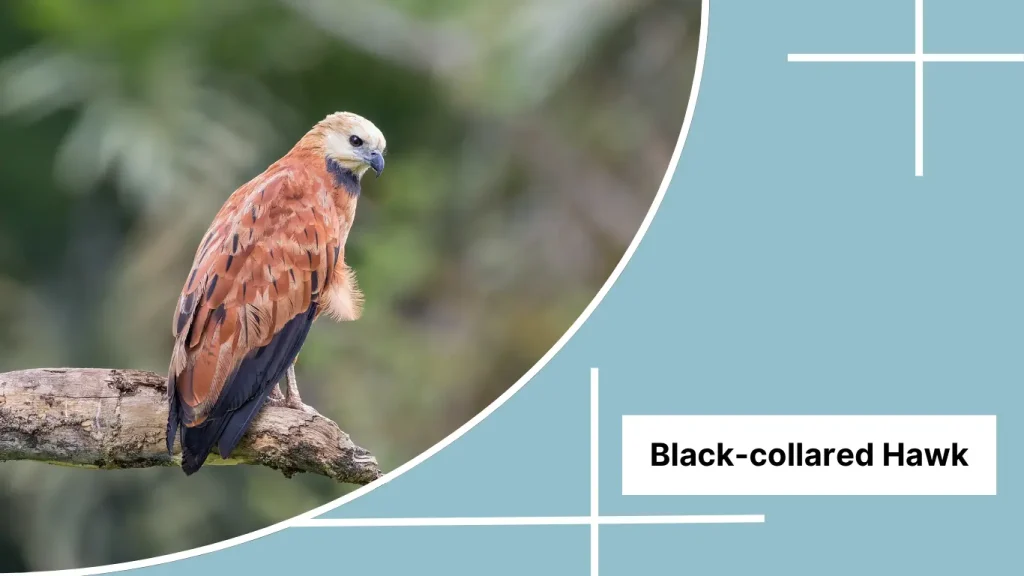
The Black-collared Hawk (Busarellus nigricollis) is a striking, fish-eating raptor associated with tropical freshwater habitats. Its appearance and behavior are somewhat reminiscent of an osprey.
Identification
- Medium to large hawk with a wingspan of 45–50 inches
- Rich chestnut body with pale head and a distinct black collar
- Broad, rounded wings with dark flight feathers
- Short, hooked beak suited for grasping slippery prey
- Yellow legs and talons
- Juveniles are streaked and less vividly colored
Habitat and Range
Found near lakes, rivers, and marshes across Central and South America. Frequently seen perched over water or flying slowly with deep wingbeats.
Hunting and Diet
Specializes in fish, but also eats frogs and aquatic insects. Dives feet-first into shallow water to snatch prey, often from a low perch or slow glide.
18. Crane Hawk
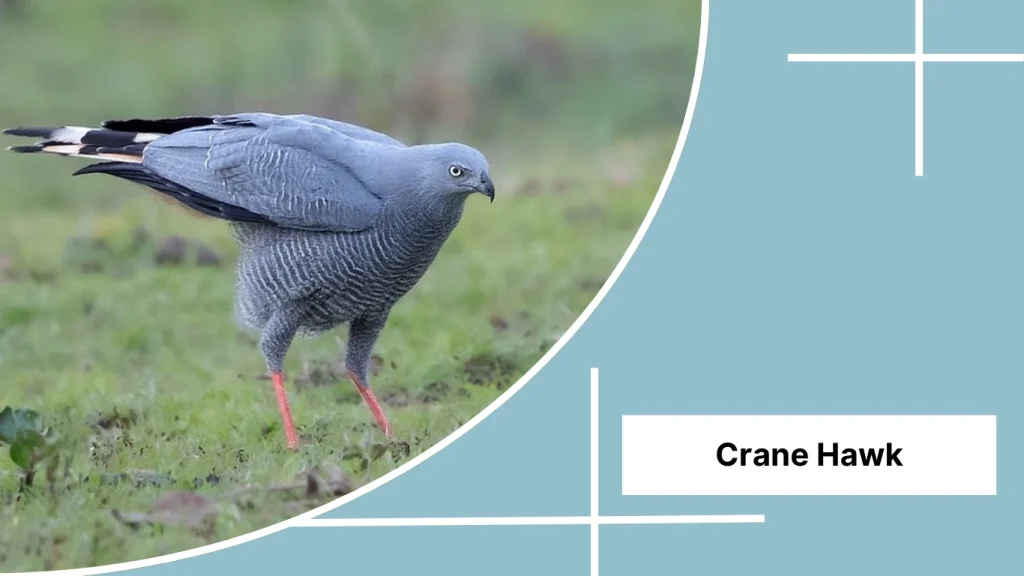
The Crane Hawk (Geranospiza caerulescens) is a slender, long-legged raptor known for its distinctive foraging behavior—using its flexible legs to extract prey from tree cavities and crevices. It’s one of the few raptors that can reach deep into holes to catch hidden animals.
Identification
- Medium-sized hawk with a wingspan of 39–47 inches
- Slate gray body with contrasting white bands on a long black tail
- Long orange-red legs and cere
- Slim build with long, broad wings
- Juveniles are brown with streaked underparts and duller legs
- Bold white trailing edge under wings visible in flight
Habitat and Range
Found in tropical lowland forests, mangroves, and woodland edges from Mexico through Central America and into much of South America. Prefers humid habitats and is often seen gliding through the canopy.
Behavior and Diet
Known for its unique leg flexibility, the Crane Hawk hunts lizards, rodents, frogs, and nestlings by reaching into tree hollows. It’s a quiet, stealthy hunter that often moves slowly through trees while searching for prey.
19. Short-tailed Hawk
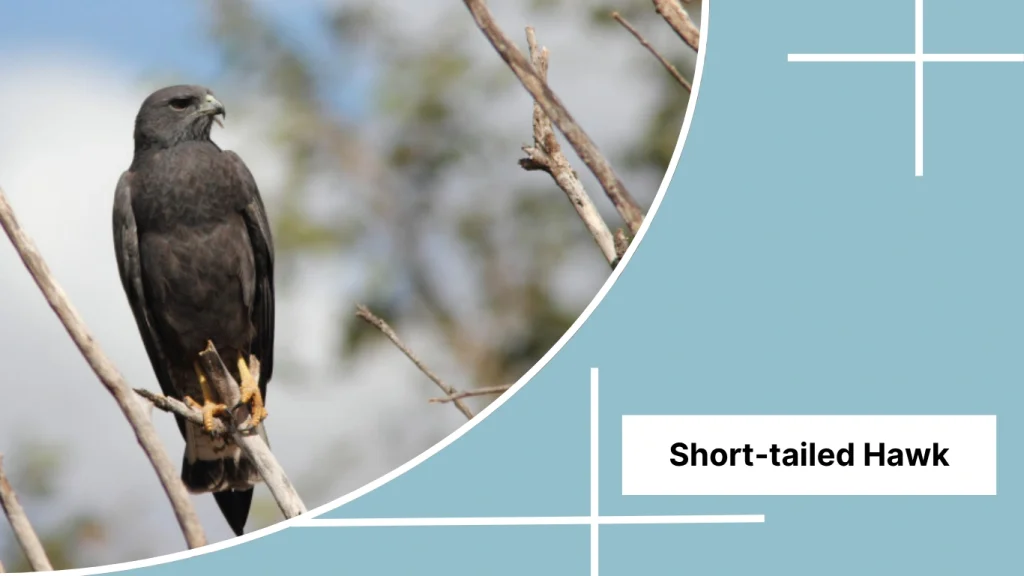
The Short-tailed Hawk (Buteo brachyurus) is a secretive hawk of tropical woodlands and open skies. It is rarely seen perched and is better known for its aerial hunting techniques, especially for catching birds mid-flight.
Identification
- Medium-sized hawk with a wingspan of 32–40 inches
- Two color morphs: dark (entirely chocolate brown) and light (white underparts with dark upperparts and flight feathers)
- Short, squared tail with narrow dark bands
- Long wings relative to its body
- Yellow legs and cere
- Juveniles resemble adults but are paler with more streaks
Habitat and Range
Occurs in southern Florida, Mexico, Central America, and South America. Prefers wooded areas near open fields or wetlands where it can hunt effectively while soaring.
Hunting and Feeding
Feeds mainly on small birds, which it catches while gliding and diving from great heights. Sometimes takes reptiles and large insects. Unlike many Buteos, it rarely perches for long and is often seen circling high overhead.
20. Great Black Hawk

The Great Black Hawk (Buteogallus urubitinga) is a large, tropical raptor commonly found in coastal and riverine habitats of Central and South America. It resembles the Common Black Hawk but is noticeably larger and has different proportions.
Identification
- Large hawk with a wingspan of 50–56 inches
- Uniform black plumage with white band near the tip of the tail
- Long yellow legs and cere
- Broad wings and long tail with squared tip
- Juveniles are brown with heavy streaking and mottling
- Soars with wings slightly raised and head held low
Habitat and Range
Found near rivers, mangroves, marshes, and forests from Mexico to northern Argentina. Occasionally wanders into southern Texas and was famously spotted in Maine in 2018—a rare vagrant event.
Behavior and Diet
Feeds on amphibians, reptiles, fish, crabs, and carrion. Hunts by walking on the ground or dropping from a perch. It often patrols shorelines and mudflats. Known for its deep, whistled call and slow, deliberate flight.
21. Hook-billed Kite

The Hook-billed Kite (Chondrohierax uncinatus) is a highly specialized hawk with a strongly curved beak used for extracting snails from their shells. Its population distribution and appearance vary greatly across its range.
Identification
- Medium-sized hawk with a wingspan of 30–35 inches
- Notably hooked upper mandible curving down past the lower beak
- Plumage varies: gray or brown upperparts, pale barred underparts
- Short tail with several white bands
- Small head and slim body
- Juveniles are heavily streaked and may appear mottled
Habitat and Range
Found from southern Texas through Mexico, Central America, and into northern South America. Prefers humid forests and woodland edges with nearby water sources, especially where tree snails are common.
Diet and Behavior
Feeds almost exclusively on arboreal snails, using its uniquely adapted beak to pry open shells. Also eats insects and small reptiles. Generally shy and slow-moving, often seen perched quietly in thick vegetation.
22. Mississippi Kite
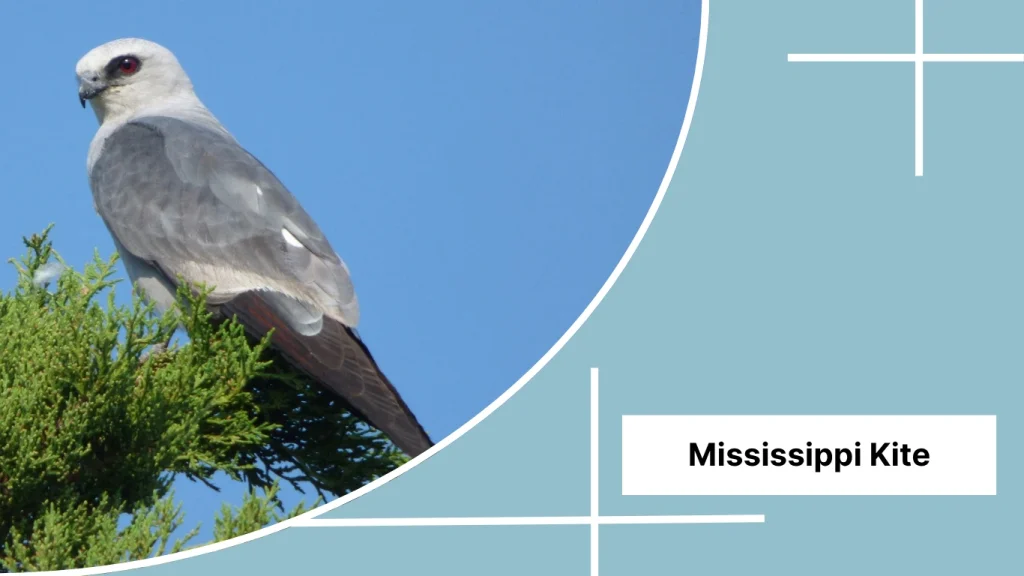
The Mississippi Kite (Ictinia mississippiensis) is a sleek, graceful raptor known for its elegant flight and insect-catching acrobatics. It breeds in the southern U.S. and migrates in flocks to South America for the winter.
Identification
- Medium-sized hawk with a wingspan of 36–42 inches
- Smooth gray body with paler head and darker tail
- Long, pointed wings with black flight feathers
- Small, sharp beak and red eyes
- Juveniles are streaked brown with banded tails
- Streamlined silhouette and buoyant, gliding flight
Habitat and Range
Breeds in southeastern and central U.S., often near rivers, forests, and open areas. Common in Oklahoma, Texas, and along the Mississippi River. Winters in South America, especially Argentina and Brazil.
Behavior and Diet
Feeds primarily on large insects like cicadas, dragonflies, and beetles, often caught mid-air. Occasionally takes small birds, frogs, or reptiles. Often seen soaring or circling over fields and woodlands in small family groups.
23. Snail Kite

The Snail Kite (Rostrhamus sociabilis) is a wetland specialist with a beak uniquely adapted to extract apple snails—its primary food source. It is most common in Central and South America but also breeds in Florida.
Identification
- Medium-sized raptor with a wingspan of 42–45 inches
- Adult males are slate-gray with black wingtips and red eyes
- Females are brown with white streaking and pale underparts
- Long, deeply hooked bill ideal for snail extraction
- Long tail with white base and dark tip
- Juveniles resemble females but with heavier streaking
Habitat and Range
Inhabits freshwater marshes, lakes, and wetlands with abundant snail populations. Found in Florida, Cuba, Central America, and much of South America.
Feeding and Hunting
Almost exclusively feeds on apple snails. Perches low or flies slowly over water, dropping down to snatch snails with its feet. It holds the snail with one foot and uses its sharply curved bill to pry open the shell with precision.
24. Plumbeous Kite
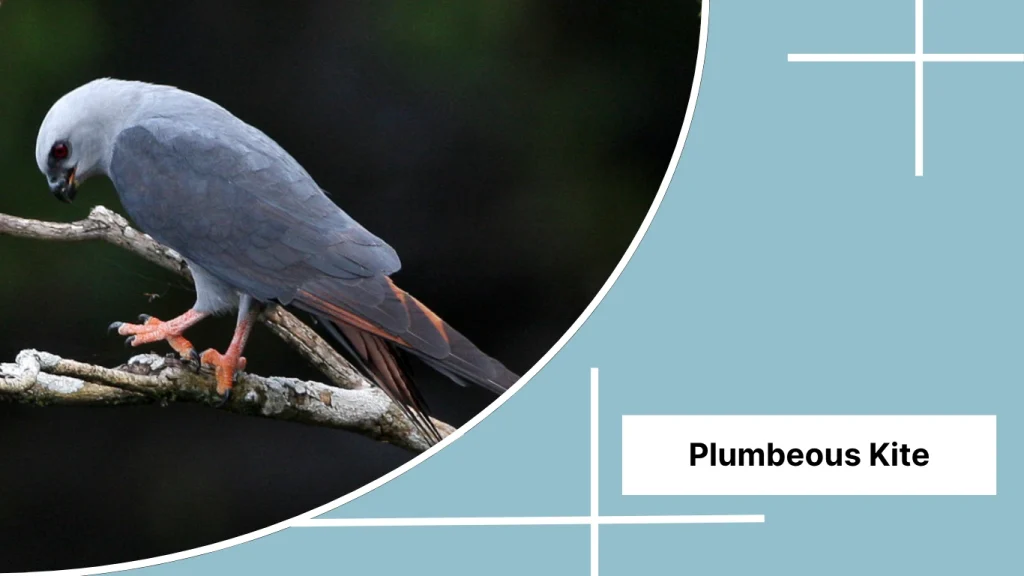
The Plumbeous Kite (Ictinia plumbea) is a sleek, agile raptor that inhabits tropical and subtropical forests. It is often seen soaring high in the canopy or circling above forest edges.
Identification
- Medium-sized kite with a wingspan of 30–35 inches
- Uniform slate-gray plumage with slightly lighter head
- Long, pointed wings with black wingtips
- Narrow tail with faint white bands and white base visible in flight
- Red eyes and pale cere
- Juveniles are browner with streaked underparts
Habitat and Range
Found in lowland forests and open woodlands across Central and South America, from Mexico to northern Argentina. Often spotted during migration along ridges and forested slopes.
Behavior and Diet
Feeds on large insects, especially during flight. Also preys on small birds, reptiles, and amphibians. Soars and glides effortlessly, often alone or in small groups.
25. Swallow-tailed Kite

The Swallow-tailed Kite (Elanoides forficatus) is one of the most striking raptors in the Americas, known for its deeply forked tail and graceful flight. It’s a summer breeder in the southeastern U.S.
Identification
- Medium-sized raptor with a wingspan of 48–53 inches
- White head and underparts with contrasting black wings and tail
- Deeply forked, black tail
- Long, narrow wings held in a shallow V during flight
- Slender body and small feet
- Juveniles look similar to adults but with duller plumage
Habitat and Range
Breeds in the southeastern U.S., especially Florida and coastal states. Winters in South America. Prefers swamps, river forests, and open woodlands.
Behavior and Diet
Feeds mainly on flying insects, small frogs, lizards, and nestling birds. Catches prey in flight or plucks it from trees with great agility. Rarely seen perched; spends most of its time soaring in wide circles.
26. Slate-colored Hawk

The Slate-colored Hawk (Buteogallus schistaceus) is a lesser-known raptor of the Amazon Basin, favoring dense, humid forests and river edges. It is secretive and often heard before seen.
Identification
- Medium-sized hawk with uniform slate-gray plumage
- Black tail with narrow white bands
- Bright yellow legs and cere
- Short, broad wings and rounded tail
- Juveniles are brownish with streaked underparts and a banded tail
Habitat and Range
Found in lowland rainforests along the Amazon River and its tributaries in countries like Brazil, Peru, Colombia, and Ecuador.
Diet and Behavior
Feeds on reptiles, amphibians, and small mammals. Often calls from dense canopy cover and hunts by swooping from perches.
27. Long-legged Buzzard
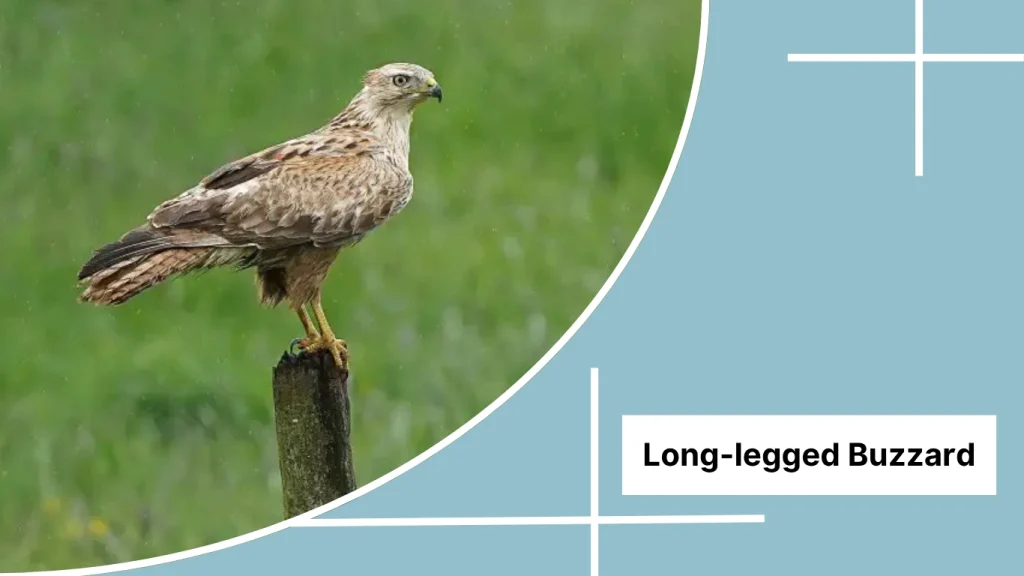
The Long-legged Buzzard (Buteo rufinus) is a powerful, wide-ranging hawk of open areas in Europe, North Africa, and Asia. It’s adapted to dry habitats and known for its varied plumage.
Identification
- Large hawk with pale to dark brown color variations
- Long feathered legs (hence the name)
- Broad wings and short tail with pale coloration
- Wingspan of 51–59 inches
- Juveniles are typically paler with less defined markings
Habitat and Range
Inhabits steppes, deserts, and rocky slopes from the Mediterranean east to Central Asia. Often seen soaring or perched on rocks and poles.
Diet and Behavior
Preys on rodents, reptiles, and birds. Hunts from the ground or in low flight. Known to hover briefly while scanning for prey.
28. Ridgway’s Hawk
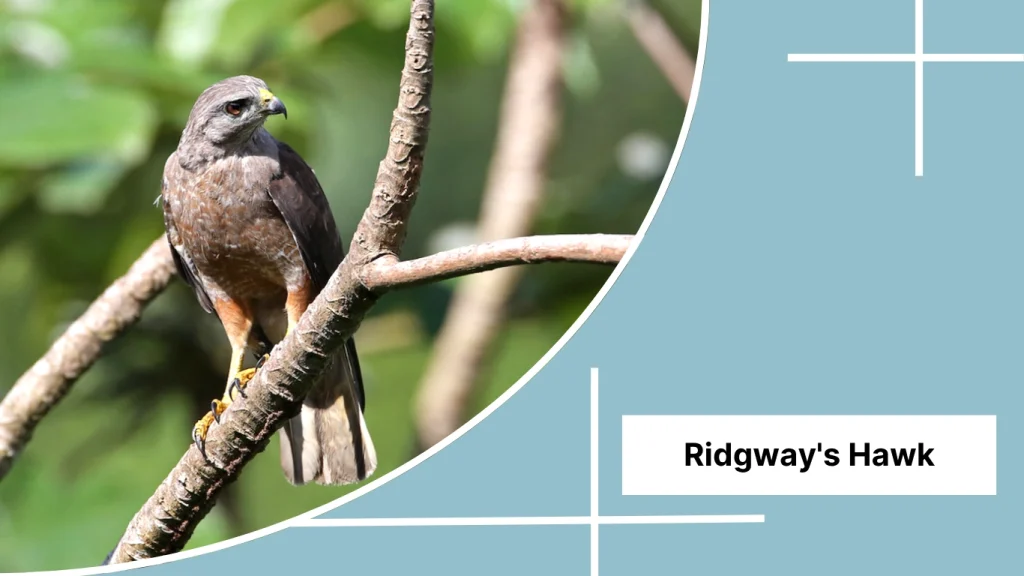
Ridgway’s Hawk (Buteo ridgwayi) is a critically endangered species found only in the Dominican Republic. Conservation efforts are ongoing to protect its small and vulnerable population.
Identification
- Small, stocky hawk with gray upperparts and rufous underparts
- Pale gray head and finely barred chest
- Short, broad wings and long tail with narrow dark bands
- Yellow legs and cere
- Juveniles are brown with streaked underparts
Habitat and Range
Restricted to the island of Hispaniola, mainly within Los Haitises National Park. Prefers subtropical forests and mangrove areas.
Diet and Behavior
Feeds on lizards, birds, insects, and small mammals. Hunts from perches and is territorial. Known for its loud, harsh calls during breeding season.
29. White Hawk
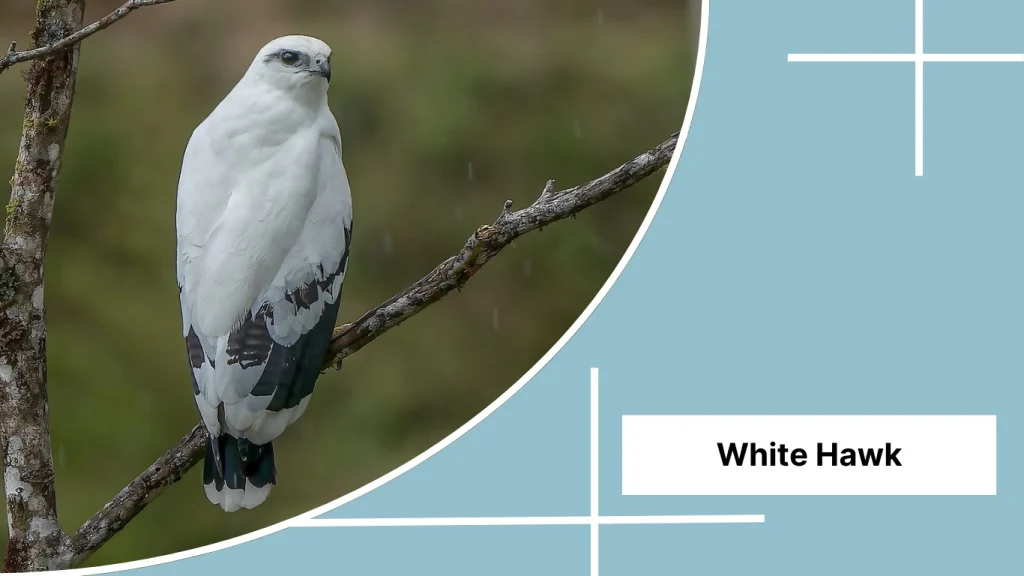
The White Hawk (Pseudastur albicollis) is a striking forest raptor known for its bright plumage and quiet soaring above tropical canopies.
Identification
- Large white hawk with black markings on wings and back
- Broad, rounded wings and short, fan-shaped tail
- Dark eyes and pale yellow legs
- Juveniles are dusky with streaked white underparts
Habitat and Range
Found in tropical forests from southern Mexico to northern South America. Prefers humid lowland forests and hilly terrain.
Diet and Behavior
Feeds on reptiles, amphibians, insects, and occasionally small mammals or birds. Soars high over forests and hunts from elevated perches.
30. Rufous Crab Hawk
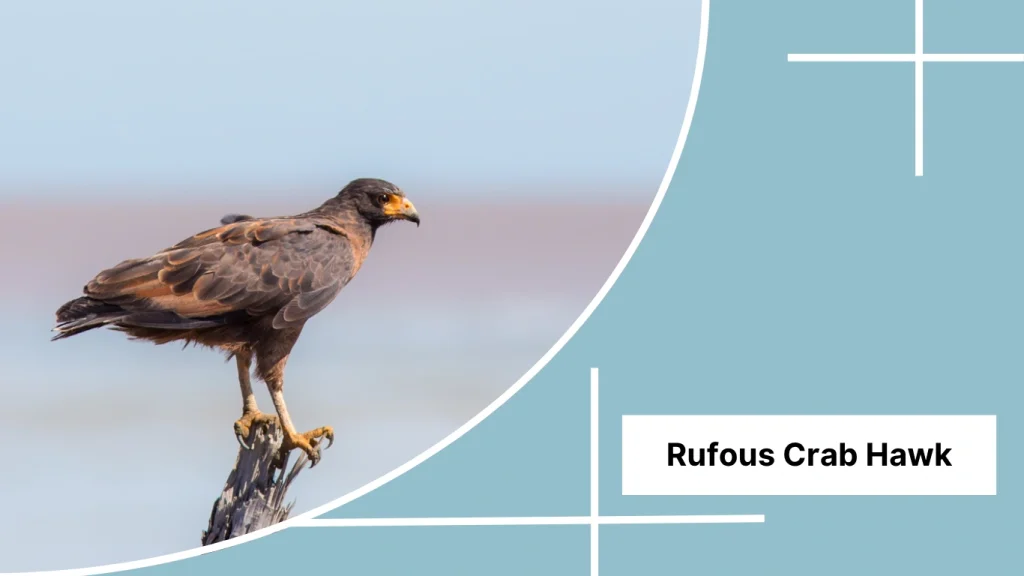
The Rufous Crab Hawk (Buteogallus aequinoctialis) is a coastal raptor specialized in hunting crabs along mangrove swamps and tidal estuaries. It is uncommon and has a fragmented distribution in South America.
Identification
- Medium-sized hawk with rufous-orange underparts and gray upperparts
- Broad black-and-white banded tail
- Bright yellow legs, cere, and facial skin
- Thick neck and short, broad wings
- Juveniles are browner and streaked with paler plumage
Habitat and Range
Found in coastal mangroves and estuaries along the Atlantic coast of South America—from Venezuela to southeastern Brazil. Strongly associated with mangrove habitats.
Behavior and Diet
Feeds mainly on crabs, which it captures by stalking through mudflats or snatching from the water. Hunts at low tide and nests in mangrove trees. Its call is a loud, piercing whistle, especially heard during courtship or territorial displays.
31. Bicolored Hawk
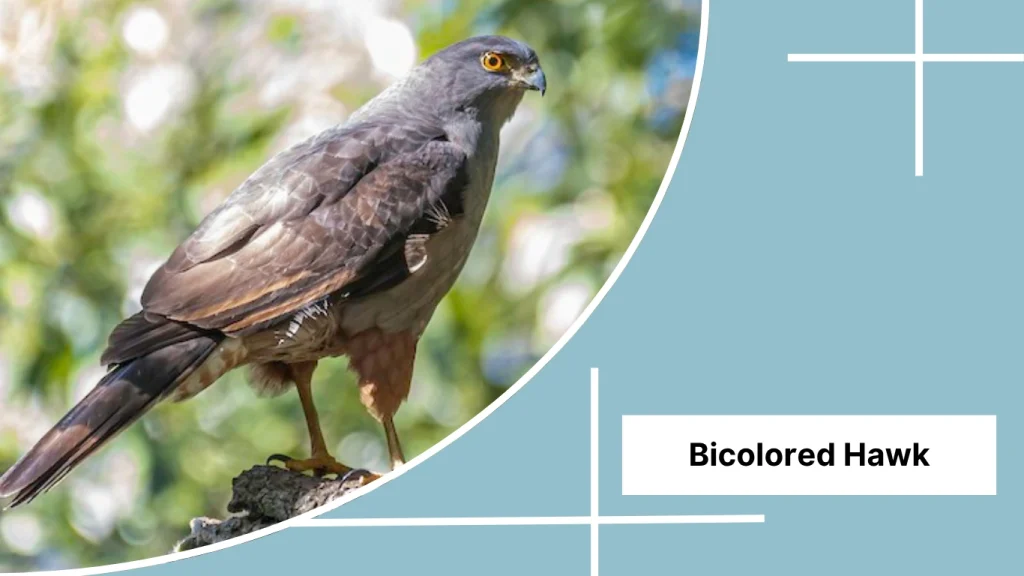
The Bicolored Hawk (Accipiter bicolor) is a bold, secretive forest hawk known for its agility and preference for densely wooded areas. It closely resembles the larger Northern Goshawk but is more tropical in range.
Identification
- Medium-sized hawk with dark gray upperparts and barred white underparts
- Black cap and contrasting white throat
- Short, rounded wings and long tail with dark bands
- Yellow legs and cere
- Juveniles are brown above and heavily streaked below
Habitat and Range
Found in tropical and subtropical forests from Mexico through Central America to northern Argentina. Prefers dense forests and wooded hillsides.
Hunting and Behavior
Feeds on small birds, mammals, and reptiles. Hunts with rapid, agile flight through thick vegetation, often surprising prey. Tends to stay hidden and is most active at dawn or dusk. Its call is a sharp series of high-pitched whistles.
32. Montagu’s Harrier
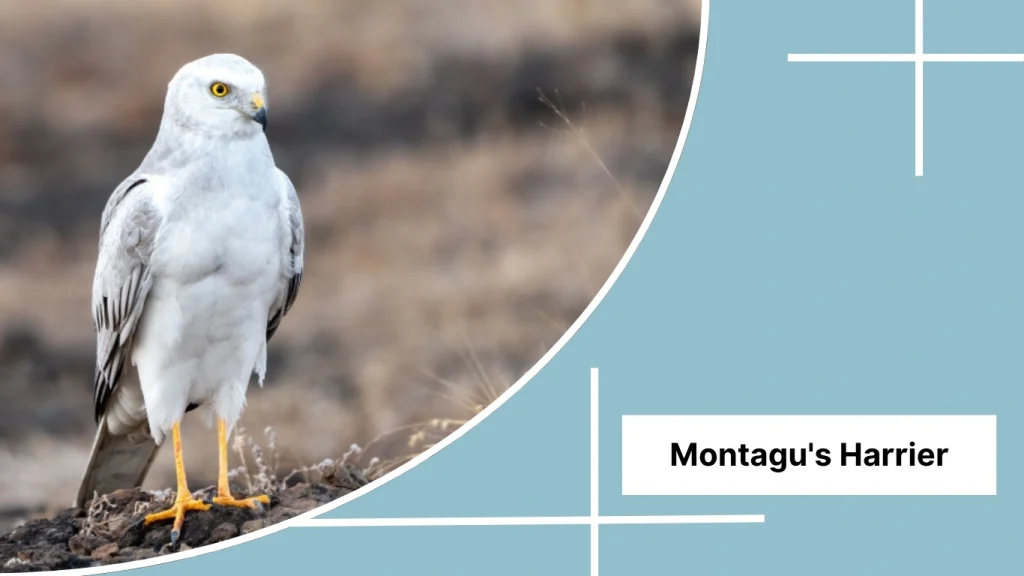
Montagu’s Harrier (Circus pygargus) is a graceful, slender-winged harrier found across Europe and parts of Asia. Known for its buoyant, gliding flight, it breeds in open country and grasslands.
Identification
- Medium-sized harrier with a wingspan of 39–45 inches
- Adult males are pale gray with black wing tips and narrow tail
- Females and juveniles are brown with streaked underparts and white rump patch
- Long, narrow wings and slim body
- Facial disk helps focus sound, like in owls
Habitat and Range
Breeds across Europe, western and central Asia, and migrates to Africa for the winter. Prefers meadows, heathlands, and agricultural areas.
Diet and Behavior
Feeds on small mammals, birds, insects, and amphibians. Hunts low over fields in a floating, gliding pattern. Often nests on the ground in tall vegetation. Calls are soft and mainly heard near nests.
33. Pallid Harrier
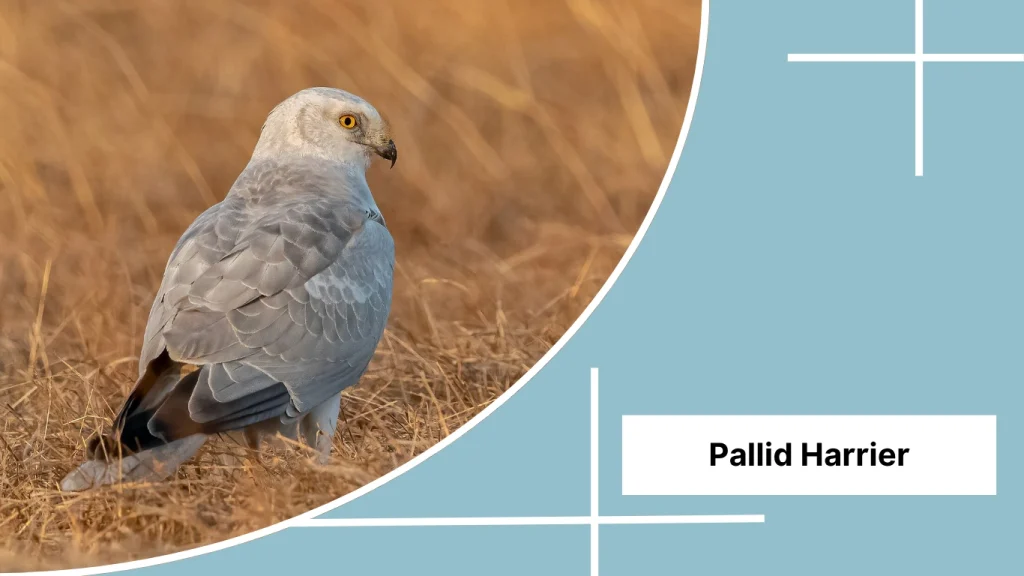
The Pallid Harrier (Circus macrourus) is a rare and elegant bird of prey, recognized by its ghostly appearance and silent, low-level flight. It is one of the least common harriers in Europe but has a wide breeding range in Asia.
Identification
- Slender harrier with a wingspan of 37–43 inches
- Adult males are pale gray with black wing tips and white underparts
- Females and juveniles are brown with a white rump and streaked belly
- Slim, long-tailed body with pointed wings
- Similar in appearance to Montagu’s but slightly smaller and paler
Habitat and Range
Breeds in Central Asia’s steppes and grasslands, and winters in Africa and the Indian subcontinent. Occasional vagrant to Europe.
Feeding and Flight Behavior
Feeds on small rodents, birds, and insects. Hunts by flying low over open areas, often weaving in and out of vegetation. Nests on the ground in grassy plains or cultivated fields. Quiet and elusive, especially during migration.