

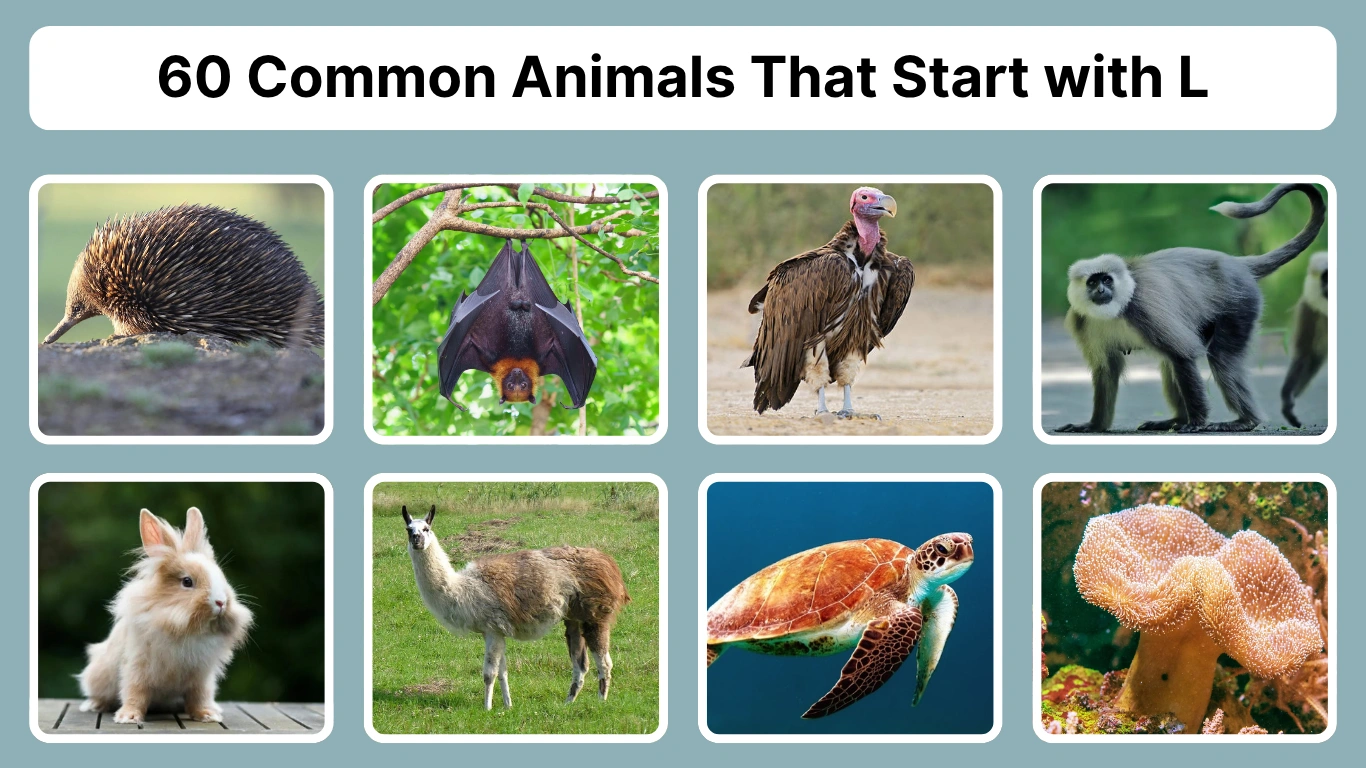
Animals that begin with the letter L span a wide range of species, from majestic mammals to vibrant birds, fascinating reptiles, and unique insects. This diverse collection highlights the incredible variety of life found across the globe. Exploring these animals helps us appreciate their roles in ecosystems and the natural world’s rich biodiversity. Whether found in forests, oceans, or deserts, each species plays a vital part in maintaining balance and beauty in nature.
Mammals That Start with L
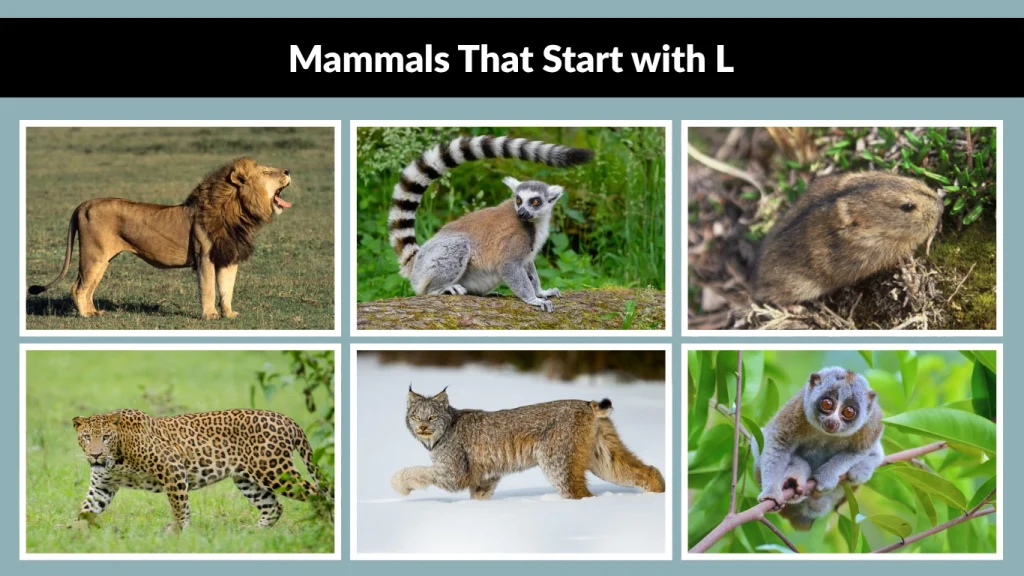
Mammals are warm-blooded animals known for their fur or hair and for feeding their young with milk. The group includes a variety of species from the powerful lion to the elusive loris. These animals play important roles in their ecosystems as predators, prey, and seed dispersers.
1. Lion
Lions are large, muscular cats known as the “king of the jungle.” They live in groups called prides, mostly found in Africa. Male lions have a distinctive mane, while females do most of the hunting. Lions are apex predators, mainly feeding on herbivores like zebras and antelopes.
Lions play a vital role in maintaining the balance of their ecosystem. They help control populations of herbivores, preventing overgrazing. Their social structure and cooperation in hunting make them one of the most fascinating mammals in the wild.
2. Lemur
Lemurs are small primates native to Madagascar. They have large eyes, long tails, and are mostly nocturnal. Lemurs live in groups and communicate through vocalizations and scent marking. Their diet mainly includes fruit, leaves, and insects.
Lemurs are crucial for seed dispersal in their habitat, helping maintain forest health. Unfortunately, many lemur species are endangered due to habitat loss and hunting. Conservation efforts focus on protecting their natural environment and raising awareness.
3. Lemming
Lemmings are small rodents found in Arctic and subarctic regions. They have thick fur that changes color with the seasons for camouflage. Lemmings mainly feed on grasses and mosses. They are known for population booms followed by sudden crashes.
Lemmings serve as important prey for many Arctic predators, including owls and foxes. Their population cycles influence the dynamics of the tundra ecosystem, affecting food availability for other species.
4. Leopard
Leopards are solitary big cats known for their spotted coats and agility. They inhabit diverse environments from savannas to forests across Africa and Asia. Leopards are excellent climbers and often stash their prey in trees to protect it from scavengers.
Leopards are opportunistic hunters, feeding on a wide range of animals, from small rodents to large ungulates. Their adaptability allows them to survive close to human settlements, sometimes leading to conflicts.
5. Lynx
Lynxes are medium-sized wild cats with tufted ears and thick fur, adapted to cold climates. They are solitary and mainly hunt at night, preying on hares, birds, and small mammals. Lynxes are found in forests of North America, Europe, and Asia.
The lynx’s keen senses and stealth make it an effective predator. Its presence indicates a healthy forest ecosystem, as it requires large territories with abundant prey.
6. Loris
Lorises are slow-moving, nocturnal primates found in Southeast Asia. They have large eyes for night vision and a strong grip for climbing. Lorises feed on insects, fruits, and tree sap. Their slow movements help them avoid predators.
Lorises are threatened by habitat destruction and the illegal pet trade. Despite their small size and gentle nature, lorises play an important role in insect control and forest ecology.
Birds That Start with L

Birds are warm-blooded vertebrates characterized by feathers, beaks, and the ability to lay eggs. Many species starting with L are known for their beautiful songs, unique behaviors, and important roles in ecosystems such as seed dispersal and insect control. They inhabit various environments, from wetlands to forests.
7. Lark
Larks are small to medium-sized ground-dwelling birds recognized for their melodious singing. Found mainly in open fields and grasslands, larks use their songs to attract mates and defend territory. Their diet consists mostly of seeds and insects.
Larks have adapted well to agricultural landscapes, though some species face habitat loss. Their distinctive flight songs make them a favorite among bird watchers and nature enthusiasts.
8. Laughing Gull
The laughing gull is a medium-sized gull found along coasts of the Americas. Named for its distinctive “laughing” call, it frequents beaches, marshes, and estuaries. It feeds on fish, insects, and human food scraps.
Laughing gulls are social birds often seen in large flocks. Their adaptability to human environments helps them thrive, but they remain important indicators of coastal ecosystem health.
9. Long-tailed Tit
The long-tailed tit is a small songbird with a notably long tail relative to its body size. It inhabits woodlands and gardens across Europe and Asia. These birds feed mainly on insects and small spiders.
Known for their social behavior, long-tailed tits live in family groups and roost together to keep warm. Their fluffy appearance and acrobatic movements make them a delight to observe.
10. Lapwing
Lapwings are medium-sized wading birds with striking black-and-white plumage and distinctive crests. Found in wetlands and farmland, they feed on insects, worms, and seeds. Lapwings are known for their dramatic flight displays during breeding.
Lapwings play a crucial role in controlling insect populations. Their nesting habits make them sensitive to changes in wetland environments, making their conservation important.
11. Loon
Loons are large aquatic birds famous for their eerie calls and expert diving abilities. Found in lakes and coastal waters, they catch fish with sharp beaks and strong swimming skills. Loons have striking black-and-white breeding plumage.
Loons require clean, clear lakes to thrive, making them indicators of water quality. Their haunting calls are iconic sounds of northern wilderness areas.
12. Little Egret
The little egret is a small white heron common in wetlands worldwide. It feeds on fish, frogs, and crustaceans by wading in shallow water. Its elegant white plumage and black legs with yellow feet make it easily recognizable.
Little egrets often forage alongside other wading birds and contribute to the balance of aquatic ecosystems by controlling prey populations.
Reptiles and Amphibians That Start with L
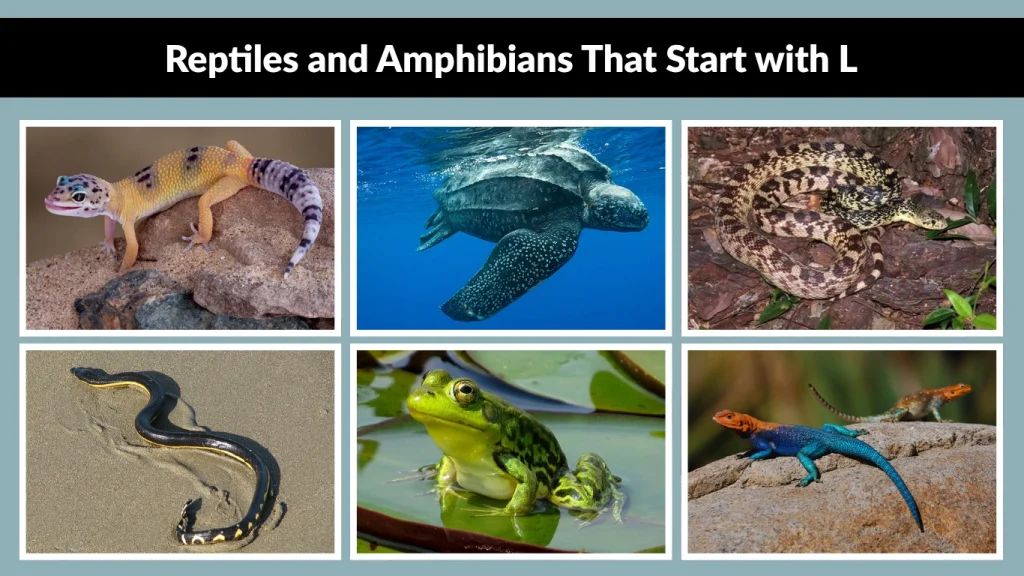
Reptiles and amphibians are cold-blooded vertebrates adapted to a wide range of habitats, from deserts to wetlands. Many species starting with L are notable for their unique physical traits, survival strategies, and ecological roles such as pest control and maintaining healthy aquatic environments.
13. Leopard Gecko
The leopard gecko is a small, nocturnal lizard native to South Asia. Known for its spotted pattern, it thrives in arid environments. Leopard geckos eat insects and are popular as low-maintenance pets due to their calm temperament.
These geckos have specialized skin that helps camouflage them from predators. Their ability to detach their tails to escape threats is a remarkable survival tactic.
14. Leatherback Turtle
The leatherback turtle is the largest sea turtle species, famous for its tough, leathery shell. It migrates thousands of miles across oceans and primarily feeds on jellyfish. Leatherbacks play a key role in marine ecosystems by regulating jellyfish populations.
Threatened by habitat loss and fishing nets, conservation efforts focus on protecting nesting beaches and reducing bycatch to ensure their survival.
15. Louisiana Pine Snake
The Louisiana pine snake is a large, non-venomous snake native to the pine forests of Louisiana. It preys mainly on rodents and is known for its excellent burrowing ability. This snake is critically endangered due to habitat destruction.
Protecting its natural habitat and controlling deforestation are vital for the conservation of this elusive species.
16. Lined Sea Snake
Lined sea snakes are venomous snakes adapted to marine life, found in warm coastal waters. They have flattened tails for swimming and feed on fish and eels. Their venom helps immobilize prey quickly.
Though dangerous to humans if provoked, they play an important role in maintaining fish populations and marine biodiversity.
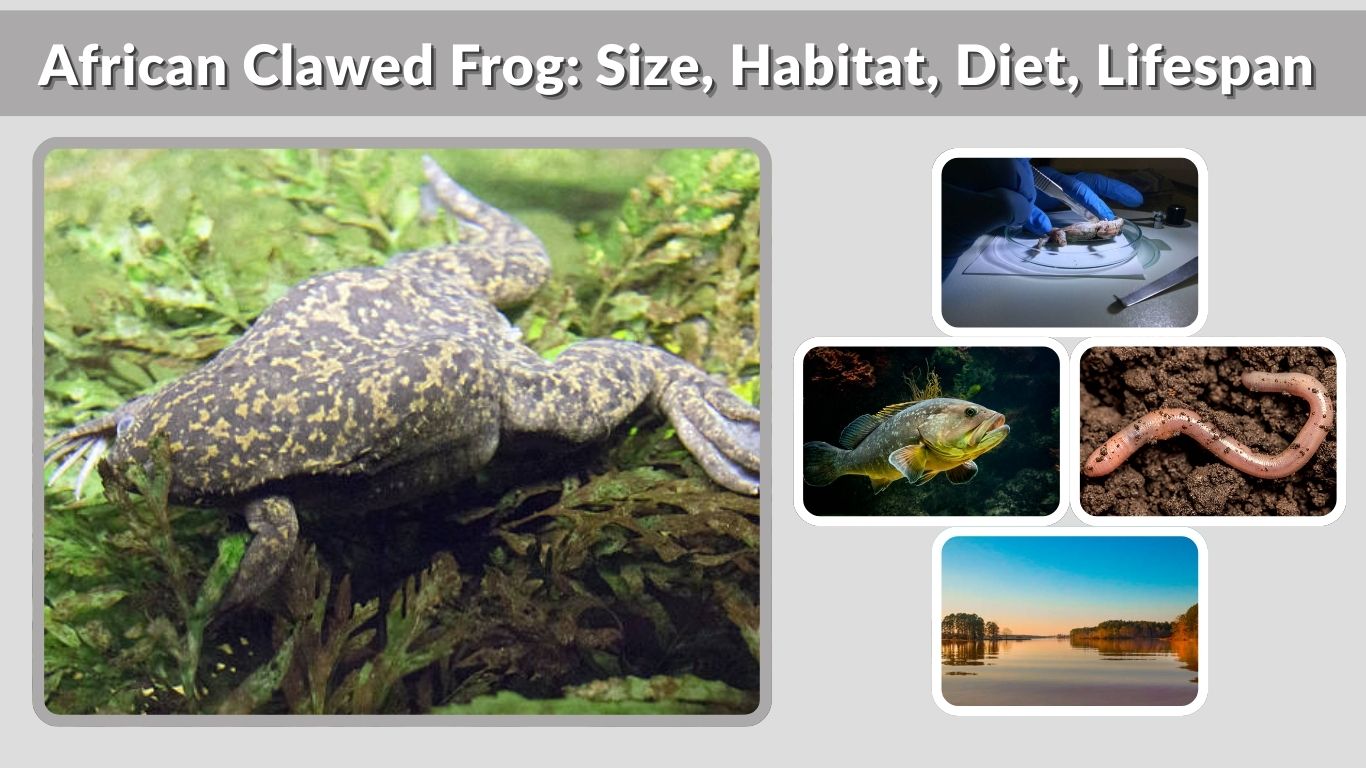
17. Lake Frog
Lake frogs are amphibians commonly found near freshwater lakes and ponds. They have smooth, moist skin and powerful legs for jumping. Their diet includes insects, small fish, and other invertebrates.
Frogs are bioindicators, meaning their health reflects the quality of their environment, making them important for ecological monitoring.
18. Lizard
Lizards are a diverse group of reptiles found worldwide, varying greatly in size and habitat. Most are insectivores, but some species eat plants or small animals. Lizards play important roles as both predators and prey in ecosystems.
They use a variety of adaptations, such as camouflage and quick reflexes, to survive in environments ranging from deserts to rainforests.
Fish That Start with L
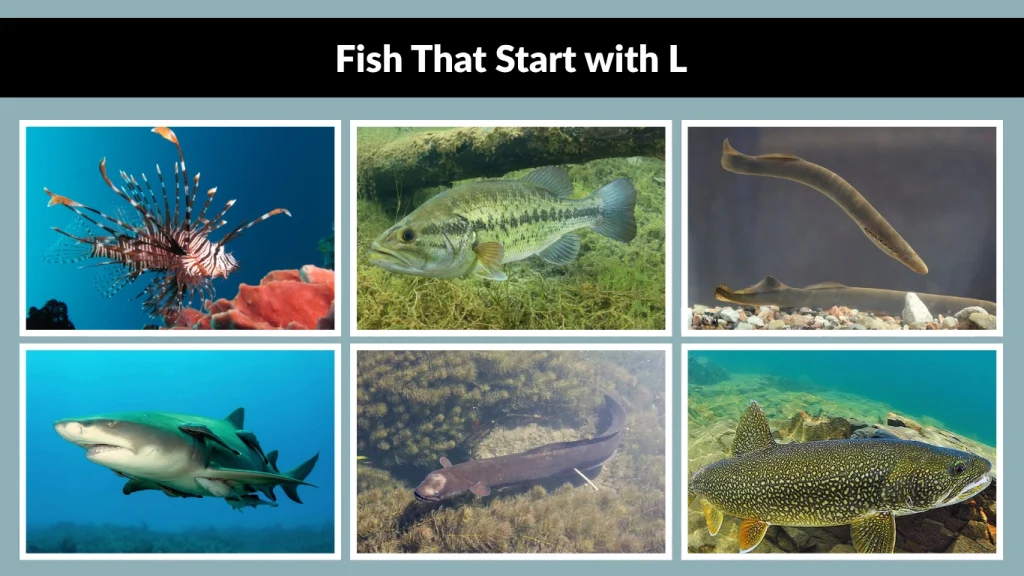
Fish are aquatic vertebrates that inhabit freshwater and marine environments. Many fish starting with L are valued for their ecological roles and popularity in fishing and aquariums. They vary from small species to large predators, contributing to aquatic food chains and biodiversity.
19. Lionfish
Lionfish are strikingly colored fish known for their venomous spines and distinctive striped patterns. Native to the Indo-Pacific, they have become invasive in the Atlantic, threatening local ecosystems. Lionfish feed on small fish and crustaceans.
Their venomous spines serve as a defense against predators. Controlling their population is crucial to protecting native reef species in affected areas.
20. Largemouth Bass
Largemouth bass are popular freshwater game fish found in North America. They have large mouths extending past their eyes and are aggressive predators feeding on smaller fish, amphibians, and insects. Their popularity makes them important in recreational fishing.
These bass thrive in warm, vegetated waters and play a key role in maintaining balanced aquatic ecosystems by controlling prey populations.
21. Lamprey
Lampreys are jawless fish with eel-like bodies and circular, toothed mouths used to latch onto other fish. Some species are parasitic, feeding on the blood of their hosts. Lampreys are found in freshwater and coastal waters worldwide.
Despite their reputation as pests, lampreys have ancient evolutionary significance and contribute to nutrient cycling in aquatic systems.
22. Lemon Shark
Lemon sharks are medium-sized sharks named for their yellowish skin. They inhabit shallow coastal waters of the Atlantic and Pacific. These sharks prey on fish, rays, and crustaceans. They are known for their social behavior and sometimes form groups.
Lemon sharks are important apex predators, helping regulate fish populations and maintaining marine ecosystem health.
23. Longfin Eel
Longfin eels are freshwater eels found mainly in New Zealand and Australia. They have elongated bodies and long fins along their backs. These nocturnal predators feed on fish, invertebrates, and carrion. They are prized in local fisheries.
Longfin eels play a vital role in freshwater ecosystems and have cultural significance for indigenous peoples.
24. Lake Trout
Lake trout are large freshwater fish native to North American lakes. They prefer cold, deep waters and feed on smaller fish and crustaceans. Known for their longevity and size, lake trout are a popular target for anglers.
Their presence indicates healthy lake environments, and they contribute to controlling prey species, maintaining ecological balance.
Insects and Arachnids That Start with L
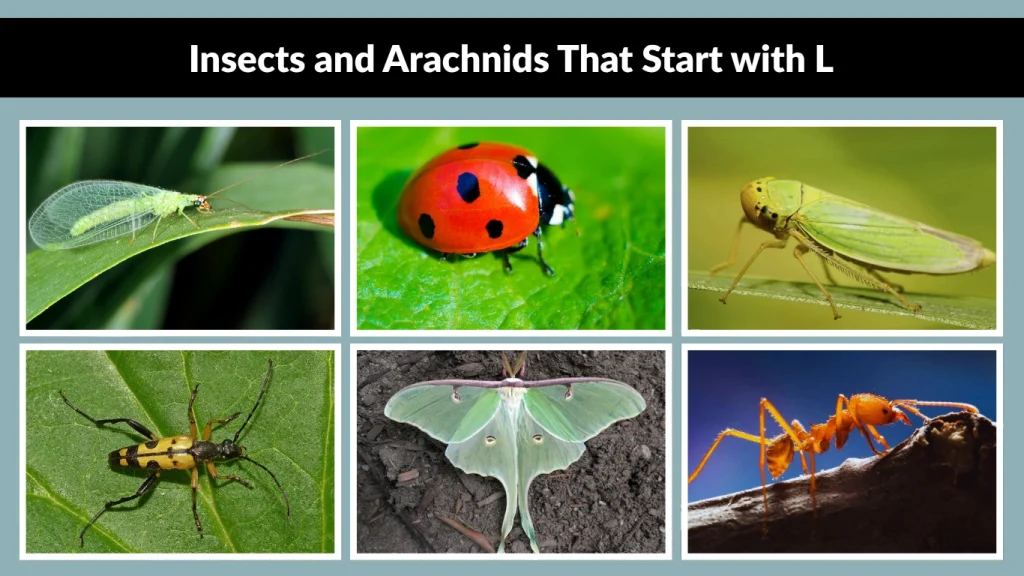
Insects and arachnids are among the most diverse and abundant creatures on Earth. Many species beginning with L play essential roles in ecosystems such as pollination, pest control, and soil aeration. They vary in size, behavior, and habitat preferences, often showcasing fascinating adaptations.
25. Lacewing
Lacewings are delicate green insects known for their transparent, lacy wings. They are beneficial predators, feeding on aphids and other small pests, making them valuable in natural pest control. Lacewing larvae are voracious hunters.
Their presence helps maintain garden and crop health by reducing harmful insect populations without the need for chemicals.
26. Ladybug (Ladybird Beetle)
Ladybugs are small, rounded beetles often brightly colored with spots. They are famous for feeding on aphids and other agricultural pests. Ladybugs are widely considered beneficial insects for gardeners and farmers.
Besides pest control, ladybugs have cultural significance as symbols of good luck and are popular among children and adults alike.
27. Leafhopper
Leafhoppers are small, jumping insects that feed on plant sap. They can be pests by transmitting plant diseases, but they also serve as prey for many birds and predatory insects. Leafhoppers have distinctive wedge-shaped bodies.
Their role in food webs is important despite some species being agricultural pests, as they help support biodiversity.
28. Longhorn Beetle
Longhorn beetles are characterized by their long antennae, often longer than their bodies. They are wood-boring insects whose larvae develop inside dead or decaying trees, aiding decomposition.
By breaking down wood, longhorn beetles contribute to nutrient recycling in forests, helping maintain healthy ecosystems.
29. Luna Moth
The luna moth is a large, pale green moth with long, trailing tails on its hindwings. Native to North America, it is nocturnal and does not feed as an adult. Its short adult life focuses on reproduction.
Luna moths are admired for their beauty and are often featured in nature photography and educational materials.
30. Leafcutter Ant
Leafcutter ants are known for cutting and carrying leaf fragments to their nests. They use the leaves to cultivate fungus, their primary food source. These ants are social insects living in large colonies.
Their complex farming behavior showcases remarkable insect intelligence and impacts the ecosystems they inhabit by recycling plant material.
Marine Animals That Start with L
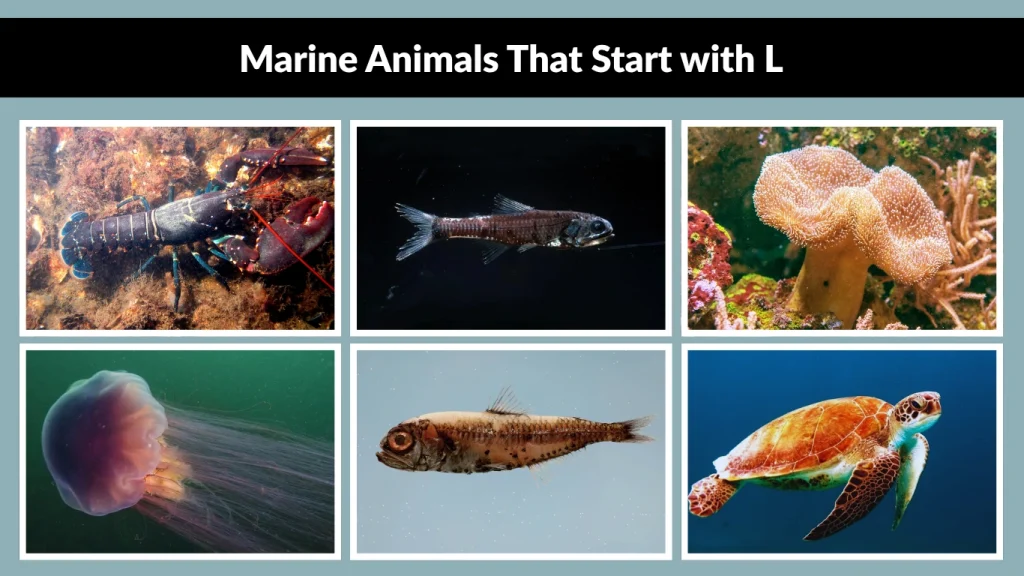
Marine animals beginning with L are a diverse group that inhabit oceans and seas worldwide. From crustaceans to jellyfish, these species play vital roles in marine ecosystems, contributing to food chains, nutrient cycling, and habitat formation.
31. Lobster
Lobsters are large crustaceans known for their strong claws and hard shells. They live on the ocean floor and are scavengers and predators, feeding on fish, mollusks, and plant material. Lobsters are highly prized seafood.
Their burrowing behavior helps aerate the seabed, contributing to the health of benthic ecosystems.
32. Lampfish
Lampfish are small, deep-sea fish known for their bioluminescent organs used to attract prey and mates. They inhabit dark ocean depths and form a significant part of the deep-sea food web.
Lampfish are important prey for larger marine animals, linking lower and higher trophic levels.
33. Leather Coral
Leather corals are soft corals found in tropical reefs. Unlike hard corals, they have flexible, leathery bodies and contribute to reef structure and biodiversity by providing habitat for various marine species.
They are sensitive to environmental changes, serving as indicators of reef health.
34. Lion’s Mane Jellyfish
The lion’s mane jellyfish is the largest known jellyfish species, with long, trailing tentacles that can sting prey and deter predators. They inhabit cooler ocean waters and feed on small fish and plankton.
Despite their sting, they are an essential part of marine ecosystems, controlling plankton populations.
35. Lanternfish
Lanternfish are small, bioluminescent fish found in deep ocean layers. They perform diel vertical migrations, rising to surface waters at night to feed. Lanternfish make up a large portion of deep-sea biomass.
Their massive numbers make them a crucial food source for whales, squid, and other predators.
36. Loggerhead Sea Turtle
Loggerhead turtles are large marine turtles named for their big heads. They inhabit coastal waters and feed mainly on hard-shelled prey like crabs and mollusks. Loggerheads contribute to maintaining healthy seagrass beds.
They are endangered due to habitat loss and human activities, with conservation efforts focusing
Small Mammals and Rodents That Start with L
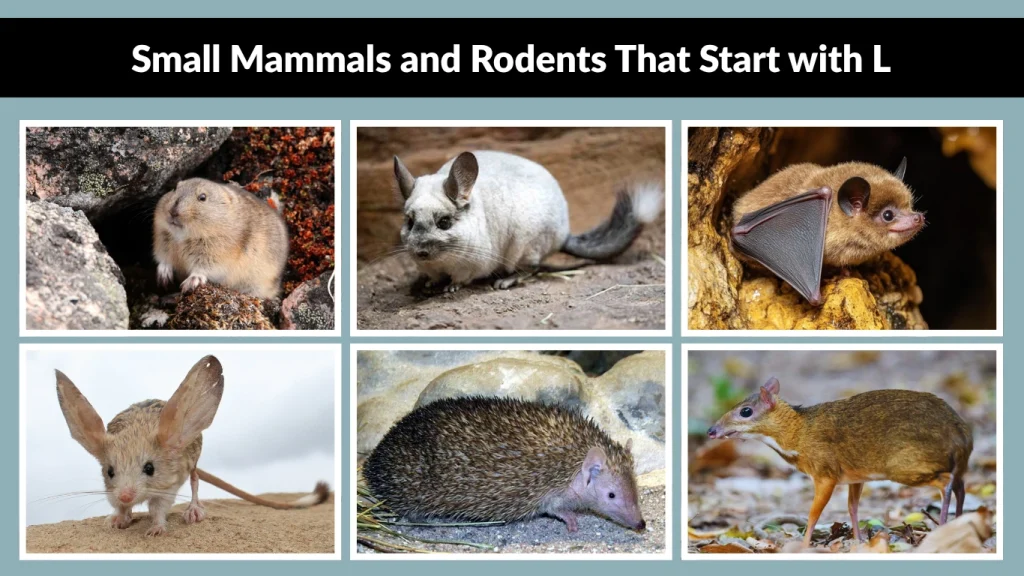
Small mammals and rodents are vital components of many ecosystems, serving as prey for larger animals and influencing vegetation through their feeding habits. Many species starting with L are adapted to diverse habitats, from deserts to forests, and exhibit unique behaviors.
37. Lemming
Lemmings are tiny rodents native to Arctic and subarctic regions. They have thick fur for insulation and change color seasonally. Lemmings primarily feed on grasses and mosses and are known for population booms followed by sharp declines.
Their population cycles greatly impact predator numbers and tundra vegetation, making them key players in Arctic ecosystems.
38. Long-tailed Chinchilla
The long-tailed chinchilla is a small rodent native to the Andes Mountains. It has dense, soft fur and a long bushy tail. These nocturnal animals feed on grasses and seeds and are known for their agility and speed.
Chinchillas have been heavily hunted for their fur, but conservation efforts have helped stabilize some wild populations.
39. Little Brown Bat
The little brown bat is a small insectivorous mammal found across North America. It uses echolocation to hunt flying insects at night. Little brown bats play an essential role in controlling insect populations.
Unfortunately, they face threats from habitat loss and diseases like white-nose syndrome, prompting conservation concerns.
40. Long-eared Jerboa
The long-eared jerboa is a tiny rodent with extremely large ears and long hind legs for jumping. Found in desert regions of Asia, it is nocturnal and feeds on seeds and insects. Its adaptations help it survive harsh environments.
Its unique appearance and behaviors make the long-eared jerboa an interesting subject for studies on desert adaptation.
41. Lesser Hedgehog Tenrec
Lesser hedgehog tenrecs are small, spiny mammals native to Madagascar. They resemble hedgehogs but are only distantly related. These tenrecs are nocturnal and feed on insects and small invertebrates.
They contribute to insect population control and are part of Madagascar’s unique mammal diversity.
42. Lesser Mouse Deer
Lesser mouse deer are tiny hoofed mammals found in Southeast Asian forests. Despite their name, they are not true deer but chevrotains. They feed on leaves, fruits, and shoots and are elusive forest dwellers.
Their small size and secretive nature make them rarely seen, but they play a role in seed dispersal.
Farm and Domestic Animals That Start with L
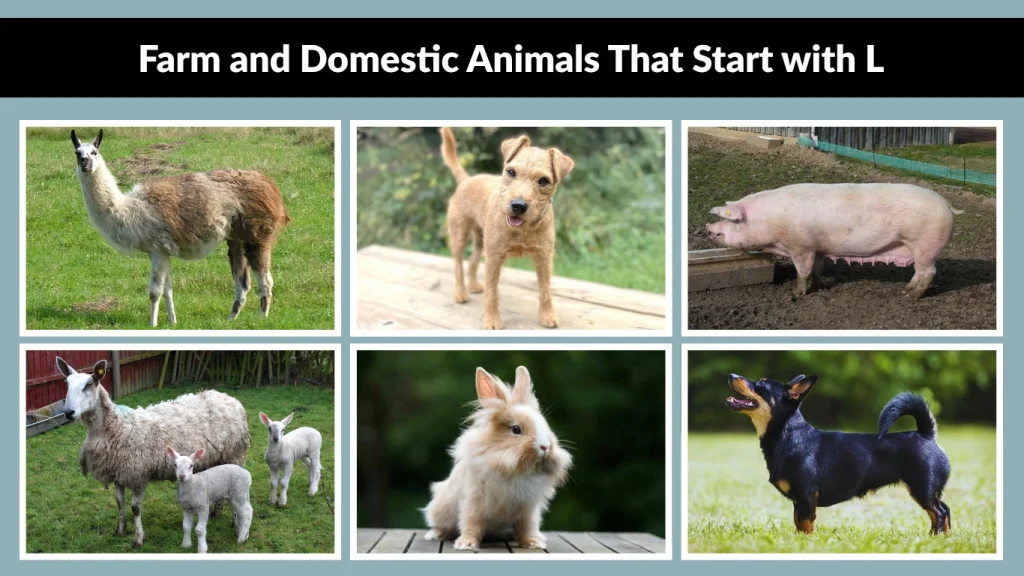
Farm and domestic animals starting with L include species bred for agriculture, companionship, and utility. These animals contribute significantly to human livelihoods through products like meat, wool, and companionship, as well as aiding in farm work.
43. Llama
Llamas are domesticated South American camelids used as pack animals and for their wool. They are hardy, social animals adapted to mountainous terrain. Llamas are known for their gentle nature and ability to carry heavy loads.
Besides their practical uses, llamas are also popular in petting zoos and therapy animal programs.
44. Lakeland Terrier (dog breed)
The Lakeland Terrier is a small, energetic dog breed originally from England’s Lake District. Known for its distinctive wiry coat and hunting skills, it was bred to control vermin on farms. Lakeland Terriers are friendly and intelligent pets.
They require regular exercise and grooming, making them suitable for active owners.
45. Landrace Pig
Landrace pigs are a group of domestic pigs prized for their meat quality and prolific breeding. Known for their long bodies and white skin, they are widely used in commercial pig farming worldwide.
Landrace pigs contribute significantly to the pork industry through their efficient growth and adaptability.
46. Leicester Sheep
Leicester sheep are a breed known for their long, lustrous wool and meat. Originating from England, they are medium to large-sized animals raised for both wool production and meat. Leicester sheep are hardy and adapt well to different climates.
Their wool is valued in textile industries for its softness and durability.
47. Lionhead Rabbit
The Lionhead rabbit is a domestic breed named for the mane-like fur around its head. Known for their friendly temperament and small size, they are popular pets. Lionhead rabbits require regular grooming due to their long fur.
They are also kept for show purposes and as companion animals.
48. Lancashire Heeler (dog breed)
The Lancashire Heeler is a small herding dog from northern England. Known for being lively and alert, they were traditionally used for herding cattle. Lancashire Heelers make loyal and intelligent family pets.
They thrive in active households and enjoy regular exercise and mental stimulation.
Exotic and Tropical Animals That Start with L
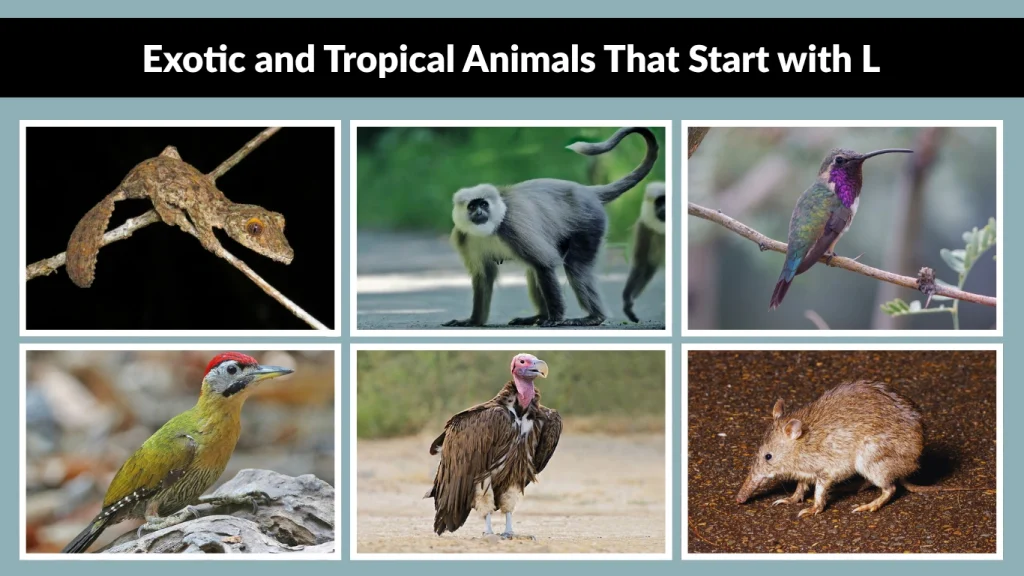
Exotic and tropical animals beginning with L inhabit diverse environments like rainforests, tropical islands, and savannas. Many of these species exhibit unique adaptations and behaviors suited to warm, lush habitats and play important roles in maintaining ecological balance.
49. Leaf-tailed Gecko
Leaf-tailed geckos are masters of camouflage, with bodies shaped and colored like leaves. Native to Madagascar and surrounding islands, they are nocturnal and insectivorous. Their remarkable disguise helps them avoid predators.
These geckos are indicators of healthy forest ecosystems, and habitat loss threatens their survival.
50. Langur
Langurs are a group of slender, long-tailed monkeys found in South and Southeast Asia. They live in social groups and feed mostly on leaves, fruits, and flowers. Langurs are agile climbers and spend much time in the forest canopy.
Their complex social behaviors and vocalizations make them fascinating subjects for primate studies.
51. Lucifer Hummingbird
The Lucifer hummingbird is a tiny, fast-flying bird native to the southwestern United States and Mexico. Known for its iridescent plumage and rapid wing beats, it feeds primarily on nectar from flowers.
This hummingbird plays a vital role in pollination, supporting the reproduction of many flowering plants.
52. Laced Woodpecker
Laced woodpeckers are medium-sized birds native to tropical Asia, recognized by their black and white patterned feathers. They forage on tree trunks, feeding on insects and larvae. Their pecking helps control tree-boring pests.
Woodpeckers also create nesting holes used by other animals, enhancing forest biodiversity.
53. Lappet-faced Vulture
The lappet-faced vulture is a large scavenging bird native to Africa and the Middle East. It has a distinctive bald head with loose skin folds (“lappets”). As a scavenger, it helps clean the environment by feeding on carrion.
Lappet-faced vultures are vulnerable due to poisoning and habitat loss, requiring conservation attention.
54. Long-nosed Bandicoot
Long-nosed bandicoots are small marsupials found in Australia and New Guinea. They have elongated snouts used for digging and foraging for insects and roots. Nocturnal and solitary, they contribute to soil aeration.
Their digging activity helps nutrient cycling and seed dispersal in their habitats.
Miscellaneous Animals That Start with L
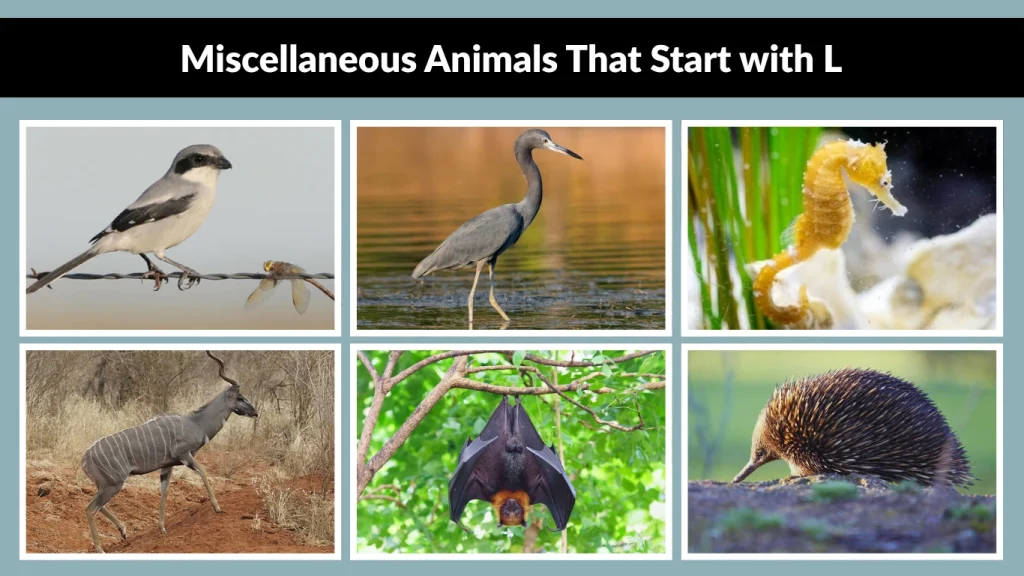
This diverse group includes animals from various habitats and classifications. Although varied, each species plays a unique role in its ecosystem, from controlling insect populations to dispersing seeds and maintaining ecological balance.
55. Loggerhead Shrike
Loggerhead shrikes are medium-sized songbirds known for their hooked beaks and predatory behavior. They often impale prey like insects and small vertebrates on thorns or barbed wire as “larders.” Found across North America, they inhabit open fields and scrublands.
Their unique hunting technique sets them apart among songbirds, helping control pest populations.
56. Little Blue Heron
The little blue heron is a small wading bird with slate-blue plumage. It inhabits wetlands and marshes in the Americas. Feeding mainly on fish, crustaceans, and insects, it uses stealthy hunting tactics to catch prey.
Little blue herons contribute to the health of wetland ecosystems by balancing aquatic food webs.
57. Lined Seahorse
Lined seahorses are small marine fish recognized by their upright posture and bony armor with vertical lines. They inhabit seagrass beds and coral reefs, feeding on tiny crustaceans. Male seahorses carry fertilized eggs in a pouch.
Seahorses are indicators of healthy coastal habitats but face threats from habitat destruction and the aquarium trade.
58. Lesser Kudu
The lesser kudu is a shy antelope species native to eastern Africa. It has striking white stripes on its reddish-brown coat and spiraled horns in males. They browse on leaves, shoots, and fruits in dense bushlands.
Lesser kudus help shape vegetation structure and provide prey for large African predators.
59. Large Flying Fox
The large flying fox is a species of fruit bat found in Southeast Asia. With a wingspan of up to 1.5 meters, it feeds on nectar, fruit, and flowers. These bats are important pollinators and seed dispersers.
Their role supports forest regeneration and biodiversity, though habitat loss threatens their populations.
60. Long-beaked Echidna
The long-beaked echidna is a rare monotreme native to New Guinea. It has a spiny coat and a long snout used to probe for insects. Unlike most mammals, echidnas lay eggs but nurse their young with milk.
These unique creatures provide insight into early mammalian evolution and biodiversity.