


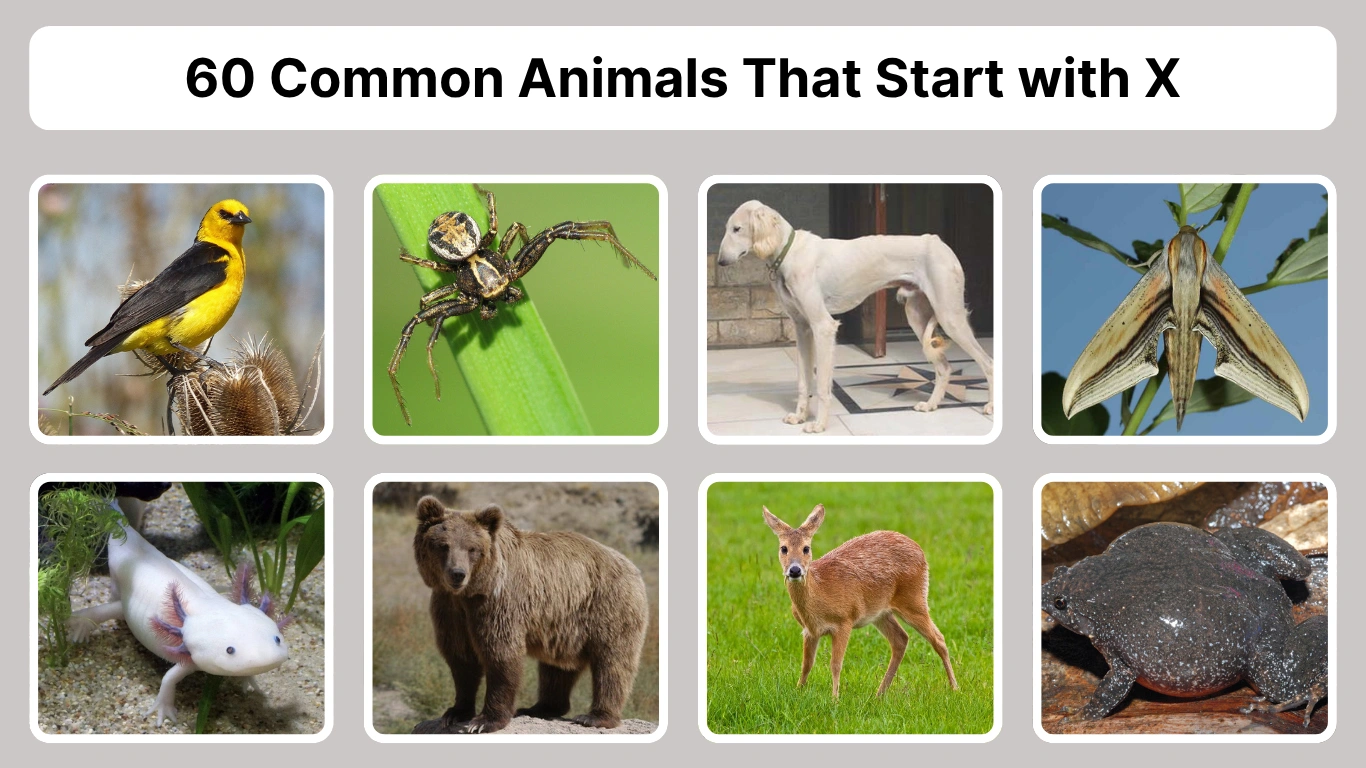
Animals whose names begin with the letter X are rare and fascinating, often drawing their names from scientific, Latin, or indigenous origins. They span every corner of the animal kingdom, from mammals and birds to reptiles, fish, and marine creatures. Many of these species are region-specific, unique in appearance, and vital to their ecosystems, making them intriguing to wildlife enthusiasts and researchers alike. This list explores 60 such remarkable creatures.
Mammals that Start with X
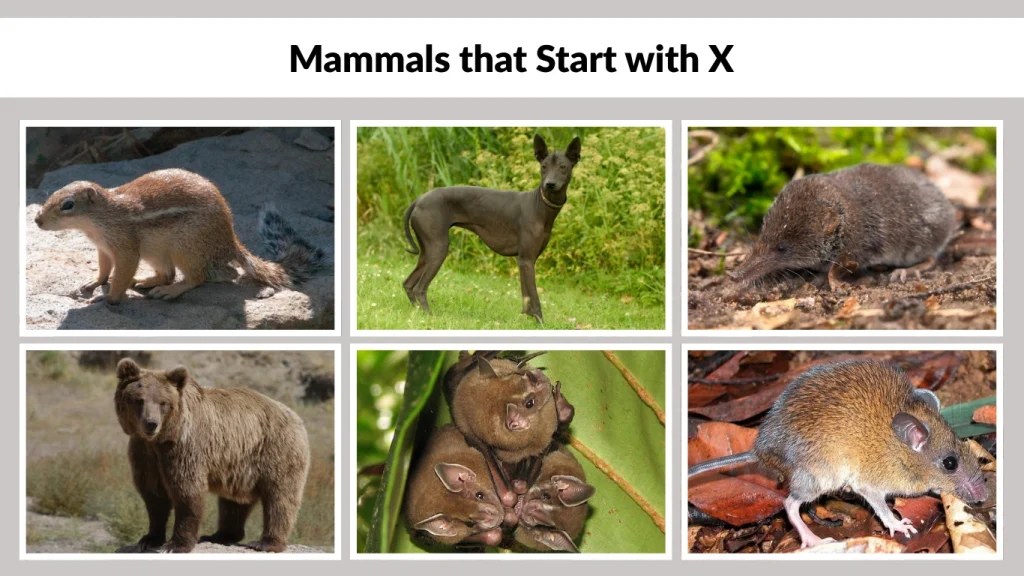
Mammals beginning with the letter X are rare and often have names derived from local languages or scientific classifications. They inhabit diverse environments, from deserts and grasslands to tropical forests. Many are unique to specific regions, making them intriguing for researchers and wildlife enthusiasts. These species showcase distinctive adaptations for survival in their specialized habitats.
1. Xerus (African Ground Squirrel)
The Xerus is a ground-dwelling squirrel native to Africa’s dry savannas and semi-deserts. Unlike tree squirrels, they spend most of their time on the ground, living in complex burrow systems that offer protection from predators and extreme heat.
These social animals live in groups, sharing duties like sentry watch and foraging. Their diet includes seeds, roots, and insects, helping them survive in areas where food is scarce. Their bushy tails also serve as sunshades in the hot African climate.
2. Xoloitzcuintli (Mexican Hairless Dog)
The Xoloitzcuintli, or Xolo, is one of the world’s oldest and rarest dog breeds, native to Mexico. Known for its almost hairless skin and elegant build, it comes in three sizes—toy, miniature, and standard.
Historically, Xolos were regarded as sacred dogs by the Aztecs and believed to guide souls to the afterlife. Today, they are valued as loyal companions with a calm temperament, making them popular among dog enthusiasts who appreciate their unique look and heritage.
3. Xanthippe’s Shrew
Xanthippe’s shrew is a small insectivorous mammal found in parts of East Africa, including Tanzania and Kenya. It has a pointed snout, tiny eyes, and dense brownish fur, perfect for blending into its environment.
It spends most of its life foraging for insects, worms, and small invertebrates in leaf litter and soil. Though small, it plays a vital role in controlling insect populations, making it an important contributor to ecological balance in its habitat.
4. Xinjiang Brown Bear
The Xinjiang brown bear is a subspecies of the brown bear found in China’s Xinjiang region. It inhabits mountainous forests and grasslands, where it forages for berries, roots, fish, and small animals.
This bear is a solitary creature, especially active during the summer and autumn when it builds fat reserves for winter hibernation. Human activity and habitat loss have made it less common, but it remains an impressive symbol of the region’s wildlife.
5. Xingu Leaf-eared Bat
The Xingu leaf-eared bat is a small bat species found in South America, particularly near Brazil’s Xingu River. It gets its name from the leaf-shaped structure on its nose, which helps in echolocation.
It roosts in caves and hollow trees, emerging at night to feed on insects. These bats play a critical role in insect control, benefiting agriculture and human health. Their populations are often tied to healthy forest and river ecosystems.
6. Xiamen Spiny Rat
The Xiamen spiny rat is a rodent native to parts of East Asia. Its coarse, spiny fur helps protect it from predators, while its strong claws make it an adept digger.
It forages for seeds, fruits, and insects, often under the cover of night. Due to its limited range, habitat destruction poses a threat to its survival, making conservation of its forest environment essential for its continued existence.
Birds that Start with X
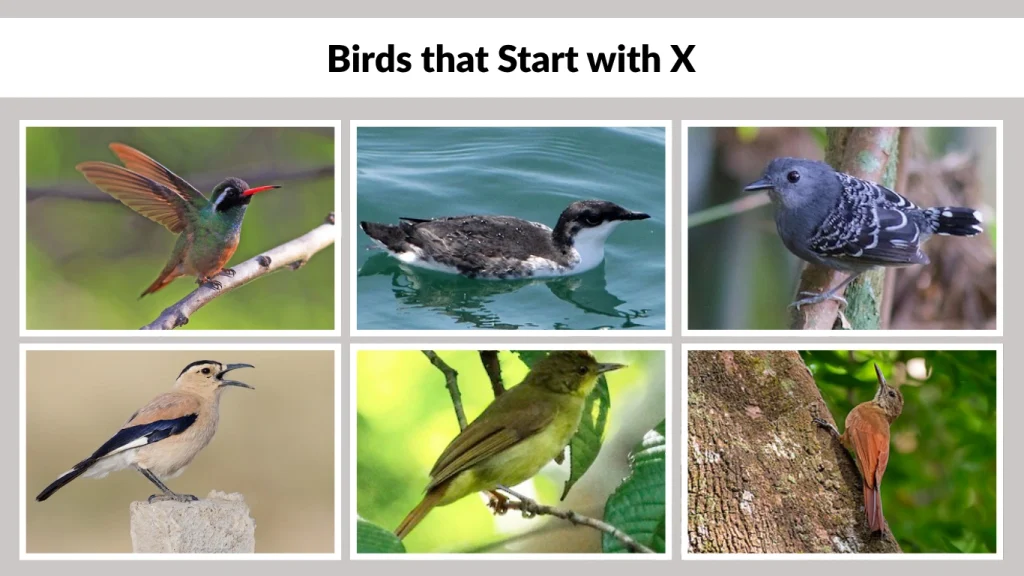
Birds whose names begin with the letter X are rare and often have names derived from explorers, scientists, or their native habitats. Many of these species are found in limited geographic ranges, making them special to birdwatchers. They display a variety of adaptations, from specialized feeding habits to unique plumage patterns that help them thrive in their environments.
7. Xantus’s Hummingbird
Xantus’s hummingbird is a small, vibrant bird native to Baja California in Mexico. Males have shimmering green feathers and a distinctive white eye stripe, making them easy to spot in their natural habitat.
They feed primarily on nectar from flowers, using their long, specialized tongues to extract it. These hummingbirds are important pollinators, transferring pollen between plants while feeding and contributing to the biodiversity of their ecosystems.
8. Xantus’s Murrelet
The Xantus’s murrelet is a small seabird found along the Pacific coast from California to Mexico. It has a sleek black-and-white body adapted for diving and catching small fish and plankton.
Unlike many seabirds, it nests in hidden rocky crevices on islands close to shore. These murrelets are excellent swimmers, using their wings to propel themselves underwater in pursuit of prey.
9. Xingu Scale-backed Antbird
The Xingu scale-backed antbird is a striking bird found in the Brazilian Amazon, particularly near the Xingu River. Males have black plumage with distinctive white scaling on their backs.
They live in dense forest undergrowth, often following swarms of army ants to catch insects fleeing from the ants. This specialized feeding behavior makes them dependent on healthy forest ecosystems.
10. Xinjiang Ground Jay
The Xinjiang ground jay is a rare bird native to China’s Xinjiang desert region. It has sandy-colored plumage that blends with its arid surroundings, long legs for running, and a strong beak for digging food.
Unlike most jays, it spends much of its time on the ground, foraging for seeds, insects, and small reptiles. Its limited range makes it vulnerable to habitat changes caused by human activity.
11. Xavier’s Greenbul
Xavier’s greenbul is a small songbird found in parts of Central Africa. It has olive-green plumage and a sweet, melodic song that echoes through forests and woodlands.
These birds are frugivorous, feeding mainly on berries and fruit, though they also eat insects. They play a role in seed dispersal, helping maintain the diversity of plant life in their habitats.
12. Xingu Woodcreeper
The Xingu woodcreeper is a medium-sized bird from the Amazon rainforest, known for climbing tree trunks in search of insects. Its brown, streaked plumage provides camouflage against tree bark.
It uses its strong, curved beak to probe crevices for prey. As a forest-dependent species, it relies heavily on large, undisturbed tracts of rainforest for survival, making deforestation a serious threat.
Reptiles that Start with X

Reptiles beginning with the letter X are not very common and often have scientific names rooted in Greek or Latin. Many of them are adapted to specific regions, from dry deserts to lush tropical forests. These species display fascinating survival traits, such as camouflage, unique body structures, and specialized hunting techniques.
13. Xantus’s Leaf-toed Gecko
Xantus’s leaf-toed gecko is a small lizard native to parts of Baja California, Mexico. It is named for its leaf-shaped toe pads, which give it excellent climbing abilities on rocks and vegetation.
Its coloration allows it to blend into its surroundings, protecting it from predators. Nocturnal by nature, it emerges at night to feed on insects and other small invertebrates.
14. Xenosaurus (Knob-scaled Lizard)
The Xenosaurus, or knob-scaled lizard, is found in rocky areas of Mexico. Its rough, bumpy scales give it a distinctive texture and aid in camouflage.
These lizards are primarily insectivorous, feeding on beetles, ants, and spiders. They prefer to stay hidden among rocks and crevices, emerging only when it is safe to hunt for food.
15. Xinjiang Toad-headed Agama
The Xinjiang toad-headed agama is a small desert lizard native to China’s arid regions. It has a broad, flattened head and sandy coloration that helps it blend with its environment.
It feeds on insects, especially ants, and is an active forager during the day. Its ability to withstand extreme temperatures makes it well-suited for desert life.
16. Xantus’s Night Lizard
Xantus’s night lizard is a secretive reptile found in the arid regions of Mexico. Despite its name, it can be active during both day and night depending on conditions.
It has smooth, shiny scales and a preference for living under rocks or fallen logs. Its diet includes insects, spiders, and small arthropods.
17. Xenagama (Turnip-tailed Agama)
The Xenagama, also called the turnip-tailed agama, is native to arid areas of Ethiopia and Somalia. Its short, thick tail is used for fat storage, which helps it survive in dry environments.
It basks in the sun to regulate body temperature and retreats into burrows for safety. Its diet is mainly insects, though it occasionally consumes plant material.
18. Xantus’s Snake
Xantus’s snake is a non-venomous species native to parts of Central America. It has slender body and smooth scales, often in muted colors to avoid detection.
It hunts small lizards, frogs, and insects, using stealth rather than speed. This snake spends much of its time hidden under leaf litter or in burrows.
Amphibians that Start with X
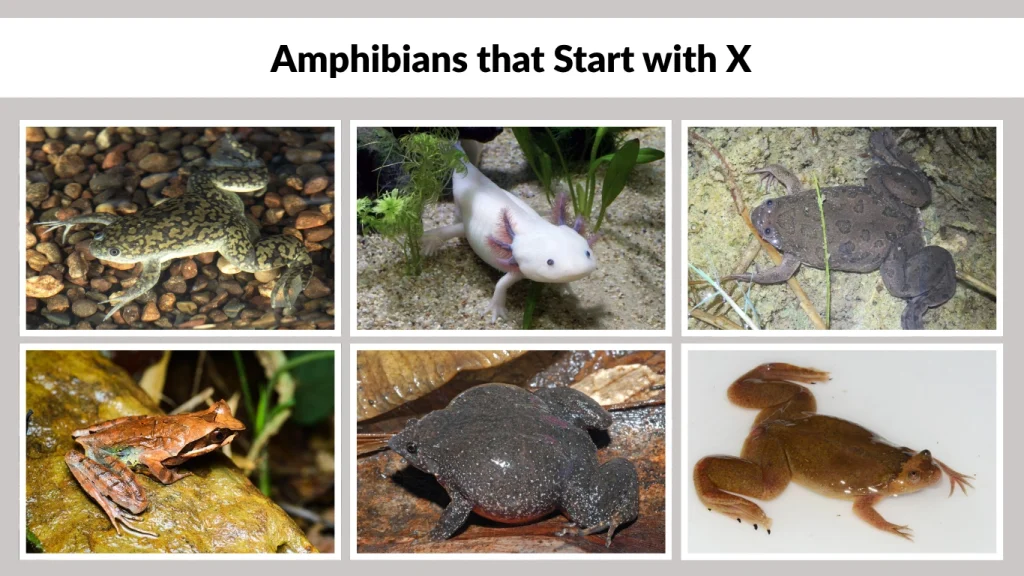
Amphibians beginning with the letter X are quite rare, and many belong to species with scientific names derived from Latin or Greek. They often thrive in wetland, river, or forest habitats, and many are sensitive indicators of environmental health. These creatures display fascinating adaptations like unique breeding strategies, specialized skin, and aquatic as well as terrestrial lifestyles.
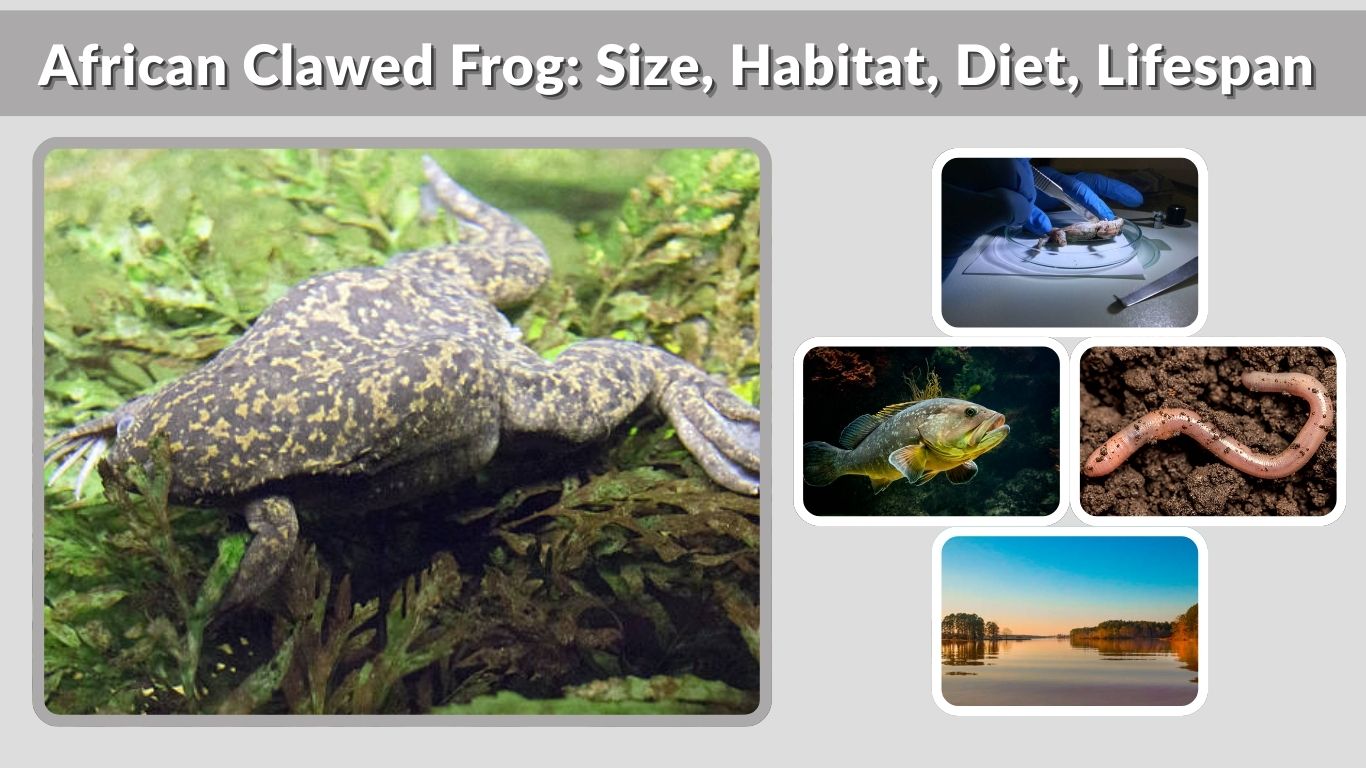
19. Xenopus laevis (African Clawed Frog)
The African clawed frog is an entirely aquatic amphibian native to sub-Saharan Africa. It is known for its claw-like tips on the hind feet, which it uses to tear apart food.
These frogs are opportunistic feeders, eating insects, small fish, and organic debris. They are also used in scientific research due to their adaptability and ease of breeding in captivity.
20. Xochimilco Axolotl
The Xochimilco axolotl is a critically endangered amphibian native to the canals of Xochimilco, Mexico. Unlike most amphibians, it retains its larval features, such as gills, throughout its life.
It is highly adapted to an aquatic lifestyle, feeding on small fish, worms, and insects. Conservation efforts are ongoing to protect its dwindling wild population.
21. Xenopus muelleri (Tropical Clawed Frog)
The tropical clawed frog is closely related to the African clawed frog but prefers warmer, tropical waters across Africa. It has smooth, slippery skin and a flattened body shape for swimming.
It feeds on aquatic invertebrates and small vertebrates. Its presence in many water bodies makes it an important part of local ecosystems, controlling insect larvae.
22. Xenophrys major (Large Horned Toad)
The large horned toad, also called the giant horned frog, is a terrestrial amphibian found in parts of Asia. It has bony ridges over its eyes that resemble horns.
It camouflages among leaf litter and ambushes prey such as insects and small vertebrates. Its large mouth allows it to consume surprisingly big prey items.
23. Xenorhina parkerorum (Parker’s Snouted Frog)
Parker’s snouted frog is a burrowing amphibian native to Papua New Guinea. It has a pointed snout used for digging into soft soil.
This frog spends most of its life underground, emerging during rains to feed on ants and termites. Its cryptic lifestyle helps it avoid predators.
24. Xenopus fraseri (Fraser’s Clawed Frog)
Fraser’s clawed frog is an aquatic species native to central Africa. It has webbed hind feet and strong swimming abilities, living primarily in slow-moving or still waters.
It is a scavenger, feeding on detritus, insects, and small aquatic animals. Its adaptability allows it to survive in both permanent and temporary water bodies.
Fish that Start with X
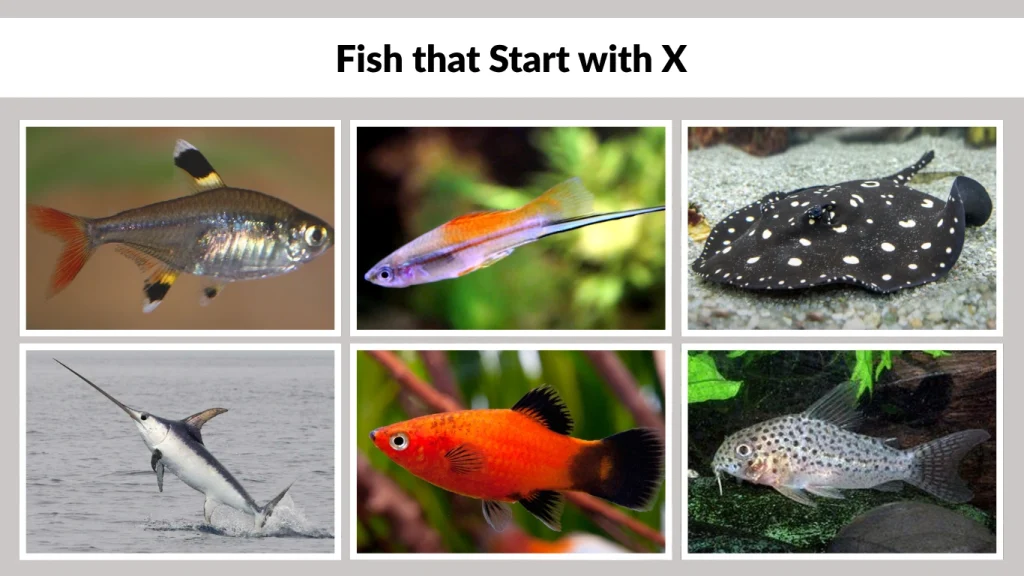
Fish species beginning with the letter X are uncommon, with many recognized by scientific or regional names. They inhabit a range of environments, from fast-flowing rivers to deep oceans. These fish often stand out for their striking colors, unique body shapes, or specialized behaviors, making them popular among scientists, anglers, and aquarium enthusiasts alike.
25. X-ray Tetra
The X-ray tetra is a small, translucent freshwater fish native to South America. Its clear body allows its internal bones to be faintly visible, hence the name.
It thrives in schools, feeding on small invertebrates and plant matter. Popular in aquariums, it is admired for its peaceful nature and shimmering golden stripe along its body.
26. Xiphophorus helleri (Swordtail Fish)
The swordtail fish is a brightly colored freshwater fish native to Central America. Males have a distinctive elongated tail fin resembling a sword.
They are livebearers, meaning they give birth to free-swimming young. Known for their hardiness, swordtails are common in aquariums and come in various color varieties through selective breeding.
27. Xingu River Ray
The Xingu River ray is a freshwater stingray found in Brazil’s Xingu River. It has a striking pattern of white or yellow spots on a dark background.
It spends most of its time on the riverbed, feeding on crustaceans, worms, and small fish. Its beautiful markings make it a sought-after species in the aquarium trade, though it requires specialized care.
28. Xiphias gladius (Swordfish)
The swordfish is a large, powerful predator found in tropical and temperate oceans. It is named for its long, flat bill used to slash at schools of fish.
Capable of incredible speed, swordfish are prized by sport fishers. They feed on squid, mackerel, and other fish, often hunting at great depths.
29. Xiphophorus maculatus (Platy Fish)
The platy fish is a small, colorful freshwater fish native to Mexico and Central America. It is peaceful, easy to care for, and available in many vibrant color patterns.
Platies are livebearers, producing young that are ready to swim and feed immediately. They thrive in community aquariums alongside other peaceful species.
30. Xingu Corydoras
The Xingu corydoras is a small catfish species found in Brazil’s Xingu River. It has an armored body and barbels around its mouth for detecting food.
It feeds on detritus, insect larvae, and small crustaceans. Peaceful and hardy, it is popular among aquarists who appreciate its bottom-cleaning habits.
Insects that Start with X

Insects whose names begin with the letter X are often lesser-known and typically identified by scientific names. Many of them are region-specific and have fascinating adaptations for survival, from specialized feeding structures to vibrant colors. These insects play important roles in pollination, decomposition, and controlling pest populations, making them essential components of healthy ecosystems.
31. Xylocopa (Carpenter Bee)
Xylocopa, or carpenter bees, are large bees known for their ability to bore into wood to create nesting tunnels. They are found worldwide, especially in warm and tropical regions.
Despite their size, they are generally non-aggressive and are important pollinators. Their strong mandibles help them excavate wood, while their hairy bodies transfer pollen between flowers.
32. Xerces Blue Butterfly
The Xerces blue butterfly, once native to the coastal sand dunes of San Francisco, is now extinct. It had vivid blue wings with delicate black margins.
Its decline was due to habitat destruction from urban development. Today, it serves as a symbol for insect conservation efforts, highlighting the importance of protecting native habitats.
33. Xylotrechus Beetle
The Xylotrechus beetle is a genus of longhorn beetles with elongated bodies and long antennae. Many species have bold patterns of black and yellow or red.
Their larvae bore into wood, playing a role in breaking down dead trees. While some species are harmless, others can become pests in timber industries.
34. Xylophanes Moth
Xylophanes moths are medium to large hawk moths found primarily in Central and South America. They are known for their sleek, aerodynamic bodies and rapid flight.
The larvae feed on plants such as coffee and jasmine, while adults feed on nectar. Their long proboscis allows them to access deep flowers, aiding in pollination.
35. Xylophagus Fly
Xylophagus flies are small, predatory insects found in forested regions. Adults often feed on nectar, while larvae live in decaying wood.
The larvae are important decomposers, helping recycle nutrients back into the soil. Their presence often indicates a healthy forest ecosystem.
36. Xystrocera Beetle
The Xystrocera beetle is a type of longhorn beetle commonly found in tropical Asia. It has a narrow body and extremely long antennae, sometimes exceeding its body length.
It lays eggs in tree bark, and the larvae feed on wood, making them potential pests in forestry. However, they also contribute to natural wood decomposition processes.
Marine Animals that Start with X
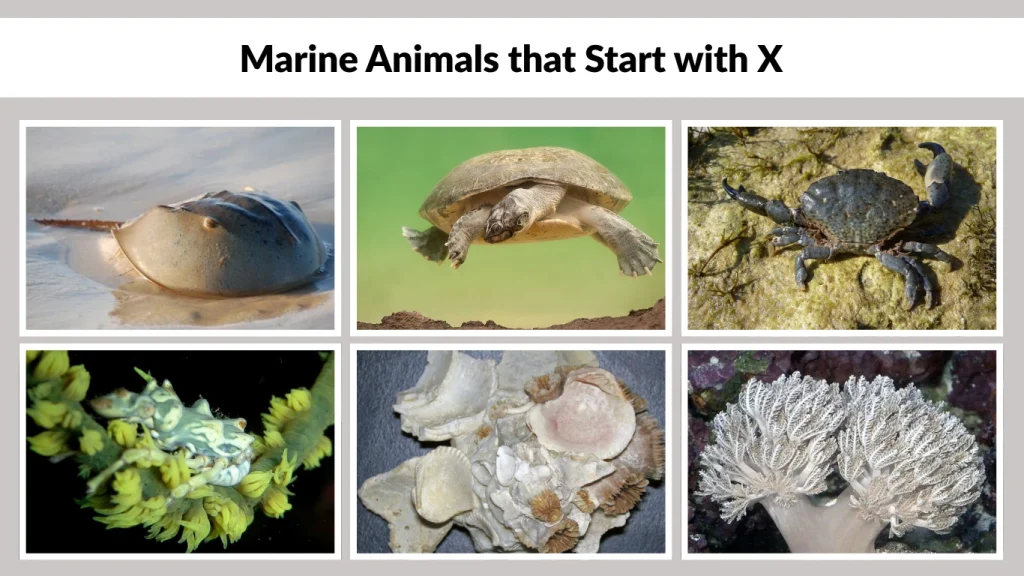
Marine animals whose names begin with the letter X are rare and often have scientific names linked to their appearance or place of discovery. These species inhabit diverse aquatic environments, from shallow coral reefs to deep ocean floors. Many play vital roles in marine ecosystems, contributing to reef health, nutrient cycling, and the balance of aquatic food chains.
37. Xiphosura (Horseshoe Crab)
Xiphosura, commonly known as horseshoe crabs, are ancient marine arthropods that have existed for over 450 million years. They are easily recognized by their hard, dome-shaped shell and long tail spine.
They feed on worms and small mollusks in shallow coastal waters. Horseshoe crab blood is highly valued in medical testing for detecting bacterial contamination in vaccines and surgical equipment.
38. Xingu River Turtle
The Xingu River turtle is a freshwater turtle native to the Xingu River basin in Brazil. It has a streamlined shell that aids in swimming against strong currents.
Its diet includes aquatic plants, insects, and small fish. This turtle is considered vulnerable due to habitat loss and overharvesting, making conservation efforts critical for its survival.
39. Xanthid Crab
The Xanthid crab is a brightly colored crab species found in coral reefs worldwide. Its vibrant shell often features striking patterns of red, yellow, and black.
While beautiful, many species in this family are toxic if consumed due to powerful marine toxins in their tissues. They play an important role in reef ecosystems as scavengers.
40. Xenocarcinus tuberculatus (Spider Crab)
The Xenocarcinus tuberculatus, or spider crab, has long, spindly legs and a small body, allowing it to camouflage among corals. It is found in tropical Indo-Pacific waters.
It often decorates its shell with algae and sponges for extra concealment. Feeding on small invertebrates and detritus, it helps keep reef environments clean.
41. Xenophora (Carrier Shell)
The Xenophora, or carrier shell, is a sea snail known for attaching shells, stones, and other debris to its own shell as camouflage. It inhabits sandy and muddy seabeds.
This unique behavior helps it avoid predators while it feeds on algae and detritus. Its decorated shell often makes it a favorite among shell collectors.
42. Xeniid Coral
Xeniid corals are soft corals found in shallow tropical reefs, especially in the Indo-Pacific region. They are recognized by their pulsing polyps that gently wave in ocean currents.
These corals rely on symbiotic algae for photosynthesis and contribute to reef biodiversity. They are also popular in marine aquariums for their delicate movement and beauty.
Exotic and Rare Animals that Start with X
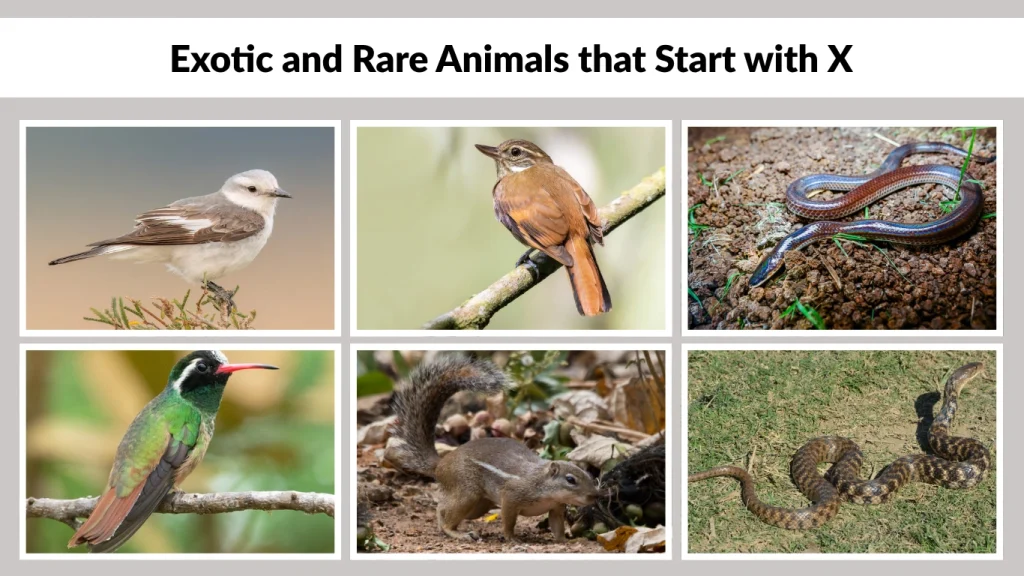
Exotic and rare animals beginning with the letter X are often known only to specific regions or scientific communities. Many are endangered or have restricted habitats, making them difficult to observe in the wild. Their unusual adaptations, striking appearances, and limited distributions make them fascinating subjects for researchers and wildlife enthusiasts alike.
43. Xolmis velatus (White-rumped Monjita)
The white-rumped monjita is a striking bird found in open grasslands of South America. It has bright white plumage with a distinctive black eye mask and a dark tail.
It perches on fence posts and low shrubs to hunt insects. Its bold appearance and active hunting style make it a favorite among birdwatchers in its native range.
44. Xenops (Tropical Bird)
The xenops is a small, brown bird found in Central and South American forests. It has a slightly upturned bill used for probing bark and leaves for insects.
It is often seen moving quickly through the canopy, sometimes hanging upside down to forage. Its unique feeding style makes it easy to distinguish from other forest birds.
45. Xenopeltis unicolor (Sunbeam Snake)
The sunbeam snake is a non-venomous reptile found in Southeast Asia. Its smooth, iridescent scales reflect a rainbow sheen under sunlight.
It lives underground or under leaf litter, emerging mainly at night to hunt frogs, lizards, and small mammals. Despite its beauty, it is shy and rarely seen by humans.
46. Xantus’s Sabrewing
Xantus’s sabrewing is a large hummingbird species found in Mexico and Central America. It has shimmering green feathers and a long, curved bill adapted for feeding on tubular flowers.
It is territorial, often defending its feeding areas from other hummingbirds. Its vibrant plumage and energetic flight patterns make it a standout in tropical forests.
47. Xerus erythropus (Striped Ground Squirrel)
The striped ground squirrel is native to Africa’s savannas and open woodlands. It has a sandy-brown coat with distinctive white side stripes.
It lives in burrows, often in small colonies, and feeds on seeds, roots, and insects. Its stripes provide camouflage in grassy environments, protecting it from predators.
48. Xenochrophis piscator (Asian Water Snake)
The Asian water snake is a non-venomous snake found in freshwater habitats across South and Southeast Asia. It has a dark body with lighter crossbands.
It is an excellent swimmer, preying on fish, frogs, and aquatic invertebrates. Although harmless to humans, it is often mistaken for venomous snakes and sometimes killed unnecessarily.
Domesticated and Farm Animals that Start with X
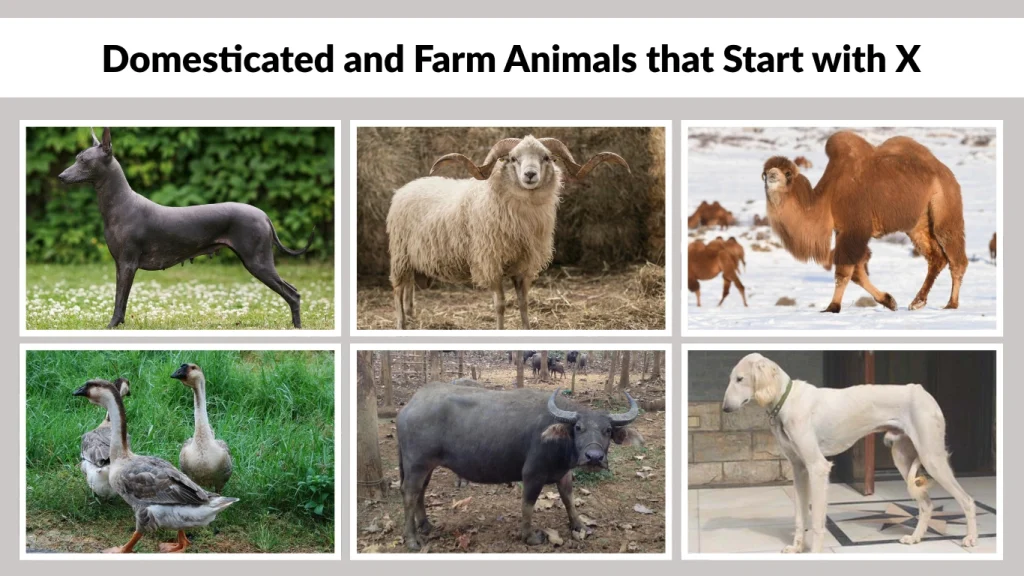
Domesticated and farm animals beginning with the letter X are rare, and many are specific breeds or species adapted to particular regions. These animals have been selectively bred for purposes such as companionship, herding, transport, or food production. They often carry cultural significance in the areas where they are raised, and some are valued for their unique appearances or abilities.
49. Xoloitzcuintli (Hairless Dog Breed)
The Xoloitzcuintli, or Xolo, is an ancient Mexican dog breed known for its nearly hairless skin and elegant, athletic build. It comes in three sizes and has a calm, loyal temperament.
Historically revered by the Aztecs, the breed was believed to guide souls in the afterlife. Today, it is appreciated both as a companion animal and as a living link to Mexico’s cultural heritage.
50. Xalda Sheep
The Xalda sheep is a rare, ancient breed from Asturias, Spain. It is small, hardy, and well-adapted to mountainous terrain, with wool ranging from black to brown.
Traditionally raised for meat and wool, Xalda sheep are also valued for their role in preserving regional agricultural heritage. Conservation programs have helped prevent their extinction.
51. Xinjiang Camel
The Xinjiang camel is a sturdy breed of Bactrian camel found in the Xinjiang region of China. It is used for transport, milk, and wool production in harsh desert climates.
Its two humps store fat, allowing it to survive long journeys without water. It has been essential for trade and travel along parts of the historic Silk Road.
52. Xiamen Goose
The Xiamen goose is a domestic goose breed originating from China. Known for its upright posture and alert expression, it is often raised for meat and ornamental purposes.
It is hardy and adapts well to different climates, making it a practical choice for small farms. Its calm nature also makes it suitable for mixed-flock farming.
53. Xieng Khouang Buffalo
The Xieng Khouang buffalo is a water buffalo breed native to Laos. It is used for plowing rice paddies, transporting goods, and producing milk and meat.
Strong and resilient, it thrives in hot, humid climates. In rural communities, these buffaloes remain a cornerstone of traditional farming practices.
54. Xigou (Chinese Sighthound)
The Xigou is a sleek, fast dog breed from China, closely related to the Greyhound. It has been used for hunting and coursing game for centuries.
Its slender build and keen eyesight make it an exceptional runner. Today, it is increasingly kept as a companion animal, admired for its elegance and loyalty.
Miscellaneous Animals that Start with X
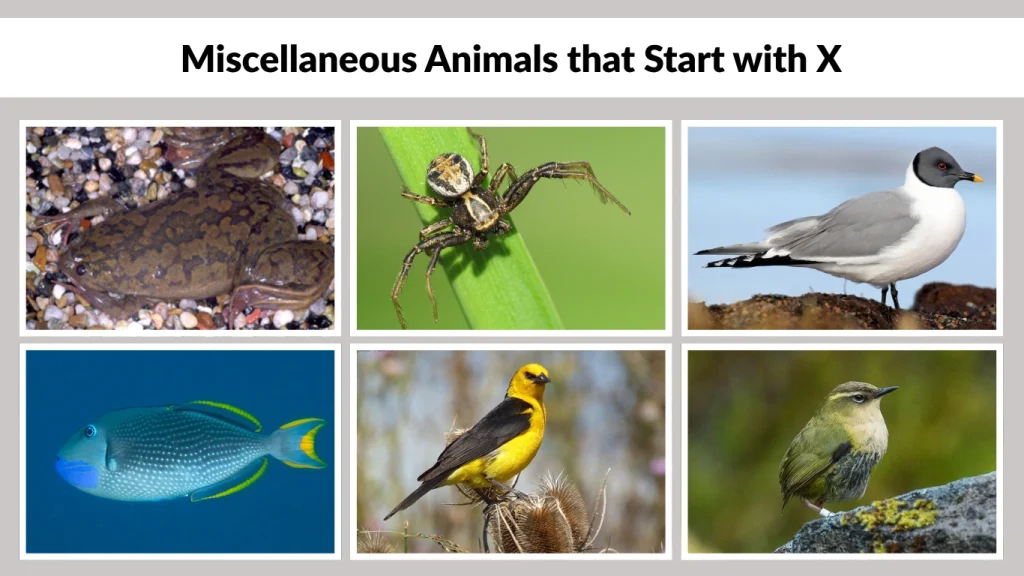
Miscellaneous animals beginning with the letter X include a mix of species from different habitats and classifications. These animals range from birds and reptiles to amphibians and invertebrates. Many have unique adaptations or striking appearances, and several are region-specific, making them particularly interesting to naturalists and wildlife enthusiasts.
55. Xenopus borealis (Lake Victoria Clawed Frog)
The Lake Victoria clawed frog is an aquatic amphibian found in freshwater habitats around Lake Victoria in East Africa. It is adapted for swimming, with fully webbed hind feet.
It feeds on insects, small fish, and aquatic invertebrates. This species plays an important role in its ecosystem by controlling insect populations in the water.
56. Xysticus (Crab Spider)
Xysticus is a genus of crab spiders found worldwide in grasslands, forests, and gardens. They are named for their crab-like stance and sideways movement.
They rely on camouflage to ambush prey rather than building webs. These spiders help control insect populations naturally in their habitats.
57. Xema sabini (Sabine’s Gull)
Sabine’s gull is a medium-sized seabird with a distinctive black-and-white wing pattern and a forked tail. It breeds in Arctic regions and migrates long distances to winter at sea.
It feeds on fish, crustaceans, and insects, often foraging along shorelines or over open water. Its striking plumage makes it easy to identify among gull species.
58. Xanthichthys auromarginatus (Blue Triggerfish)
The blue triggerfish is a reef-dwelling fish found in the Indo-Pacific. It has a vivid blue body with golden-edged fins, making it highly sought after for aquariums.
It feeds on crustaceans, mollusks, and algae. In the wild, it plays a role in maintaining reef health by controlling certain invertebrate populations.
59. Xanthopsar flavus (Saffron-cowled Blackbird)
The saffron-cowled blackbird is a striking yellow-and-black songbird native to South America. It prefers grasslands and marshy areas.
It feeds on seeds and insects, often foraging in small flocks. Habitat loss has caused population declines, leading to conservation concerns for this beautiful bird.
60. Xenicus gilviventris (New Zealand Rockwren)
The New Zealand rockwren is a small, ground-dwelling bird found in alpine areas of New Zealand. It has olive-green plumage and a distinctive bobbing movement.
It feeds on insects and spiders, foraging among rocks and vegetation. Adapted to cold mountain environments, it is one of New Zealand’s few truly alpine birds.