



Crabs are fascinating crustaceans found in oceans, rivers, beaches, marshes, and even on land. With thousands of species worldwide, they vary greatly in size, color, habitat, and behavior. Some crabs are highly valued for seafood, while others play crucial ecological roles in coastal and marine ecosystems. This guide introduces 32 common types of crabs, highlighting their diversity and importance across different environments.
1. Blue Crab

The blue crab is one of the most well-known and widely harvested crab species in the world. It is especially famous in coastal regions for its sweet, tender meat and its importance to commercial and recreational fishing. Blue crabs are active swimmers and are easily recognized by their vivid coloration and sharp claws.
Identification
- Olive to bluish-green carapace with white spots
- Bright blue claws with red tips on mature females
- Broad, flattened rear legs adapted for swimming
- Hard shell that molts several times as it grows
Habitat and Range
Blue crabs are commonly found in estuaries, bays, lagoons, and coastal waters. They prefer brackish environments with sandy or muddy bottoms and are widely distributed along the Atlantic coast and the Gulf of Mexico.
Behavior and Diet
These crabs are aggressive, fast-moving, and opportunistic feeders. They eat fish, mollusks, smaller crustaceans, plant material, and organic debris. Blue crabs are also known for cannibalistic behavior, especially during molting.
Importance to Humans
Blue crabs are a major seafood species and play a key role in coastal economies. They are harvested using traps, trotlines, and nets, and are especially popular in regional cuisines for steaming, boiling, and making crab cakes.
2. Dungeness Crab

The Dungeness crab is a highly prized edible crab known for its sweet, delicate meat and large body size. It is one of the most important commercial crab species on the west coast of North America and is popular in both home cooking and restaurants.
Identification
- Broad, oval-shaped brown to purplish carapace
- Smooth shell with small, evenly spaced spines along the edges
- Thick legs and strong claws with light-colored tips
- Can grow noticeably wider than most common shore crabs
Habitat and Range
Dungeness crabs are found in sandy or muddy bottoms of bays, estuaries, and coastal waters. Their range extends from Alaska down to California, where cooler waters support healthy populations.
Behavior and Diet
These crabs are bottom dwellers that spend much of their time buried in sediment. They are omnivorous, feeding on fish, clams, worms, small crustaceans, and decaying organic matter.
Importance to Humans
Dungeness crab supports a major commercial fishery and is especially popular during crab season. Its meat is valued for its tenderness and mild flavor, commonly enjoyed steamed, boiled, or used in crab dishes.
3. King Crab
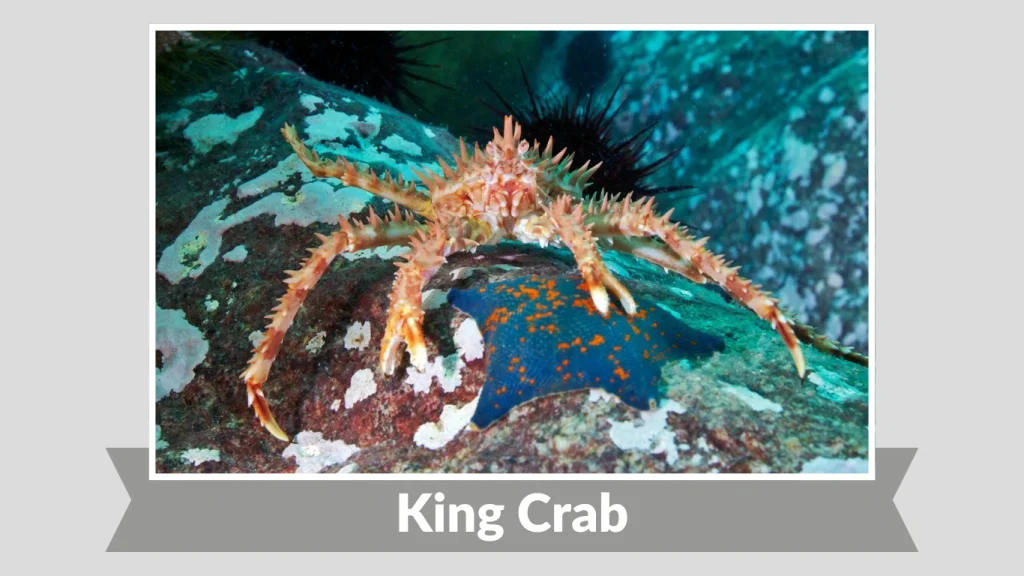
King crabs are among the largest and most valuable crabs in the world, famous for their massive legs and rich, flavorful meat. They are commonly associated with cold ocean waters and are a premium seafood choice in global markets.
Identification
- Very large body with long, spiny legs
- Reddish-brown to deep red hard shell
- Thick, powerful claws (one often larger than the other)
- Rough, spiked carapace texture
Habitat and Range
King crabs inhabit deep, cold waters of the North Pacific Ocean, particularly around Alaska, Russia, and the Bering Sea. They are usually found on sandy or muddy ocean floors at significant depths.
Behavior and Diet
These crabs are slow-moving bottom dwellers that forage along the seafloor. Their diet includes mollusks, worms, sea stars, smaller crustaceans, and other benthic organisms.
Importance to Humans
King crab is one of the most expensive and sought-after seafood products. It supports a tightly regulated commercial fishery and is commonly served steamed, grilled, or boiled due to its large meat-filled legs.
4. Snow Crab
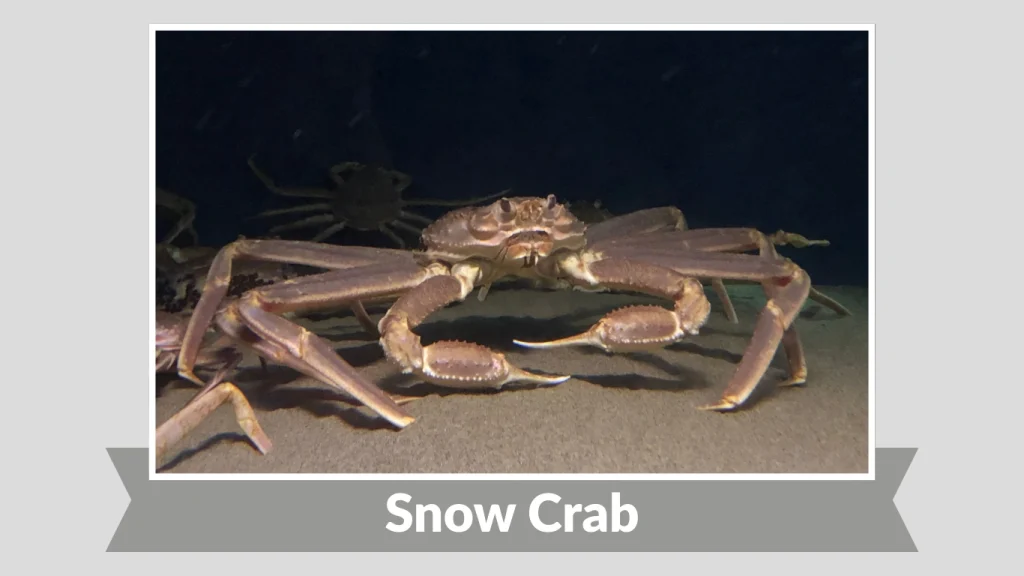
Snow crabs are well known for their long legs and sweet, delicate meat. They are a popular cold-water crab species and are widely harvested for commercial seafood, especially in North America and Asia.
Identification
- Pale brown to light reddish carapace
- Long, slender legs with a slightly flattened shape
- Smaller body compared to leg span
- Hard shell with a smooth to lightly textured surface
Habitat and Range
Snow crabs live in cold, deep waters of the North Atlantic and North Pacific Oceans. They are commonly found on muddy or sandy seafloors at depths ranging from continental shelves to deeper offshore zones.
Behavior and Diet
These crabs are slow-moving bottom dwellers that feed mainly at night. Their diet consists of worms, clams, small crustaceans, fish remains, and other benthic organisms.
Importance to Humans
Snow crab is a major commercial species and is especially popular for its leg meat. It is commonly sold as clusters and used in steaming, boiling, and seafood platters worldwide.
5. Stone Crab
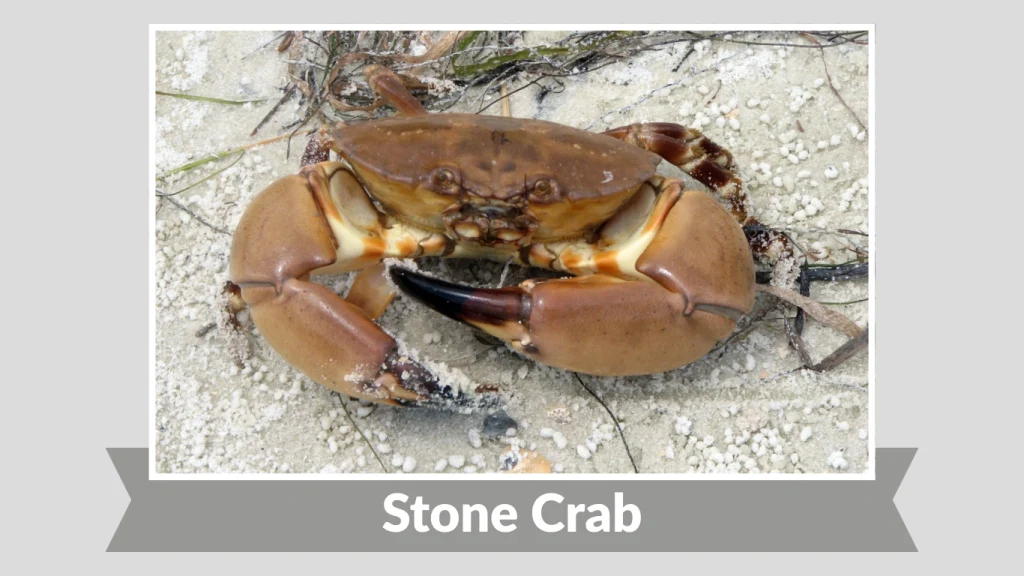
Stone crabs are famous for their extremely strong claws and sweet, firm meat. Unlike most edible crabs, only their claws are harvested, allowing the crab to regenerate them over time.
Identification
- Brown to grayish hard carapace
- Very large, black-tipped claws with crushing strength
- Relatively smaller body compared to claw size
- Thick, rough-textured shell
Habitat and Range
Stone crabs are found in shallow coastal waters, rocky bottoms, and seagrass beds. Their range includes the western Atlantic Ocean, Gulf of Mexico, and Caribbean Sea.
Behavior and Diet
These crabs are slow-moving and spend much of their time hiding in crevices or burrows. They are omnivorous, feeding on mollusks, smaller crustaceans, plant matter, and detritus.
Importance to Humans
Stone crab claws are a highly valued seafood delicacy, especially in Florida. Harvesting is strictly regulated, and claws are typically served chilled with mustard-based dipping sauces.
6. Soft-Shell Crab

Soft-shell crabs are not a separate species but blue crabs that have recently molted their hard exoskeleton. During this short phase, the entire crab becomes tender and edible, making it highly valued in seafood cuisine.
Identification
- Flexible, paper-thin shell instead of a hard carapace
- Pale bluish to gray coloration
- Flattened body with easily bendable legs and claws
- Same overall shape as a blue crab
Habitat and Range
Soft-shell crabs occur wherever blue crabs are found, mainly in estuaries, bays, and coastal waters. They are most common along the Atlantic coast and Gulf of Mexico during molting seasons.
Behavior and Diet
After molting, these crabs hide to avoid predators while their new shell hardens. They continue feeding on small fish, mollusks, worms, and organic matter when active.
Importance to Humans
Soft-shell crabs are considered a delicacy because the entire crab can be eaten whole. They are commonly fried, sautéed, or used in sandwiches and are harvested during specific seasonal windows.
7. Red Rock Crab
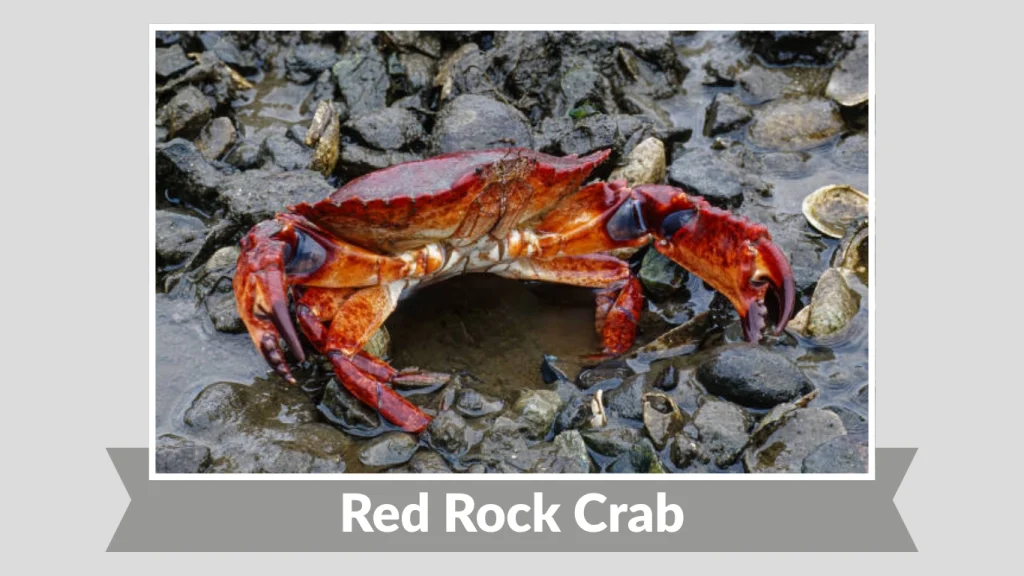
The red rock crab is a sturdy coastal species recognized for its deep red shell and strong claws. It is commonly found along rocky shorelines and is sometimes harvested as an alternative to more popular edible crabs.
Identification
- Deep red to dark maroon carapace
- Black-tipped claws with rough texture
- Oval-shaped, thick shell
- Short, powerful legs suited for rocky terrain
Habitat and Range
Red rock crabs inhabit rocky shores, tide pools, and shallow subtidal zones. Their range extends along the Pacific coast of North America, from Alaska to California.
Behavior and Diet
These crabs are aggressive and territorial, often hiding in crevices during the day. They feed on mollusks, barnacles, smaller crustaceans, and organic debris.
Importance to Humans
Red rock crabs are edible and occasionally harvested for their meat. While not as sweet as Dungeness crab, they are still valued locally and often used in soups and stews.
8. Jonah Crab
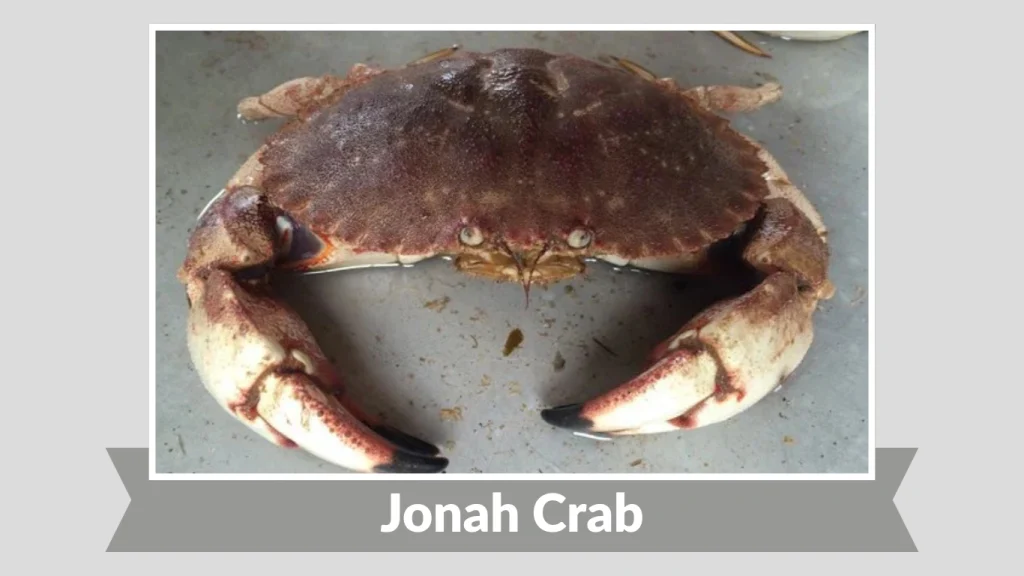
The Jonah crab is a hardy Atlantic species that has gained popularity as a seafood option in recent years. It is often compared to stone crab due to its similar claw meat texture and flavor.
Identification
- Reddish-brown to tan carapace
- Large, heavy claws with dark tips
- Smooth, rounded shell shape
- Stocky body with thick legs
Habitat and Range
Jonah crabs are found on rocky and sandy bottoms along the western Atlantic Ocean. Their range stretches from Canada down to Florida, commonly at moderate to deeper coastal depths.
Behavior and Diet
These crabs are slow-moving bottom dwellers that hide under rocks or ledges. They feed on mollusks, worms, small crustaceans, and carrion found on the seafloor.
Importance to Humans
Jonah crab is increasingly harvested for its claws and body meat. It is widely used as an affordable alternative to stone crab and is commonly served steamed, boiled, or in seafood dishes.
9. Mud Crab
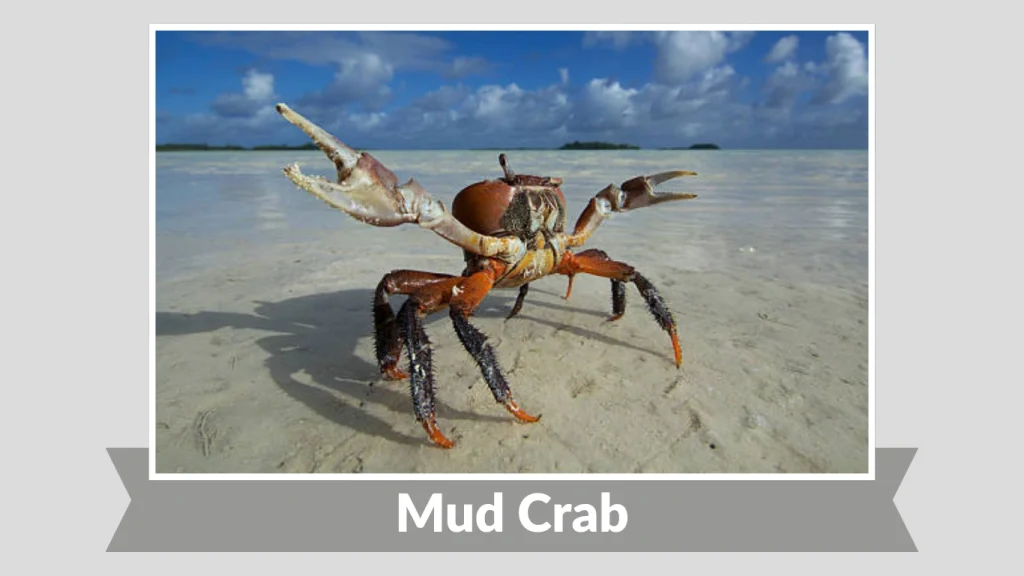
Mud crabs are a group of robust, aggressive crabs well known for their large size and flavorful meat. They are highly valued in many Asian and Indo-Pacific cuisines and support important local fisheries.
Identification
- Large, broad carapace with dark green to brown coloration
- Very strong, thick claws with black tips
- Smooth but heavy shell structure
- Stocky legs adapted for burrowing
Habitat and Range
Mud crabs inhabit mangroves, estuaries, river mouths, and muddy coastal areas. They are widely distributed across the Indo-Pacific region, including Southeast Asia, Australia, and parts of Africa.
Behavior and Diet
These crabs are territorial and often hide in burrows during the day. They are omnivorous, feeding on mollusks, fish, smaller crabs, plant material, and organic waste.
Importance to Humans
Mud crabs are one of the most commercially important crab groups in Asia. They are commonly sold live and prepared in a variety of dishes, including curries, stir-fries, and steamed seafood meals.
10. Coconut Crab
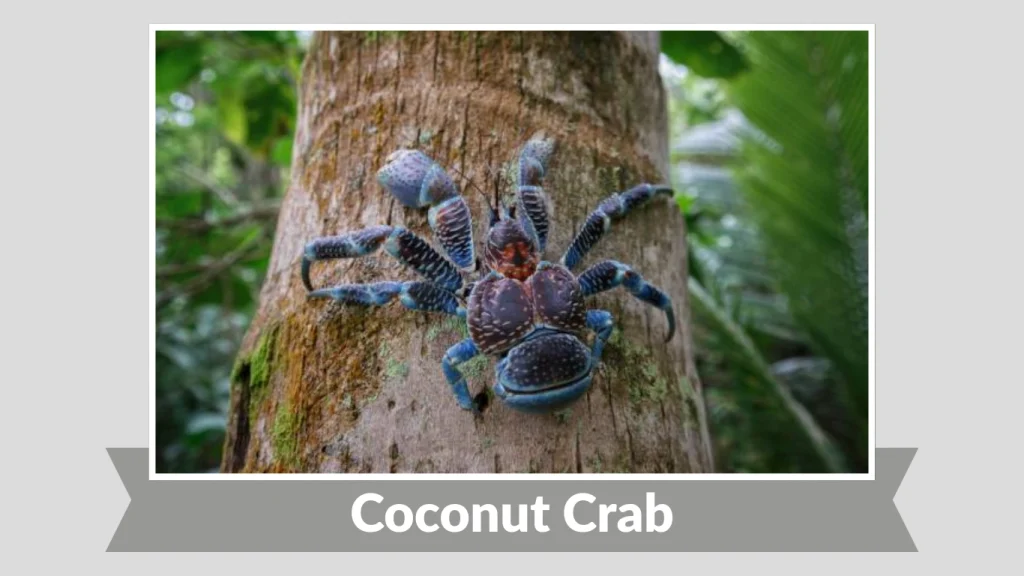
The coconut crab is the largest land-dwelling crab in the world and is famous for its incredible strength. Despite its name, it eats a wide variety of foods and is capable of climbing trees and cracking hard shells.
Identification
- Massive body with thick, powerful legs
- Blue, brown, or reddish-purple coloration
- Very large claws capable of crushing hard objects
- Hard, rough-textured exoskeleton
Habitat and Range
Coconut crabs live on tropical islands and coastal regions of the Indo-Pacific. They prefer rocky areas, forests near the shore, and burrows, spending most of their lives on land rather than in water.
Behavior and Diet
These crabs are mostly nocturnal and highly solitary. They feed on coconuts, fruits, seeds, carrion, and occasionally other animals, using their strong claws to tear food apart.
Importance to Humans
Coconut crabs are culturally significant and considered a delicacy in some regions. Due to slow growth and overharvesting, they are protected or regulated in many areas to prevent population decline.
11. Fiddler Crab
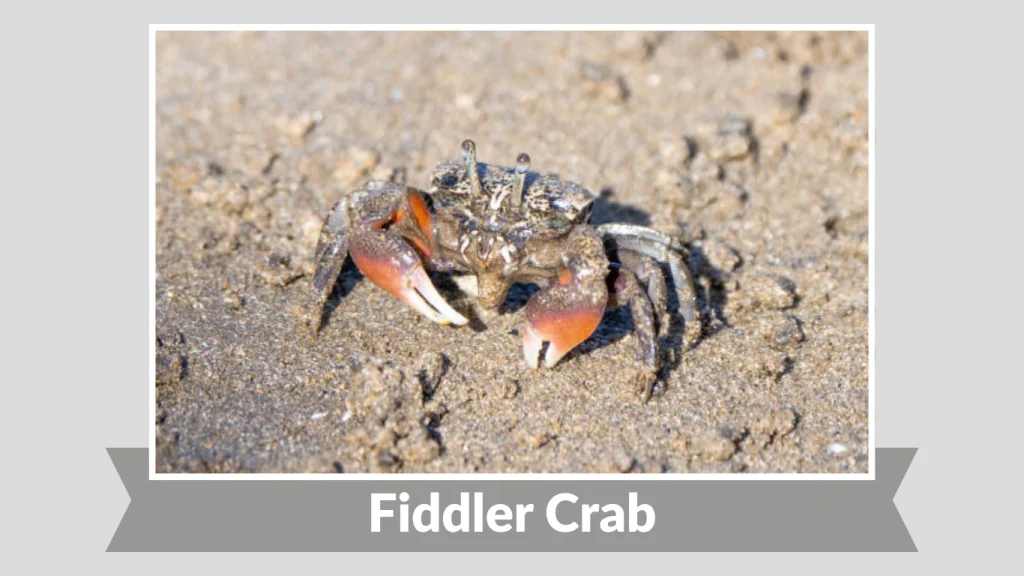
Fiddler crabs are small, highly recognizable crabs known for the oversized claw found on males. They are commonly seen along shorelines, where large groups gather and display active, social behavior.
Identification
- Small body with a square-shaped carapace
- Males have one greatly enlarged claw and one small claw
- Colors range from brown and gray to bright red or blue
- Long eyestalks extending above the head
Habitat and Range
Fiddler crabs inhabit intertidal zones, mudflats, salt marshes, mangroves, and sandy beaches. They are widely distributed along tropical, subtropical, and temperate coastlines around the world.
Behavior and Diet
These crabs are highly active during low tide and retreat to burrows when the tide rises. They feed by sifting mud and sand for algae, bacteria, and organic particles.
Importance to Humans
Fiddler crabs play an important ecological role by aerating soil and recycling nutrients. While not commonly eaten, they are often studied for behavior research and are popular in aquariums and coastal education programs.
12. Ghost Crab
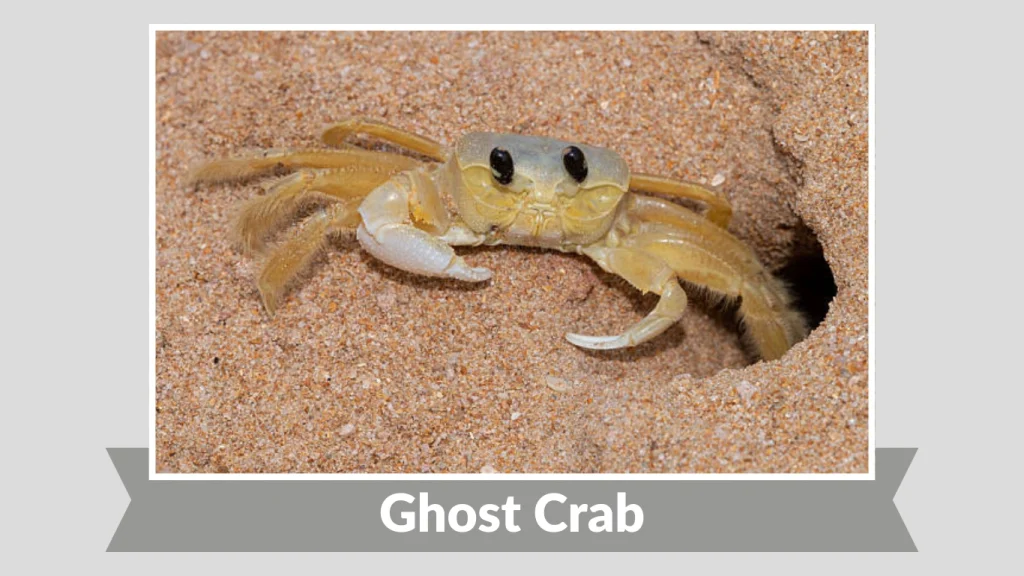
Ghost crabs are fast-running, pale-colored crabs commonly found on sandy beaches. Their name comes from their ability to blend into their surroundings and their sudden, ghost-like movements.
Identification
- Pale gray, white, or yellowish carapace
- Long legs adapted for rapid sideways running
- Large, stalked eyes providing wide vision
- Square-shaped body with relatively small claws
Habitat and Range
Ghost crabs live on sandy beaches above the high-tide line. They are found along tropical and subtropical coastlines worldwide, where they dig deep burrows in dry sand.
Behavior and Diet
These crabs are mostly nocturnal and highly territorial. They feed on insects, small animals, organic debris, and occasionally turtle hatchlings or carrion.
Importance to Humans
Ghost crabs are important indicators of beach health and ecosystem balance. They are not typically harvested for food but are valued for their role in coastal biodiversity and environmental studies.
13. Spider Crab

Spider crabs are named for their long, thin legs and spider-like appearance. They are known for their unique ability to decorate their bodies with algae, sponges, and debris for camouflage.
Identification
- Small to medium-sized body with very long legs
- Rough, uneven carapace often covered with growths
- Brown, orange, or reddish coloration
- Narrow body compared to leg span
Habitat and Range
Spider crabs are found in coastal waters, coral reefs, rocky areas, and seagrass beds. They are widely distributed in temperate and tropical oceans around the world.
Behavior and Diet
These crabs move slowly and rely on camouflage for protection. They feed on algae, sponges, small invertebrates, and organic matter found on the seafloor.
Importance to Humans
Spider crabs have limited commercial value but are ecologically important. Some species are kept in aquariums, and larger varieties are occasionally harvested for food in certain regions.
14. Hermit Crab
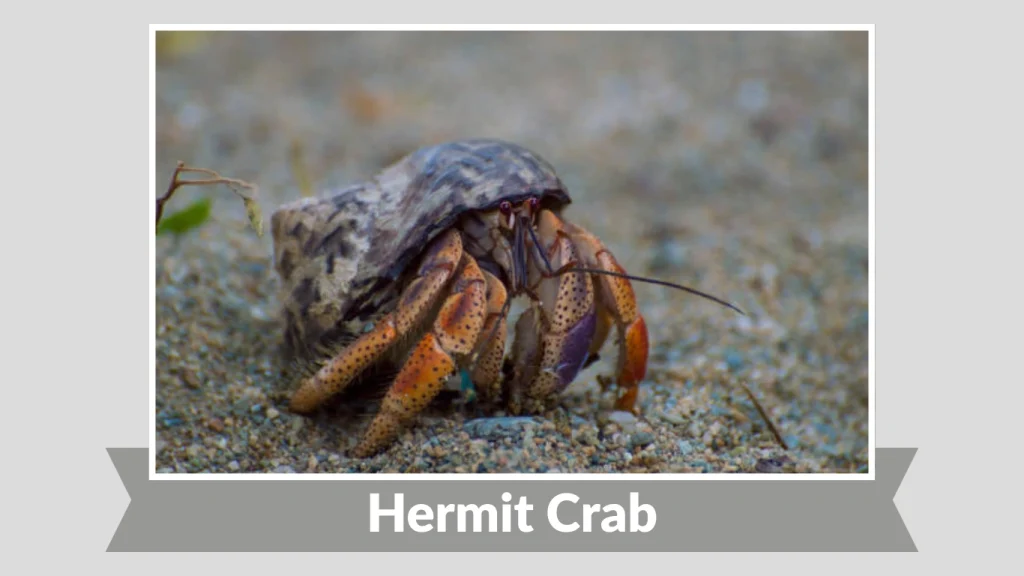
Hermit crabs are unique crabs known for living inside empty shells to protect their soft abdomens. They are popular in coastal ecosystems and are also commonly kept as pets due to their interesting behavior.
Identification
- Soft, spiral-shaped abdomen hidden inside borrowed shells
- Uneven claws, with one usually larger
- Small to medium body size
- Color varies from tan and brown to red or blue
Habitat and Range
Hermit crabs are found in coastal regions, coral reefs, beaches, and shallow waters. Some species are fully marine, while others live on land near shorelines across tropical and temperate regions.
Behavior and Diet
These crabs are scavengers and constantly search for food and better shells. Their diet includes algae, plant matter, decaying material, small invertebrates, and leftovers from other animals.
Importance to Humans
Hermit crabs contribute to ecosystem cleanliness by consuming waste and debris. They are widely used in research and the pet trade, although responsible care is important to ensure their survival.
15. Pea Crab
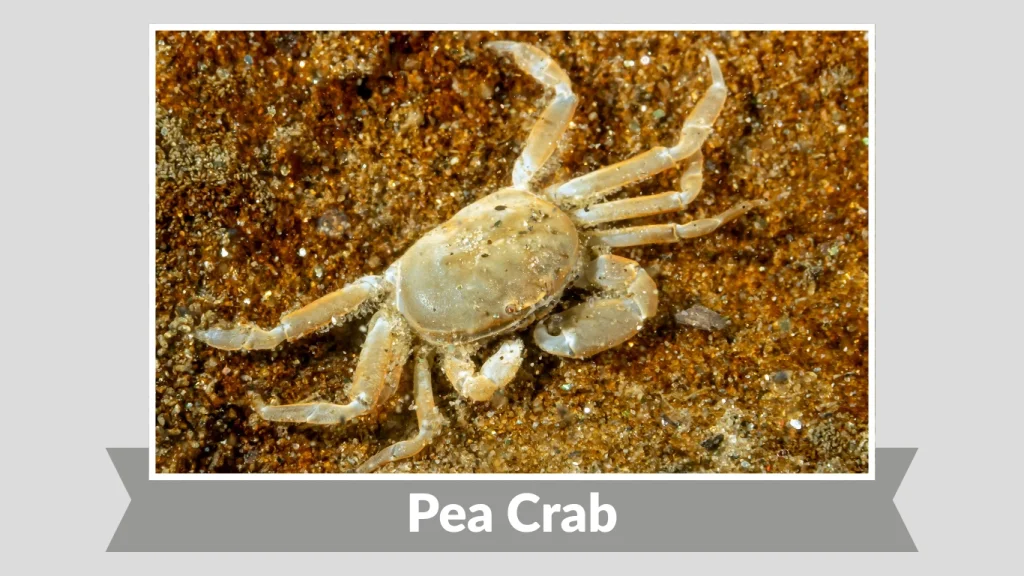
Pea crabs are tiny, soft-bodied crabs best known for living inside the shells of oysters, clams, and mussels. They are among the smallest crab species and are rarely seen outside their hosts.
Identification
- Very small, pea-sized body
- Soft, translucent to pale-colored shell
- Rounded carapace with delicate legs
- Females larger and softer than males
Habitat and Range
Pea crabs live inside bivalve mollusks in coastal and estuarine waters. They are found in oceans worldwide, including the Atlantic, Pacific, and Indian Oceans.
Behavior and Diet
These crabs live as commensals or parasites, feeding on food particles filtered by their host. They rarely leave the shell once established, especially females.
Importance to Humans
Pea crabs are not commercially harvested but are sometimes discovered in oysters and clams. They are of scientific interest due to their unique lifestyle and symbiotic relationships.
16. Box Crab

Box crabs are distinctive crabs known for their ability to fold their legs tightly against their bodies, forming a box-like shape. This unique feature helps them defend against predators.
Identification
- Smooth, rounded carapace with a boxy appearance
- Legs fold neatly under the body when threatened
- Claws short and strong
- Color ranges from sandy brown to gray
Habitat and Range
Box crabs are typically found on sandy or muddy seafloors in shallow coastal waters. They are distributed across tropical and subtropical regions, particularly in the Indo-Pacific.
Behavior and Diet
These crabs are slow-moving and rely on their defensive posture for protection. They feed on small invertebrates, organic debris, and carrion found on the ocean floor.
Importance to Humans
Box crabs have little commercial value but are important to marine ecosystems. They are sometimes collected for educational purposes due to their unusual defensive behavior.
17. Horsehair Crab
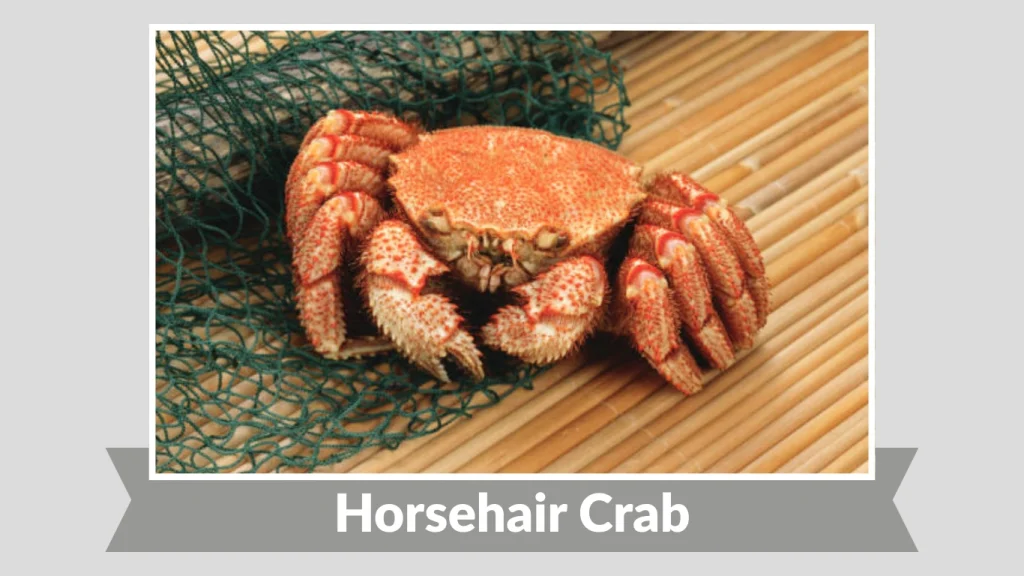
The horsehair crab is a cold-water crab species prized for its rich flavor and dense meat. It is especially popular in East Asian seafood markets and is known for the fine hair-like covering on its shell.
Identification
- Rounded carapace covered with fine, hair-like bristles
- Reddish-brown to dark brown coloration
- Medium-sized body with sturdy legs
- Strong claws suited for crushing prey
Habitat and Range
Horsehair crabs inhabit cold coastal waters and rocky seabeds. They are mainly found in the North Pacific, particularly around Japan, Korea, and parts of Russia.
Behavior and Diet
These crabs are slow-moving bottom dwellers that hide among rocks. They feed on shellfish, small crustaceans, algae, and organic matter found on the seafloor.
Importance to Humans
Horsehair crab is considered a delicacy in Japan, especially during winter. It is commonly served steamed, boiled, or used in traditional dishes, supporting valuable seasonal fisheries.
18. Brown Crab
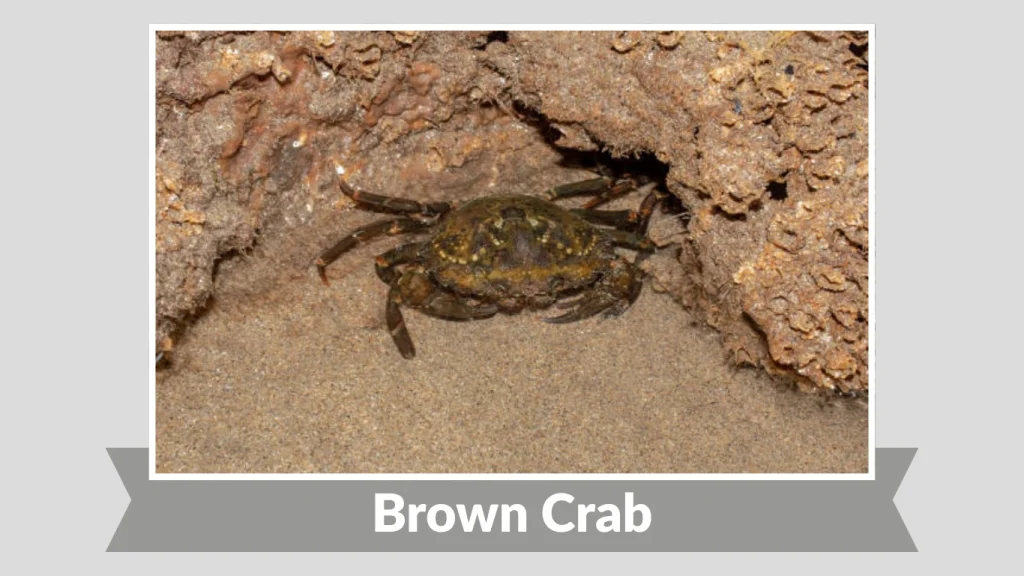
The brown crab is a large, robust species well known in European waters for its rich, flavorful meat. It is an important commercial crab and is widely used in traditional seafood dishes.
Identification
- Broad, oval carapace with reddish-brown coloration
- Black-tipped, powerful claws
- Rough shell surface with small bumps
- Thick legs adapted for strong grip
Habitat and Range
Brown crabs inhabit rocky and sandy seabeds in coastal and offshore waters. They are commonly found in the northeastern Atlantic Ocean, including the North Sea and Mediterranean Sea.
Behavior and Diet
These crabs are mostly nocturnal and hide during the day. They are omnivorous, feeding on mollusks, smaller crustaceans, worms, and decaying organic matter.
Importance to Humans
Brown crab supports major commercial fisheries in Europe. It is sold live or cooked and used in dishes such as crab salads, soups, and traditional seafood platters.
19. Mangrove Crab
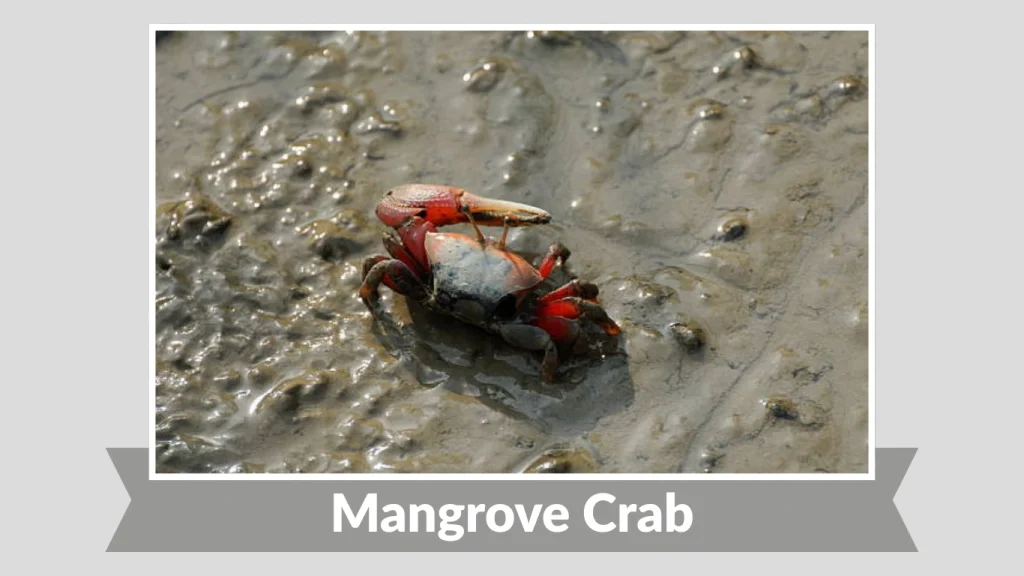
Mangrove crabs are strong, adaptable crabs commonly found in coastal mangrove ecosystems. They play an important role in maintaining the health of mangrove forests and are also harvested for food in many regions.
Identification
- Large, dark brown to purplish carapace
- Thick, powerful claws with rough texture
- Broad body adapted for climbing and digging
- Sturdy legs suited for muddy environments
Habitat and Range
Mangrove crabs live in mangrove forests, estuaries, and muddy coastal areas. They are widely distributed across tropical and subtropical regions of Africa, Asia, Australia, and the Americas.
Behavior and Diet
These crabs are mostly nocturnal and spend much of their time in burrows. They are omnivorous, feeding on leaves, seeds, mollusks, small animals, and organic debris.
Importance to Humans
Mangrove crabs are harvested for local consumption and small-scale fisheries. They are valued for their meat and are commonly prepared in regional coastal cuisines.
20. Velvet Crab
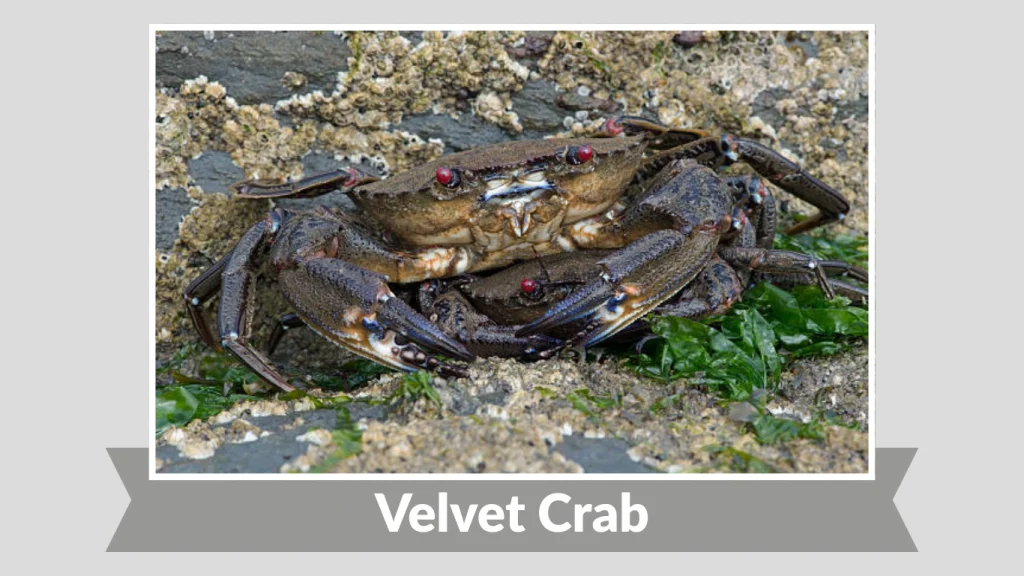
The velvet crab is named for the dense, fine hairs that cover its shell, giving it a soft, velvety appearance. It is known for its aggressive behavior and striking coloration.
Identification
- Dark blue to purplish carapace covered in fine hairs
- Bright red eyes that stand out clearly
- Strong claws with black tips
- Compact, rounded body shape
Habitat and Range
Velvet crabs inhabit rocky shores, reefs, and coastal waters. They are commonly found in the northeastern Atlantic Ocean, including the British Isles and parts of the Mediterranean Sea.
Behavior and Diet
These crabs are aggressive and active, especially at night. They feed on mollusks, small crustaceans, worms, and carrion found on rocky seabeds.
Importance to Humans
Velvet crabs are edible but not heavily targeted commercially. They are sometimes collected for bait or local consumption and are also studied for their defensive and aggressive behaviors.
21. Flower Crab
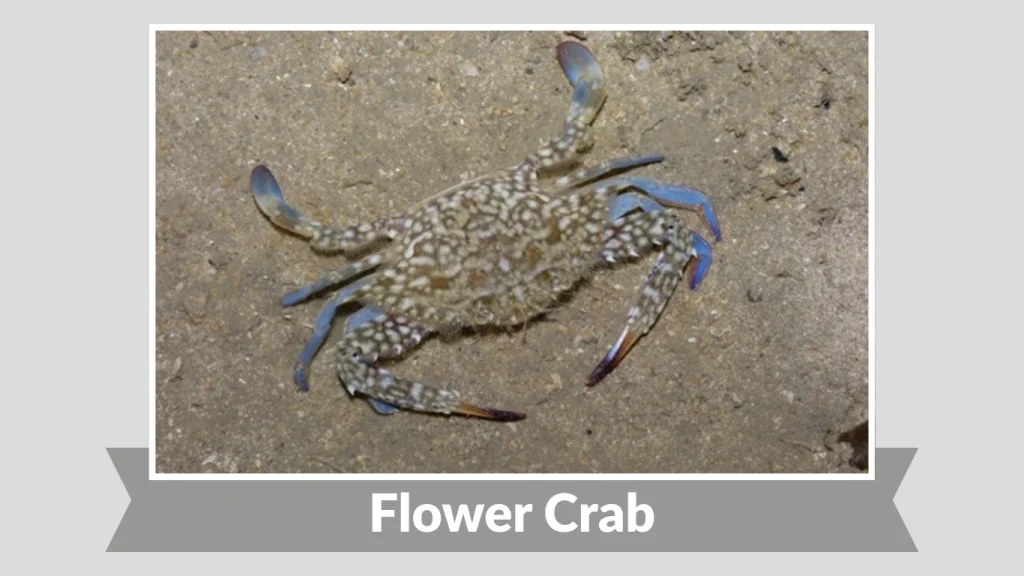
The flower crab is a colorful swimming crab known for its striking patterns and strong swimming ability. It is highly valued in many Asian cuisines for its sweet and flavorful meat.
Identification
- Blue-green carapace with white and yellow floral patterns
- Long, flattened rear legs adapted for swimming
- Strong claws with sharp tips
- Smooth, oval-shaped shell
Habitat and Range
Flower crabs inhabit coastal waters, sandy bottoms, and coral reef areas. They are widely distributed throughout the Indo-Pacific region, including Southeast Asia and the Indian Ocean.
Behavior and Diet
These crabs are active swimmers and opportunistic feeders. Their diet includes fish, mollusks, smaller crustaceans, algae, and organic debris.
Importance to Humans
Flower crabs support important commercial fisheries in Asia. They are commonly sold fresh or live and prepared steamed, stir-fried, or used in crab-based dishes.
22. Swimming Crab
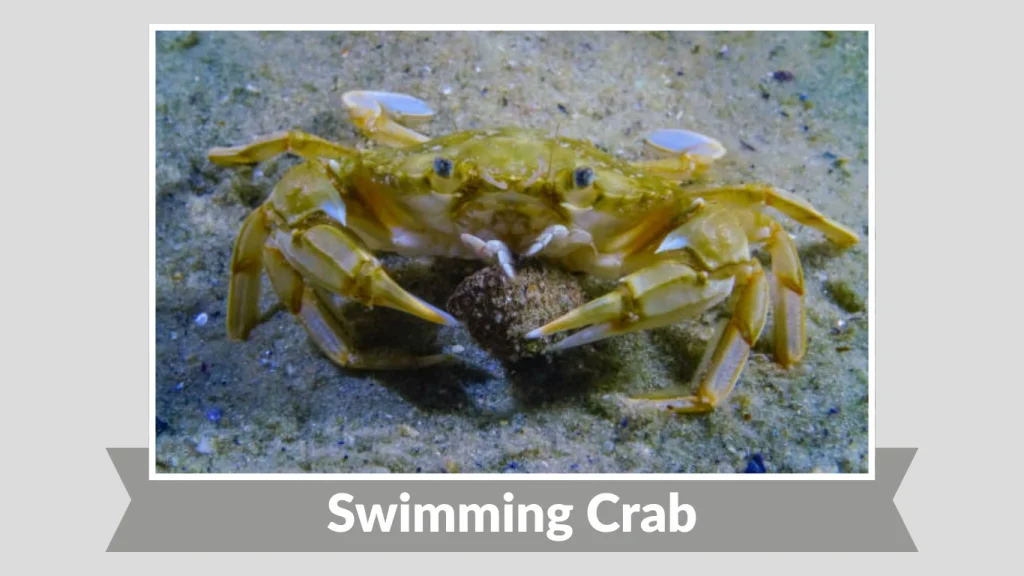
Swimming crabs are a group of agile crabs known for their paddle-shaped rear legs, which allow them to swim efficiently. Many species in this group are important seafood resources.
Identification
- Flattened, paddle-like rear legs for swimming
- Broad, often colorful carapace
- Sharp, well-developed claws
- Smooth to slightly textured shell
Habitat and Range
Swimming crabs are found in coastal waters, estuaries, and shallow seas. They are widely distributed in tropical and temperate oceans around the world.
Behavior and Diet
These crabs are active hunters and scavengers. They feed on fish, mollusks, smaller crustaceans, algae, and organic matter, often swimming short distances to catch prey.
Importance to Humans
Many swimming crab species are commercially harvested and widely consumed. They are commonly used in soups, curries, stir-fries, and steamed seafood dishes across different cultures.
23. Shore Crab
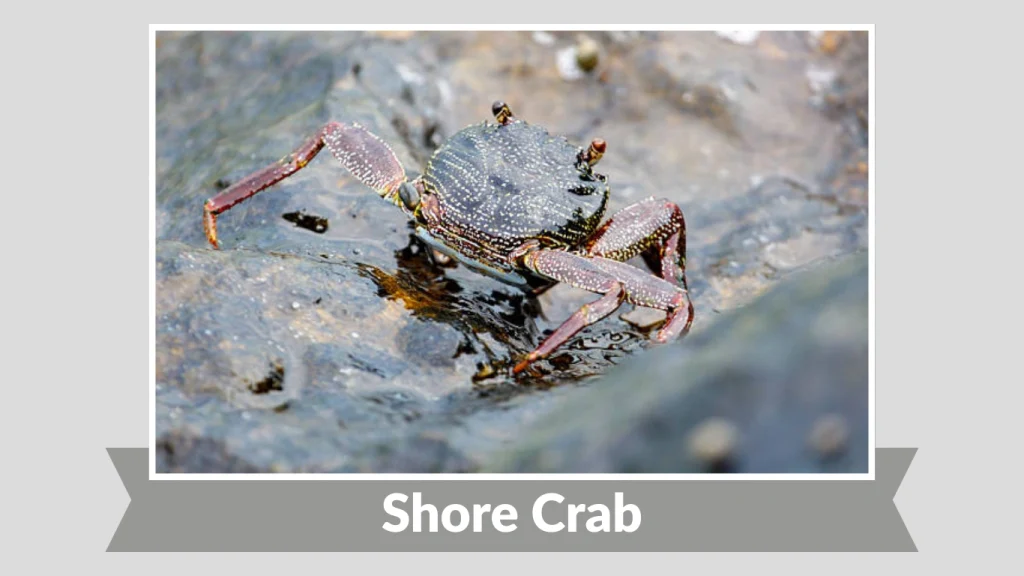
Shore crabs are small to medium-sized crabs commonly seen along coastlines. They are highly adaptable and are often one of the most abundant crab species in intertidal environments.
Identification
- Small, broad carapace with rounded edges
- Color varies from green and brown to reddish tones
- Short legs and sturdy claws
- Smooth to slightly rough shell texture
Habitat and Range
Shore crabs live in rocky shores, tide pools, estuaries, and harbors. They are widely distributed along Atlantic and Pacific coastlines, especially in temperate regions.
Behavior and Diet
These crabs are active scavengers and opportunistic feeders. They eat algae, mollusks, small crustaceans, worms, and organic debris found in intertidal zones.
Importance to Humans
Shore crabs have limited commercial value but are ecologically important. They are often used in scientific research and as bait, and they play a role in controlling coastal invertebrate populations.
24. Japanese Spider Crab
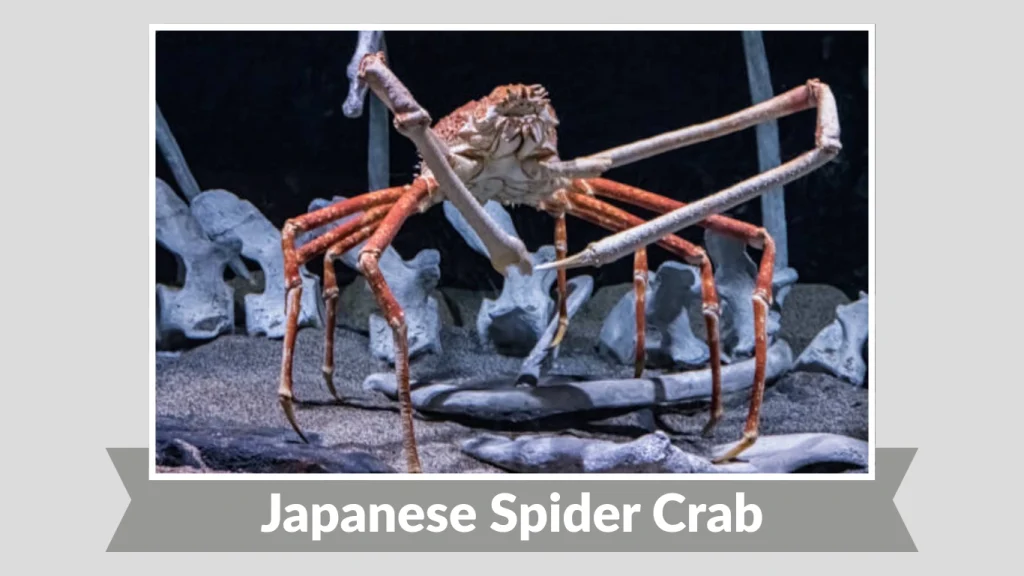
The Japanese spider crab is the largest crab species in the world by leg span. It is famous for its long legs and massive size, making it one of the most recognizable deep-sea crabs.
Identification
- Extremely long legs with white and orange markings
- Large, rounded carapace with spines
- Orange body with white spots
- Very wide leg span compared to body size
Habitat and Range
Japanese spider crabs inhabit deep waters along the Pacific coast of Japan. They are usually found on sandy or rocky seafloors at significant depths.
Behavior and Diet
These crabs are slow-moving scavengers that feed on dead animals, shellfish, and organic matter. They sometimes decorate their bodies with sponges and debris for camouflage.
Importance to Humans
Japanese spider crabs are harvested in limited numbers and are considered a delicacy in Japan. They are also popular attractions in aquariums due to their enormous size.
25. Sally Lightfoot Crab
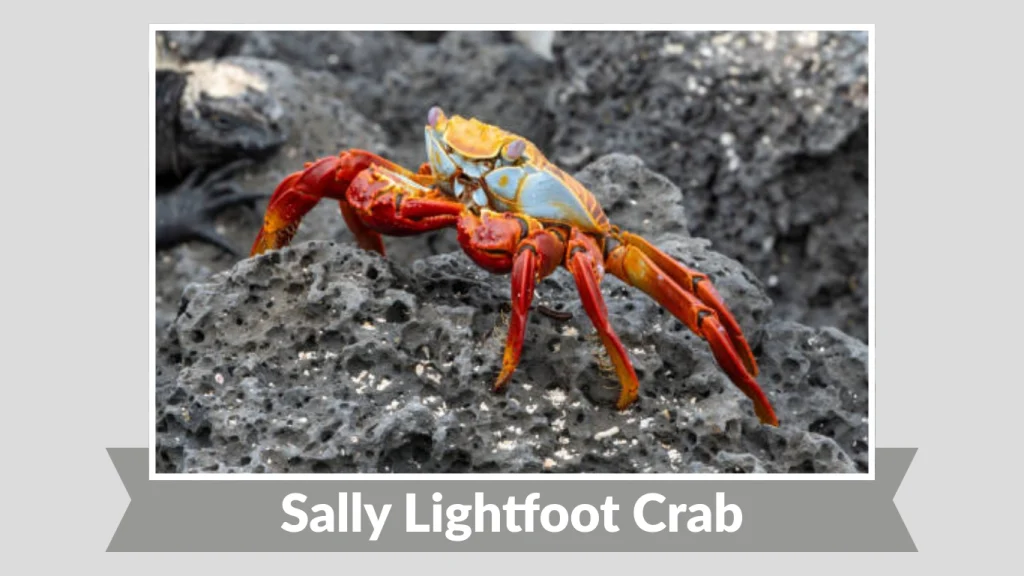
The Sally Lightfoot crab is a fast-moving, brightly colored crab commonly seen along rocky coastlines. It is well known for its agility and striking appearance, often catching the eye of beach visitors.
Identification
- Flat, oval-shaped carapace
- Bright red, orange, blue, or green coloration
- Long, slender legs built for speed
- Small but sharp claws
Habitat and Range
Sally Lightfoot crabs live on rocky shores and intertidal zones. They are commonly found along the Pacific and Atlantic coasts of the Americas, especially in tropical and subtropical regions.
Behavior and Diet
These crabs are extremely quick and alert, darting across rocks to avoid predators. They feed on algae, plant material, dead animals, and organic debris washed ashore.
Importance to Humans
Sally Lightfoot crabs play an important role in cleaning shorelines by consuming waste and algae. They are not commonly eaten but are valued for their ecological role and visual appeal.
26. Rock Crab
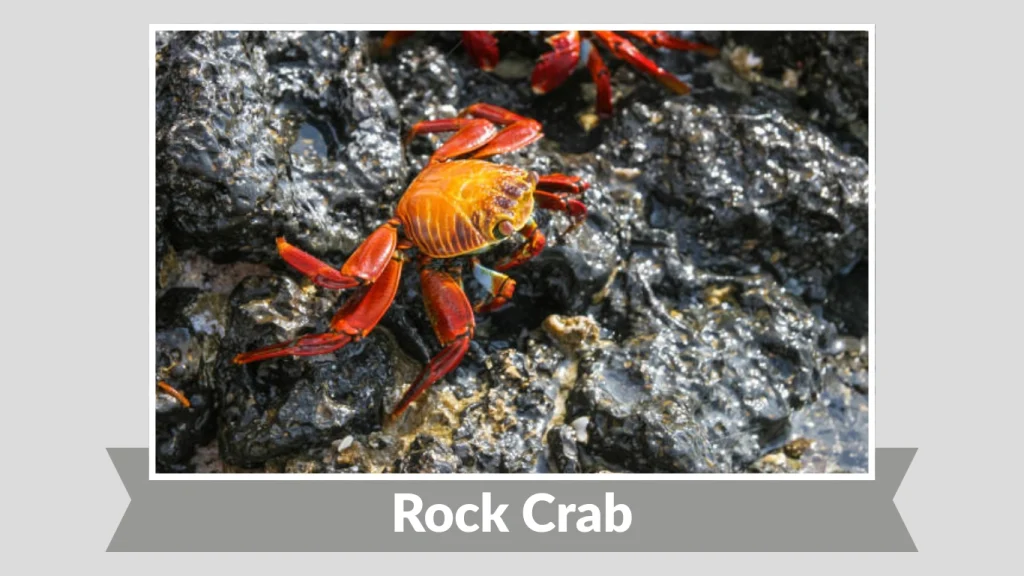
Rock crabs are sturdy, hard-shelled crabs commonly found in rocky coastal areas. They are known for their strong claws and are often harvested as a secondary seafood species.
Identification
- Dark brown to reddish-brown carapace
- Thick, powerful claws with black tips
- Rounded, heavy shell structure
- Short, strong legs adapted for rocky surfaces
Habitat and Range
Rock crabs inhabit rocky shores, reefs, and coastal seabeds. They are found in both the Atlantic and Pacific Oceans, depending on the species.
Behavior and Diet
These crabs are slow-moving but aggressive when threatened. They feed on mollusks, barnacles, smaller crustaceans, worms, and organic matter.
Importance to Humans
Rock crabs are edible and commercially harvested in some regions. Their meat is often used in soups, stews, and mixed seafood dishes, especially where larger crab species are scarce.
27. Golden King Crab

The golden king crab is a large deep-water crab closely related to red king crab. It is valued for its sweet, firm meat and is harvested in colder ocean regions under strict regulations.
Identification
- Golden-orange to light brown carapace
- Long legs covered with small spines
- Smaller and smoother shell than red king crab
- One claw often slightly larger than the other
Habitat and Range
Golden king crabs live in deep, cold waters of the North Pacific Ocean. They are commonly found around Alaska, the Aleutian Islands, and parts of the Bering Sea.
Behavior and Diet
These crabs are bottom dwellers that move slowly across the seafloor. Their diet includes mollusks, worms, sea stars, small crustaceans, and organic matter.
Importance to Humans
Golden king crab supports a valuable commercial fishery. Its meat is considered a premium seafood product and is typically sold frozen, steamed, or served in high-end seafood dishes.
28. Tanner Crab

The Tanner crab, also known as the snow crab’s close relative, is a cold-water species valued for its mild, slightly sweet meat. It is an important commercial crab in northern oceans.
Identification
- Light brown to reddish carapace
- Long, slender legs similar to snow crab
- Smaller body with wide leg span
- Smooth to lightly textured shell
Habitat and Range
Tanner crabs inhabit cold, deep waters of the North Pacific Ocean. They are commonly found in the Bering Sea and Gulf of Alaska on sandy or muddy seafloors.
Behavior and Diet
These crabs are bottom dwellers that feed on worms, clams, small crustaceans, fish remains, and other benthic organisms. They are generally slow-moving and active mainly at night.
Importance to Humans
Tanner crab supports commercial fisheries and is often marketed alongside snow crab. Its meat is used in steaming, boiling, and a variety of seafood dishes, especially in North America and Asia.
29. Christmas Island Red Crab

The Christmas Island red crab is a land-dwelling crab famous for its massive annual migration to the sea. Its bright red color and synchronized movement make it one of the most iconic crab species in the world.
Identification
- Bright red, rounded carapace
- Medium-sized body with sturdy legs
- Relatively small claws compared to body size
- Smooth, glossy shell surface
Habitat and Range
These crabs are native to Christmas Island in the Indian Ocean. They live in forests, rocky areas, and coastal regions, spending most of their lives on land except during breeding season.
Behavior and Diet
Christmas Island red crabs are mostly terrestrial and feed on fallen leaves, fruits, flowers, and organic matter. During the wet season, millions migrate to the ocean to spawn.
Importance to Humans
They are a key species for ecosystem balance on Christmas Island and a major tourist attraction. The crabs are protected by conservation measures to preserve their unique population and migration patterns.
30. Decorator Crab
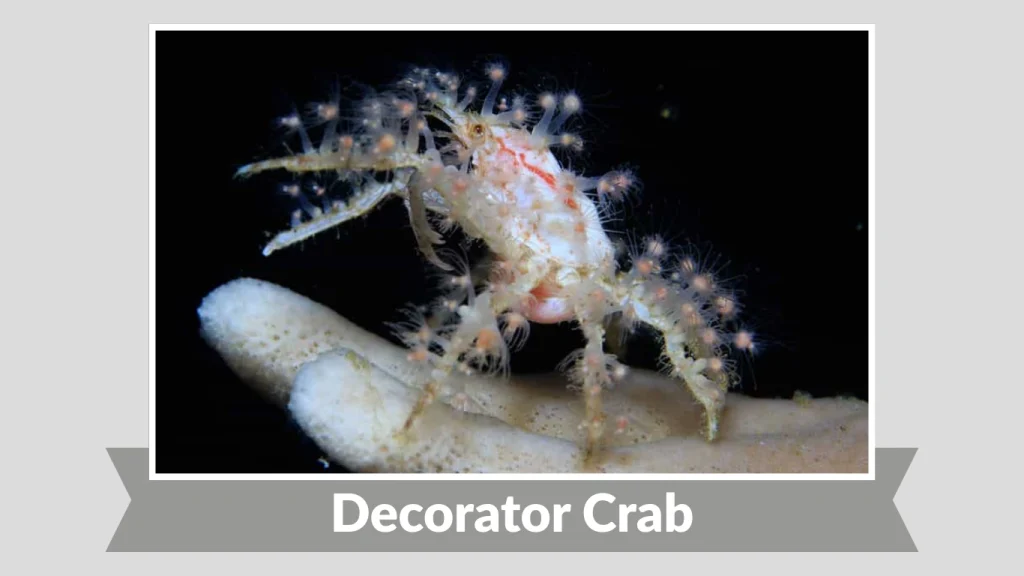
Decorator crabs are known for their unique behavior of attaching materials like algae, sponges, and shells to their bodies for camouflage. This helps them blend into their surroundings and avoid predators.
Identification
- Rough, uneven carapace with hooked hairs
- Body often covered with attached debris or algae
- Long legs with spiny texture
- Color varies depending on decorations
Habitat and Range
Decorator crabs inhabit coral reefs, rocky areas, and coastal waters. They are found in temperate and tropical oceans worldwide.
Behavior and Diet
These crabs are slow-moving and rely heavily on camouflage for protection. They feed on algae, sponges, small invertebrates, and organic matter on the seafloor.
Importance to Humans
Decorator crabs have little commercial value but are ecologically important. They are popular in aquariums and marine studies due to their unusual and fascinating behavior.
31. Porcelain Crab
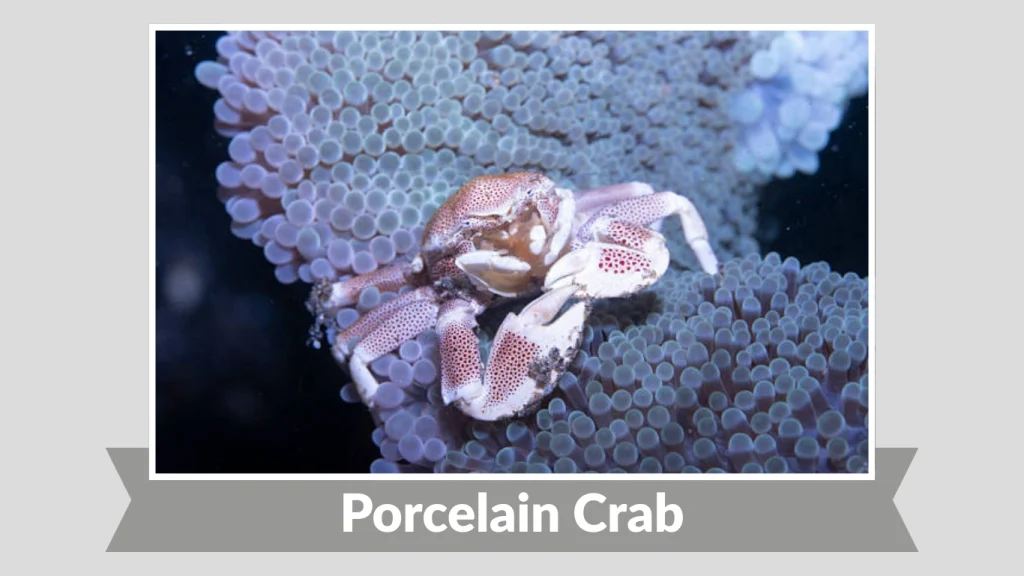
Porcelain crabs are small, flat-bodied crabs that resemble true crabs but are actually more closely related to squat lobsters. They are known for their delicate appearance and filter-feeding behavior.
Identification
- Flat, wide carapace with smooth surface
- Large claws compared to body size
- Fragile legs that break off easily
- Colors range from white and brown to bright patterned tones
Habitat and Range
Porcelain crabs live under rocks, in coral reefs, and among crevices in shallow coastal waters. They are widely distributed in tropical and temperate oceans.
Behavior and Diet
These crabs are mostly stationary and feed by extending feathery mouthparts into the water. They consume plankton, algae, and tiny organic particles suspended in the water.
Importance to Humans
Porcelain crabs are not harvested for food but are important to marine ecosystems. They are also popular in reef aquariums due to their small size and interesting feeding behavior.
32. Marsh Crab
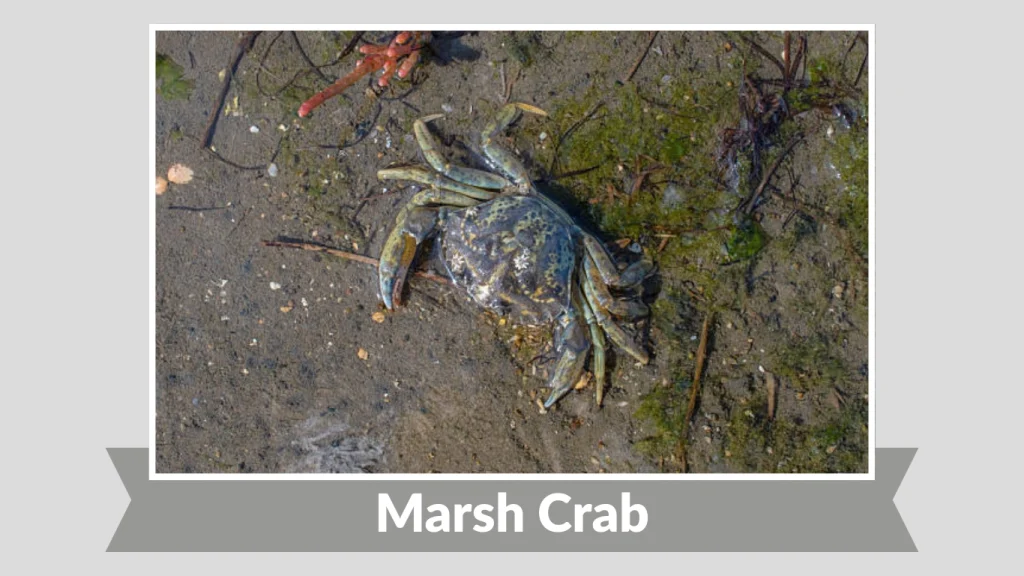
Marsh crabs are small to medium-sized crabs commonly found in coastal marshlands. They are well adapted to living in muddy environments and play an important role in maintaining marsh ecosystem health.
Identification
- Squarish to rounded carapace
- Brown, olive, or dark green coloration
- Short legs suited for walking on soft mud
- Moderately sized claws used for feeding and defense
Habitat and Range
Marsh crabs inhabit salt marshes, mangroves, tidal creeks, and muddy shorelines. They are widely distributed in coastal regions across tropical and temperate zones.
Behavior and Diet
These crabs are active burrowers and are usually most active during low tide. They feed on algae, plant material, detritus, and small invertebrates found in marsh sediments.
Importance to Humans
Marsh crabs are ecologically significant rather than commercially valuable. They help aerate soil, recycle nutrients, and support food webs that benefit fish, birds, and other wildlife.