





Red cow breeds are valued worldwide for their strength, adaptability, and productivity in both beef and dairy farming. Known for their distinctive red or reddish-brown coats, these cattle thrive in a wide range of climates and farming systems. From hardy, grass-fed breeds to high-performing commercial cattle, red cow breeds offer farmers reliable performance, good temperament, and quality meat or milk production across diverse agricultural environments.
1. Red Angus
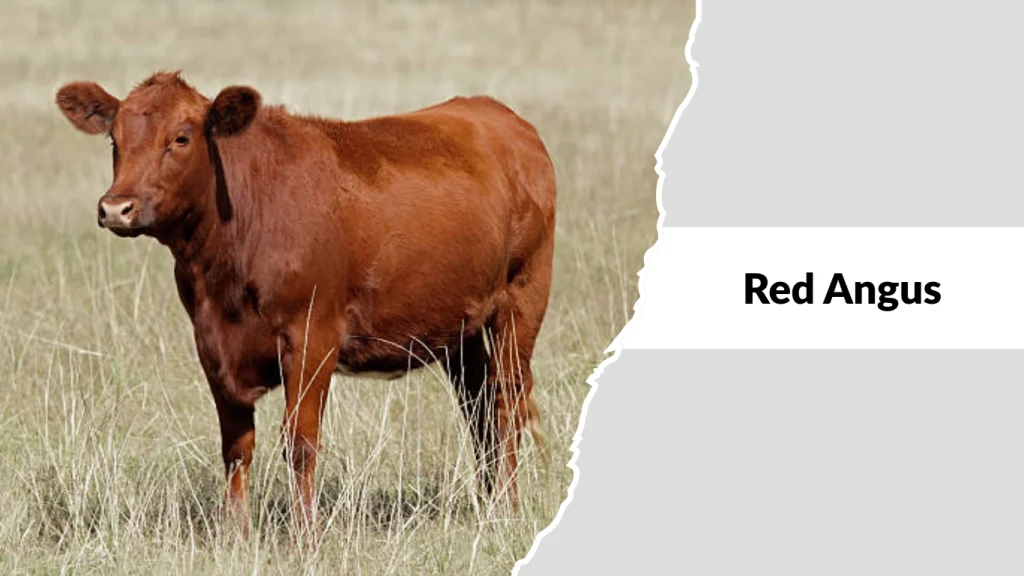
Red Angus is a well-known beef cattle breed valued for its calm temperament, strong maternal traits, and high-quality beef. Originating from Scotland, it is especially popular in commercial beef production due to its adaptability and efficiency.
Identification
- Solid red coat color
- Naturally polled (no horns)
- Medium to large body frame
- Muscular build with smooth lines
Habitat
Red Angus cattle thrive in a wide range of environments, from temperate grasslands to more challenging climates. They adapt well to both pasture-based systems and managed ranch settings.
Behavior
This breed is known for its docile and manageable nature. Red Angus cattle are easy to handle, making them suitable for both small-scale and large-scale operations.
Diet
Red Angus primarily graze on grasses and forage but also perform well on balanced supplemental feeds when managed for beef production. Their feed efficiency is one of their key strengths.
2. Hereford
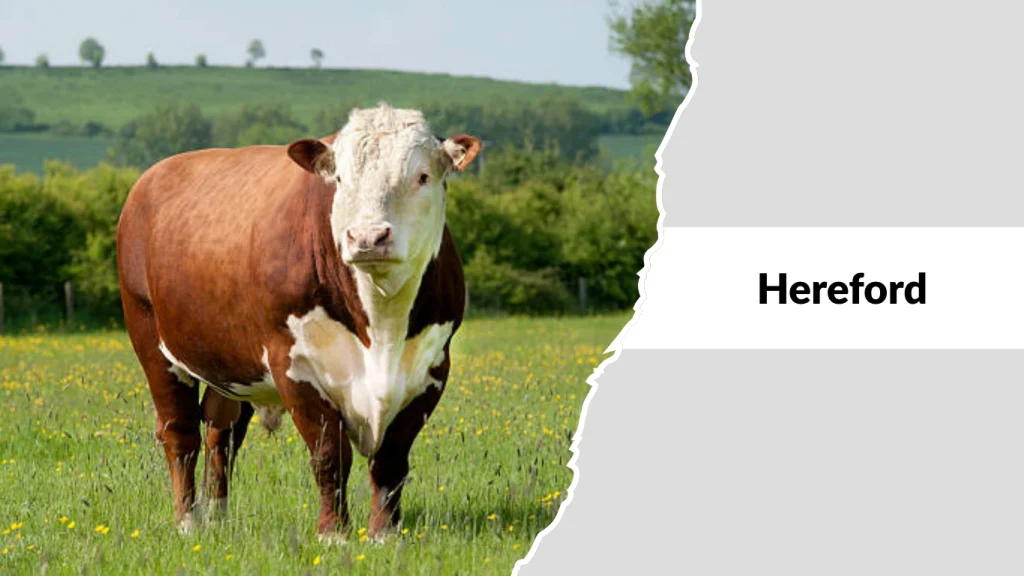
Hereford is a classic beef cattle breed recognized for its hardiness, fast growth, and excellent meat quality. Originating in England, it is widely used around the world in both purebred and crossbreeding programs.
Identification
- Reddish-brown body with white face
- White markings on chest, belly, and legs
- Horned or polled varieties
- Broad body with deep chest
Habitat
Hereford cattle adapt well to diverse climates, including grasslands, plains, and semi-arid regions. They perform reliably in extensive grazing systems.
Behavior
This breed is generally calm, hardy, and easy to manage. Their strong survival instincts make them well suited for open-range conditions.
Diet
Herefords primarily feed on pasture grasses and forage. They convert feed efficiently and can maintain condition even on moderate-quality grazing.
3. Limousin
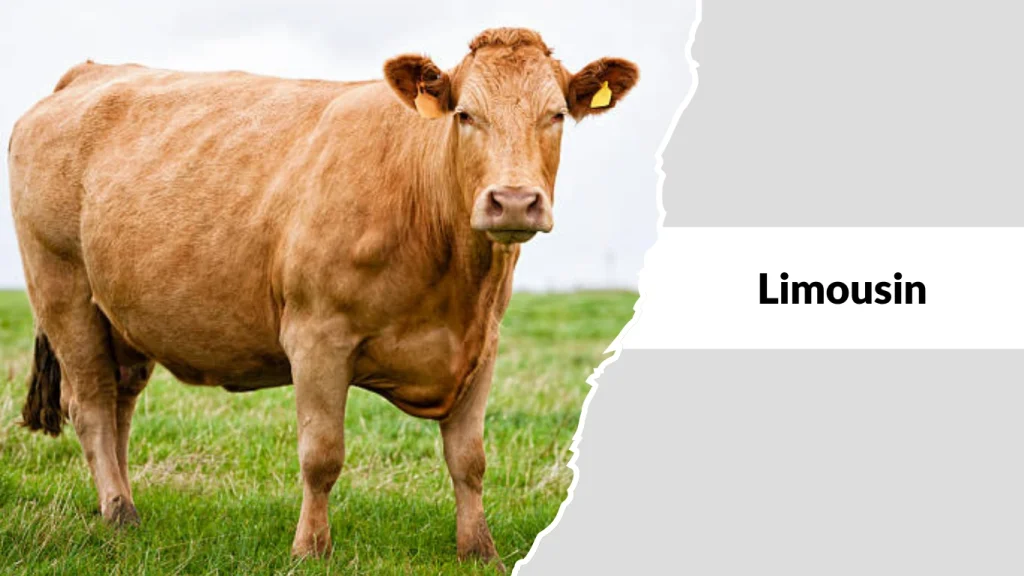
Limousin is a highly efficient beef cattle breed known for its exceptional muscle development and lean meat. Originating from France, it is widely used in beef production and crossbreeding programs due to its strong growth performance and carcass quality.
Identification
- Golden-red to light red coat
- Lighter color around eyes and muzzle
- Fine bone structure
- Well-defined muscular body
- Medium to large frame size
Habitat
Limousin cattle adapt well to a variety of environments, including rugged and mountainous regions. They perform efficiently in both pasture-based systems and managed feedlot conditions, showing strong resilience to environmental stress.
Behavior
This breed is alert, active, and intelligent. While slightly more energetic than some traditional beef breeds, Limousins respond well to proper handling and management, especially when raised in controlled herd systems.
Diet
Limousin cattle primarily consume grasses, legumes, and forage. They are known for excellent feed conversion efficiency, producing high-quality beef with less fat even on moderate feed rations.
4. Devon
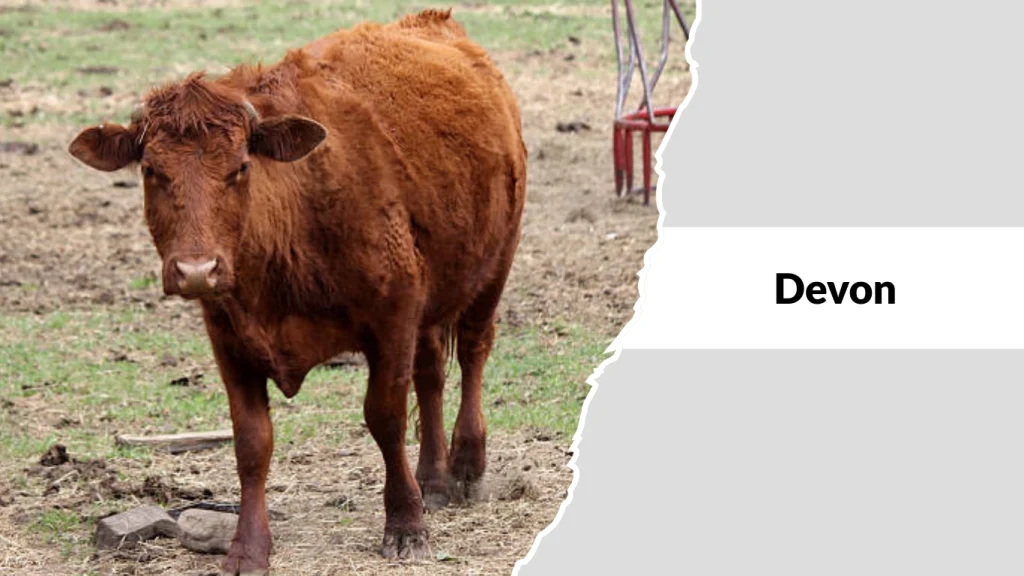
Devon, also known as Red Devon, is one of the oldest British cattle breeds, valued for its hardiness, fertility, and flavorful beef. The breed is well adapted to grass-based farming systems and is often favored in sustainable and traditional agriculture.
Identification
- Deep red coat color
- Medium-sized body
- Strong legs and compact frame
- Horned or polled varieties
- Broad chest and well-rounded body
Habitat
Devon cattle thrive in temperate climates and are well suited to hilly and rough grazing lands. Their strong foraging ability allows them to perform well on pasture with minimal supplementation.
Behavior
This breed is known for its calm and friendly temperament. Devon cattle are easy to manage, highly maternal, and adapt well to both small farms and larger ranch operations.
Diet
Devon cattle mainly graze on grasses and natural forage. They efficiently convert pasture into quality beef and maintain good condition on grass-fed diets alone.
5. Red Poll
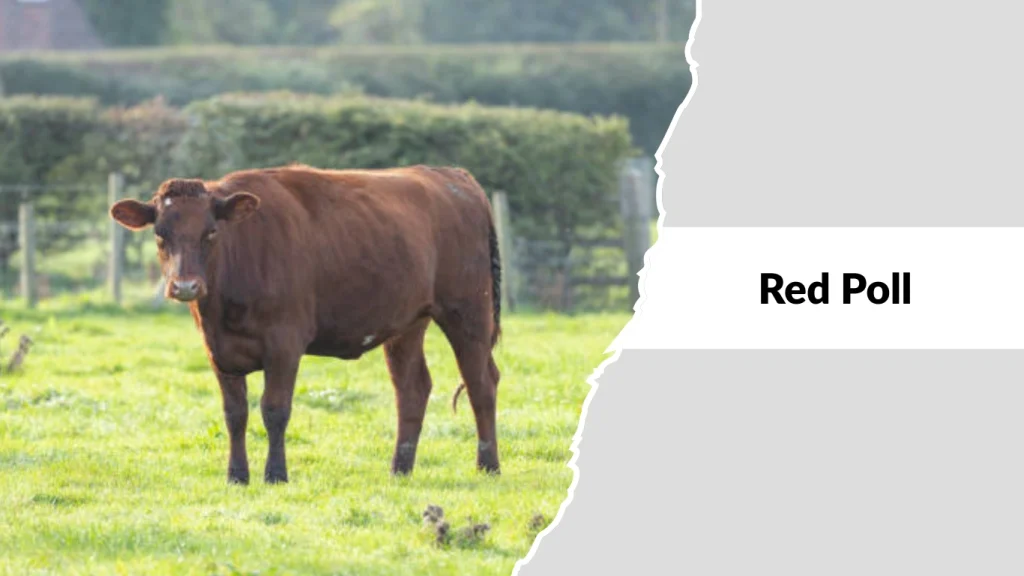
Red Poll is a dual-purpose cattle breed known for both quality beef and good milk production. Originating in England, it is valued for its efficiency, fertility, and gentle nature, making it suitable for diverse farming systems.
Identification
- Solid deep red coat
- Naturally polled (hornless)
- Medium-sized, well-balanced body
- Smooth shoulders and straight back
- Strong legs and hooves
Habitat
Red Poll cattle adapt well to a wide range of environments, from lowland pastures to moderately challenging climates. They perform best in grass-based and mixed farming systems.
Behavior
This breed is calm, docile, and easy to handle. Red Poll cattle are excellent mothers with strong nurturing instincts and are well suited for family farms and commercial herds alike.
Diet
Red Poll cattle primarily feed on pasture grasses, legumes, and forage. They are efficient grazers and maintain productivity with minimal concentrate supplementation.
6. Santa Gertrudis
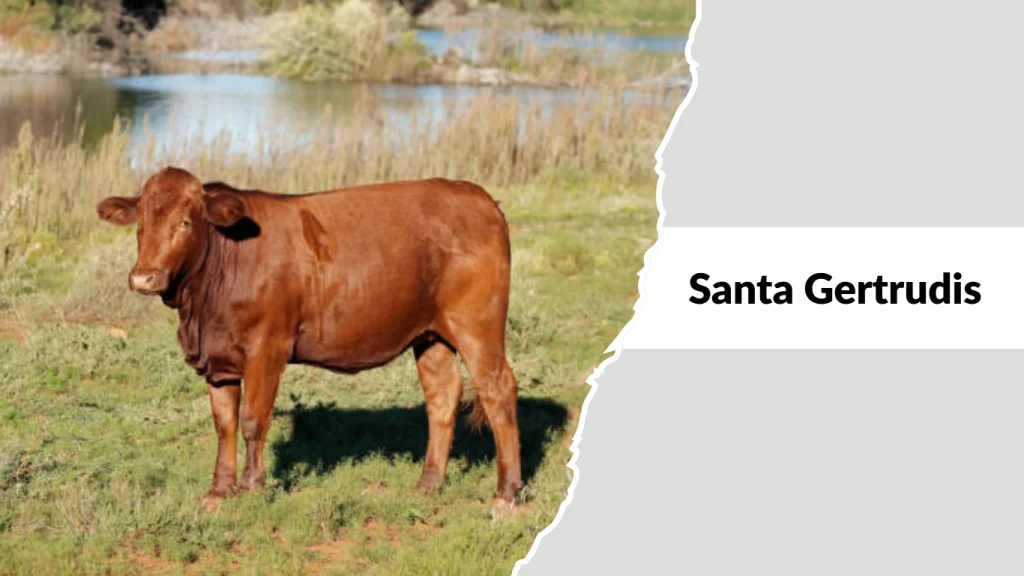
Santa Gertrudis is a hardy beef cattle breed developed in the United States, specifically bred for heat tolerance and strong beef production. It is well known for its ability to perform efficiently in hot and challenging environments.
Identification
- Deep cherry-red coat
- Large, muscular body frame
- Loose skin and well-developed shoulders
- Horned or polled types
- Strong legs with heavy bone structure
Habitat
Santa Gertrudis cattle thrive in hot, humid, and semi-arid regions. They are especially suited to open rangelands and large grazing operations where temperatures and environmental stress can be high.
Behavior
This breed is generally calm and adaptable. Santa Gertrudis cattle are resilient, independent grazers and handle extensive range conditions well when managed properly.
Diet
Santa Gertrudis cattle mainly consume grasses and natural forage. They are efficient converters of low-quality feed and can maintain body condition in areas where forage availability is limited.
7. Beefmaster
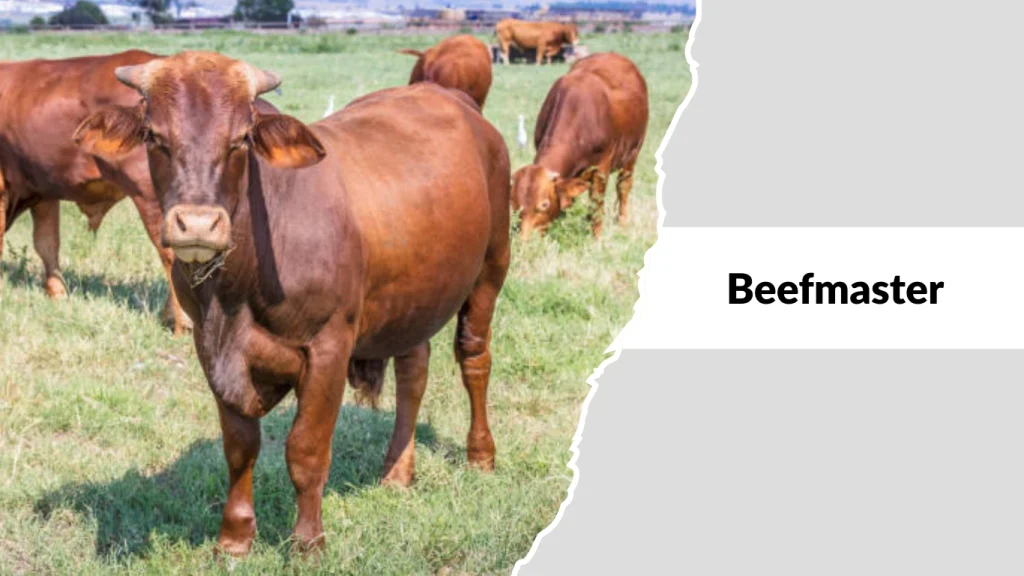
Beefmaster is a composite beef cattle breed developed in the United States, known for its strength, adaptability, and productivity. It was bred to combine hardiness, fertility, and efficient beef production in demanding environments.
Identification
- Solid red or reddish-brown coat
- Large, muscular body
- Loose skin, especially around the neck
- Horned or polled varieties
- Broad chest and strong legs
Habitat
Beefmaster cattle perform well in hot, dry, and semi-tropical regions. They are commonly raised on open ranges and large ranches where environmental conditions can be challenging.
Behavior
This breed is alert yet manageable. Beefmaster cattle are known for their resilience and adaptability, making them reliable performers in extensive grazing systems.
Diet
Beefmaster cattle feed primarily on pasture grasses and forage. They are efficient grazers and maintain good growth rates even on lower-quality feed sources.
8. Red Brahman
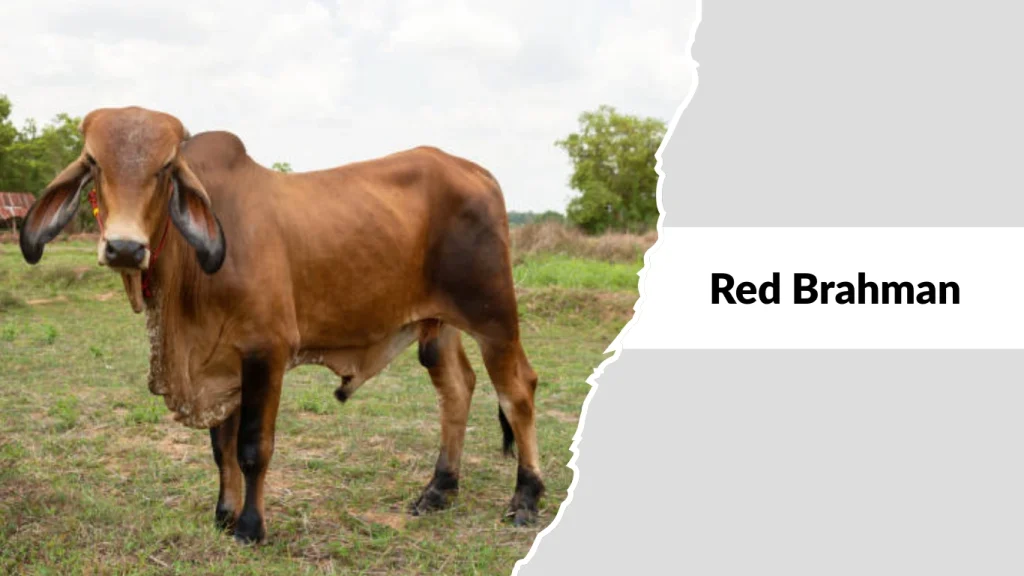
Red Brahman is a heat-tolerant beef cattle breed derived from Indian zebu cattle and widely raised in tropical and subtropical regions. It is valued for its endurance, disease resistance, and adaptability.
Identification
- Reddish-brown to dark red coat
- Prominent shoulder hump
- Loose skin with large dewlap
- Long, drooping ears
- Medium to large body size
Habitat
Red Brahman cattle thrive in hot, humid, and tropical climates. They are well suited to open rangelands, savannas, and areas where heat and insects pose challenges to other breeds.
Behavior
This breed is intelligent, alert, and independent. Red Brahman cattle may be more cautious than some European breeds but respond well to consistent handling and proper management.
Diet
Red Brahman cattle primarily consume grasses, forage, and crop residues. They efficiently utilize low-quality feed and can survive in regions with limited nutritional resources.
9. Gelbvieh
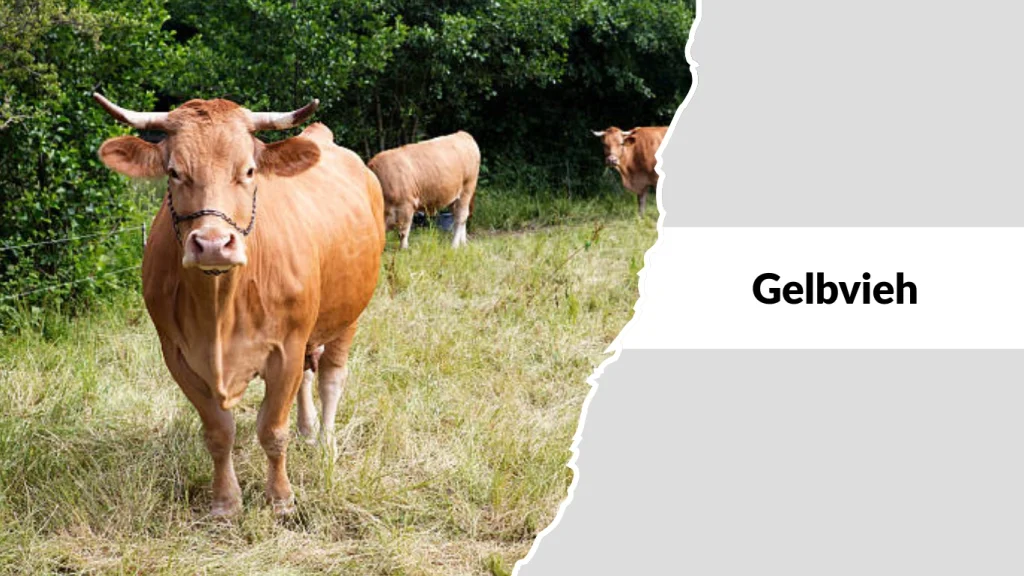
Gelbvieh is a versatile beef cattle breed known for rapid growth, fertility, and strong maternal traits. Originating in Germany, it has become popular worldwide for both purebred herds and crossbreeding programs.
Identification
- Golden-red to reddish-brown coat
- Medium to large body frame
- Muscular yet smooth body structure
- Horned or polled varieties
- Strong legs and deep chest
Habitat
Gelbvieh cattle adapt well to diverse climates, including temperate grasslands and mixed farming regions. They perform effectively in both pasture-based systems and controlled feeding operations.
Behavior
This breed is generally calm and cooperative. Gelbvieh cattle are known for good mothering ability and ease of handling, making them suitable for commercial and family-run farms.
Diet
Gelbvieh cattle primarily graze on pasture grasses and forage. They efficiently convert feed into muscle and maintain productivity with balanced nutritional programs.
10. Ayrshire
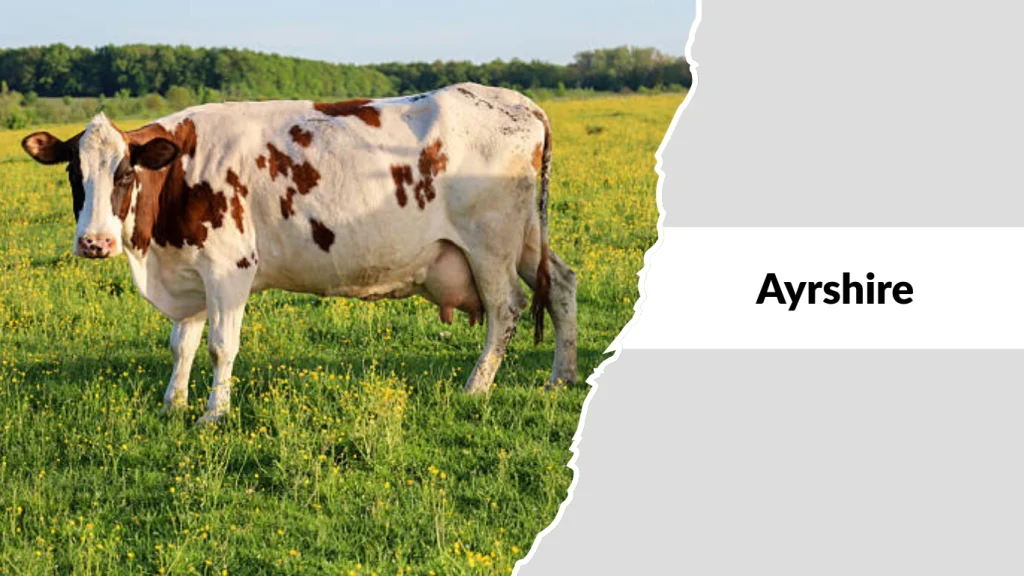
Ayrshire is a hardy dairy cattle breed known for its efficiency, strong constitution, and quality milk production. Originating in Scotland, it is well suited to challenging environments and pasture-based systems.
Identification
- Reddish-brown and white coat pattern
- Medium-sized body with strong frame
- Horned or polled varieties
- Well-developed udder (in females)
- Alert appearance with straight legs
Habitat
Ayrshire cattle thrive in cooler and temperate climates, particularly in hilly or less fertile grazing lands. Their hardiness allows them to perform well where conditions may be unsuitable for more delicate dairy breeds.
Behavior
This breed is active, alert, and generally manageable. Ayrshires are known for their strong survival instincts and adaptability, though they can be more energetic than some other dairy cattle.
Diet
Ayrshire cattle mainly feed on grasses, forage, and hay. They are efficient grazers and maintain good milk production on well-managed pasture diets.
11. Shorthorn
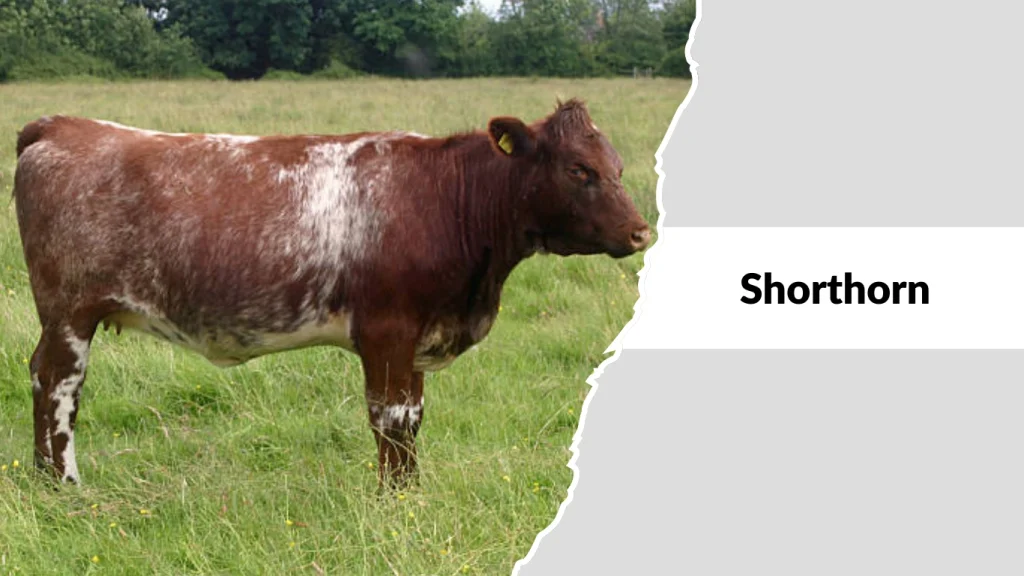
Shorthorn is a versatile cattle breed valued for both beef and dairy production. Known for its adaptability and good temperament, it has been widely used in crossbreeding programs around the world.
Identification
- Red, white, or roan coat colors
- Medium to large body size
- Short horns or naturally polled varieties
- Broad chest and deep body
- Strong legs and balanced frame
Habitat
Shorthorn cattle adapt well to a wide range of climates, from cool temperate regions to warmer grasslands. They perform well in pasture-based systems as well as in managed farm environments.
Behavior
This breed is calm, docile, and easy to handle. Shorthorn cattle are known for good maternal instincts and are suitable for both small farms and large-scale operations.
Diet
Shorthorn cattle primarily consume pasture grasses, forage, and supplemental feeds. They efficiently convert feed into meat or milk depending on management goals.
12. Salers

Salers is a hardy beef cattle breed from France, known for its endurance, strong maternal ability, and high-quality beef. It is especially valued in traditional and extensive farming systems.
Identification
- Dark red to mahogany coat
- Long, lyre-shaped horns
- Thick, curly hair coat
- Large, robust body frame
- Strong legs and wide hooves
Habitat
Salers cattle thrive in mountainous and rugged regions with cooler climates. They are well adapted to high altitudes and harsh grazing conditions where forage quality may be limited.
Behavior
This breed is alert, protective, and highly maternal. Salers cattle are known for strong bonding with calves and perform best under experienced management.
Diet
Salers cattle primarily graze on natural pasture, grasses, and rough forage. Their efficient digestion allows them to maintain body condition in environments with sparse or coarse vegetation.
FAQs
1. What are red cow breeds mainly used for?
Red cow breeds are used for beef production, dairy farming, or both, depending on the breed. Many are valued for meat quality, while others are known for milk yield or dual-purpose performance.
2. Are red cow breeds suitable for hot climates?
Yes, several red cow breeds are well adapted to hot and humid climates. Breeds like Red Brahman, Santa Gertrudis, and Beefmaster are especially heat tolerant.
3. Do red cows have a calm temperament?
Most red cow breeds are known for calm and manageable behavior. Proper handling and management further improve temperament, especially in commercial farming systems.
4. Can red cow breeds be raised on pasture alone?
Many red cow breeds perform well on grass-based diets. Some may require supplemental feed depending on production goals, climate, and forage quality.
5. Are red cow breeds good for crossbreeding?
Yes, red cow breeds are commonly used in crossbreeding programs to improve growth rate, adaptability, fertility, and meat quality.