



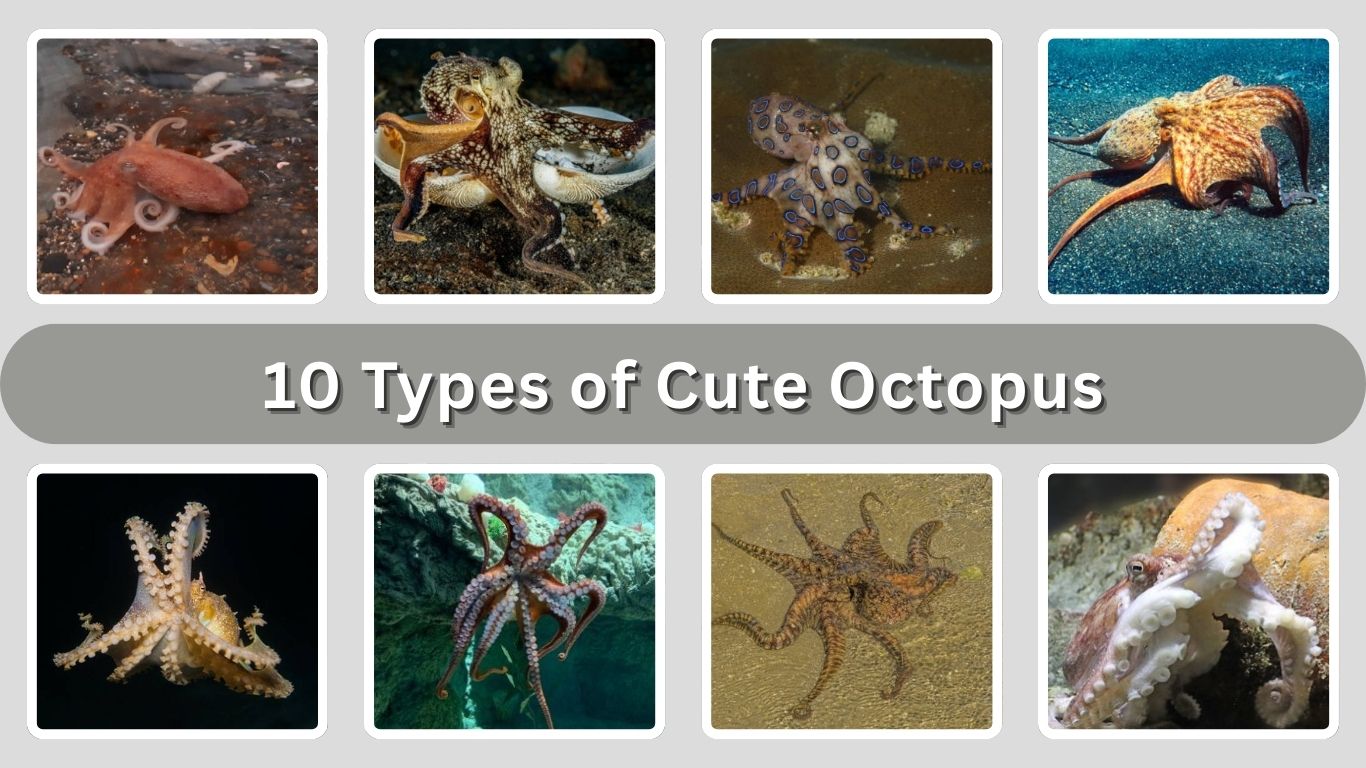
Cute octopuses capture attention with their tiny size, big expressive eyes, soft bodies, and playful behaviors. From deep-sea species that look like floating cartoons to small reef octopuses that explore shells and rocks, these creatures are both fascinating and adorable. In this guide, you’ll discover some of the cutest octopus types in the ocean, each known for unique features like ear-shaped fins, glowing spots, or miniature bodies that make them stand out.
1. Dumbo Octopus
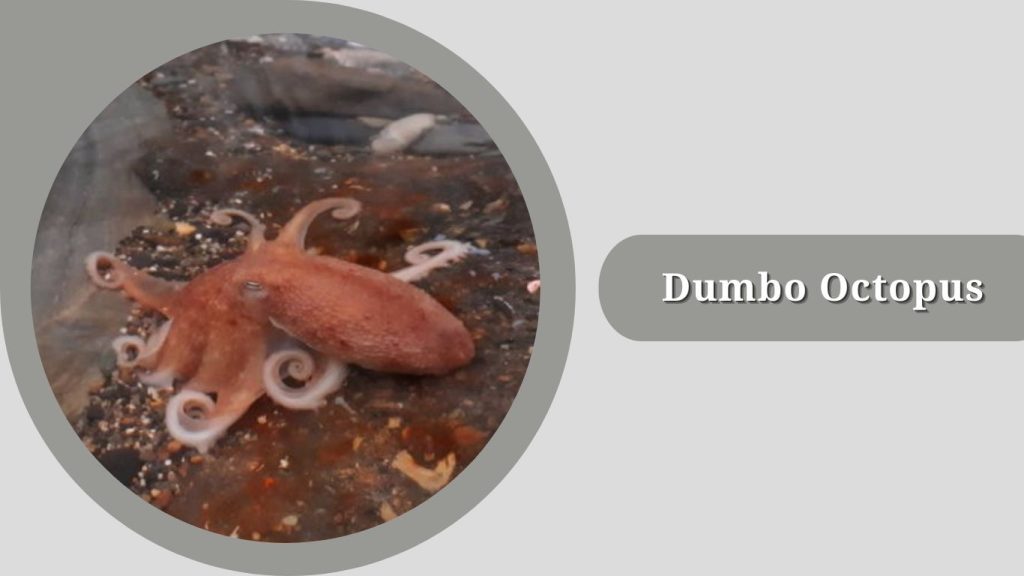
The Dumbo octopus is one of the cutest and most recognizable octopus types, named after its ear-like fins that resemble Disney’s Dumbo. These deep-sea octopuses float gracefully through cold ocean waters, using their fins to “fly.” Their small size, rounded body, and gentle movements make them especially popular in marine biology and ocean-life content.
Identification
- Small, soft, rounded body with a gelatinous appearance
- Two large ear-like fins on the head
- Short arms with webbing between them
- Pale white, pink, or light orange coloration
- Large eyes adapted for deep-sea vision
Habitat
Dumbo octopuses live in the deep ocean, usually at depths of 3,000 to over 13,000 feet. They are commonly found in cold, dark waters of the Pacific, Atlantic, and Indian Oceans, where sunlight never reaches and pressure is extremely high.
Behavior
They move by gently flapping their ear-like fins and steering with their arms. Unlike many octopuses, Dumbo octopuses rarely jet away. Their slow, floating motion gives them a calm, almost “cute” appearance as they drift above the seafloor searching for food.
Diet
Dumbo octopuses mainly eat small deep-sea animals such as crustaceans, worms, and tiny snails. They hover over the ocean bottom and pick up prey whole, swallowing it without strong biting since their environment provides soft-bodied food sources.
2. Coconut Octopus

The coconut octopus is a small, intelligent, and surprisingly cute octopus known for using objects as tools. It often carries coconut shells or seashells to build portable shelters, a behavior rarely seen in marine animals. Its expressive eyes, compact body, and curious movements make it one of the most fascinating and adorable octopus species.
Identification
- Small to medium-sized body with smooth to slightly textured skin
- Light brown, tan, or gray coloration with darker patterns
- Large, expressive eyes
- Moderately long arms with strong suckers
- Ability to change color and texture quickly
Habitat
Coconut octopuses live in shallow tropical waters of the Indo-Pacific region. They are commonly found on sandy or muddy seabeds, seagrass areas, and coastal zones where shells, coconuts, and debris are available for shelter.
Behavior
This species is famous for collecting and carrying coconut shells, clam shells, or bottles to use as hiding places. It walks along the seafloor using its arms, often standing upright, which adds to its unique and cute appearance.
Diet
Coconut octopuses feed on small crabs, shrimp, clams, and other marine invertebrates. They hunt by pouncing on prey and using their arms and suckers to pull food to their beak.
3. Blue-Ringed Octopus

The blue-ringed octopus is tiny, colorful, and visually adorable, with bright blue rings that glow against its yellowish body. Although it is extremely venomous, its small size, big eyes, and glowing patterns often make people describe it as “cute.” It is one of the most famous small octopus species in the world.
Identification
- Very small body, usually only a few inches long
- Yellow, tan, or light brown base color
- Bright electric-blue rings that appear when threatened
- Short arms with strong suckers
- Smooth skin with high-contrast color changes
Habitat
Blue-ringed octopuses live in shallow coastal waters of the Indo-Pacific, especially around coral reefs, tide pools, and rocky shores. They often hide in crevices, shells, and under rocks during the day.
Behavior
They are usually shy and calm but flash their bright blue rings as a warning when disturbed. Despite their cute size, they rely on powerful venom rather than speed or ink to defend themselves.
Diet
Blue-ringed octopuses mainly eat small crabs, shrimp, and other crustaceans. They inject venom to paralyze prey, then use their beak to feed.
4. Mimic Octopus

The mimic octopus is one of the cutest and most entertaining octopus types because of its incredible ability to imitate other sea animals. It can change both color and body shape to look like fish, sea snakes, lionfish, or flounders. Its playful movements, expressive eyes, and dramatic transformations make it especially appealing.
Identification
- Slender body with long, flexible arms
- Light brown or cream base color with dark bands
- Highly changeable skin color and texture
- Large, alert eyes on a raised head
- Narrow mantle compared to many other octopuses
Habitat
Mimic octopuses are found in shallow tropical waters of Southeast Asia, especially on sandy or muddy seafloors near river mouths and coastal reefs. They prefer open flats where their mimicry is easy to display.
Behavior
This species is famous for copying the movements and shapes of other marine animals to scare predators or sneak up on prey. It can flatten its body, bury itself in sand, or swim with arms trailing behind like a sea snake.
Diet
Mimic octopuses eat small fish, crabs, worms, and shrimp. They hunt by sneaking close to prey or confusing animals with their sudden shape and color changes.
5. Flapjack Octopus

The flapjack octopus is one of the roundest and cutest octopus species, often compared to a tiny pancake with big eyes. Its soft body and webbed arms give it a cartoon-like look, especially when it spreads out on the seafloor or gently floats in the water. This adorable appearance has made it very popular in ocean imagery.
Identification
- Small, flattened, and rounded body shape
- Very large eyes compared to body size
- Short arms connected by wide webbing
- Soft, smooth, jelly-like skin
- Pale pink, orange, or reddish coloration
Habitat
Flapjack octopuses live in deep ocean waters, often thousands of feet below the surface. They are found in parts of the Pacific Ocean, resting on or just above the seafloor in cold, dark environments.
Behavior
They move slowly and calmly, often spreading their arms like a small disk. When swimming, they gently pulse their webbed arms, creating a floating, umbrella-like motion that adds to their cute appearance.
Diet
Flapjack octopuses feed on small deep-sea animals such as worms, tiny crustaceans, and bottom-dwelling invertebrates. They glide close to the seafloor and scoop up prey with their arms.
6. Glass Octopus

The glass octopus is one of the most delicate and cute-looking octopus species because its body is almost completely transparent. You can often see its internal organs through its clear skin, giving it a ghost-like yet adorable appearance. Its tiny size, soft shape, and gentle movements make it especially fascinating.
Identification
- Nearly transparent, glass-like body
- Small, rounded mantle with visible internal organs
- Short to medium arms with fine suckers
- Large, prominent eyes
- Very soft, fragile appearance
Habitat
Glass octopuses live in deep pelagic waters, usually hundreds to thousands of feet below the surface. They are found in open oceans rather than near reefs, floating in dark, cold environments.
Behavior
They drift quietly in the water column, using slow arm movements and gentle fin-like motions to stay suspended. Their transparency helps them avoid predators by blending into the surrounding water.
Diet
Glass octopuses mainly eat tiny drifting animals such as copepods, small crustaceans, and larval fish. They capture prey by extending their arms and pulling food toward their beak.
7. Atlantic Pygmy Octopus

The Atlantic pygmy octopus is one of the smallest and cutest octopus species in the world. Its tiny size, rounded head, and large eyes give it a baby-like appearance even as an adult. Because of its small body and curious behavior, it is often described as one of the most adorable reef-dwelling octopuses.
Identification
- Very small body, usually only a few inches long
- Rounded mantle with smooth skin
- Large eyes compared to head size
- Short, delicate arms with fine suckers
- Brown, reddish, or mottled coloration
Habitat
Atlantic pygmy octopuses live in warm shallow waters of the western Atlantic, including the Caribbean Sea and Gulf of Mexico. They are commonly found around coral rubble, rocks, and seagrass beds.
Behavior
They are active and curious, often exploring small crevices and shells. This species uses quick color changes to communicate, hide, and surprise prey, making them lively and interesting to observe.
Diet
Atlantic pygmy octopuses feed on tiny crabs, shrimp, snails, and other small invertebrates. They hunt at short range, grabbing prey with their arms and pulling it to their beak.
8. California Two-Spot Octopus

The California two-spot octopus is a friendly-looking, medium-sized octopus known for the two bright blue spots below its eyes that look almost like glowing freckles. Its soft body, expressive eyes, and curious nature often make it appear cute and intelligent to divers and ocean enthusiasts.
Identification
- Medium-sized octopus with a smooth, soft body
- Two distinctive bright blue eye spots (ocelli)
- Mottled brown, tan, or gray coloration
- Long flexible arms with strong suckers
- Able to change color and skin texture
Habitat
This octopus lives along the Pacific coast of North America, especially around California. It prefers rocky reefs, kelp forests, and tide pools, where it can hide in crevices and abandoned shells.
Behavior
California two-spot octopuses are active hunters and very curious. They often explore their surroundings, manipulate objects, and interact with divers, showing high intelligence and problem-solving behavior.
Diet
They mainly eat crabs, clams, snails, and small fish. They use their arms to pull prey apart and their beak to break shells.
9. Star-Sucker Pygmy Octopus
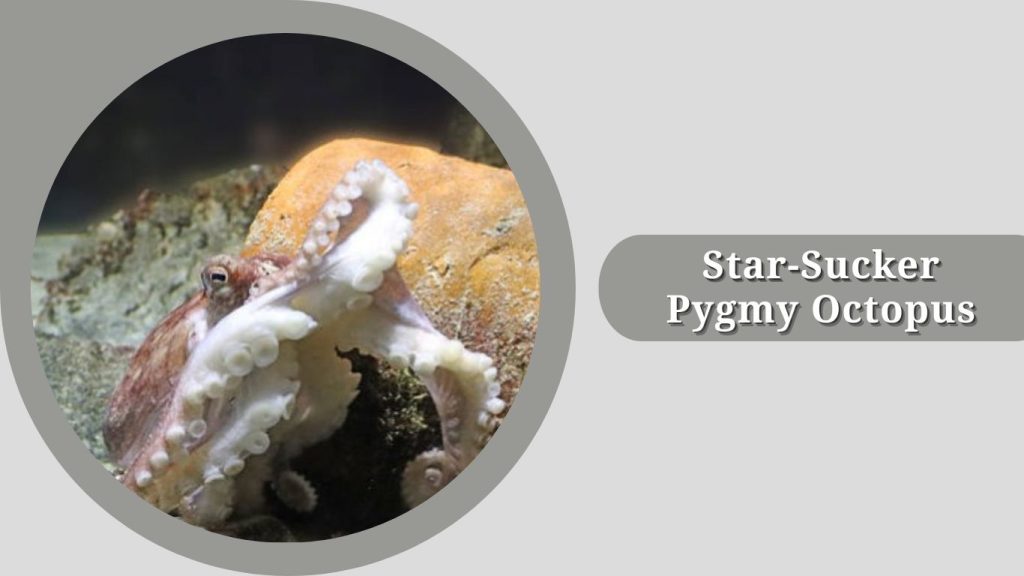
The star-sucker pygmy octopus is one of the tiniest and cutest octopus species, named for the star-shaped patterns formed by its suckers. Its miniature size, soft rounded body, and delicate arms make it look almost toy-like. Because of its small scale and gentle appearance, it is especially appealing to marine life enthusiasts.
Identification
- Extremely small body, often under 2 inches long
- Short arms with star-shaped sucker patterns
- Rounded mantle with smooth skin
- Large eyes compared to body size
- Brown, reddish, or mottled coloration
Habitat
Star-sucker pygmy octopuses live in shallow tropical waters, especially in the Indo-Pacific region. They are commonly found hiding in coral rubble, shells, and rocky crevices.
Behavior
They are shy and secretive, spending much of their time tucked into tiny holes. When active, they crawl slowly over rocks and coral, using quick color changes to blend in.
Diet
They feed on very small crustaceans, tiny snails, and other micro-invertebrates. They ambush prey at close range and quickly pull it into their arms.
10. Caribbean Reef Octopus
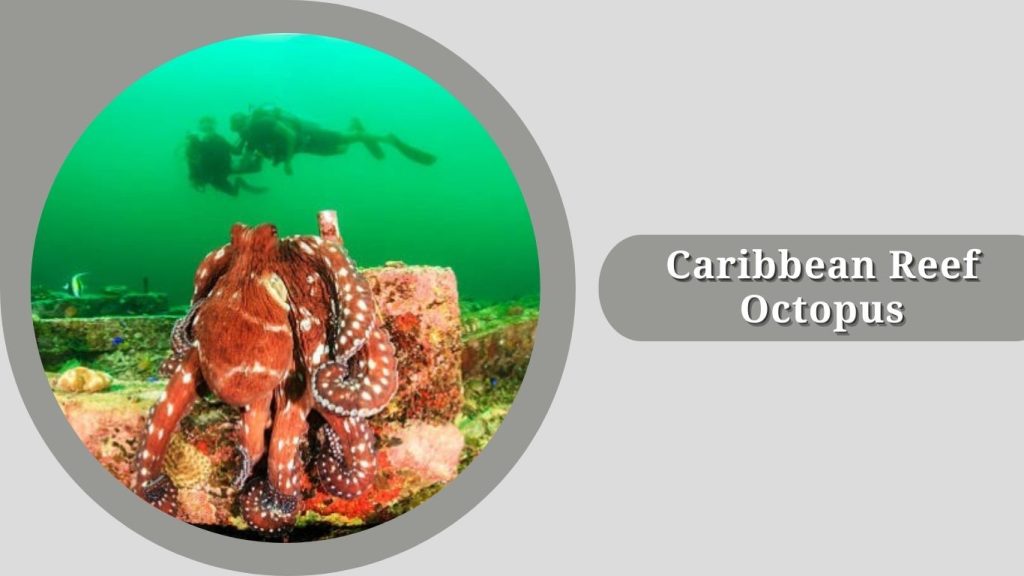
The Caribbean reef octopus is one of the most charming and visually appealing octopus species, known for its smooth skin, bright eyes, and graceful movements. Although larger than pygmy octopuses, its expressive behavior, curiosity, and frequent color changes often make it seem “cute” to divers and underwater photographers.
Identification
- Medium to large body with smooth, soft skin
- Long arms with well-defined suckers
- Large, intelligent-looking eyes
- Colors range from brown and red to green and blue tones
- Capable of rapid color and texture change
Habitat
Caribbean reef octopuses live in warm, shallow waters of the Caribbean Sea, Gulf of Mexico, and western Atlantic Ocean. They are commonly found around coral reefs, rocky bottoms, and seagrass beds.
Behavior
They are highly intelligent and active, often seen exploring reef structures and interacting with objects. This species is mostly nocturnal but can be spotted during the day hiding in reef crevices.
Diet
They feed on crabs, lobsters, shrimp, and small fish. Using their arms and strong beak, they capture, drill, and consume hard-shelled prey.