



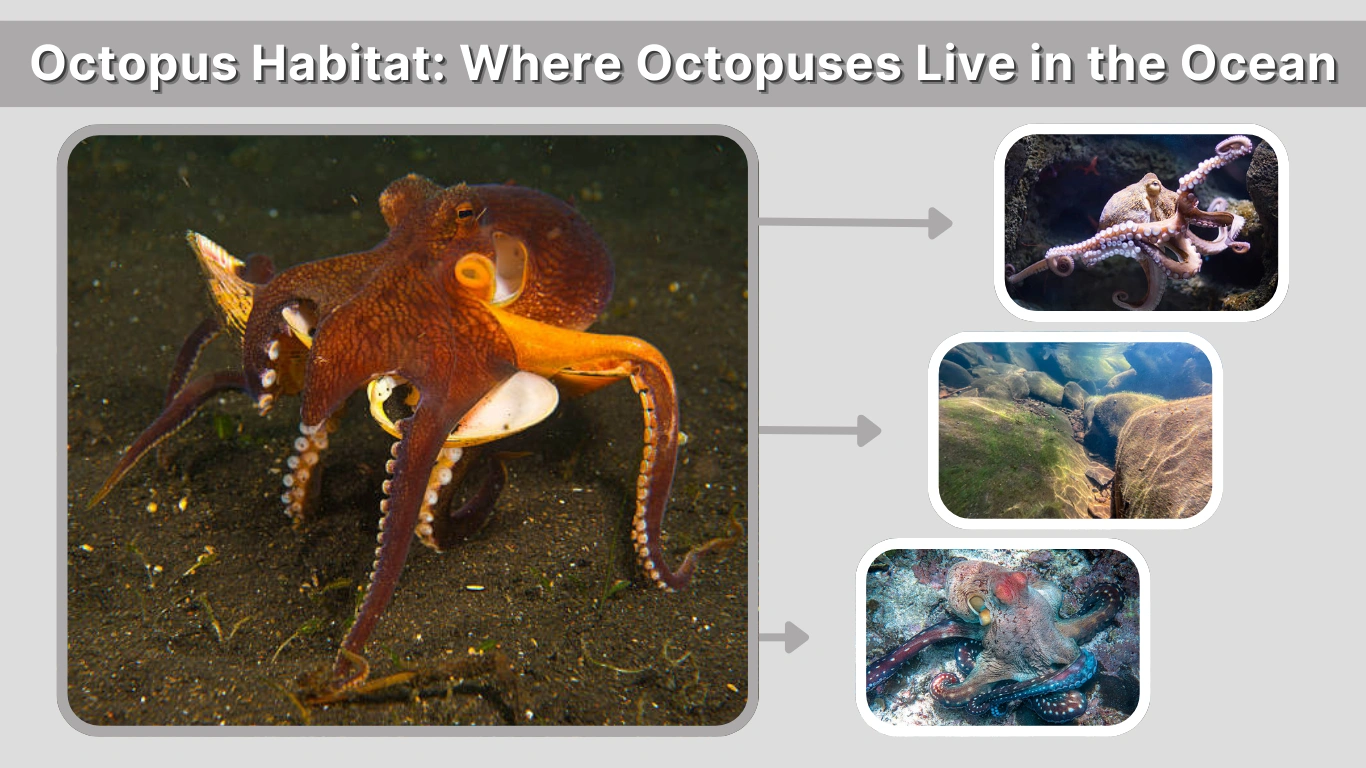
Octopuses are found in nearly every ocean on Earth, from warm tropical reefs to the dark, icy depths of the deep sea. Their remarkable adaptability allows them to survive in environments that range from shallow tide pools to underwater volcanic slopes thousands of meters below the surface. Understanding octopus habitat helps explain how these intelligent invertebrates hunt, hide, reproduce, and avoid predators. Each habitat type shapes their behavior, body structure, and survival strategies.
What Is an Octopus Habitat?
An octopus habitat is any marine environment that provides three essential things: shelter, food, and suitable water conditions. Unlike many free-swimming animals, most octopuses are bottom dwellers. They live close to the seafloor, where they can hide in crevices, build dens, and ambush prey.
Octopus habitats vary widely, but all share common features such as rocky surfaces, coral structures, sand beds, or muddy bottoms. These environments support the crabs, shrimp, mollusks, and small fish that octopuses rely on for food. Water temperature, oxygen levels, and current strength also play major roles in determining which species can survive in a given area.
Oceans and Regions Where Octopuses Live

Octopuses have one of the widest geographic ranges of any marine invertebrate. They are found in:
- The Pacific, Atlantic, Indian, Arctic, and Southern Oceans
- Coastal waters and open ocean margins
- Tropical, temperate, and polar regions
Tropical oceans host the greatest diversity of octopus species, including reef-dwelling and mimic octopuses. Temperate waters support larger species such as the giant Pacific octopus. Cold and deep environments are home to unusual forms like dumbo octopuses, which live thousands of meters below the surface.
Shallow-Water Octopus Habitats
Coral Reefs
Coral reefs are among the most important octopus habitats. These complex structures offer countless hiding places, hunting grounds, and egg-laying sites. Reef octopuses often live in cracks, coral heads, and rubble zones.
Reef environments support a wide variety of prey, including crabs, snails, and small fish. The vibrant colors and textures of coral reefs also match the octopus’s ability to camouflage, allowing it to blend perfectly into its surroundings.
Rocky Shores and Tide Pools
Some octopus species live in very shallow coastal zones, including rocky shorelines and tide pools. These habitats experience constant change due to waves, tides, and temperature fluctuations.
Octopuses in these areas often shelter under rocks or inside abandoned shells. They must tolerate exposure to air during low tides and rapidly changing salinity levels. Their flexibility, intelligence, and ability to seal themselves inside moist crevices help them survive these extreme conditions.
Seagrass Beds and Sandy Flats
Seagrass meadows and sandy bottoms may appear barren, but they support abundant life. Octopuses living here often bury themselves under sand or build dens from shells and stones.
In open habitats, camouflage becomes especially important. These octopuses frequently mimic sand patterns, seaweed, or even other animals to avoid predators and surprise prey.
Deep-Sea Octopus Habitats

Continental Slopes and Abyssal Plains
Many octopus species live far below sunlight penetration. Deep-sea habitats include continental slopes, underwater plains, and ocean trenches. These environments are cold, dark, and under immense pressure.
Deep-sea octopuses often have softer bodies, larger fins, and slower metabolisms. Food is scarce, so these species grow slowly and may live longer than shallow-water octopuses.
Hydrothermal Vents and Cold Seeps
Some octopuses are found near hydrothermal vents and cold seeps, where warm, mineral-rich water emerges from the seafloor. These areas attract dense communities of crustaceans and worms, providing feeding opportunities.
In rare cases, scientists have discovered octopus nurseries near volcanic springs, where slightly warmer water may help eggs develop faster in otherwise cold environments.
Freshwater vs Saltwater: Can Octopuses Live Outside the Ocean?
All known octopus species are strictly marine. They cannot survive in freshwater rivers or lakes. Their bodies are adapted to saltwater chemistry, and freshwater exposure disrupts their internal balance, quickly leading to death.
However, some species tolerate brackish environments, such as mangrove edges or coastal lagoons, where freshwater mixes with seawater. Even in these locations, saltwater remains essential for survival.
How Octopuses Choose and Build Their Homes

Octopuses do not simply occupy habitats—they actively shape them. Most species construct dens that serve as resting places, feeding stations, and egg-laying chambers.
Common den sites include:
- Rock crevices
- Coral cavities
- Abandoned shells
- Burrows in sand or mud
- Human debris such as bottles or pipes
Octopuses often decorate den entrances with shells and stones, possibly for camouflage or protection. These dens allow octopuses to retreat quickly from predators while maintaining access to hunting grounds.
Environmental Conditions That Shape Octopus Habitats
Water Temperature
Temperature strongly influences where octopuses live. Tropical species prefer warm, stable waters. Cold-water species thrive in temperatures near freezing. Warmer water speeds metabolism and growth but usually shortens lifespan.
Oxygen Availability
Octopuses require well-oxygenated water. Strong currents and wave action help supply oxygen, which is why many octopuses favor reef slopes and rocky coastlines.
Depth and Pressure
As depth increases, light disappears, pressure rises, and food becomes scarcer. Deep-sea octopuses show special adaptations, including gelatinous bodies and slower life cycles.
Food Supply
Octopus habitats must support crustaceans, mollusks, and small fish. Areas rich in benthic life attract and sustain octopus populations.
Habitat and Camouflage: A Perfect Match
One of the most remarkable aspects of octopus habitat use is camouflage. Octopuses adjust their skin color, brightness, and texture to match rocks, corals, algae, and sand. Some species even mimic specific animals, such as lionfish, sea snakes, or flounders.
This ability allows octopuses to thrive in visually complex environments like reefs and seagrass beds. In deep habitats, camouflage shifts from color matching to transparency and texture blending.
Human Impact on Octopus Habitats
Octopus habitats are increasingly threatened by human activities. Coastal development destroys reefs and seagrass beds. Pollution reduces oxygen levels and contaminates prey species. Bottom trawling damages deep-sea environments that take centuries to recover.
Climate change is also altering octopus habitats by warming oceans, increasing acidity, and disrupting food chains. While some octopus species adapt quickly, others are highly sensitive to environmental change.
Protecting marine habitats not only preserves octopus populations but also supports entire ocean ecosystems.
Why Octopus Habitats Matter
Octopus habitats support far more than octopuses alone. They are vital centers of biodiversity. As predators, octopuses regulate populations of crabs and mollusks. As prey, they feed fish, seals, sharks, and dolphins.
Healthy octopus habitats indicate healthy oceans. Studying where octopuses live helps scientists understand environmental change, ecosystem balance, and marine conservation priorities.