






Takins are some of the most unusual and powerful mountain animals in the world, often described as a mix between a goat, antelope, and musk ox. Native to the Himalayas and southwestern China, these massive herbivores are specially adapted to cold climates, steep slopes, and dense forests. In this guide, you’ll explore 10 different types of takin, highlighting how each form varies in appearance, range, and mountain lifestyle.
1. Mishmi Takin

The Mishmi takin is a rare and powerful-looking mountain ungulate found mainly in the eastern Himalayas, especially in the Mishmi Hills of Arunachal Pradesh (India), northern Myanmar, and nearby parts of Tibet. It is one of the least-studied takin forms and is well adapted to cold, rugged terrain with steep slopes, dense forests, and alpine meadows. With its thick coat, stocky build, and distinctive arched nose, the Mishmi takin is perfectly designed to survive harsh mountain climates and seasonal food shortages.
Identification
- Large, stocky goat-antelope with a heavy, muscular body
- Thick, shaggy coat ranging from dark brown to blackish
- Broad head with a strongly arched, “Roman-nose” profile
- Short, powerful legs built for climbing steep terrain
- Both males and females have thick, curved horns that sweep outward and slightly upward
- Prominent scent glands on the face, giving a slightly oily appearance
Habitat and Range
The Mishmi takin lives in remote high-altitude regions between about 2,000 and 4,500 meters. It prefers mixed coniferous forests, bamboo thickets, and alpine shrublands. During warmer months, it often moves higher into open meadows, while in winter it descends into forested valleys for shelter and food. Its range is limited and fragmented, which makes encounters with this animal uncommon and special.
Diet and Feeding Behavior
Mishmi takins are herbivores with a very flexible diet. They feed on grasses, bamboo shoots, leaves, herbs, mosses, and shrubs. In forested zones, they browse on twigs and low branches, sometimes standing on their hind legs to reach higher vegetation. Their strong jaws and large molars allow them to process coarse plant material that many other mountain animals cannot digest efficiently.
Behavior and Lifestyle
This takin is generally shy and avoids human presence. It may live alone, in small family groups, or occasionally in larger herds, especially outside the breeding season. Mishmi takins are excellent climbers and can navigate steep cliffs and slippery slopes with surprising agility. They are mostly active during early morning and late afternoon, resting in dense cover during the day. When threatened, they rely on their size, horns, and sure-footedness rather than speed.
2. Golden Takin
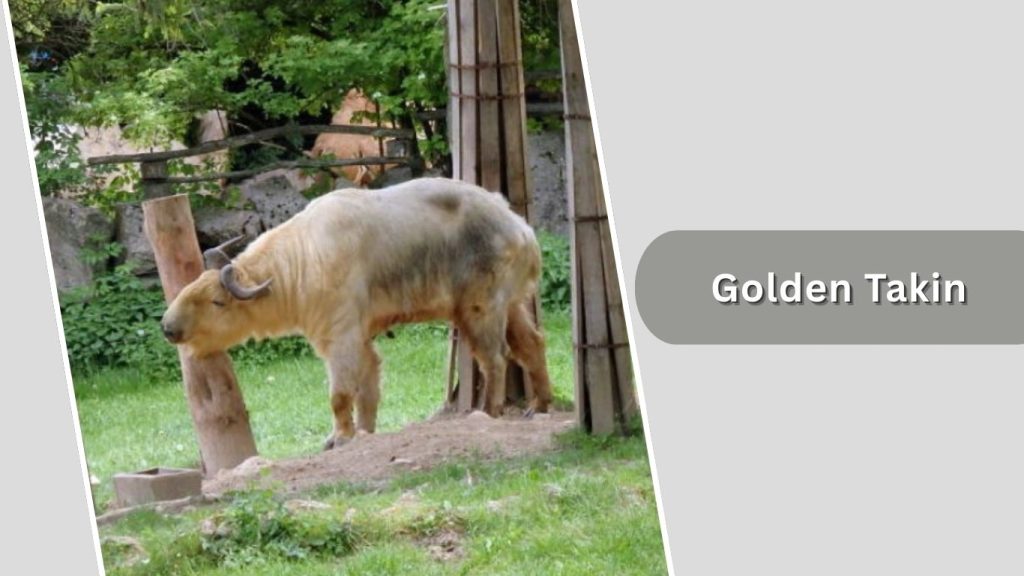
The golden takin is the most visually striking member of the takin group, famous for its rich golden-yellow coat and massive, ox-like build. It is mainly found in central China, especially in the Qinling and Minshan mountain ranges. This subspecies is also the national animal of Bhutan’s close relatives, symbolizing strength and endurance in Asian mountain folklore. Its thick fur and dense undercoat protect it from freezing temperatures and heavy snowfall in high elevations.
Identification
- Large, heavy-bodied ungulate with a powerful chest and thick neck
- Long, dense coat colored golden yellow to pale straw, darker on the face and legs
- Broad head with a strongly arched nose and wide muzzle
- Thick, ridged horns in both sexes, sweeping outward from the sides of the head
- Short, sturdy legs with broad hooves for rocky slopes
- Oily secretions around the face that help waterproof the fur
Habitat and Range
Golden takins inhabit mountainous forests and alpine zones at elevations of roughly 1,500 to 4,000 meters. They favor bamboo forests, mixed coniferous woods, and high meadows near the tree line. Seasonal migration is common: herds move upward in summer to graze on fresh alpine plants and descend in winter to lower, forested valleys for shelter.
Diet and Feeding Behavior
Their diet consists mainly of bamboo leaves and shoots, grasses, herbs, and the leaves of shrubs and trees. Golden takins are strong browsers and will strip bark or break small branches to reach tender growth. In winter, when food is scarce, they rely more heavily on evergreen leaves, dry grasses, and woody plant material.
Behavior and Lifestyle
Golden takins are social animals and are often seen in small herds, though large groups may form during certain seasons. They are slow-moving but extremely sure-footed, capable of climbing steep mountain terrain with ease. Calves are born in late spring or early summer and can follow the herd within days, showing remarkable strength from an early age.
3. Bhutan Takin
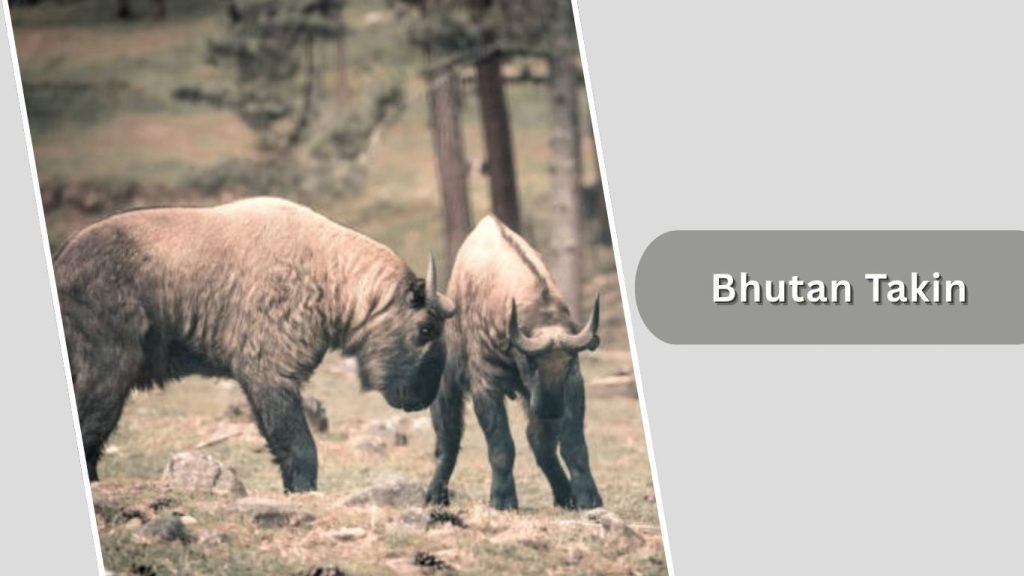
The Bhutan takin is the national animal of Bhutan and one of the most culturally significant takin forms. It is primarily found in the eastern Himalayan region, including Bhutan, northeastern India, and southern Tibet. This takin is well adapted to cold, misty mountain forests and high alpine meadows, where it spends much of the year grazing and browsing in remote, rugged landscapes.
Identification
- Large, stocky body with a deep chest and strong shoulders
- Thick, shaggy coat ranging from creamy white to light golden or tan
- Broad head with a pronounced arched nose and wide muzzle
- Both males and females carry heavy, curved horns that extend sideways then upward
- Short, muscular legs with wide hooves for stability on steep ground
- Dense underfur that insulates against snow, wind, and freezing rain
Habitat and Range
Bhutan takins inhabit elevations between about 2,000 and 4,500 meters. They prefer temperate broadleaf forests, conifer forests, bamboo thickets, and alpine grasslands. During summer, herds migrate to higher slopes and open meadows, while in winter they descend into forested valleys where food and shelter are more available.
Diet and Feeding Behavior
This takin feeds on a wide variety of mountain vegetation, including grasses, herbs, bamboo, leaves, and shrubs. It also consumes mosses and lichens when other food is limited. Bhutan takins are powerful browsers and may strip foliage from bushes or stand on their hind legs to reach higher branches.
Behavior and Lifestyle
Bhutan takins are generally calm but alert animals. They are often seen in small herds, though larger groups may gather seasonally. They are excellent climbers, able to move confidently across rocky slopes and forested ridges. During the breeding season, males become more aggressive and use their horns and body mass to compete for mates.
4. Sichuan Takin
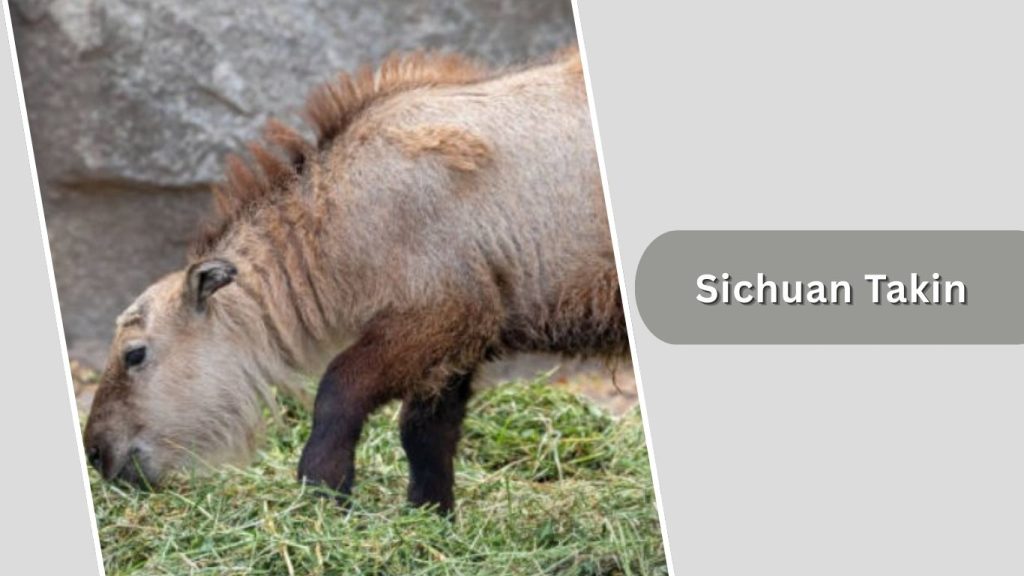
The Sichuan takin is a robust mountain ungulate native to southwestern China, mainly in Sichuan Province and nearby regions. It is closely related to the golden takin but is often darker in coloration, with thicker facial features and a heavier-looking body. This takin is superbly adapted to cold, wet mountain environments where dense forests meet high alpine grasslands.
Identification
- Very large, heavy-bodied build with a thick neck and deep chest
- Dense, shaggy coat colored light brown to dark golden or grayish
- Broad head with a strongly arched nose and wide nostrils
- Thick, ridged horns present in both sexes, sweeping outward then upward
- Short, powerful legs with broad hooves for gripping rocky slopes
- Oily facial secretions that give the fur a slightly glossy look
Habitat and Range
Sichuan takins live in mountainous regions between about 1,800 and 4,300 meters. They favor mixed conifer forests, bamboo zones, cloud forests, and alpine meadows near the tree line. Seasonal migration is common, with herds moving to higher elevations in summer and descending to lower forested valleys in winter.
Diet and Feeding Behavior
Their diet includes bamboo leaves and shoots, grasses, herbs, shrubs, and tree leaves. They also consume twigs and bark, especially in winter. Sichuan takins use their strong necks and bodies to push through dense vegetation and access food sources that smaller herbivores cannot reach.
Behavior and Lifestyle
Sichuan takins are typically found in small to medium-sized herds, though large seasonal gatherings can occur. They are mostly active during early morning and late afternoon. Despite their bulky appearance, they are agile climbers and can escape predators by moving into steep, rocky terrain where few animals can follow.
5. Tibetan Takin
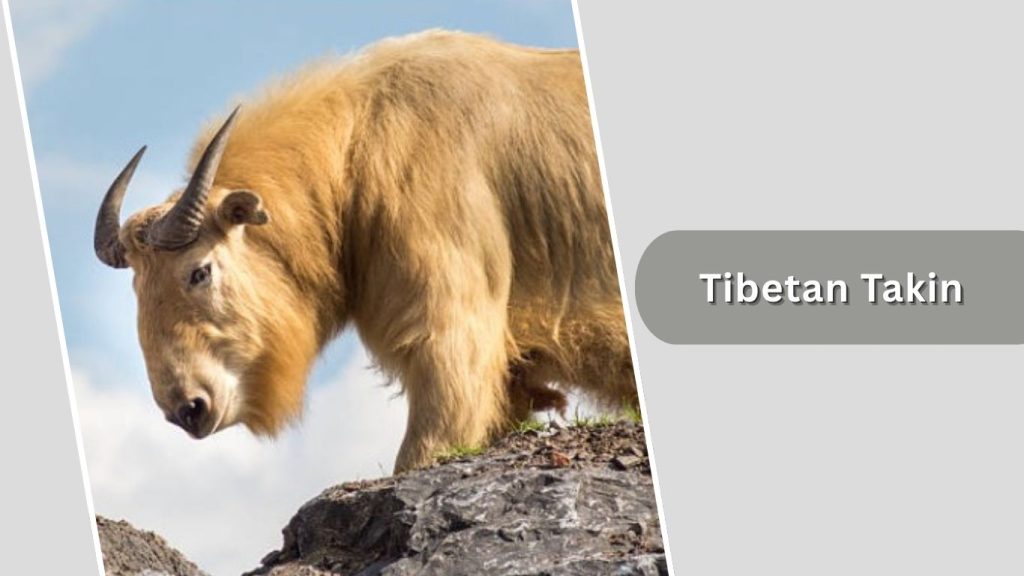
The Tibetan takin is a powerful, high-altitude form of takin native to the eastern edge of the Tibetan Plateau and adjoining mountain systems. It inhabits some of the coldest and most rugged environments occupied by any wild cattle-like mammal. With its dense coat, massive shoulders, and distinctive arched nose, the Tibetan takin is perfectly suited for life in thin air, heavy snow, and steep, rocky terrain.
Identification
- Very large, stocky body with a pronounced shoulder hump
- Thick, woolly coat usually dark brown, smoky gray, or yellow-brown
- Broad head with a strong Roman-nose profile
- Both sexes carry heavy, outward-sweeping horns with ridged bases
- Short, muscular legs with wide, rubbery hooves for traction
- Long, coarse guard hairs over a dense insulating undercoat
Habitat and Range
Tibetan takins are found mainly in eastern Tibet and nearby high mountain regions of western China. They typically live between 2,500 and 4,800 meters in elevation. Their preferred habitats include alpine shrublands, high conifer forests, rocky slopes, and open meadows near the snow line. Seasonal movements occur as herds shift upward in summer and descend to forested valleys in winter.
Diet and Feeding Behavior
Their diet is entirely plant-based and varies by season. In warmer months, Tibetan takins feed on alpine grasses, flowering herbs, bamboo, and tender shoots. During winter, they rely more heavily on woody plants, evergreen leaves, twigs, and bark. Their strong jaws and large molars allow them to grind tough, fibrous vegetation efficiently.
Behavior and Lifestyle
Tibetan takins are generally quiet, slow-moving animals, but they are extremely sure-footed. They live alone or in small groups for much of the year, forming larger herds during certain seasons. When threatened, they may stand their ground and use their horns defensively, making them formidable animals even for large predators.
6. Himalayan Takin
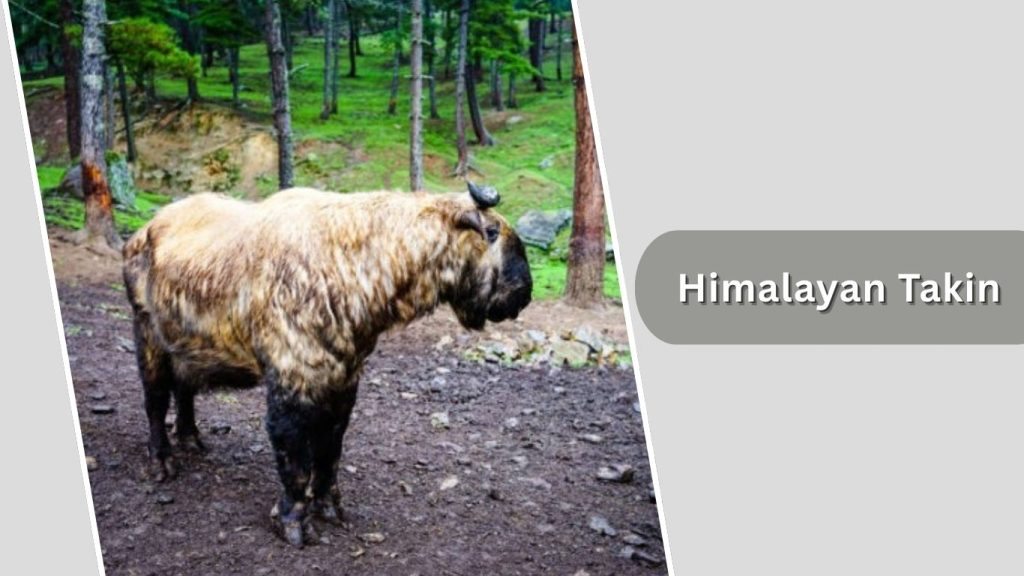
The Himalayan takin is a massive, goat-antelope native to the central and eastern Himalayan ranges. It occupies remote, rugged landscapes where thick forests rise into alpine slopes and windswept meadows. Often considered a broader mountain form that includes several local populations, the Himalayan takin shows strong adaptations to cold, steep terrain and seasonal changes in food availability.
Identification
- Very large, muscular body with a deep chest and heavy shoulders
- Thick, shaggy coat varying from pale tan to dark brown
- Broad head with a pronounced arched nose and wide muzzle
- Both males and females have thick, curved horns that sweep outward
- Short, powerful legs with wide hooves for gripping rocky ground
- Dense underfur beneath coarse outer hair for insulation
Habitat and Range
Himalayan takins are found across high mountain regions of Bhutan, northeastern India, northern Myanmar, and parts of southern Tibet. They generally inhabit elevations between 2,000 and 4,500 meters. Their habitats include temperate forests, bamboo thickets, subalpine scrub, and alpine meadows. Seasonal migration is common, with herds moving upward in summer and descending into sheltered forest valleys in winter.
Diet and Feeding Behavior
This takin feeds on a wide variety of mountain plants, including grasses, herbs, bamboo, leaves, and shrubs. In colder months, it consumes more woody vegetation, twigs, and bark. Himalayan takins are powerful browsers and may bend small trees or stand on their hind legs to reach higher foliage.
Behavior and Lifestyle
Himalayan takins are typically shy and avoid human contact. They are seen alone, in small family groups, or occasionally in larger herds. They are excellent climbers, able to move confidently along steep ridges and rocky slopes. During the breeding season, males become more territorial and may clash horns to compete for females.
7. Assam Takin
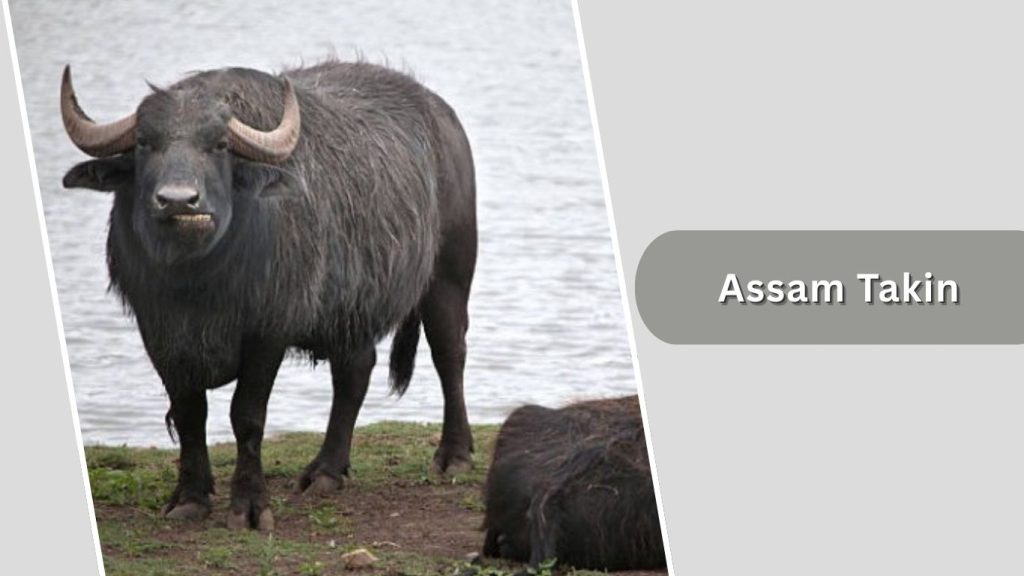
The Assam takin is a rarely mentioned regional form associated with the eastern Himalayan foothills and adjacent highlands near Assam and Arunachal Pradesh. It is often considered part of broader Himalayan or Mishmi takin populations, but the name is used locally to describe takins occurring in this transitional zone between lowland forests and high mountains. These animals live in extremely remote terrain where dense forests meet steep, cloud-covered slopes.
Identification
- Large, heavy-bodied ungulate with a broad chest and thick neck
- Coat usually dark brown to blackish, sometimes lighter on the back
- Wide head with a strong arched nose and blunt muzzle
- Thick, outward-curving horns present in both males and females
- Short, muscular legs with wide hooves adapted for climbing
- Coarse outer hair over a dense, insulating undercoat
Habitat and Range
Assam takins are associated with mountainous forest regions along the India–China–Myanmar border zone, especially around Arunachal Pradesh and nearby areas historically linked with Assam. They inhabit elevations from about 1,800 to 4,000 meters, using subtropical forests, bamboo belts, and upper temperate woodlands. Seasonal movements take them higher in summer and lower in winter.
Diet and Feeding Behavior
Their diet consists of grasses, bamboo, herbs, leaves, shrubs, and young tree shoots. They are opportunistic feeders and adjust their diet based on seasonal availability. In winter, they rely more heavily on woody plants, evergreen leaves, and bark when soft vegetation is scarce.
Behavior and Lifestyle
Assam takins are secretive and not well studied. They are believed to live in small groups or family units, occasionally forming larger herds. They are slow-moving but extremely sure-footed, using steep terrain and dense vegetation as protection from predators and human disturbance.
8. Yunnan Takin
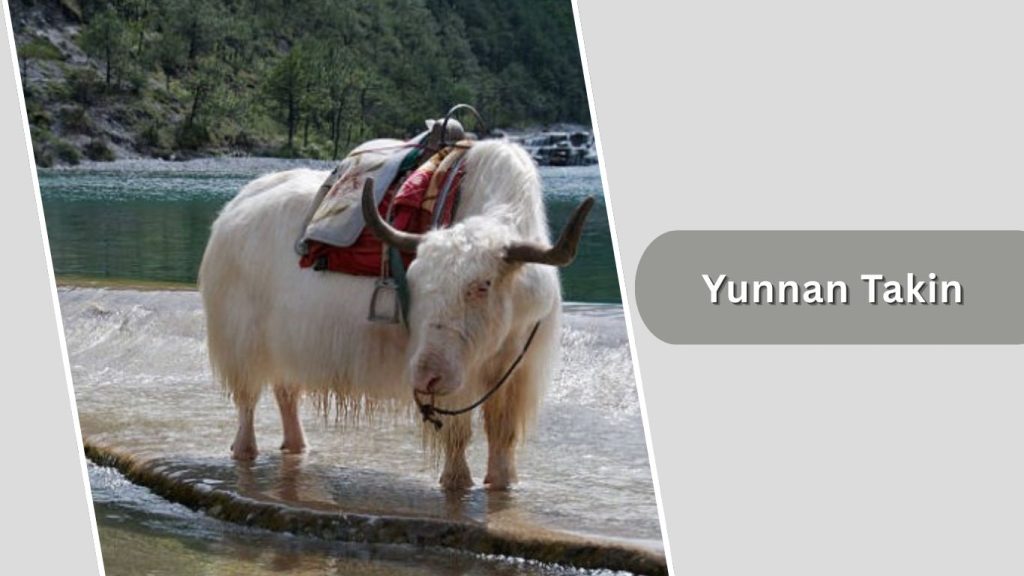
The Yunnan takin is a regional mountain form associated with the highlands of Yunnan Province in southwestern China, near the borders of Tibet and Myanmar. It inhabits some of the most biologically rich yet rugged landscapes in Asia, where deep valleys rise sharply into misty forests and alpine slopes. This takin shows strong adaptations to both dense woodland life and open high-elevation grazing.
Identification
- Large, solid body with powerful shoulders and a thick neck
- Dense, shaggy coat colored gray-brown to golden brown
- Broad head with a pronounced arched nose and wide nostrils
- Thick, ridged horns in both sexes, sweeping outward from the skull
- Short, strong legs with wide hooves for rocky and muddy ground
- Long guard hairs over a soft insulating undercoat
Habitat and Range
Yunnan takins inhabit mountainous regions of northwestern Yunnan at elevations of roughly 2,000 to 4,500 meters. They are found in mixed conifer forests, bamboo zones, cloud forests, and subalpine shrublands. Like other takins, they migrate seasonally, moving higher in summer to alpine meadows and descending to forested valleys during winter.
Diet and Feeding Behavior
Their diet includes bamboo shoots, grasses, flowering herbs, leaves, and shrubs. They also browse on twigs and low branches and will strip bark in winter when other foods are limited. Yunnan takins use their strong necks and bodies to push through thick vegetation to reach feeding areas.
Behavior and Lifestyle
Yunnan takins are generally quiet and wary. They live in small herds for most of the year, with larger seasonal groupings sometimes forming. They are excellent climbers and can move across narrow mountain trails and steep slopes with surprising stability. When threatened, they often retreat into rugged terrain rather than open ground.
9. Eastern Takin
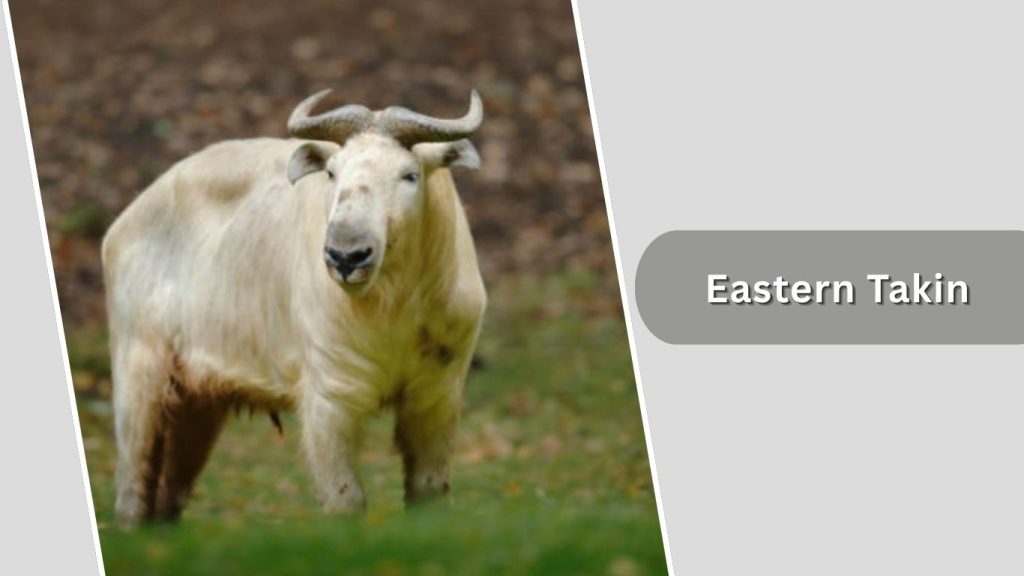
The Eastern takin is a broad regional term used for takin populations found across the eastern edge of the Himalayas and the mountains of southwestern China and northern Myanmar. These takins inhabit some of Asia’s wettest and most forested mountain systems, where thick vegetation, heavy rainfall, and steep terrain shape their lifestyle and movement patterns.
Identification
- Very large, stocky build with a deep chest and strong shoulders
- Thick, shaggy coat ranging from yellow-brown to dark brown
- Broad head with a distinctive arched nose and blunt muzzle
- Both sexes possess heavy, outward-sweeping horns with ridged bases
- Short, sturdy legs with wide hooves suited for steep, muddy slopes
- Dense underfur beneath long outer hair for insulation
Habitat and Range
Eastern takins are found in mountainous regions of northeastern India, northern Myanmar, Bhutan, and southwestern China. They generally occupy elevations from about 1,800 to 4,300 meters. Their habitats include temperate rainforests, bamboo thickets, cloud forests, and alpine meadows. Seasonal altitudinal migration is common, allowing them to track fresh vegetation.
Diet and Feeding Behavior
Their diet is diverse and includes bamboo, grasses, herbs, leaves, shrubs, and young tree shoots. Eastern takins are flexible feeders, switching between grazing and browsing depending on habitat and season. In winter, they rely more heavily on evergreen plants, twigs, and bark.
Behavior and Lifestyle
Eastern takins are typically shy and avoid open areas. They live in small to medium-sized groups and are most active during the early morning and late afternoon. They are powerful climbers and often escape danger by moving into dense forest or steep, rocky zones where predators have difficulty following.
10. Northern Takin
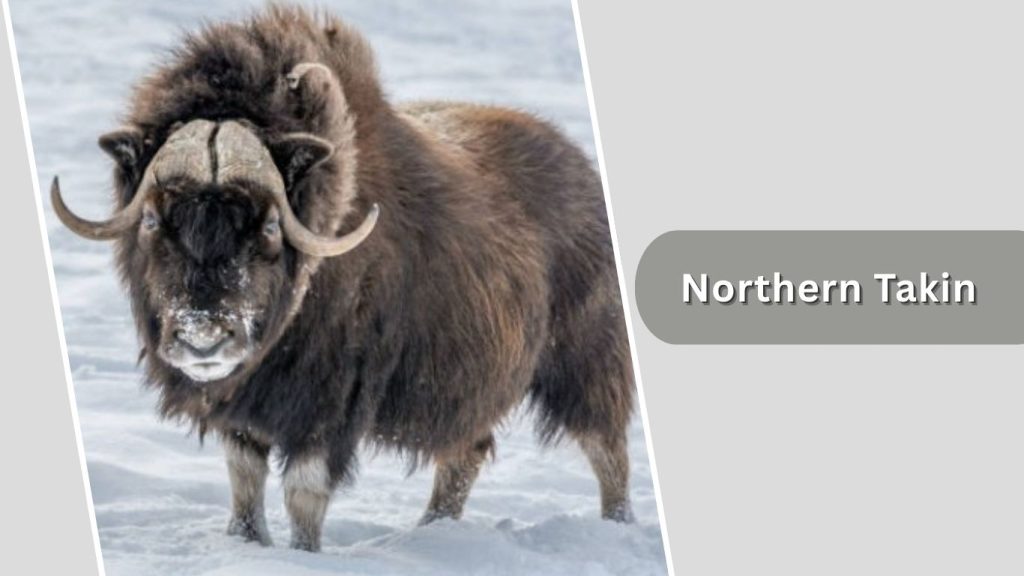
The Northern takin is a large mountain ungulate associated with the cooler, higher-latitude parts of the takin’s range, particularly in northern Sichuan, Gansu, and parts of the eastern Tibetan Plateau. It occupies cold, rugged environments with long winters, heavy snowfall, and short growing seasons, requiring strong physical and behavioral adaptations.
Identification
- Massive, heavy-bodied build with a thick neck and deep chest
- Dense, shaggy coat, often pale golden to gray-brown
- Broad head with a pronounced arched nose and wide muzzle
- Thick, ridged horns in both males and females, sweeping outward
- Short, powerful legs with wide hooves for icy, rocky ground
- Long guard hairs over a dense insulating undercoat
Habitat and Range
Northern takins live in high mountain regions between about 2,300 and 4,800 meters. They are found in cold conifer forests, subalpine shrublands, and alpine meadows. Seasonal migration is well developed: herds move upward to open grazing areas in summer and descend into sheltered forests and valleys during harsh winters.
Diet and Feeding Behavior
Their diet includes alpine grasses, herbs, bamboo, leaves, shrubs, and woody plants. During winter, they rely heavily on twigs, bark, and evergreen foliage. Northern takins are strong browsers and use their size and neck strength to push through snow and dense vegetation to access food.
Behavior and Lifestyle
Northern takins are generally slow-moving but extremely resilient. They are usually seen in small herds, though larger seasonal gatherings can occur. They are highly sure-footed and can move confidently across snow-covered slopes and narrow mountain paths. When threatened, they may stand their ground or retreat into steep, inaccessible terrain.