


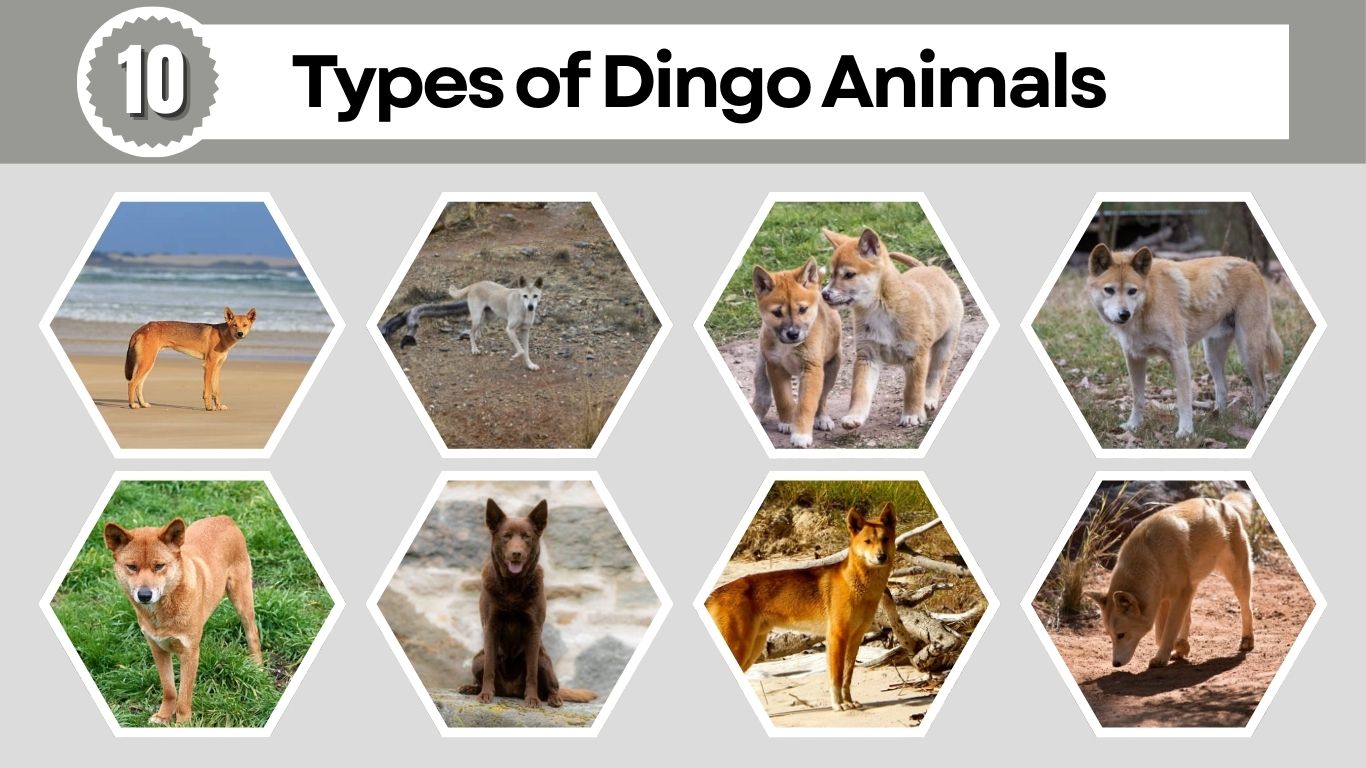
Dingoes are Australia’s iconic wild canids, known for their haunting howls, sharp intelligence, and remarkable adaptability. Believed to have arrived thousands of years ago, dingoes now inhabit nearly every mainland habitat, from burning deserts and tropical savannas to alpine forests and coastal regions. Although often mistaken for domestic dogs, dingoes are unique predators that play a vital role in controlling prey populations and maintaining ecological balance across diverse Australian landscapes.
1. Australian Dingo
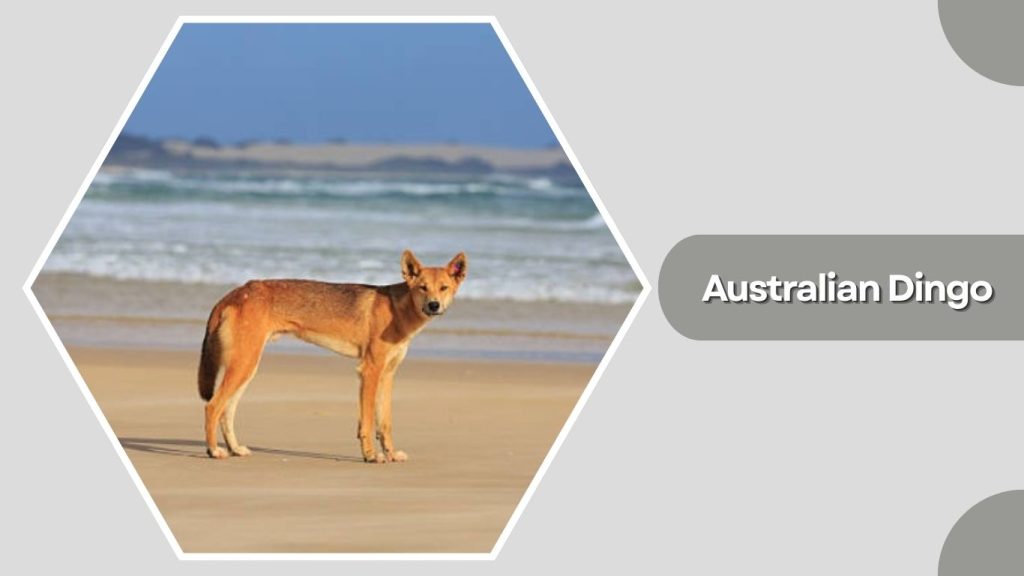
The Australian dingo (Canis dingo) is the country’s largest native land predator and one of the most iconic wild canids in the world. Thought to have arrived in Australia thousands of years ago, dingoes have adapted to deserts, forests, grasslands, and tropical regions. They play a major ecological role by controlling populations of kangaroos, wallabies, rabbits, and other animals.
Identification
- Medium-sized, lean dog with long legs
- Sandy yellow, ginger, or reddish coat
- White markings on chest, paws, and tail tip
- Long muzzle with erect, pointed ears
- Bushy tail carried low
Habitat and Range
Australian dingoes are found across most of mainland Australia, from arid deserts and open grasslands to forests and tropical savannas. They are absent from Tasmania and are rare in heavily urbanized coastal regions.
Behavior and Social Structure
Dingoes may live alone, in pairs, or in small packs depending on food availability. They communicate using howls, body posture, and scent marking. Packs defend territories and cooperate when hunting larger prey.
Diet and Hunting Habits
Australian dingoes are carnivorous opportunists. They hunt kangaroos, wallabies, rabbits, rodents, birds, and reptiles and also scavenge when necessary. Their flexible diet allows them to survive in harsh and changing environments.
2. Desert Dingo
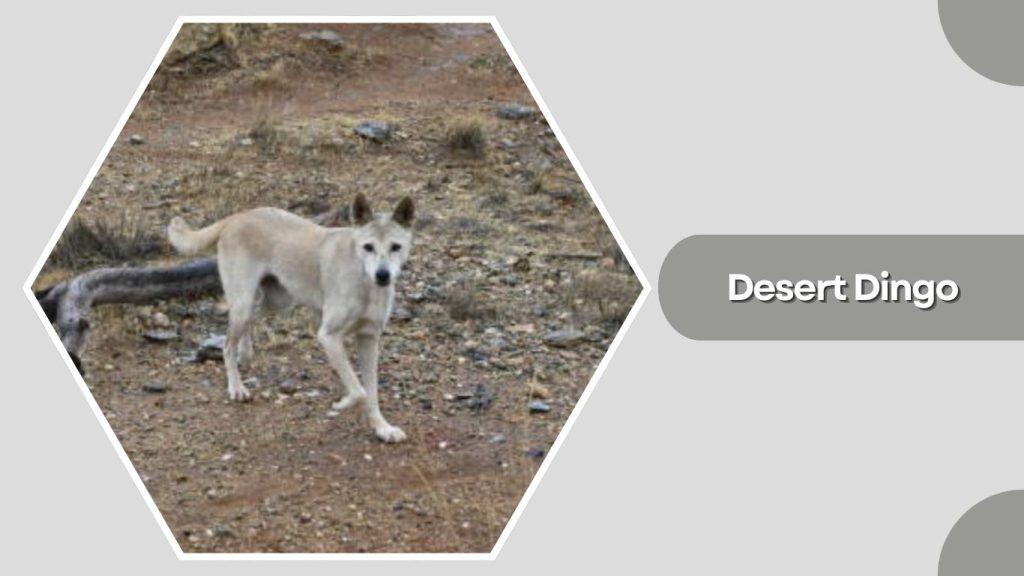
The desert dingo is a hardy form of the Australian dingo adapted to life in the country’s dry interior. It survives in some of the harshest conditions on Earth, where extreme heat, low rainfall, and limited prey make survival difficult. These dingoes are known for their endurance, wide-ranging movements, and excellent hunting skills.
Identification
- Lean, athletic body built for long-distance travel
- Short, sandy or pale ginger coat
- Long legs and narrow chest
- Erect ears and pointed muzzle
- Bushy tail often with a lighter tip
Habitat and Range
Desert dingoes inhabit central and western Australia, including arid deserts, semi-deserts, and sparse shrublands. They often roam vast territories following prey and water sources.
Behavior and Social Structure
They may live alone, in pairs, or in small packs. In deserts, group size is usually smaller due to limited food. Desert dingoes are mainly nocturnal or crepuscular to avoid extreme daytime heat.
Diet and Hunting Habits
Their diet includes kangaroos, wallabies, rabbits, lizards, birds, insects, and carrion. Desert dingoes are skilled hunters and scavengers, able to survive long periods with little food or water.
3. Alpine Dingo
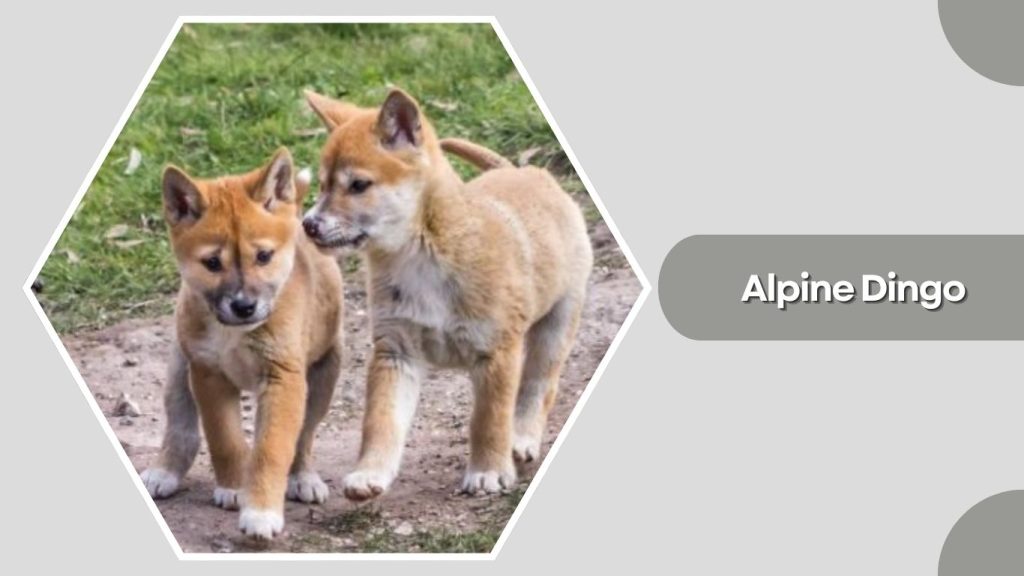
The alpine dingo is a regional form of the Australian dingo adapted to cooler, mountainous environments. Found in the Australian Alps and surrounding highlands, it is known for its thicker coat, strong endurance, and ability to hunt in rugged terrain.
Identification
- Medium-sized, lean but sturdy body
- Thicker, longer coat than desert dingoes
- Coat color ranges from ginger to cream or black-and-tan
- Upright ears and narrow muzzle
- Bushy tail with pale or white tip
Habitat and Range
Alpine dingoes live in the Australian Alps, Great Dividing Range, and highland forests. They occupy woodlands, alpine meadows, and mountainous regions with cold winters and occasional snow.
Behavior and Social Structure
They usually live in pairs or small packs. Alpine dingoes are territorial and vocal, using howls to communicate across valleys and forested slopes.
Diet and Hunting Habits
Their diet includes wallabies, wombats, rabbits, possums, birds, and reptiles. They may work together to hunt larger prey in mountainous terrain where cooperation increases success.
4. Tropical Dingo
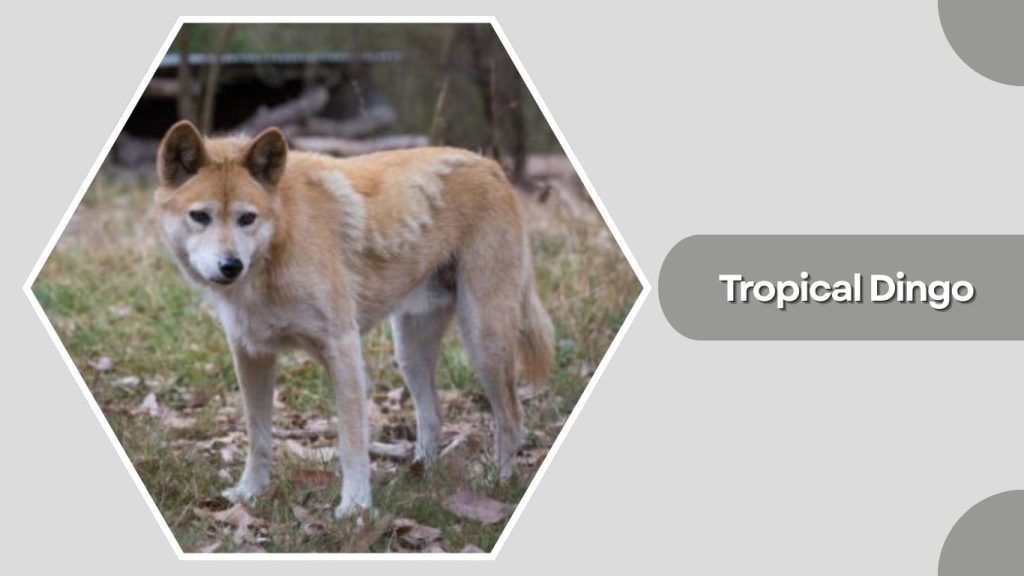
The tropical dingo is a northern form of the Australian dingo adapted to warm, humid climates. It is found mainly in northern Australia, where monsoon forests, savannas, and coastal regions shape its lifestyle. These dingoes are generally lighter-built and well suited to heat and seasonal rainfall.
Identification
- Slender, athletic body
- Short, smooth coat suited for hot climates
- Coat colors include ginger, tan, and sandy yellow
- Upright ears and narrow muzzle
- Bushy tail often with a pale tip
Habitat and Range
Tropical dingoes inhabit northern Australia, including the Northern Territory and northern Queensland. They live in savannas, open forests, wetlands, and tropical woodlands.
Behavior and Social Structure
They may live alone, in pairs, or in small packs. Tropical dingoes are active mostly at night and early morning, avoiding the hottest parts of the day. They communicate using howls, yelps, and scent marking.
Diet and Hunting Habits
Their diet consists of wallabies, bandicoots, rodents, birds, reptiles, insects, and carrion. They also forage near waterways and coastal areas when food is scarce.
5. Northern Dingo
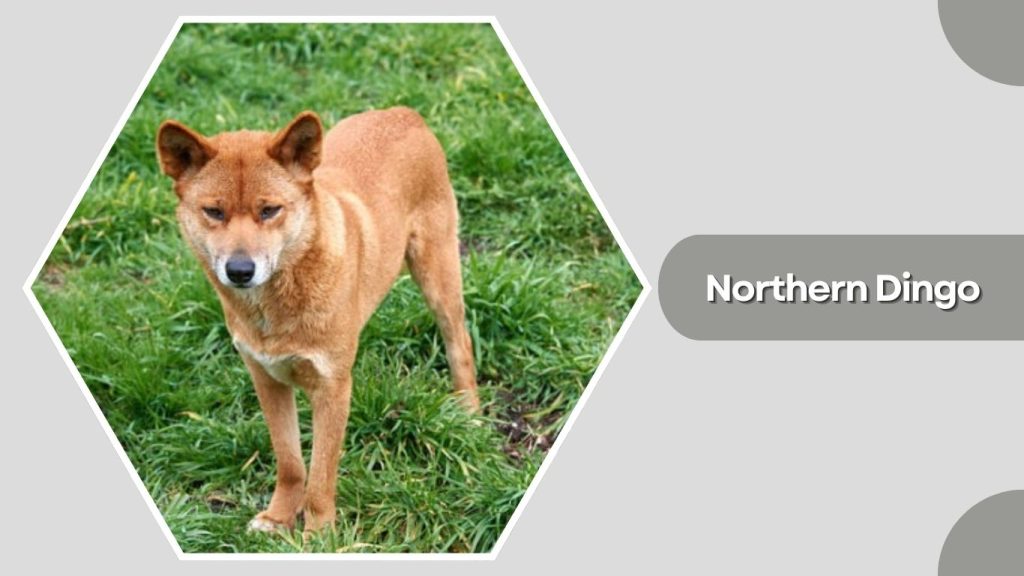
The northern dingo is a regional population of dingoes found across the far north of Australia. It is closely related to the tropical dingo but is often described separately due to its wide distribution and adaptation to remote wilderness areas.
Identification
- Medium-sized, lean-bodied canine
- Short coat ranging from pale yellow to reddish-brown
- White markings on chest, paws, and tail tip
- Long muzzle and erect ears
- Slim legs built for endurance
Habitat and Range
Northern dingoes live in the Northern Territory, northern Western Australia, and northern Queensland. They occupy savannas, open forests, wetlands, and remote bushlands.
Behavior and Social Structure
They live alone, in pairs, or in small packs depending on prey abundance. Northern dingoes are highly territorial and use howling to communicate over long distances.
Diet and Hunting Habits
Their diet includes wallabies, small kangaroos, rodents, birds, reptiles, insects, and carrion. They may hunt cooperatively when targeting larger prey.
6. Central Desert Dingo
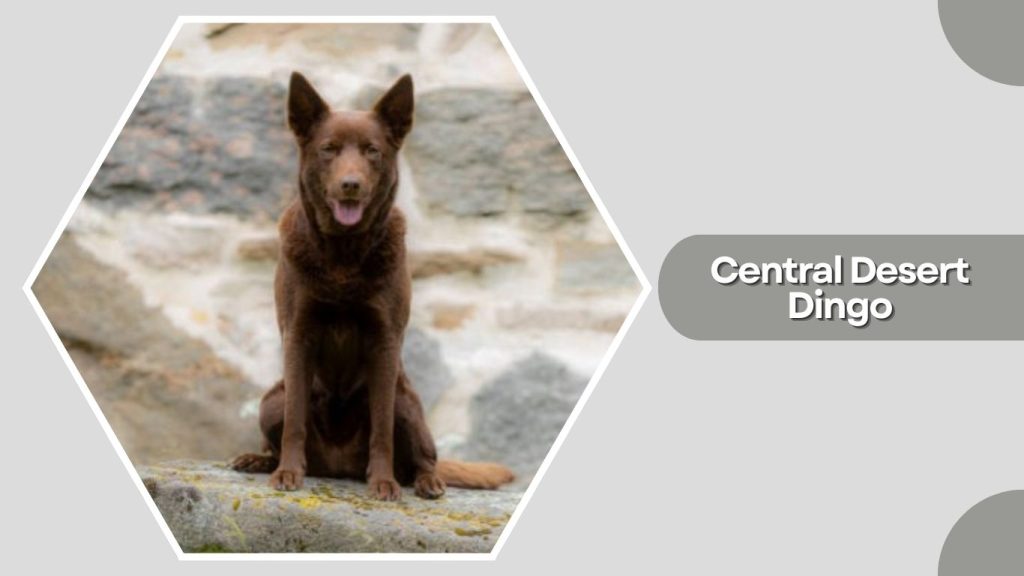
The central desert dingo is a form of the Australian dingo adapted to the harsh, arid heart of the continent. Living in some of Australia’s driest regions, it is known for its endurance, wide roaming behavior, and ability to survive with very limited water.
Identification
- Slim, long-legged body built for distance travel
- Short, pale sandy to light ginger coat
- Narrow chest and lean face
- Upright ears and pointed muzzle
- Bushy tail often lighter underneath
Habitat and Range
Central desert dingoes inhabit Australia’s interior, including parts of the Simpson Desert, Great Victoria Desert, and surrounding semi-arid zones. They roam deserts, salt plains, and sparse shrublands.
Behavior and Social Structure
They are usually solitary or live in small packs. Activity peaks at night and early morning to avoid extreme heat. Territories can be extremely large due to low prey density.
Diet and Hunting Habits
Their diet includes kangaroos, wallabies, rabbits, lizards, snakes, birds, insects, and carrion. They are opportunistic feeders capable of traveling long distances between successful hunts.
7. Fraser Island Dingo
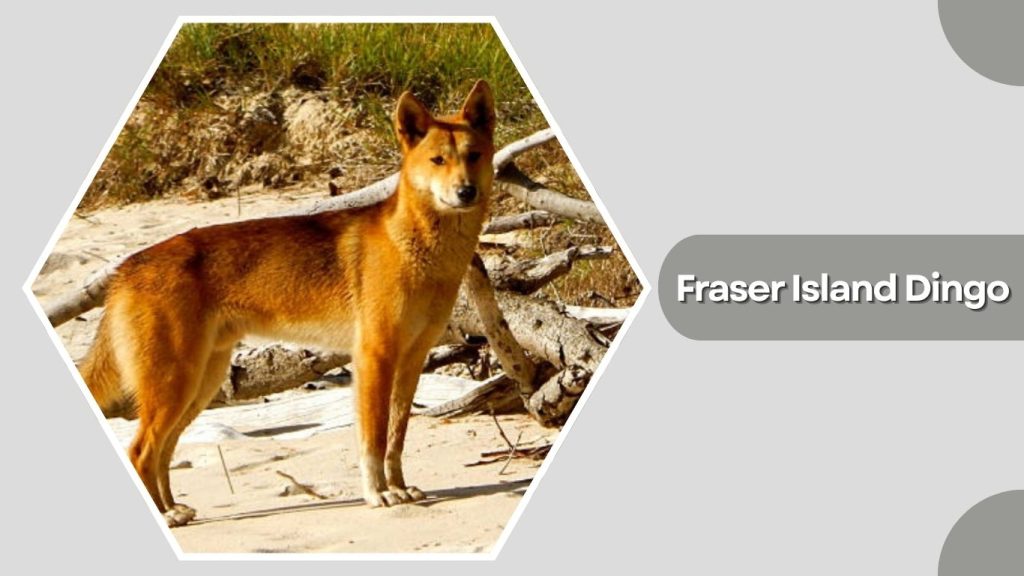
The Fraser Island dingo is one of the purest and most well-known dingo populations in Australia. Isolated on K’gari (Fraser Island), Queensland, these dingoes are protected and closely studied because they show fewer signs of domestic dog hybridization.
Identification
- Medium-sized, lean and athletic body
- Sandy-yellow to light ginger coat
- White chest, paws, and tail tip common
- Narrow muzzle with erect, pointed ears
- Bushy tail carried low
Habitat and Range
Fraser Island dingoes live exclusively on K’gari, the world’s largest sand island. They inhabit beaches, sand dunes, rainforests, and coastal woodlands.
Behavior and Social Structure
They live in small packs with defined territories. These dingoes are cautious but curious and use howls, body language, and scent marking to communicate.
Diet and Hunting Habits
Their diet includes fish, small mammals, birds, reptiles, crabs, and carrion. They also hunt wallabies and scavenge along shorelines.
8. Tanami Dingo
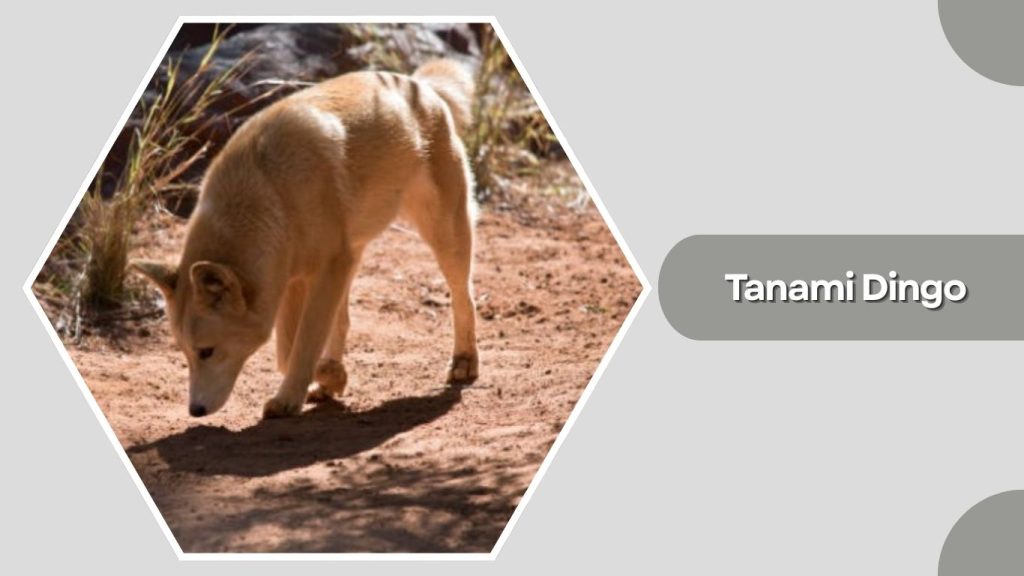
The Tanami dingo is a regional form of dingo found in and around the Tanami Desert of northern Australia. It is adapted to extreme heat, open desert plains, and sparse vegetation, where prey is widely scattered.
Identification
- Lean, long-legged body
- Short, light sandy or reddish coat
- Narrow muzzle and upright ears
- Bushy tail, often with lighter tip
- Overall slim, endurance-built frame
Habitat and Range
Tanami dingoes inhabit the Tanami Desert and surrounding semi-arid regions of northern Australia. They roam spinifex grasslands, dry plains, and open scrublands.
Behavior and Social Structure
They are mostly solitary or live in small packs. Tanami dingoes are highly mobile, traveling long distances at night in search of prey and water.
Diet and Hunting Habits
Their diet includes rabbits, small kangaroos, rodents, reptiles, birds, insects, and carrion. They are opportunistic predators and skilled scavengers.
9. Simpson Desert Dingo
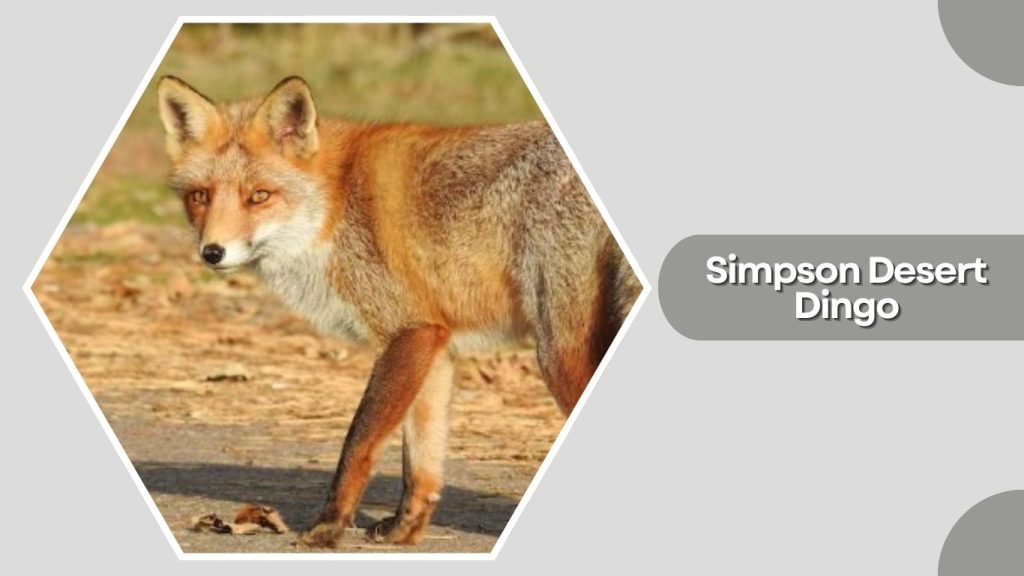
The Simpson Desert dingo is a desert-adapted form of the Australian dingo living in one of the driest and most remote regions of the continent. It survives in an environment of shifting sand dunes, extreme heat, and scarce water.
Identification
- Slim, athletic body with long legs
- Pale ginger, cream, or sandy-colored coat
- Narrow chest and pointed muzzle
- Erect ears and bushy tail
- Light-colored underparts
Habitat and Range
Simpson Desert dingoes inhabit the Simpson Desert across South Australia, Queensland, and the Northern Territory. They roam sand dunes, salt flats, and sparse desert shrublands.
Behavior and Social Structure
They are mostly nocturnal and live alone or in small packs. Large territories are common due to low prey density, and howling is used to maintain contact.
Diet and Hunting Habits
Their diet consists of rabbits, rodents, lizards, birds, insects, small kangaroos, and carrion. They take advantage of any available food source in this extreme environment.
10. Southeastern Dingo
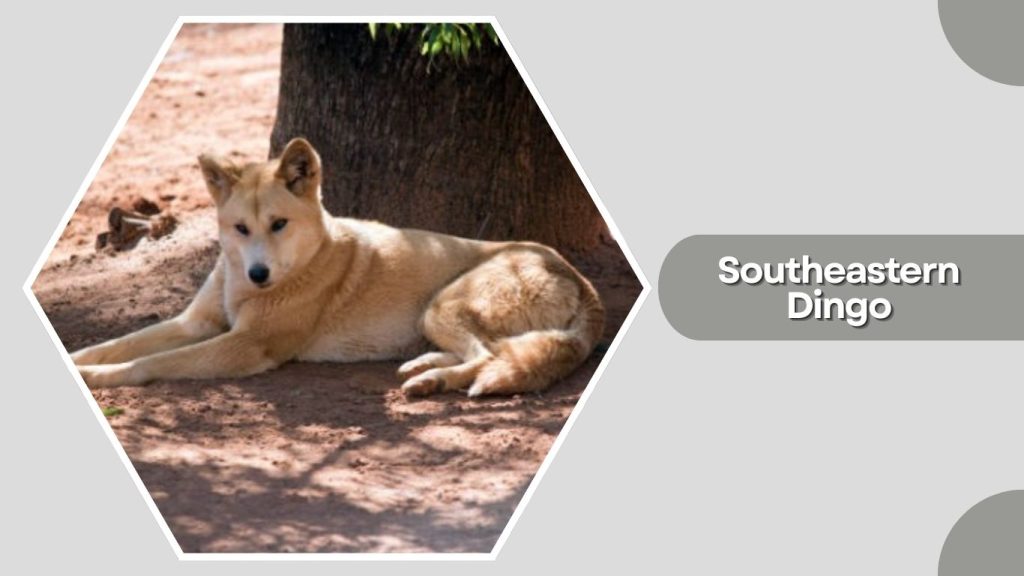
The southeastern dingo is a regional form of dingo found mainly in southeastern Australia. It is adapted to cooler climates, forested landscapes, and agricultural regions and is sometimes influenced by hybridization with domestic dogs.
Identification
- Medium-sized, lean but sturdy body
- Coat colors include ginger, tan, black-and-tan, or cream
- White markings on chest, paws, and tail tip
- Upright ears and narrow muzzle
- Bushy tail, often darker toward the tip
Habitat and Range
Southeastern dingoes inhabit forests, woodlands, grasslands, and farmland across New South Wales, Victoria, and parts of South Australia.
Behavior and Social Structure
They live alone, in pairs, or in small packs. Southeastern dingoes are territorial and vocal, using howls to communicate across forested and open landscapes.
Diet and Hunting Habits
Their diet includes wallabies, wombats, rabbits, rodents, birds, and carrion. They may also prey on livestock in agricultural areas.
FAQs
Are dingoes wolves or dogs?
Dingoes are wild canids closely related to domestic dogs and wolves. Most scientists classify them as a primitive type of dog rather than true wolves. They share traits with both but are genetically closest to early domestic dogs.
Where are dingoes naturally found?
Dingoes are native to mainland Australia and are also found on some nearby islands, such as K’gari (Fraser Island). They do not naturally occur in Tasmania.
What do dingoes mainly eat?
Dingoes are carnivorous opportunists. They eat kangaroos, wallabies, rabbits, rodents, birds, reptiles, insects, and carrion. Their flexible diet allows them to survive in deserts, forests, and tropical regions.
Do dingoes live in packs?
Yes, dingoes can live alone, in pairs, or in packs. Pack size depends on food availability. In areas with abundant prey, dingoes often form stable packs with a breeding pair and their offspring.
Are dingoes dangerous to humans?
Dingoes usually avoid people, but they are wild animals and can be dangerous, especially when fed by humans. Rare attacks have occurred, mostly involving habituated dingoes in tourist areas.