



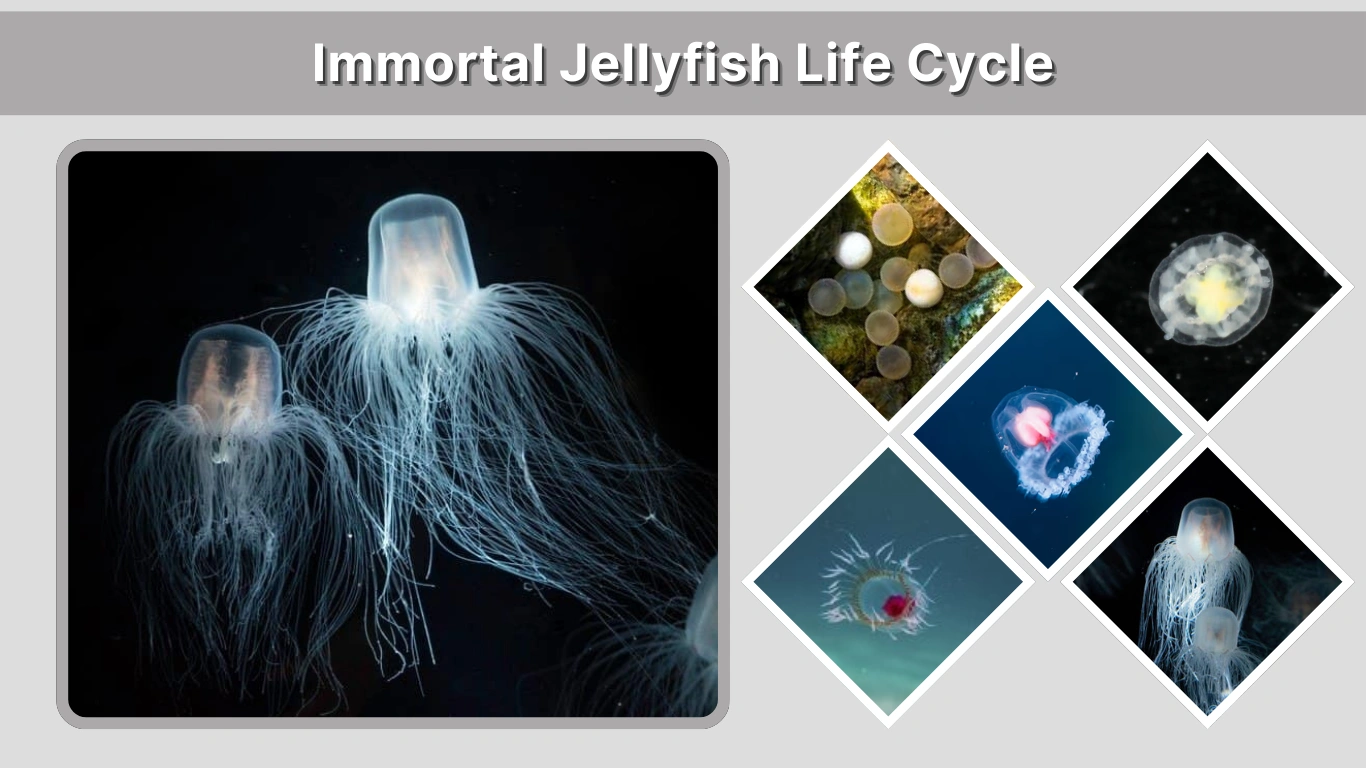
The immortal jellyfish is one of the most extraordinary animals ever discovered in the ocean. Unlike almost all other creatures, it does not have to die from old age. Instead, it can reverse its life cycle and return to a juvenile state after becoming an adult. This rare biological ability has made the immortal jellyfish famous around the world. To understand how this is possible, it is essential to explore the immortal jellyfish life cycle in detail—from egg to adult, and then back again.
What Is the Immortal Jellyfish?
The immortal jellyfish is a tiny marine animal scientifically known as Turritopsis dohrnii. It belongs to the hydrozoan class, not the large jellyfish most people imagine. Adults are only about 4–5 millimeters wide, nearly transparent, with a noticeable reddish stomach visible through the bell.
What makes this species unique is not its appearance, but its life cycle. When most jellyfish reach adulthood, reproduce, and weaken, they eventually die. The immortal jellyfish can do something no other complex animal is known to do repeatedly: it can transform its adult body back into a juvenile stage and begin life again.
Overview of the Immortal Jellyfish Life Cycle
The immortal jellyfish follows the same basic early life cycle as many jellyfish species. It begins as an egg, becomes a larva, develops into a polyp, and then grows into an adult medusa. What makes it different is what happens after the adult stage.
Instead of dying, the adult can reverse its development and return to the polyp stage. This creates a biological loop rather than a one-way life path.
Egg and Fertilization Stage
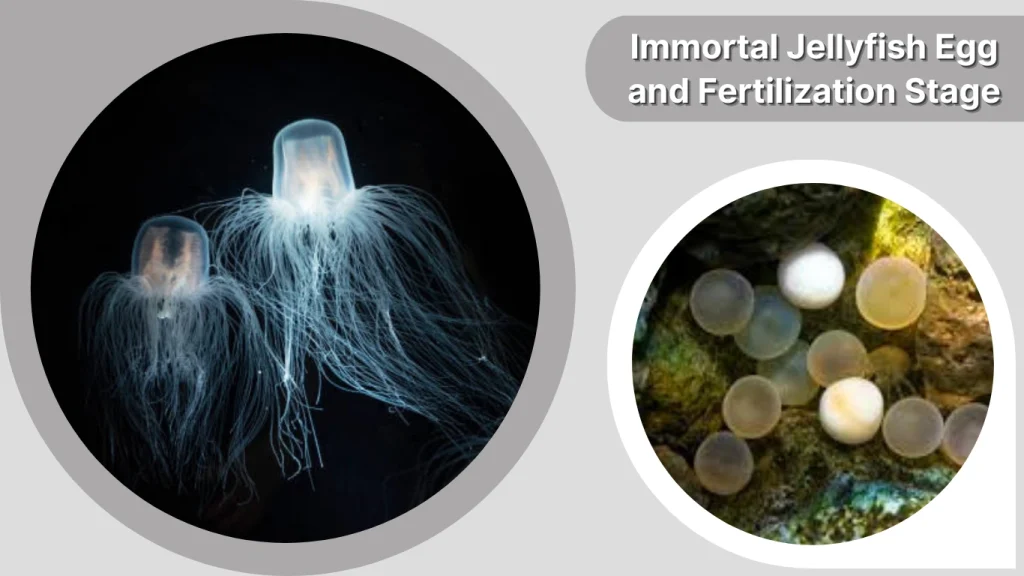
The life cycle begins with sexual reproduction. Adult immortal jellyfish release sperm and eggs into the surrounding water. Fertilization usually occurs externally. Once fertilized, the egg begins dividing rapidly.
Within a short time, the fertilized egg develops into a microscopic organism. At this stage, it is extremely vulnerable. Many eggs are eaten by plankton feeders or destroyed by environmental conditions before they can develop further.
Planula Larva Stage
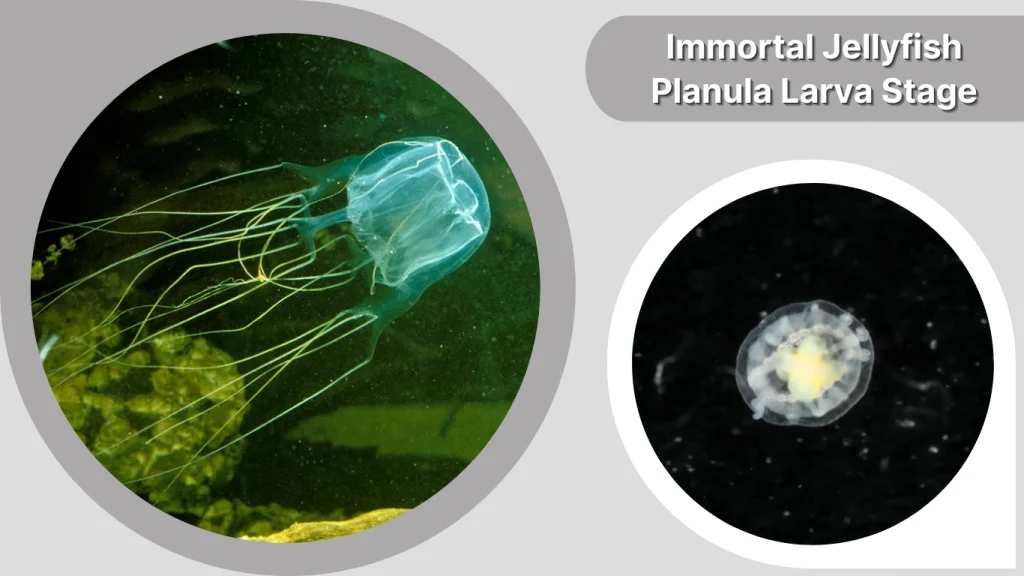
The fertilized egg becomes a tiny, free-swimming larva called a planula. This larva drifts through the water as part of the plankton community. It does not resemble a jellyfish and cannot sting or hunt large prey.
The planula’s main goal is survival and settlement. After drifting for several days, it searches for a suitable hard surface such as rock, shell, coral, or dock pilings. Once it finds a stable location, it attaches itself and undergoes a major transformation.
Polyp Stage
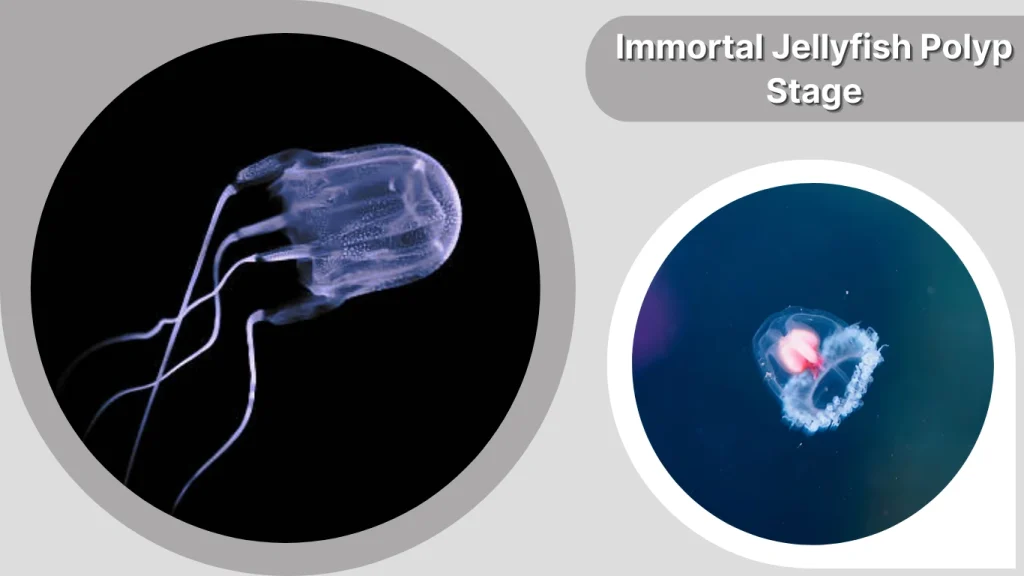
After attachment, the planula develops into a polyp. This stage looks like a tiny tube with a mouth and tentacles at the top. The polyp remains fixed to a surface and feeds on microscopic organisms drifting past.
The polyp stage is often the longest-lasting part of a jellyfish’s life. Polyps can survive for months or even years. They can reproduce asexually, forming small colonies and producing genetically identical offspring.
In the immortal jellyfish, the polyp can bud off small juvenile jellyfish. These tiny medusae detach from the colony and begin swimming freely in the water.
Juvenile Medusa Stage
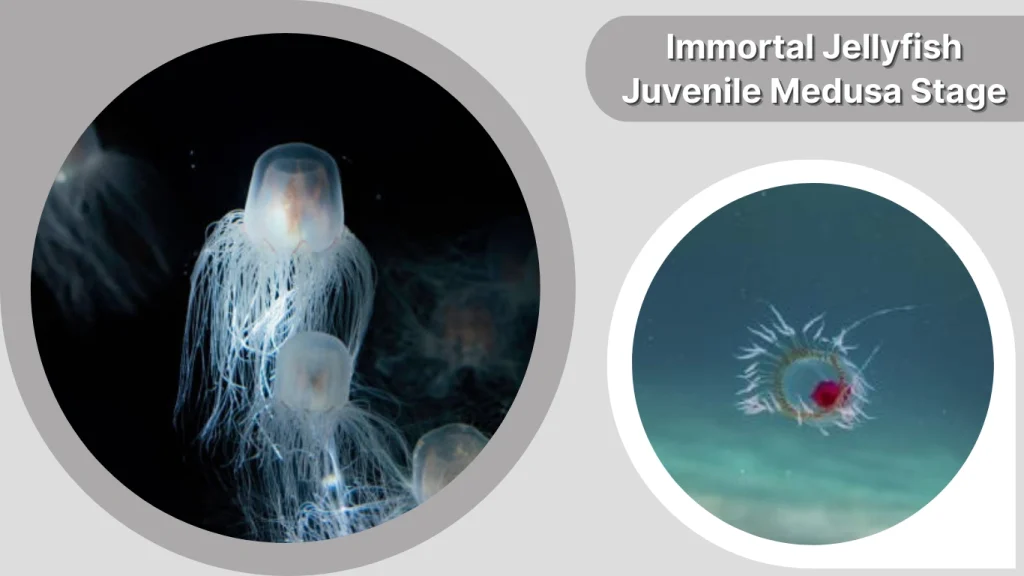
The newly released medusa is a miniature version of the adult immortal jellyfish. It has a small transparent bell and short tentacles. At this stage, it feeds on microscopic prey and grows steadily.
As it matures, its tentacles lengthen, its stinging cells become more effective, and its internal structures develop. Over time, it becomes capable of sexual reproduction, completing the traditional jellyfish life cycle.
In most jellyfish species, this adult stage marks the beginning of the end. For the immortal jellyfish, it marks a turning point.
Adult Medusa Stage
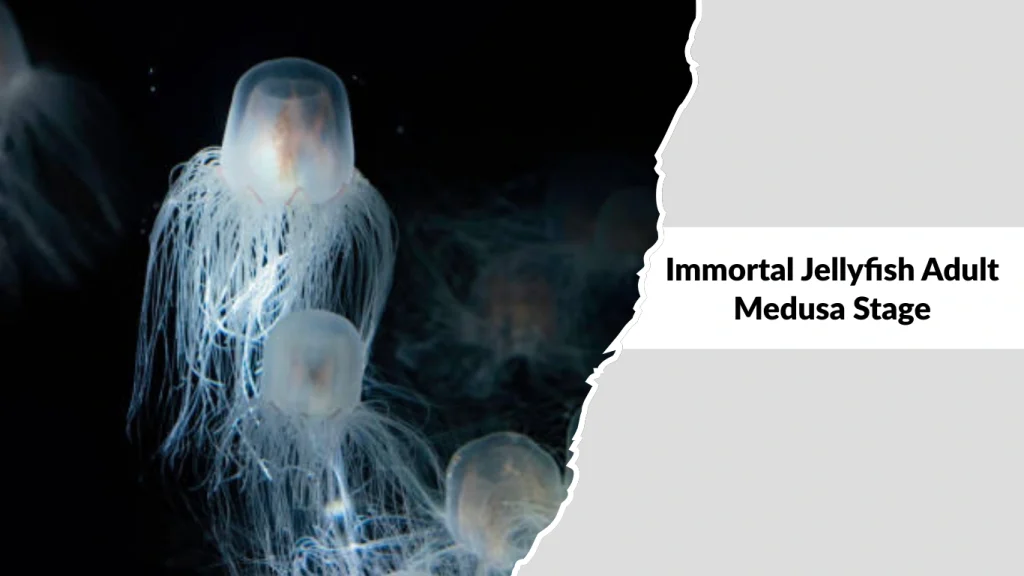
The adult immortal jellyfish is free-swimming and actively feeds on zooplankton, fish eggs, and tiny crustaceans. It reproduces sexually, releasing eggs or sperm into the water.
In other jellyfish, reproduction is usually followed by rapid physical decline and death. In Turritopsis dohrnii, adulthood does not have to be permanent.
When the adult jellyfish experiences stress—such as injury, lack of food, sudden temperature change, or physical damage—it can initiate an extraordinary transformation.
Reversal Process (Transdifferentiation)
Instead of dying, the adult immortal jellyfish sinks to the seafloor and contracts into a small, blob-like mass. Inside this mass, its cells begin a process called transdifferentiation.
Transdifferentiation is the direct conversion of one mature cell type into another. Muscle cells can become nerve cells. Skin cells can become digestive cells. The adult body is biologically dismantled and reorganized.
This is not reproduction. It is not cloning. It is the same individual reorganizing its own cells into a new form.
Return to the Polyp Stage
The reorganized mass attaches itself to a surface and develops into a new polyp. This polyp is genetically identical to the original jellyfish. From this polyp, new medusae bud off.
The life cycle has restarted.
This process can happen repeatedly. As long as the immortal jellyfish is not killed by predators, disease, or complete physical destruction, it can continue cycling between adult and juvenile forms.
Why This Life Cycle Is Unique
Most animals follow a one-directional life cycle. Cells specialize and cannot change their identity. Aging is progressive and irreversible.
The immortal jellyfish breaks this biological rule. Its cells retain the ability to change roles. This allows the entire organism to escape senescence, the natural process of aging.
No other known complex animal has been observed to naturally and repeatedly reverse its full life cycle in this way.
Environmental Limits of Immortality
Although the immortal jellyfish can reset its development, it is not invincible. It is commonly eaten by fish, larger jellyfish, and plankton-feeding animals. Pollution, acidification, and temperature extremes can destroy its cells beyond repair.
In the wild, most immortal jellyfish probably die before completing many life-cycle reversals. Immortality in this case refers only to the absence of biological aging, not freedom from death.
Scientific Importance of the Immortal Jellyfish Life Cycle
Scientists study the immortal jellyfish to better understand cellular reprogramming, regeneration, and aging. Its life cycle offers a natural example of how adult cells can revert to a youthful state.
Research on this species may help scientists explore new approaches to tissue regeneration, stem-cell science, and age-related disease. While humans cannot replicate this life cycle, understanding it could influence future medical advances.
FAQs
What is the life cycle of the immortal jellyfish?
The immortal jellyfish begins as an egg, becomes a planula larva, develops into a polyp, and then grows into an adult medusa. Unlike other jellyfish, the adult can reverse its development, transform back into a polyp, and restart the entire life cycle again.
How does the immortal jellyfish go back to being young?
It uses a process called transdifferentiation, where adult cells change directly into different juvenile cell types. The adult body reorganizes into a cyst-like form and then develops into a new polyp, effectively resetting its biological age.
Does the immortal jellyfish reproduce when it resets its life cycle?
No. Life-cycle reversal is not reproduction. It is the same individual transforming its own body. Sexual reproduction still occurs separately when adults release eggs and sperm into the water.
Can the immortal jellyfish repeat its life cycle forever?
In theory, yes. It can repeat the cycle indefinitely if it is not eaten, diseased, or physically destroyed. In nature, however, most individuals die from environmental threats before completing many resets.
Why is the immortal jellyfish life cycle important to science?
Its life cycle provides a living model of biological rejuvenation. Scientists study it to understand aging, cell reprogramming, and regeneration, which may contribute to future research in medicine and biotechnology.