




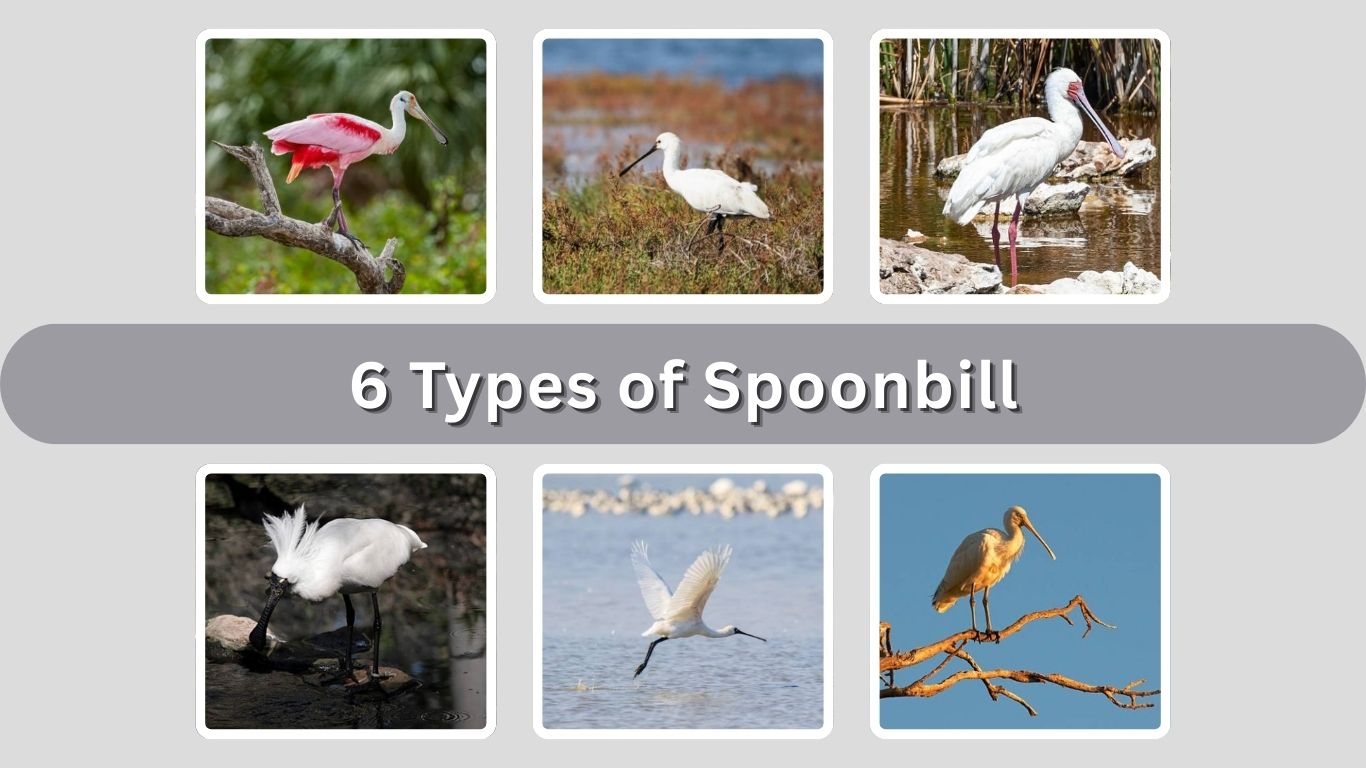
Spoonbills are fascinating wading birds best known for their long legs, graceful bodies, and uniquely shaped spoon-like bills. These birds are perfectly adapted for life in shallow wetlands, where they slowly sweep their bills through water to detect and capture small aquatic animals. Found across several continents, spoonbills inhabit marshes, lagoons, estuaries, and river edges. Although there are only a few species worldwide, each type of spoonbill has distinct features, ranges, and behaviors that make them special among waterbirds.
1. Roseate Spoonbill
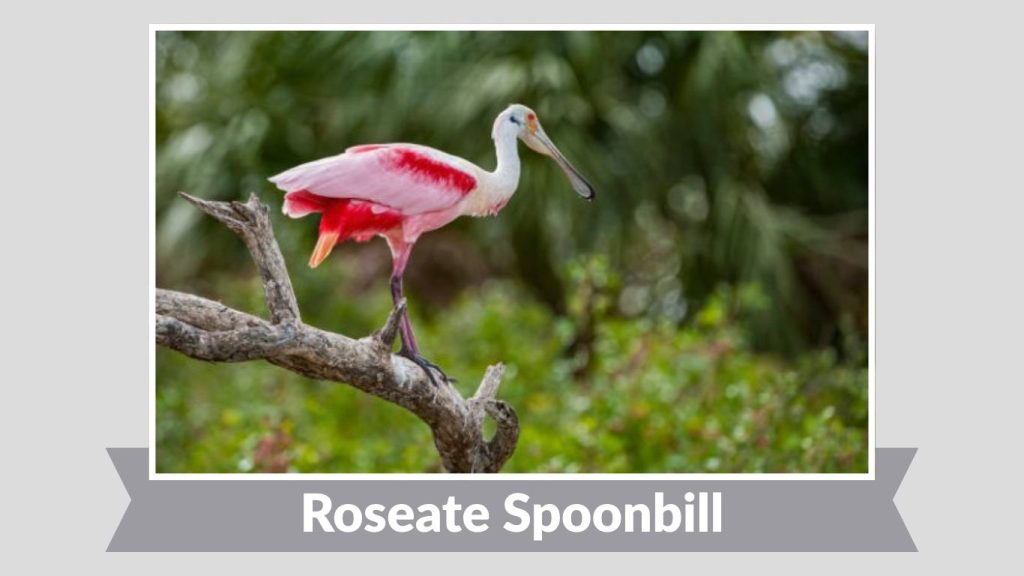
The roseate spoonbill is one of the most visually striking spoonbill species, best known for its bright pink plumage and uniquely shaped spoon-like bill. Native to the Americas, this bird is commonly seen wading through shallow wetlands, lagoons, and coastal marshes where it sweeps its bill side to side to catch small aquatic prey.
Identification
- Bright pink body with deeper rose and red tones on the wings
- Long, flat, spoon-shaped gray bill
- Bare greenish head in adults
- Long reddish legs adapted for wading
- Medium to large wading bird with a broad wingspan
Habitat
Roseate spoonbills are found in warm coastal and inland wetlands, including mangroves, estuaries, lagoons, freshwater marshes, and slow-moving rivers. They prefer shallow water environments where food is abundant and nesting sites are available in trees or dense shrubs near water.
Diet
Their diet mainly consists of small fish, shrimp, crabs, aquatic insects, and other tiny invertebrates. They feed by sweeping their partially open bill through the water, snapping it shut instantly when prey is detected.
Behavior
These birds are social and often seen feeding, flying, and nesting in groups. During flight, they stretch their necks and legs straight out, forming a graceful silhouette. They are also known for communal nesting in large mixed-species colonies.
Lifespan
In the wild, roseate spoonbills typically live around 10 to 15 years, though some individuals may live longer under favorable conditions. Their lifespan depends on habitat quality, food availability, and protection from predators and environmental threats.
2. Eurasian Spoonbill
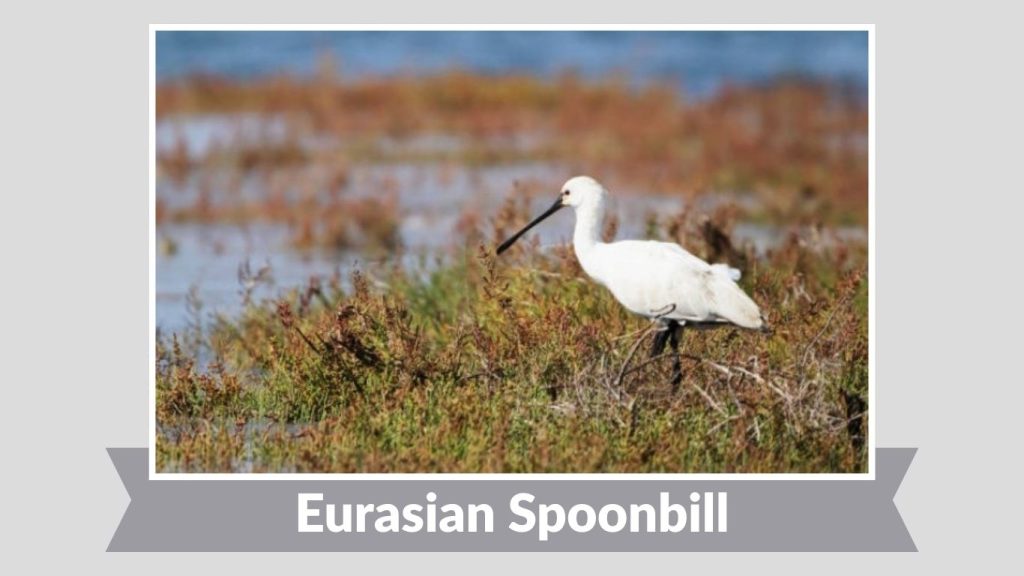
The Eurasian spoonbill is a large, elegant wading bird recognized for its pure white plumage and long, spatula-shaped black bill. It is widely distributed across parts of Europe, Asia, and North Africa, where it inhabits shallow wetlands, coastal lagoons, and river deltas, feeding by sweeping its bill through the water.
Identification
- Pure white body and wings
- Long, flat, black spoon-shaped bill
- Long black legs suited for wading
- Slight yellow patch on the throat in breeding adults
- Broad wings and slow, steady flight
Habitat
Eurasian spoonbills live in shallow freshwater and saltwater habitats such as marshes, lakes, estuaries, mudflats, and flooded fields. They usually nest in reed beds, low trees, or shrubs close to water, often forming breeding colonies.
Diet
Their diet includes small fish, crustaceans, aquatic insects, worms, and mollusks. They feed by moving their bill from side to side in shallow water, quickly snapping it shut when prey is detected.
Behavior
These birds are highly social and are often seen feeding, resting, and migrating in flocks. During the breeding season, they form noisy colonies and perform simple courtship displays involving bill clattering and head movements.
Lifespan
Eurasian spoonbills generally live between 10 and 20 years in the wild. Survival rates depend on wetland conservation, food availability, and protection from disturbance and habitat loss.
3. African Spoonbill
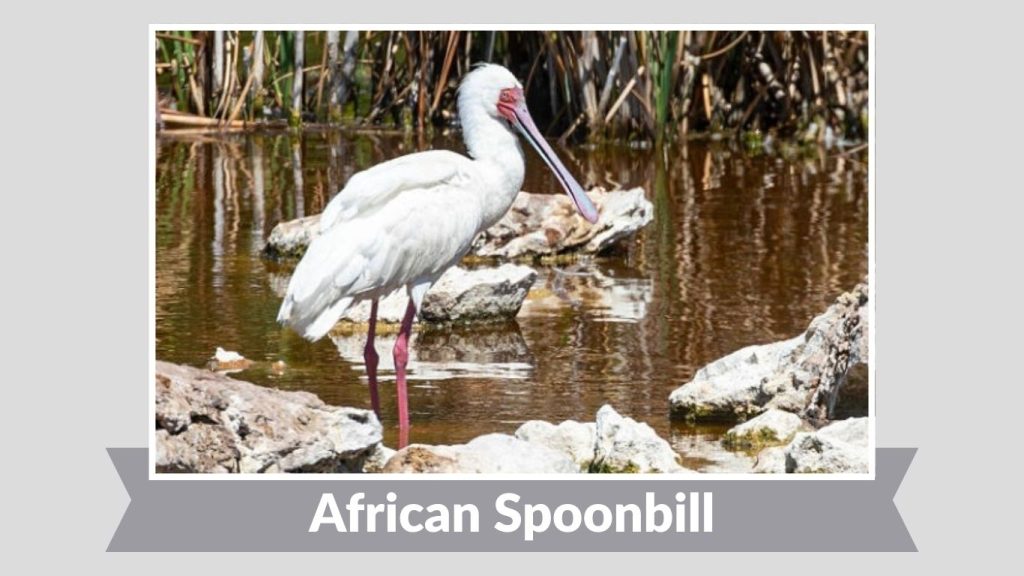
The African spoonbill is a striking white wading bird distinguished by its long red face, spatula-shaped bill, and crimson legs. It is widespread across sub-Saharan Africa and Madagascar, where it frequents shallow wetlands and slow-moving waters in search of small aquatic prey.
Identification
- White plumage with a glossy appearance
- Long, flat, spoon-shaped reddish bill
- Bare red face and throat skin
- Long red legs adapted for wading
- Medium to large-sized wading bird
Habitat
African spoonbills inhabit freshwater and coastal environments such as lakes, marshes, swamps, floodplains, estuaries, and mangroves. They prefer shallow waters that allow easy sweeping of the bill while feeding.
Diet
Their diet mainly consists of small fish, frogs, crustaceans, aquatic insects, worms, and mollusks. They forage by rhythmically moving their open bill through the water to detect and capture prey.
Behavior
These birds are social and often seen in small flocks, sometimes mixing with herons, ibises, and storks. They nest colonially in trees or reed beds and become more vocal and active during the breeding season.
Lifespan
African spoonbills typically live around 10 to 15 years in the wild, though individuals may survive longer in protected wetland habitats with stable food supplies.
4. Royal Spoonbill
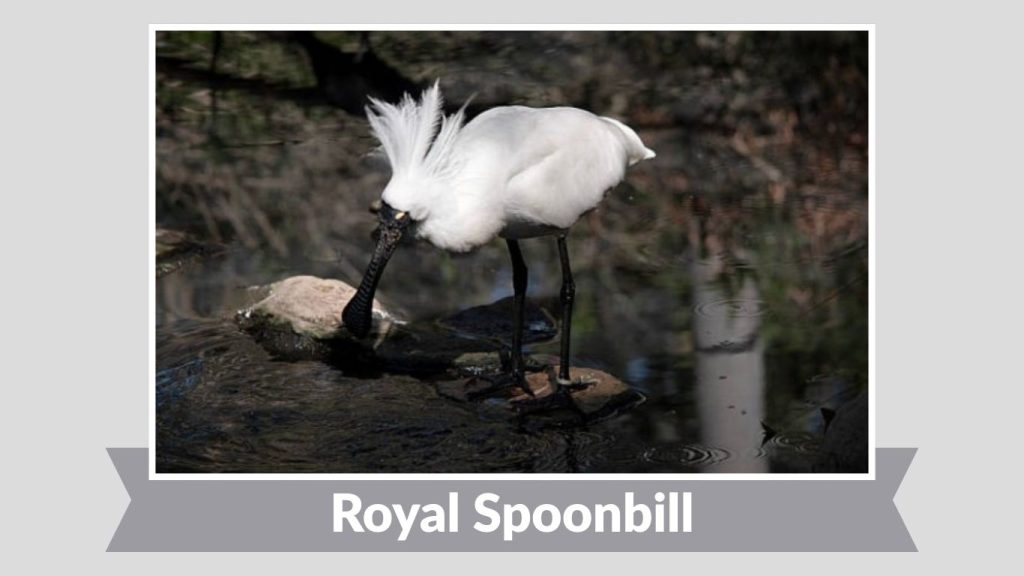
The royal spoonbill is a large, elegant white wading bird best known for its long black spoon-shaped bill and distinctive crest seen during the breeding season. It is native to Australia, New Zealand, and nearby islands, where it inhabits a wide range of freshwater and coastal wetlands.
Identification
- White plumage with a slight creamy tint
- Long, flat, black spoon-shaped bill
- Black facial skin with a shaggy white crest in breeding season
- Long black legs suited for wading
- Broad wings and slow, powerful flight
Habitat
Royal spoonbills are found in estuaries, tidal flats, lagoons, rivers, swamps, and inland lakes. They prefer shallow waters for feeding and often nest in trees, shrubs, or reed beds near water.
Diet
Their diet includes small fish, crustaceans, insects, aquatic larvae, and mollusks. They feed by sweeping their open bill from side to side through shallow water or mud.
Behavior
These birds are usually seen alone or in small groups, but they gather in larger flocks at feeding sites. During breeding season, they perform courtship displays involving crest raising and bill clapping.
Lifespan
Royal spoonbills generally live around 10 to 15 years in the wild, depending on environmental conditions, predation pressure, and wetland health.
5. Black-faced Spoonbill
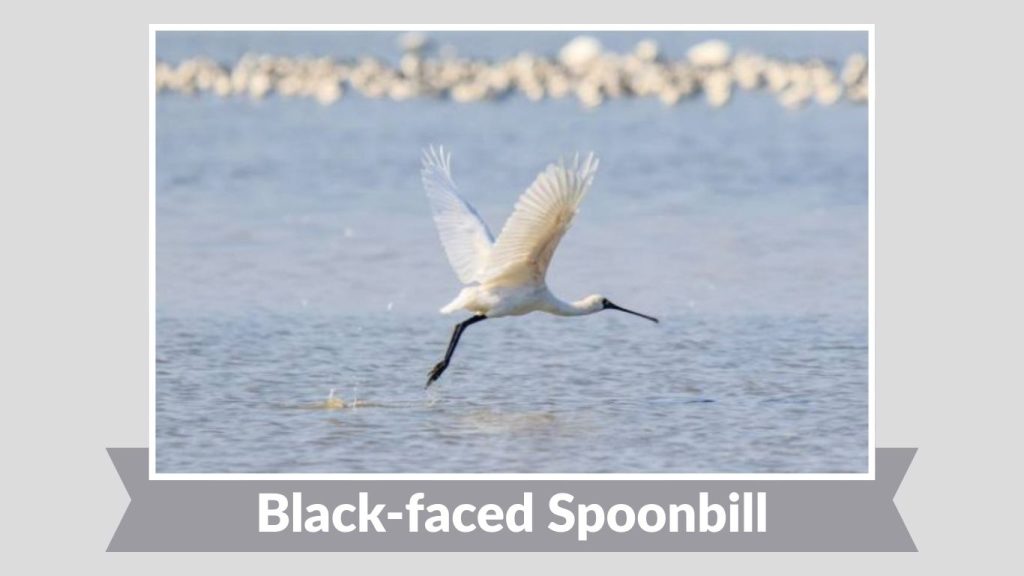
The black-faced spoonbill is one of the rarest spoonbill species in the world, easily recognized by its white body and contrasting black face and bill. It is mainly found in East Asia, where it depends heavily on coastal wetlands and tidal mudflats for survival.
Identification
- White plumage with a slight yellowish wash
- Long, flat, black spoon-shaped bill
- Distinct black facial mask around the eyes and bill base
- Long black legs adapted for wading
- Medium to large-sized wading bird
Habitat
Black-faced spoonbills inhabit estuaries, tidal flats, mangroves, shallow coastal lagoons, and salt pans. They breed on small offshore islands and spend the non-breeding season in coastal wetlands and river mouths.
Diet
Their diet consists mainly of small fish, shrimp, crabs, aquatic insects, and other invertebrates. They forage in shallow water by sweeping their bill side to side to locate prey.
Behavior
These birds are generally quiet and shy, often feeding alone or in small groups. They are migratory, moving seasonally between breeding islands and wintering grounds across East and Southeast Asia.
Lifespan
In the wild, black-faced spoonbills are believed to live around 10 to 15 years, although detailed lifespan data is limited due to their rarity.
6. Yellow-billed Spoonbill
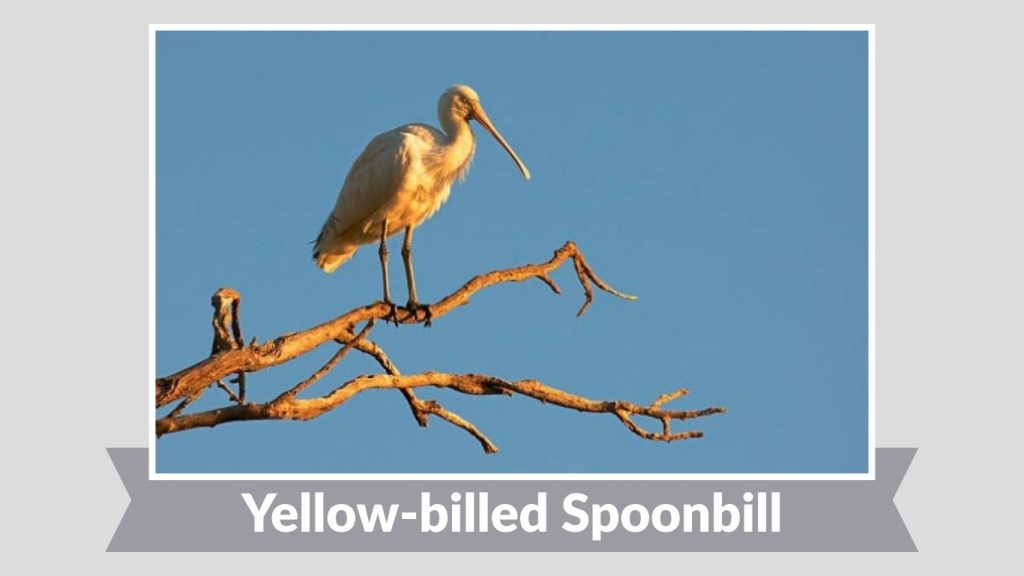
The yellow-billed spoonbill is a distinctive wading bird recognized by its long pale yellow spoon-shaped bill and clean white plumage. It is native to Australia and parts of New Guinea, where it inhabits freshwater wetlands, floodplains, and coastal environments.
Identification
- White body and wings
- Long, flat, pale yellow spoon-shaped bill
- Black facial skin around the eyes
- Long yellowish legs suited for wading
- Large wading bird with broad wings
Habitat
Yellow-billed spoonbills are commonly found in rivers, swamps, lakes, flooded grasslands, estuaries, and shallow coastal lagoons. They prefer open wetlands with slow-moving or still water.
Diet
Their diet includes fish, aquatic insects, crustaceans, tadpoles, and small mollusks. They feed by sweeping their bill through shallow water, snapping it shut when prey is detected.
Behavior
These birds are usually seen alone, in pairs, or in small flocks. They often associate with other waterbirds and may gather in larger numbers at productive feeding sites.
Lifespan
Yellow-billed spoonbills generally live around 10 to 15 years in the wild, depending on habitat quality and environmental stability.
FAQs
What is a spoonbill bird?
A spoonbill is a large wading bird known for its long, flat bill that widens at the tip like a spoon. This unique bill shape helps it catch small fish and aquatic animals by sweeping through shallow water.
Why are spoonbills’ bills shaped like a spoon?
Their spoon-shaped bills are specially adapted for feeding. As they move the bill side to side in water, sensitive nerves detect vibrations, allowing the bird to snap the bill shut instantly when it touches prey.
Where are spoonbills commonly found?
Spoonbills live mainly in shallow wetlands such as marshes, lagoons, estuaries, swamps, and tidal flats. Different species are found across the Americas, Africa, Europe, Asia, and Australia.
What do spoonbills eat?
Spoonbills feed on small fish, shrimp, crabs, aquatic insects, worms, and other tiny water-dwelling animals. They rarely hunt by sight, instead relying on touch while sweeping their bill through water.
Are any spoonbill species endangered?
Yes, some species face serious threats. The black-faced spoonbill is considered endangered due to habitat loss and wetland destruction, making conservation of coastal and freshwater wetlands extremely important.