



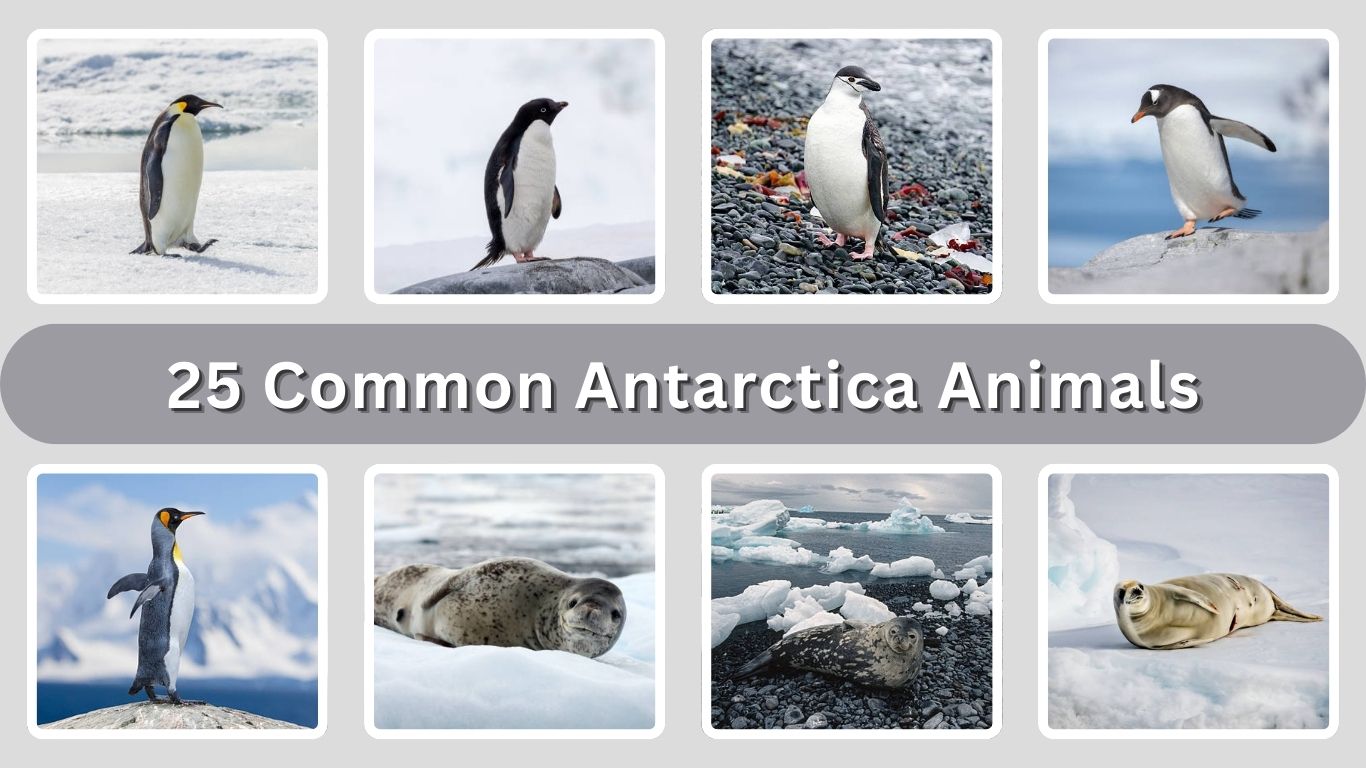
Antarctica is one of the most extreme and isolated places on Earth, yet it supports a surprisingly rich variety of wildlife. Most Antarctic animals are specially adapted to survive freezing temperatures, powerful winds, and icy oceans. From massive whales and powerful seals to iconic penguins and tiny krill, each species plays a vital role in maintaining the delicate balance of this polar ecosystem.
1. Emperor Penguin
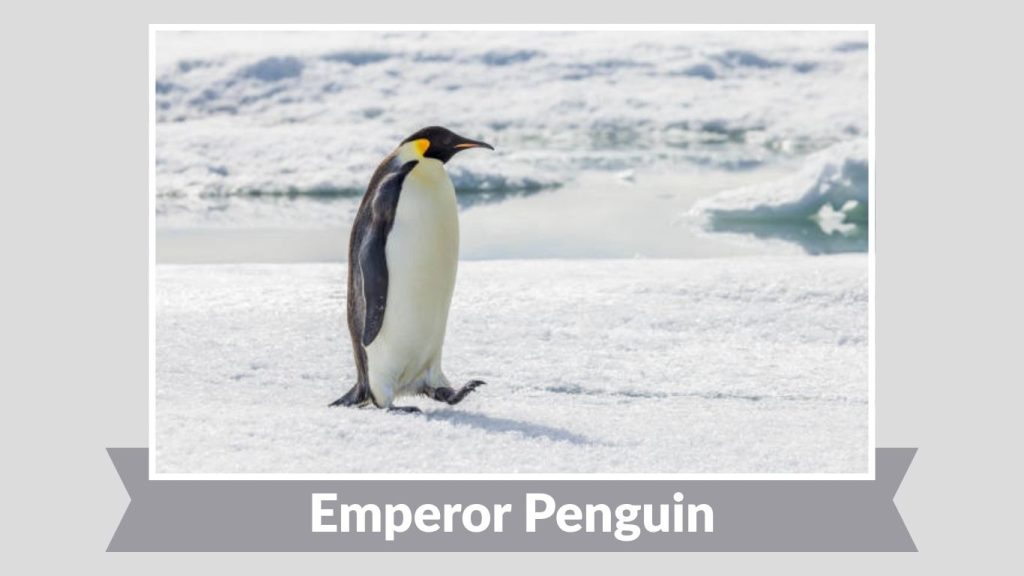
The Emperor Penguin is the largest living penguin species and one of the most iconic animals of Antarctica. Perfectly adapted to extreme cold, it survives temperatures below −50°C and fierce winds. Unlike other birds, it breeds during the Antarctic winter, making it a symbol of endurance and resilience in one of the harshest environments on Earth.
Identification
- Scientific name: Aptenodytes forsteri
- Average height: 1.1–1.3 meters
- Average weight: 22–45 kilograms
- Black head with pale yellow ear patches
- White belly and dark gray to black back
- Short, stiff feathers for insulation
Habitat
Emperor Penguins are found exclusively in Antarctica. They live and breed on stable sea ice surrounding the continent, often far from open water. Outside the breeding season, they spend much of their time in the Southern Ocean, navigating icy waters and floating ice shelves. Their habitat is closely tied to sea ice availability, which is essential for breeding and molting.
Behaviors
These penguins are highly social and famous for their huddling behavior, where thousands gather together to conserve heat. Males balance eggs on their feet under a brood pouch for over two months without eating. Emperor Penguins are exceptional divers, capable of reaching depths over 500 meters and holding their breath for more than 20 minutes.
Diet
Their diet mainly consists of fish, squid, and Antarctic krill. They hunt while swimming beneath the ice, using their speed and agility to catch prey during deep dives.
Lifespan
In the wild, Emperor Penguins typically live between 15 and 20 years. Survival depends on food availability, ice conditions, and protection from predators such as leopard seals and orcas.
2. Adélie Penguin
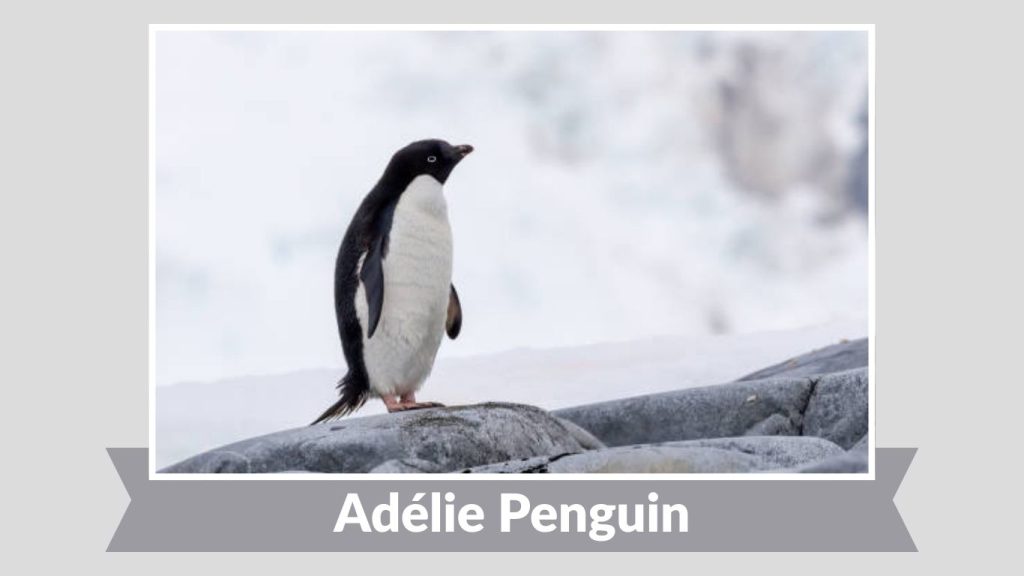
The Adélie Penguin is one of the most widespread and well-studied penguin species in Antarctica. Recognizable by its bold black-and-white appearance and distinctive white eye ring, this species is highly adapted to cold coastal environments. Adélie Penguins are known for their energetic behavior, strong nesting instincts, and large breeding colonies.
Identification
- Scientific name: Pygoscelis adeliae
- Average height: 60–70 centimeters
- Average weight: 3.5–6 kilograms
- Black head with a prominent white eye ring
- White underside and black back
- Short, strong bill suited for catching prey
Habitat
Adélie Penguins inhabit the Antarctic continent and nearby islands, especially along ice-free rocky coastlines. During the breeding season, they nest on exposed land close to the sea, building nests from small stones. Outside the breeding period, they migrate northward with the retreating sea ice and spend most of their time in the open Southern Ocean.
Behaviors
Adélie Penguins are highly social and often form massive colonies containing thousands of individuals. They are known for their loud calls, territorial nest defense, and comical walking style. During breeding, they show strong pair bonds and aggressively protect nesting sites. They are agile swimmers and frequently leap out of the water to avoid predators.
Diet
Their diet mainly consists of Antarctic krill, small fish, and squid. Adélie Penguins forage in shallow to moderately deep waters, often near pack ice, where food is abundant.
Lifespan
Adélie Penguins typically live between 10 and 20 years in the wild. Their survival is influenced by sea ice conditions, food availability, and predation by leopard seals and skuas.
3. Chinstrap Penguin
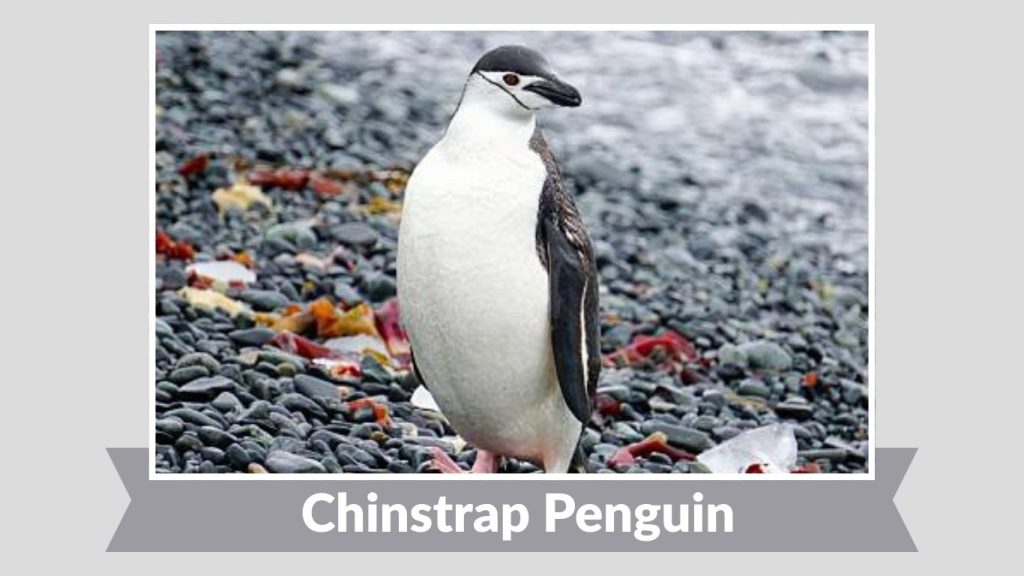
The Chinstrap Penguin is a hardy and highly vocal penguin species known for the thin black line that runs under its chin, giving it its name. It is one of the most abundant penguin species in the Antarctic region and is well adapted to life in cold, rugged coastal environments. Its energetic nature and loud calls make it a distinctive presence in large breeding colonies.
Identification
- Scientific name: Pygoscelis antarcticus
- Average height: 68–76 centimeters
- Average weight: 3–5 kilograms
- Black head with a narrow black “chinstrap” marking
- White face and belly with black back
- Short, pointed bill and strong flippers
Habitat
Chinstrap Penguins are found on islands and coastal areas around Antarctica, particularly in the Antarctic Peninsula and South Sandwich Islands. They prefer ice-free rocky slopes for nesting and rely heavily on nearby pack ice and open water for feeding. Outside the breeding season, they spend most of their time at sea, following the movement of sea ice.
Behaviors
These penguins are extremely social and breed in large, dense colonies that can number in the hundreds of thousands. They are known for their harsh, braying calls used for communication and mate recognition. Chinstrap Penguins are strong swimmers and climbers, often navigating steep, rocky terrain to reach nesting sites.
Diet
Their diet is dominated by Antarctic krill, with small amounts of fish and squid. They forage in groups and typically hunt close to the ocean surface or near pack ice.
Lifespan
Chinstrap Penguins usually live between 15 and 20 years in the wild. Their lifespan depends on environmental conditions, food availability, and avoidance of predators such as leopard seals.
4. Gentoo Penguin
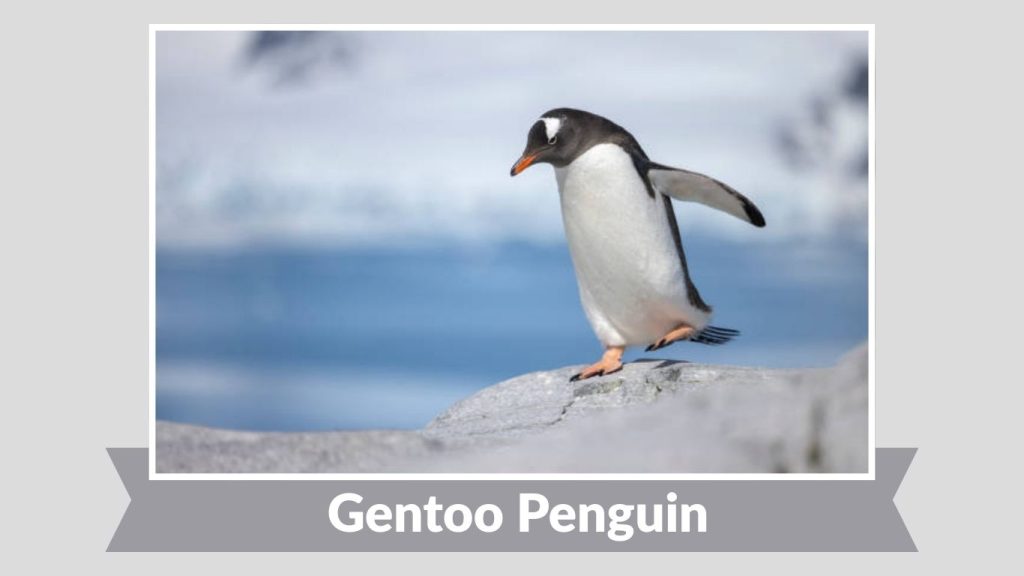
The Gentoo Penguin is one of the fastest-swimming penguin species and is easily recognized by the bright white stripe that extends across the top of its head. Compared to other Antarctic penguins, it prefers milder, ice-free coastal areas and shows remarkable adaptability. Its curious nature and relatively stable population make it one of the most successful penguin species in the region.
Identification
- Scientific name: Pygoscelis papua
- Average height: 70–90 centimeters
- Average weight: 5–8 kilograms
- Distinct white band across the head
- Bright orange bill and feet
- White belly with dark gray to black back
Habitat
Gentoo Penguins live along the Antarctic Peninsula and on sub-Antarctic islands. They favor ice-free coastlines, sandy beaches, and grassy or rocky areas for nesting. Unlike other penguins that rely heavily on sea ice, Gentoo Penguins remain closer to shore and prefer open water, making them less dependent on pack ice.
Behaviors
These penguins are strong swimmers, capable of reaching speeds up to 36 km/h underwater. They form large colonies and build nests from stones, grass, and moss. Gentoo Penguins show strong parental cooperation, with both parents sharing incubation and chick-rearing duties. They are generally less aggressive than other penguin species.
Diet
Their diet includes fish, squid, and krill. Gentoo Penguins typically forage closer to shore and dive to moderate depths to catch prey.
Lifespan
In the wild, Gentoo Penguins usually live between 13 and 20 years. Survival rates are influenced by food availability, climate conditions, and predation from seals and seabirds.
5. King Penguin
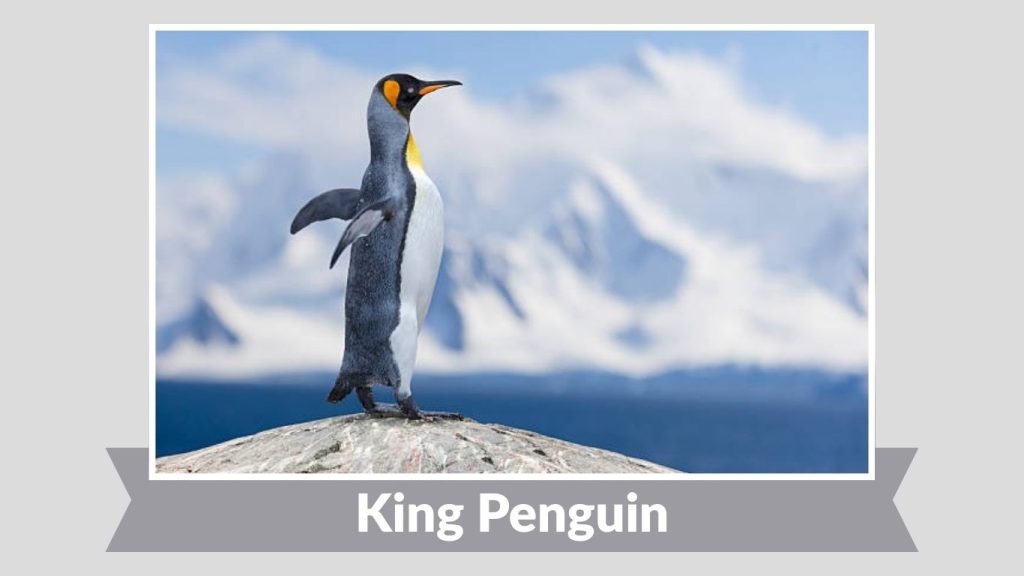
The King Penguin is the second-largest penguin species and is known for its elegant appearance and vibrant orange markings. Although often associated with Antarctica, it mainly inhabits sub-Antarctic islands rather than the Antarctic mainland. King Penguins are highly social and form some of the largest penguin colonies in the world.
Identification
- Scientific name: Aptenodytes patagonicus
- Average height: 85–95 centimeters
- Average weight: 11–16 kilograms
- Bright orange patches on the neck and chest
- Silvery-gray back with a white belly
- Long, slender bill with orange accents
Habitat
King Penguins are found primarily on sub-Antarctic islands such as South Georgia, the Falkland Islands, and Crozet Islands. They prefer flat, ice-free beaches and coastal plains for breeding. Unlike Emperor Penguins, they do not rely on sea ice and spend much of their time in the surrounding Southern Ocean.
Behaviors
These penguins are highly social and gather in colonies that can number in the hundreds of thousands. They have a unique breeding cycle that lasts more than a year, with parents taking turns caring for a single chick. King Penguins are excellent divers and can reach depths of over 300 meters while hunting.
Diet
Their diet mainly consists of fish, especially lanternfish, along with squid and small crustaceans. They forage far from land, often traveling long distances to find food.
Lifespan
King Penguins typically live between 15 and 25 years in the wild. Their longevity depends on stable food supplies, successful breeding, and limited predation.
6. Leopard Seal
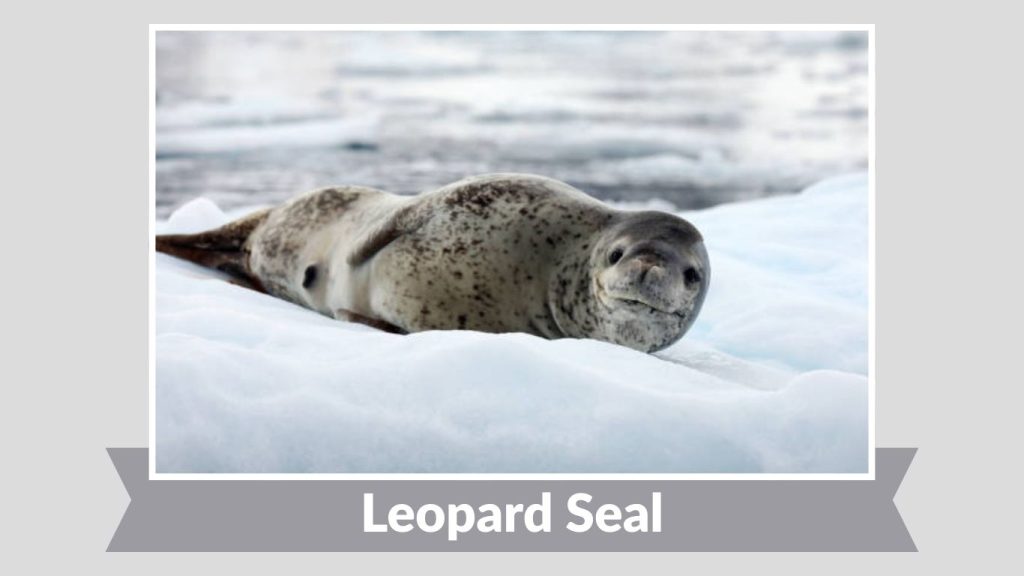
The Leopard Seal is one of Antarctica’s top predators and is known for its powerful build, large head, and fierce hunting skills. Unlike many seals, it is mostly solitary and highly aggressive when feeding. Its name comes from the dark, spotted pattern on its light-colored body, which resembles a leopard’s coat.
Identification
- Scientific name: Hydrurga leptonyx
- Average length: 3–3.6 meters
- Average weight: 200–600 kilograms
- Long, muscular body with a large head
- Dark gray spots on a lighter underside
- Powerful jaws with sharp teeth
Habitat
Leopard Seals are found throughout the Antarctic and sub-Antarctic regions, mainly along the pack ice and coastal waters. They prefer areas near the edge of the ice where prey is abundant. While most individuals remain in Antarctic waters, some may migrate northward during winter months.
Behaviors
These seals are mostly solitary and highly territorial, especially when feeding. Leopard Seals are strong swimmers and are known to ambush prey near ice edges. They are also vocal underwater, producing eerie calls during the breeding season. Their aggressive nature sets them apart from many other seal species.
Diet
Their diet is varied and includes penguins, fish, squid, and Antarctic krill. Leopard Seals are one of the few predators known to regularly hunt penguins.
Lifespan
In the wild, Leopard Seals typically live for 20–26 years. Their position at the top of the food chain means they face few natural predators, with orcas being the main threat.
7. Weddell Seal
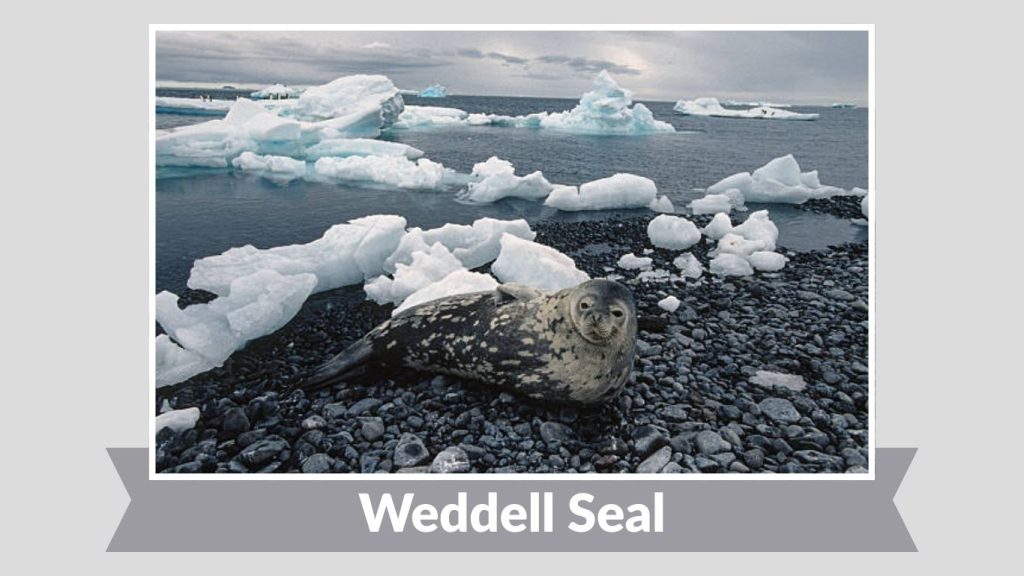
The Weddell Seal is one of the southernmost-living mammals in the world and is well known for its calm nature and haunting underwater vocalizations. Unlike many other seals, it thrives deep within the Antarctic pack ice and remains close to the continent year-round. Its ability to live in such extreme conditions makes it one of Antarctica’s most remarkable marine mammals.
Identification
- Scientific name: Leptonychotes weddellii
- Average length: 2.5–3.5 meters
- Average weight: 400–600 kilograms
- Thick, robust body with a small head
- Gray to brown coat with light and dark mottled patterns
- Short flippers and whiskered snout
Habitat
Weddell Seals inhabit coastal Antarctic waters and dense pack ice. They often maintain breathing holes in thick ice using their strong teeth. Unlike many seal species, they do not migrate far and remain in Antarctic waters throughout the year, even during winter.
Behaviors
These seals are relatively non-aggressive and often rest on ice near breathing holes. They are excellent divers, capable of descending over 600 meters and staying underwater for more than an hour. Weddell Seals are famous for their complex underwater vocalizations, which are believed to help with communication and navigation beneath the ice.
Diet
Their diet mainly consists of fish, squid, and crustaceans. They hunt beneath the ice, using their excellent vision and sensitivity to movement to locate prey.
Lifespan
Weddell Seals can live between 20 and 30 years in the wild. Their main predators are orcas and leopard seals, though adults face relatively few threats due to their size and strength.
8. Crabeater Seal
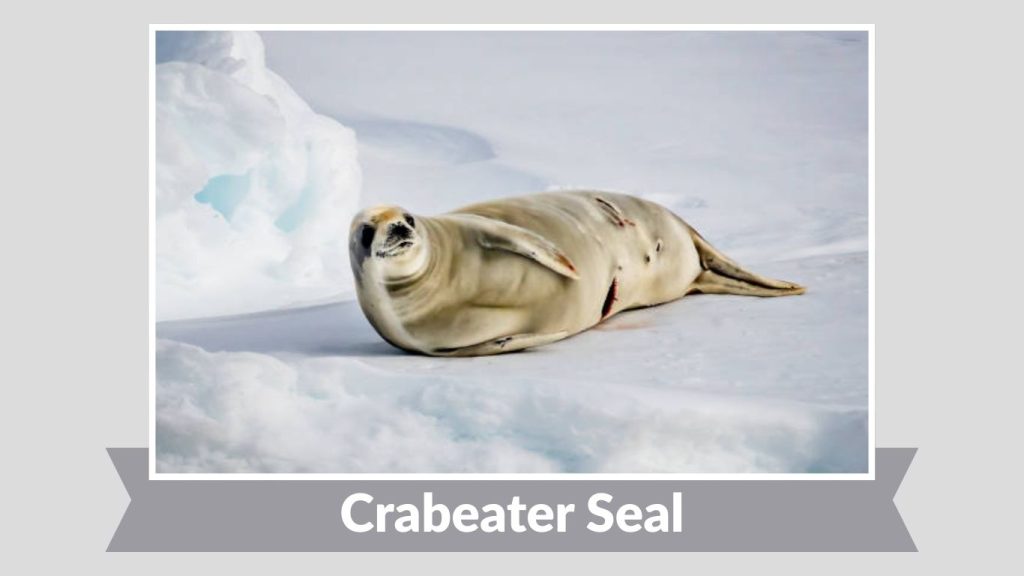
The Crabeater Seal is the most abundant seal species in the world and plays a major role in the Antarctic ecosystem. Despite its name, it does not eat crabs but feeds almost exclusively on Antarctic krill. Its specialized teeth make it perfectly adapted for filtering small prey from the water.
Identification
- Scientific name: Lobodon carcinophaga
- Average length: 2.2–2.6 meters
- Average weight: 200–300 kilograms
- Slender body with a long snout
- Light-colored coat with dark scars common on adults
- Unique multi-lobed teeth adapted for krill filtering
Habitat
Crabeater Seals are widely distributed around Antarctica, mainly in the pack ice zone. They prefer drifting ice floes where they can rest and give birth. Their range closely follows the distribution of sea ice and krill, making them highly dependent on stable ice conditions.
Behaviors
These seals are usually found in small groups on ice floes, though they may gather in larger numbers during breeding season. They are agile swimmers and can quickly evade predators. Crabeater Seals are less aggressive than leopard seals but are alert and responsive to threats, often slipping into the water when disturbed.
Diet
Their diet consists almost entirely of Antarctic krill. Using their specialized teeth, they filter krill from seawater while swimming with their mouths open.
Lifespan
Crabeater Seals typically live between 20 and 25 years in the wild. Leopard seals are their main predators, and many adults bear scars from surviving attacks.
9. Ross Seal
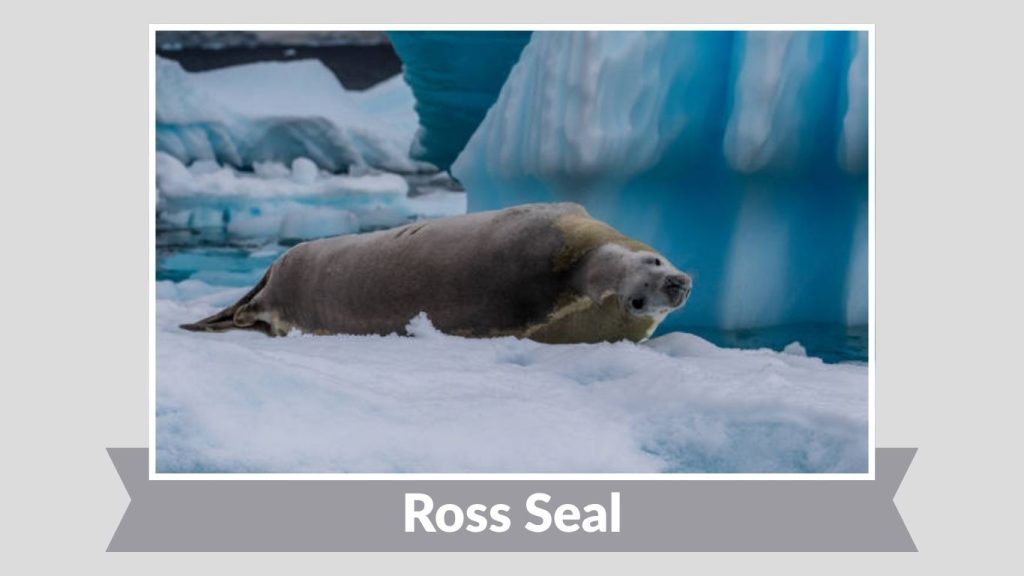
The Ross Seal is one of the rarest and least understood seals in the world, living deep within Antarctica’s pack ice. It is known for its small size, large eyes, and unusual vocal abilities. Because it inhabits remote, hard-to-reach areas, it is rarely seen by humans and remains one of the most mysterious Antarctic mammals.
Identification
- Scientific name: Ommatophoca rossii
- Average length: 1.7–2.1 meters
- Average weight: 130–200 kilograms
- Short, stout body with a small head
- Very large eyes adapted for low light
- Gray to brown coat with lighter underside
Habitat
Ross Seals live primarily in dense pack ice surrounding Antarctica, far from coastlines and human activity. They prefer areas with stable ice where they can rest, breed, and molt. Unlike some other seals, they are seldom found on land and spend most of their lives on ice floes or in nearby waters.
Behaviors
These seals are usually solitary and highly elusive. Ross Seals are famous for their strange, siren-like underwater vocalizations, which can be heard during the breeding season. They are capable of deep dives and rely on ice openings to breathe, but little is known about their daily behavior due to their remote habitat.
Diet
Their diet mainly includes squid, fish, and crustaceans. They hunt beneath the ice, using their sharp teeth and strong jaws to capture prey in cold, dark waters.
Lifespan
Ross Seals are believed to live around 20 years in the wild. Due to their isolated lifestyle, they face few natural predators, though orcas and leopard seals may prey on them occasionally.
10. Southern Elephant Seal
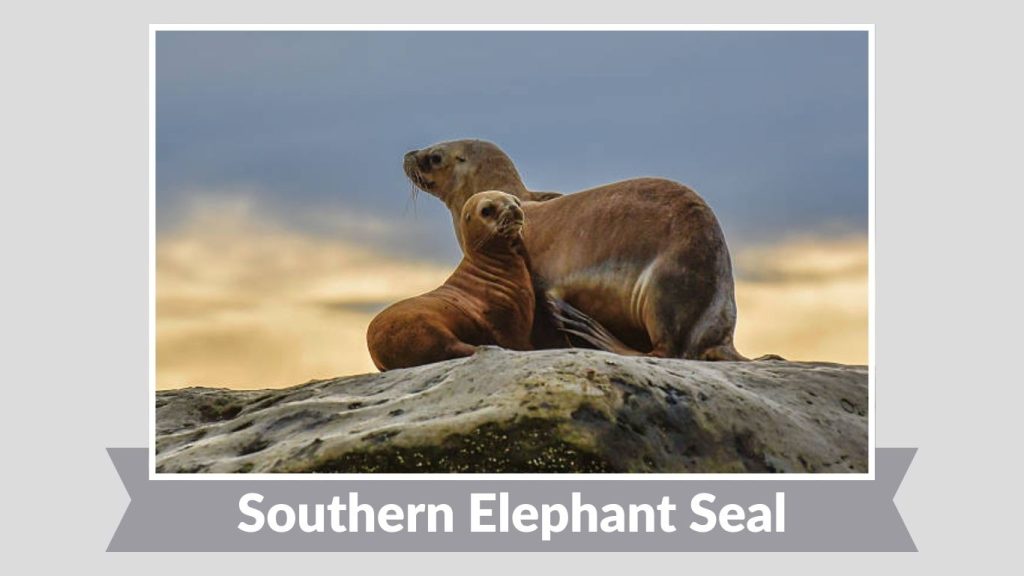
The Southern Elephant Seal is the largest seal species in the world and one of the most impressive marine mammals found in Antarctic and sub-Antarctic regions. Males are especially notable for their massive size and inflatable trunk-like nose, which resembles an elephant’s trunk and gives the species its name.
Identification
- Scientific name: Mirounga leonina
- Average length:
- Males: 4–6 meters
- Females: 2.5–3 meters
- Males: 4–6 meters
- Average weight:
- Males: 3,000–4,000 kilograms
- Females: 400–900 kilograms
- Males: 3,000–4,000 kilograms
- Large, bulky body with thick blubber
- Males have a prominent inflatable nose
- Gray to brown skin, often scarred
Habitat
Southern Elephant Seals are found around Antarctica and on sub-Antarctic islands such as South Georgia and Macquarie Island. They come ashore on beaches for breeding and molting but spend most of their lives in the open Southern Ocean, traveling vast distances in search of food.
Behaviors
These seals are highly polygynous, with dominant males controlling large harems of females during the breeding season. Males engage in fierce battles, using their size and strength to establish dominance. Southern Elephant Seals are exceptional divers, capable of reaching depths over 2,000 meters and staying underwater for more than an hour.
Diet
Their diet consists mainly of squid and deep-sea fish. They forage far offshore and dive continuously during long feeding trips.
Lifespan
Southern Elephant Seals typically live 15–23 years in the wild. Males often have shorter lifespans due to intense competition and physical stress during breeding seasons.
11. Antarctic Minke Whale
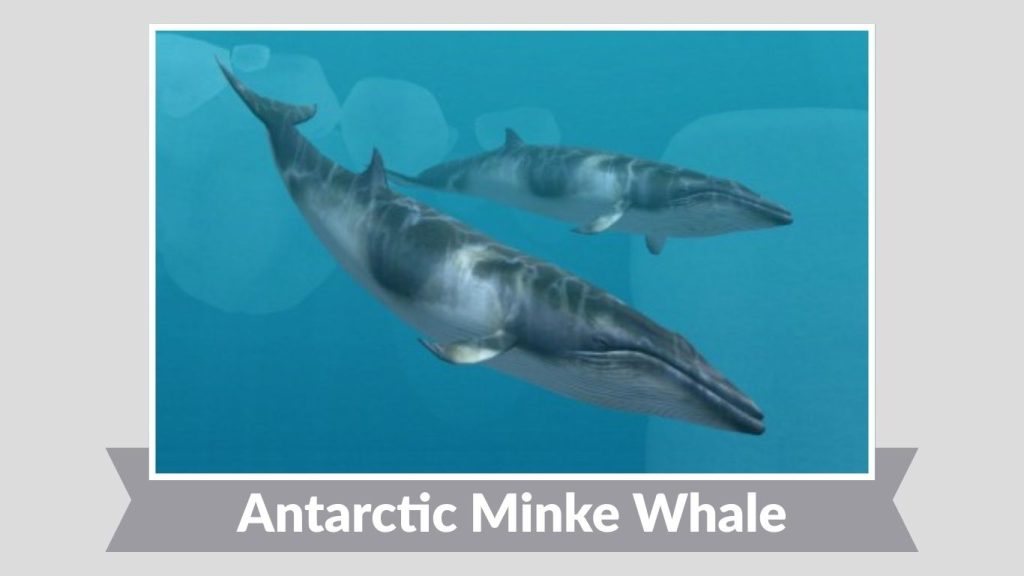
The Antarctic Minke Whale is the smallest and most common baleen whale found in Antarctic waters. Agile and fast-moving, it is well adapted to icy seas and is often seen swimming close to pack ice. This species plays an important role in the Southern Ocean ecosystem and is known for its curiosity around ships and ice edges.
Identification
- Scientific name: Balaenoptera bonaerensis
- Average length: 7–10 meters
- Average weight: 5–10 tons
- Slim, streamlined body shape
- Dark gray to black back with a lighter underside
- Narrow, pointed head with baleen plates instead of teeth
Habitat
Antarctic Minke Whales are found mainly in the Southern Ocean surrounding Antarctica. They prefer cold waters near pack ice, where food is abundant. During the Antarctic summer, they remain in high-latitude feeding grounds, while in winter they migrate northward to warmer waters for breeding.
Behaviors
These whales are known for their speed and agility, often weaving through ice floes with ease. They are usually seen alone or in small groups and are less likely to form large pods. Antarctic Minke Whales surface frequently to breathe and can be difficult to spot due to their quick, low-profile movements.
Diet
Their diet consists primarily of Antarctic krill, along with small fish and planktonic organisms. They feed by lunging through dense swarms of prey and filtering food through their baleen plates.
Lifespan
Antarctic Minke Whales are believed to live for 30–50 years in the wild. Their main natural predators are orcas, particularly when calves are present.
12. Orca (Killer Whale)
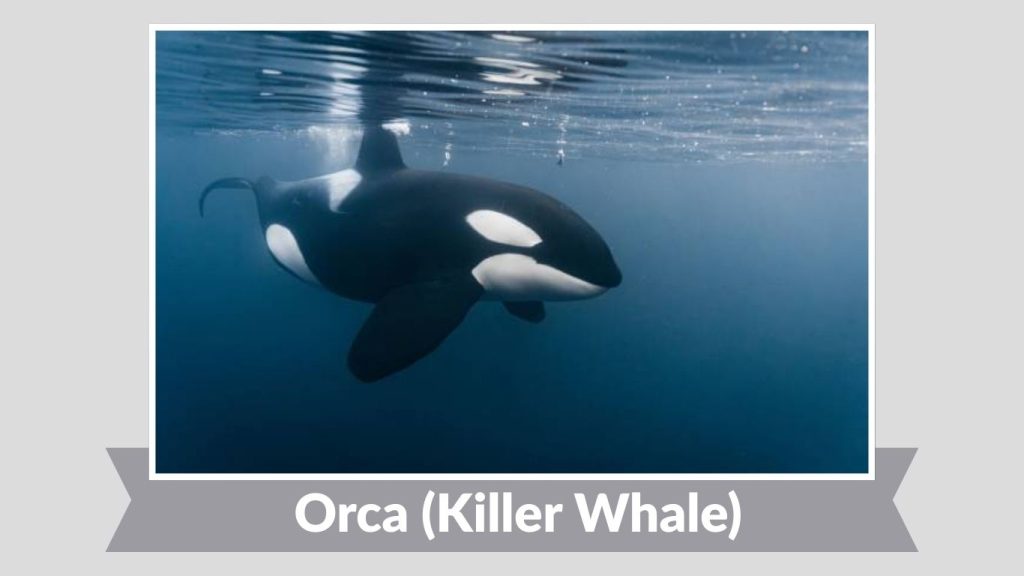
The Orca, also known as the Killer Whale, is the top predator of the Antarctic marine ecosystem. Highly intelligent and extremely social, orcas are known for their complex hunting strategies and strong family bonds. In Antarctic waters, they show unique behaviors adapted to icy environments, making them one of the most fascinating marine mammals on Earth.
Identification
- Scientific name: Orcinus orca
- Average length: 6–8 meters
- Average weight: 3–6 tons
- Distinct black-and-white coloration
- Tall dorsal fin, especially in males
- Powerful tail flukes and broad flippers
Habitat
Orcas are found in all oceans of the world, including the cold waters surrounding Antarctica. Several Antarctic ecotypes live year-round in polar regions, often near pack ice and coastal waters. They are highly adaptable and can travel long distances in search of prey.
Behaviors
Orcas are extremely social and live in stable family groups called pods. They communicate using clicks, whistles, and calls. Antarctic orcas are famous for cooperative hunting techniques, such as creating waves to wash seals off ice floes. Their intelligence allows them to learn and pass hunting strategies across generations.
Diet
Their diet varies by ecotype and may include seals, penguins, fish, squid, and even large whales. This dietary flexibility helps them thrive in diverse marine environments.
Lifespan
Female orcas can live 60–90 years, while males usually live 30–60 years. Longevity depends on food availability, social stability, and environmental conditions.
13. Humpback Whale
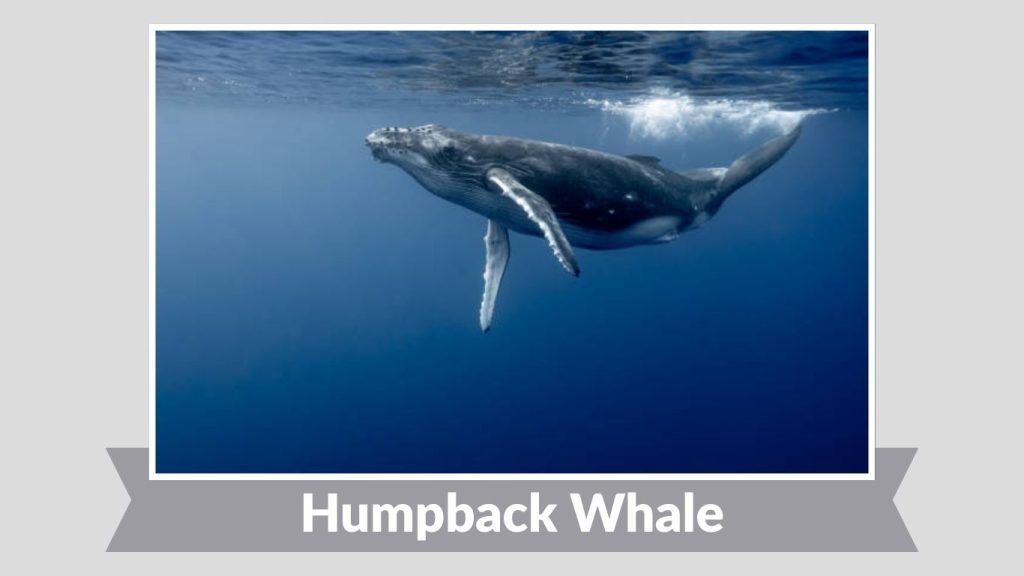
The Humpback Whale is one of the most recognizable whale species due to its massive size, long flippers, and spectacular breaching behavior. These whales migrate vast distances between warm breeding waters and cold Antarctic feeding grounds, where they consume enormous amounts of food during the summer months.
Identification
- Scientific name: Megaptera novaeangliae
- Average length: 12–16 meters
- Average weight: 25–40 tons
- Long pectoral fins, up to one-third of body length
- Knobby head with small bumps called tubercles
- Dark back with a lighter underside
Habitat
Humpback Whales are found in oceans worldwide and regularly migrate to Antarctic waters during the summer. They feed in the cold, nutrient-rich Southern Ocean and travel to warmer tropical and subtropical waters in winter to breed and give birth.
Behaviors
These whales are known for their acrobatic displays, including breaching, tail slapping, and flipper waving. Humpbacks are also famous for their complex and haunting songs, produced mainly by males during the breeding season. In Antarctic waters, they often feed cooperatively, using bubble-net feeding techniques to trap prey.
Diet
Their diet consists mainly of Antarctic krill and small schooling fish. During feeding season, Humpback Whales consume huge quantities of food to build fat reserves for migration and breeding.
Lifespan
Humpback Whales typically live 45–50 years, though some individuals may live longer. Their survival is influenced by food availability, ocean conditions, and human-related threats such as ship strikes and entanglement.
14. Blue Whale
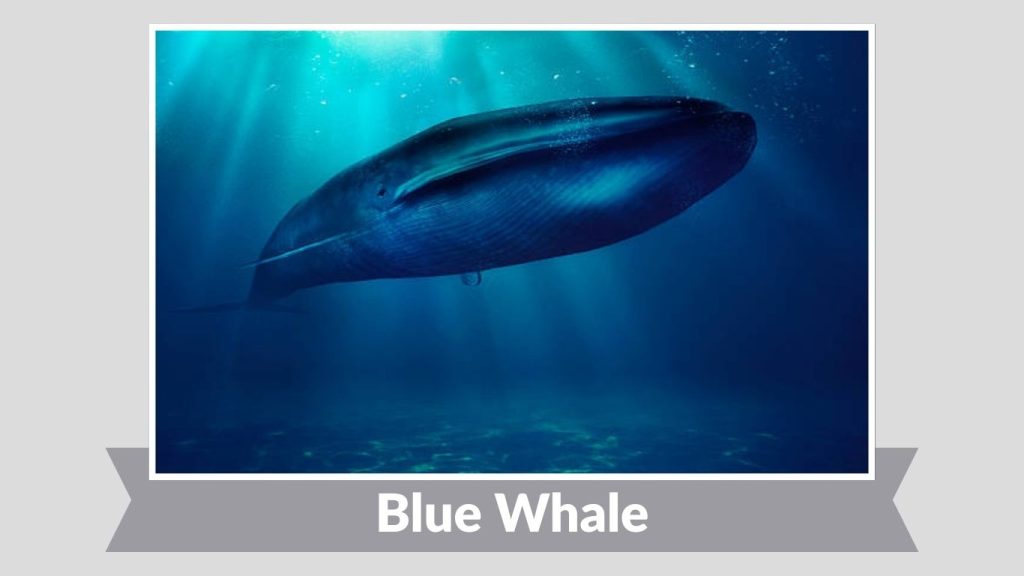
The Blue Whale is the largest animal ever known to have lived on Earth, surpassing even the biggest dinosaurs. In Antarctic waters, these giants feed intensively during the summer months, taking advantage of dense krill populations. Despite their enormous size, Blue Whales are gentle and feed almost exclusively on tiny prey.
Identification
- Scientific name: Balaenoptera musculus
- Average length: 24–30 meters
- Average weight: 100–180 tons
- Long, slender blue-gray body with mottled patterns
- Broad, flat head with a wide mouth
- Small dorsal fin located far back on the body
Habitat
Blue Whales are found in all major oceans, including the Southern Ocean surrounding Antarctica. They migrate seasonally, spending summers in cold, productive feeding grounds and winters in warmer waters for breeding. Antarctic Blue Whales are a distinct subspecies adapted to polar environments.
Behaviors
These whales are generally solitary or found in small groups. They are slow-moving but capable of powerful swimming when needed. Blue Whales communicate using very low-frequency calls that can travel hundreds of kilometers underwater, helping them stay in contact across vast distances.
Diet
Their diet consists almost entirely of Antarctic krill. A single Blue Whale can consume several tons of krill per day during peak feeding season by filtering prey through baleen plates.
Lifespan
Blue Whales are believed to live 70–90 years or more. Natural predators are rare, though orcas may occasionally attack calves. Population recovery remains slow due to past commercial whaling.
15. Fin Whale
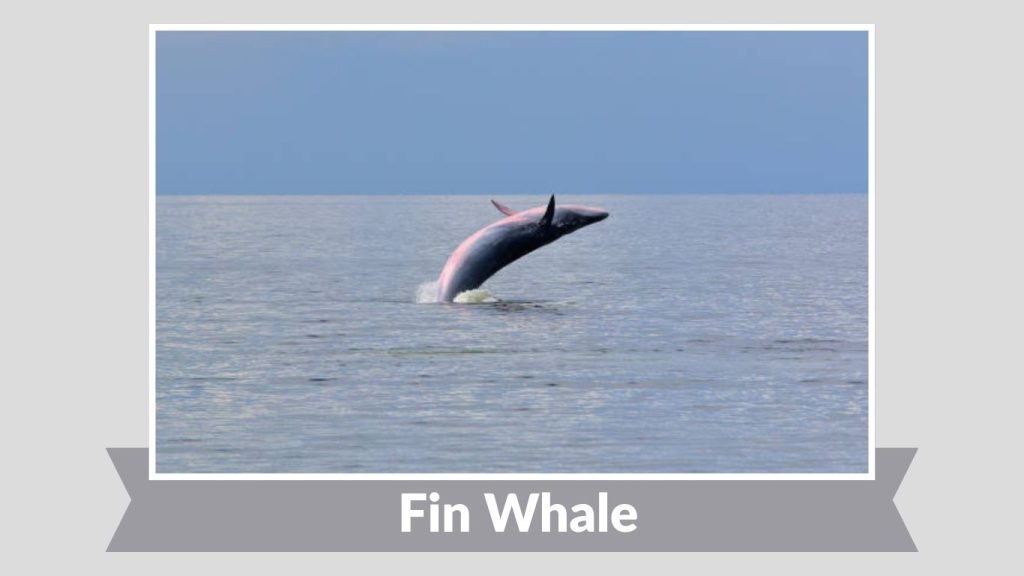
The Fin Whale is the second-largest animal on Earth, surpassed only by the Blue Whale. Sleek, fast, and powerful, it is often called the “greyhound of the sea.” In Antarctic waters, Fin Whales gather during the summer months to take advantage of rich feeding grounds filled with krill and small fish.
Identification
- Scientific name: Balaenoptera physalus
- Average length: 18–22 meters
- Average weight: 40–80 tons
- Long, streamlined body with a tall dorsal fin
- Distinct asymmetrical jaw coloring (white on the right side)
- Dark gray to brownish back with a lighter underside
Habitat
Fin Whales are widely distributed across the world’s oceans, including the Southern Ocean around Antarctica. They migrate seasonally, feeding in cold, high-latitude waters during summer and moving to warmer, lower-latitude waters in winter for breeding and calving.
Behaviors
These whales are fast swimmers and can reach speeds of up to 37 km/h. They are usually seen alone or in small groups but may form larger feeding aggregations in productive areas. Fin Whales surface smoothly and are less likely to breach compared to Humpback Whales.
Diet
Their diet mainly includes Antarctic krill, small schooling fish, and squid. They feed by lunging through dense prey patches and filtering food through baleen plates.
Lifespan
Fin Whales typically live 80–90 years in the wild. Although they have few natural predators, their populations were heavily reduced by commercial whaling and are still recovering.
16. Antarctic Krill
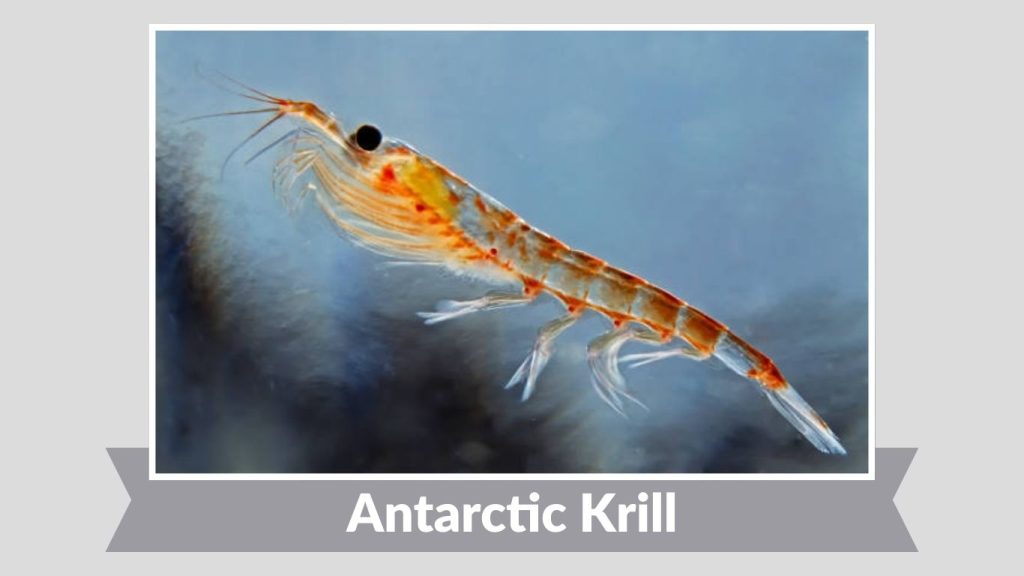
Antarctic Krill are small, shrimp-like crustaceans that form the foundation of the Antarctic marine food web. Despite their tiny size, they are one of the most important animals in the Southern Ocean, supporting whales, seals, penguins, fish, and seabirds. Their massive swarms make them one of the most abundant animal species on Earth.
Identification
- Scientific name: Euphausia superba
- Average length: 4–6 centimeters
- Small, translucent body with a pinkish hue
- Large black eyes
- Hard outer shell (exoskeleton)
- Long antennae and multiple swimming legs
Habitat
Antarctic Krill are found throughout the Southern Ocean, especially in waters surrounding Antarctica. They are closely associated with sea ice, which provides shelter and a rich food source in the form of algae growing on the ice underside. Krill often form enormous swarms that can stretch for kilometers.
Behaviors
Krill are highly social and live in dense swarms that help protect them from predators. They migrate vertically each day, moving to deeper waters during daylight hours and returning to the surface at night to feed. Krill also play a role in carbon cycling by transporting carbon to deeper ocean layers through their waste.
Diet
Their diet mainly consists of phytoplankton and ice algae. They use fine, hair-like structures on their legs to filter food particles from the water.
Lifespan
Antarctic Krill can live up to 5–7 years, which is relatively long for small crustaceans. Their survival depends heavily on sea ice conditions and stable ocean ecosystems.
17. Snow Petrel
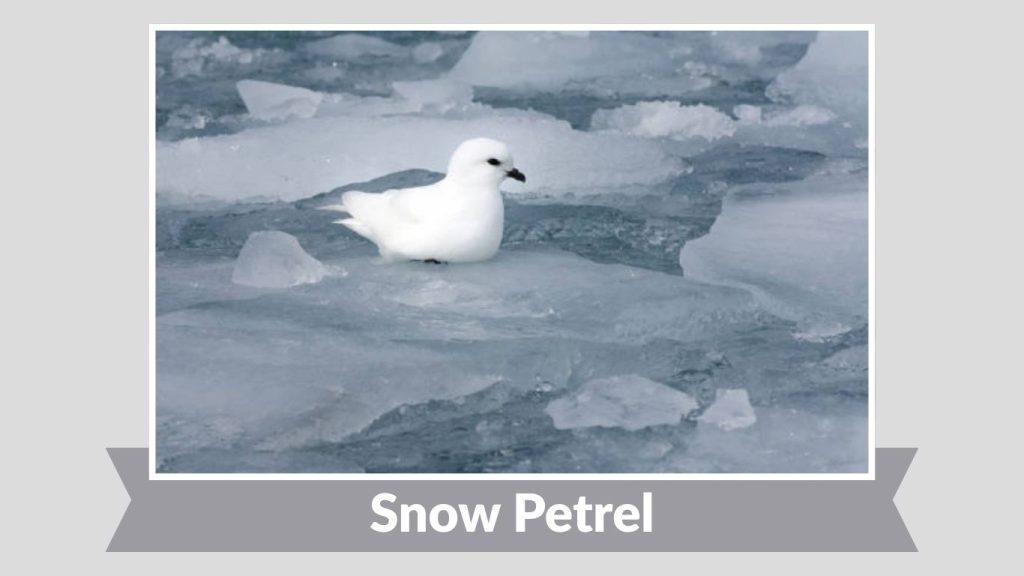
The Snow Petrel is a strikingly white seabird often seen flying over Antarctica’s icy landscapes. It is one of the few bird species that breeds exclusively on the Antarctic continent, making it a true symbol of the polar environment. Its graceful flight and pure white plumage make it easily recognizable against the dark ocean and ice.
Identification
- Scientific name: Pagodroma nivea
- Average length: 30–40 centimeters
- Average wingspan: 75–95 centimeters
- Pure white feathers with black eyes
- Short, strong bill adapted for feeding at sea
- Compact, lightweight body
Habitat
Snow Petrels live throughout Antarctica and the surrounding Southern Ocean. They breed on rocky cliffs and crevices far inland, often many kilometers from the coast. Outside the breeding season, they spend most of their time at sea, particularly near pack ice where food is plentiful.
Behaviors
These birds are strong fliers and can glide effortlessly for long distances. Snow Petrels are often seen alone or in small groups and are highly adapted to cold, windy conditions. During breeding, they are territorial and fiercely defend nesting sites. They are known to eject foul-smelling stomach oil as a defense mechanism.
Diet
Their diet consists of fish, squid, krill, and other small marine organisms. Snow Petrels feed by skimming the ocean surface or diving shallowly to catch prey.
Lifespan
Snow Petrels can live for 20 years or more. Their long lifespan is supported by low predation levels and strong adaptations to the harsh Antarctic environment.
18. Antarctic Petrel
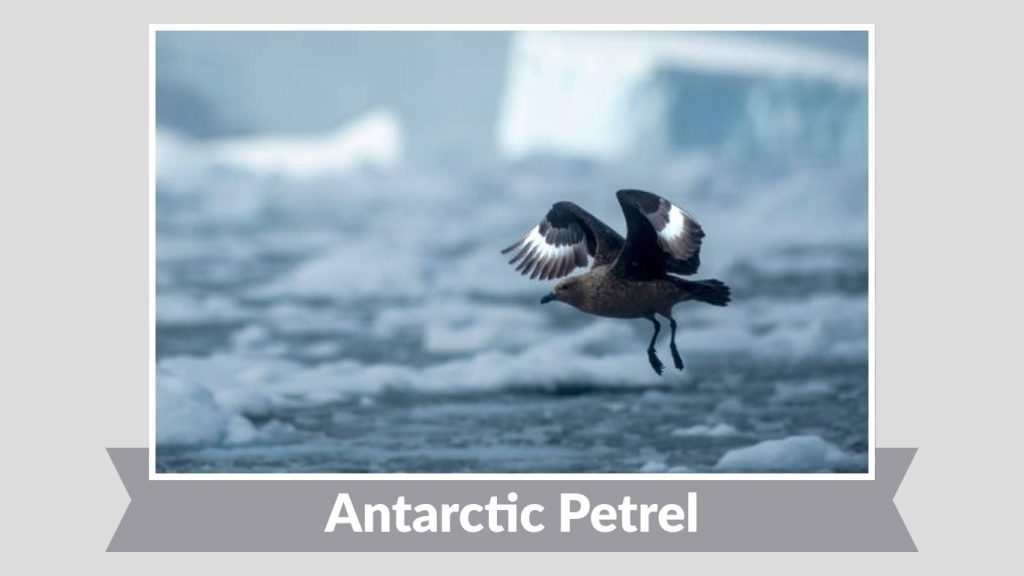
The Antarctic Petrel is a hardy seabird that thrives in one of the coldest environments on Earth. It is well adapted to life around sea ice and is commonly seen soaring over the Southern Ocean. Known for its endurance and strong flight, this species plays an important role in Antarctica’s marine ecosystem.
Identification
- Scientific name: Thalassoica antarctica
- Average length: 40–46 centimeters
- Average wingspan: 85–100 centimeters
- Dark brown body with white wings and underside
- Black head and chest
- Strong, hooked bill
Habitat
Antarctic Petrels are found throughout the Southern Ocean and along the Antarctic coastline. They breed on rocky slopes and cliffs near the continent, often close to sea ice. Outside the breeding season, they remain at sea, preferring cold, ice-filled waters where food is abundant.
Behaviors
These birds are powerful fliers and can travel long distances over open ocean. Antarctic Petrels often follow ships and feed opportunistically. They nest in loose colonies and are known for their loud calls during the breeding season. Like other petrels, they can eject stomach oil as a defense against predators.
Diet
Their diet includes fish, krill, squid, and carrion. They feed mainly at the ocean surface, scavenging or capturing prey while in flight.
Lifespan
Antarctic Petrels typically live between 15 and 20 years. Their survival depends on stable sea ice conditions and access to abundant marine food sources.
19. Skua
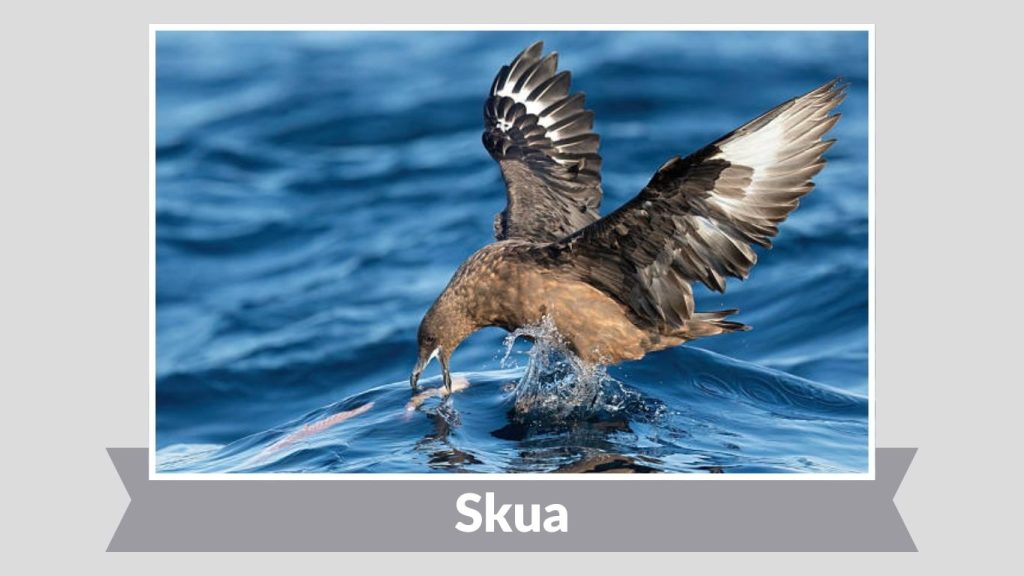
Skuas are tough, aggressive seabirds known for their bold behavior and intelligence. In Antarctica, they are among the dominant avian predators and scavengers, often seen harassing other birds to steal food. Their adaptability and fearlessness allow them to survive in harsh polar conditions.
Identification
- Scientific name: Stercorarius (several Antarctic species)
- Average length: 50–60 centimeters
- Average wingspan: 125–140 centimeters
- Dark brown to mottled plumage
- Strong, hooked bill
- Broad wings and powerful legs
Habitat
Skuas are found along Antarctic coastlines and nearby islands during the breeding season. They nest on open, ice-free ground, often close to penguin colonies. Outside the breeding period, many skuas migrate northward and spend months at sea.
Behaviors
Skuas are highly aggressive and territorial, especially during nesting. They are famous for kleptoparasitism—chasing other birds to force them to drop food. Skuas are intelligent, adaptable, and will attack animals much larger than themselves to defend nests.
Diet
Their diet includes fish, krill, penguin eggs and chicks, carrion, and stolen food from other seabirds. This flexible diet helps them survive in a challenging environment.
Lifespan
Skuas can live 20–30 years in the wild. Their longevity is supported by their adaptability, intelligence, and dominant position among Antarctic seabirds.
20. Wilson’s Storm Petrel
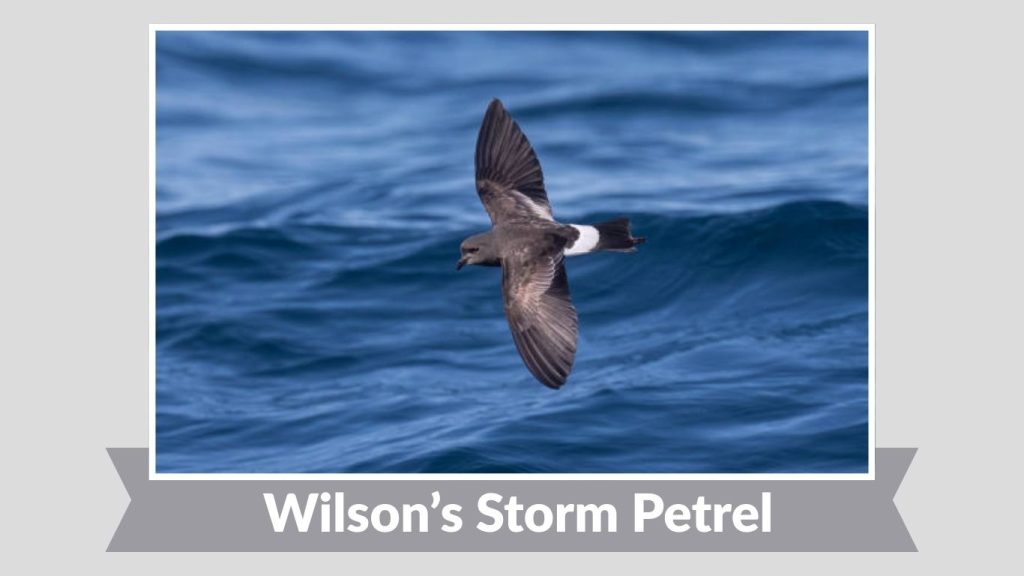
Wilson’s Storm Petrel is one of the most abundant seabirds in the world and a constant presence over the Southern Ocean. Small but incredibly resilient, this bird is famous for its habit of pattering its feet on the water’s surface while feeding. It is highly adapted to long-distance flight and harsh Antarctic conditions.
Identification
- Scientific name: Oceanites oceanicus
- Average length: 16–18 centimeters
- Average wingspan: 38–42 centimeters
- Dark brown to black plumage
- Distinct white rump patch
- Slender body with long legs and webbed feet
Habitat
Wilson’s Storm Petrels are widely distributed across the Southern Ocean and around Antarctica. They breed on rocky slopes and crevices on Antarctic islands and coastal areas. Outside the breeding season, they spend almost their entire lives at sea, rarely coming to land.
Behaviors
These birds are agile fliers and often appear to “walk on water” as they hover and patter their feet while feeding. They are usually seen alone or in small groups and can travel enormous distances across oceans. Wilson’s Storm Petrels are highly tolerant of cold and stormy weather.
Diet
Their diet consists mainly of plankton, krill, small fish, and oily surface material. They feed at the ocean surface, picking up food while flying or floating briefly.
Lifespan
Wilson’s Storm Petrels typically live 15–20 years in the wild. Their long lifespan is supported by few natural predators and strong adaptations to life at sea.
21. Antarctic Toothfish
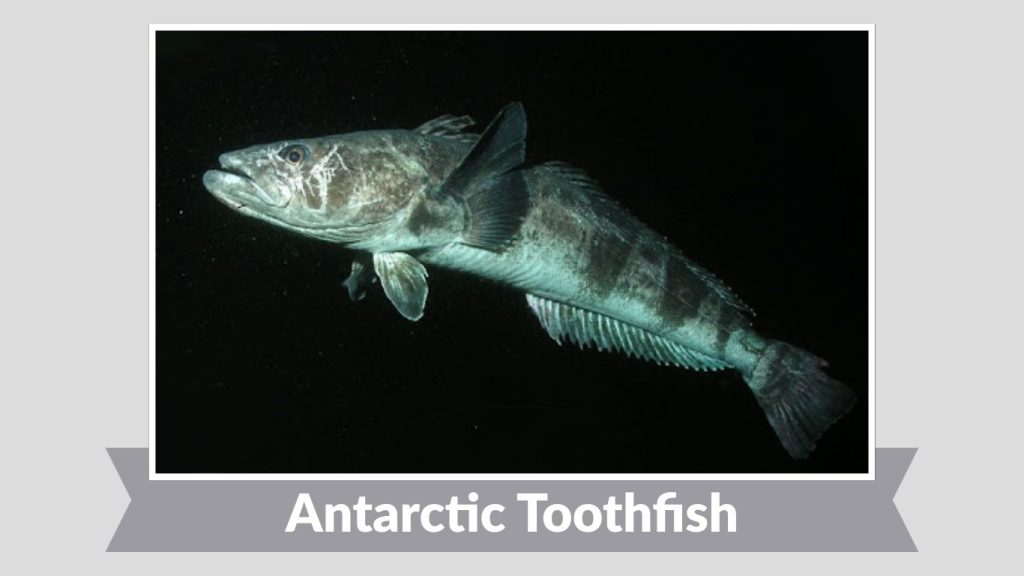
The Antarctic Toothfish is one of the largest fish species in the Southern Ocean and is often referred to as the “Antarctic cod.” It plays a crucial role in the Antarctic marine ecosystem as both a top predator and an important prey species for seals and whales. Its unique adaptations allow it to survive in freezing, deep-sea waters.
Identification
- Scientific name: Dissostichus mawsoni
- Average length: 1.5–2 meters
- Average weight: 50–135 kilograms
- Large, elongated body
- Dark brown to black coloration
- Large head with powerful jaws and sharp teeth
Habitat
Antarctic Toothfish inhabit the cold waters of the Southern Ocean, mainly around Antarctica. They are commonly found at great depths, ranging from 400 to over 2,000 meters. Juveniles live in shallower waters, while adults migrate deeper as they grow. They are closely associated with continental slopes and deep-sea environments.
Behaviors
This species is a slow-growing, long-lived predator that spends much of its life in deep water. Antarctic Toothfish use natural antifreeze proteins in their blood to prevent ice crystals from forming. They are solitary hunters and rely on stealth and size to capture prey.
Diet
Their diet includes fish, squid, and crustaceans. As they grow larger, Antarctic Toothfish may also prey on smaller toothfish and other deep-sea species.
Lifespan
Antarctic Toothfish can live for 40–50 years or more. Their slow growth and long lifespan make them vulnerable to overfishing and environmental changes.
22. Icefish
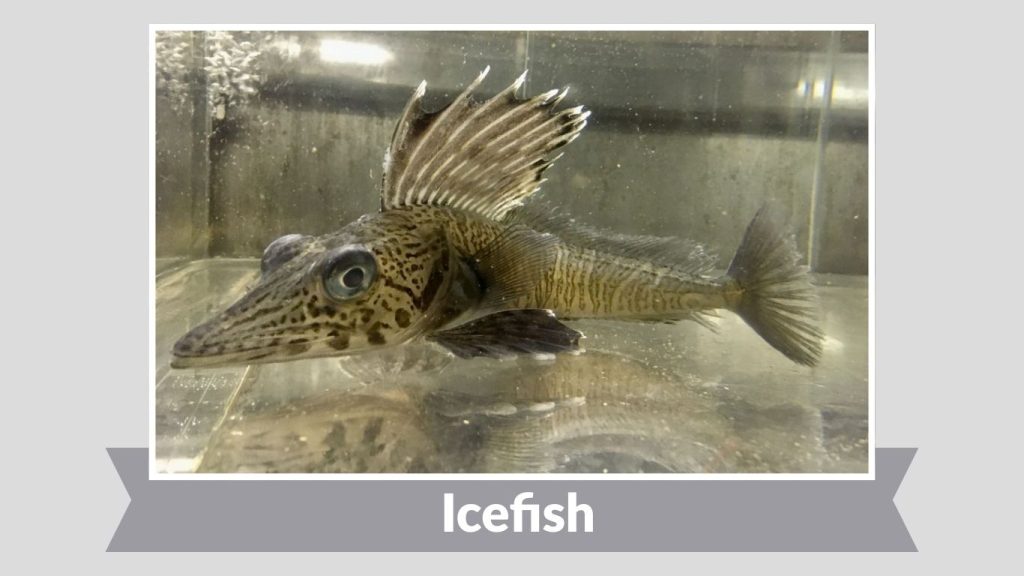
Icefish are a unique group of Antarctic fish best known for their transparent blood, which lacks hemoglobin. This remarkable adaptation allows them to survive in the icy waters of the Southern Ocean, where temperatures remain below freezing. Icefish are an important part of the Antarctic food web.
Identification
- Scientific name: Channichthyidae (family)
- Average length: 25–50 centimeters
- Slender, elongated body
- Pale or translucent appearance
- Lack of hemoglobin in blood
- Large head with wide mouth
Habitat
Icefish live in the cold waters surrounding Antarctica, from shallow coastal areas to deep continental shelves. They are commonly found near the seafloor and are well adapted to subzero temperatures. Their distribution is closely linked to stable, cold ocean conditions.
Behaviors
These fish are slow-moving and rely on antifreeze proteins in their blood to prevent ice crystal formation. Because their blood carries less oxygen, icefish have large hearts and wide blood vessels to compensate. They are generally solitary and conserve energy in the cold environment.
Diet
Icefish feed on krill, small fish, and other marine invertebrates. They hunt by ambushing prey near the ocean floor or within cold-water currents.
Lifespan
Icefish typically live 10–20 years. Their survival depends on cold, oxygen-rich waters and stable Antarctic ecosystems.
23. Colossal Squid
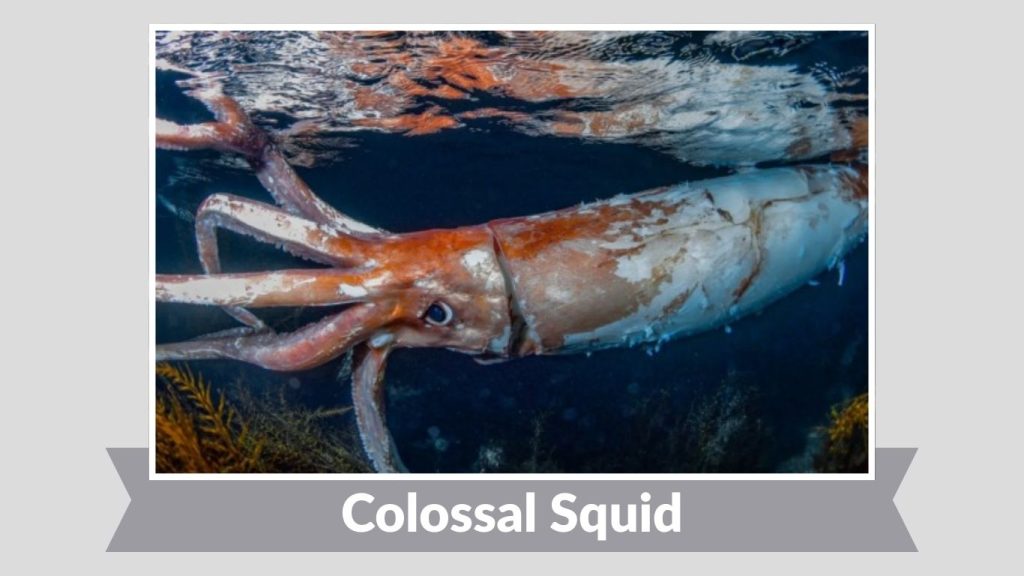
The Colossal Squid is one of the largest and most mysterious invertebrates on Earth. Living in the deep, dark waters of the Southern Ocean, it is heavier and more massive than the Giant Squid. With enormous eyes and powerful tentacles, it is a formidable predator adapted to extreme deep-sea conditions.
Identification
- Scientific name: Mesonychoteuthis hamiltoni
- Average length: 10–14 meters
- Average weight: up to 500 kilograms or more
- Massive body with short, thick tentacles
- Large rotating hooks on arms and tentacles
- Largest eyes of any known animal
Habitat
Colossal Squid inhabit the deep waters of the Southern Ocean surrounding Antarctica. They are usually found at depths of 1,000–2,200 meters, where sunlight does not penetrate. This deep-sea habitat provides both protection and access to large prey species.
Behaviors
Very little is known about the behavior of Colossal Squid due to their extreme habitat. They are believed to be ambush predators, drifting slowly and striking prey with powerful tentacles. Their large eyes help them detect movement in near-total darkness.
Diet
Their diet likely includes large fish such as Antarctic Toothfish and other squid. They use sharp hooks and a strong beak to capture and tear prey.
Lifespan
The lifespan of the Colossal Squid is not well known, but it is estimated to be around 5–10 years. Their primary natural predator is the Sperm Whale.
24. Antarctic Silverfish
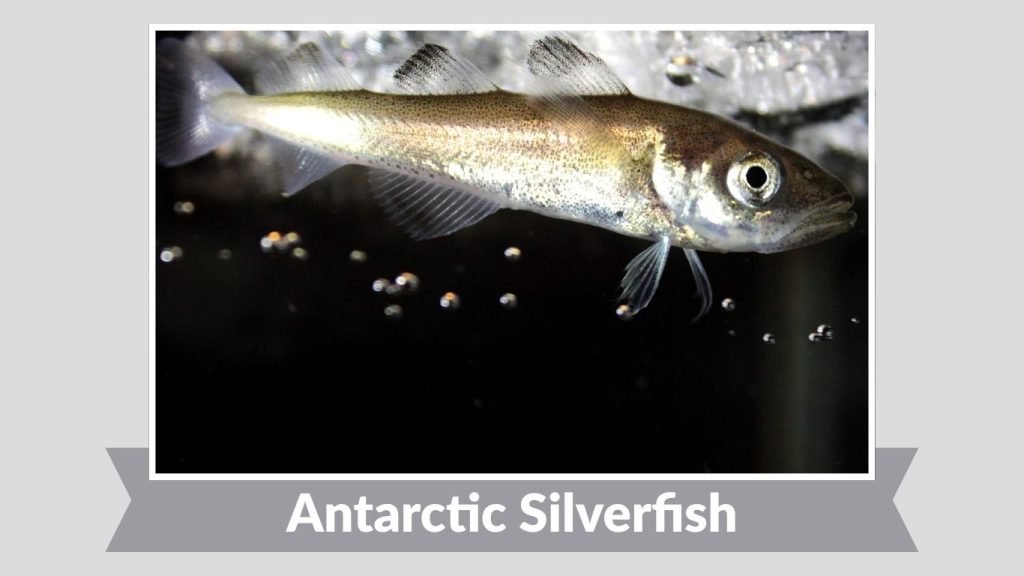
The Antarctic Silverfish is a small but extremely important species in the Southern Ocean ecosystem. It serves as a key link between plankton and larger predators such as penguins, seals, and whales. Despite its modest size, it is one of the most abundant fish species in Antarctic waters.
Identification
- Scientific name: Pleuragramma antarcticum
- Average length: 15–25 centimeters
- Slender, elongated body
- Silvery, semi-translucent appearance
- Large eyes adapted for low light
- Soft fins and flexible body
Habitat
Antarctic Silverfish are found throughout the Southern Ocean, particularly in waters close to Antarctica. They inhabit both coastal areas and open ocean, often near sea ice. Juveniles are commonly found under ice shelves, while adults may move to deeper waters.
Behaviors
This species often forms large schools, which provides protection from predators. Antarctic Silverfish migrate vertically in the water column, moving closer to the surface at night to feed. They are well adapted to freezing waters and rely on antifreeze proteins in their blood.
Diet
Their diet consists mainly of zooplankton, especially Antarctic krill larvae and copepods. By feeding on plankton, they transfer energy to higher levels of the food chain.
Lifespan
Antarctic Silverfish can live up to 15 years. Their survival is closely linked to sea ice conditions and the stability of Antarctic marine ecosystems.
25. Southern Giant Petrel
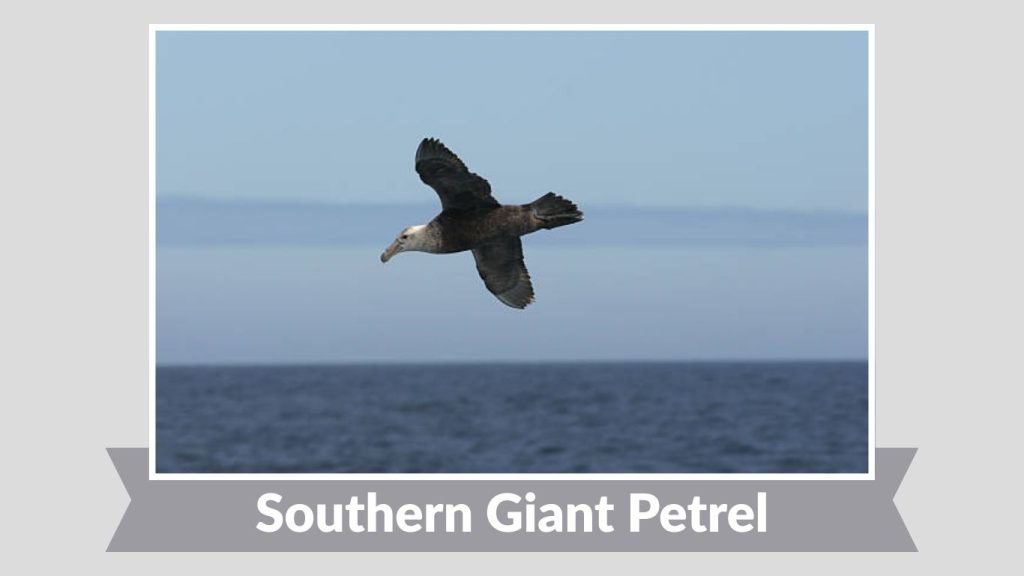
The Southern Giant Petrel is a large, powerful seabird often referred to as the “vulture of the Southern Ocean” due to its scavenging habits. Despite this reputation, it is also an efficient hunter. With its impressive wingspan and strong flight, it is one of the most dominant birds in Antarctic and sub-Antarctic regions.
Identification
- Scientific name: Macronectes giganteus
- Average length: 80–100 centimeters
- Average wingspan: 185–205 centimeters
- Large, bulky body with long wings
- Pale to dark brown plumage
- Heavy, hooked bill with a greenish tip
Habitat
Southern Giant Petrels are found throughout the Southern Ocean, including coastal Antarctica and sub-Antarctic islands. They breed on open ground near coastlines and cliffs. Outside the breeding season, they roam widely over the ocean, often following ships and feeding near ice edges.
Behaviors
These birds are strong, confident fliers capable of traveling vast distances. They are aggressive on land and dominate other seabirds at feeding sites. Southern Giant Petrels are often seen scavenging seal carcasses and preying on penguin chicks, especially in breeding colonies.
Diet
Their diet includes carrion, fish, krill, squid, and penguin chicks. This highly flexible feeding behavior helps them survive in a challenging environment.
Lifespan
Southern Giant Petrels typically live 30–40 years. Their long lifespan is supported by few natural predators and their ability to exploit a wide range of food sources.
FAQs
What types of animals live in Antarctica?
Antarctica is home mainly to marine animals and seabirds. Common groups include penguins, seals, whales, seabirds, fish, squid, and tiny crustaceans like krill. There are no native land mammals, reptiles, or amphibians due to the extreme cold.
Why are penguins so common in Antarctica?
Penguins thrive in Antarctica because they are highly adapted to cold environments. Their thick feathers, blubber layers, and social behaviors like huddling help them survive freezing temperatures and strong winds.
What is the most important animal in the Antarctic ecosystem?
Antarctic krill are considered the most important species. They form the base of the food chain and are a primary food source for whales, seals, penguins, fish, and seabirds.
Are there predators at the top of the Antarctic food chain?
Yes, orcas (killer whales) are the top predators in Antarctica. Leopard seals are also major predators, especially of penguins and other seals.
How do Antarctic animals survive extreme cold?
Antarctic animals survive through special adaptations such as thick blubber, dense feathers or fur, antifreeze proteins in their blood, efficient oxygen use, and behaviors like migration or huddling to conserve heat.