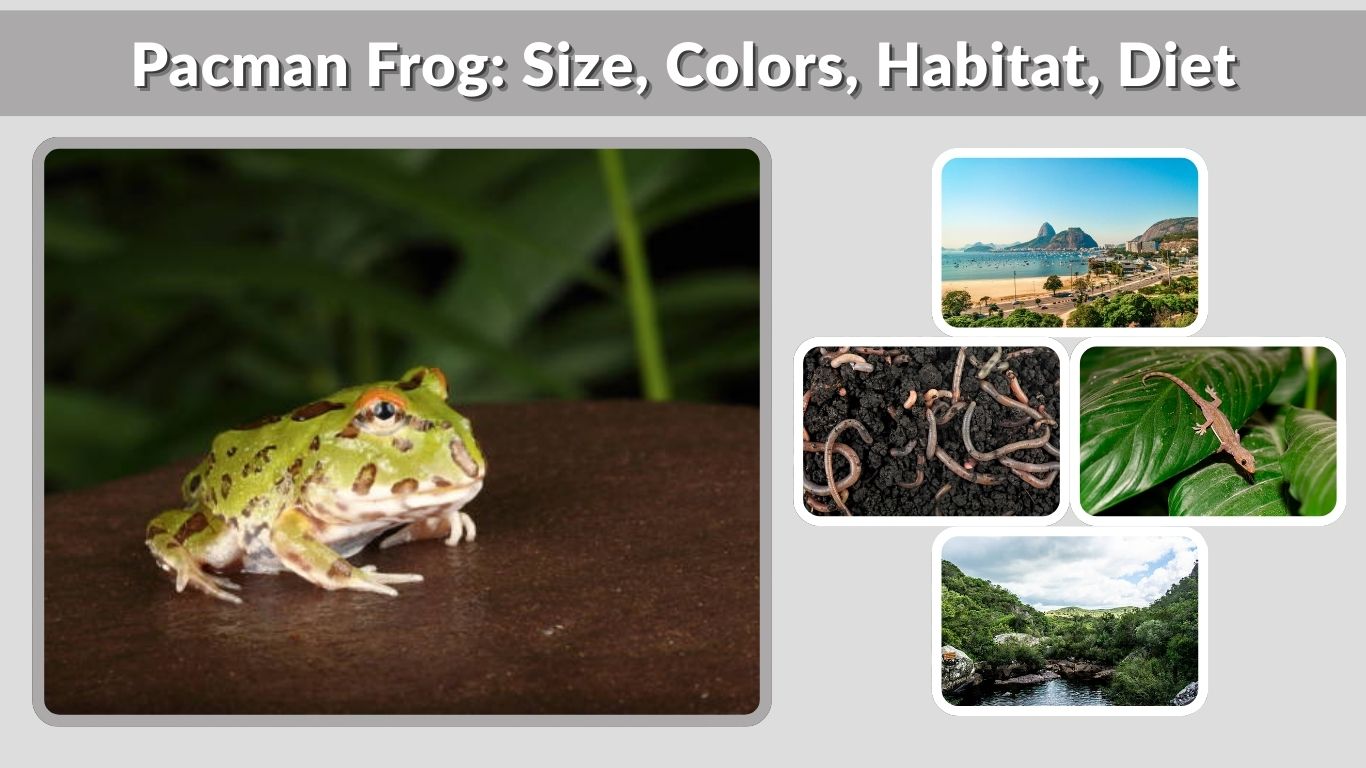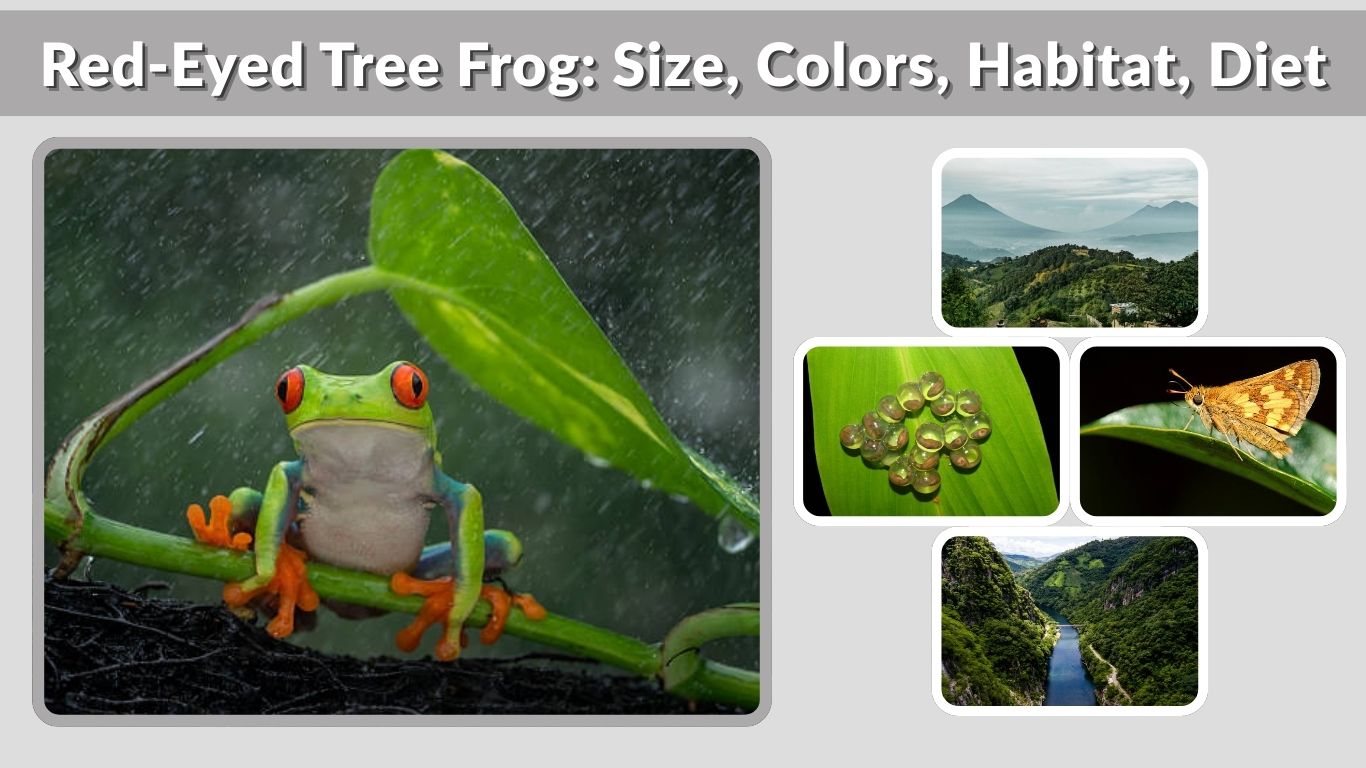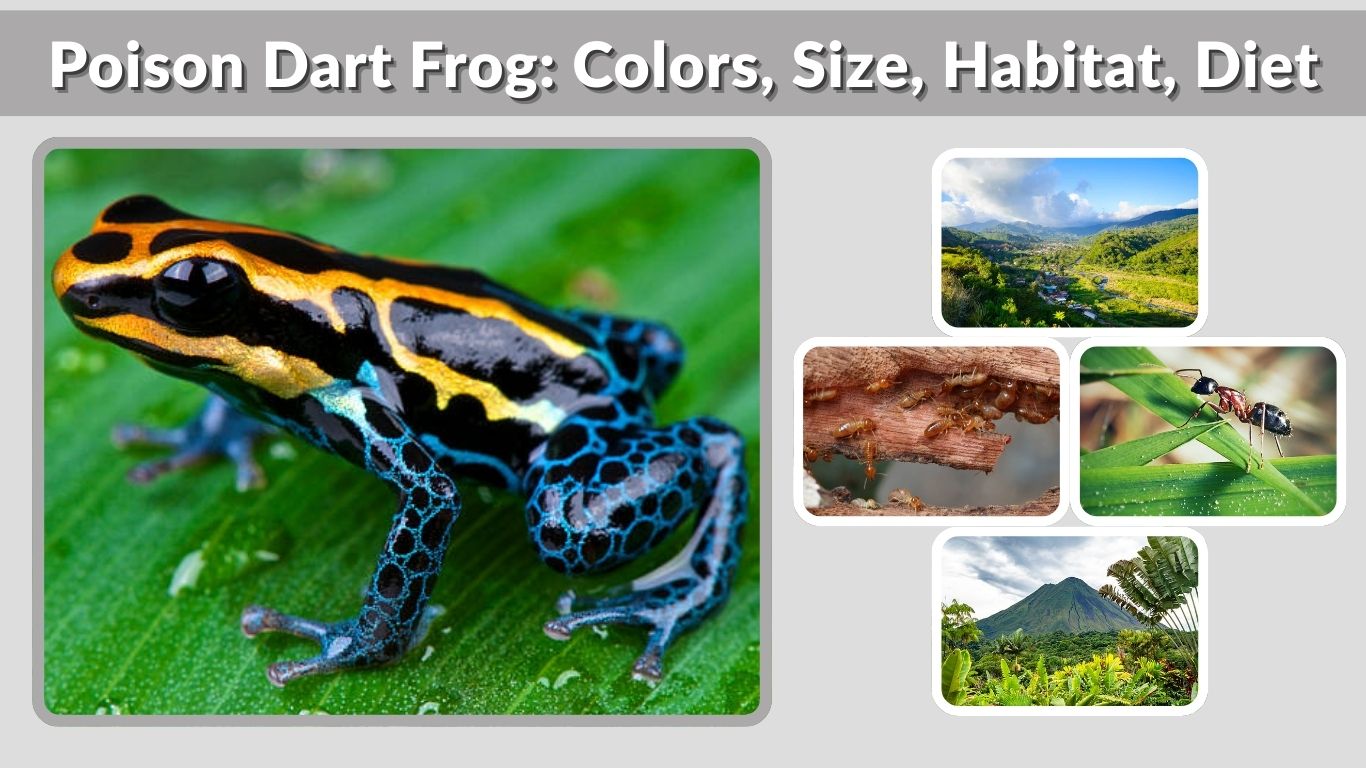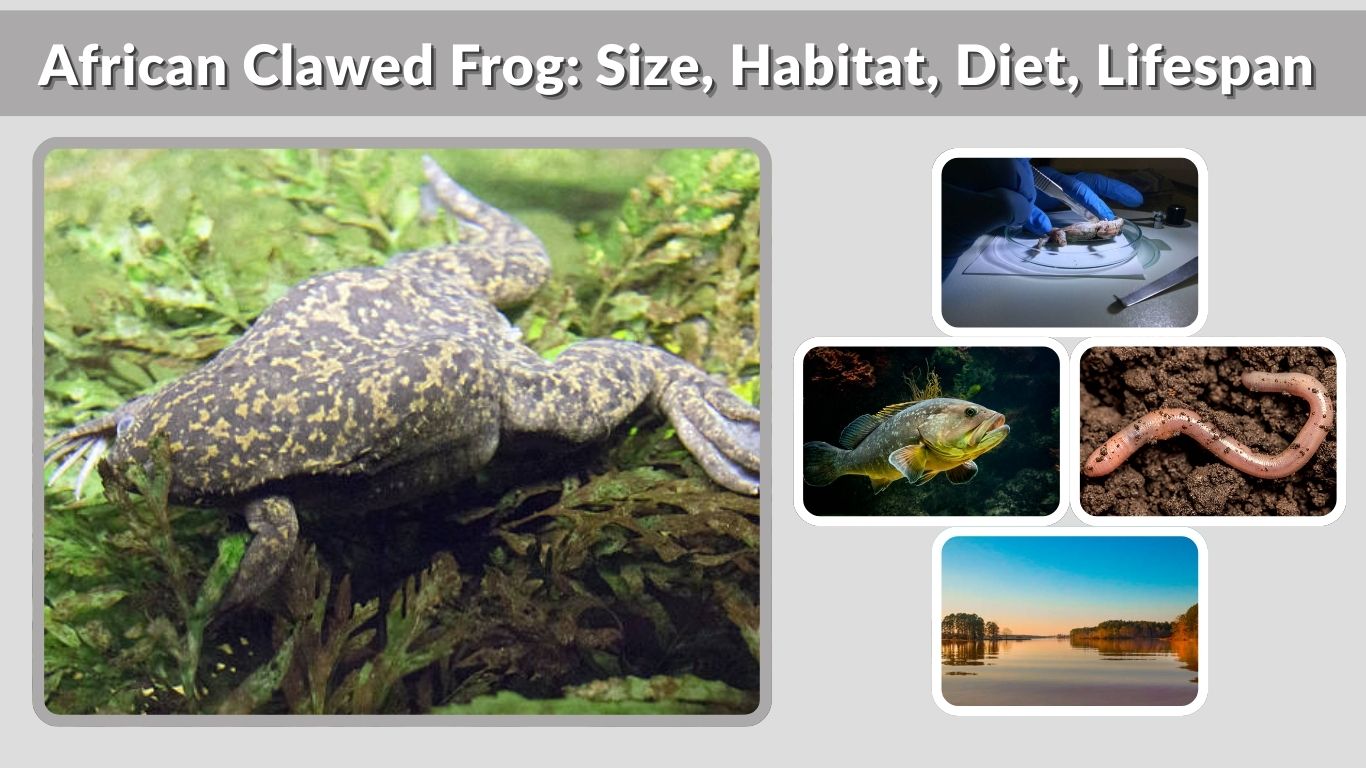




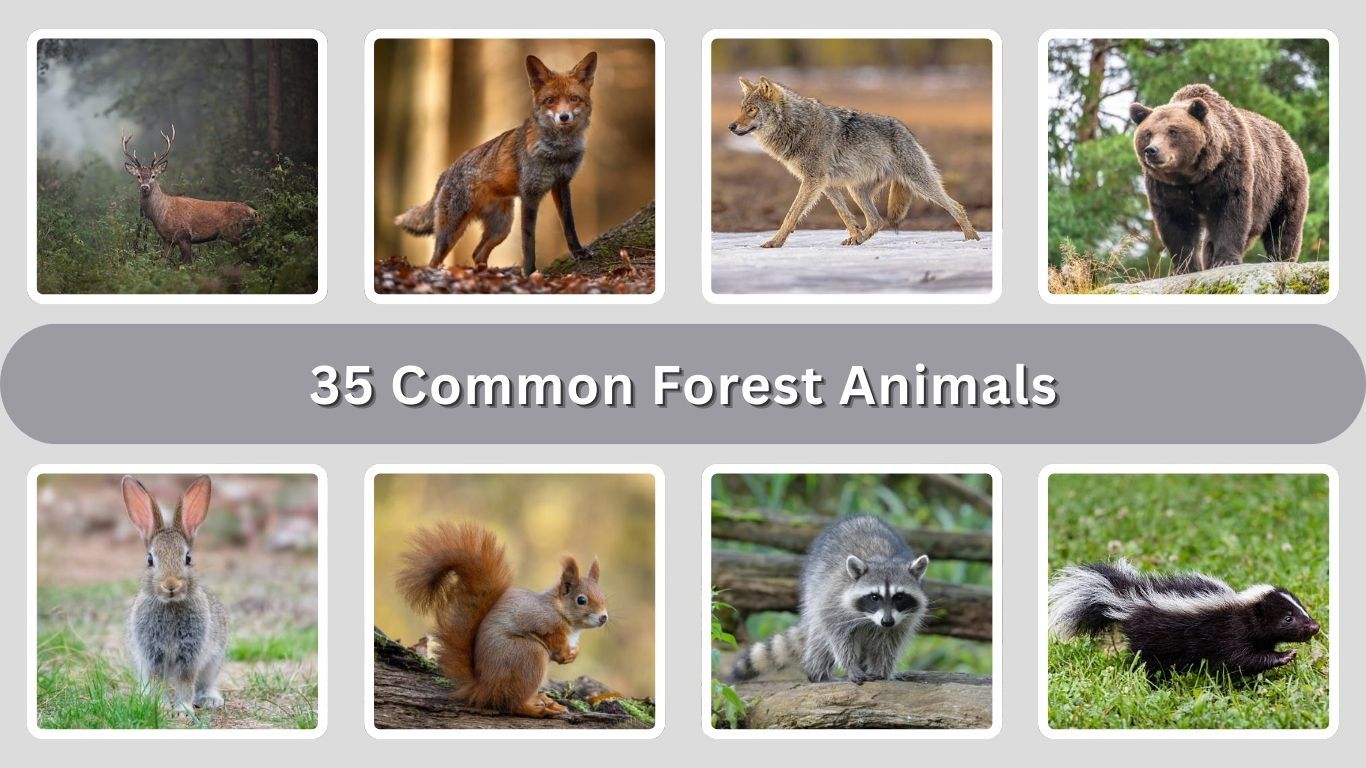
Forests are home to a wide variety of animals, each uniquely adapted to survive in these rich and complex ecosystems. From large predators like tigers and bears to small creatures such as frogs, insects, and squirrels, forest animals play vital roles in maintaining ecological balance. They help regulate populations, spread seeds, recycle nutrients, and support healthy plant growth. Understanding forest animals helps us appreciate biodiversity and highlights the importance of conserving forests for future generations.
1. Deer
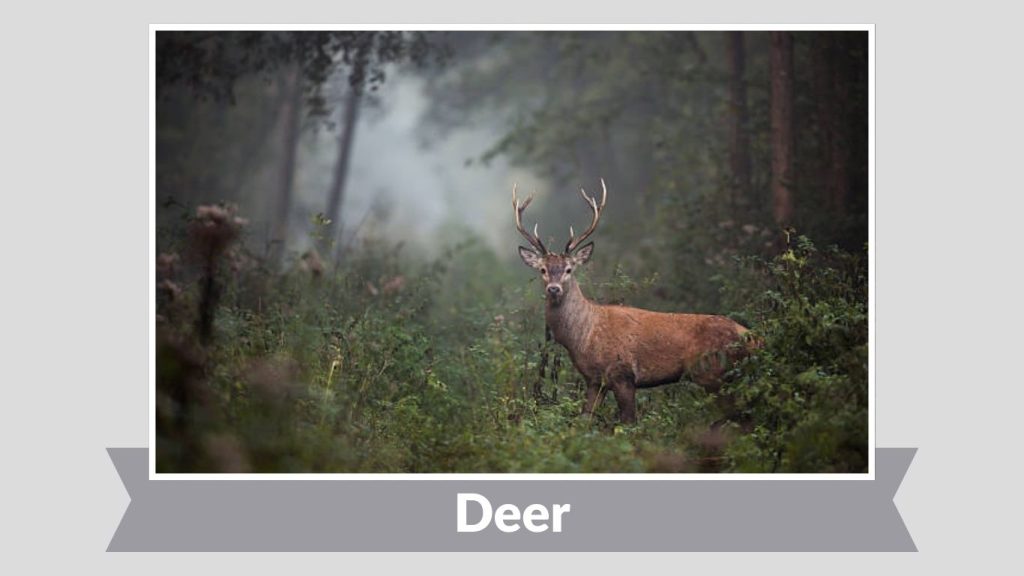
Deer are graceful, hoofed mammals commonly found in forests around the world. They are well known for their agility, keen senses, and, in many species, the impressive antlers grown by males. Deer play an important role in forest ecosystems by shaping vegetation and serving as prey for large predators.
Identification
- Medium to large-sized herbivorous mammal
- Slender body with long legs
- Short tail
- Males of most species have antlers
- Brown, gray, or reddish coat (often seasonal)
Habitat
Deer primarily live in forests, woodlands, and forest edges, but they can also be found in grasslands and mountainous regions. They prefer areas with dense vegetation for cover and open spaces for grazing.
Behaviors
Deer are generally shy and alert animals. Most species are active during early morning and evening (crepuscular). They often live alone or in small groups, though females may stay with their young, and males may form small bachelor groups outside the breeding season.
Diet
Deer are herbivores. Their diet includes grass, leaves, shoots, fruits, nuts, bark, and twigs. The exact diet varies depending on the season and available vegetation.
Lifespan
In the wild, deer typically live between 6 and 14 years, depending on the species and environmental conditions. Predation, disease, and human activity can significantly affect their lifespan.
2. Fox
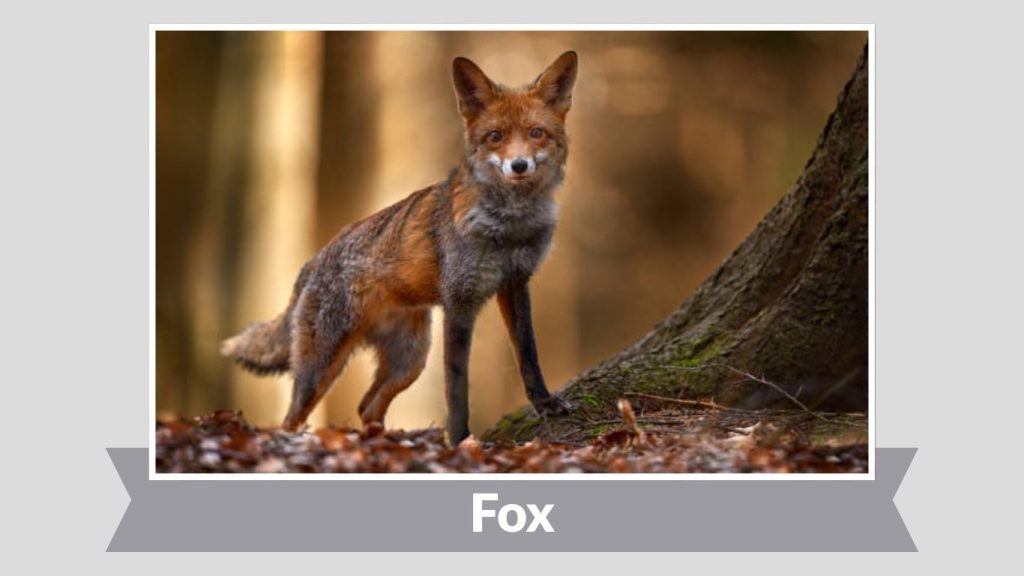
Foxes are small to medium-sized mammals known for their intelligence, sharp senses, and adaptability. They are found in many forested regions and are easily recognized by their bushy tails and pointed faces. Foxes play a key role in controlling populations of small animals.
Identification
- Small to medium-sized carnivorous mammal
- Slender body with long legs
- Pointed snout and upright ears
- Bushy tail (often with a white tip)
- Fur color varies (red, gray, white, or black)
Habitat
Foxes commonly inhabit forests, woodlands, grasslands, and forest edges. They adapt well to different environments and may also live near human settlements if food is available.
Behaviors
Foxes are mostly nocturnal or crepuscular. They are solitary animals outside the breeding season and are known for their cunning behavior. Foxes communicate using vocal sounds, body language, and scent marking.
Diet
Foxes are omnivores. Their diet includes small mammals, birds, insects, fruits, berries, eggs, and occasionally carrion. This flexible diet helps them survive in diverse environments.
Lifespan
In the wild, foxes usually live between 3 and 7 years. While they can live longer in captivity, predators, disease, and human activity often shorten their lifespan in nature.
3. Wolf
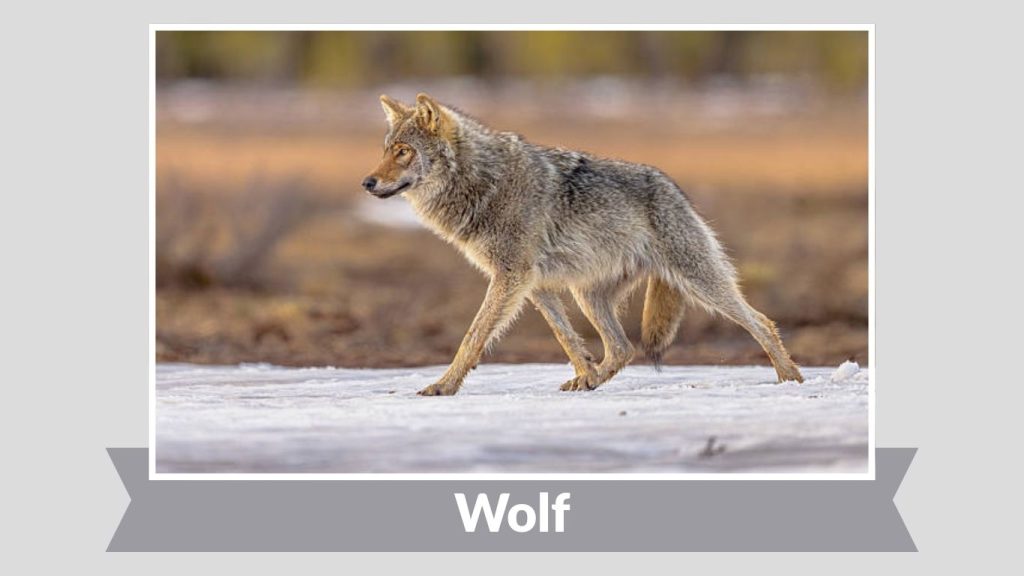
Wolves are large, powerful carnivorous mammals and one of the most iconic animals of the forest. Known for their strong social bonds and intelligence, wolves live and hunt in coordinated groups called packs. They play a crucial role in maintaining balance within forest ecosystems.
Identification
- Large carnivorous mammal
- Strong, muscular build
- Long legs and broad chest
- Thick fur, usually gray, white, black, or brown
- Bushy tail carried low
Habitat
Wolves inhabit forests, woodlands, tundra, and mountainous regions. They prefer large, remote areas with abundant prey and minimal human disturbance.
Behaviors
Wolves are highly social animals that live in packs with a clear hierarchy. They communicate through howling, body posture, facial expressions, and scent marking. Pack members cooperate in hunting and caring for young.
Diet
Wolves are carnivores. Their diet mainly consists of large ungulates such as deer, elk, and moose, but they also eat smaller mammals, birds, and carrion when necessary.
Lifespan
In the wild, wolves typically live between 6 and 8 years, though some individuals may survive longer. Factors such as food availability, disease, and human conflict strongly influence their lifespan.
4. Bear
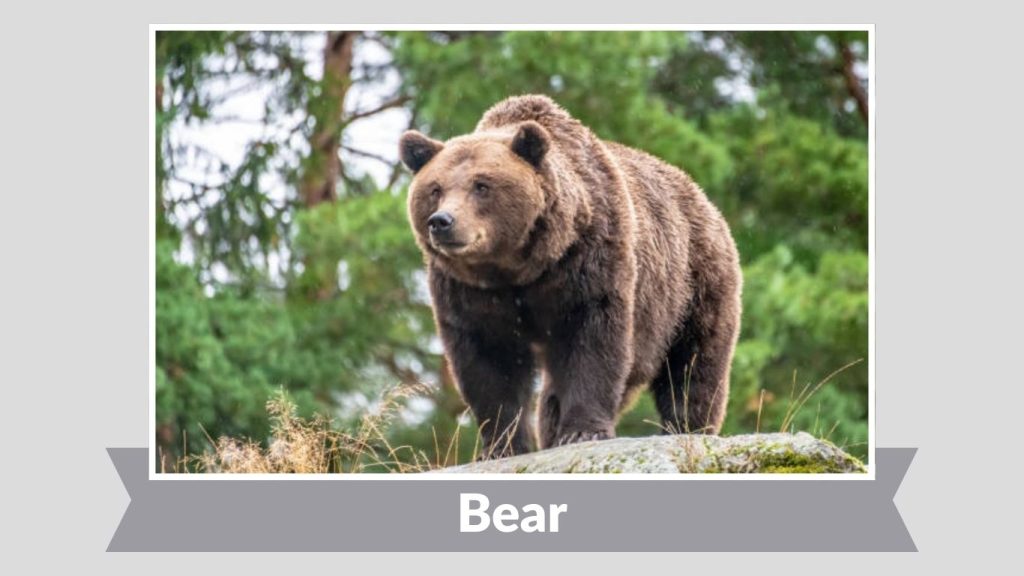
Bears are large, powerful mammals commonly found in forested regions across the world. They are known for their strength, thick fur, and adaptability, with diets that vary widely by species and season. Bears are important to forest ecosystems as seed dispersers and top-level consumers.
Identification
- Large, heavy-bodied mammal
- Thick fur and a stocky build
- Short tail and small eyes
- Long snout with a strong sense of smell
- Color varies by species (black, brown, white)
Habitat
Bears mainly live in forests, woodlands, and mountainous areas. They prefer regions with dense cover, access to water, and abundant seasonal food sources.
Behaviors
Bears are generally solitary animals, except mothers with cubs. Many species hibernate or enter a state of torpor during winter. They are strong swimmers and climbers, depending on the species.
Diet
Bears are omnivores. Their diet includes fruits, berries, roots, insects, fish, small mammals, and occasionally larger prey. Food choices change with seasonal availability.
Lifespan
In the wild, bears usually live between 15 and 25 years. Their lifespan depends on species, habitat quality, and human-related threats such as habitat loss and hunting.
5. Rabbit
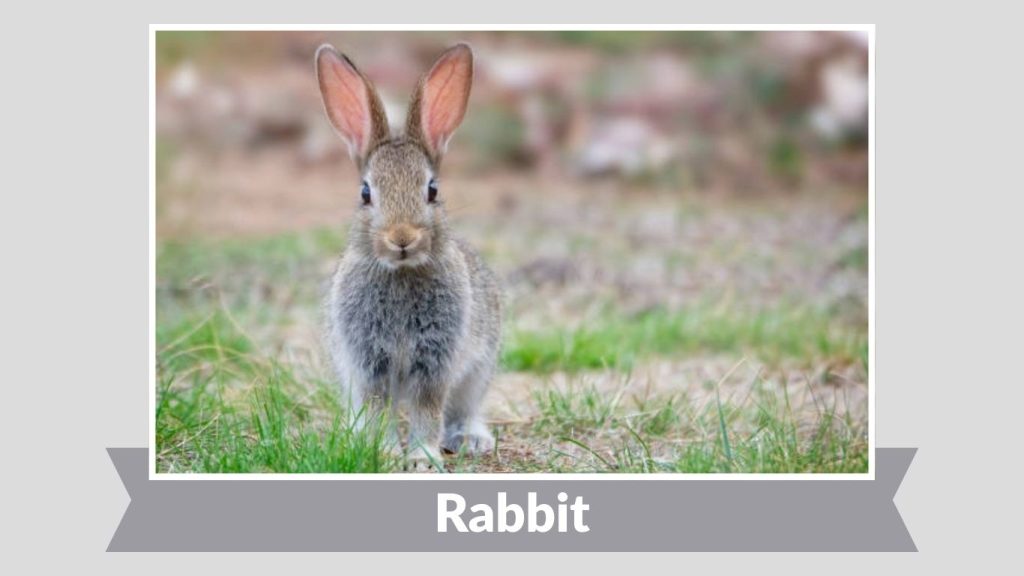
Rabbits are small, fast-moving mammals commonly found in forest undergrowth and woodland edges. They are known for their long ears, strong hind legs, and rapid breeding. Rabbits are an important prey species and play a key role in forest food chains.
Identification
- Small herbivorous mammal
- Long ears and large eyes
- Short fluffy tail
- Strong hind legs adapted for jumping
- Soft fur, usually brown, gray, or white
Habitat
Rabbits live in forests, woodlands, grasslands, and shrublands. They prefer areas with dense vegetation for hiding and open patches for feeding.
Behaviors
Rabbits are mostly crepuscular, being active at dawn and dusk. They are social animals and often live in groups, using burrows or natural cover to escape predators.
Diet
Rabbits are herbivores. Their diet consists of grass, leaves, shoots, bark, and roots. They also practice coprophagy, re-eating soft feces to absorb additional nutrients.
Lifespan
In the wild, rabbits typically live between 1 and 3 years. High predation rates and environmental pressures often limit their lifespan.
6. Squirrel
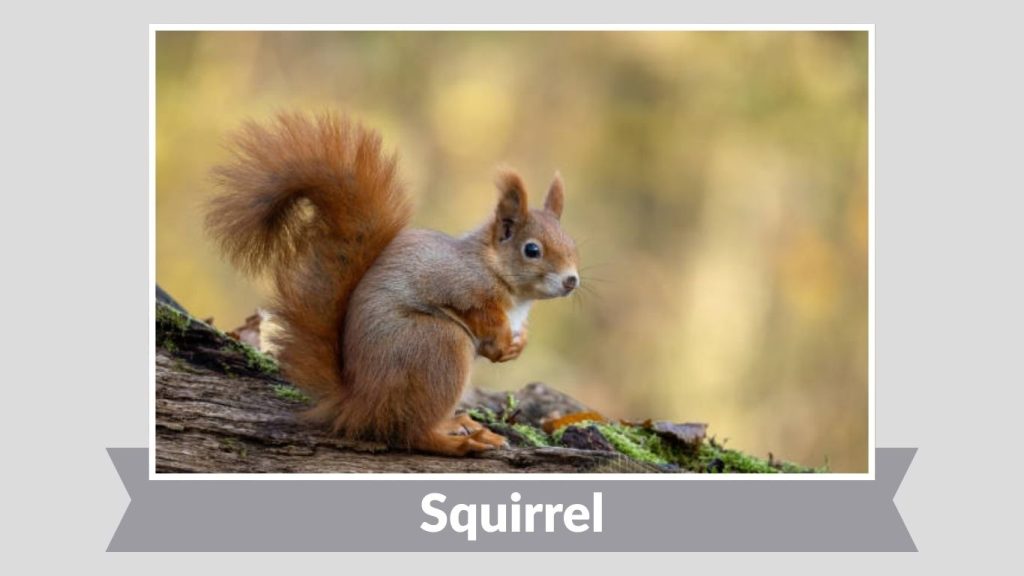
Squirrels are small, energetic rodents commonly seen in forests and woodlands. They are known for their quick movements, bushy tails, and habit of collecting and storing food. Squirrels play an important role in forests by helping spread seeds and nuts.
Identification
- Small to medium-sized rodent
- Slender body with sharp claws
- Large eyes and small rounded ears
- Long, bushy tail
- Fur color varies (gray, red, brown, or black)
Habitat
Squirrels mainly live in forests, woodlands, and parks. They prefer areas with plenty of trees, as they rely on them for shelter, nesting, and food.
Behaviors
Squirrels are mostly active during the day. They are agile climbers and excellent jumpers, often moving quickly between trees. Many species store food in hidden caches to survive winter months.
Diet
Squirrels are omnivores. Their diet includes nuts, seeds, fruits, berries, fungi, insects, and sometimes bird eggs.
Lifespan
In the wild, squirrels generally live between 5 and 10 years, though many do not survive that long due to predators and environmental challenges.
7. Raccoon
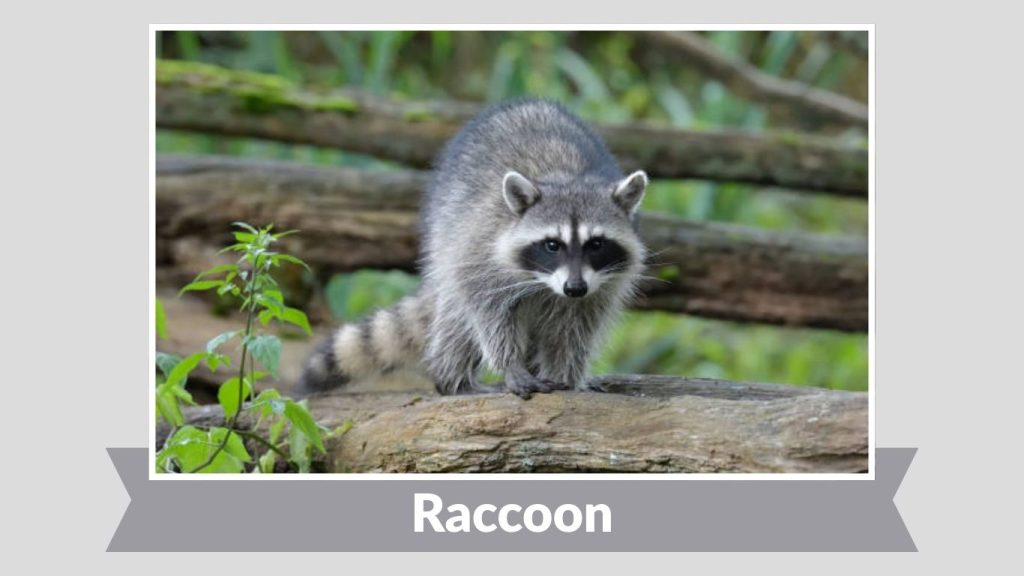
Raccoons are clever, adaptable mammals known for their masked faces and dexterous front paws. Common in forested areas, they are excellent problem-solvers and can thrive in a wide range of environments, including those close to human activity.
Identification
- Medium-sized mammal
- Distinct black “mask” around the eyes
- Ringed, bushy tail
- Grayish-brown fur
- Highly flexible front paws
Habitat
Raccoons live in forests, woodlands, wetlands, and forest edges. They prefer habitats near water sources such as rivers, lakes, or swamps.
Behaviors
Raccoons are mostly nocturnal. They are solitary animals but may share dens during colder months. Raccoons are known for their curiosity and ability to manipulate objects.
Diet
Raccoons are omnivores. Their diet includes fruits, nuts, insects, small animals, eggs, fish, and amphibians.
Lifespan
In the wild, raccoons typically live between 2 and 5 years. Disease, predation, and vehicle collisions often reduce their lifespan.
8. Skunk
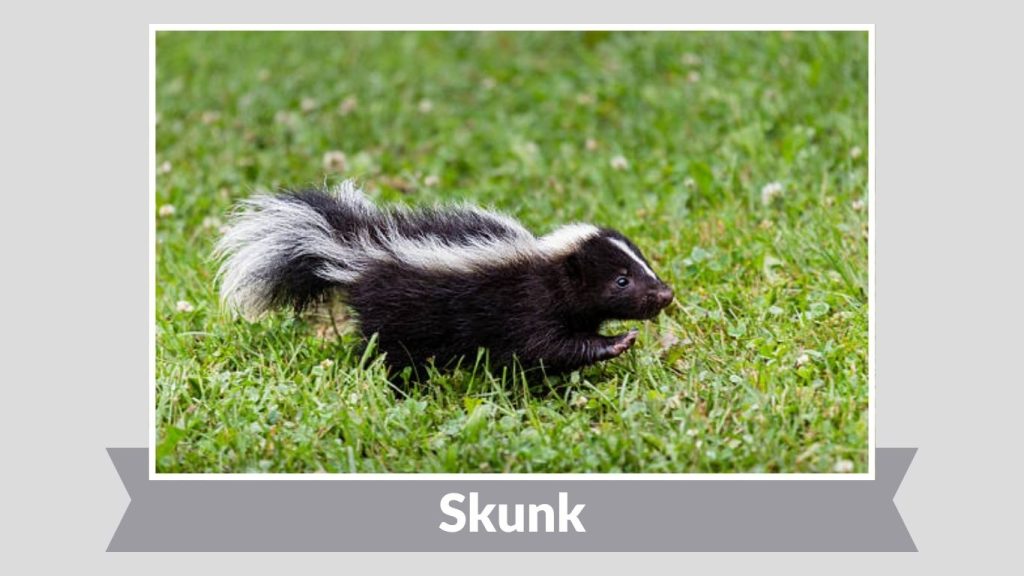
Skunks are small to medium-sized mammals best known for their powerful defensive spray and bold black-and-white coloring. Despite their reputation, skunks are generally calm animals that avoid conflict and play a useful role in forest ecosystems by controlling insect and rodent populations.
Identification
- Medium-sized mammal with a stocky body
- Distinct black fur with white stripes or spots
- Small head with short legs
- Bushy tail often raised when threatened
- Strong scent glands at the base of the tail
Habitat
Skunks are commonly found in forests, woodlands, grasslands, and forest edges. They prefer areas with mixed vegetation and easy access to shelter such as hollow logs, burrows, rock piles, or abandoned dens.
Behaviors
Skunks are primarily nocturnal and solitary. They rely more on warning displays than aggression, stamping their feet and raising their tail before spraying. The spray is used only as a last resort. During colder months, skunks may remain inactive for long periods but do not truly hibernate.
Diet
Skunks are omnivores with a varied diet. They eat insects, grubs, beetles, small mammals, eggs, berries, fruits, roots, and occasionally carrion. Their strong appetite for insects makes them beneficial to forests and farms.
Lifespan
In the wild, skunks usually live between 3 and 7 years. Their lifespan is often shortened by predators, disease, and vehicle accidents, though they can live longer in protected environments.
9. Badger
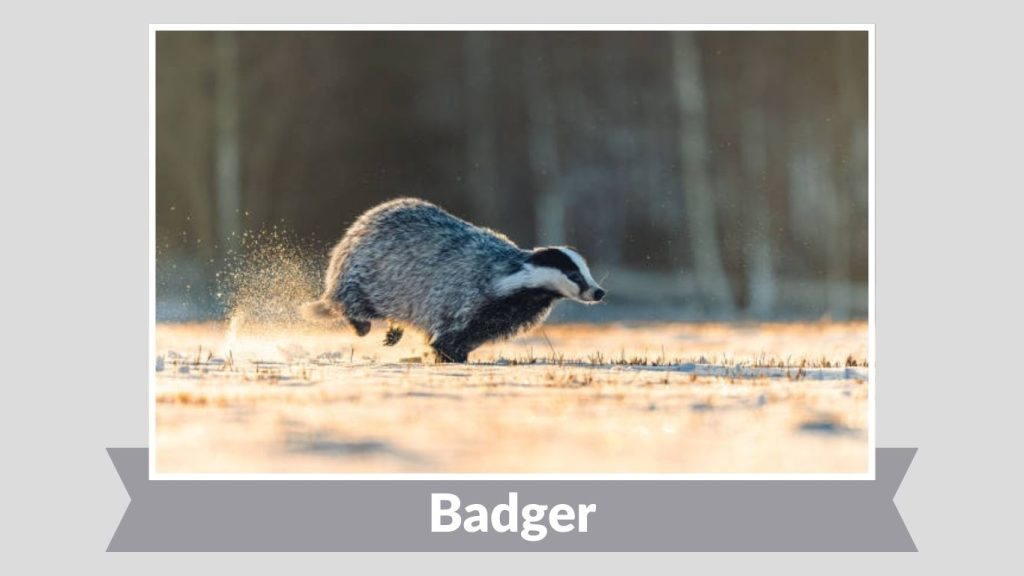
Badgers are strong, burrowing mammals known for their short legs, muscular build, and distinctive facial markings. They are highly adapted to life underground and play an important role in forest ecosystems by aerating soil and controlling insect and small animal populations.
Identification
- Medium-sized, stocky mammal
- Short legs with powerful claws
- Broad head with a short neck
- Distinct facial stripes (usually black and white)
- Thick, coarse gray or brown fur
Habitat
Badgers live in forests, woodlands, grasslands, and forest edges. They prefer areas with soft soil suitable for digging and often create extensive underground tunnel systems called setts.
Behaviors
Badgers are mostly nocturnal and spend much of their time underground. They are solitary or live in small family groups, depending on the species. Badgers are excellent diggers and use their burrows for shelter, raising young, and protection from predators.
Diet
Badgers are omnivores. Their diet includes insects, earthworms, small mammals, birds’ eggs, roots, fruits, and nuts. Diet varies by season and habitat availability.
Lifespan
In the wild, badgers typically live between 4 and 10 years. Predation, disease, and habitat disturbance are the main factors affecting their longevity.
10. Moose
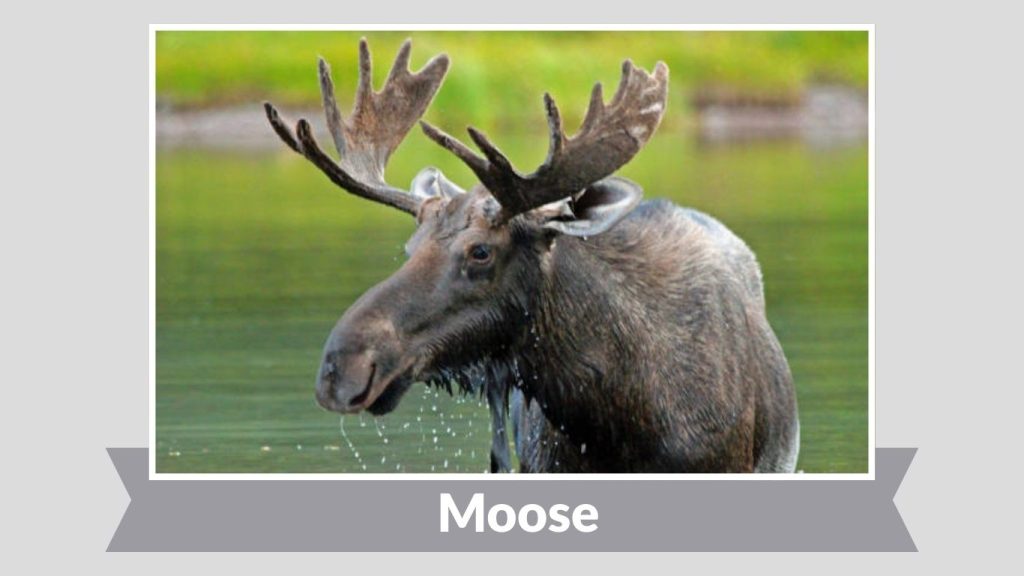
Moose are the largest members of the deer family and are well known for their massive size, long legs, and broad antlers. They are powerful yet solitary animals, adapted to cold forest environments and capable of moving easily through dense vegetation and deep snow.
Identification
- Very large herbivorous mammal
- Long legs and a heavy, muscular body
- Broad snout with a hanging flap of skin (dewlap)
- Males have large, flat, palm-shaped antlers
- Dark brown to black coat
Habitat
Moose live in boreal forests, temperate forests, and wetlands. They prefer areas with lakes, rivers, and marshes, as water plants are an important part of their diet.
Behaviors
Moose are generally solitary and less social than other deer species. They are most active during early morning and evening. Despite their size, moose are strong swimmers and can travel long distances through water and rough terrain.
Diet
Moose are herbivores. Their diet includes leaves, twigs, bark, shrubs, and aquatic plants. They often feed on willow, birch, and water vegetation, especially during summer.
Lifespan
In the wild, moose typically live between 15 and 20 years. Calves and older individuals are more vulnerable to predators, harsh winters, and disease.
11. Wild Boar
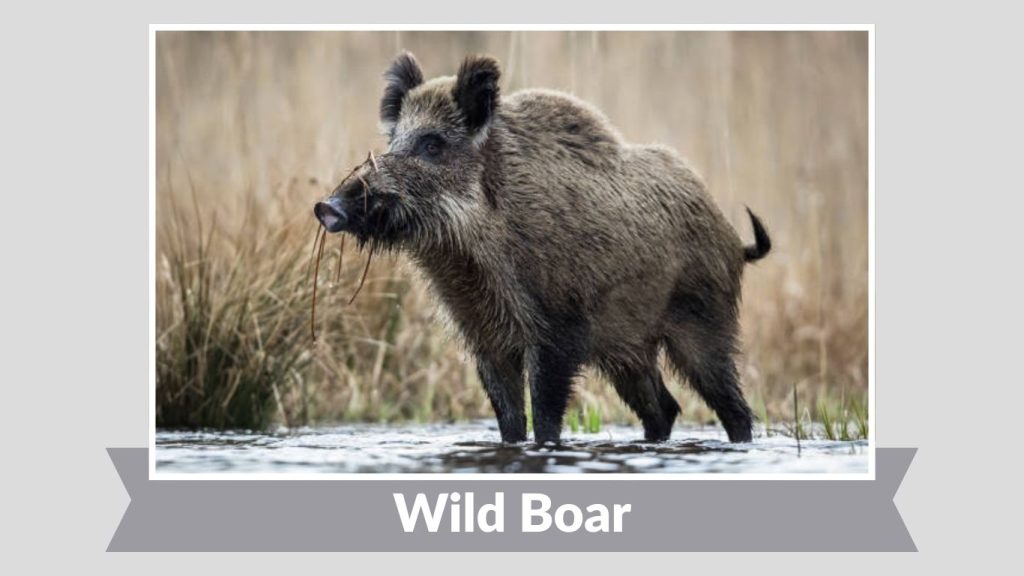
Wild boars are strong, adaptable mammals known for their tusks, coarse hair, and rooting behavior. They are highly resilient animals that thrive in many forest environments and have a major impact on soil structure and vegetation through their foraging habits.
Identification
- Medium to large-sized mammal
- Stocky body with short legs
- Coarse, bristly hair (brown, black, or gray)
- Long snout adapted for digging
- Curved tusks, especially prominent in males
Habitat
Wild boars inhabit forests, woodlands, swamps, and forest edges. They prefer areas with dense cover, soft soil for rooting, and nearby water sources for drinking and wallowing.
Behaviors
Wild boars are usually nocturnal or crepuscular. They are social animals, often living in groups called sounders, typically made up of females and young. Boars are known for wallowing in mud to regulate body temperature and protect their skin from parasites.
Diet
Wild boars are omnivores. Their diet includes roots, tubers, nuts, fruits, insects, small animals, eggs, and carrion. Their flexible diet allows them to survive in diverse environments.
Lifespan
In the wild, wild boars generally live between 10 and 14 years. Hunting, predation, and harsh environmental conditions often reduce their average lifespan.
12. Hedgehog
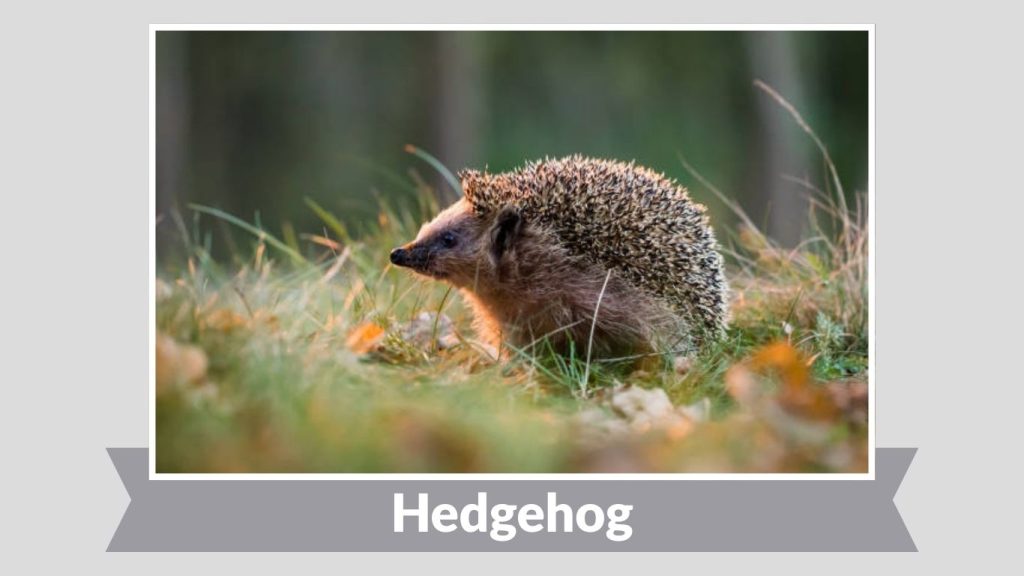
Hedgehogs are small, nocturnal mammals easily recognized by their coat of sharp spines. They are shy, ground-dwelling animals that rely on camouflage and defense rather than speed. In forest ecosystems, hedgehogs help control insect populations.
Identification
- Small, round-bodied mammal
- Covered in stiff spines instead of fur on the back
- Short legs and pointed snout
- Small eyes and ears
- Brown or gray coloration
Habitat
Hedgehogs live in forests, woodlands, hedgerows, and forest edges. They prefer areas with leaf litter, dense undergrowth, and plenty of hiding places such as logs or shrubs.
Behaviors
Hedgehogs are primarily nocturnal and solitary. When threatened, they curl into a tight ball, using their spines for protection. In colder regions, hedgehogs hibernate during winter.
Diet
Hedgehogs are omnivores. Their diet includes insects, worms, snails, beetles, small amphibians, fruits, and berries.
Lifespan
In the wild, hedgehogs typically live between 3 and 7 years. Predators, road accidents, and habitat loss are common threats that affect their survival.
13. Beaver
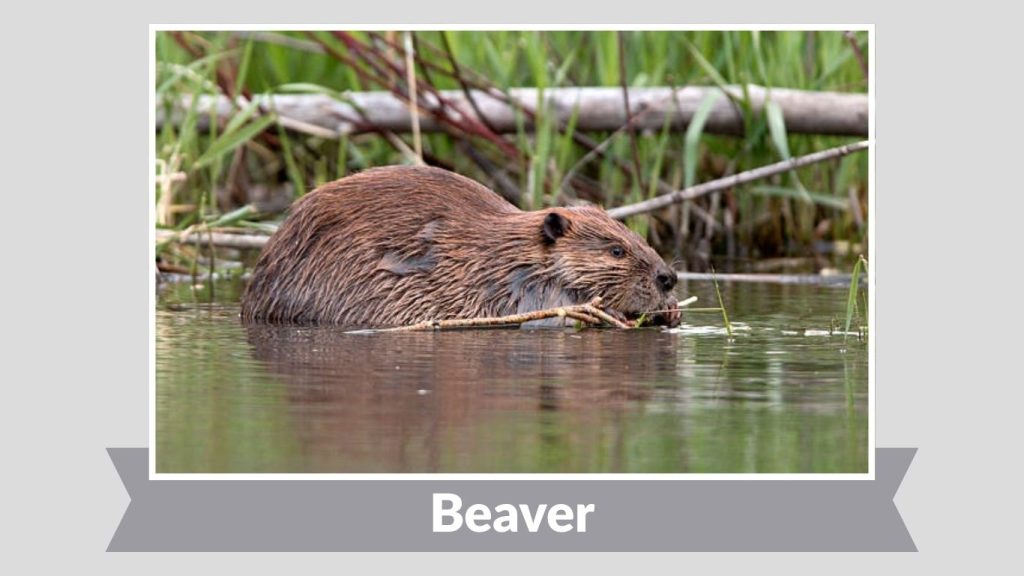
Beavers are large, semi-aquatic rodents famous for their dam-building abilities. They are considered “ecosystem engineers” because their activities create wetlands that support many other forest and aquatic species.
Identification
- Large rodent with a heavy body
- Broad, flat, paddle-shaped tail
- Thick waterproof fur, usually brown
- Strong front teeth that continuously grow
- Webbed hind feet for swimming
Habitat
Beavers live in forested areas near rivers, streams, lakes, and ponds. They prefer slow-moving or still water surrounded by trees such as willow, aspen, and birch, which they use for food and construction.
Behaviors
Beavers are mostly nocturnal and live in family groups. They build dams to control water levels and construct lodges for shelter. Beavers communicate using scent marking and tail slapping on water as a warning signal.
Diet
Beavers are herbivores. Their diet consists of tree bark, twigs, leaves, aquatic plants, and roots. During winter, they rely on stored food underwater.
Lifespan
In the wild, beavers typically live between 10 and 12 years. Their survival depends on water quality, habitat stability, and predator presence.
14. Porcupine
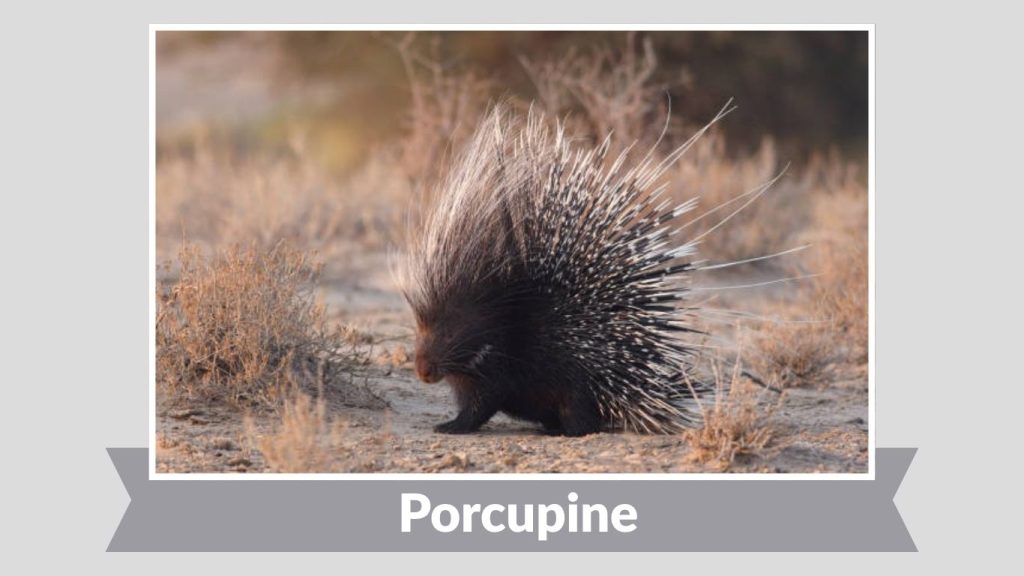
Porcupines are slow-moving, tree-climbing rodents best known for their sharp quills, which provide strong protection from predators. Despite their defensive appearance, porcupines are generally calm animals and play a role in shaping forest vegetation.
Identification
- Medium to large-sized rodent
- Body covered with sharp quills
- Short legs and rounded body
- Small head with blunt snout
- Brown, black, or yellowish fur mixed with quills
Habitat
Porcupines live in forests, woodlands, and mountainous regions. They prefer areas with abundant trees, as they rely on them for food, shelter, and climbing.
Behaviors
Porcupines are mostly nocturnal and solitary. When threatened, they raise and rattle their quills as a warning. They are skilled climbers and often spend time in trees to feed and rest.
Diet
Porcupines are herbivores. Their diet includes tree bark, leaves, twigs, needles, fruits, and roots. During winter, bark becomes their primary food source.
Lifespan
In the wild, porcupines typically live between 5 and 10 years. Their quills provide strong defense, allowing some individuals to survive longer than many other rodents.
15. Lynx

The lynx is a medium-sized wild cat known for its tufted ears, thick fur, and stealthy hunting skills. Perfectly adapted to forest life, lynx are solitary predators that help regulate populations of smaller mammals.
Identification
- Medium-sized wild cat
- Short tail with a black tip
- Tufted ears with black hair tips
- Thick, soft fur for cold climates
- Long legs and large paws
Habitat
Lynx inhabit dense forests, boreal woodlands, and mountainous regions. They prefer remote areas with heavy cover and abundant prey.
Behaviors
Lynx are solitary and mostly nocturnal or crepuscular. They are quiet, elusive hunters that rely on stealth and patience. Large paws help them move easily over snow.
Diet
Lynx are carnivores. Their diet mainly consists of small to medium-sized mammals such as hares, rabbits, rodents, and occasionally birds.
Lifespan
In the wild, lynx typically live between 10 and 15 years. Food availability and habitat quality strongly influence their survival.
16. Bobcat
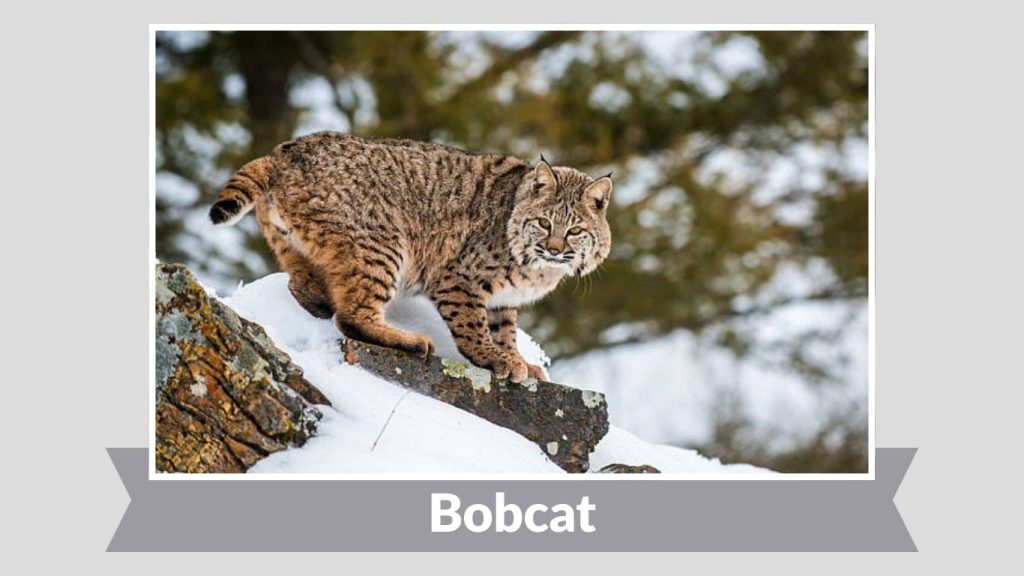
Bobcats are medium-sized wild cats known for their adaptability and keen hunting skills. They are named for their short “bobbed” tails and are common predators in forest ecosystems, helping control populations of small mammals.
Identification
- Medium-sized wild cat
- Short tail with black bands and tip
- Spotted or streaked brownish coat
- Pointed ears with small tufts
- Muscular body with long legs
Habitat
Bobcats live in forests, woodlands, deserts, and forest edges. They adapt well to different environments as long as there is sufficient cover and prey.
Behaviors
Bobcats are solitary and mostly nocturnal. They are territorial animals and use scent marking to define their range. Bobcats are skilled climbers and can swim when necessary.
Diet
Bobcats are carnivores. Their diet includes rabbits, rodents, birds, reptiles, and occasionally deer fawns.
Lifespan
In the wild, bobcats generally live between 7 and 10 years. Predation, disease, and human activity affect their lifespan.
17. Chipmunk
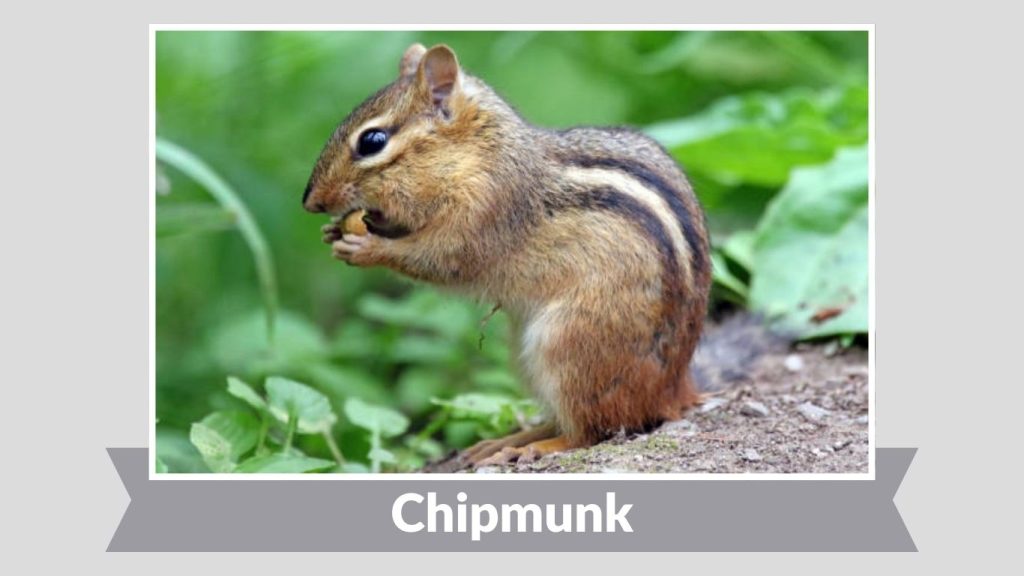
Chipmunks are small, striped rodents known for their quick movements and cheek pouches used for carrying food. They are active forest dwellers that contribute to seed dispersal and soil health.
Identification
- Small rodent with a slender body
- Distinct dark and light stripes along the back
- Large eyes and small rounded ears
- Short legs and bushy tail
- Expandable cheek pouches for food storage
Habitat
Chipmunks live in forests, woodlands, and forest edges. They prefer areas with leaf litter, rocks, logs, and tree roots that provide shelter and foraging space.
Behaviors
Chipmunks are mostly active during the day. They are solitary animals and are known for their rapid movements and high-pitched calls. Chipmunks store food in underground burrows to prepare for winter.
Diet
Chipmunks are omnivores. Their diet includes seeds, nuts, fruits, berries, insects, and occasionally small amphibians.
Lifespan
In the wild, chipmunks typically live between 2 and 5 years. Predators and environmental factors often limit their lifespan.
18. Weasel
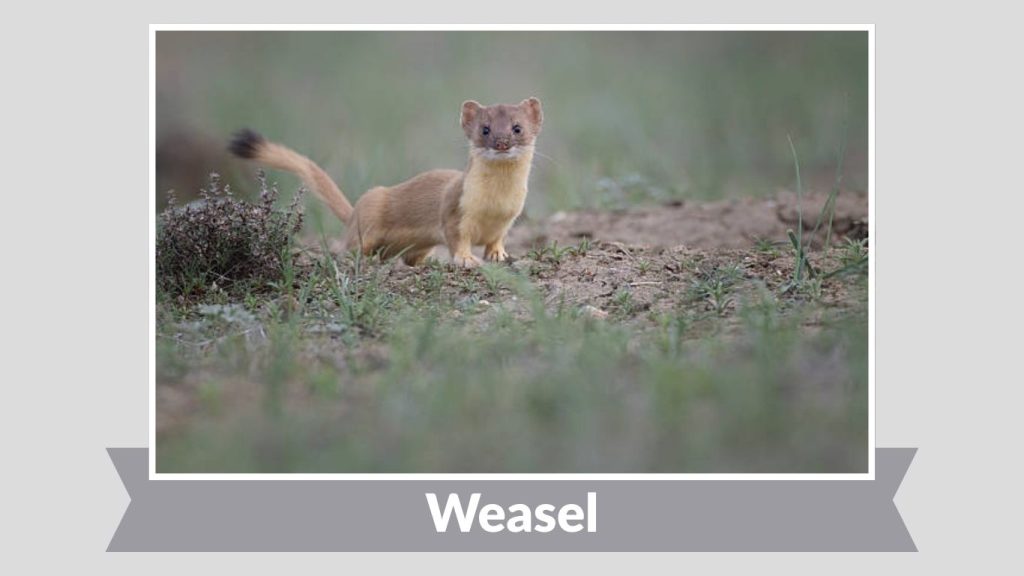
Weasels are small, slender carnivorous mammals known for their agility and fearless hunting behavior. Despite their size, they are efficient predators and play an important role in controlling rodent populations in forest ecosystems.
Identification
- Small, long-bodied mammal
- Short legs and elongated neck
- Pointed snout with sharp teeth
- Brown fur with a lighter underside
- Some species turn white in winter
Habitat
Weasels inhabit forests, woodlands, grasslands, and forest edges. They prefer areas with dense ground cover and abundant small prey.
Behaviors
Weasels are active both day and night. They are solitary and highly territorial, using scent marking to defend their range. Weasels are quick, curious, and extremely agile.
Diet
Weasels are carnivores. Their diet consists mainly of mice, voles, small birds, eggs, frogs, and insects.
Lifespan
In the wild, weasels usually live between 1 and 3 years. High energy demands and predation contribute to their relatively short lifespan.
19. Otter
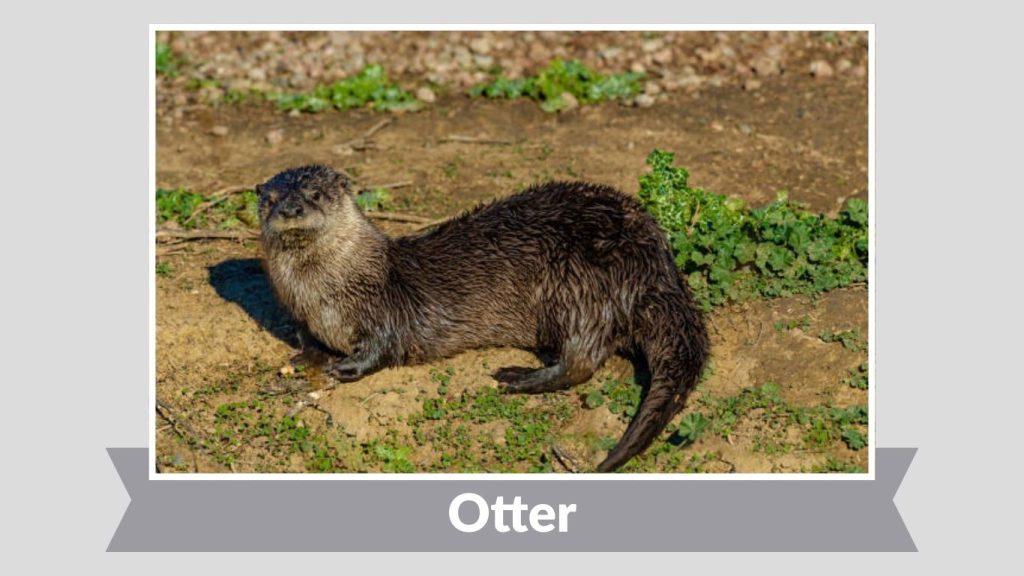
Otters are playful, semi-aquatic mammals well known for their swimming skills and sleek bodies. Found near forest waterways, they are important indicators of healthy aquatic ecosystems.
Identification
- Medium-sized semi-aquatic mammal
- Long, streamlined body
- Short legs with webbed feet
- Thick, waterproof fur
- Long, muscular tail
Habitat
Otters live in forests near rivers, streams, lakes, and wetlands. They require clean water and abundant food, making them sensitive to environmental changes.
Behaviors
Otters are active mostly at night or early morning. They are intelligent and playful, often seen sliding on riverbanks and playing in water. Otters may live alone or in small family groups.
Diet
Otters are carnivores. Their diet includes fish, frogs, crustaceans, insects, and small aquatic animals.
Lifespan
In the wild, otters typically live between 8 and 15 years. Water pollution, habitat loss, and human activity can reduce their lifespan.
20. Marten
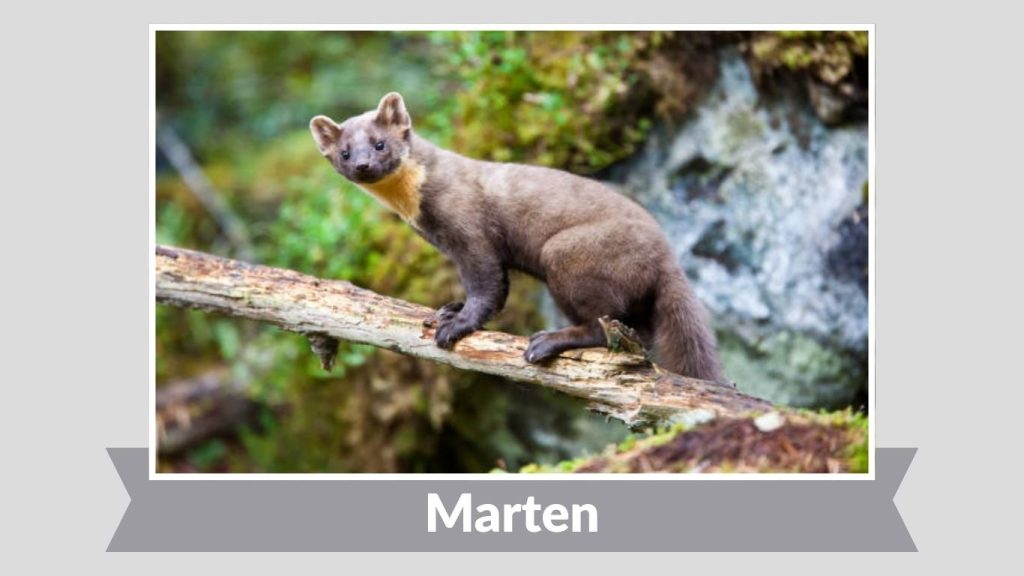
Martens are agile, tree-climbing mammals belonging to the weasel family. They are known for their sleek bodies, sharp senses, and ability to move easily through forest canopies, making them skilled hunters in woodland environments.
Identification
- Medium-sized mammal with a slender body
- Long tail and short legs
- Pointed face with rounded ears
- Thick, soft fur (brown, yellow, or dark)
- Sharp claws for climbing
Habitat
Martens inhabit dense forests, especially mature woodlands with plenty of trees and fallen logs. They prefer areas that provide both canopy cover and ground shelter.
Behaviors
Martens are mostly solitary and active during the day or night, depending on the species. They are excellent climbers and often hunt both on the ground and in trees.
Diet
Martens are omnivores. Their diet includes small mammals, birds, insects, fruits, berries, eggs, and carrion.
Lifespan
In the wild, martens generally live between 8 and 12 years. Survival depends on habitat quality and food availability.
21. Wolverine
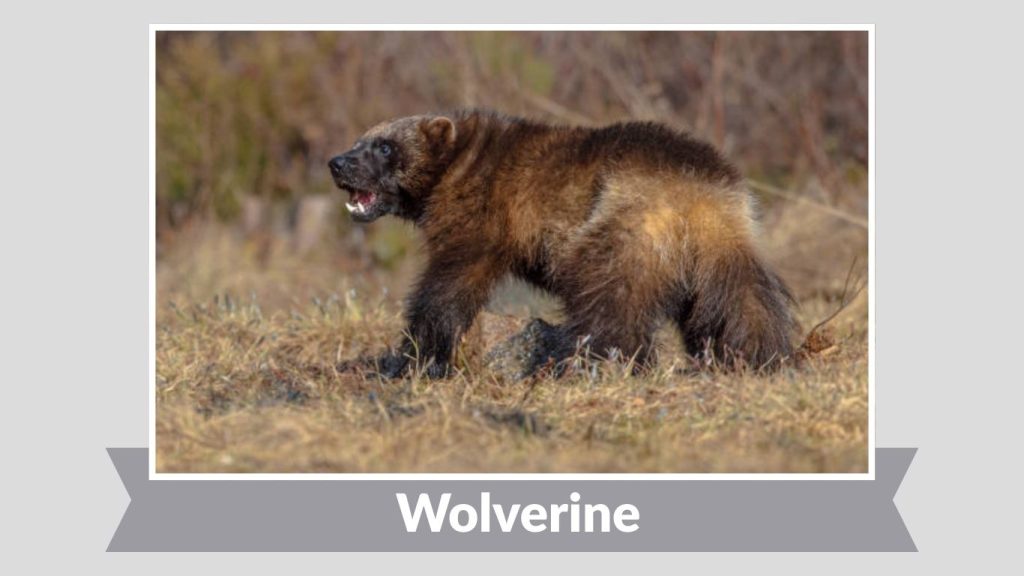
Wolverines are powerful, muscular mammals despite their relatively small size. Known for their strength and fierce nature, they are solitary forest predators that can survive in harsh, cold environments.
Identification
- Stocky, muscular mammal
- Broad head with strong jaws
- Short legs with large paws
- Thick, dark brown fur with lighter side stripes
- Bushy tail
Habitat
Wolverines live in boreal forests, tundra edges, and mountainous regions. They prefer remote, cold environments with deep snow and minimal human disturbance.
Behaviors
Wolverines are solitary and highly territorial. They are known for their endurance and strength, capable of traveling long distances in search of food. Wolverines use scent marking to communicate and defend territory.
Diet
Wolverines are carnivores and scavengers. Their diet includes small and large mammals, birds, eggs, carrion, and occasionally plant matter.
Lifespan
In the wild, wolverines typically live between 7 and 13 years. Limited food availability and harsh conditions strongly affect their survival.
22. Bat
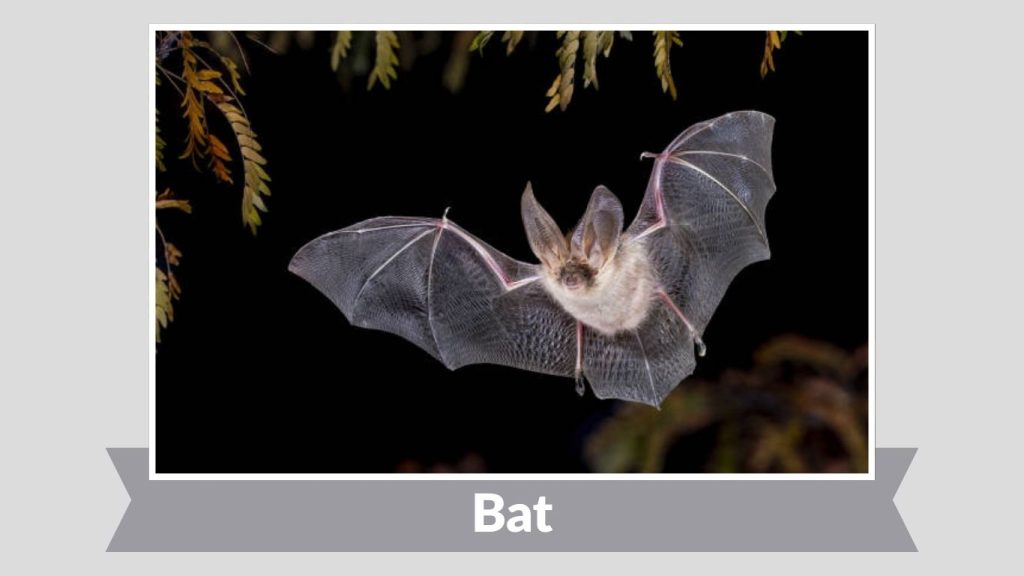
Bats are the only mammals capable of true flight and are essential to forest ecosystems. They help control insect populations and, in some regions, assist in pollination and seed dispersal.
Identification
- Small to medium-sized flying mammal
- Wings made of thin skin stretched over elongated fingers
- Short fur-covered body
- Large ears (in many species)
- Sharp teeth adapted for insect-eating or fruit-eating
Habitat
Bats live in forests, caves, tree hollows, and sometimes abandoned buildings. Forest bats often roost in trees or under loose bark.
Behaviors
Bats are nocturnal and rely on echolocation to navigate and hunt in darkness. They often roost in groups and emerge at dusk to feed.
Diet
Most forest bats are insectivores, feeding on mosquitoes, moths, and beetles. Some species also eat fruit, nectar, or small animals.
Lifespan
Bats have surprisingly long lifespans for their size, often living between 10 and 30 years in the wild, depending on the species.
23. Owl
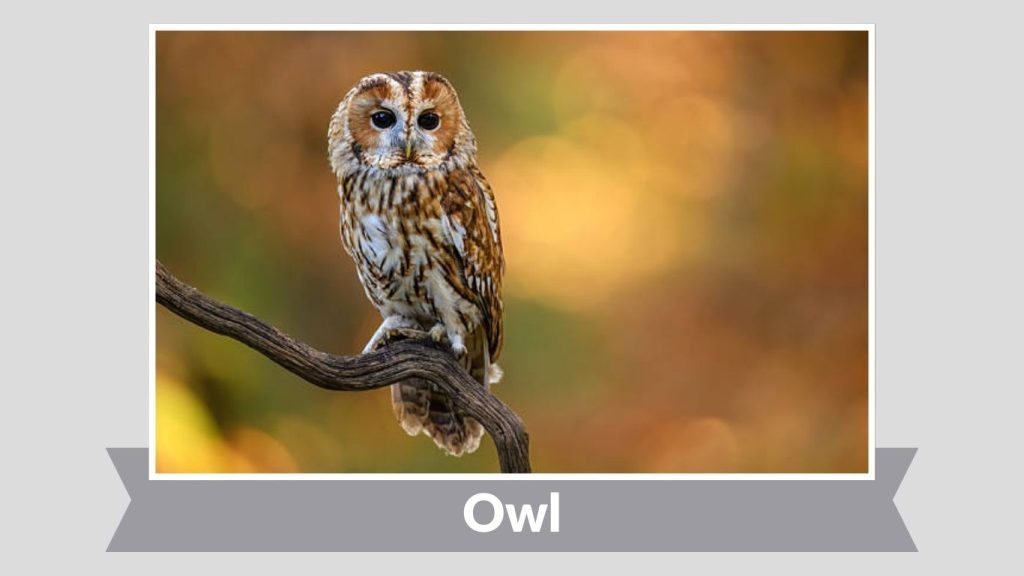
Owls are nocturnal birds of prey known for their silent flight and sharp hunting abilities. They are key forest predators that help control populations of rodents and other small animals.
Identification
- Medium to large bird with a rounded head
- Large forward-facing eyes
- Hooked beak and sharp talons
- Soft feathers for silent flight
- Plumage usually brown, gray, or white
Habitat
Owls live in forests, woodlands, and wooded grasslands. They nest in tree cavities, dense foliage, or abandoned nests of other birds.
Behaviors
Owls are mostly nocturnal and hunt at night. They rely on exceptional hearing and vision to locate prey. Owls are generally solitary and highly territorial.
Diet
Owls are carnivores. Their diet includes rodents, small mammals, birds, reptiles, amphibians, and insects.
Lifespan
In the wild, owls typically live between 5 and 15 years. Some larger species may live longer under favorable conditions.
24. Woodpecker
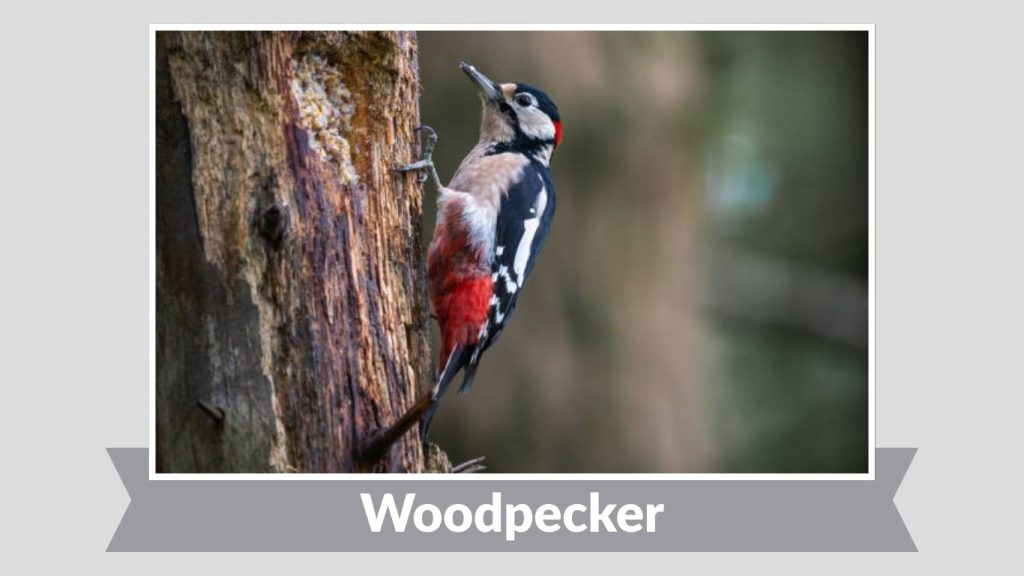
Woodpeckers are distinctive forest birds known for pecking on tree trunks in search of food and nesting sites. They play an important role in forest health by controlling insect populations and creating cavities used by other animals.
Identification
- Medium-sized bird with a strong, straight beak
- Stiff tail feathers used for support
- Short legs with strong claws
- Often black, white, and red markings
- Long, sticky tongue for catching insects
Habitat
Woodpeckers inhabit forests, woodlands, and wooded areas with mature trees. They prefer environments with dead or decaying wood.
Behaviors
Woodpeckers are mostly diurnal and are known for their drumming behavior, which is used to communicate and establish territory. They cling vertically to tree trunks while feeding.
Diet
Woodpeckers are omnivores. Their diet includes insects, larvae, ants, beetles, nuts, seeds, and fruits.
Lifespan
In the wild, woodpeckers generally live between 4 and 11 years, depending on the species and habitat conditions.
25. Crow
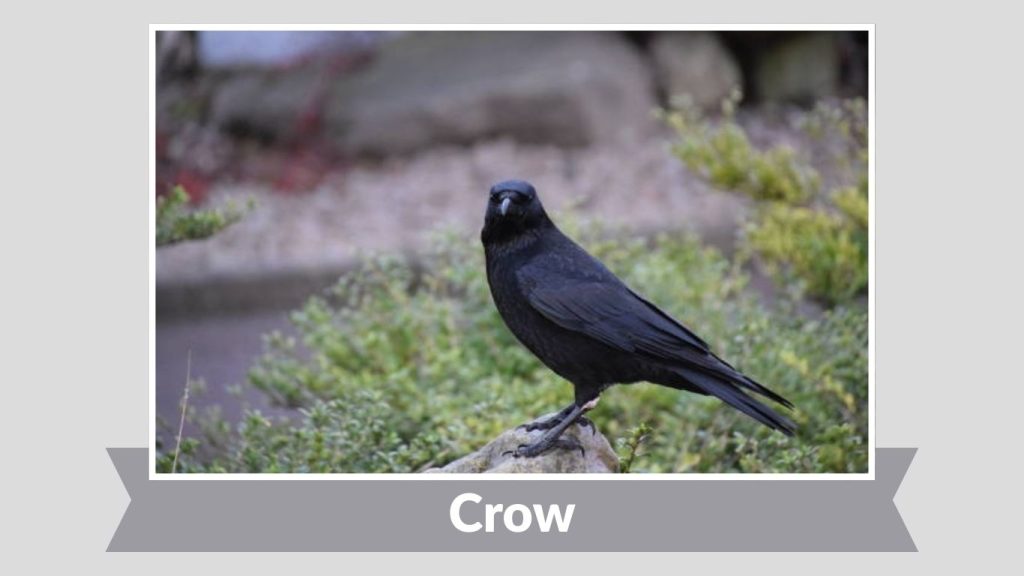
Crows are highly intelligent and adaptable birds commonly found in forests and woodlands. Known for their problem-solving abilities and complex social behavior, crows play an important role in maintaining forest cleanliness.
Identification
- Medium to large-sized bird
- Entirely black or dark plumage
- Strong, slightly curved beak
- Intelligent, alert appearance
- Loud, varied vocalizations
Habitat
Crows live in forests, woodlands, open fields, and forest edges. They adapt easily to different environments, including areas near human settlements.
Behaviors
Crows are diurnal and highly social. They communicate using a wide range of calls and body language. Crows are known to use tools and remember human faces.
Diet
Crows are omnivores. Their diet includes insects, small animals, fruits, seeds, grains, eggs, and carrion.
Lifespan
In the wild, crows typically live between 7 and 15 years, though some individuals may live much longer.
26. Snake
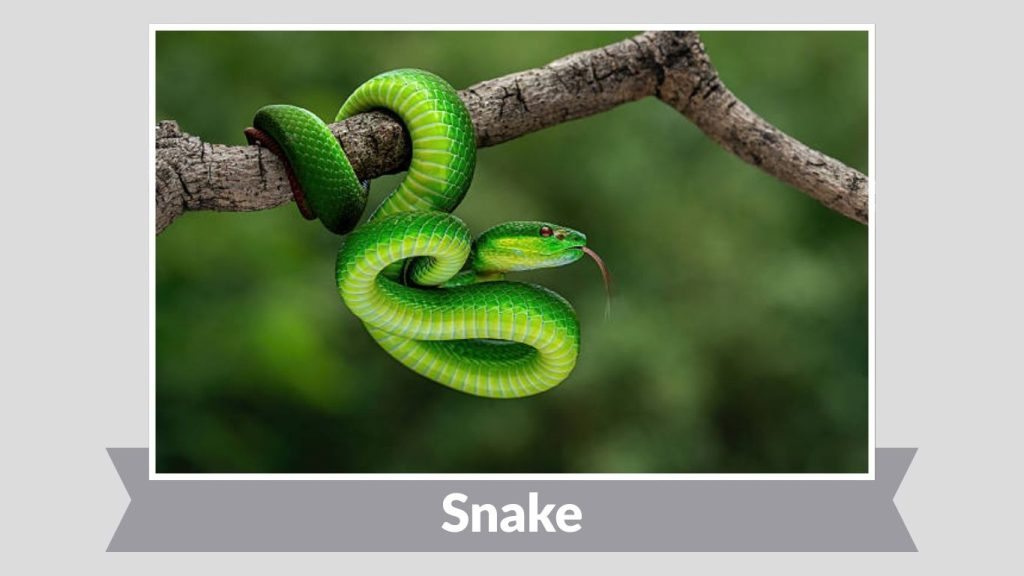
Snakes are legless reptiles commonly found in forest environments, where they play an important role as both predators and prey. They are highly adaptable and come in a wide variety of sizes, colors, and behaviors depending on the species.
Identification
- Long, slender body without limbs
- Dry, scaly skin
- Forked tongue used for sensing surroundings
- Flexible jaw allowing large prey to be swallowed
- Color and pattern vary widely by species
Habitat
Snakes inhabit forests, woodlands, grasslands, wetlands, and forest edges. Many species prefer areas with dense vegetation, fallen logs, rocks, or leaf litter for shelter and hunting.
Behaviors
Snakes are mostly solitary and may be diurnal or nocturnal depending on the species and climate. They move by slithering and rely on camouflage or quick strikes for defense and hunting.
Diet
Snakes are carnivores. Their diet includes rodents, birds, eggs, frogs, lizards, insects, and sometimes other snakes.
Lifespan
In the wild, snakes typically live between 5 and 20 years, depending on the species, environmental conditions, and predation pressures.
27. Frog
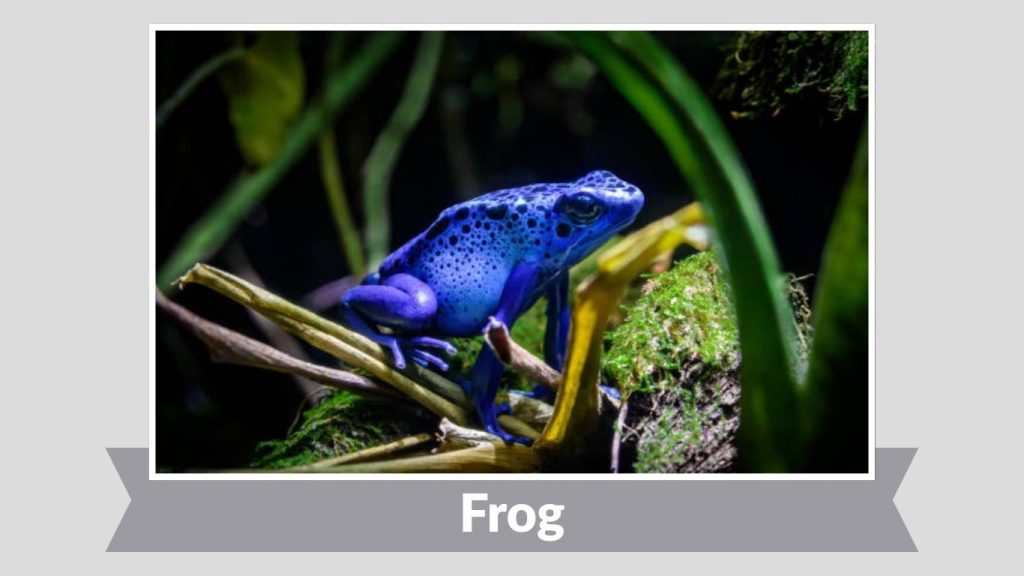
Frogs are small to medium-sized amphibians commonly found in forest environments near water sources. They are known for their jumping ability, moist skin, and loud calls, and they play a vital role in controlling insect populations.
Identification
- Small to medium-sized amphibian
- Smooth, moist skin
- Long, powerful hind legs for jumping
- Bulging eyes positioned on top of the head
- Color varies widely (green, brown, spotted, or striped)
Habitat
Frogs live in forests near ponds, streams, wetlands, and damp areas. They require moist environments and are often found close to freshwater for breeding.
Behaviors
Frogs are mostly nocturnal or crepuscular. They are strong jumpers and swimmers. Many species communicate using croaking sounds, especially during the breeding season.
Diet
Frogs are carnivores. Their diet consists mainly of insects, spiders, worms, and other small invertebrates.
Lifespan
In the wild, frogs typically live between 5 and 10 years, depending on the species, habitat quality, and environmental conditions.
28. Salamander
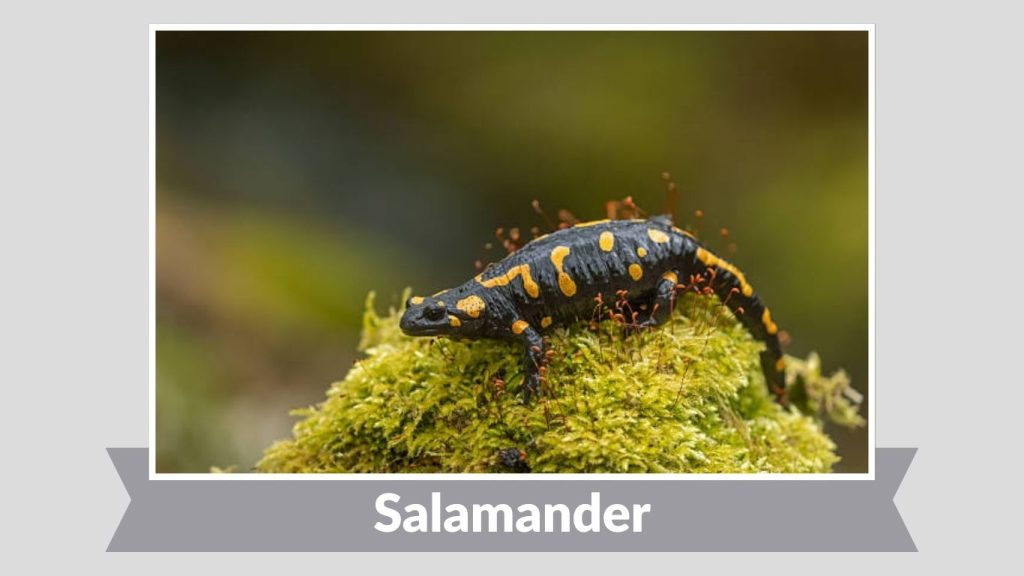
Salamanders are small, moisture-loving amphibians commonly found in forest ecosystems. They resemble lizards but have smooth, moist skin and play a crucial role in forest food webs by controlling insect populations.
Identification
- Small to medium-sized amphibian
- Smooth, moist skin without scales
- Long tail and short legs
- Lizard-like body shape
- Colors range from dark brown to brightly patterned
Habitat
Salamanders live in damp forests, under logs, leaf litter, rocks, and near streams or ponds. They require cool, moist environments to survive and reproduce.
Behaviors
Salamanders are mostly nocturnal and secretive. They avoid sunlight to prevent drying out and are usually active during rainy or humid conditions.
Diet
Salamanders are carnivores. Their diet includes insects, worms, slugs, spiders, and other small invertebrates.
Lifespan
In the wild, salamanders typically live between 5 and 20 years, depending on the species and environmental conditions.
29. Toad
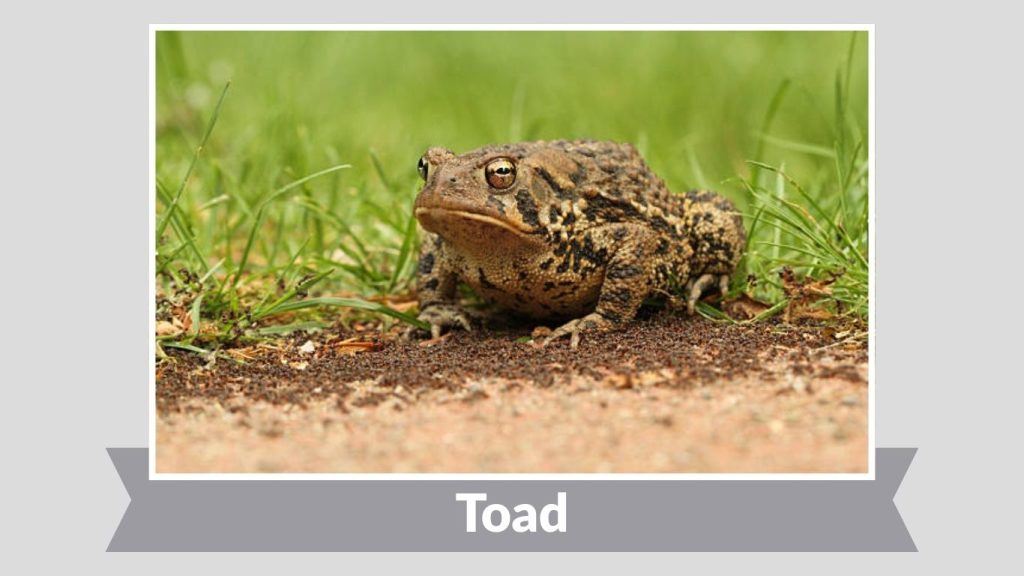
Toads are sturdy amphibians closely related to frogs but are adapted to drier forest environments. They are known for their bumpy skin and slow, deliberate movements, and they help control insect populations.
Identification
- Medium-sized amphibian
- Dry, bumpy or warty skin
- Shorter hind legs than frogs
- Broad body with a blunt snout
- Usually brown, gray, or olive in color
Habitat
Toads live in forests, woodlands, gardens, and forest edges. They spend much of their time on land but return to water to breed.
Behaviors
Toads are mostly nocturnal and active during cooler, damp conditions. They move by walking or short hops rather than long jumps and often remain hidden during the day.
Diet
Toads are carnivores. Their diet includes insects, beetles, ants, worms, and other small invertebrates.
Lifespan
In the wild, toads typically live between 10 and 15 years, though some species can live longer under favorable conditions.
30. Turtle
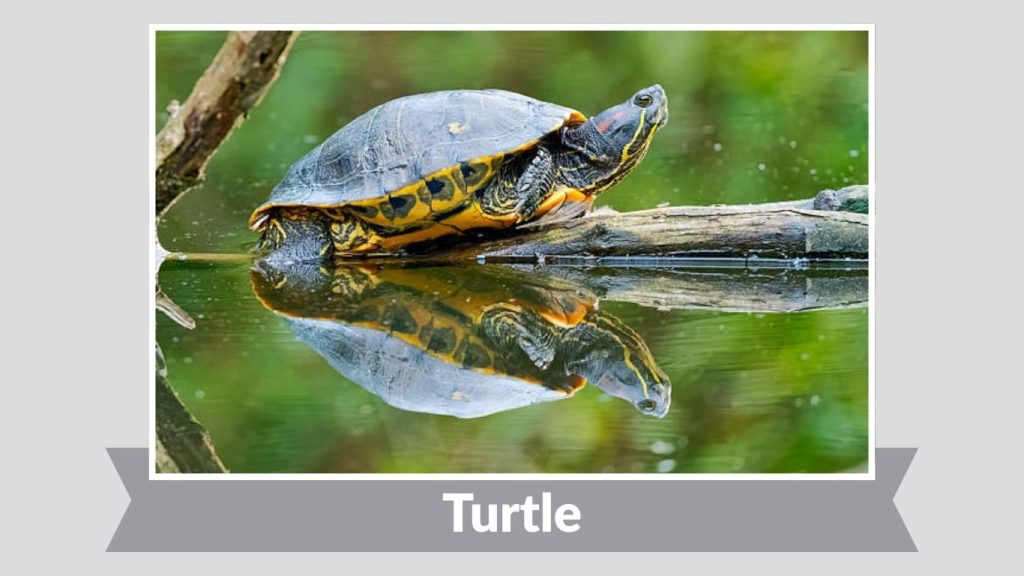
Turtles are reptiles known for their hard protective shells and slow, steady movements. In forest environments, many turtle species live near water and play an important role in maintaining healthy ecosystems.
Identification
- Reptile with a hard shell (carapace and plastron)
- Short, sturdy legs or webbed feet
- Toothless beak
- Thick, scaly skin
- Shell color varies by species
Habitat
Turtles inhabit forests near ponds, rivers, wetlands, and marshes. Some species are more terrestrial, living in forest floors and burrowing in soil or leaf litter.
Behaviors
Turtles are generally diurnal and spend much of their time basking in the sun to regulate body temperature. When threatened, many turtles withdraw into their shells for protection.
Diet
Turtles can be omnivores, herbivores, or carnivores depending on the species. Their diet may include plants, fruits, insects, fish, amphibians, and carrion.
Lifespan
Turtles are long-lived animals. In the wild, many species live between 20 and 50 years, with some surviving even longer under ideal conditions.
31. Lizard
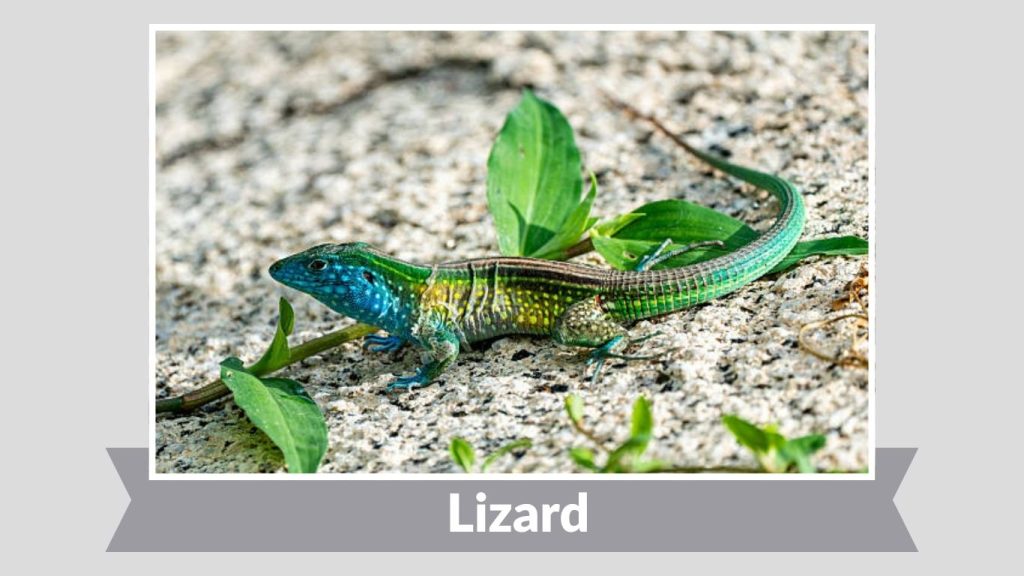
Lizards are small to medium-sized reptiles commonly found in forest environments, especially in warm and temperate regions. They are agile, alert animals that help control insect populations and serve as prey for larger forest predators.
Identification
- Small to medium-sized reptile
- Scaly skin with varied textures
- Long tail (often detachable in some species)
- Four well-developed legs
- Color varies widely, often for camouflage
Habitat
Lizards live in forests, woodlands, rocky areas, and forest edges. They are often found on tree trunks, rocks, leaf litter, or basking in sunny clearings.
Behaviors
Lizards are mostly diurnal and rely on basking to regulate body temperature. Many species are quick runners and climbers. Some can shed their tails to escape predators.
Diet
Most forest lizards are insectivores, feeding on insects, spiders, and worms. Some species also eat fruits, leaves, or small vertebrates.
Lifespan
In the wild, lizards typically live between 5 and 10 years, depending on the species, habitat conditions, and predation.
32. Antelope
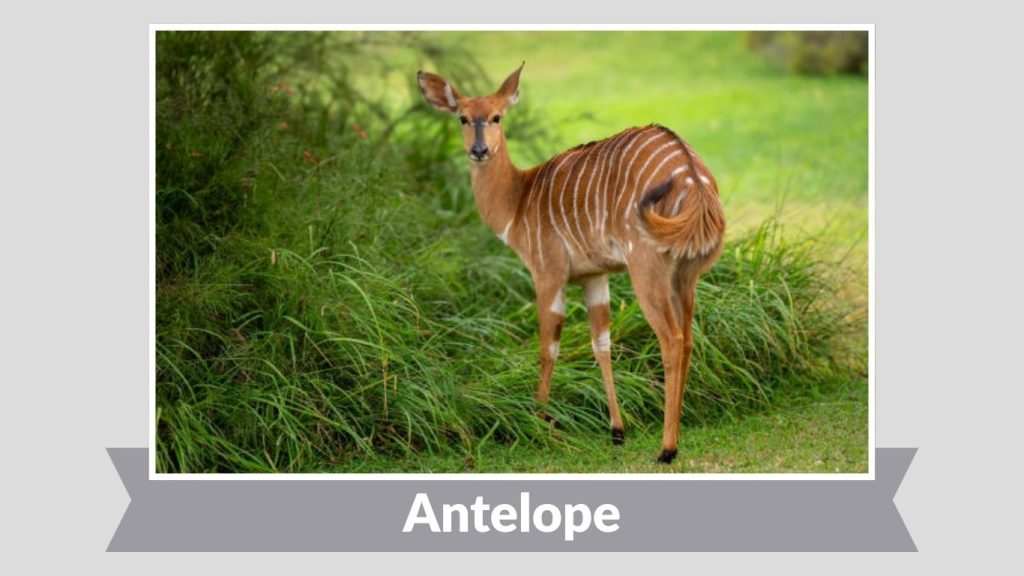
Antelopes are graceful, fast-running hoofed mammals found in open forests, woodlands, and forest edges. Known for their speed and agility, they are important herbivores that help shape vegetation and serve as prey for large predators.
Identification
- Medium to large-sized herbivorous mammal
- Slender body with long legs
- Permanent horns (in most species)
- Short tail and narrow face
- Coat color ranges from tan to brown
Habitat
Antelopes live in open forests, woodlands, savannas, and grasslands. They prefer areas with a mix of open space for running and vegetation for feeding and cover.
Behaviors
Antelopes are usually diurnal and often live in groups or herds. They rely on speed, sharp eyesight, and alert behavior to detect and escape predators.
Diet
Antelopes are herbivores. Their diet consists of grasses, leaves, shoots, herbs, and sometimes fruits, depending on the species and season.
Lifespan
In the wild, antelopes typically live between 10 and 20 years. Predation, drought, and habitat loss are major factors affecting their survival.
33. Monkey
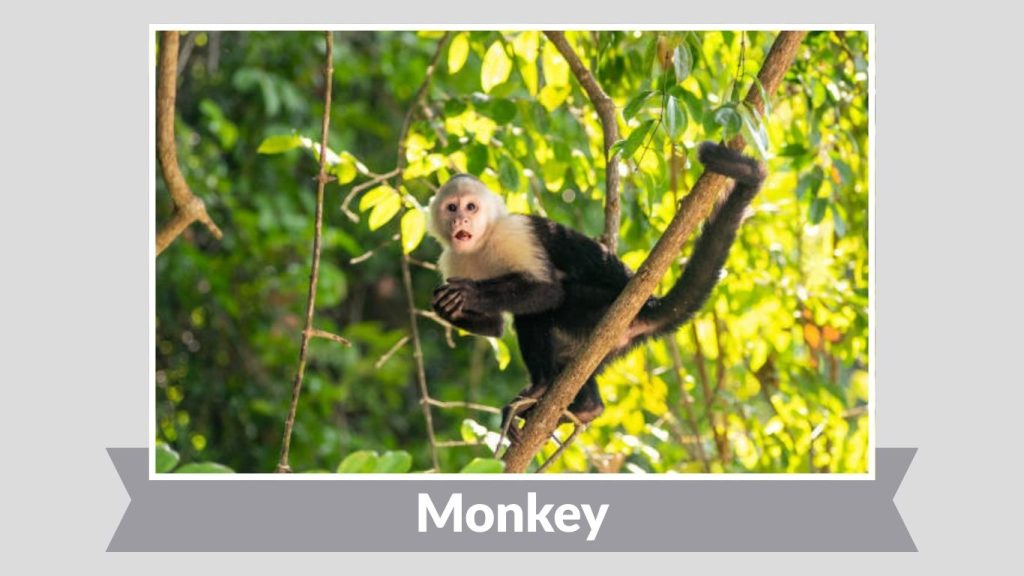
Monkeys are intelligent, social mammals commonly found in forest and woodland ecosystems, especially in tropical and subtropical regions. They are known for their agility, expressive behavior, and strong social bonds.
Identification
- Medium-sized mammal with a flexible body
- Long arms and legs adapted for climbing
- Forward-facing eyes with good vision
- Most species have long tails
- Fur color varies by species
Habitat
Monkeys live in forests, rainforests, and wooded areas. Many species spend most of their lives in trees, while some also forage on the forest floor.
Behaviors
Monkeys are highly social and live in groups called troops. They communicate using vocal sounds, facial expressions, and body language. Many species are active during the day.
Diet
Monkeys are omnivores. Their diet includes fruits, leaves, seeds, insects, flowers, and sometimes small animals.
Lifespan
In the wild, monkeys generally live between 15 and 25 years, depending on the species and environmental conditions.
34. Tiger
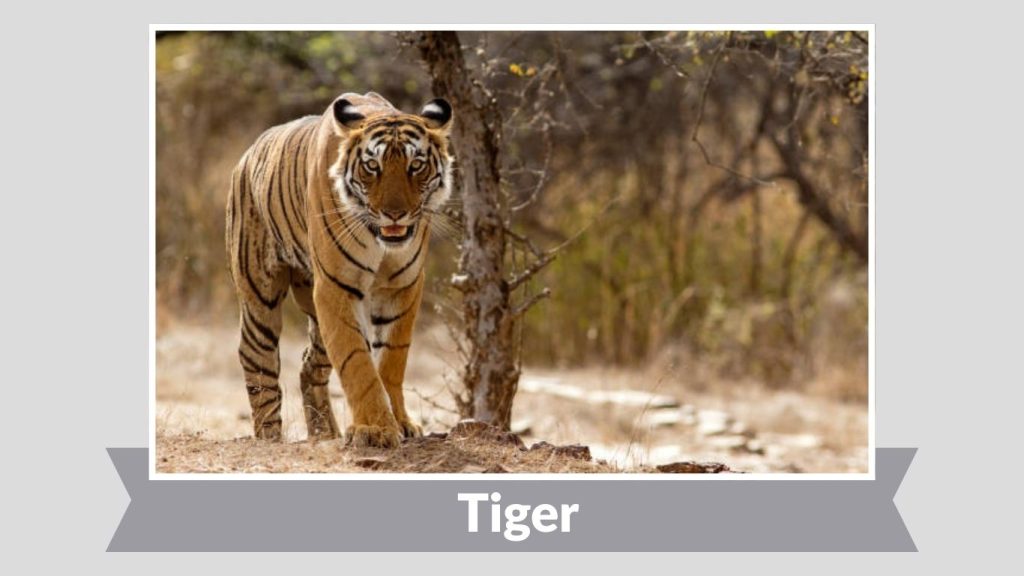
Tigers are the largest wild cats in the world and are powerful apex predators of forest ecosystems. Known for their striking striped coats and strength, tigers play a crucial role in maintaining balance by controlling herbivore populations.
Identification
- Large, muscular carnivorous mammal
- Orange coat with black vertical stripes
- White underside and facial markings
- Strong jaws with long canine teeth
- Long tail used for balance
Habitat
Tigers live in dense forests, mangroves, grasslands, and forest edges. They prefer areas with thick cover, access to water, and abundant prey.
Behaviors
Tigers are solitary and mostly nocturnal hunters. They are highly territorial and use scent marking and vocalizations to communicate. Tigers are strong swimmers and often cool off in water.
Diet
Tigers are carnivores. Their diet mainly consists of large herbivores such as deer, wild boar, and antelope, though they may also hunt smaller animals.
Lifespan
In the wild, tigers typically live between 10 and 15 years. Habitat loss, poaching, and human conflict are the main threats affecting their lifespan and survival.
35. Tiger
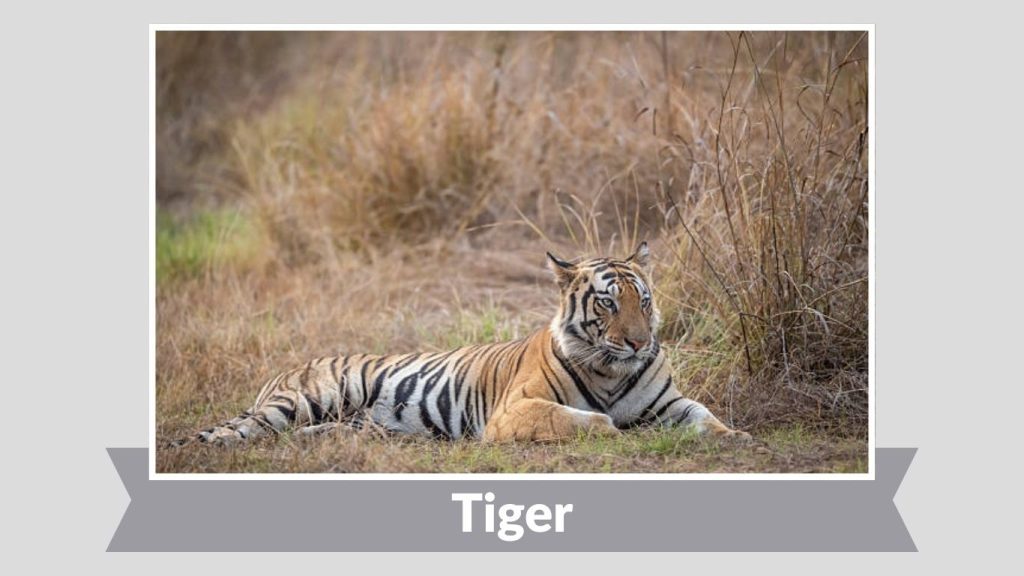
Tigers are powerful and iconic big cats that dominate forest ecosystems as top predators. Their presence is a sign of a healthy forest, as they require large territories and abundant prey to survive.
Identification
- Very large, muscular wild cat
- Orange coat with bold black stripes
- White fur on chest, belly, and face
- Strong limbs with retractable claws
- Long tail for balance
Habitat
Tigers inhabit dense forests, tropical rainforests, mangroves, and grassland–forest edges. They prefer areas with thick vegetation, nearby water sources, and sufficient prey animals.
Behaviors
Tigers are solitary and territorial animals. They are mostly active at night and rely on stealth rather than speed when hunting. Tigers communicate through scent marking, scratches on trees, and vocal sounds such as roars.
Diet
Tigers are strict carnivores. Their diet mainly includes deer, wild boar, buffalo, and other medium to large mammals. They are capable of taking down prey much larger than themselves.
Lifespan
In the wild, tigers generally live between 10 and 15 years. Their survival is threatened by habitat loss, poaching, and conflicts with humans.
FAQs
What are forest animals?
Forest animals are species that live in or depend on forests for shelter, food, and survival. They include mammals, birds, reptiles, amphibians, and insects adapted to forest environments.
Why are forest animals important to the ecosystem?
Forest animals help maintain ecological balance by controlling populations, dispersing seeds, pollinating plants, and recycling nutrients within the forest.
What do forest animals eat?
Forest animals have varied diets depending on the species. Some are herbivores that eat plants, others are carnivores that hunt animals, and many are omnivores that eat both plants and animals.
How do forest animals protect themselves from predators?
Forest animals use different strategies such as camouflage, speed, sharp senses, defensive behaviors, group living, or physical features like claws, teeth, shells, or spines.
What threats do forest animals face today?
Forest animals face threats such as deforestation, habitat loss, climate change, pollution, poaching, and human–wildlife conflict, which can reduce their populations and endanger species.