




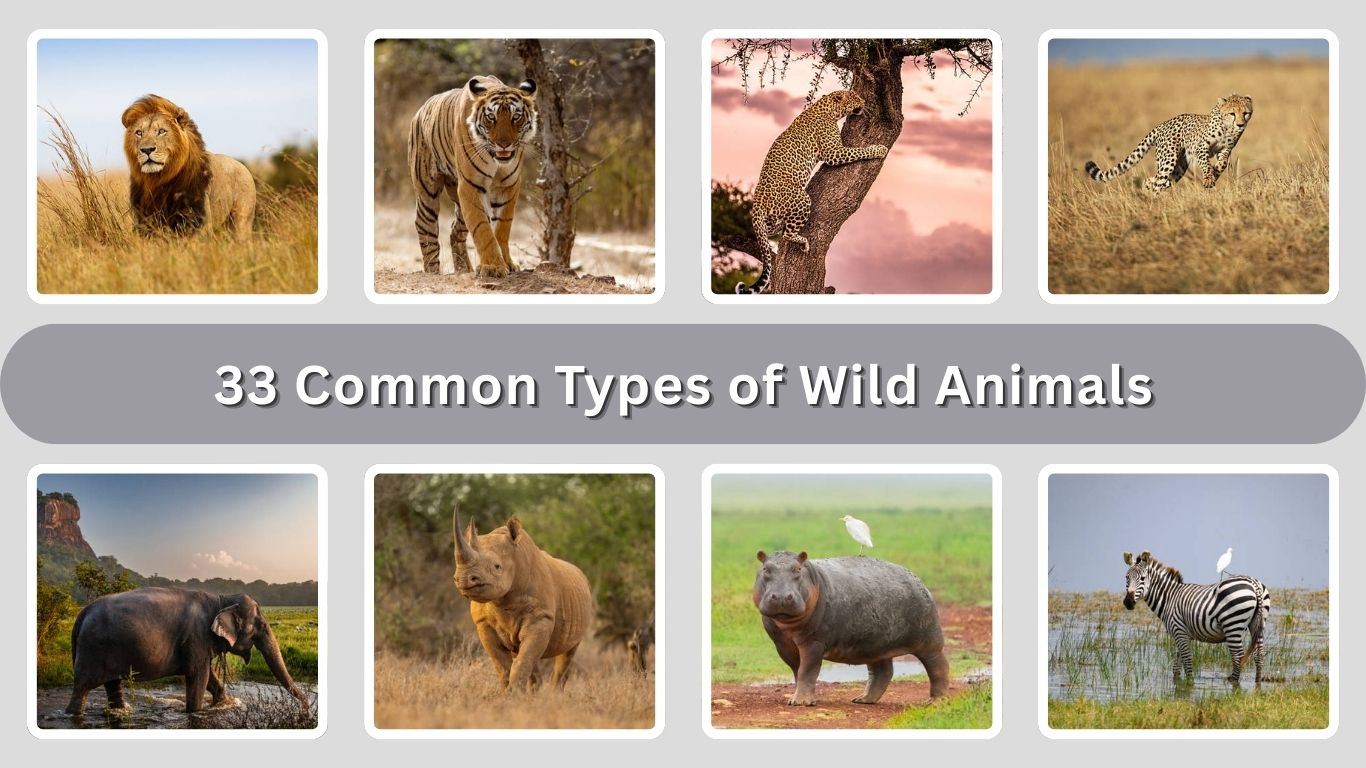
Wild animals are an essential part of our planet’s natural balance. From powerful predators to gentle herbivores, each species plays a unique role in maintaining healthy ecosystems. These animals live independently in forests, grasslands, oceans, and deserts, adapting to their environments over thousands of years. Learning about wild animals helps us understand biodiversity, appreciate nature’s complexity, and recognize the importance of conservation efforts to protect wildlife for future generations.
1. Lion (Panthera leo)
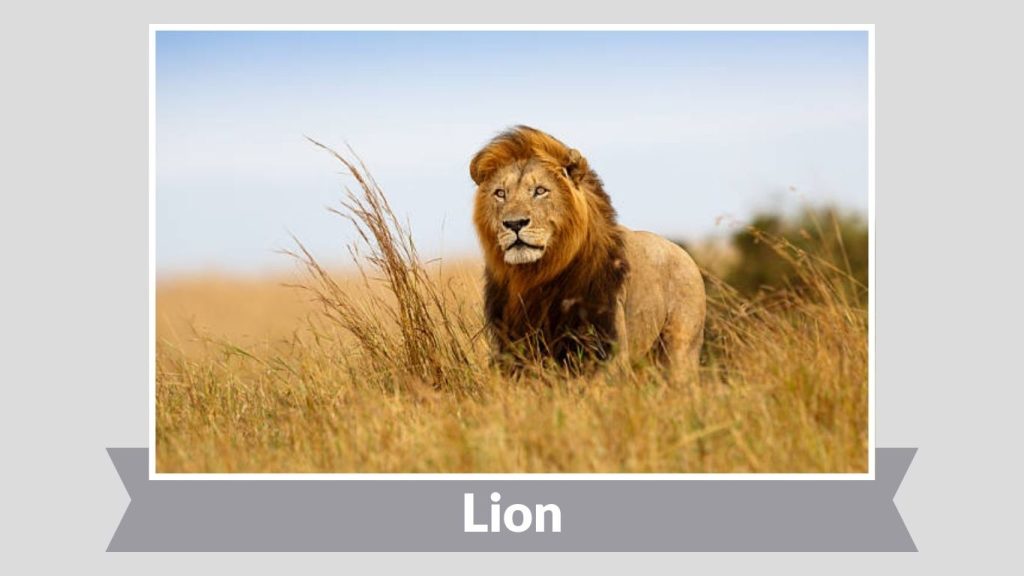
The lion is one of the most powerful and recognizable wild animals in the world. Often referred to as the “King of the Jungle,” lions are actually found in open landscapes rather than dense forests. They are known for their muscular build, loud roar, and unique social structure. Unlike most big cats, lions live in groups called prides, which helps them hunt efficiently and protect their territory. As apex predators, lions play a vital role in maintaining ecological balance by regulating prey populations.
Identification
- Scientific name: Panthera leo
- Common name: Lion
- Animal type: Mammal
- Order: Carnivora
- Family: Felidae
- Average weight: 120–250 kg
- Distinct feature: Male lions have a mane
Habitat
Lions mainly live in grasslands, savannas, and open woodlands. They are most widely distributed across sub-Saharan Africa. A small, isolated population also lives in the Gir Forest of India. Lions prefer areas with abundant prey and access to water but can adapt to dry environments.
Behaviors
Lions are highly social animals that live in prides made up of females, cubs, and a few adult males. They communicate using roars, growls, and body language. Lions are mostly inactive during the day and become more active during the evening and night.
Diet
Lions are carnivorous predators. Their diet mainly includes large herbivores such as zebras, wildebeests, antelopes, and buffalo. Females usually hunt cooperatively, while males defend the pride and its territory.
Lifespan
In the wild, lions typically live between 10 and 14 years. In captivity, with proper care and no natural threats, they can live up to 20 years.
2. Tiger (Panthera tigris)
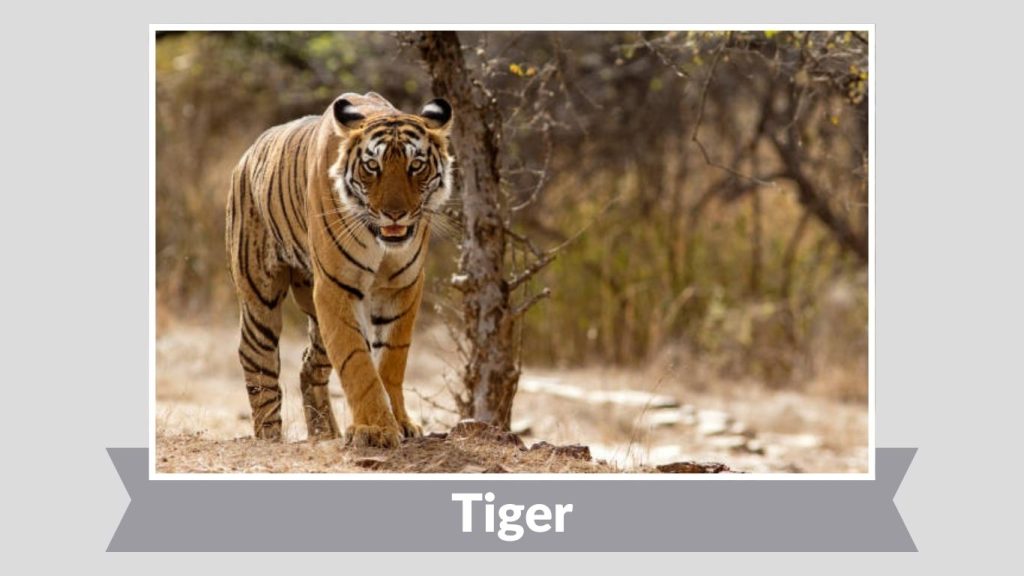
The tiger is the largest species of big cat and one of the most powerful predators in the wild. Known for its striking orange coat with black stripes, each tiger has a unique pattern, much like a human fingerprint. Tigers are solitary animals and symbolize strength and courage in many cultures. As apex predators, they play an important role in maintaining healthy ecosystems by controlling prey populations.
Identification
- Scientific name: Panthera tigris
- Common name: Tiger
- Animal type: Mammal
- Order: Carnivora
- Family: Felidae
- Average weight: 90–300 kg
- Distinct feature: Black stripes on orange fur
Habitat
Tigers inhabit a wide range of environments, including tropical rainforests, mangrove swamps, grasslands, and temperate forests. They are mainly found in Asia, particularly in India, Russia, China, and Southeast Asia. Tigers prefer areas with dense vegetation, sufficient prey, and access to water.
Behaviors
Tigers are solitary and highly territorial animals. They mark their territory using scent markings, scratches on trees, and vocalizations. Tigers are mostly active at night and are excellent swimmers, often using water to cool down or hunt prey.
Diet
Tigers are strict carnivores. Their diet consists mainly of deer, wild boar, buffalo, and other large mammals. They are ambush hunters, relying on stealth and strength to overpower prey.
Lifespan
In the wild, tigers typically live between 10 and 15 years. In captivity, with protection and regular care, they can live up to 20–25 years.
3. Leopard (Panthera pardus)
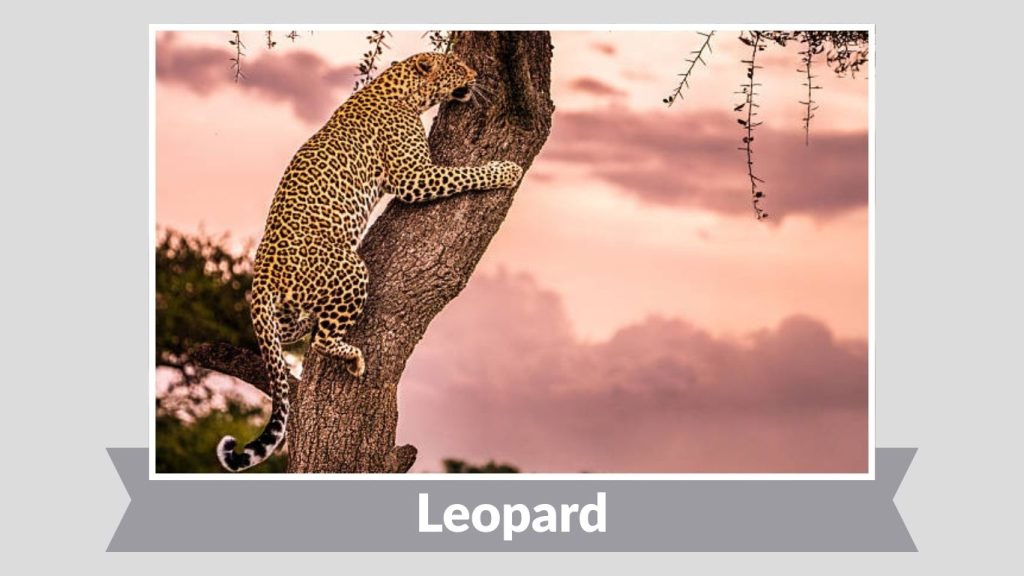
The leopard is a powerful and adaptable big cat known for its spotted coat and stealthy hunting skills. It is one of the most widespread wild cats in the world and is highly skilled at surviving in different environments. Leopards are excellent climbers and often carry their prey into trees to protect it from scavengers. Their ability to live close to human settlements also shows their remarkable adaptability.
Identification
- Scientific name: Panthera pardus
- Common name: Leopard
- Animal type: Mammal
- Order: Carnivora
- Family: Felidae
- Average weight: 30–90 kg
- Distinct feature: Rosette-shaped black spots
Habitat
Leopards inhabit a wide range of environments, including forests, grasslands, savannas, mountains, and deserts. They are found across Africa and parts of Asia, including India, China, and Southeast Asia. Leopards prefer areas with good cover and enough prey but can adapt to dry and rocky regions.
Behaviors
Leopards are solitary and mainly nocturnal animals. They are known for their stealth, strength, and excellent climbing ability. Leopards mark their territory using scent markings and scratches. They often rest in trees during the day to avoid competition.
Diet
Leopards are carnivores with a very flexible diet. They hunt deer, antelope, monkeys, birds, and even small mammals. Their strong jaws allow them to carry prey heavier than their own body weight.
Lifespan
In the wild, leopards usually live between 12 and 15 years. In captivity, they can live up to 20 years with proper care.
4. Cheetah (Acinonyx jubatus)
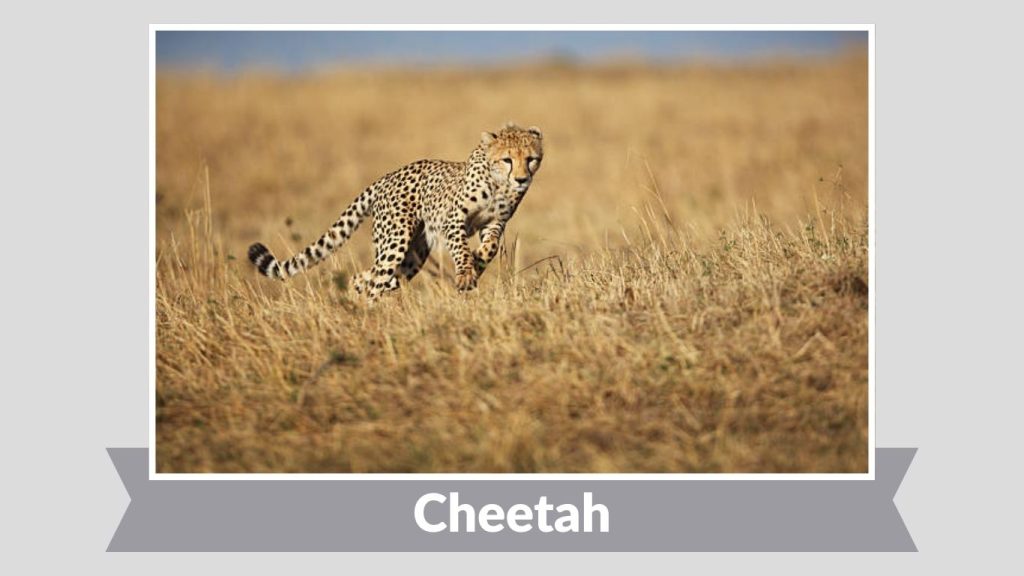
The cheetah is the fastest land animal in the world, famous for its incredible speed and sleek body. Built for sprinting, cheetahs can reach speeds of up to 100–120 km/h in short bursts. Unlike other big cats, cheetahs rely more on speed than strength to catch prey. They are graceful hunters and play an important role in controlling populations of medium-sized herbivores.
Identification
- Scientific name: Acinonyx jubatus
- Common name: Cheetah
- Animal type: Mammal
- Order: Carnivora
- Family: Felidae
- Average weight: 35–65 kg
- Distinct feature: Black tear-like lines on the face
Habitat
Cheetahs mainly live in open grasslands, savannas, and semi-arid regions. They are primarily found in sub-Saharan Africa, with a small population in Iran. Open landscapes allow cheetahs to use their speed effectively while hunting.
Behaviors
Cheetahs are mostly active during the day, which helps them avoid competition with larger predators. They are generally solitary, though males may form small groups called coalitions. Cheetahs communicate using chirps, purrs, and growls.
Diet
Cheetahs are carnivores and mainly hunt smaller to medium-sized animals such as gazelles, impalas, and hares. They rely on short, explosive chases and need time to rest after a hunt.
Lifespan
In the wild, cheetahs usually live between 10 and 12 years. In captivity, with protection and care, they can live up to 15–17 years.
5. Elephant
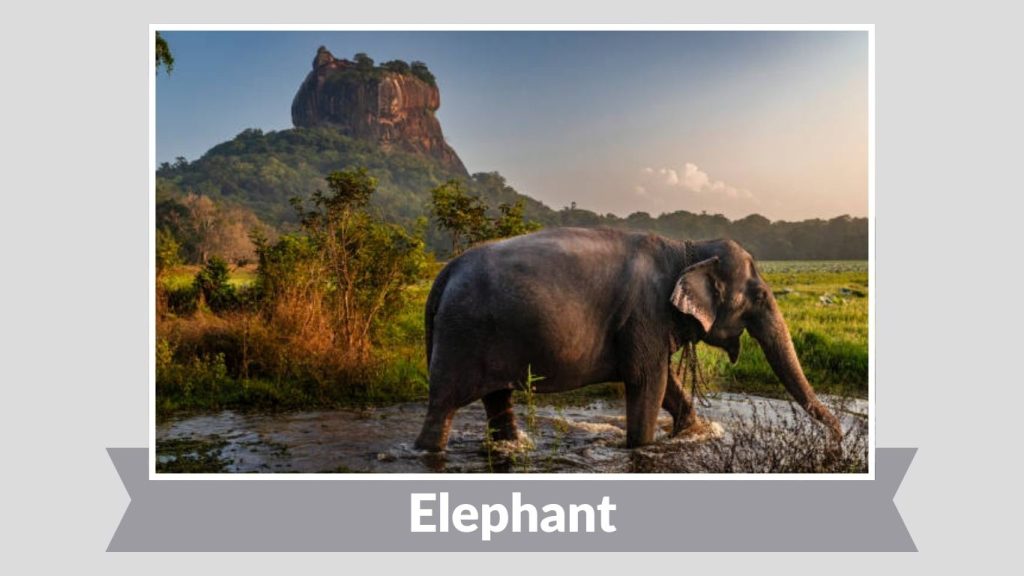
The elephant is the largest land animal on Earth and is known for its intelligence, strong social bonds, and impressive memory. Elephants are gentle giants that play a crucial role in shaping their ecosystems by creating pathways, dispersing seeds, and maintaining water sources. They are highly emotional animals and show behaviors such as mourning and cooperation within their herds.
Identification
- Scientific name: Loxodonta africana (African elephant), Elephas maximus (Asian elephant)
- Common name: Elephant
- Animal type: Mammal
- Order: Proboscidea
- Family: Elephantidae
- Average weight: 2,700–6,000 kg
- Distinct feature: Long trunk and large ears
Habitat
Elephants inhabit a variety of environments, including savannas, forests, grasslands, and wetlands. African elephants are mostly found in sub-Saharan Africa, while Asian elephants live in parts of South and Southeast Asia. They require large areas with access to water and vegetation.
Behaviors
Elephants are highly social and live in matriarchal herds led by an older female. They communicate using sounds, body language, and low-frequency vibrations. Elephants are known for their intelligence, problem-solving abilities, and strong family bonds.
Diet
Elephants are herbivores and consume grasses, leaves, bark, fruits, and roots. An adult elephant can eat up to 150 kg of food per day and spends most of its time feeding.
Lifespan
In the wild, elephants typically live between 60 and 70 years. In captivity, their lifespan may be slightly shorter due to different living conditions.
6. Rhinoceros
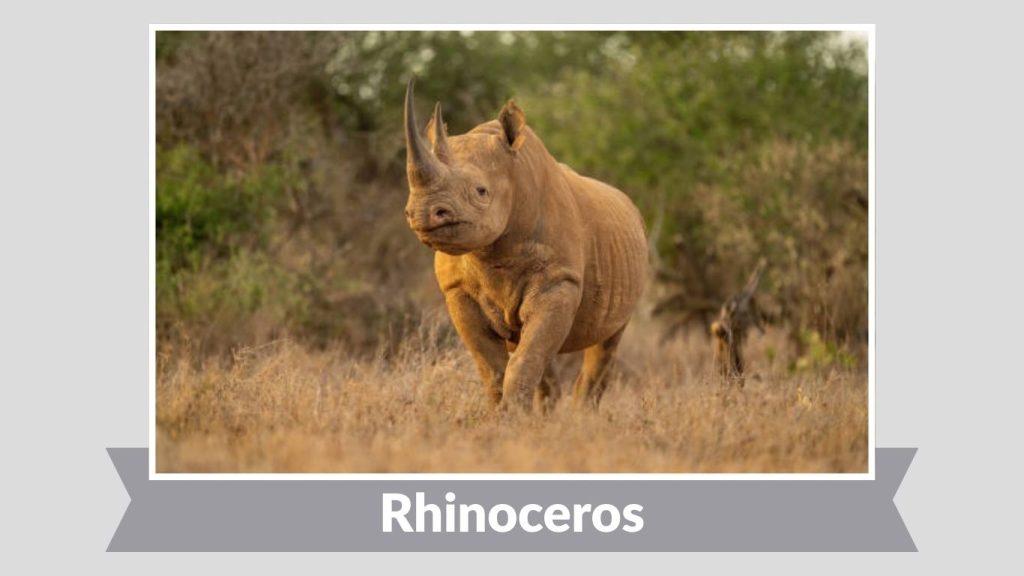
The rhinoceros is a large, powerful herbivorous mammal known for its thick skin and one or two horns on its nose. Despite their heavy build, rhinos can run surprisingly fast and are very protective of their territory. They play an important role in their ecosystems by shaping vegetation and creating pathways used by other animals.
Identification
- Scientific name: Rhinocerotidae (family)
- Common name: Rhinoceros
- Animal type: Mammal
- Order: Perissodactyla
- Family: Rhinocerotidae
- Average weight: 800–2,500 kg
- Distinct feature: One or two horns made of keratin
Habitat
Rhinoceroses live in grasslands, savannas, wetlands, and tropical forests. African rhinos are found mainly in sub-Saharan Africa, while Asian rhinos inhabit parts of India and Southeast Asia. They prefer areas with water and abundant vegetation.
Behaviors
Rhinos are generally solitary animals, except for mothers with calves. They are territorial and mark their territory using dung piles. Rhinos have poor eyesight but a strong sense of smell and hearing.
Diet
Rhinoceroses are herbivores. Their diet includes grasses, leaves, shoots, fruits, and branches, depending on the species. Their feeding habits help maintain plant diversity in their habitats.
Lifespan
In the wild, rhinoceroses usually live between 35 and 50 years. In captivity, some individuals may live slightly longer under protected conditions.
7. Hippopotamus
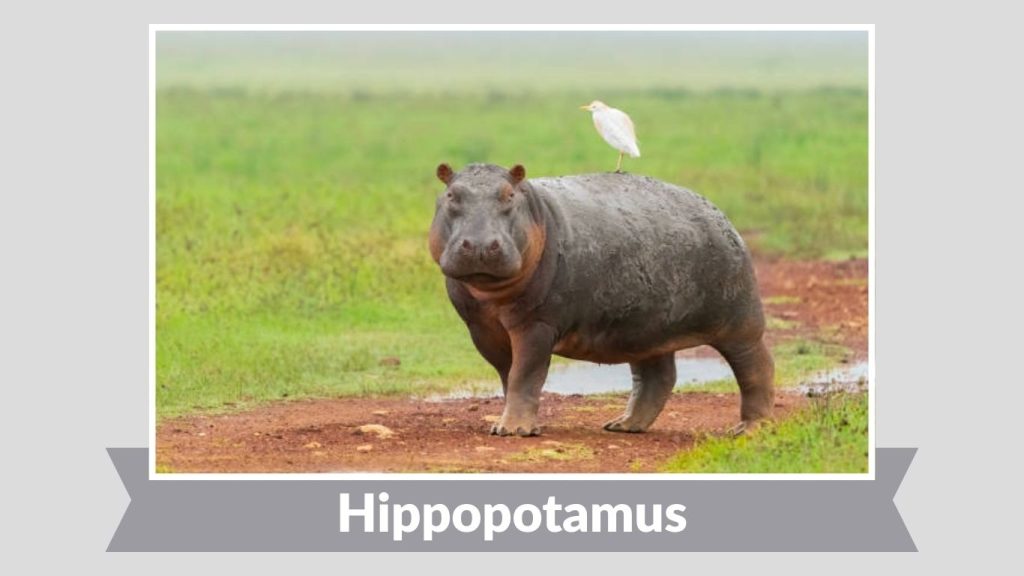
The hippopotamus is a large, semi-aquatic mammal known for its massive body, wide mouth, and strong jaws. Despite appearing slow and calm, hippos are extremely aggressive and are considered one of the most dangerous animals in Africa. They play an important role in river ecosystems by influencing water flow and nutrient distribution.
Identification
- Scientific name: Hippopotamus amphibius
- Common name: Hippopotamus
- Animal type: Mammal
- Order: Artiodactyla
- Family: Hippopotamidae
- Average weight: 1,300–3,200 kg
- Distinct feature: Large mouth with long canine teeth
Habitat
Hippos live in rivers, lakes, swamps, and wetlands. They are mainly found in sub-Saharan Africa. During the day, they stay in water to keep their bodies cool and prevent their skin from drying out, while at night they move onto land to feed.
Behaviors
Hippopotamuses are social animals that live in groups called pods. They are highly territorial in water and use vocal sounds, yawning displays, and physical aggression to defend their space. Hippos spend most of the day resting in water.
Diet
Hippos are herbivores and primarily feed on grasses. They usually graze at night and can travel several kilometers from water to find food. An adult hippo can consume up to 40 kg of grass in one night.
Lifespan
In the wild, hippos typically live between 40 and 50 years. In captivity, they may live slightly longer due to regular food and medical care.
8. Giraffe
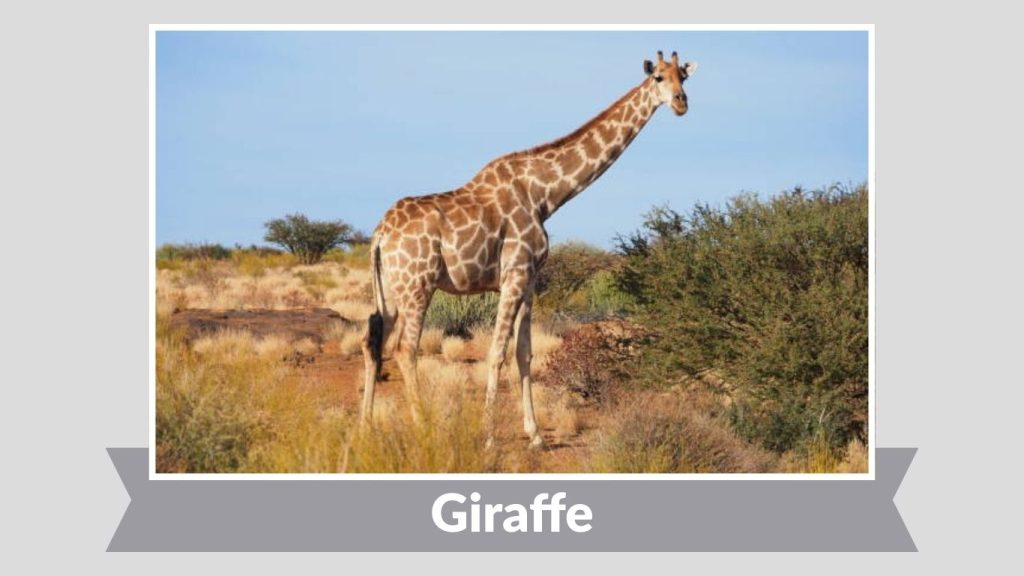
The giraffe is the tallest land animal in the world, easily recognized by its long neck, long legs, and unique spotted coat. Giraffes use their height to reach leaves high in trees that other herbivores cannot access. They are gentle animals and play an important role in shaping vegetation patterns in their habitats.
Identification
- Scientific name: Giraffa camelopardalis
- Common name: Giraffe
- Animal type: Mammal
- Order: Artiodactyla
- Family: Giraffidae
- Average height: 4.5–6 meters
- Distinct feature: Extremely long neck and legs
Habitat
Giraffes mainly inhabit savannas, grasslands, and open woodlands. They are found across various regions of sub-Saharan Africa. Giraffes prefer areas with plenty of acacia trees, which are a major food source.
Behaviors
Giraffes are generally social animals and live in loose groups without strong bonds. They communicate using body language and low-frequency sounds. Male giraffes engage in “necking” behavior, swinging their necks to compete for dominance.
Diet
Giraffes are herbivores and primarily feed on leaves, flowers, and fruits from tall trees, especially acacia. Their long tongues help them grasp leaves and avoid thorns.
Lifespan
In the wild, giraffes usually live between 20 and 25 years. In captivity, they may live slightly longer with proper care.
9. Zebra
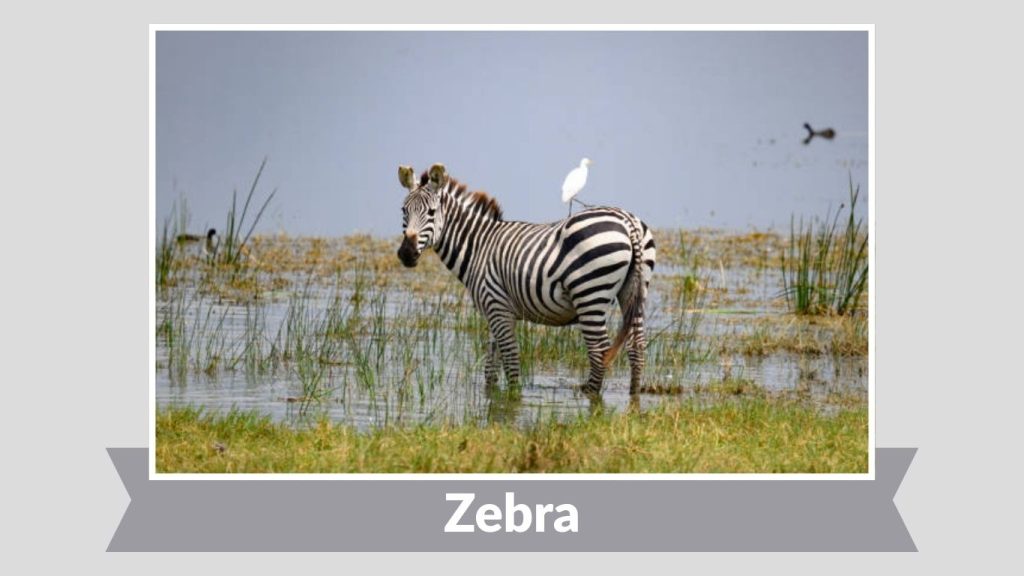
The zebra is a wild herbivorous animal best known for its distinctive black-and-white striped coat. Each zebra has a unique stripe pattern, which helps with identification and may also protect them from predators. Zebras are social animals and are commonly seen grazing in groups across open landscapes.
Identification
- Scientific name: Equus quagga (Plains zebra)
- Common name: Zebra
- Animal type: Mammal
- Order: Perissodactyla
- Family: Equidae
- Average weight: 200–450 kg
- Distinct feature: Black-and-white stripes
Habitat
Zebras live mainly in grasslands, savannas, and open plains. They are native to Africa and often stay near water sources. Their habitat allows them to graze freely and remain alert to predators.
Behaviors
Zebras are highly social and live in groups called herds. They communicate using sounds, facial expressions, and ear movements. Zebras are constantly alert and will flee quickly when threatened.
Diet
Zebras are herbivores and primarily feed on grasses. Their digestive system allows them to survive on lower-quality vegetation, which helps reduce competition with other grazing animals.
Lifespan
In the wild, zebras typically live between 20 and 25 years. In captivity, they may live slightly longer under protected conditions.
10. Bear
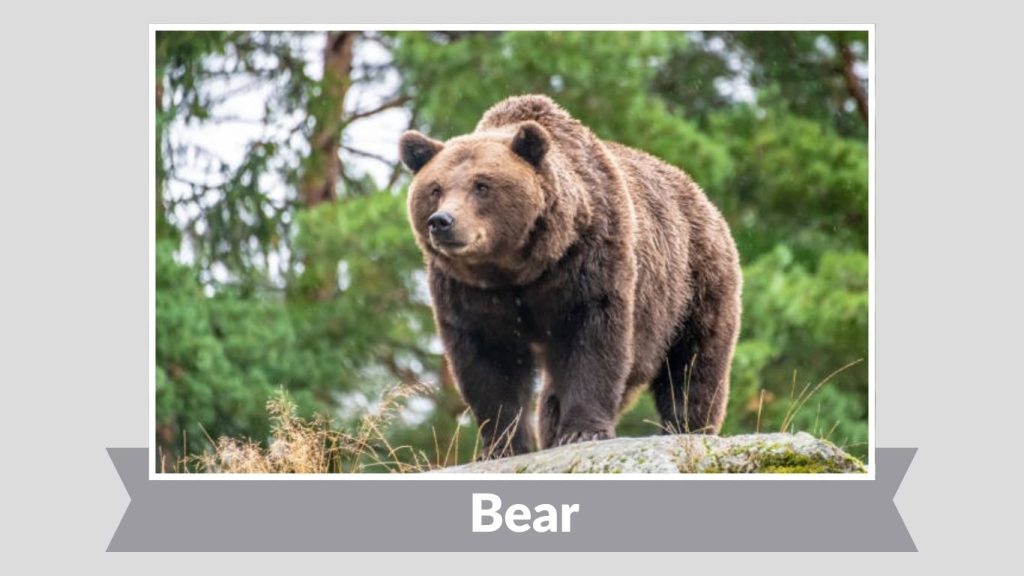
Bears are large, powerful mammals known for their strength, intelligence, and adaptability. They are found in many parts of the world and can survive in a wide range of environments. Although often seen as aggressive, most bears avoid humans and play an important role in their ecosystems by spreading seeds and controlling insect populations.
Identification
- Scientific name: Ursidae (family)
- Common name: Bear
- Animal type: Mammal
- Order: Carnivora
- Family: Ursidae
- Average weight: 80–600 kg (varies by species)
- Distinct feature: Large body with strong claws
Habitat
Bears inhabit forests, mountains, tundra, and grasslands. They are found in North America, South America, Europe, and Asia. Different species adapt to different habitats, from polar bears in icy regions to sloth bears in tropical forests.
Behaviors
Bears are generally solitary animals, except for mothers with cubs. Many species hibernate during winter to conserve energy. Bears have a strong sense of smell and are excellent climbers and swimmers.
Diet
Most bears are omnivores. Their diet includes fruits, berries, insects, fish, small animals, and honey. Some species, like polar bears, mainly eat meat, while giant pandas feed almost entirely on bamboo.
Lifespan
In the wild, bears usually live between 20 and 30 years. In captivity, some bears can live over 40 years.
11. Wolf
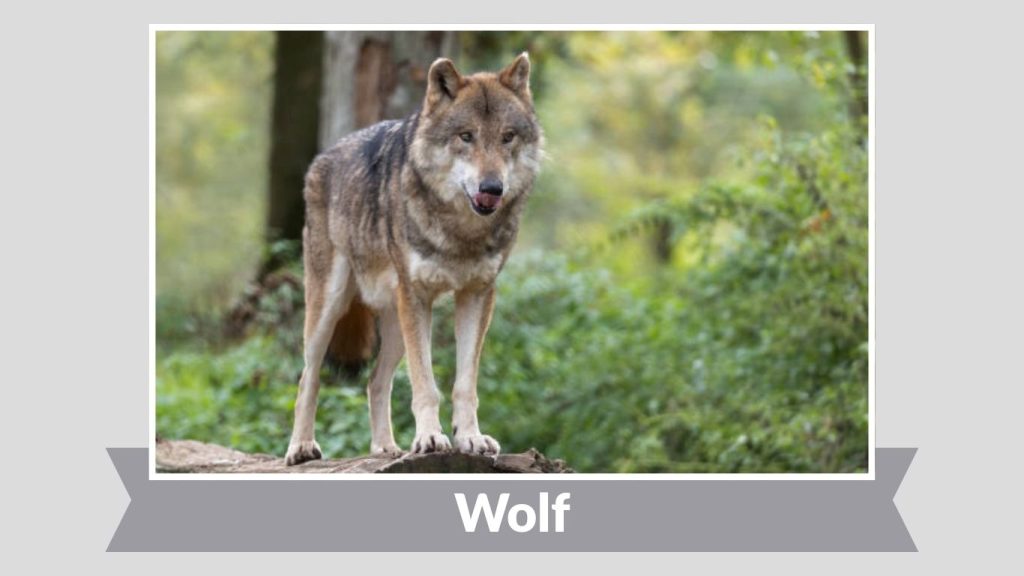
The wolf is a highly intelligent and social wild animal known for its strong pack structure and hunting skills. Wolves are closely related to domestic dogs and are important predators in maintaining healthy ecosystems. They are often misunderstood but play a vital role by controlling prey populations and preventing overgrazing.
Identification
- Scientific name: Canis lupus
- Common name: Wolf
- Animal type: Mammal
- Order: Carnivora
- Family: Canidae
- Average weight: 30–80 kg
- Distinct feature: Thick fur and sharp teeth
Habitat
Wolves live in a wide range of habitats, including forests, grasslands, mountains, tundra, and deserts. They are found in North America, Europe, and Asia. Wolves require large territories with enough prey to support their packs.
Behaviors
Wolves are highly social animals that live in packs with a clear hierarchy. They communicate through howling, body language, and facial expressions. Wolves cooperate during hunting and while raising their young.
Diet
Wolves are carnivores and mainly hunt large herbivores such as deer, elk, and moose. They may also eat smaller animals when larger prey is scarce.
Lifespan
In the wild, wolves typically live between 6 and 8 years. In captivity, they can live up to 15–17 years.
12. Fox
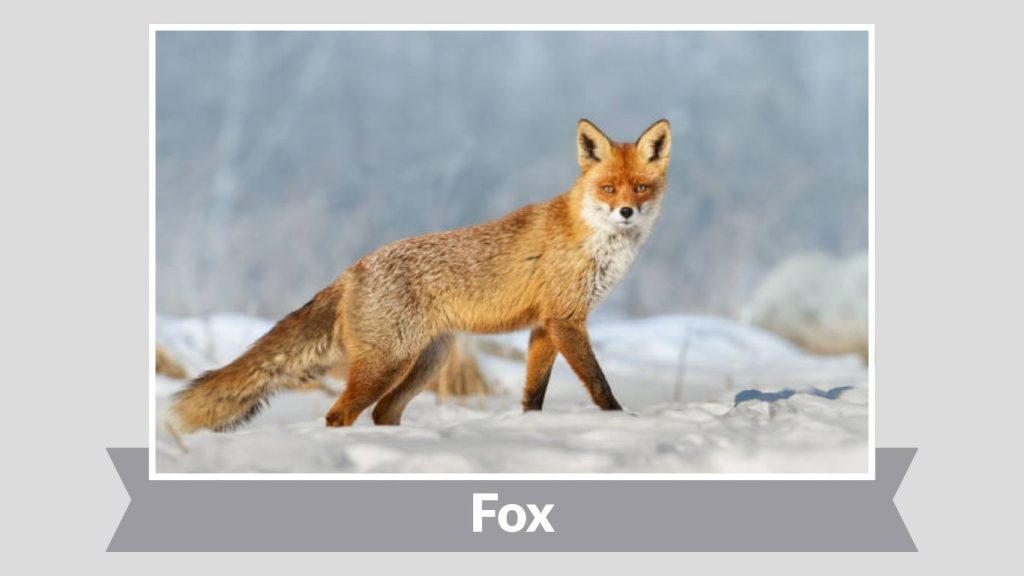
The fox is a small to medium-sized wild animal known for its intelligence, agility, and adaptability. Foxes are often associated with cleverness due to their problem-solving abilities and survival skills. They can live in both wild and human-populated areas, making them one of the most adaptable mammals.
Identification
- Scientific name: Vulpes vulpes (Red fox)
- Common name: Fox
- Animal type: Mammal
- Order: Carnivora
- Family: Canidae
- Average weight: 3–14 kg
- Distinct feature: Bushy tail and pointed ears
Habitat
Foxes inhabit forests, grasslands, mountains, deserts, and even urban areas. They are found across North America, Europe, Asia, and parts of Africa. Foxes easily adapt to changing environments and human presence.
Behaviors
Foxes are mostly solitary animals but may form small family groups during breeding season. They are mainly nocturnal and communicate through vocal sounds, body movements, and scent marking.
Diet
Foxes are omnivores. Their diet includes small mammals, birds, insects, fruits, berries, and human food waste in urban areas. This flexible diet helps them survive in many environments.
Lifespan
In the wild, foxes usually live between 3 and 5 years. In captivity, they can live up to 10–12 years.
13. Deer
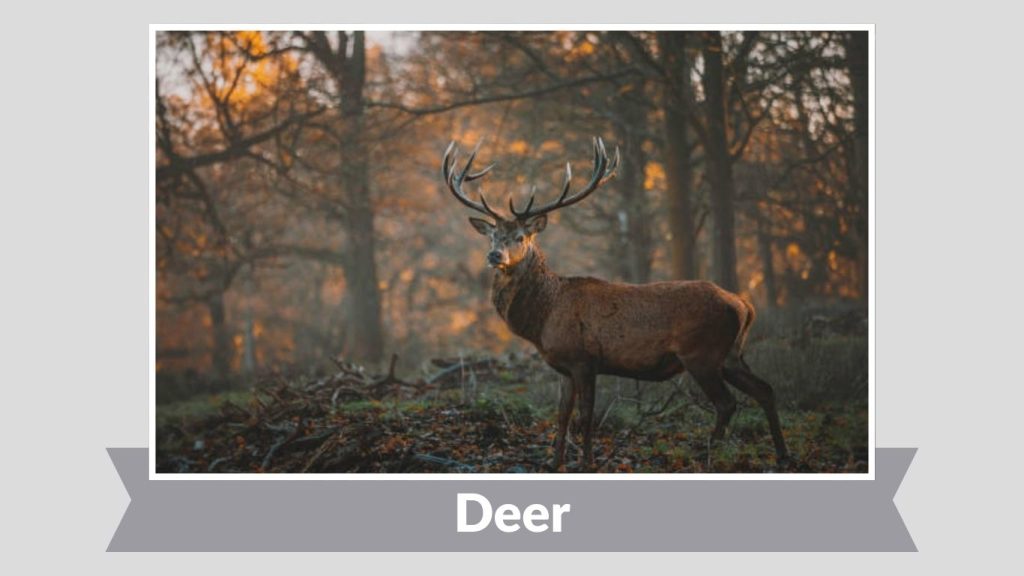
Deer are graceful herbivorous mammals commonly found in forests and grasslands around the world. They are known for their speed, alertness, and, in many species, antlers grown by males. Deer play an important role in ecosystems by influencing plant growth and serving as prey for large predators.
Identification
- Scientific name: Cervidae (family)
- Common name: Deer
- Animal type: Mammal
- Order: Artiodactyla
- Family: Cervidae
- Average weight: 30–300 kg (varies by species)
- Distinct feature: Antlers (in most males)
Habitat
Deer inhabit forests, grasslands, wetlands, and mountainous regions. They are found in North America, Europe, Asia, South America, and parts of Africa. Deer prefer areas with abundant vegetation and access to water.
Behaviors
Deer are social animals and often live in groups called herds. They are most active during early morning and evening. Deer communicate using body language, vocal sounds, and scent marking.
Diet
Deer are herbivores and feed on grasses, leaves, shoots, fruits, and bark. Their diet varies by season and available vegetation.
Lifespan
In the wild, deer typically live between 10 and 20 years. In captivity, some species may live longer under protected conditions.
14. Moose
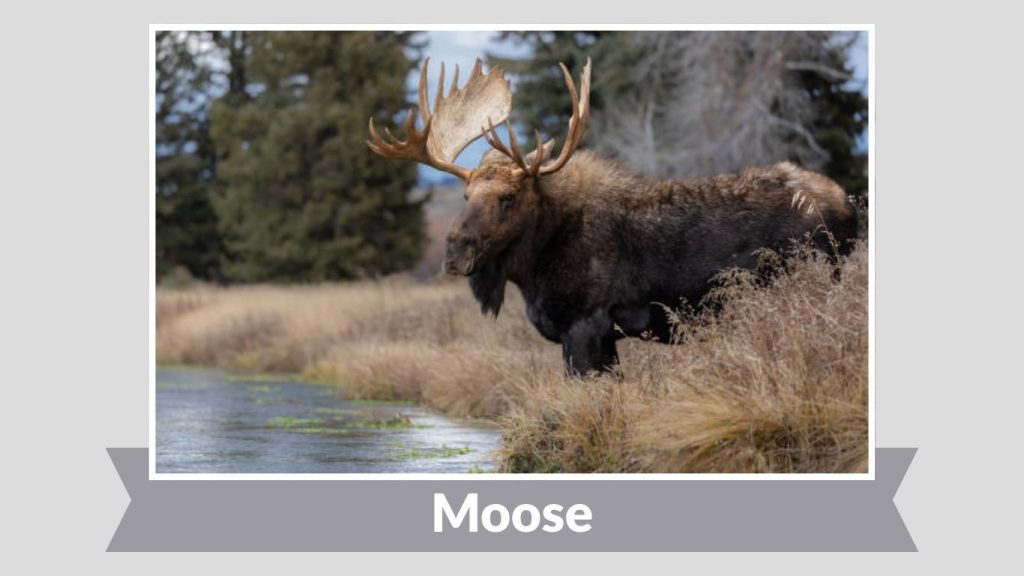
The moose is the largest member of the deer family and is known for its massive body, long legs, and broad antlers. Despite its size, the moose is a strong swimmer and can move quickly through forests and wetlands. Moose play an important role in northern ecosystems by shaping vegetation.
Identification
- Scientific name: Alces alces
- Common name: Moose
- Animal type: Mammal
- Order: Artiodactyla
- Family: Cervidae
- Average weight: 400–700 kg
- Distinct feature: Large palmate antlers (males)
Habitat
Moose inhabit boreal forests, wetlands, and cold northern regions. They are found in North America, Europe, and Asia. Moose prefer areas near lakes, rivers, and marshes where aquatic plants are available.
Behaviors
Moose are mostly solitary animals, except during the breeding season. They are generally calm but can become aggressive if threatened. Moose are excellent swimmers and can dive underwater to feed on plants.
Diet
Moose are herbivores and feed on leaves, twigs, bark, and aquatic vegetation. Their long legs and flexible lips help them reach high branches and underwater plants.
Lifespan
In the wild, moose usually live between 15 and 25 years. In captivity, they may live slightly longer with proper care.
15. Bison
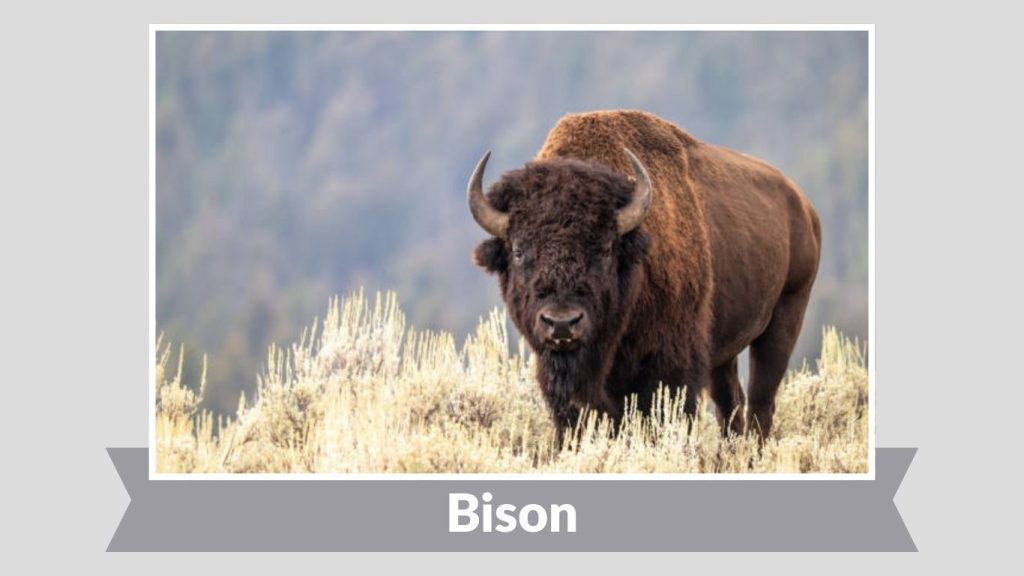
The bison is a massive, powerful herbivore and one of the largest land mammals in North America. Known for its thick fur, large hump, and strong build, bison once roamed the plains in huge herds. They are an important symbol of the wild and play a key role in maintaining grassland ecosystems.
Identification
- Scientific name: Bison bison
- Common name: Bison
- Animal type: Mammal
- Order: Artiodactyla
- Family: Bovidae
- Average weight: 400–1,000 kg
- Distinct feature: Large shoulder hump and shaggy fur
Habitat
Bison mainly inhabit grasslands, plains, and open prairies. They are native to North America, though some populations also exist in protected areas in Europe. Bison prefer open spaces with abundant grasses.
Behaviors
Bison are social animals and live in herds. They are generally calm but can become aggressive when threatened. Despite their size, bison can run fast and are excellent at surviving harsh weather conditions.
Diet
Bison are herbivores and primarily graze on grasses and sedges. Their grazing helps maintain healthy grasslands and supports biodiversity.
Lifespan
In the wild, bison typically live between 15 and 20 years. In captivity, they may live slightly longer under protected care.
16. Buffalo
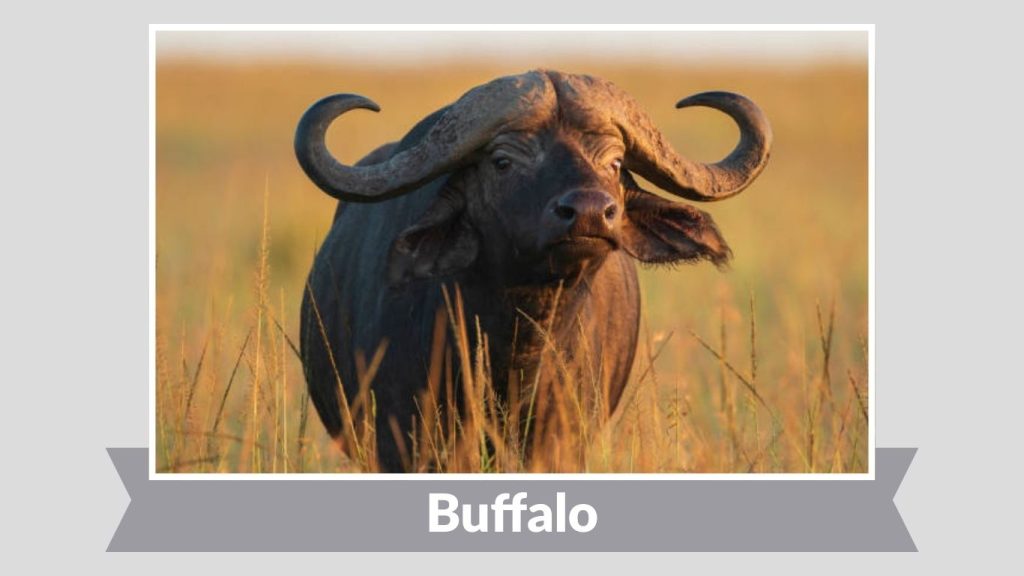
The buffalo is a large, strong herbivorous mammal known for its thick body and curved horns. Buffaloes are highly social animals and often live in large herds, which helps protect them from predators. They play an important role in grassland ecosystems by grazing and maintaining vegetation balance.
Identification
- Scientific name: Syncerus caffer (African buffalo)
- Common name: Buffalo
- Animal type: Mammal
- Order: Artiodactyla
- Family: Bovidae
- Average weight: 500–900 kg
- Distinct feature: Large curved horns
Habitat
Buffaloes live in grasslands, savannas, forests, and wetlands. African buffaloes are found in sub-Saharan Africa, while other buffalo species inhabit parts of Asia. They prefer areas with access to water and grazing land.
Behaviors
Buffaloes are social and live in herds that can include hundreds of individuals. They are known for their strong group defense behavior and will work together to protect calves from predators.
Diet
Buffaloes are herbivores and mainly feed on grasses and plants. They graze for long hours and depend on water sources for survival.
Lifespan
In the wild, buffaloes usually live between 15 and 25 years. In captivity, they may live longer with proper care.
17. Wild Boar
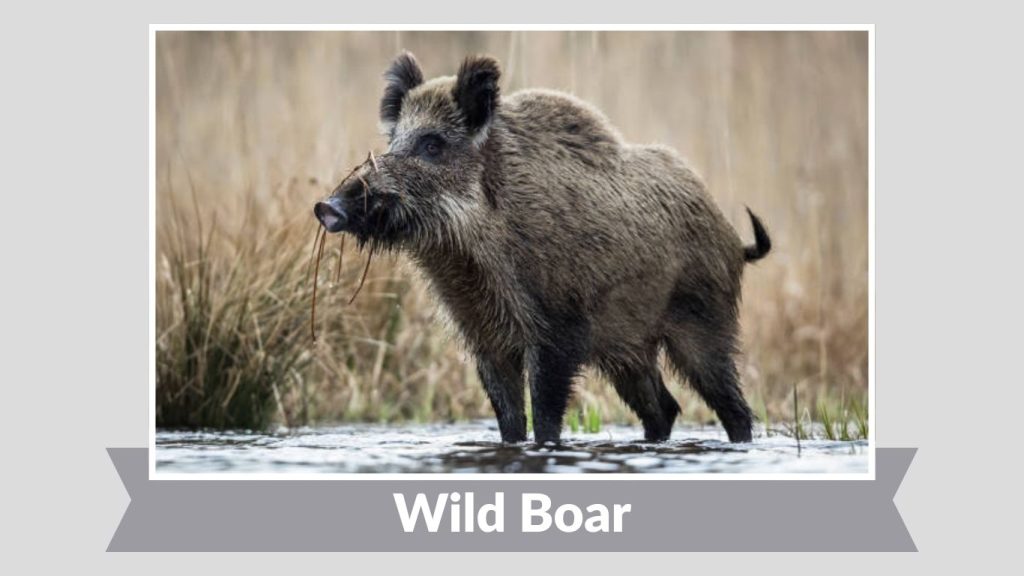
The wild boar is a strong and intelligent mammal known for its thick body, sharp tusks, and adaptability. It is the wild ancestor of the domestic pig and is found in many parts of the world. Wild boars play an important role in ecosystems by turning soil while foraging, which helps plant growth.
Identification
- Scientific name: Sus scrofa
- Common name: Wild Boar
- Animal type: Mammal
- Order: Artiodactyla
- Family: Suidae
- Average weight: 50–200 kg
- Distinct feature: Curved tusks and bristly hair
Habitat
Wild boars inhabit forests, grasslands, wetlands, and agricultural areas. They are native to Europe, Asia, and North Africa but have also been introduced to other regions. They prefer areas with dense cover and access to food and water.
Behaviors
Wild boars are usually nocturnal and live in groups called sounders, mainly consisting of females and young. Adult males are often solitary. They are strong, fast, and can be aggressive when threatened.
Diet
Wild boars are omnivores. Their diet includes roots, fruits, nuts, insects, small animals, and crops. Their flexible feeding habits allow them to survive in many environments.
Lifespan
In the wild, wild boars typically live between 10 and 14 years. In captivity, they may live longer under controlled conditions.
18. Gorilla
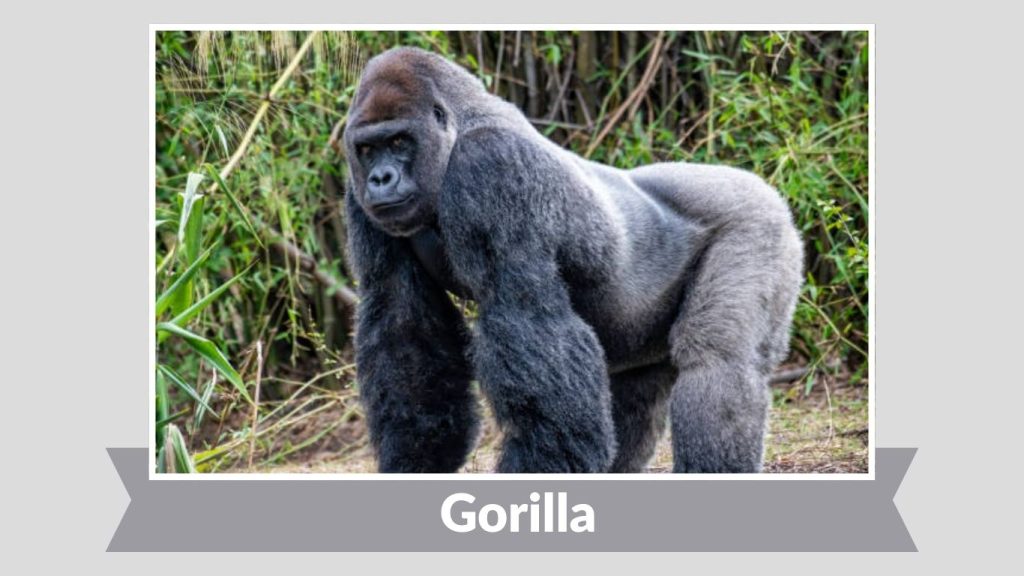
The gorilla is the largest living primate and is known for its strength, intelligence, and gentle nature. Despite their powerful appearance, gorillas are generally calm and social animals. They share a high percentage of DNA with humans and play an important role in forest ecosystems through seed dispersal.
Identification
- Scientific name: Gorilla gorilla (Western gorilla), Gorilla beringei (Eastern gorilla)
- Common name: Gorilla
- Animal type: Mammal
- Order: Primates
- Family: Hominidae
- Average weight: 100–200 kg
- Distinct feature: Muscular build and broad chest
Habitat
Gorillas live in tropical rainforests, montane forests, and lowland forests of central and eastern Africa. They prefer dense vegetation that provides food and shelter.
Behaviors
Gorillas live in family groups led by a dominant male called a silverback. They communicate using vocal sounds, facial expressions, and gestures. Gorillas are mostly active during the day and spend much of their time feeding and resting.
Diet
Gorillas are primarily herbivores. Their diet includes leaves, stems, shoots, fruits, and occasionally insects. Their feeding habits help shape plant growth in their habitats.
Lifespan
In the wild, gorillas typically live between 35 and 40 years. In captivity, they can live longer with proper care.
19. Chimpanzee
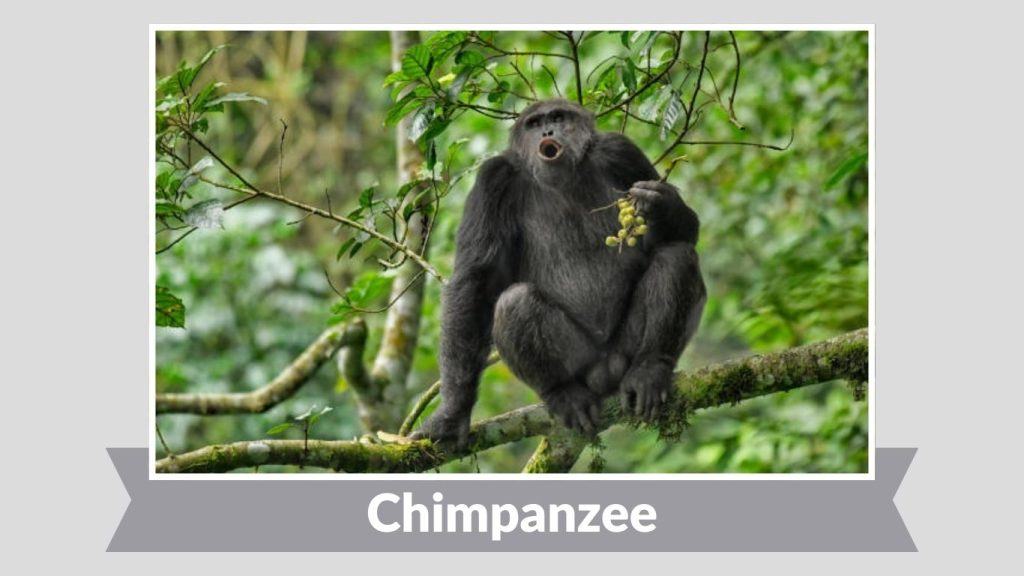
The chimpanzee is a highly intelligent primate and one of humans’ closest living relatives. Chimpanzees are known for their problem-solving skills, use of tools, and complex social behavior. They play an important role in forest ecosystems by spreading seeds and influencing plant growth.
Identification
- Scientific name: Pan troglodytes
- Common name: Chimpanzee
- Animal type: Mammal
- Order: Primates
- Family: Hominidae
- Average weight: 40–70 kg
- Distinct feature: Long arms and expressive face
Habitat
Chimpanzees live in tropical rainforests, woodlands, and savannas of central and western Africa. They prefer areas with abundant fruit trees and access to water.
Behaviors
Chimpanzees are social animals that live in communities with complex social structures. They communicate through vocal sounds, gestures, and facial expressions. Chimpanzees are known to use tools, such as sticks to extract insects.
Diet
Chimpanzees are omnivores. Their diet includes fruits, leaves, seeds, insects, and occasionally small animals. Fruit makes up the largest part of their diet.
Lifespan
In the wild, chimpanzees usually live between 30 and 40 years. In captivity, they can live over 50 years.
20. Orangutan
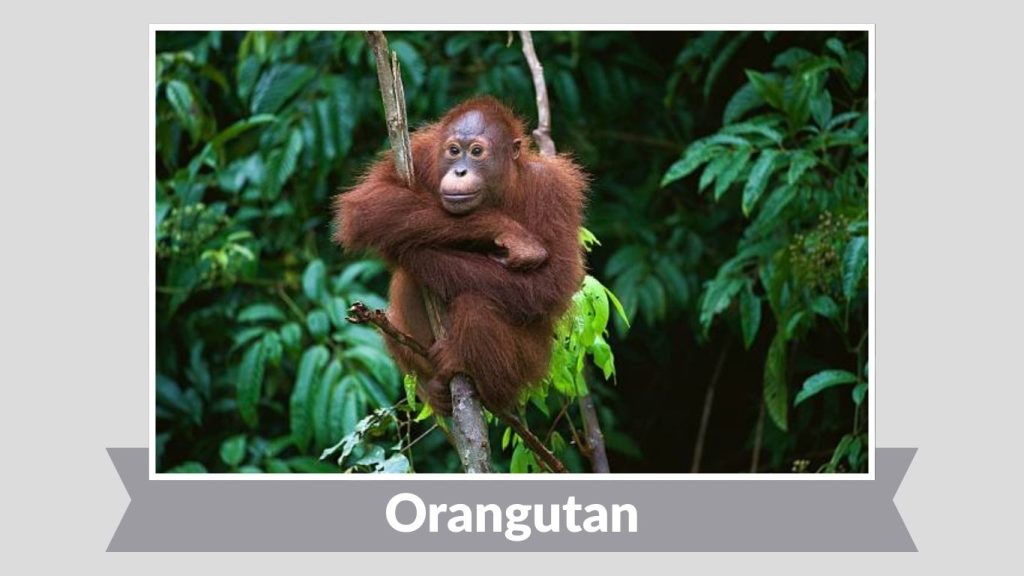
The orangutan is a highly intelligent great ape known for its long arms and reddish-brown hair. Orangutans spend most of their lives in trees and are among the most arboreal of all primates. They play an important role in forest ecosystems by dispersing seeds over large areas.
Identification
- Scientific name: Pongo pygmaeus, Pongo abelii, Pongo tapanuliensis
- Common name: Orangutan
- Animal type: Mammal
- Order: Primates
- Family: Hominidae
- Average weight: 30–90 kg
- Distinct feature: Long arms and orange-brown fur
Habitat
Orangutans live in tropical rainforests of Southeast Asia, mainly on the islands of Borneo and Sumatra. They depend heavily on dense forests with tall trees for food and shelter.
Behaviors
Orangutans are mostly solitary animals, unlike other great apes. They are slow-moving and highly intelligent, using tools and building nests in trees for sleeping. Adult males are known for their loud long calls.
Diet
Orangutans are primarily frugivores. Their diet consists mainly of fruits, along with leaves, bark, flowers, and insects. Seasonal fruit availability strongly influences their movement.
Lifespan
In the wild, orangutans typically live between 35 and 45 years. In captivity, they may live longer with proper care.
21. Kangaroo
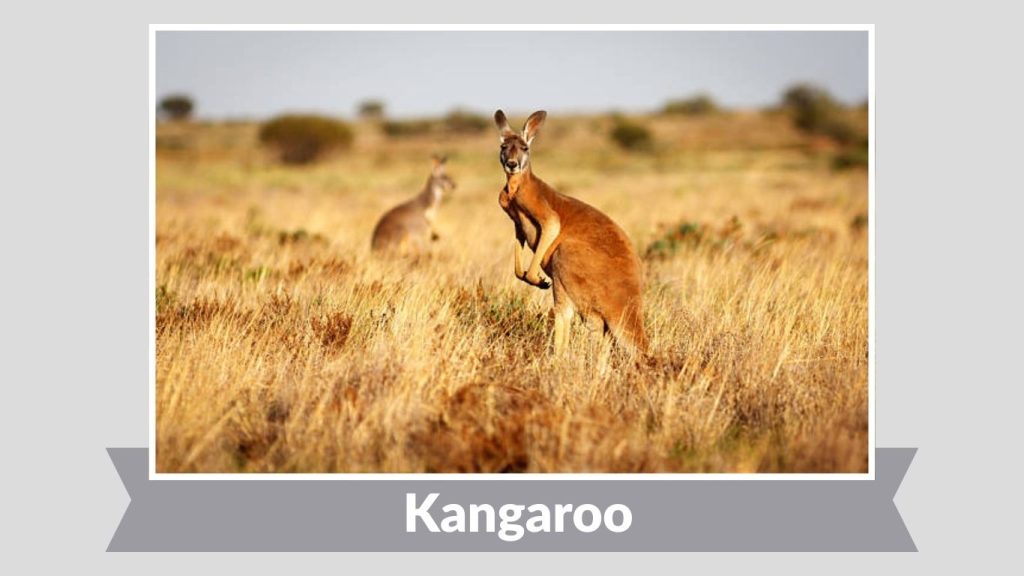
The kangaroo is a marsupial native to Australia and is well known for its powerful hind legs and unique hopping movement. Kangaroos are symbols of Australia and are adapted to survive in harsh, dry environments. They play an important role in maintaining grassland ecosystems.
Identification
- Scientific name: Macropus (genus)
- Common name: Kangaroo
- Animal type: Mammal
- Order: Diprotodontia
- Family: Macropodidae
- Average weight: 18–90 kg
- Distinct feature: Strong hind legs and long tail
Habitat
Kangaroos inhabit grasslands, savannas, woodlands, and semi-arid regions of Australia. They prefer open areas where they can easily move and find food.
Behaviors
Kangaroos are social animals and live in groups called mobs. They are most active during early morning and evening. Kangaroos use their powerful legs for hopping and their tails for balance and support.
Diet
Kangaroos are herbivores. Their diet mainly consists of grasses, leaves, and shrubs. They can survive with very little water by obtaining moisture from their food.
Lifespan
In the wild, kangaroos typically live between 8 and 12 years. In captivity, they may live longer with protection and regular care.
22. Koala
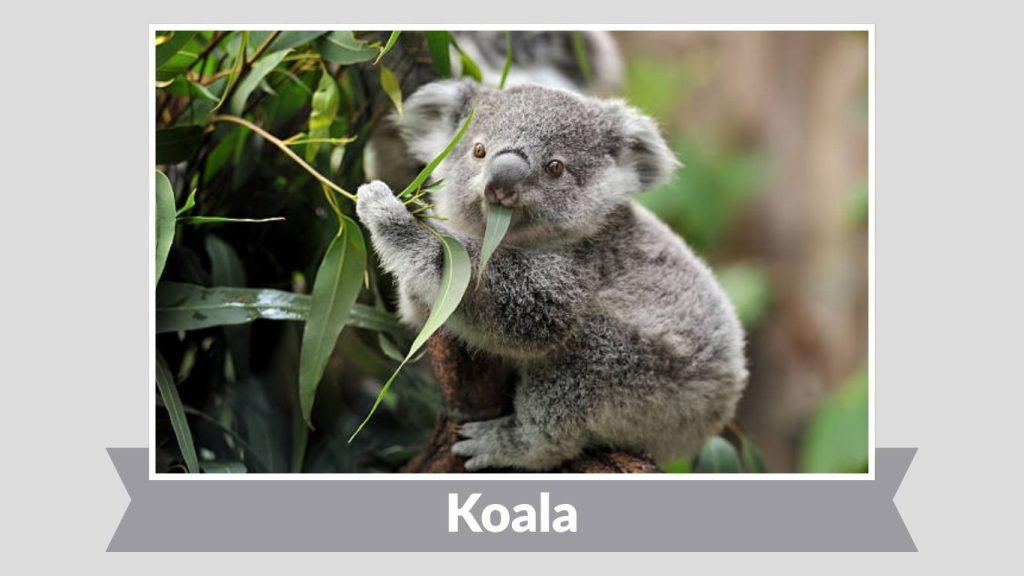
The koala is a tree-dwelling marsupial native to Australia and is known for its round face, fluffy ears, and calm nature. Although often called a “koala bear,” it is not a bear at all. Koalas spend most of their lives in eucalyptus trees and are well adapted to a slow, energy-conserving lifestyle.
Identification
- Scientific name: Phascolarctos cinereus
- Common name: Koala
- Animal type: Mammal
- Order: Diprotodontia
- Family: Phascolarctidae
- Average weight: 4–15 kg
- Distinct feature: Thick gray fur and large nose
Habitat
Koalas live in eucalyptus forests and woodlands of eastern and southern Australia. Their habitat depends heavily on the presence of specific eucalyptus tree species, which provide both food and shelter.
Behaviors
Koalas are solitary and mostly nocturnal animals. They sleep up to 18–20 hours a day to conserve energy. Koalas communicate using deep vocal calls, especially during the breeding season.
Diet
Koalas are herbivores and feed almost exclusively on eucalyptus leaves. These leaves are low in nutrients and toxic to most animals, but koalas have a specialized digestive system to process them.
Lifespan
In the wild, koalas usually live between 10 and 15 years. In captivity, they may live slightly longer under proper care.
23. Panda

The giant panda is a gentle and easily recognizable wild animal known for its black-and-white fur. Native to China, pandas are symbols of conservation and peace. Despite belonging to the carnivore family, pandas primarily eat bamboo and have adapted uniquely to this diet.
Identification
- Scientific name: Ailuropoda melanoleuca
- Common name: Giant Panda
- Animal type: Mammal
- Order: Carnivora
- Family: Ursidae
- Average weight: 70–120 kg
- Distinct feature: Black-and-white fur pattern
Habitat
Pandas live in temperate mountain forests with dense bamboo growth. They are found mainly in central China, where cool and moist conditions support bamboo forests.
Behaviors
Pandas are solitary animals and spend most of their time feeding. They are generally calm and avoid confrontation. Pandas communicate through vocal sounds and scent marking.
Diet
Pandas feed almost entirely on bamboo, including shoots, leaves, and stems. They must eat large quantities daily due to bamboo’s low nutritional value.
Lifespan
In the wild, giant pandas typically live between 15 and 20 years. In captivity, they can live over 30 years with proper care.
24. Crocodile
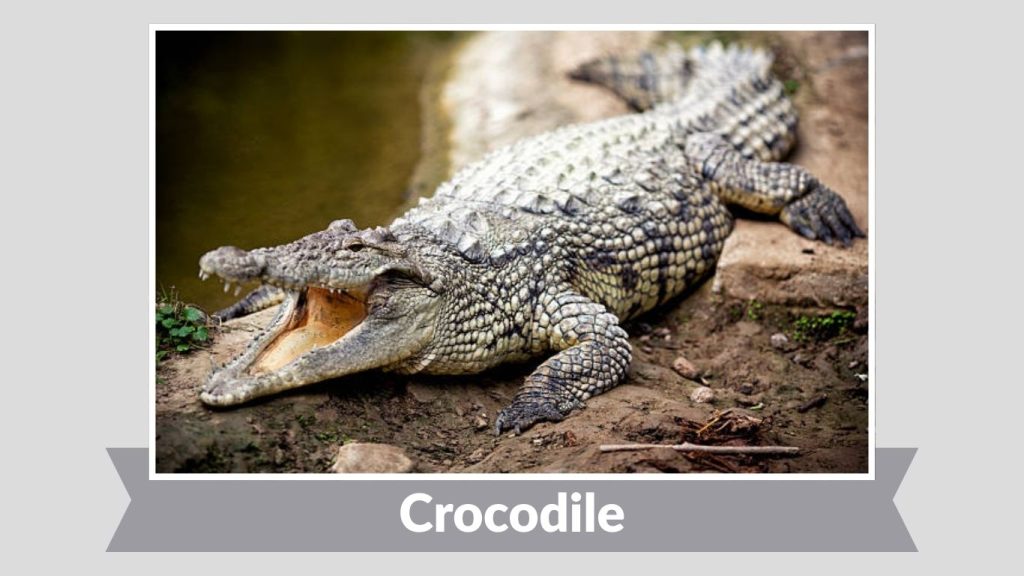
The crocodile is a large, ancient reptile known for its powerful jaws and armored body. Crocodiles have existed for millions of years and are highly effective predators. They play an important role in aquatic ecosystems by controlling fish and animal populations.
Identification
- Scientific name: Crocodylidae (family)
- Common name: Crocodile
- Animal type: Reptile
- Order: Crocodylia
- Family: Crocodylidae
- Average length: 3–6 meters
- Distinct feature: Long snout and strong jaws
Habitat
Crocodiles live in rivers, lakes, wetlands, mangroves, and coastal areas. They are found in Africa, Asia, Australia, and the Americas. They prefer warm climates with access to water.
Behaviors
Crocodiles are mostly solitary and territorial. They spend much of their time basking in the sun to regulate body temperature. Crocodiles are ambush predators, remaining still before attacking prey suddenly.
Diet
Crocodiles are carnivores. Their diet includes fish, birds, mammals, and occasionally other reptiles. Larger crocodiles can take down large prey.
Lifespan
In the wild, crocodiles can live between 40 and 70 years. Some individuals may live even longer in captivity.
25. Alligator
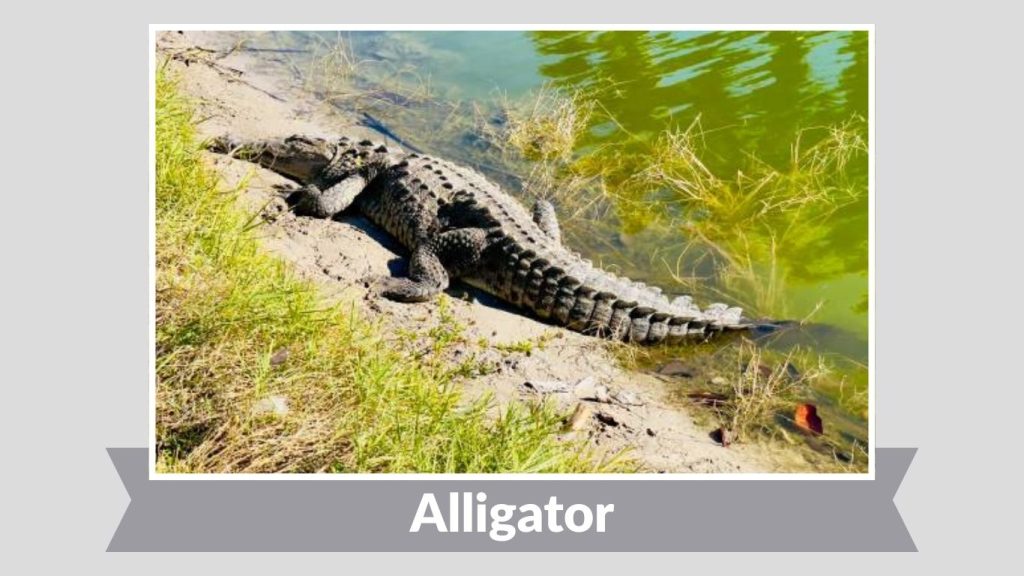
The alligator is a large reptile closely related to crocodiles but distinguished by its broader snout and darker coloration. Alligators are powerful predators and play a key role in maintaining healthy wetland ecosystems by creating water holes used by other animals.
Identification
- Scientific name: Alligator mississippiensis (American alligator)
- Common name: Alligator
- Animal type: Reptile
- Order: Crocodylia
- Family: Alligatoridae
- Average length: 3–4.5 meters
- Distinct feature: Broad, rounded snout
Habitat
Alligators live in freshwater environments such as rivers, lakes, swamps, and marshes. They are mainly found in the southeastern United States and parts of China. Warm, slow-moving water is ideal for them.
Behaviors
Alligators are generally solitary and territorial. They regulate body temperature by basking in the sun or cooling off in water. During breeding season, males produce loud bellows to attract females.
Diet
Alligators are carnivores and feed on fish, birds, mammals, and reptiles. Young alligators eat insects and small fish, while adults hunt larger prey.
Lifespan
In the wild, alligators typically live between 30 and 50 years. In captivity, they can live even longer under protected conditions.
26. Snake
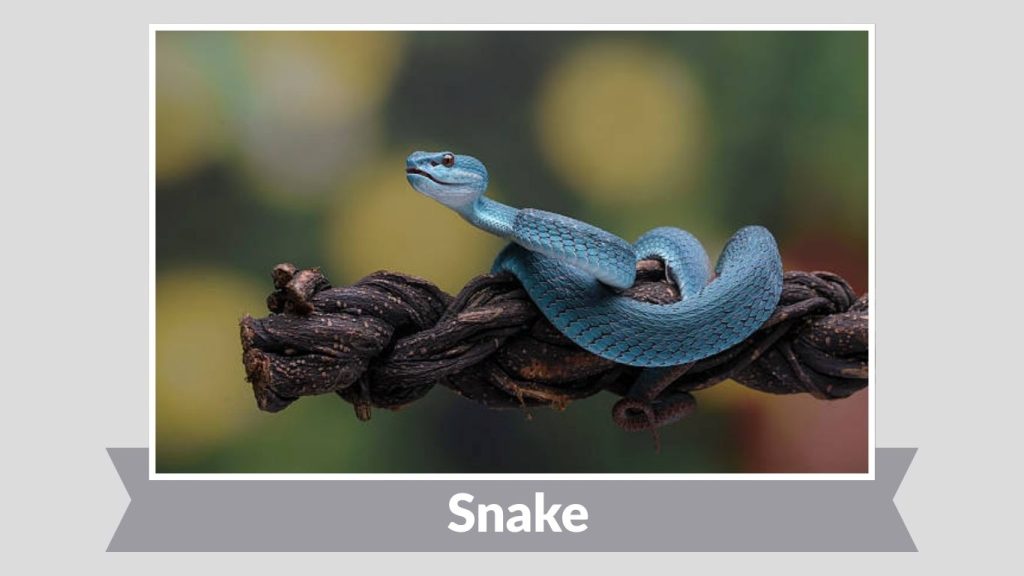
Snakes are legless reptiles known for their flexible bodies and unique movement. Found on almost every continent, snakes vary greatly in size, color, and behavior. Some species are harmless, while others use venom to hunt prey. Snakes play an important role in controlling rodent and pest populations.
Identification
- Scientific name: Serpentes (suborder)
- Common name: Snake
- Animal type: Reptile
- Order: Squamata
- Suborder: Serpentes
- Average length: 0.3–6 meters (varies by species)
- Distinct feature: Long, limbless body
Habitat
Snakes inhabit forests, deserts, grasslands, wetlands, and even oceans. They are found worldwide except in extremely cold regions. Many species adapt well to both wild and human-influenced environments.
Behaviors
Snakes are mostly solitary and rely on camouflage and stealth. They sense vibrations and use their forked tongues to detect scents. Most snakes are active hunters, while some wait in ambush.
Diet
Snakes are carnivores. Their diet includes rodents, birds, eggs, insects, amphibians, and other reptiles. Some species use venom, while others constrict their prey.
Lifespan
In the wild, snakes typically live between 10 and 25 years, depending on the species. In captivity, some can live over 30 years.
27. Eagle
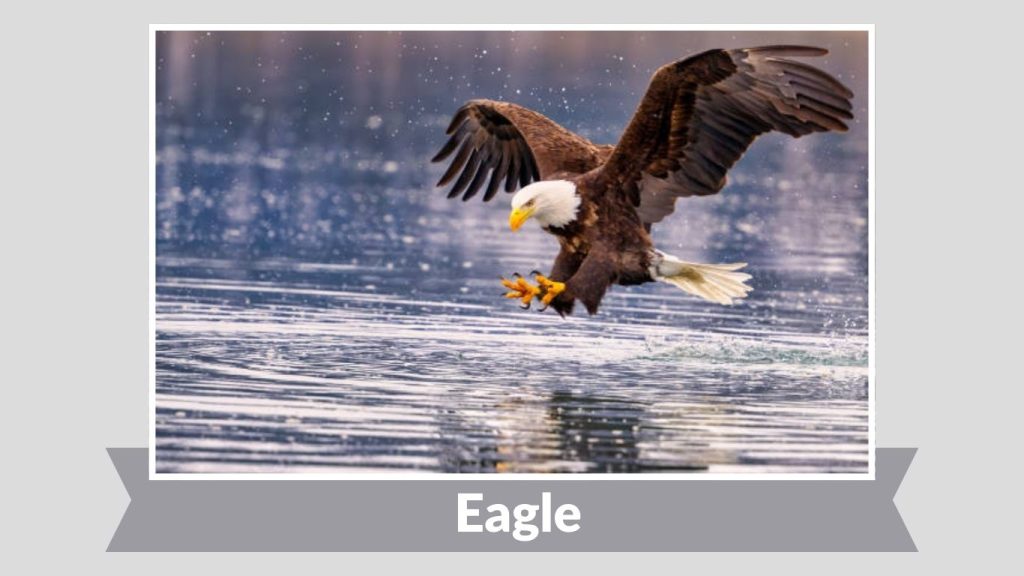
The eagle is a large bird of prey known for its powerful build, sharp eyesight, and strong talons. Eagles are symbols of strength and freedom in many cultures. As top predators, they help maintain balance in ecosystems by controlling prey populations.
Identification
- Scientific name: Accipitridae (family)
- Common name: Eagle
- Animal type: Bird
- Order: Accipitriformes
- Family: Accipitridae
- Average wingspan: 1.5–2.5 meters
- Distinct feature: Sharp beak and strong talons
Habitat
Eagles live in mountains, forests, grasslands, and near large bodies of water. They are found on every continent except Antarctica. Eagles prefer high nesting areas such as cliffs or tall trees.
Behaviors
Eagles are mostly solitary and territorial. They are excellent fliers and can soar for long periods. Eagles use their keen eyesight to spot prey from great distances.
Diet
Eagles are carnivores. Their diet includes fish, small mammals, birds, and reptiles. Different species specialize in different types of prey.
Lifespan
In the wild, eagles typically live between 20 and 30 years. Some species can live longer in captivity.
28. Hawk
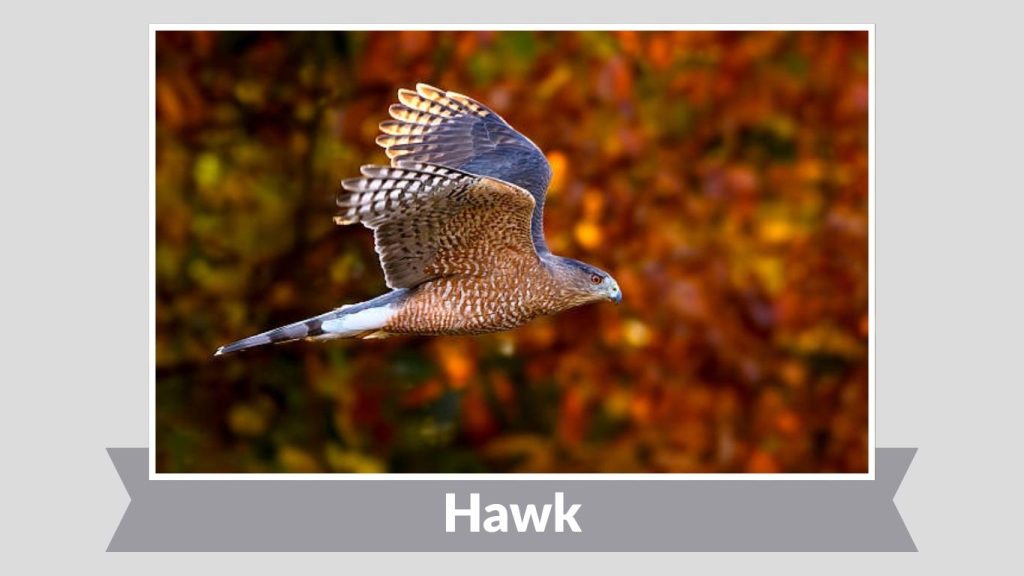
The hawk is a medium to large bird of prey known for its sharp vision, speed, and agile flight. Hawks are skilled hunters and are often seen soaring high in the sky or perched while scanning for prey. They play an important role in controlling rodent and small animal populations.
Identification
- Scientific name: Accipitridae (family)
- Common name: Hawk
- Animal type: Bird
- Order: Accipitriformes
- Family: Accipitridae
- Average wingspan: 0.8–1.5 meters
- Distinct feature: Sharp eyesight and curved beak
Habitat
Hawks live in forests, grasslands, deserts, and urban areas. They are found on every continent except Antarctica. Hawks adapt well to different environments as long as prey is available.
Behaviors
Hawks are usually solitary and territorial. They hunt during the day and rely on speed and surprise. Hawks communicate using high-pitched calls.
Diet
Hawks are carnivores. Their diet includes rodents, birds, reptiles, and insects. Some species specialize in hunting specific prey.
Lifespan
In the wild, hawks generally live between 10 and 20 years. In captivity, some may live longer.
29. Owl
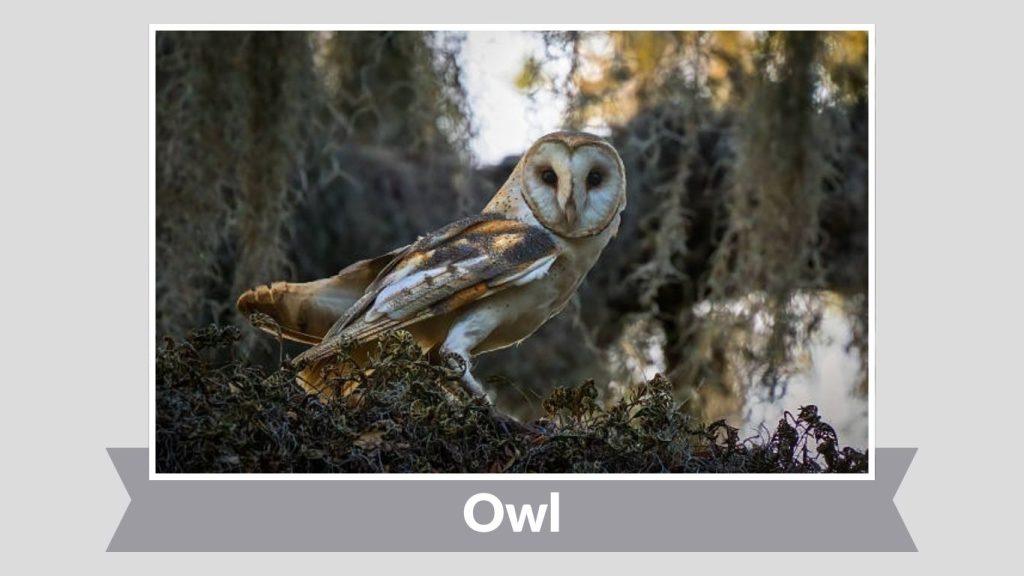
The owl is a nocturnal bird of prey known for its silent flight, large eyes, and ability to rotate its head. Owls are highly efficient hunters and are often associated with wisdom in many cultures. They help control rodent populations and maintain ecological balance.
Identification
- Scientific name: Strigiformes (order)
- Common name: Owl
- Animal type: Bird
- Order: Strigiformes
- Family: Strigidae / Tytonidae
- Average wingspan: 0.6–2 meters
- Distinct feature: Large forward-facing eyes
Habitat
Owls inhabit forests, grasslands, deserts, wetlands, and urban areas. They are found on every continent except Antarctica. Owls prefer quiet areas with nesting sites such as tree hollows or old buildings.
Behaviors
Owls are mostly nocturnal and hunt at night. Their silent flight allows them to approach prey undetected. Owls communicate through hoots and screeches.
Diet
Owls are carnivores and feed on rodents, birds, insects, and small reptiles. Some species specialize in hunting specific prey.
Lifespan
In the wild, owls typically live between 10 and 25 years. In captivity, they may live longer.
30. Peacock
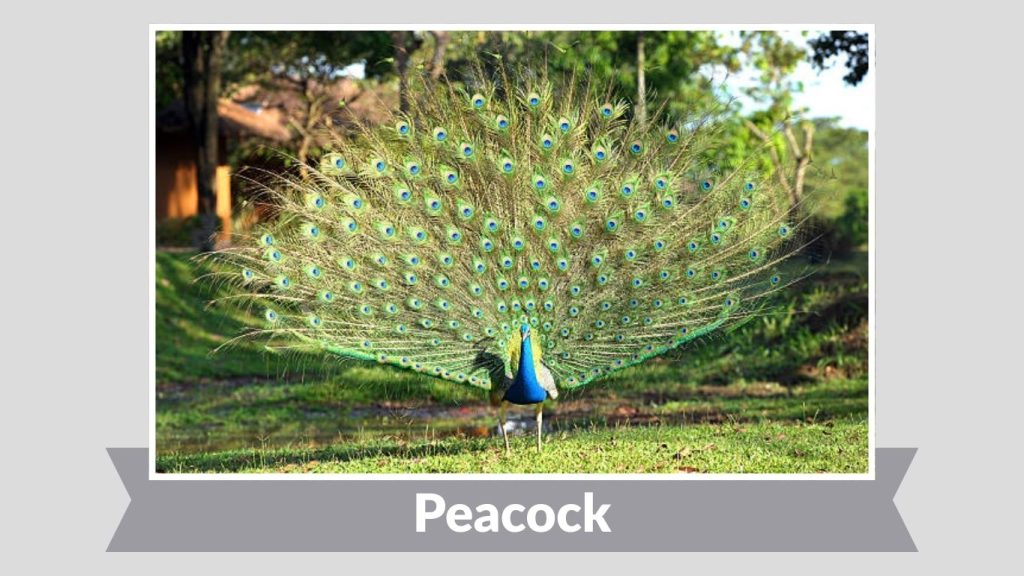
The peacock is a colorful and eye-catching bird best known for the male’s long, iridescent tail feathers, which it displays during courtship. Peacocks are admired for their beauty and are often associated with grace and elegance. They play a role in controlling insects and small animals in their environment.
Identification
- Scientific name: Pavo cristatus (Indian peafowl)
- Common name: Peacock
- Animal type: Bird
- Order: Galliformes
- Family: Phasianidae
- Average length: 1–2.3 meters (including tail)
- Distinct feature: Colorful fan-shaped tail feathers
Habitat
Peacocks live in forests, grasslands, and agricultural areas. They are native to South Asia but have been introduced to many other regions. They prefer areas with trees for roosting and open ground for feeding.
Behaviors
Peacocks are social birds and often live in small groups. Males display their feathers to attract females. They are mostly active during the day and roost in trees at night.
Diet
Peacocks are omnivores. Their diet includes seeds, grains, insects, small reptiles, and plants. This varied diet helps them adapt to different environments.
Lifespan
In the wild, peacocks usually live between 15 and 20 years. In captivity, they may live longer with proper care.
31. Ostrich
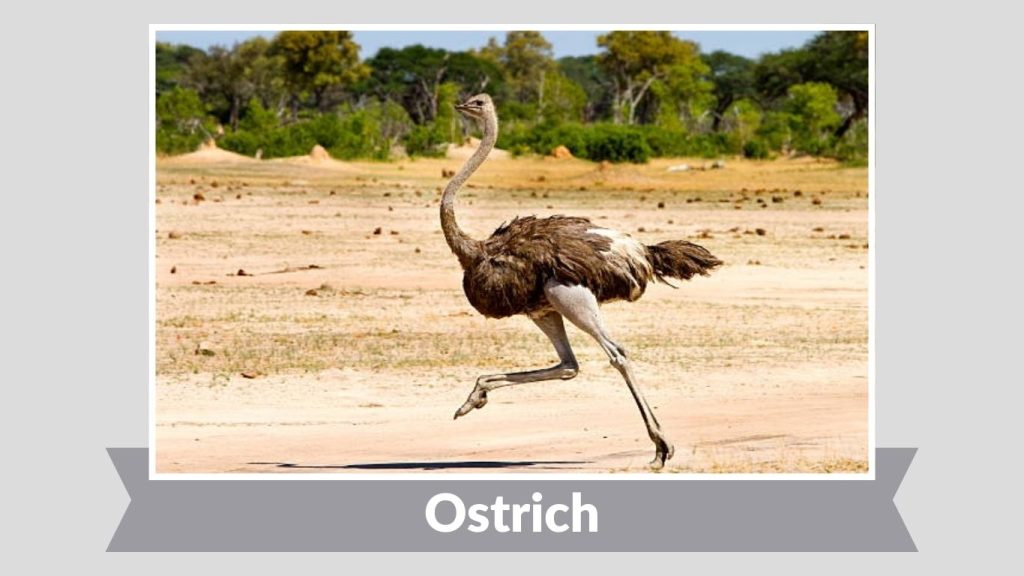
The ostrich is the largest and heaviest living bird in the world. Although it cannot fly, it is an excellent runner and can reach very high speeds. Ostriches are well adapted to life in open landscapes and rely on their speed and strong legs for defense.
Identification
- Scientific name: Struthio camelus
- Common name: Ostrich
- Animal type: Bird
- Order: Struthioniformes
- Family: Struthionidae
- Average height: 2–2.8 meters
- Distinct feature: Long legs and large body
Habitat
Ostriches live in savannas, grasslands, and semi-desert regions of Africa. They prefer open areas where they can easily spot predators from a distance.
Behaviors
Ostriches are social birds and often live in small groups. When threatened, they may run away or defend themselves with powerful kicks. Ostriches are active during the day.
Diet
Ostriches are omnivores. Their diet includes seeds, grasses, fruits, insects, and small animals. They swallow stones to help grind food in their stomach.
Lifespan
In the wild, ostriches typically live between 30 and 40 years. In captivity, they may live slightly longer.
32. Penguin
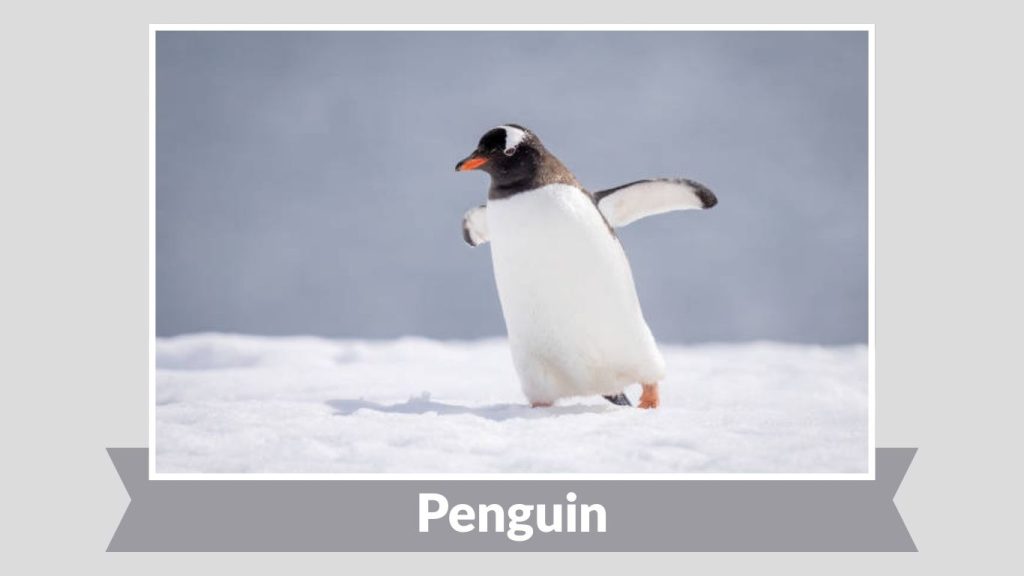
Penguins are flightless birds specially adapted for life in water. Known for their upright posture and waddling walk, penguins are excellent swimmers. They play an important role in marine ecosystems and are found mostly in the Southern Hemisphere.
Identification
- Scientific name: Spheniscidae (family)
- Common name: Penguin
- Animal type: Bird
- Order: Sphenisciformes
- Family: Spheniscidae
- Average height: 30 cm–1.1 meters (varies by species)
- Distinct feature: Flipper-like wings
Habitat
Penguins live along coastlines, islands, and icy regions. Most species inhabit the Southern Hemisphere, including Antarctica, South America, Africa, Australia, and New Zealand. They rely on cold ocean waters rich in food.
Behaviors
Penguins are social birds and often live in large colonies. They communicate using vocal calls and body movements. Penguins spend much of their time swimming and hunting in the ocean.
Diet
Penguins are carnivores. Their diet consists mainly of fish, squid, and krill. Their streamlined bodies help them swim efficiently underwater.
Lifespan
In the wild, penguins typically live between 15 and 20 years. Some species may live longer under favorable conditions.
33. Hyena
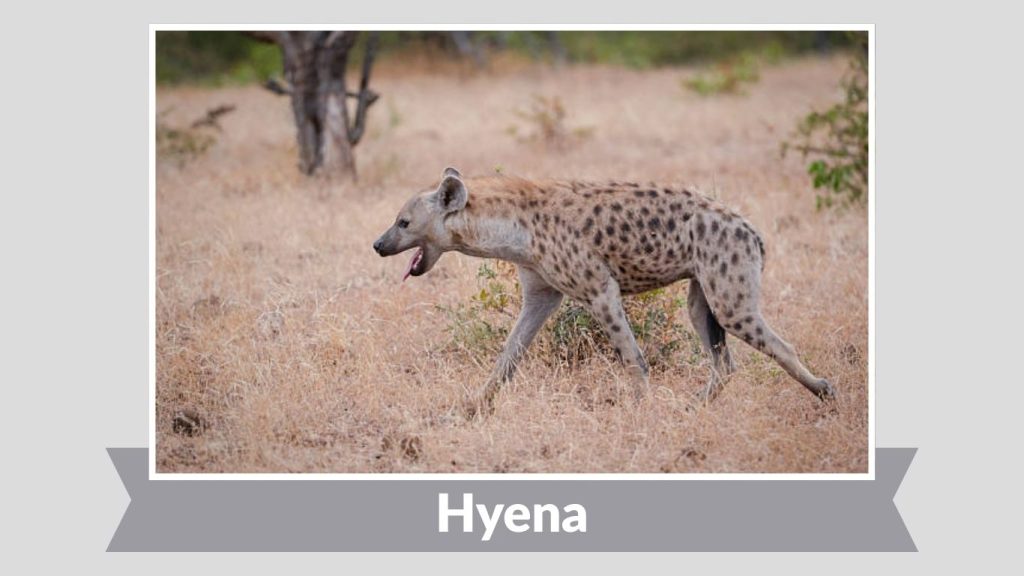
The hyena is a highly intelligent and social carnivorous mammal often misunderstood as only a scavenger. In reality, hyenas are skilled hunters with powerful jaws capable of crushing bones. They play a crucial role in ecosystems by cleaning up carcasses and controlling animal populations.
Identification
- Scientific name: Hyaenidae (family)
- Common name: Hyena
- Animal type: Mammal
- Order: Carnivora
- Family: Hyaenidae
- Average weight: 40–80 kg
- Distinct feature: Strong jaws and sloping back
Habitat
Hyenas live in grasslands, savannas, woodlands, and semi-desert areas. They are mainly found in Africa, with some species in parts of Asia. Hyenas adapt well to both open and dry environments.
Behaviors
Hyenas are highly social animals that live in large groups called clans. They communicate using a wide range of sounds, including the well-known “laugh.” Hyenas have complex social hierarchies and strong cooperative behavior.
Diet
Hyenas are carnivores and scavengers. Their diet includes large mammals, smaller animals, and carcasses. Their powerful digestive system allows them to eat bones and tough materials.
Lifespan
In the wild, hyenas typically live between 12 and 25 years. In captivity, they may live longer with proper care.
FAQs
What is considered a wild animal?
A wild animal is any animal that lives in nature without human control or domestication. These animals survive by finding their own food, shelter, and protection in natural environments such as forests, grasslands, oceans, and deserts.
How are wild animals different from domestic animals?
Wild animals are not tamed and do not depend on humans for survival, while domestic animals are bred and raised by humans for companionship, food, or work. Wild animals retain natural instincts that help them hunt, hide, or defend themselves.
Why are wild animals important to ecosystems?
Wild animals help maintain ecological balance by controlling prey populations, spreading seeds, pollinating plants, and recycling nutrients. Removing or harming them can disrupt entire ecosystems.
Where do most wild animals live?
Wild animals live in a wide variety of habitats, including forests, savannas, mountains, wetlands, oceans, and polar regions. Each species is adapted to survive in a specific environment.
How can humans help protect wild animals?
Humans can protect wild animals by conserving natural habitats, reducing pollution, stopping illegal hunting, supporting wildlife conservation programs, and spreading awareness about the importance of biodiversity.