




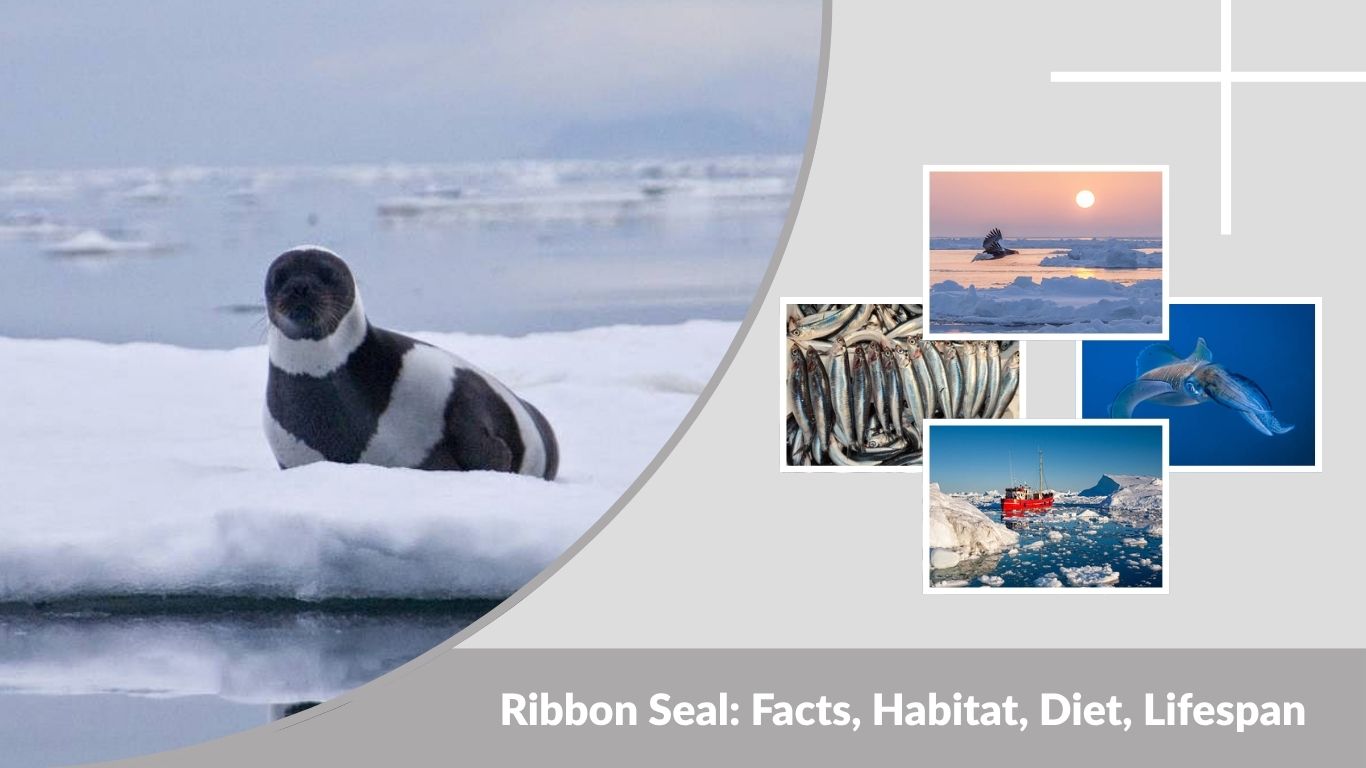
The ribbon seal is one of the most visually striking marine mammals found in the cold waters of the North Pacific. Known for its bold, ribbon-like white bands across a dark body, this unique seal stands out among all other species. Ribbon seals are highly adapted to life on drifting sea ice and spend much of their time in remote ocean regions. Despite their beauty, they remain relatively mysterious, making them a fascinating subject for scientists and wildlife enthusiasts alike.
What is a Ribbon Seal?
The ribbon seal (Histriophoca fasciata) is a medium-sized earless seal belonging to the family Phocidae. It is the only species in its genus and is easily recognized by its distinctive striped pattern. Ribbon seals are primarily found in the North Pacific Ocean, particularly in the Bering Sea and the Sea of Okhotsk.
These seals are known for their solitary lifestyle and preference for offshore ice environments. Unlike more social seal species, ribbon seals are rarely seen in large groups, which adds to their elusive nature.
Ribbon Seal Physical Characteristics
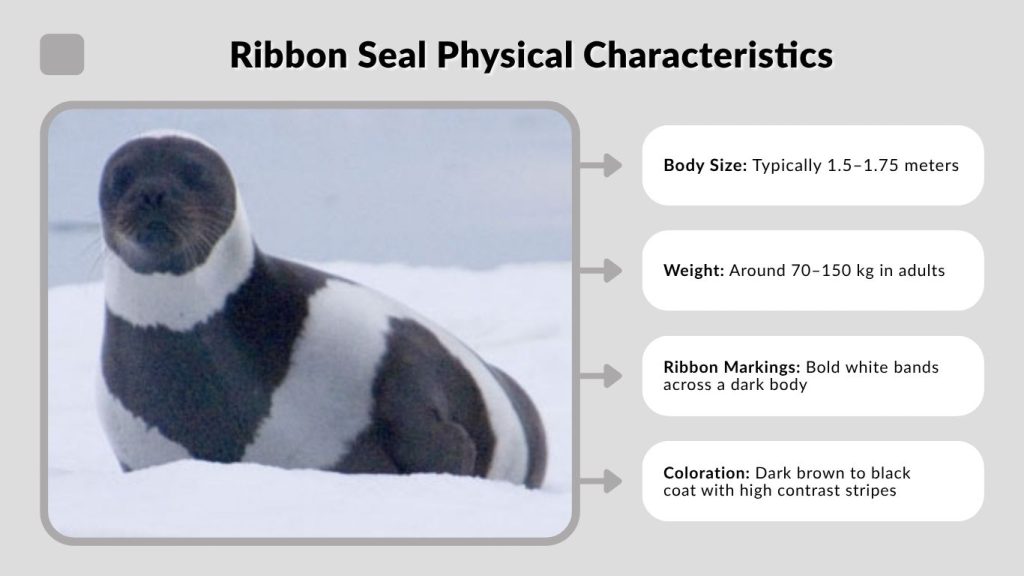
Ribbon seals are medium-sized marine mammals uniquely adapted to cold ocean environments. Their bodies are streamlined for efficient swimming, and they possess thick blubber to survive freezing temperatures. What truly sets them apart from other seals is their striking coat pattern, which makes them one of the most visually distinctive species in the marine world.
Key Physical Features:
- Body Size: Typically 1.5–1.75 meters (5–5.7 feet) long
- Weight: Around 70–150 kg in adults
- Ribbon Markings: Bold white bands across a dark body
- Coloration: Dark brown to black coat with high contrast stripes
- Blubber Layer: Thick fat layer for insulation and energy
- Body Shape: Smooth and streamlined for fast swimming
- Flippers: Strong and well-adapted for movement in icy water
- Whiskers (Vibrissae): Sensitive for detecting prey underwater
Ribbon Seal Habitat
Geographic Distribution
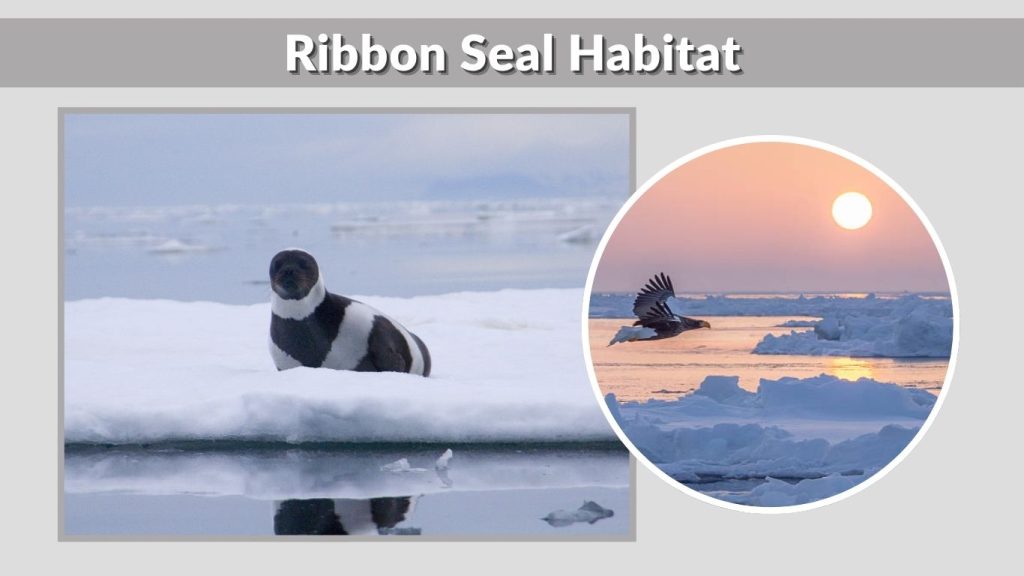
Ribbon seals are found mainly in the North Pacific Ocean. Their range includes the Bering Sea, the Sea of Okhotsk, and surrounding Arctic waters near Alaska and Russia. They prefer remote and less disturbed areas, which is why they are not commonly observed.
Ice-Dependent Lifestyle
These seals are closely tied to seasonal sea ice. They use floating pack ice as platforms for resting, molting, and giving birth. As the ice melts in warmer months, ribbon seals move into deeper offshore waters.
Environmental Preferences
Ribbon seals favor cold, open waters and are often found far from land. Their habitat choice helps reduce competition and allows them access to abundant marine food sources.
Behavior and Adaptations
Solitary Nature
Ribbon seals are mostly solitary animals. They are rarely seen in groups and tend to live and hunt alone. This behavior is quite different from many other seal species that form colonies.
Swimming and Diving
Ribbon seals are powerful swimmers and capable divers. They spend a large portion of their lives in the water, diving deep to search for food. Their streamlined bodies and strong muscles allow them to move efficiently through the ocean.
Adaptations to Cold
To survive in freezing environments, ribbon seals have thick blubber that insulates their bodies. They also have the ability to regulate oxygen use during dives, enabling them to stay underwater for extended periods.
Ribbon Seal Diet
Main Food Sources
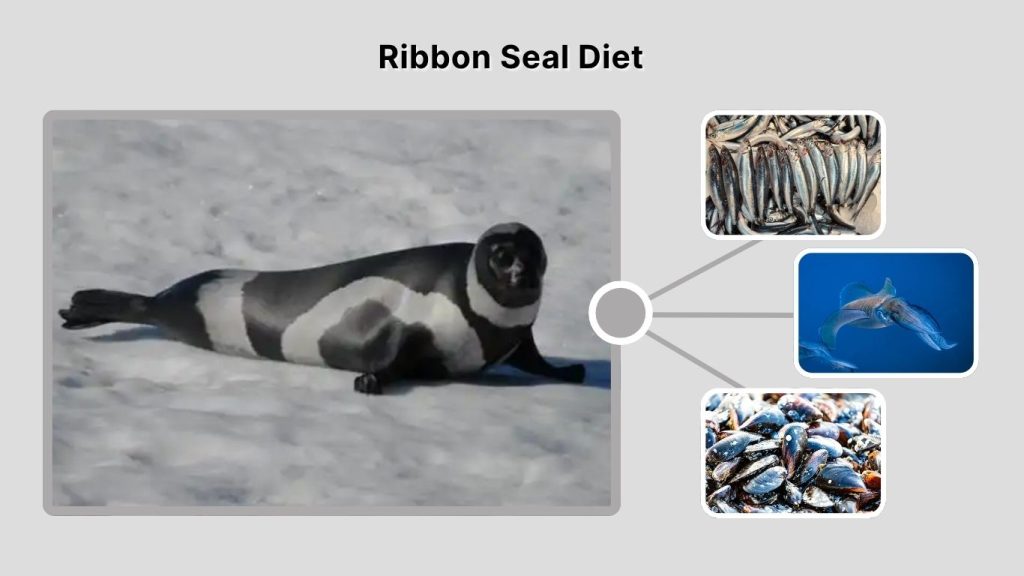
Ribbon seals are carnivorous and feed mainly on fish, squid, and crustaceans. Their diet varies depending on location and seasonal availability of prey.
Hunting Techniques
They hunt underwater, using their sensitive whiskers to detect movement and locate prey. This allows them to find food even in dark or deep waters.
Seasonal Feeding
Ribbon seals may adjust their feeding habits based on the time of year. During certain seasons, they may rely more heavily on specific types of prey depending on what is most abundant.
Ribbon Seal Baby (Pups)
Birth and Appearance
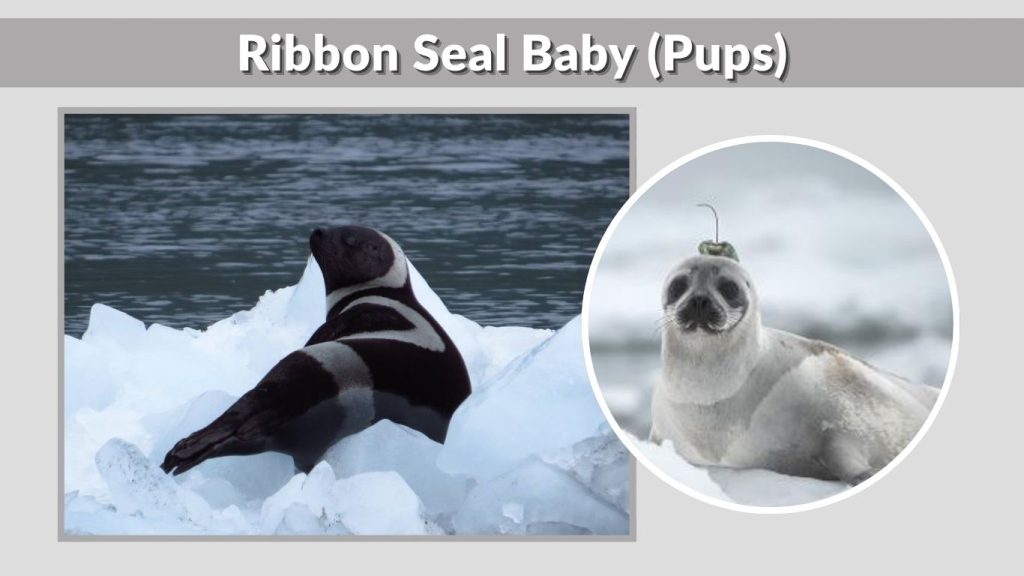
Ribbon seal pups are born in early spring on floating sea ice. At birth, they have a soft, fluffy white coat that helps them blend into the icy surroundings and stay warm. Unlike adults, pups do not yet have the distinctive ribbon-like markings.
Growth and Development
During the nursing period, which lasts about 3 to 4 weeks, the mother provides rich, high-fat milk that helps the pup grow quickly. As they develop, pups shed their white fur and gradually begin to develop the darker coat with faint markings that will later become more defined.
Survival Challenges
Young ribbon seals face several threats, especially from predators and changing ice conditions. If sea ice melts too early, pups may be forced into the water before they are fully prepared, reducing their chances of survival.
Lifespan and Life Cycle
Average Lifespan
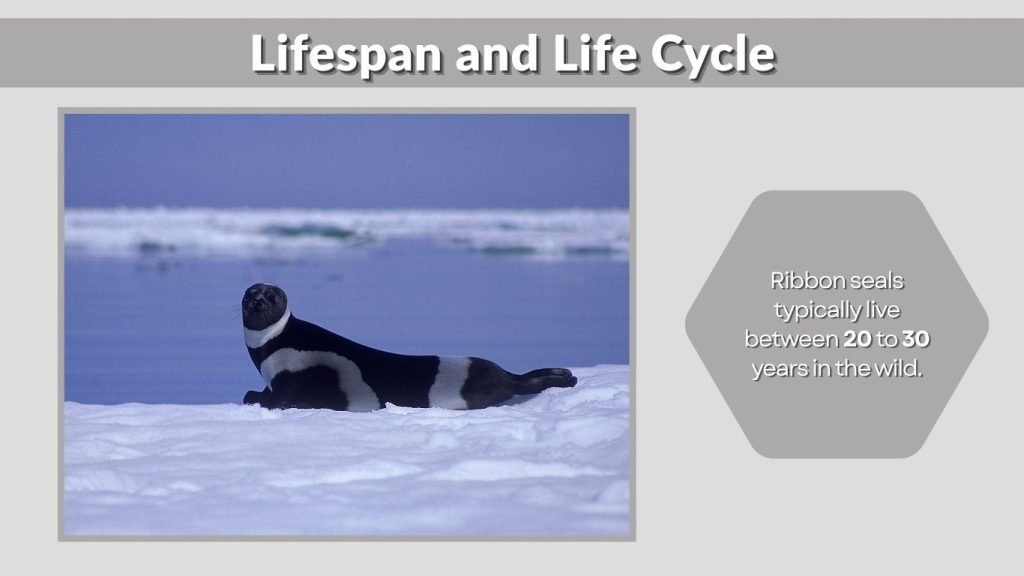
Ribbon seals typically live between 20 to 30 years in the wild. Their lifespan can vary depending on environmental factors, availability of food, and predation.
Life Stages
The life cycle of a ribbon seal includes pup, juvenile, and adult stages. As they mature, their distinctive ribbon patterns become more pronounced, especially in males.
Reproductive Cycle
Ribbon seals follow an annual breeding cycle. After mating, females experience delayed implantation, ensuring that pups are born during the optimal spring season when ice conditions are most stable.
Predators and Threats
Natural Predators
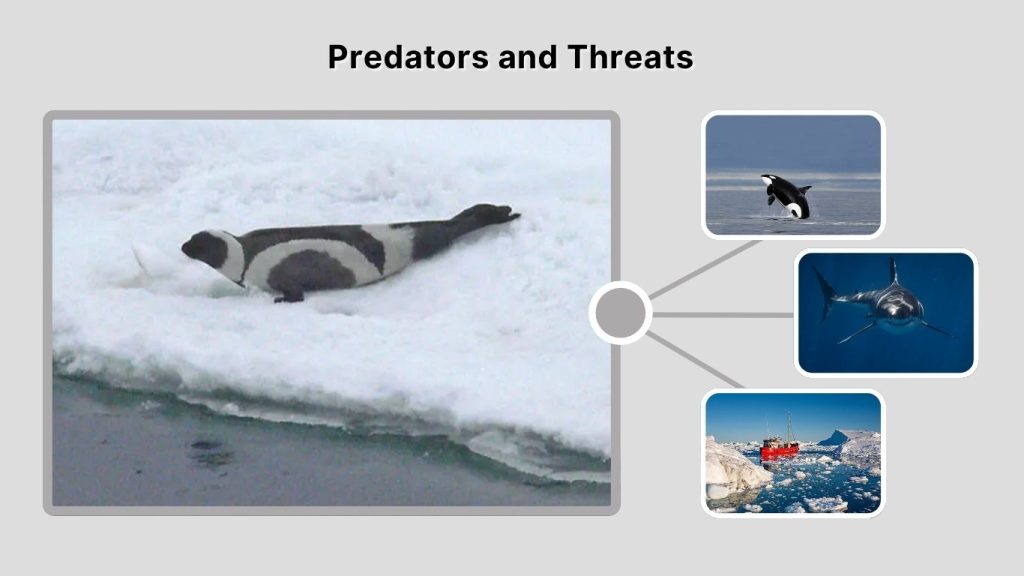
Ribbon seals are preyed upon by several marine predators, including killer whales (orcas) and large sharks. Because they spend much of their time in open water, they rely on agility and diving ability to avoid danger.
Environmental Threats
Climate change poses a significant threat to ribbon seals. The loss of sea ice affects their breeding grounds and resting areas. As ice becomes less stable, it can disrupt their entire life cycle.
Human Impact
Ribbon seals are not heavily hunted compared to other seal species, but they can still be affected by human activities such as pollution, fishing, and increased shipping in Arctic waters.
Conservation Status
Ribbon seals are currently classified as “Least Concern” by the IUCN, meaning their population is considered stable. However, scientists continue to monitor them closely due to the potential long-term effects of climate change on their habitat.
Interesting Ribbon Seal Facts
- Ribbon seals are named for their unique white bands that resemble ribbons across their bodies.
- They are among the least commonly seen seal species due to their remote habitat.
- Their bold markings make them one of the most visually distinctive marine mammals.
- They are strong swimmers and spend most of their lives in the water.
- Unlike many seals, they rarely form large groups.
Ribbon Seal vs Other Seals
Ribbon Seal vs Ringed Seal
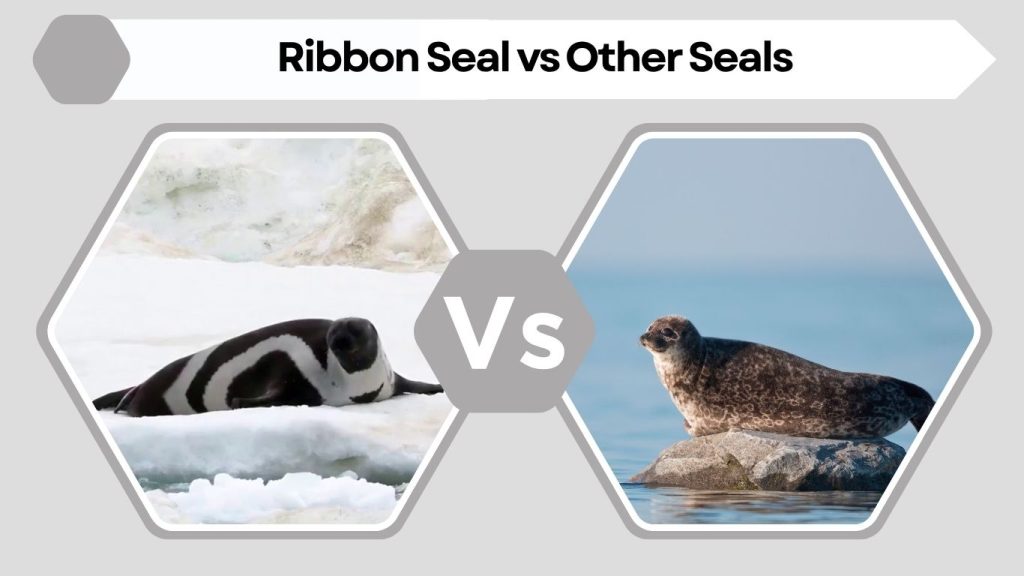
Ribbon seals are larger and have bold stripe patterns, while ringed seals are smaller with spotted ring-like markings. Ringed seals are also more closely tied to thick ice habitats.
Ribbon Seal vs Bearded Seal
Bearded seals are larger and have long whiskers for feeding on the seafloor, whereas ribbon seals rely more on swimming and hunting in open water.
FAQs
What makes ribbon seals unique?
Ribbon seals are unique because of their bold, ribbon-like white stripes across a dark body, which are not found in any other seal species.
How big do ribbon seals get?
They usually grow between 1.5 to 1.75 meters in length and weigh around 70 to 150 kilograms.
Do ribbon seals have stripes at birth?
No, pups are born with a white coat and develop their distinctive ribbon markings as they grow.
Why do ribbon seals have thick blubber?
Their blubber helps keep them warm in freezing waters and serves as an energy reserve.
How do ribbon seals move in water?
They use their strong flippers and streamlined bodies to swim efficiently and dive for food.
Conclusion
The ribbon seal is a unique and beautiful marine mammal known for its striking appearance and specialized adaptations to cold ocean environments. From its bold ribbon-like markings to its solitary lifestyle, it remains one of the most fascinating yet lesser-known seal species. While its population is currently stable, the ongoing loss of sea ice highlights the importance of protecting its fragile habitat. Understanding and conserving ribbon seals is essential for maintaining the balance of Arctic and sub-Arctic ecosystems.