



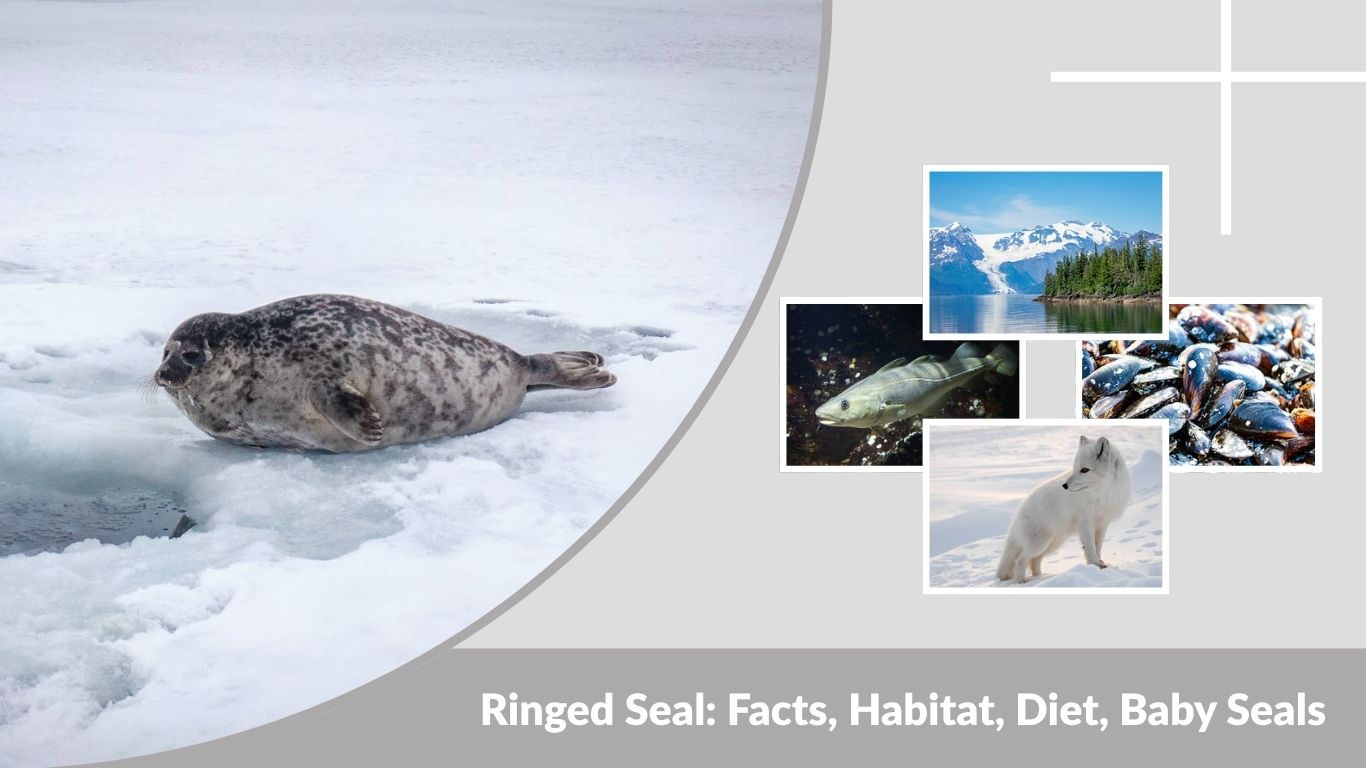
The ringed seal is one of the most important and widely distributed marine mammals in the Arctic region. Known for the distinct ring-like patterns on its coat, this small seal plays a vital role in the Arctic ecosystem, especially as the primary prey of polar bears. Highly adapted to life on sea ice, ringed seals have unique survival skills that allow them to thrive in extreme cold conditions. Understanding their habitat, diet, and life cycle helps highlight their ecological importance.
What is a Ringed Seal?
The ringed seal (Pusa hispida) is a small species of earless seal belonging to the family Phocidae. It is considered the most abundant seal in the Arctic and is well adapted to icy environments. These seals spend most of their lives in cold waters and rely heavily on sea ice for resting, breeding, and raising their young.
Ringed seals are closely related to other Arctic seals but are easily recognized by their size and unique spotted patterns. Their ability to survive in frozen habitats makes them one of the most resilient marine mammals.
Physical Characteristics
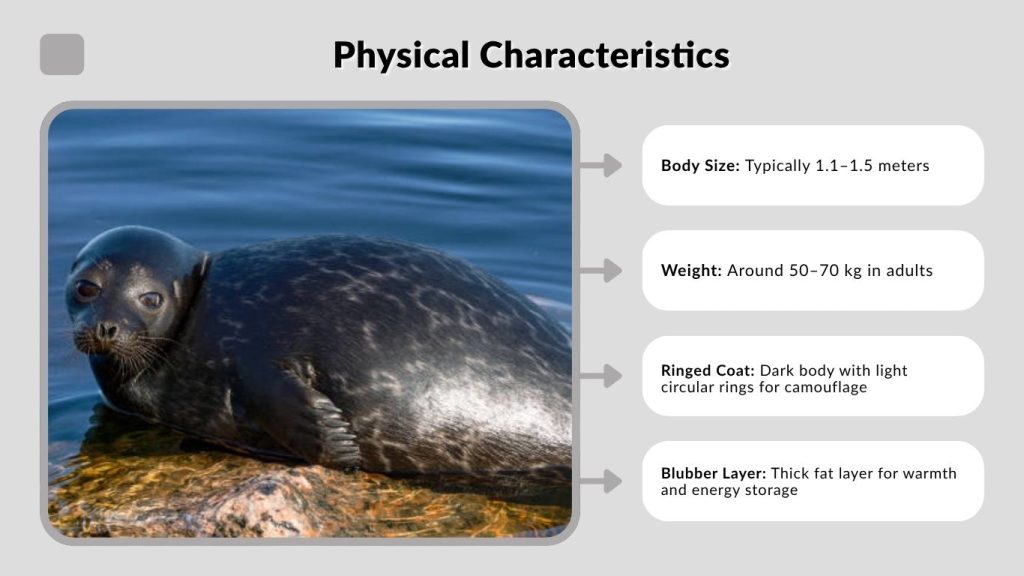
Ringed seals are small, well-adapted marine mammals built for survival in the harsh Arctic environment. Their compact bodies, insulating fat layers, and specialized features allow them to live under thick sea ice and in freezing waters. Despite their smaller size compared to other seals, they are highly efficient swimmers and perfectly suited to icy habitats.
Key Physical Features:
- Body Size: Typically 1.1–1.5 meters (3.5–5 feet) long
- Weight: Around 50–70 kg in adults
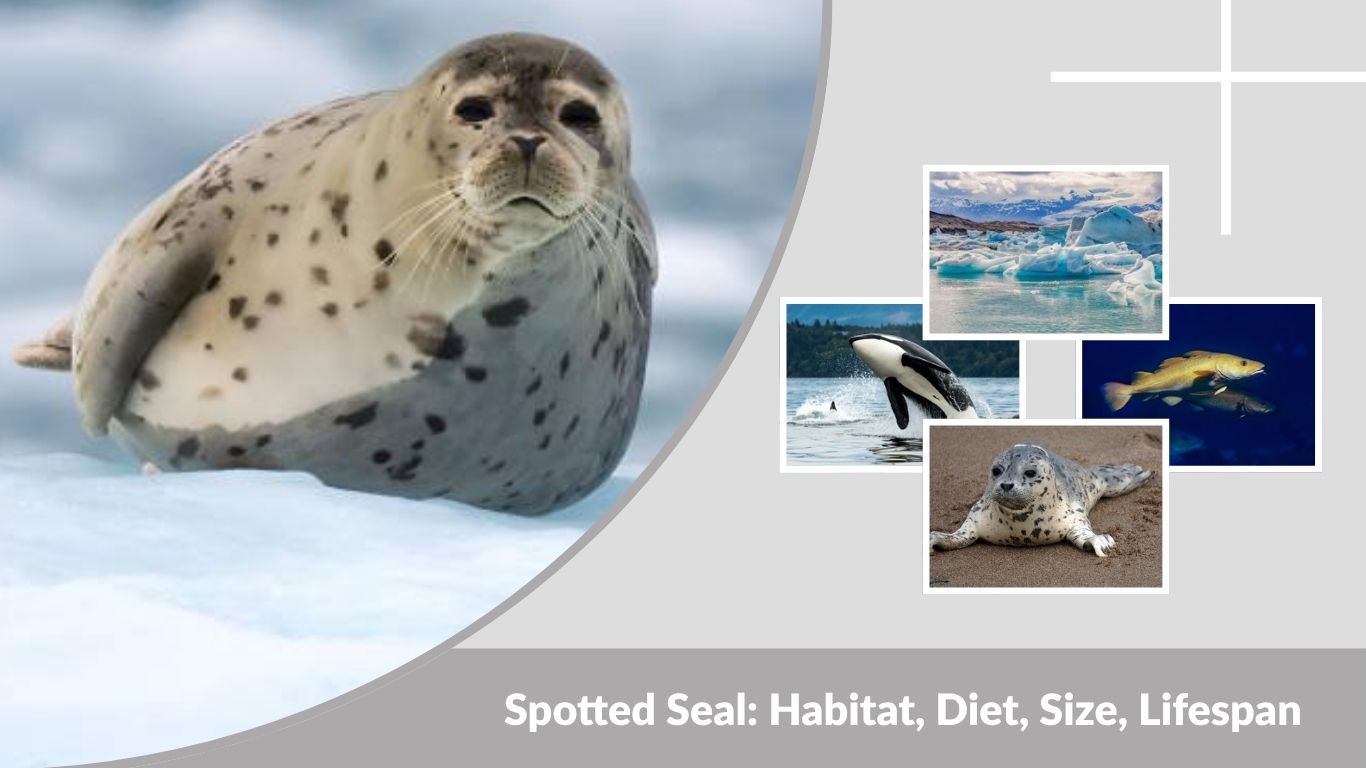
- Ringed Coat: Dark body with light circular rings for camouflage
- Blubber Layer: Thick fat layer for warmth and energy storage
- Claws: Strong front claws to maintain breathing holes in ice
- Body Shape: Compact and streamlined for swimming under ice
- Whiskers (Vibrissae): Sensitive for detecting prey in dark water
- Pups (Lanugo Fur): Born with soft white fur for insulation and concealment
Ringed Seal Habitat
Geographic Distribution
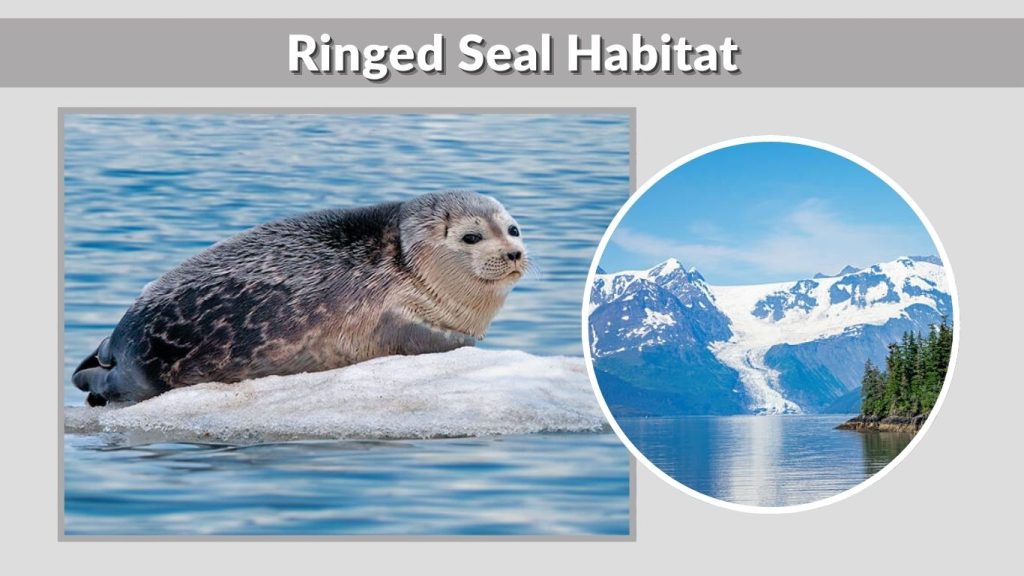
Ringed seals are found throughout the Arctic Ocean and surrounding seas, including areas near Alaska, Canada, Greenland, and Russia. They are one of the few marine mammals that remain in the Arctic year-round.
Life on Sea Ice
Sea ice is essential to the survival of ringed seals. They use it as a platform for resting, breeding, and molting. Unlike many other seals, they maintain breathing holes in the ice, allowing them to access air while living beneath thick ice layers.
Snow Dens for Survival
During the breeding season, female ringed seals build snow dens over their breathing holes. These dens provide shelter for newborn pups, protecting them from harsh weather and predators such as Arctic foxes and birds of prey.
Behavior and Adaptations
Solitary Lifestyle
Ringed seals are generally solitary animals. They spend most of their time alone in the water or on ice, only coming together during the breeding season. This behavior reduces competition for food and space.
Ice Survival Techniques
One of the most remarkable abilities of ringed seals is their skill in maintaining breathing holes. Using their sharp claws, they keep these holes open even as ice thickens, ensuring they can surface to breathe.
Diving Ability
Ringed seals are excellent divers and can reach depths of several hundred meters in search of food. They can hold their breath for extended periods, which allows them to hunt effectively beneath the ice and avoid predators.
Ringed Seal Diet
Main Food Sources
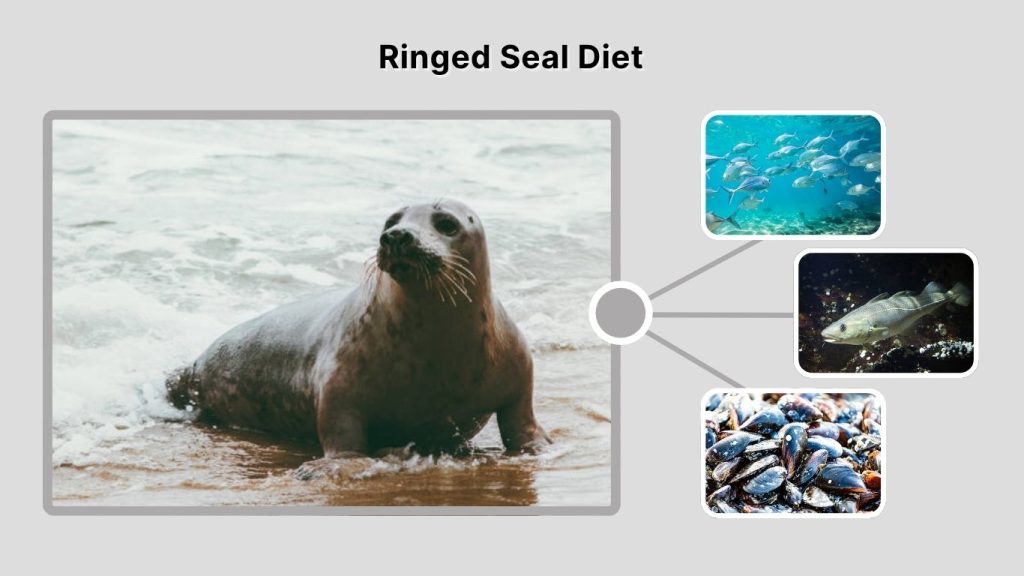
Ringed seals are carnivorous and primarily feed on small fish such as Arctic cod and herring. They also consume crustaceans like shrimp and other small marine organisms.
Hunting Methods
These seals hunt mainly under the ice, using their sensitive whiskers to detect vibrations and movements in the water. This ability helps them locate prey even in dark or murky conditions.
Seasonal Diet Changes
The diet of ringed seals can vary depending on the season and availability of prey. In some periods, they may rely more on crustaceans, while in others, fish become their primary food source.
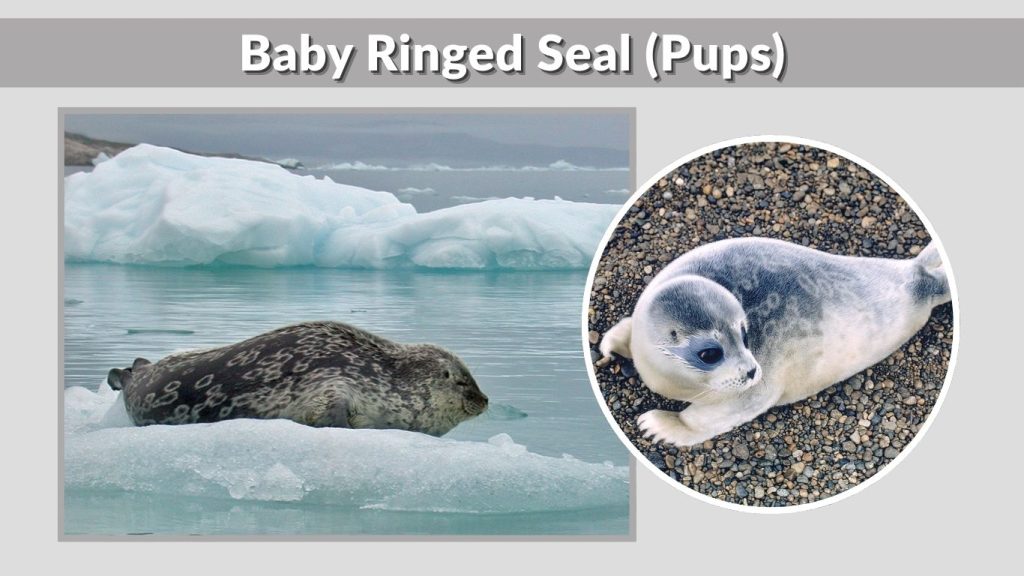
Baby Ringed Seal (Pups)
Birth and Appearance
Baby ringed seals, often called pups, are born in early spring inside protective snow dens built by their mothers. At birth, they are covered in a soft, white fur coat known as lanugo, which helps them blend into the snowy environment and stay warm in freezing temperatures.
Early Development
The nursing period for ringed seal pups lasts about 4 to 6 weeks. During this time, the mother provides rich, fatty milk that allows the pup to grow quickly and build a thick layer of blubber. This rapid development is essential for survival once the pup begins to spend more time in the water.
Survival Challenges
Despite the protection of snow dens, pups face significant threats from predators such as Arctic foxes and polar bears. If the ice melts too early or the dens collapse, pups become highly vulnerable, making stable ice conditions critical for their survival.
Lifespan and Life Cycle
Average Lifespan
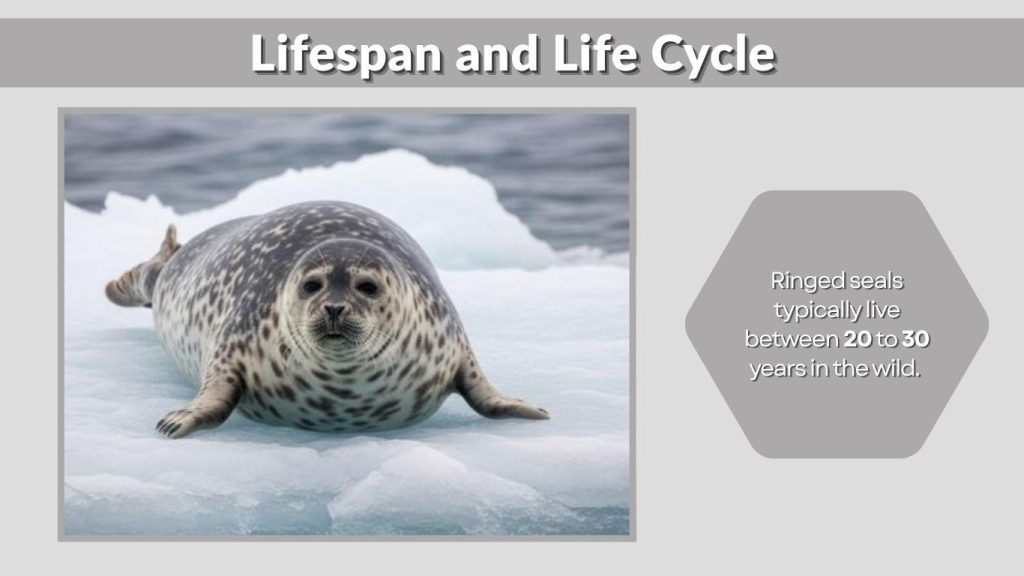
Ringed seals typically live between 20 to 30 years in the wild. Their lifespan depends on environmental conditions, predation, and food availability.
Growth Stages
The life cycle of a ringed seal includes several stages: pup, juvenile, and adult. As they grow, they become more independent and develop the skills needed for hunting and survival in the Arctic.
Reproduction Cycle
Ringed seals follow an annual breeding cycle. After mating, females undergo delayed implantation, ensuring that pups are born during optimal spring conditions when survival chances are higher.
Predators and Threats
Natural Predators
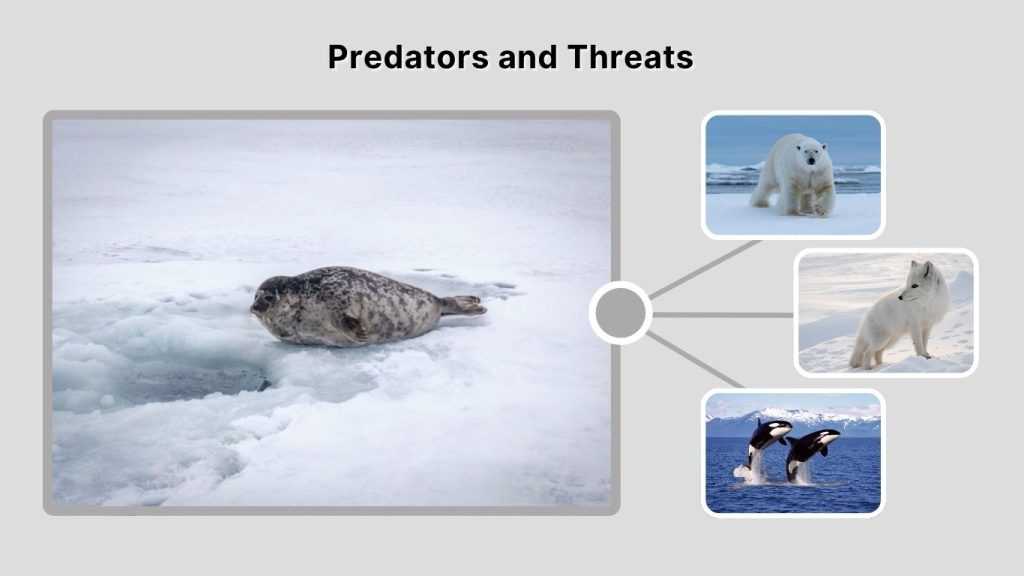
Ringed seals are a primary food source for polar bears, making them one of the most important species in the Arctic food chain. Other predators include Arctic foxes, which target pups, and killer whales (orcas), which hunt adult seals in open water.
Environmental Threats
Climate change is the greatest threat to ringed seals. The loss of sea ice reduces their habitat, making it harder to build dens and find safe resting areas. Early ice melting can also expose pups to predators.
Human Impact
Although not heavily hunted today, ringed seals have historically been hunted by indigenous communities for food and materials. Pollution and increased human activity in the Arctic also pose risks to their environment.
Conservation Status
Ringed seals are currently classified as “Least Concern” by the IUCN due to their large population. However, this status may change if climate change continues to reduce sea ice habitats. Conservation efforts focus on monitoring populations and protecting Arctic ecosystems to ensure their long-term survival.
Interesting Ringed Seal Facts
- Ringed seals are the most abundant seal species in the Arctic.
- They are the primary prey of polar bears, making them crucial to the ecosystem.
- They can maintain breathing holes in ice using their strong claws.
- Their ring-like coat patterns provide effective camouflage.
- They can live year-round in Arctic conditions without migrating long distances.
Importance in the Arctic Ecosystem
Ringed seals play a key role in maintaining the balance of the Arctic food web. As a primary food source for polar bears and other predators, they support the survival of multiple species. Additionally, their population health serves as an indicator of environmental changes, particularly those related to climate and sea ice conditions.
FAQs
What makes ringed seals unique?
Ringed seals are unique because of the light-colored ring patterns on their coat and their ability to maintain breathing holes in thick sea ice.
How big do ringed seals get?
They usually grow up to 1.5 meters in length and weigh between 50 to 70 kilograms.
Do ringed seals have fur?
Yes, they have short, dense fur, and their pups are born with a thick white coat for warmth.
Why do ringed seals have strong claws?
They use their claws to keep breathing holes open in the ice so they can surface for air.
How do ringed seals stay warm?
They rely on a thick layer of blubber and dense fur to insulate their bodies in freezing Arctic conditions.
Conclusion
The ringed seal is a remarkable Arctic species that has adapted perfectly to life in icy environments. From its unique coat patterns to its ability to survive under thick sea ice, it plays a vital role in the ecosystem. While currently stable in population, the ongoing loss of sea ice highlights the need for continued conservation efforts. Protecting ringed seals ultimately helps preserve the delicate balance of the Arctic environment.