




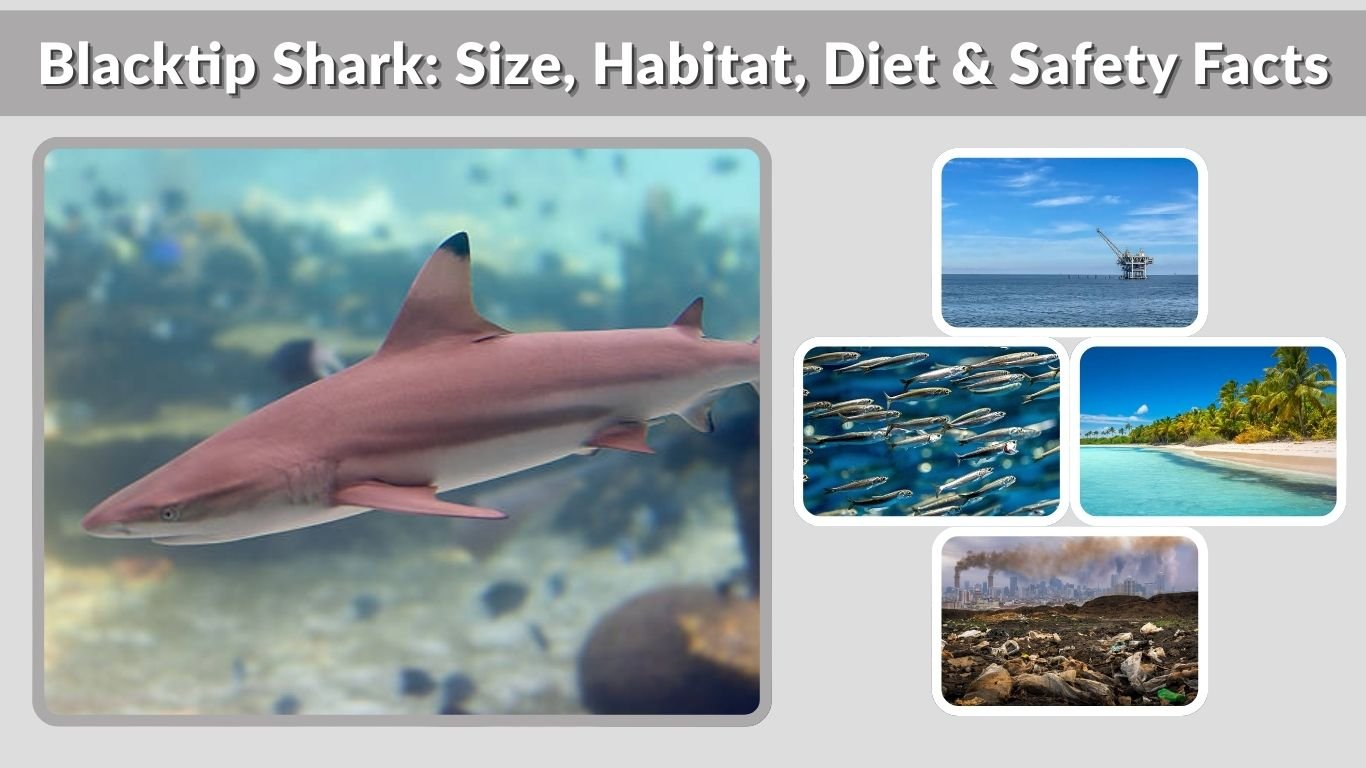
The Blacktip Shark is one of the most recognizable coastal sharks in the world. Named for the distinctive black markings on its fins, this fast-swimming species is commonly found in warm, shallow waters. Many beachgoers along the Atlantic and Gulf coasts spot Blacktip Sharks during seasonal migrations, often swimming close to shore in large groups.
Despite their intimidating appearance, Blacktip Sharks are generally not considered highly dangerous to humans. They are active predators that primarily feed on small fish and rarely target people. Their sleek bodies, quick movements, and occasional spinning leaps out of the water make them one of the most fascinating shark species to observe.
In this guide, we’ll explore Blacktip Shark size, habitat, diet, behavior, reproduction, and conservation status to better understand this important marine predator.
Blacktip Shark Species Overview
The Blacktip Shark’s scientific name is Carcharhinus limbatus. It belongs to the requiem shark family, a group known for fast, agile species that inhabit tropical and subtropical oceans worldwide. This shark is often confused with the Blacktip Reef Shark, but they are two different species.
Blacktip Sharks typically inhabit coastal waters rather than coral reef systems. They are highly migratory and often move seasonally based on water temperature. During migration periods, thousands of Blacktip Sharks may travel together, creating spectacular natural events visible from beaches and even aerial views.
Unlike some larger shark species, the Blacktip Shark has a relatively slender body and pointed snout, built for speed rather than brute strength. Their energetic swimming style and ability to leap from the water set them apart from many other coastal sharks.
Blacktip Shark Physical Characteristics and Size

The Blacktip Shark is a sleek, fast-moving coastal predator built for speed and agility. Its streamlined, torpedo-shaped body allows it to move quickly through shallow waters while hunting schooling fish. The species is easily recognized by the dark black markings on its fins, which give the shark its common name. Compared to larger shark species, the Blacktip Shark is moderate in size but highly energetic and powerful for its build.
Quick Overview of Blacktip Shark Size
- Average length: 4–5 feet (1.2–1.5 meters)
- Maximum length: Up to 8 feet (2.4 meters)
- Average weight: 60–100 pounds
- Body shape: Slim and streamlined
Key Physical Characteristics
- Black-tipped dorsal and tail fins (most distinctive feature)
- Gray or bronze upper body with a white underside
- Pointed snout designed for fast pursuit
- Long gill slits for efficient oxygen intake
- Sharp, triangular serrated teeth for gripping fish
- Tall first dorsal fin positioned toward the center of the back
These physical traits make the Blacktip Shark perfectly adapted for high-speed hunting in warm coastal environments.
Blacktip Shark Habitat and Distribution
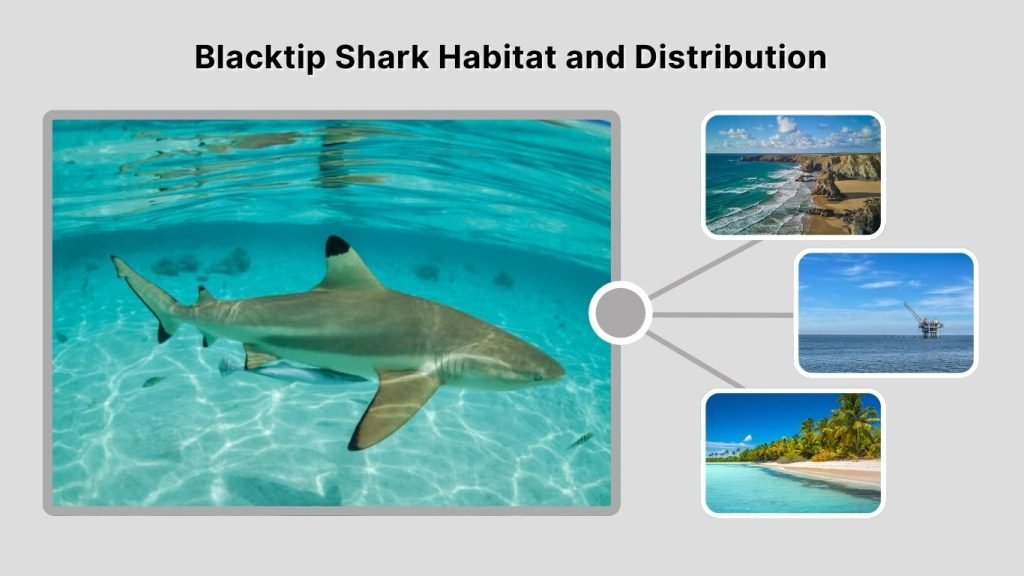
The Blacktip Shark is widely distributed in tropical and subtropical oceans around the world. It is commonly found in the western Atlantic Ocean, including the Gulf of Mexico and the Caribbean Sea. Populations also exist in the eastern Atlantic and parts of the Indo-Pacific region.
Blacktip Sharks prefer shallow coastal waters, typically at depths of less than 100 feet. They are frequently seen near beaches, estuaries, bays, and river mouths. Juveniles often inhabit shallow nursery areas where they are protected from larger predators.
Blacktip Shark Migration Patterns
One of the most fascinating aspects of Blacktip Shark behavior is seasonal migration. As water temperatures drop, large groups migrate south to warmer waters. When temperatures rise again, they return north. This annual movement is especially visible along Florida’s coastline, where thousands of Blacktip Sharks travel in dense schools.
These migrations are driven mainly by water temperature and food availability. Following schools of baitfish allows Blacktip Sharks to maintain a steady food source throughout the year.
Blacktip Shark Diet and Hunting Behavior
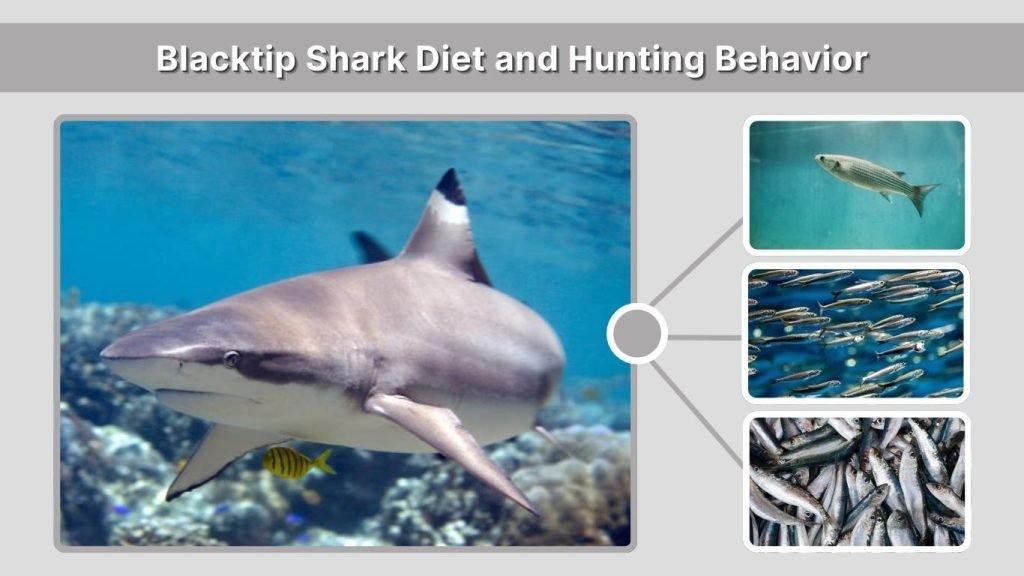
The Blacktip Shark is a carnivorous predator that feeds primarily on small schooling fish. Its diet includes mullet, sardines, herrings, anchovies, and menhaden. Occasionally, it also consumes squid, crustaceans, and other small marine animals.
Blacktip Sharks are known for their energetic hunting techniques. They often attack schools of fish at high speed, slashing through them with quick, powerful bites. One of their most dramatic behaviors is spinning vertically while feeding, sometimes leaping completely out of the water. This spinning motion helps them catch fast-moving prey.
Unlike some solitary shark species, Blacktip Sharks sometimes hunt in groups, especially when targeting large schools of baitfish. Their role as mid-to-top predators helps maintain balance in marine ecosystems by regulating fish populations.
Blacktip Shark Behavior and Interaction with Humans
The Blacktip Shark is generally considered an active but cautious species. It is highly energetic and often seen swimming quickly in coastal waters. While they are curious predators, they do not typically seek out humans as prey.
Because Blacktip Sharks frequently hunt close to shore, they are sometimes encountered by swimmers and surfers. Most interactions occur when the shark is feeding on schools of fish in shallow water. In these situations, accidental bites can happen due to mistaken identity, especially in murky conditions.
Is the Blacktip Shark Dangerous?
The Blacktip Shark has been involved in a small number of reported shark bite incidents worldwide. However, most of these cases are minor and not fatal. Compared to more aggressive species like bull sharks or tiger sharks, the Blacktip Shark poses a relatively low risk to humans.
Experts believe most bites occur when the shark mistakes a hand or foot for a fish. Splashing movements and shiny objects can also attract their attention. Overall, the Blacktip Shark is not considered a major threat, and serious attacks are rare.
Beach safety experts recommend avoiding swimming near active feeding schools of fish and staying out of the water during peak migration periods if large numbers of sharks are present.
Blacktip Shark Reproduction and Lifespan
The Blacktip Shark is viviparous, meaning it gives birth to live young rather than laying eggs. This reproductive method provides developing pups with nutrients directly from the mother through a placenta-like connection.
Blacktip Shark Breeding and Gestation
Mating typically occurs in warmer months. After fertilization, the gestation period lasts around 10 to 12 months. Female Blacktip Sharks then give birth in shallow coastal nursery areas.
These nursery grounds are often located in bays, estuaries, and protected coastal regions where young sharks are less vulnerable to larger predators.
Blacktip Shark Pups and Early Life
A female Blacktip Shark usually gives birth to between 1 and 10 pups per litter, depending on her size and age. At birth, pups measure about 2 feet (60 centimeters) long.
Young Blacktip Sharks remain in shallow nursery areas for several months. These protected waters offer abundant food and reduced predation risk. As they grow larger and stronger, they gradually move into deeper coastal waters.
Blacktip Shark Lifespan
The average lifespan of a Blacktip Shark is around 12 to 16 years. Some individuals may live slightly longer under ideal conditions. Like many shark species, they grow relatively slowly compared to bony fish, which makes them more vulnerable to overfishing.
Blacktip Shark Conservation Status and Threats
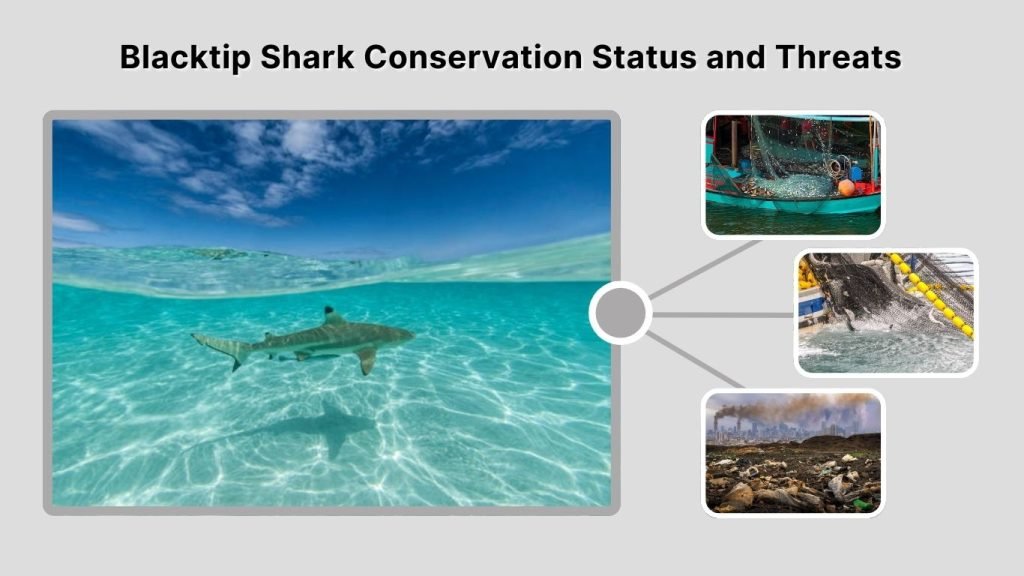
The Blacktip Shark plays an important role in maintaining marine ecosystem balance. However, like many shark species, it faces increasing environmental pressures.
According to conservation assessments, Blacktip Shark populations are affected by fishing activities in several regions. Although not currently classified among the most endangered sharks globally, certain local populations show signs of decline.
Major Threats to the Blacktip Shark
The primary threats to the Blacktip Shark include:
- Commercial and recreational fishing
- Bycatch in large fishing nets
- Habitat degradation in coastal areas
- Pollution and climate change
Because Blacktip Sharks inhabit shallow coastal waters, they are more exposed to human activity than deep-sea shark species.
Blacktip Shark Conservation Efforts
Many countries have introduced fishing regulations to manage shark harvests and reduce bycatch. Marine protected areas also help safeguard nursery habitats where juvenile Blacktip Sharks develop.
Public awareness campaigns and shark conservation programs aim to highlight the ecological importance of species like the Blacktip Shark. Protecting this species contributes to healthier ocean ecosystems overall.
Interesting Blacktip Shark Facts
The Blacktip Shark is one of the most visually exciting shark species in the ocean. Here are a few fascinating facts:
- Blacktip Sharks are known for spinning leaps during feeding frenzies.
- They can swim at speeds estimated between 20 and 30 miles per hour.
- Large seasonal migrations can involve thousands of individuals.
- They are commonly featured in wildlife documentaries due to their acrobatic behavior.
- Juveniles often return to the same nursery areas year after year.
These characteristics make the Blacktip Shark a favorite among marine researchers and wildlife photographers.
FAQs
How big does a Blacktip Shark get?
Most Blacktip Sharks grow between 4 and 5 feet long, though some can reach up to 8 feet. Their average weight ranges from 60 to 100 pounds.
Are Blacktip Sharks aggressive toward humans?
Blacktip Sharks are not typically aggressive toward humans. Most bite incidents are minor and result from mistaken identity while feeding.
Where can you see Blacktip Sharks?
They are commonly found in the Atlantic Ocean, Gulf of Mexico, Caribbean Sea, and parts of the Indo-Pacific. Seasonal migrations along Florida’s coast are especially well known.
What does a Blacktip Shark eat?
Their diet mainly consists of small schooling fish such as mullet and sardines, along with squid and crustaceans.
Conclusion
The Blacktip Shark is a fast, agile coastal predator known for its black-tipped fins and dramatic spinning leaps. Although sometimes misunderstood, it is generally not considered highly dangerous to humans. Instead, it plays a valuable role in regulating fish populations and maintaining marine ecosystem balance.
By understanding Blacktip Shark behavior, habitat, and conservation needs, we can better appreciate this remarkable species and support efforts to protect ocean biodiversity for future generations.