




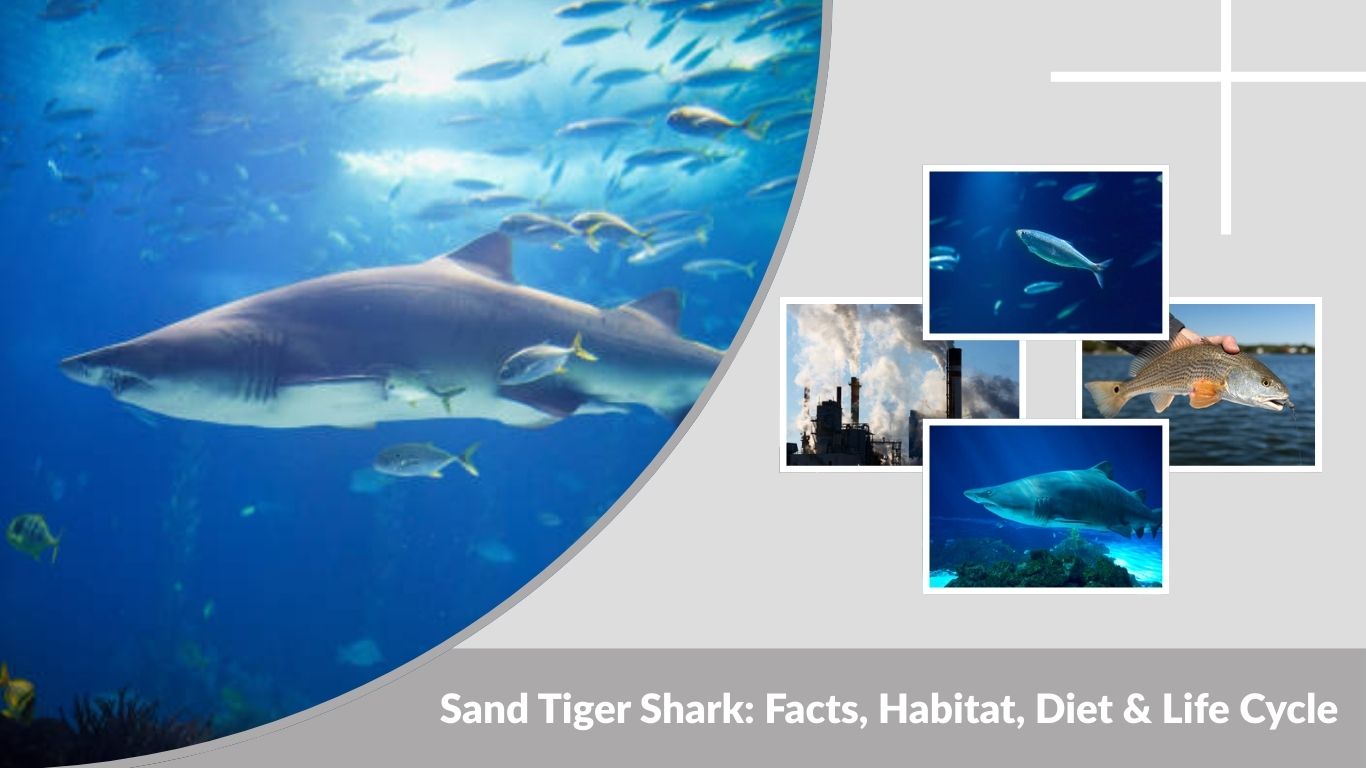
The sand tiger shark (Carcharias taurus) is one of the most misunderstood sharks in the ocean. With its sharp, protruding teeth and powerful body, it appears fierce and dangerous. However, this species is generally calm and poses little threat to humans. Found in warm coastal waters around the world, the sand tiger shark plays an important role in maintaining marine ecosystem balance. Despite its intimidating look, it is a slow-moving predator with fascinating adaptations and a surprisingly unique reproductive strategy.
Where Do Sand Tiger Sharks Live?
Global Distribution
Sand tiger sharks are widely distributed across the world’s oceans. In the Western Atlantic, they are commonly found along the eastern coast of the United States, the Gulf of Mexico, and parts of South America, including Brazil.
In the Eastern Atlantic, they inhabit areas near the Mediterranean Sea and along the coasts of Africa. They are also present in the Indian Ocean and the Western Pacific, particularly near Japan and Australia. In Australian waters, they are known as gray nurse sharks.
Although their distribution is broad, local populations can be small and vulnerable due to fishing pressure and environmental changes.
Seasonal Migration Patterns
These sharks often migrate seasonally, especially in regions with noticeable temperature changes. For example, along the U.S. East Coast, sand tiger sharks move northward during warmer months and head south as waters cool.
Migration helps them maintain access to suitable breeding grounds and feeding areas. Because they travel predictable routes, they can be particularly vulnerable to fishing activities along coastal corridors.
Sand Tiger Shark Habitat

Preferred Ocean Conditions
Sand tiger sharks prefer warm temperate and subtropical waters. They are commonly found in coastal areas along continental shelves, where food is abundant. Although they can swim at depths of up to 600 feet (around 190 meters), they are most often seen in relatively shallow waters.
These sharks tolerate a range of water temperatures but tend to migrate seasonally in search of more comfortable conditions. Their preference for coastal environments makes them more visible to divers compared to deep-ocean shark species.
Types of Habitats They Prefer
Sand tiger sharks are strongly associated with structured underwater environments. They are often found near coral reefs, rocky outcrops, and underwater caves. Shipwrecks are also common gathering spots, as these structures provide shelter and attract prey species.
Sandy ocean floors, particularly near reefs, are another favored habitat. These environments allow the sharks to patrol slowly while scanning for fish. Their hovering ability gives them an advantage when navigating tight reef spaces.
Sand Tiger Shark Diet

What Do Sand Tiger Sharks Eat?
The sand tiger shark diet mainly consists of small to medium-sized marine animals. They commonly feed on schooling fish such as menhaden, herring, mackerel, and croaker. Squid and other cephalopods are also an important part of their diet. In some cases, they may eat crustaceans, rays, and even smaller sharks.
Because they are opportunistic predators, sand tiger sharks adapt their feeding habits based on what is available in their habitat. Their teeth are designed for gripping rather than cutting, which allows them to firmly grasp slippery prey before swallowing it whole.
Hunting Techniques
Unlike fast, aggressive sharks, sand tiger sharks rely on stealth and patience. They are primarily nocturnal hunters, meaning they search for food at night. During the day, they often rest or hover near reefs and wrecks.
Their slow swimming style helps them approach prey without causing panic among fish schools. Instead of chasing at high speed, they move quietly and strike suddenly when close enough. This calm and controlled hunting strategy conserves energy and increases their chances of success.
Feeding Behavior
Sand tiger sharks typically swallow smaller prey whole. Their sharp teeth prevent prey from escaping once captured. In some feeding situations, multiple sand tiger sharks may gather in the same area, though they are not truly cooperative hunters.
Because they often feed on mid-sized fish, they help regulate fish populations and maintain balance within reef ecosystems.
Sand Tiger Shark Life Cycle
Reproduction Type
The sand tiger shark has one of the most unusual reproductive systems in the shark world. It is ovoviviparous, meaning the eggs develop inside the mother’s body and hatch internally before birth. Fertilization occurs internally, and embryos grow within the uterus.
Females typically reproduce only every two to three years, which contributes to their slow population growth.
Intrauterine Cannibalism
One of the most remarkable aspects of the sand tiger shark life cycle is intrauterine cannibalism. After the eggs hatch inside the uterus, the strongest embryo begins feeding on the remaining eggs and smaller siblings.
As a result, only one pup usually survives in each uterus, leading to a typical birth of two pups per pregnancy. This survival-of-the-fittest strategy ensures that the newborn sharks are large, strong, and better prepared to survive in the wild.
Growth and Maturity
At birth, sand tiger shark pups measure about 3 feet (1 meter) long. This relatively large size gives them an advantage against predators.
They grow slowly and may take several years to reach sexual maturity. Males generally mature earlier than females. Because they produce so few offspring and mature slowly, their populations are particularly vulnerable to overfishing and environmental threats.
Sand Tiger Shark Lifespan
The sand tiger shark lifespan is estimated to range between 15 and 25 years in the wild, although exact figures can vary depending on environmental conditions. In captivity, some individuals have lived for decades under careful management.
However, lifespan is heavily influenced by external pressures such as fishing, habitat degradation, and pollution. Their slow growth and low reproductive rate make it difficult for populations to recover once numbers decline. Protecting adult breeding individuals is especially important for long-term survival.
Sand Tiger Shark Identification (Sand Tiger Shark ID)
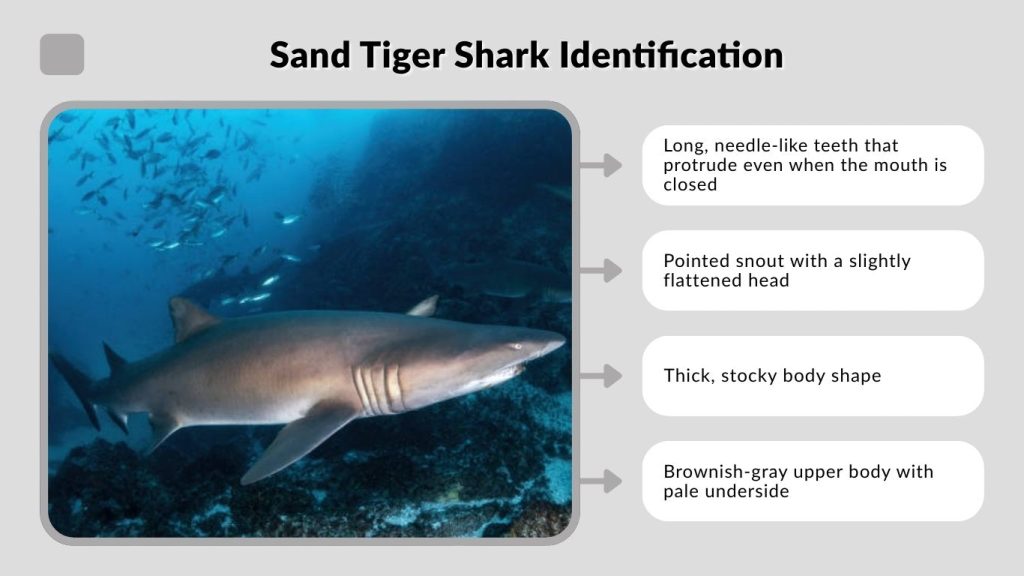
The sand tiger shark is easy to recognize once you know its standout features. Although it may resemble other large coastal sharks at first glance, a closer look reveals several unique physical traits. Its constantly visible teeth and bulky body shape are the most obvious clues. Divers often identify this species by its slow, hovering swim style and pointed snout.
Key Identification Features
- Long, needle-like teeth that protrude even when the mouth is closed
- Pointed snout with a slightly flattened head
- Thick, stocky body shape
- Brownish-gray upper body with pale underside
- Small dark spots along the sides (more common in juveniles)
- Two dorsal fins nearly equal in size
- First dorsal fin positioned far back on the body
- Long upper tail lobe
Are Sand Tiger Sharks Dangerous to Humans?
Despite their frightening appearance, sand tiger sharks are generally not considered dangerous to humans. Unprovoked attacks are extremely rare. Most encounters with divers show the sharks swimming calmly and keeping their distance.
Their aggressive look comes from their constantly visible teeth, but their behavior is typically slow and non-confrontational. Like most wild animals, they may react defensively if provoked, but they are not known for actively hunting humans.
Conservation Status and Threats
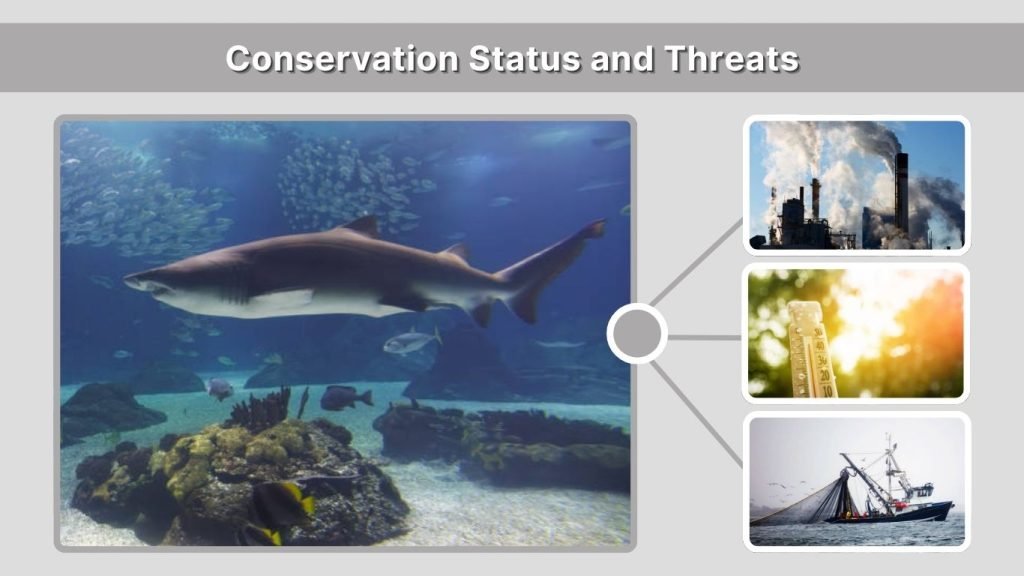
Sand tiger sharks face significant conservation challenges. In several parts of the world, they are classified as vulnerable or critically endangered due to overfishing and bycatch. Because they swim in coastal waters and follow predictable migration routes, they are often caught unintentionally in fishing gear.
Habitat destruction, pollution, and climate change also threaten their survival. Many countries have introduced protective regulations, including fishing bans and marine protected areas, to help stabilize declining populations.
Continued conservation efforts are essential to ensure that this unique and fascinating shark species remains part of our oceans for generations to come.
Sand Tiger Shark Facts
Quick Facts at a Glance
The sand tiger shark belongs to the family Odontaspididae. Adults typically measure between 6.5 and 10.5 feet (2–3.2 meters) in length and can weigh between 200 and 350 pounds. They are known by different names in various regions, including the ragged-tooth shark in South Africa and the gray nurse shark in Australia.
Unlike many fast-swimming shark species, sand tiger sharks move slowly and deliberately. They are listed as vulnerable or critically endangered in some regions due to overfishing and habitat pressures. Their slow reproduction rate makes population recovery difficult.
Physical Characteristics
One of the most noticeable features of the sand tiger shark is its long, needle-like teeth that remain visible even when its mouth is closed. These teeth are designed to grip slippery prey rather than slice it.
The shark has a thick, bulky body with a slightly flattened head and a long, pointed snout. Its coloring is usually brownish-gray on top with a lighter underside. Some individuals have darker spots along their sides, especially when young.
It also has two large dorsal fins that are nearly equal in size, which helps distinguish it from other shark species. Its tail fin is strong but not built for high-speed pursuit, reflecting its slow and steady hunting style.
Unique Adaptations
One of the sand tiger shark’s most fascinating adaptations is its ability to gulp air at the surface and store it in its stomach. This allows the shark to control its buoyancy, enabling it to hover almost motionlessly in the water. This behavior makes it appear calm and steady, especially when seen by divers.
Unlike many sharks that must constantly swim to avoid sinking, sand tiger sharks can remain nearly still. They are primarily nocturnal hunters, becoming more active at night when they search for food along reefs and sandy bottoms.
FAQs
How big do sand tiger sharks get?
Sand tiger sharks typically grow between 6.5 and 10.5 feet long. Some large individuals may exceed this range. They can weigh up to 350 pounds, making them one of the larger coastal shark species.
Why do sand tiger sharks have teeth showing?
Their long, narrow teeth protrude outward naturally, even when the mouth is closed. These teeth are designed to grip slippery prey like fish and squid, giving them a fearsome appearance.
How long do sand tiger sharks live?
Most sand tiger sharks live between 15 and 25 years in the wild. Lifespan can vary depending on environmental conditions and human-related threats.
Where are sand tiger sharks most commonly found?
They are commonly found in warm coastal waters of the Atlantic, Indian, and Pacific Oceans. Popular regions include the U.S. East Coast, South Africa, Australia, and Japan.
What makes their reproduction unique?
Their reproduction involves intrauterine cannibalism, where the strongest embryo consumes its siblings. This results in usually two well-developed pups being born per pregnancy.