




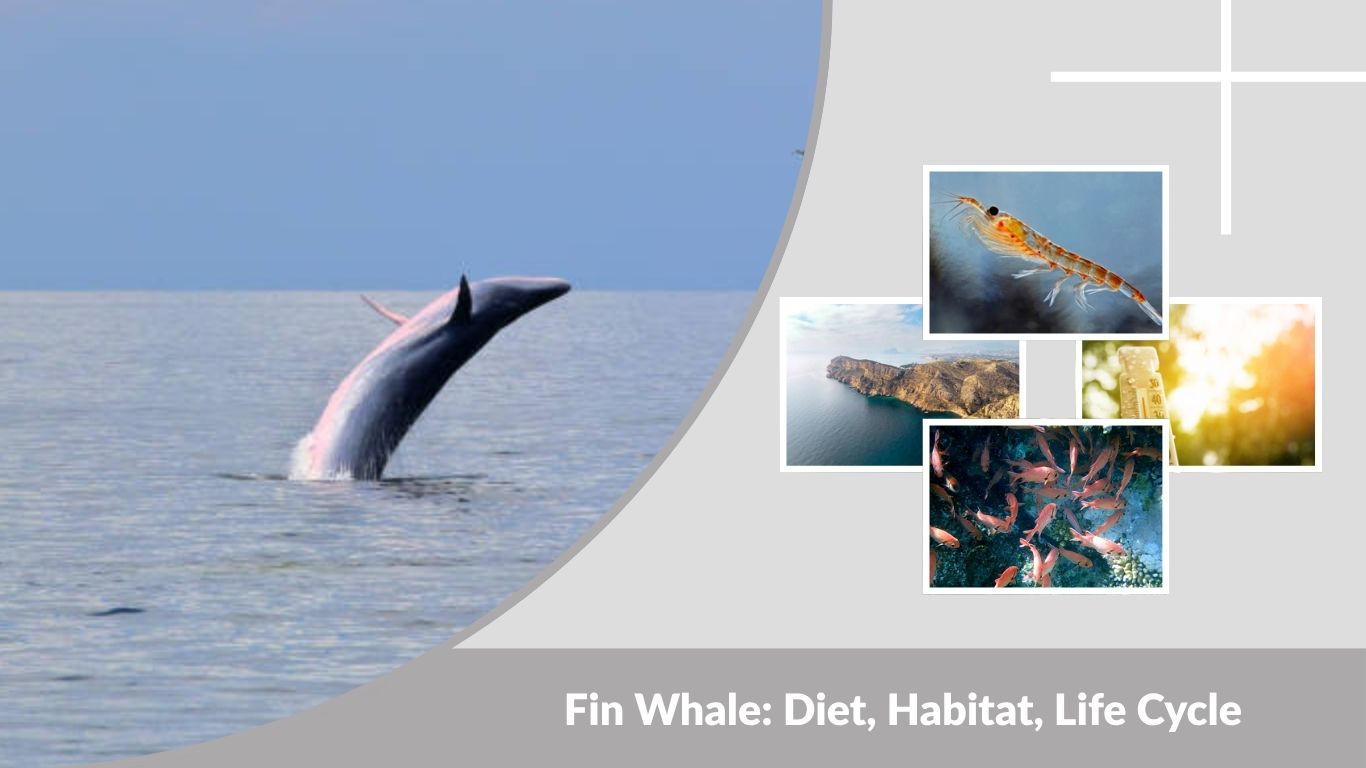
The fin whale is the second-largest animal on Earth, surpassed only by the blue whale. Known for its sleek body and incredible speed, it is often called the “greyhound of the sea.” Fin whales are found in oceans around the world and play a vital role in marine ecosystems. Despite their size, they are graceful swimmers and efficient feeders. Learning about fin whales helps us better understand ocean life and the importance of conserving these magnificent creatures.
What Is a Fin Whale?
Scientific Classification
The fin whale, scientifically known as Balaenoptera physalus, is a species of baleen whale. Baleen whales filter food from the water using specialized plates instead of teeth. Fin whales belong to the same family as blue whales and are among the largest animals ever to live on Earth.
Physical Characteristics
Fin whales can grow up to 85 feet in length and weigh as much as 80 tons. Their bodies are long, slender, and streamlined, allowing them to move quickly through the water. Unlike bulkier whales, fin whales have a more narrow and aerodynamic shape.
One of their most unique features is the asymmetrical coloring of their lower jaw—typically dark on one side and white on the other. This unusual trait may help them during feeding. Their dorsal fin is small and positioned far back on the body, adding to their streamlined appearance.
Unique Features
Fin whales are known for their speed, capable of swimming at speeds of up to 25 miles per hour. This makes them one of the fastest whales in the ocean. They are generally less acrobatic than humpback whales and rarely breach, but their smooth and powerful swimming style is impressive.
Another notable feature is their vocalization. Fin whales produce low-frequency sounds that can travel long distances underwater, allowing them to communicate across vast ocean areas.
Fin Whale Habitat
Global Distribution
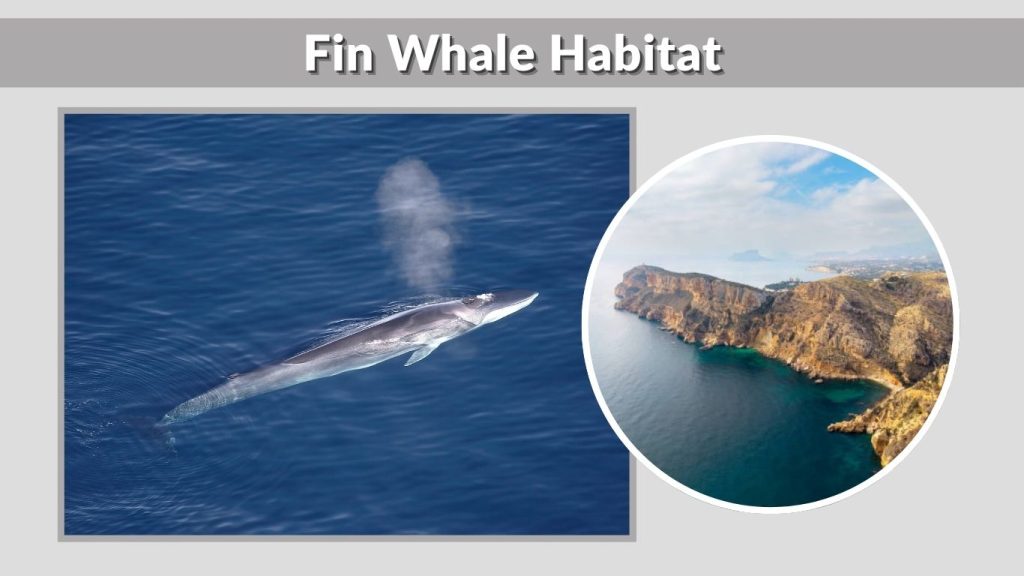
Fin whales are widely distributed and can be found in all major oceans, from polar to tropical regions. They are highly adaptable and can live in a variety of marine environments.
Preferred Environment
These whales prefer deep offshore waters rather than coastal areas. They are often found in temperate and cold regions where food is abundant. Areas near continental shelves and upwelling zones are especially attractive because they provide rich feeding grounds.
Seasonal Movement
Fin whales migrate seasonally, although their migration patterns are less well understood compared to other whale species. Generally, they move toward colder waters during feeding seasons and travel to warmer waters for breeding and calving.
Fin Whale Diet
What Do Fin Whales Eat?
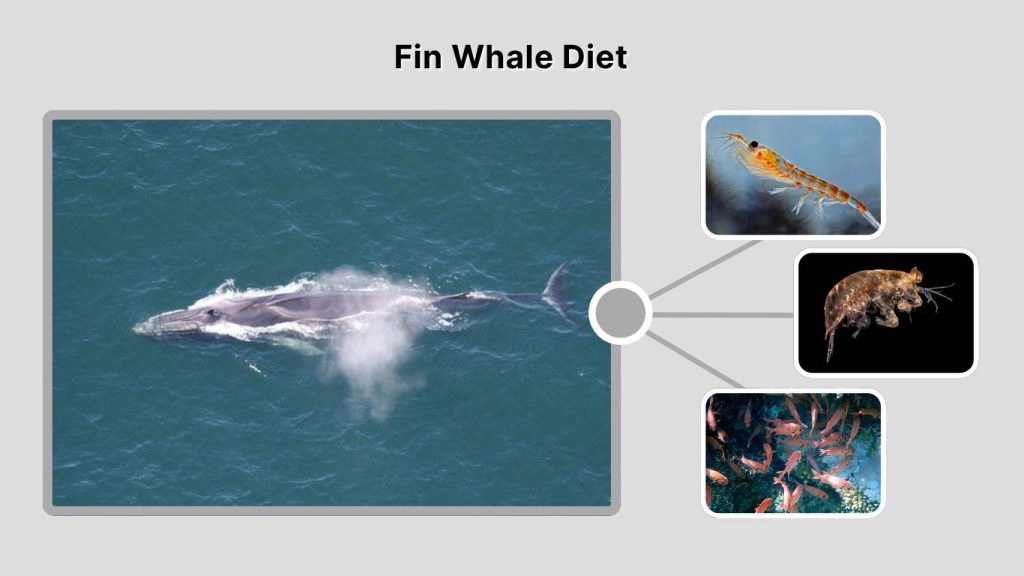
Fin whales primarily feed on krill, which are tiny shrimp-like creatures found in large numbers in the ocean. They also consume small fish and plankton, depending on availability.
Feeding Techniques
Fin whales use a method known as lunge feeding. In this technique, the whale accelerates toward a dense group of prey and opens its mouth wide, taking in a huge volume of water and food. The baleen plates then filter out the water, trapping the prey inside.
This feeding method is highly efficient and allows fin whales to consume large amounts of food in a short time. Their speed plays an important role in making this technique successful.
Feeding Efficiency
A single gulp can contain hundreds of kilograms of water and prey. Fin whales may repeat this process many times during feeding sessions, allowing them to build up the energy reserves needed for migration and survival.
Fin Whale Life Cycle
Birth and Early Life
Fin whale calves are typically born in warmer waters during the winter months. At birth, a calf can measure around 20 feet in length and weigh several tons. Despite their size, they rely heavily on their mothers for nourishment and protection.
Growth Stages
The life cycle of a fin whale includes three main stages: calf, juvenile, and adult. Calves grow rapidly, feeding on their mother’s rich milk. As they mature into juveniles, they begin to develop the skills needed for independent survival, including feeding and migration.
Reproduction
Fin whales reproduce in warmer waters during the breeding season. The gestation period lasts about 11 to 12 months, after which a single calf is born. Females usually give birth every two to three years. During this time, mothers invest a great deal of energy in raising their young, ensuring they grow quickly and gain strength for migration.
Fin Whale Lifespan
Average Lifespan
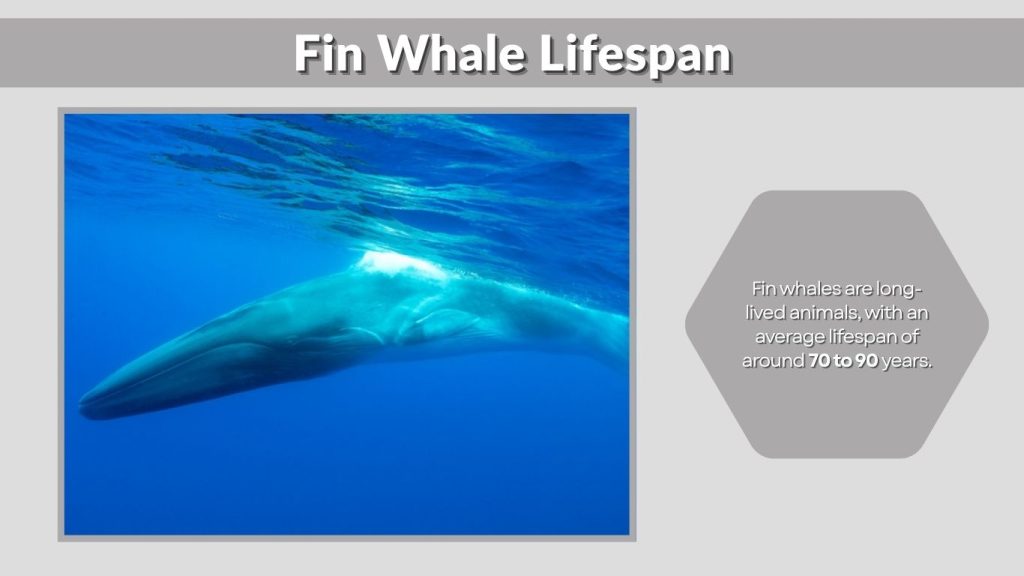
Fin whales are long-lived animals, with an average lifespan of around 70 to 90 years. Some individuals may live even longer, depending on environmental conditions and threats.
Maturity and Aging
Fin whales reach sexual maturity between 6 and 10 years of age. As they age, they continue to grow, with males and females both reaching impressive sizes. Aging whales may show changes in behavior and physical condition, but they remain important members of the marine ecosystem.
Survival Factors
The lifespan of fin whales is influenced by various factors, including food availability, environmental changes, and human activities. While they have few natural predators, human-related threats can significantly impact their survival.
Fin Whale vs Humpback Whale
Size and Appearance
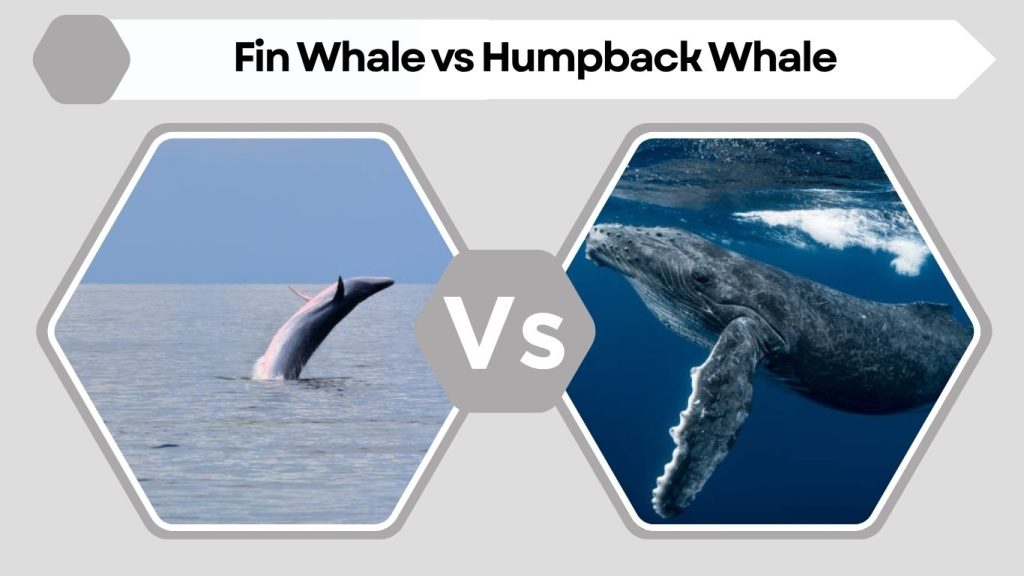
Fin whales are longer and more streamlined than humpback whales, giving them a sleek, fast-swimming appearance. Humpback whales, on the other hand, have bulkier bodies and long pectoral fins, making them easily recognizable.
Behavior Differences
Fin whales are generally less acrobatic and rarely breach the surface. In contrast, humpback whales are famous for their energetic behaviors, such as breaching, tail slapping, and fin waving.
Feeding Methods
Fin whales use lunge feeding, relying on speed to capture prey. Humpback whales often use bubble-net feeding, a cooperative technique that involves trapping fish with bubbles before feeding.
Habitat and Visibility
Fin whales prefer deeper offshore waters, making them harder to observe. Humpback whales are more commonly found near coastlines, which is why they are frequently seen during whale-watching tours.
Threats and Conservation
Historical Whaling
Fin whales were heavily hunted during the era of commercial whaling, particularly in the 20th century. Their large size made them a valuable target, leading to significant population declines worldwide.
Current Threats
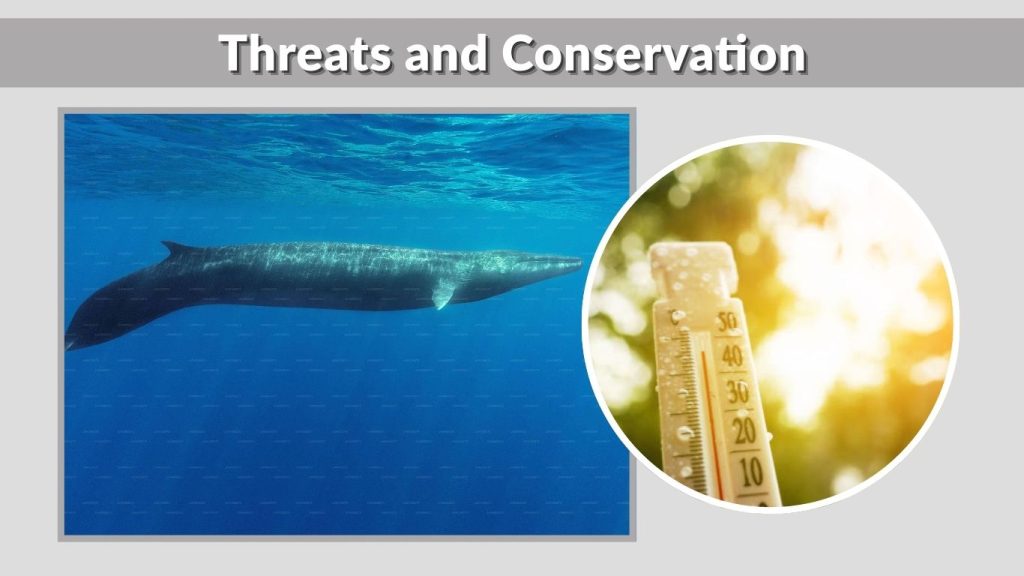
Today, fin whales still face several threats. Ship strikes are a major concern, especially in busy ocean routes. Climate change can affect the availability of their food sources, while noise pollution from ships and industrial activities can disrupt communication and feeding behavior.
Conservation Efforts
International regulations, including the ban on commercial whaling, have helped protect fin whales. Conservation organizations continue to monitor populations and promote measures to reduce human impact. Although some populations are recovering, fin whales are still considered vulnerable in many areas.
Interesting Fin Whale Facts
- Fin whales are the second-largest animals ever to exist
- They can swim at speeds of up to 25 miles per hour
- Their calls are among the lowest-frequency sounds made by animals
- They have a unique asymmetrical jaw coloration
- They are sometimes called the “greyhound of the sea” due to their speed
Conclusion
The fin whale is a remarkable marine giant, known for its speed, size, and efficiency as a feeder. From its global habitat to its unique life cycle, this species plays a crucial role in maintaining ocean ecosystems. Although it has faced significant threats in the past, ongoing conservation efforts offer hope for its future. Protecting fin whales is essential not only for their survival but also for preserving the balance of marine life in our oceans.
FAQs
What do fin whales eat?
Fin whales mainly eat krill, along with small fish and plankton.
Where do fin whales live?
They are found in all major oceans, usually in deep offshore waters.
How long do fin whales live?
Fin whales typically live between 70 and 90 years.
What is the difference between a fin whale and humpback whale?
Fin whales are faster and more streamlined, while humpback whales are more acrobatic and often seen near coastlines.