




The Port Jackson shark is one of Australia’s most recognizable and unique shark species. Known for its distinctive harness-like markings and blunt head, this bottom-dwelling shark is commonly found along southern Australian coastlines. Unlike fast-swimming oceanic sharks, the Port Jackson shark prefers rocky reefs and sandy seabeds where it hunts at night. It is also an egg-laying species, producing spiral-shaped egg cases that are unlike those of most other sharks. With its unusual appearance and calm temperament, the Port Jackson shark plays an important role in coastal marine ecosystems.
What Is a Port Jackson Shark?
The Port Jackson shark (Heterodontus portusjacksoni) is a species of bullhead shark native to Australia. It belongs to the family Heterodontidae, a group of sharks known for their unique head shape and strong jaws. Unlike large predatory sharks, this species is relatively small and spends most of its time near the ocean floor.
Scientific Name and Classification
The scientific name of the Port Jackson shark is Heterodontus portusjacksoni. The genus name “Heterodontus” means “different teeth,” which refers to its unusual tooth structure. It is part of the bullhead shark family, which includes several bottom-dwelling species found in temperate and tropical waters.
This shark is not closely related to more familiar species like great whites or tiger sharks. Instead, it represents a more primitive lineage of sharks with specialized feeding adaptations.
Why It’s Called the Port Jackson Shark
The Port Jackson shark gets its name from Port Jackson, the harbor of Sydney, Australia, where the species was first described by scientists. Although it was named after this location, the shark is found throughout southern Australia, including New South Wales, Victoria, South Australia, Western Australia, and Tasmania.
It is one of the most commonly encountered sharks in these regions, especially during breeding season.
Quick Port Jackson Shark Facts
- Scientific name: Heterodontus portusjacksoni
- Average length: 3–5 feet (1–1.6 meters)
- Habitat: Coastal reefs and sandy seabeds
- Diet: Sea urchins, mollusks, crustaceans
- Reproduction: Egg-laying (oviparous)
- Lifespan: Up to 15–20 years
These facts make the Port Jackson shark a fascinating species among Australia’s coastal marine life.
Port Jackson Shark Identification and Appearance
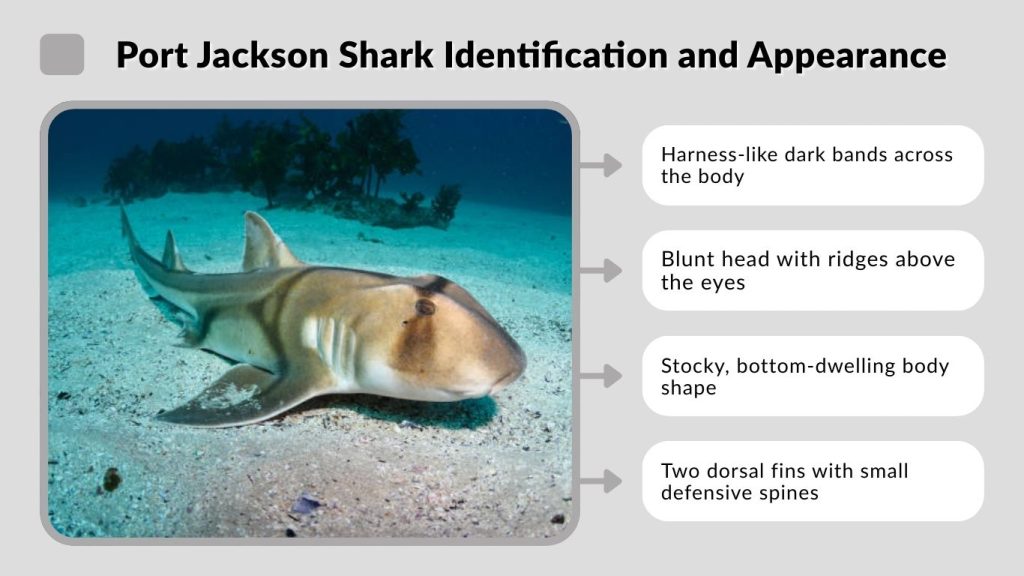
The Port Jackson shark has a very distinctive appearance that makes it easy to identify compared to other sharks.
Distinctive Harness-Like Markings
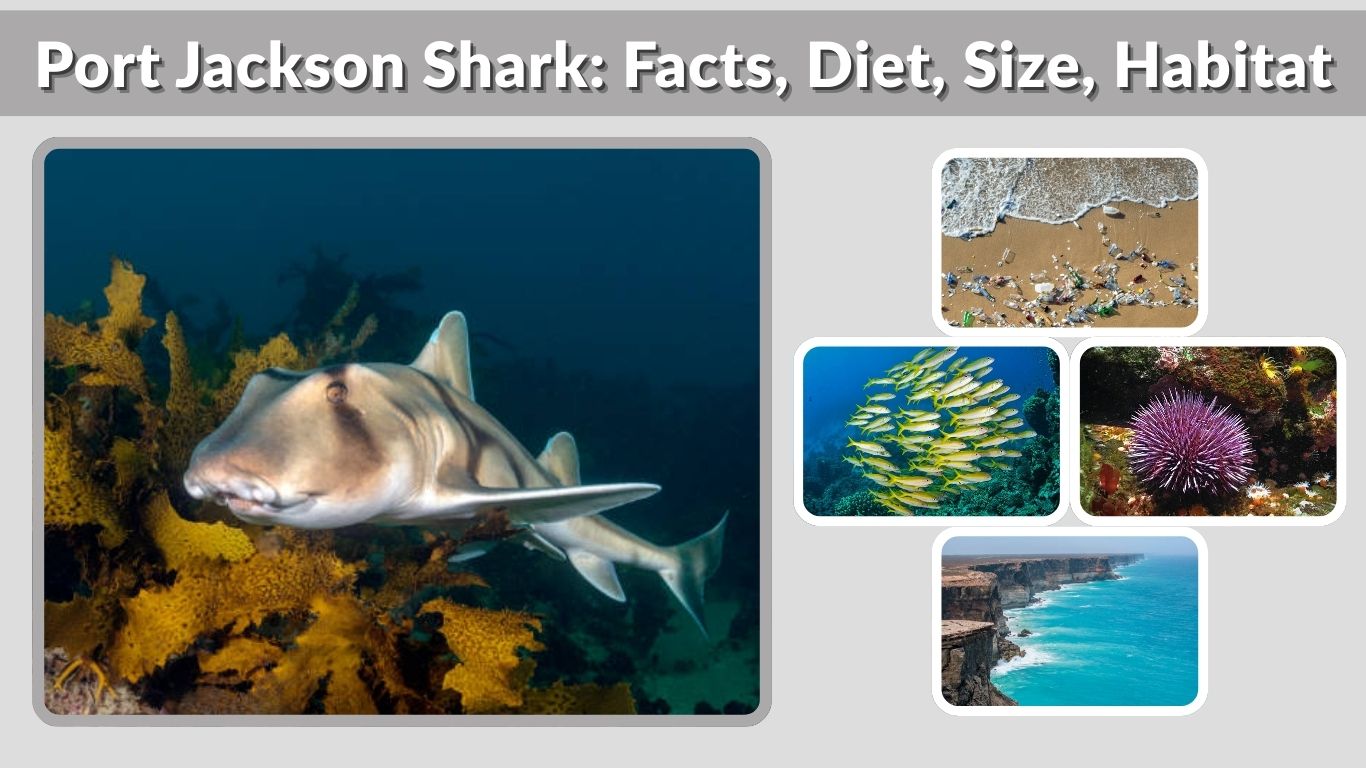
One of the most recognizable features of this shark is the dark, harness-shaped band that runs across its body and behind its head. These markings create a pattern that resembles a strap or harness, giving the shark a unique look.
Its body color is generally light gray to brown, with darker bands providing camouflage among rocky reefs and sandy ocean floors.
Body Shape and Head Structure
The Port Jackson shark has a stocky body and a blunt, rounded head. Unlike streamlined pelagic sharks, it has a more compact shape suited for life near the seabed.
Above each eye are raised ridges that give the shark a slightly fierce appearance. It also has two dorsal fins, each equipped with a small spine at the front. These spines provide protection from predators.
Its mouth is positioned slightly underneath the head, which helps it feed on organisms living on the ocean floor.
How to Identify This Species
Key identification features include:
- Harness-like dark bands across the body
- Blunt head with ridges above the eyes
- Stocky, bottom-dwelling body shape
- Two dorsal fins with small defensive spines
- Small mouth designed for crushing prey
These characteristics clearly distinguish it from reef sharks or open-ocean shark species.
Port Jackson Shark Size
The Port Jackson shark is considered a small to medium-sized shark species.
Average Length and Weight
Most adult Port Jackson sharks measure between 3 and 5 feet long (1 to 1.6 meters). Females are usually slightly larger than males. Their weight can vary depending on age and region, but they are generally much smaller than large predatory sharks.
Despite their modest size, they have powerful jaws capable of crushing hard-shelled prey.
Growth from Juvenile to Adult
When they hatch, juvenile Port Jackson sharks are only about 8–10 inches long (20–25 cm). As they grow, they gradually move from sheltered nursery areas to deeper reef habitats.
Growth is relatively steady, and sharks typically reach sexual maturity after several years. Their manageable size and calm nature make them one of the more commonly observed sharks in Australian coastal waters.
Port Jackson Shark Habitat
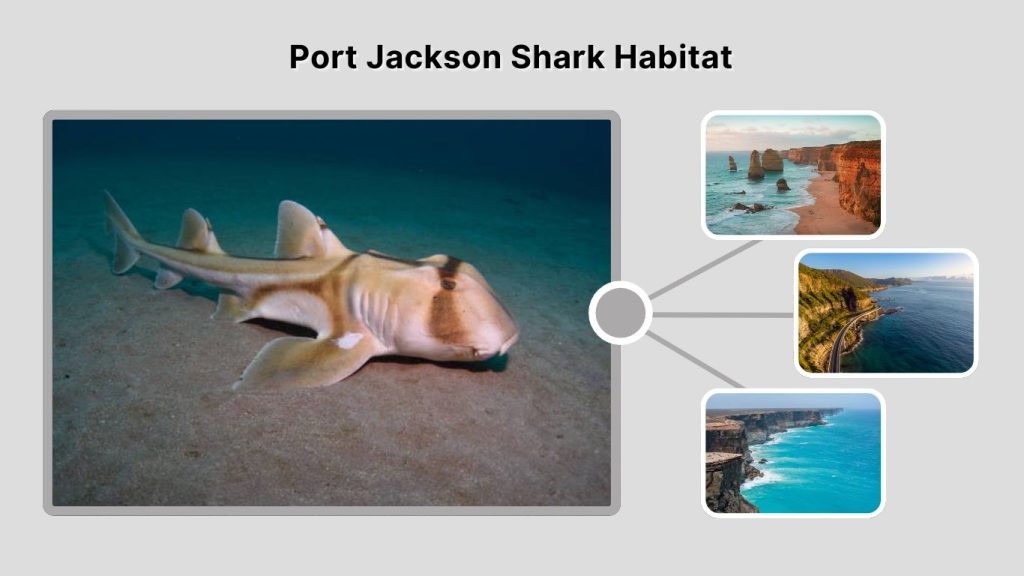
The Port Jackson shark is commonly found along the southern coast of Australia. It prefers temperate coastal waters rather than deep offshore environments.
Where Do Port Jackson Sharks Live?
Port Jackson sharks live in southern Australian waters, including New South Wales, Victoria, South Australia, Western Australia, and Tasmania. They are especially common near Sydney and along rocky coastlines.
Although they are native to Australia, they are not typically found far beyond these regions. Their distribution is closely tied to temperate marine habitats with suitable reef structures.
Coastal and Reef Environments
This species thrives in:
- Rocky reefs
- Sandy seabeds
- Coastal bays
- Seagrass beds
During the day, Port Jackson sharks often rest inside caves, crevices, or under rocky ledges. Their camouflage markings help them blend into their surroundings, reducing the risk of predation.
Depth Range and Seasonal Movement
Port Jackson sharks are usually found in shallow waters ranging from the surface to depths of about 900 feet (275 meters). However, they are most commonly seen at depths less than 100 feet.
They also display seasonal migration patterns. During late summer and autumn, adults move into shallow coastal waters to breed. After the breeding season, they may return to deeper offshore habitats.
Port Jackson Shark Diet
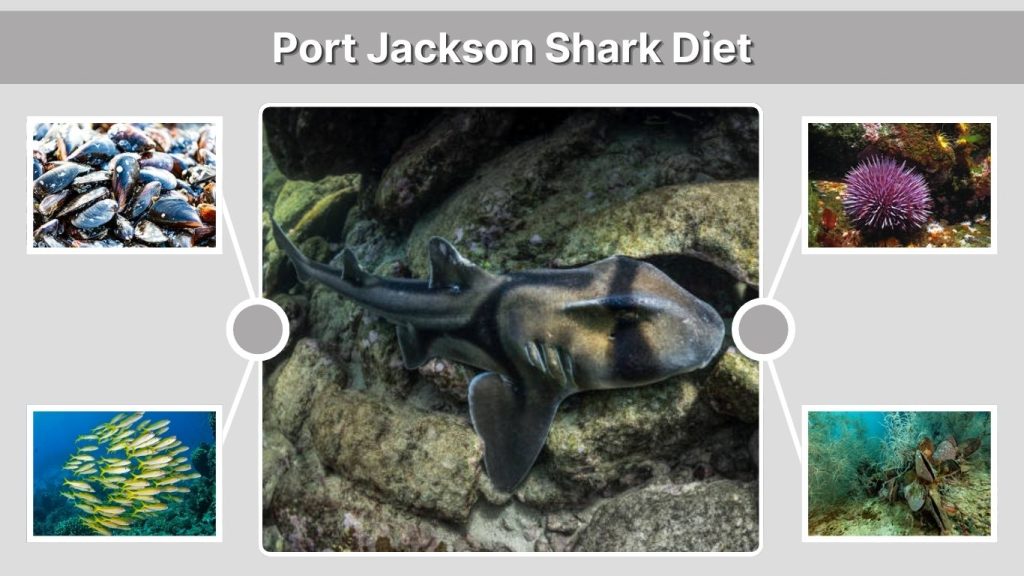
The Port Jackson shark has a specialized diet and unique feeding adaptations.
What Do Port Jackson Sharks Eat?
Port Jackson sharks primarily feed on hard-shelled marine animals, including:
- Sea urchins
- Mollusks (such as clams and snails)
- Crustaceans (like crabs)
- Small fish
Their diet makes them important in controlling sea urchin populations, which helps maintain healthy reef ecosystems.
Feeding Behavior
These sharks are nocturnal hunters. They remain relatively inactive during the day and become active at night when searching for food along the ocean floor.
They use their strong sense of smell and electroreception to locate prey buried in sand or hidden among rocks.
Unique Teeth Adaptations
The Port Jackson shark’s teeth are perfectly designed for its diet. At the front of the mouth, it has small, pointed teeth for grasping prey. At the back, it has flat, molar-like teeth that are ideal for crushing shells.
This combination of sharp and flat teeth explains the meaning of its genus name, Heterodontus, which means “different teeth.”
Port Jackson Shark Life Cycle
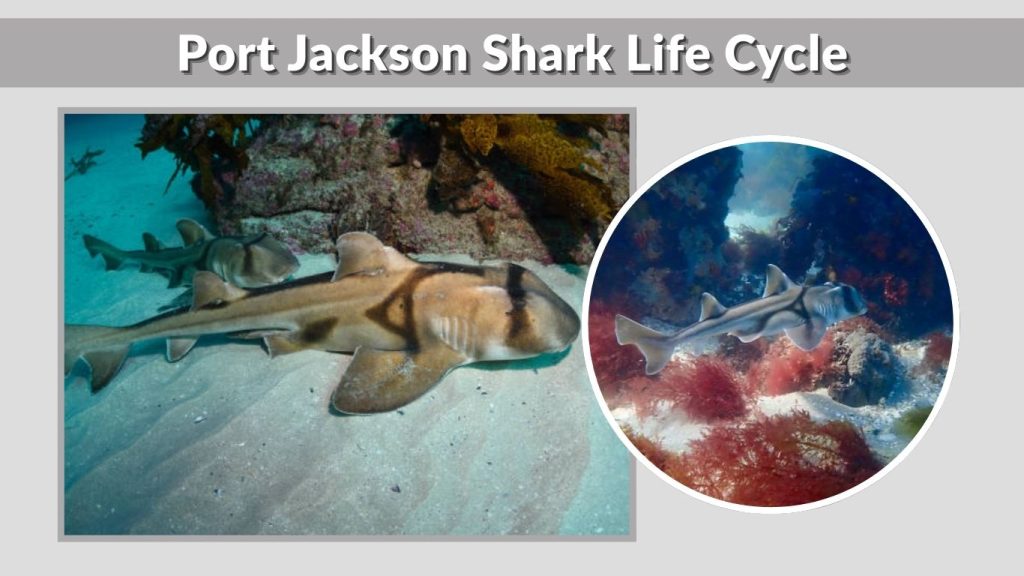
The life cycle of the Port Jackson shark is one of its most fascinating features.
Reproduction and Egg-Laying
Port Jackson sharks are oviparous, meaning they lay eggs rather than giving birth to live young. During the breeding season, females lay pairs of eggs in rocky crevices.
A female may lay between 8 and 16 eggs in a season.
Spiral Egg Case Design
The eggs are enclosed in tough, spiral-shaped cases that resemble corkscrews. This unusual design helps wedge the eggs securely into rock crevices, protecting them from currents and predators.
The egg cases are often called “mermaid’s purses” and are sometimes found washed up on beaches.
Juvenile Development
The incubation period lasts several months, depending on water temperature. Once hatched, young sharks are fully independent and must fend for themselves.
Juveniles typically remain in sheltered coastal areas until they grow large enough to move into deeper reef habitats.
Port Jackson Shark Lifespan
How Long Do Port Jackson Sharks Live?
The Port Jackson shark lifespan is estimated to be between 15 and 20 years in the wild. Some individuals in captivity have lived even longer under proper care.
Age of Maturity
Males typically reach sexual maturity at around 8–10 years of age, while females mature slightly later. Their relatively slow growth and late maturity make stable habitats important for maintaining healthy populations.
Behavior and Temperament
Port Jackson sharks are generally calm and non-aggressive.
Are Port Jackson Sharks Dangerous?
This species is not considered dangerous to humans. They are slow-moving and usually avoid confrontation. While they may bite if provoked or handled, there are no significant records of attacks on humans.
Bottom-Dwelling and Nocturnal Habits
Port Jackson sharks spend much of the day resting on the ocean floor. Unlike many sharks, they can actively pump water over their gills, allowing them to remain still for long periods.
At night, they become active and search for food among reefs and sandy areas.
Conservation Status and Threats
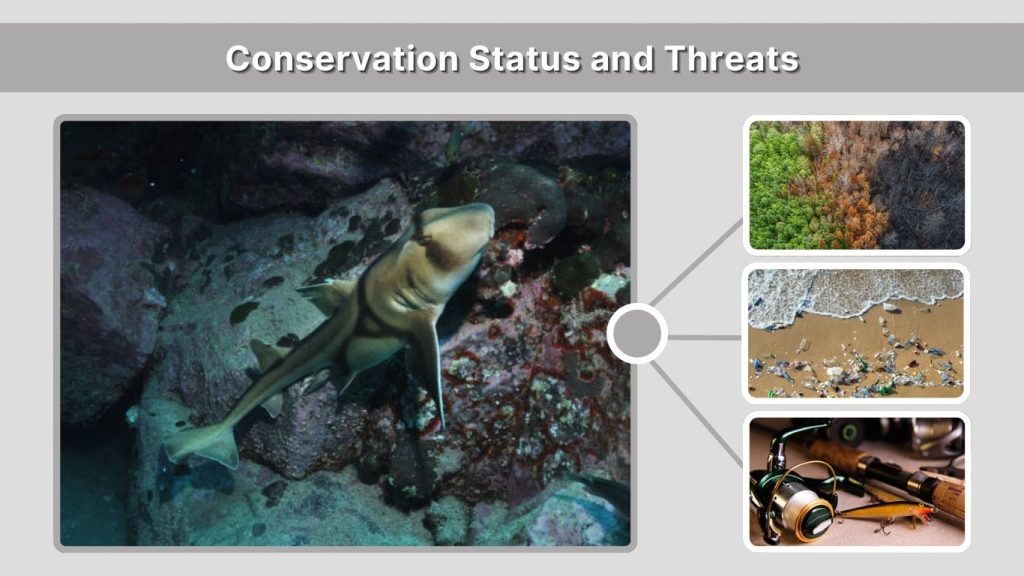
The Port Jackson shark is currently classified as “Least Concern” by conservation authorities. It is not heavily targeted by commercial fisheries.
However, potential threats include:
- Habitat degradation
- Coastal pollution
- Accidental capture in fishing gear
Marine protected areas along Australia’s coast help ensure stable populations.
Conclusion
The Port Jackson shark is a unique and important species native to Australia’s coastal waters. With its harness-like markings, crushing teeth, and spiral egg cases, it stands out among shark species worldwide.
From its specialized diet to its fascinating life cycle, this bottom-dwelling shark plays a vital role in maintaining healthy reef ecosystems. Although it is not currently endangered, continued conservation of coastal habitats will ensure that future generations can observe and appreciate this remarkable Australian shark.
FAQs
What do Port Jackson sharks eat?
Port Jackson sharks mainly eat hard-shelled marine animals such as sea urchins, mollusks, and crustaceans. They also feed on small fish. Their strong jaws and flat back teeth allow them to crush shells easily, making them well adapted to bottom-dwelling prey.
Where do Port Jackson sharks live?
Port Jackson sharks live along the southern coast of Australia, including New South Wales, Victoria, South Australia, Western Australia, and Tasmania. They prefer rocky reefs, sandy seabeds, and coastal bays in temperate waters.
How big is a Port Jackson shark?
Most adult Port Jackson sharks grow between 3 and 5 feet (1 to 1.6 meters) in length. Females are typically slightly larger than males. Although they are not large compared to other sharks, they have strong, powerful jaws.
What is the life cycle of a Port Jackson shark?
Port Jackson sharks are egg-laying (oviparous). Females lay spiral-shaped egg cases in rocky crevices during breeding season. The eggs hatch after several months, and juveniles grow in sheltered coastal habitats before moving to deeper reefs as adults.
How long do Port Jackson sharks live?
The Port Jackson shark lifespan is generally between 15 and 20 years in the wild. Some individuals may live longer in captivity. They mature slowly, with males reaching adulthood around 8–10 years of age.