




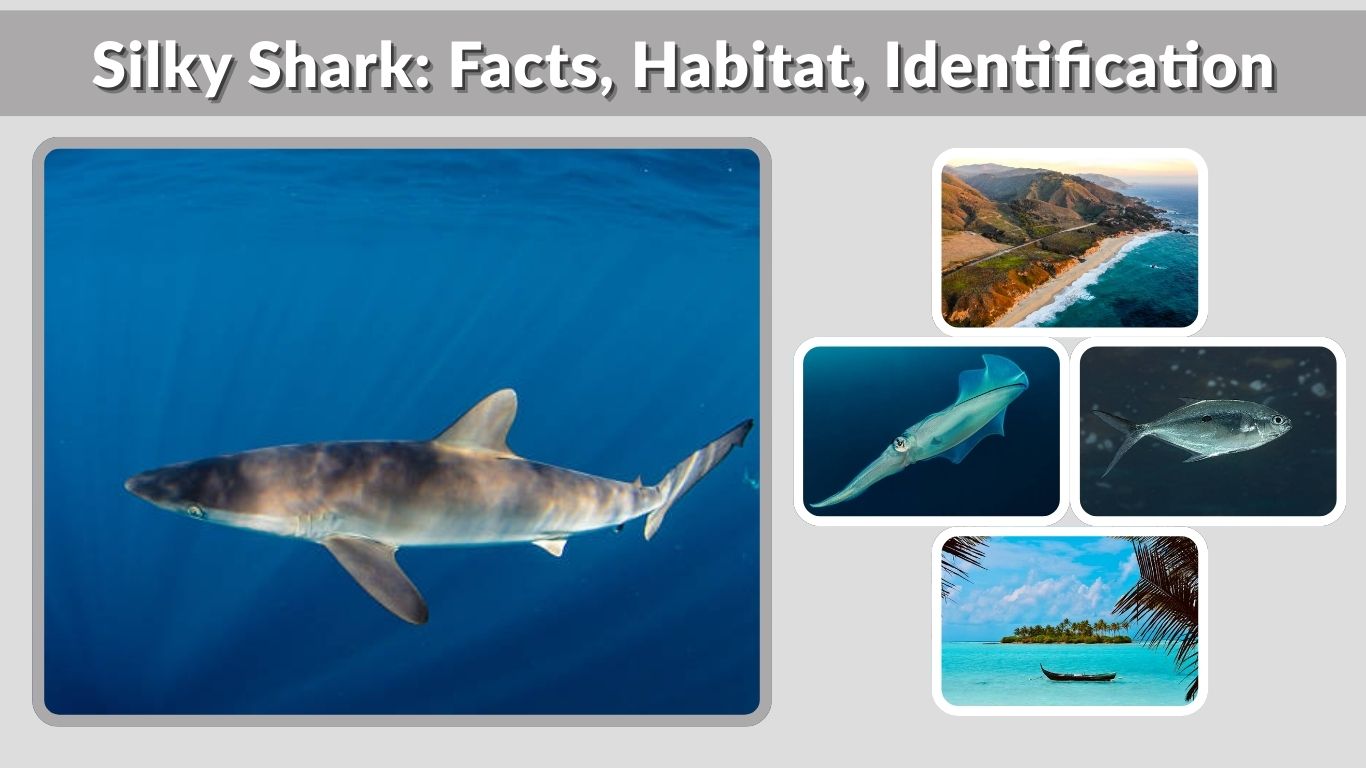
The silky shark is one of the most common and widely distributed sharks in tropical oceans around the world. Known for its smooth skin and streamlined body, this powerful predator thrives in warm offshore waters. Unlike reef sharks that stay close to coral structures, silky sharks are primarily pelagic, meaning they live in the open ocean. They are especially known for swimming near tuna schools and are frequently encountered in regions like the Galapagos Islands. Despite their abundance in some areas, silky sharks face growing threats from commercial fishing and bycatch.
What Is a Silky Shark?
The silky shark (Carcharhinus falciformis) is a species of shark found in tropical and subtropical oceans worldwide. It is considered one of the most abundant oceanic shark species, particularly in offshore waters far from the coastline.
Scientific Name and Classification
The scientific name of the silky shark is Carcharhinus falciformis. It belongs to the family Carcharhinidae, which includes other well-known species such as blacktip sharks, reef sharks, and bull sharks. As a pelagic predator, the silky shark plays an important role in maintaining balance within marine ecosystems.
Why It’s Called the “Silky” Shark
The name “silky shark” comes from its exceptionally smooth skin texture. Like all sharks, it has dermal denticles (tiny tooth-like scales), but in this species, they are packed tightly together, giving the skin a sleek, silky feel. Combined with its slender, streamlined body, this feature helps reduce drag while swimming long distances in open water.
Quick Silky Shark Facts
- Average length: 6–8 feet (1.8–2.4 meters)
- Maximum length: Around 10 feet (3 meters)
- Weight: Up to 770 pounds (350 kg)
- Habitat: Tropical and subtropical oceans
- Diet: Fish, squid, and crustaceans
- IUCN Status: Vulnerable
Silky sharks are fast, active swimmers and are often seen in large numbers in offshore fishing zones.
Silky Shark Identification
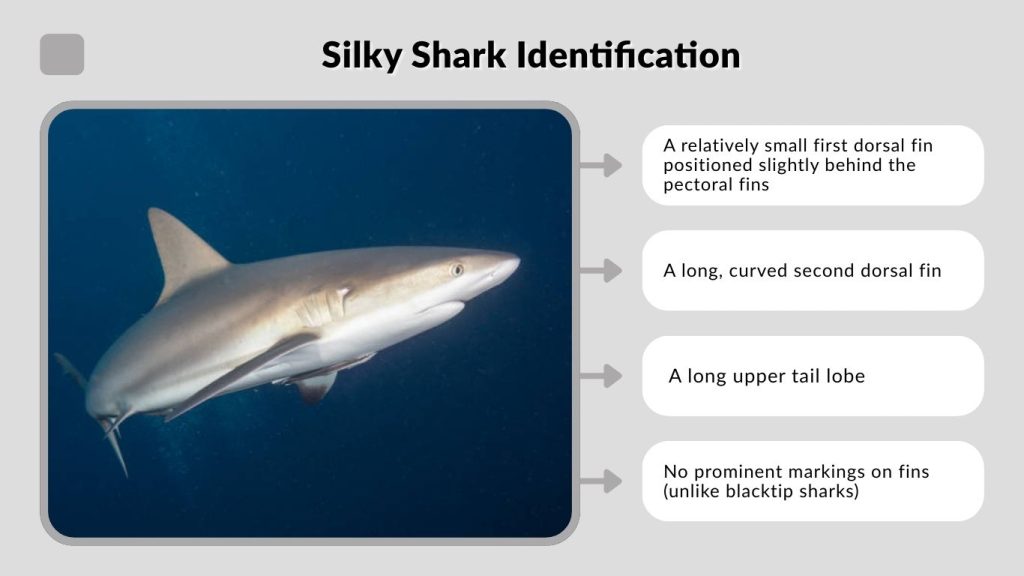
Correct silky shark identification can be challenging because they resemble other requiem sharks. However, several physical traits help distinguish them.
Physical Appearance
The silky shark has a slender, streamlined body designed for speed and endurance. It typically displays a bronze-gray to dark gray coloration on its upper body, with a lighter, almost white underside. This coloration provides camouflage in open water.
Its snout is long and rounded, and its eyes are relatively large. The overall body shape appears smooth and balanced compared to bulkier shark species.
Size and Weight
Most adult silky sharks measure between 6 and 8 feet long. Large individuals may reach up to 10 feet in length. Females are generally slightly larger than males. Their weight can range up to 770 pounds in fully grown adults.
Juvenile silky sharks are smaller and often found closer to coastal or island regions before moving offshore as they mature.
Key Identification Features
- A relatively small first dorsal fin positioned slightly behind the pectoral fins
- A long, curved second dorsal fin
- A long upper tail lobe
- No prominent markings on fins (unlike blacktip sharks)
- Smooth, sleek body profile
These features help researchers and divers differentiate silky sharks from similar species like Galapagos sharks or reef sharks.
Where Do Silky Sharks Live?

Silky sharks are widely distributed across tropical and subtropical waters worldwide.
Global Distribution
They are found in the Atlantic, Pacific, and Indian Oceans. In the Atlantic, they range from the eastern United States to Brazil and from West Africa to the Mediterranean. In the Pacific, they inhabit waters from California to Peru and throughout Southeast Asia and Australia. They are also common in the Indian Ocean.
Because they are highly migratory, silky sharks often travel long distances in search of food.
Habitat Preferences
Silky sharks prefer open ocean environments, especially in warm waters above 73°F (23°C). They are commonly associated with continental shelf edges, offshore islands, and deep reef drop-offs.
One of their most notable behaviors is their association with tuna schools. They often swim alongside tuna, which makes them particularly vulnerable to commercial tuna fisheries.
Depth Range and Migration
Silky sharks are usually found from the surface down to depths of about 1,600 feet (500 meters). However, they most commonly inhabit the upper 650 feet of the water column.
They follow prey migrations and may move seasonally depending on food availability and water temperature. This migratory behavior makes them a true pelagic species of the open sea.
Silky Shark Habitat
Silky sharks are strongly associated with warm, offshore waters, but their habitat can vary depending on age and food availability.
Adult silky sharks primarily inhabit open ocean environments far from the coastline. They are commonly found near continental shelf edges, oceanic islands, and deep-water drop-offs. These areas provide access to large schools of fish and squid, which form the core of their diet.
Juvenile silky sharks, however, are often found closer to coastal waters or around island chains. These areas may serve as nursery grounds, offering some protection from larger predators.
One of the most important aspects of silky shark habitat is their close relationship with tuna schools. Silky sharks frequently swim alongside tuna, taking advantage of feeding opportunities. Unfortunately, this behavior also makes them highly vulnerable to commercial tuna fisheries.
Where Do Galapagos Silky Sharks Live?
Silky sharks are commonly seen around the Galapagos Islands, where they are an important part of the marine ecosystem.
Around the Galapagos Islands
In the Galapagos region, silky sharks are typically found in offshore waters surrounding the islands. They are often seen near seamounts, reef drop-offs, and deep channels between islands. These areas are rich in marine life and attract large schools of fish.
Divers in the Galapagos frequently encounter silky sharks swimming in groups, especially near areas known for strong ocean currents that concentrate prey.
Marine Reserve Protections
The Galapagos Marine Reserve provides some level of protection for silky sharks. Fishing restrictions within protected zones help reduce direct hunting pressure. However, because silky sharks are migratory and travel beyond reserve boundaries, they are still at risk from international fishing fleets operating in open waters.
What Do Silky Sharks Eat?
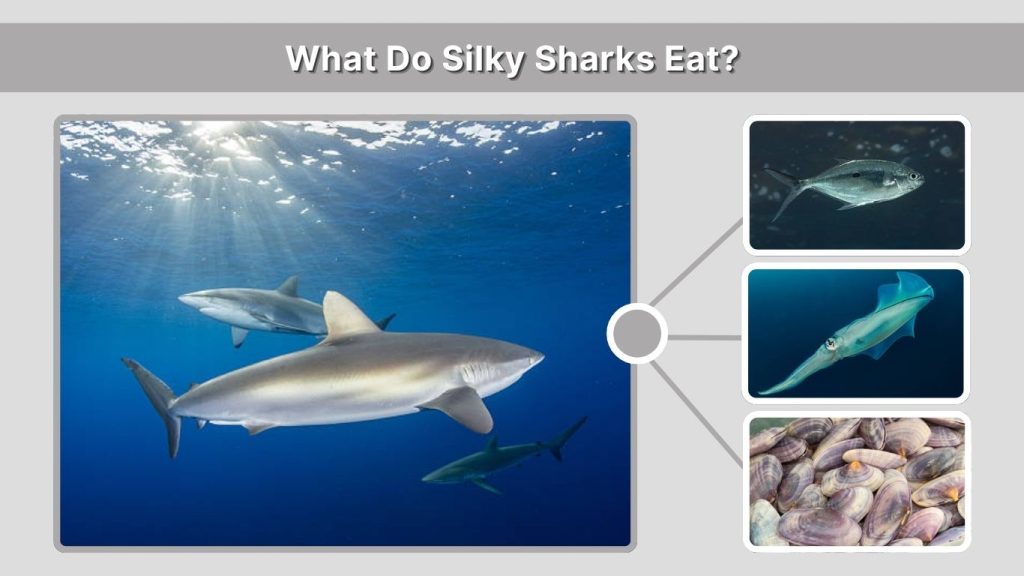
Silky sharks are active predators with a varied diet. Their feeding habits reflect their role as mid-to-upper-level predators in the open ocean.
Primary Diet
Silky sharks mainly feed on:
- Bony fish (especially tuna and mackerel)
- Squid
- Crustaceans
- Occasionally smaller sharks
They are opportunistic feeders, meaning they eat whatever prey is most available in their environment.
Hunting Behavior
Silky sharks are fast and agile swimmers. They often hunt in groups, especially when targeting schools of fish. By working together, they can herd prey into tight formations, making feeding more efficient.
Their association with tuna schools is particularly interesting. Some scientists believe silky sharks benefit from the chaos created when tuna attack smaller fish, allowing the sharks to capture prey more easily.
What Do Galapagos Silky Sharks Eat?
Galapagos silky sharks have a diet similar to other silky sharks but adapted to the region’s ecosystem.
Around the Galapagos Islands, they commonly feed on:
- Reef-associated fish
- Pelagic fish species
- Squid and small marine organisms
Seasonal changes in ocean currents influence prey availability. During nutrient-rich upwellings, prey populations increase, providing more feeding opportunities for silky sharks.
Their presence helps maintain ecological balance by controlling fish populations around the islands.
Behavior and Temperament
Silky sharks are known for being energetic and curious, especially around divers and boats.
Social Behavior
Unlike some solitary shark species, silky sharks are often seen in groups. They may form loose aggregations near feeding areas or around floating objects in the open ocean.
Juveniles tend to gather in larger groups, while adults may travel alone or in smaller numbers.
Are Silky Sharks Dangerous?
Silky sharks are generally not considered highly aggressive toward humans, but they can be bold and inquisitive. There have been a small number of incidents involving silky sharks, particularly when food is present.
Divers often describe them as confident but not typically hostile. As with all wild sharks, caution and respect are essential during encounters.
Conservation Status and Threats
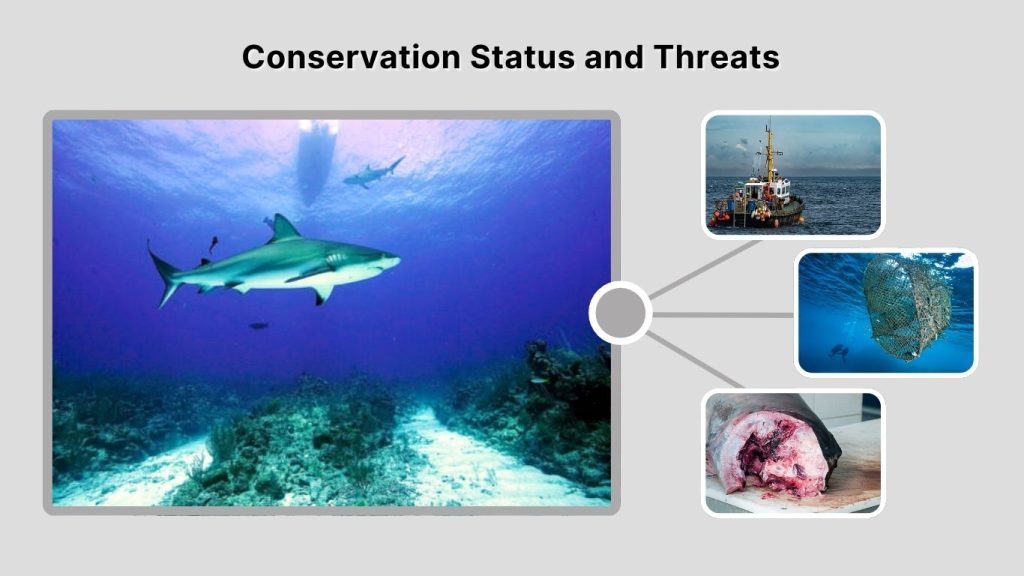
Silky sharks are currently classified as Vulnerable by the International Union for Conservation of Nature (IUCN). Their population has declined significantly in many regions.
The primary threat to silky sharks is commercial fishing. Because they frequently associate with tuna schools, they are commonly caught as bycatch in tuna fisheries. They are also targeted for their fins, meat, and oil.
High fishing pressure, combined with slow reproduction rates, makes recovery difficult. International conservation efforts now aim to regulate fishing practices and improve monitoring of shark populations.
Conclusion
The silky shark is a powerful and adaptable predator found throughout tropical oceans worldwide. From its smooth, streamlined body to its close relationship with tuna schools, this pelagic species plays an important role in maintaining marine ecosystem balance.
In places like the Galapagos Islands, silky sharks remain a common and impressive sight. However, growing fishing pressure threatens their long-term survival. Protecting migratory shark species like the silky shark requires international cooperation and sustainable fishing practices.
FAQs
Where do silky sharks live?
Silky sharks live in tropical and subtropical oceans worldwide, including the Atlantic, Pacific, and Indian Oceans. They prefer warm, open offshore waters but are also found near continental shelves and oceanic islands. They are highly migratory and often travel long distances following prey.
What do silky sharks eat?
Silky sharks mainly eat bony fish such as tuna and mackerel, along with squid and crustaceans. They are opportunistic predators and may occasionally feed on smaller sharks. Their diet depends on prey availability in their region.
Where do Galapagos silky sharks live?
Galapagos silky sharks live in offshore waters surrounding the Galapagos Islands. They are commonly found near reef drop-offs, seamounts, and deep channels between islands. These areas provide abundant prey and strong currents that attract marine life.
What do Galapagos silky sharks eat?
Galapagos silky sharks feed on reef fish, pelagic fish, and squid found around the islands. Seasonal ocean currents influence prey availability, especially during nutrient-rich upwellings that increase fish populations in the region.
How can you identify a silky shark?
Silky sharks can be identified by their slender, streamlined body, bronze-gray color, long rounded snout, and curved second dorsal fin. Unlike blacktip sharks, they lack distinct fin markings. Their smooth, silky-textured skin is another key identifying feature.