



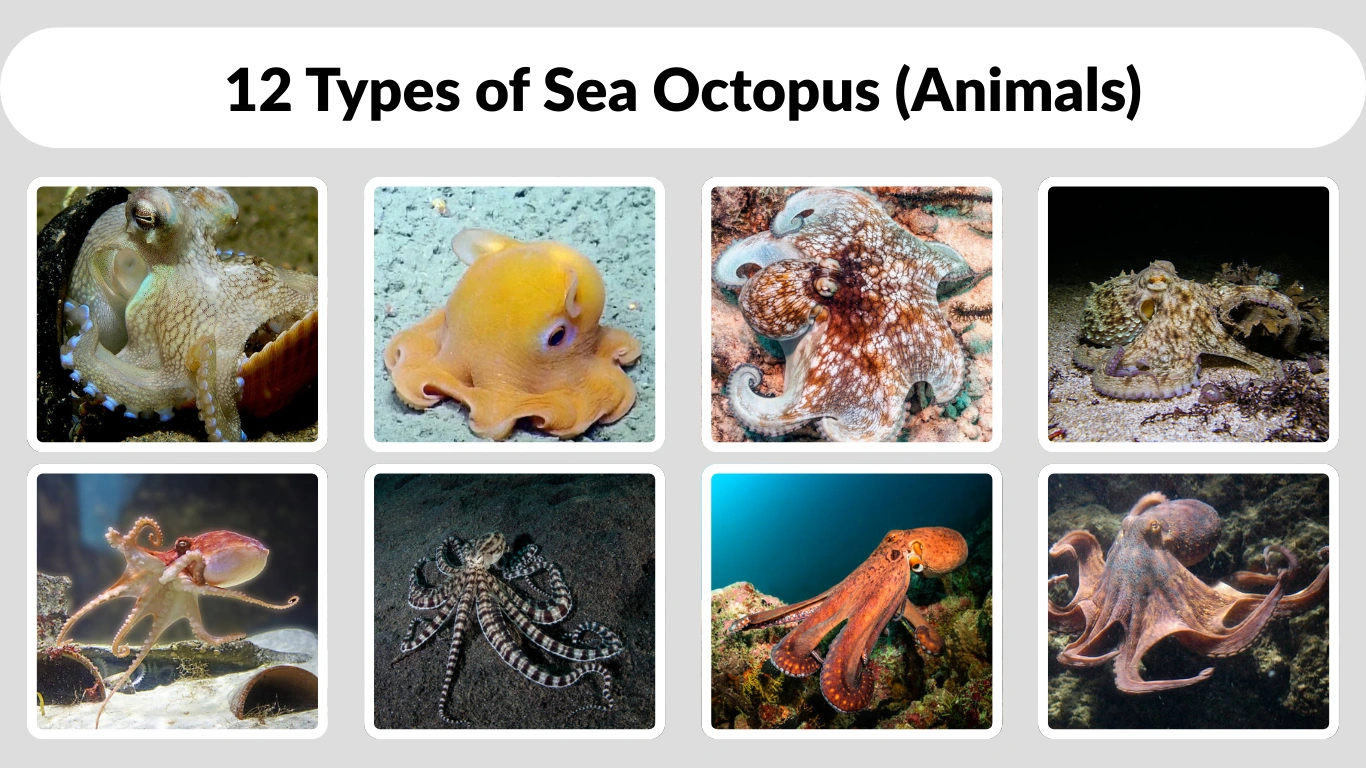
Octopuses are some of the most intelligent and mysterious sea animals in the ocean. Known for their soft bodies, eight powerful arms, and incredible ability to change color and shape, octopuses live in a wide range of marine habitats—from shallow coral reefs to the deep sea. There are hundreds of octopus species worldwide, each with unique behaviors, sizes, and survival skills. This article explores twelve well-known types of octopus, helping you understand their identification, habitats, diets, and life cycles.
1. Common Octopus (Octopus vulgaris)
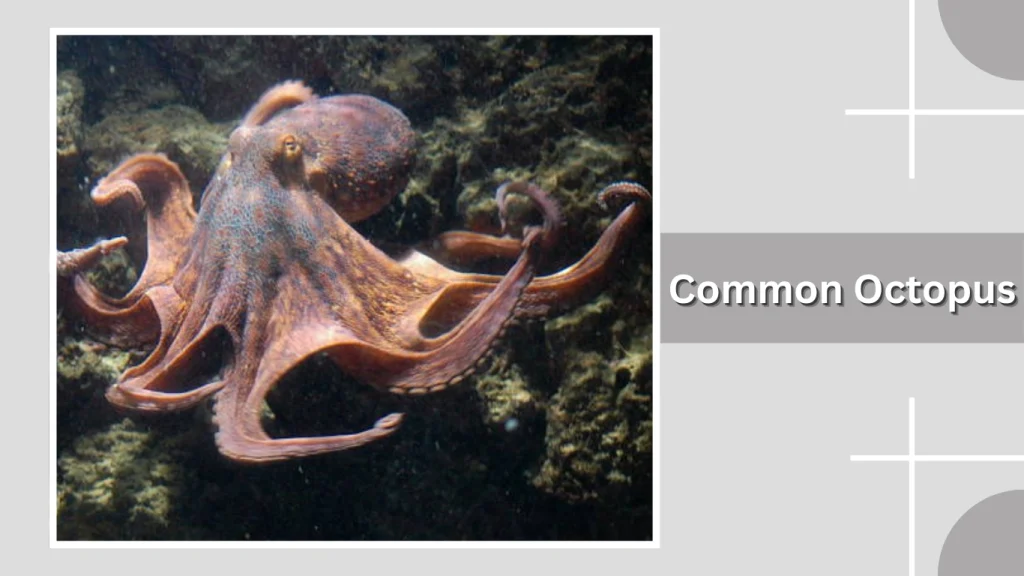
The common octopus is one of the most well-known and widely studied octopus species in the world. It is famous for its high intelligence, excellent camouflage ability, and flexible, soft body. This species lives in many warm and temperate oceans and is often seen hiding in rocky crevices, coral reefs, and seagrass beds. The common octopus is mostly solitary and active at night, using its strong arms and sharp beak to catch prey and explore its surroundings.
Identification
- Soft, round body with no internal skeleton
- Usually brown, gray, or green, but can rapidly change color and texture
- Eight long arms with two rows of powerful suction cups
- Large, well-developed eyes that provide excellent vision
- Average arm span up to 1–1.3 meters depending on age and environment
Habitat
The common octopus is found in coastal waters of the Atlantic Ocean, Mediterranean Sea, and parts of the Indian and Pacific Oceans. It prefers shallow marine environments such as coral reefs, rocky bottoms, tidal pools, and seagrass meadows. During the day, it often hides inside holes, shells, or under rocks, coming out mainly at night to hunt. It can live from the shoreline down to depths of about 200 meters.
Diet
The common octopus is a carnivorous predator that feeds mainly on crabs, lobsters, shrimp, small fish, and clams. It uses its strong arms to grab prey and its sharp beak to break hard shells. Saliva containing mild venom helps paralyze prey and begin digestion before eating. This species is an active hunter and also an opportunistic feeder.
Lifecycle & Lifespan
After mating, the female common octopus lays thousands of tiny eggs and carefully guards them in a hidden den. She cleans and aerates the eggs constantly but does not eat during this time. Once the eggs hatch, the female usually dies shortly afterward. The young octopuses drift as plankton before settling to the ocean floor. The common octopus has a relatively short lifespan, usually living about 1 to 2 years in the wild.
2. Giant Pacific Octopus (Enteroctopus dofleini)
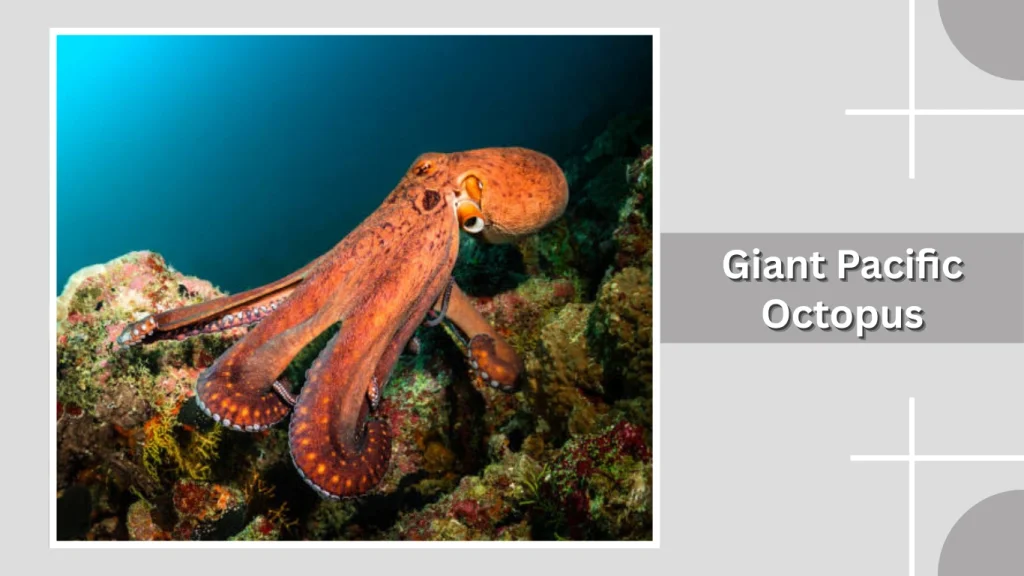
The giant Pacific octopus is the largest octopus species in the world and is famous for its impressive size, strength, and intelligence. It is known for its thick arms, powerful suckers, and remarkable problem-solving abilities. This species is mainly found in the cold waters of the North Pacific Ocean, where it lives a secretive life, hiding in rocky dens and coming out mostly at night to hunt.
Identification
- Very large, soft body with a bulb-shaped mantle
- Reddish-brown to brick-red skin, able to change color and texture
- Eight extremely long arms with strong suction cups
- Can reach over 5 meters in arm span and weigh more than 50 kg
- Large eyes and a powerful beak hidden at the center of the arms
Habitat
The giant Pacific octopus lives in the cold coastal waters of the North Pacific, including areas around Japan, Russia, Alaska, Canada, and the western United States. It prefers rocky reefs, underwater caves, and ocean floors with plenty of hiding places. This species is found from shallow tidal zones down to depths of about 1,500 meters, though it is most commonly seen in shallower coastal waters.
Diet
This octopus is a strong carnivore that feeds on crabs, clams, abalone, shrimp, fish, and even small sharks. It uses its powerful arms to pry open shells and its sharp beak to crush prey. The giant Pacific octopus is an active hunter and often drags captured prey back to its den to eat safely.
Lifecycle & Lifespan
After mating, the female lays tens of thousands of eggs inside a protected den and guards them for several months. During this period, she stops eating and focuses entirely on protecting and cleaning the eggs. Once the eggs hatch, the female usually dies soon after. The young drift as plankton before settling on the seafloor. The giant Pacific octopus typically lives about 3 to 5 years.
3. Mimic Octopus (Thaumoctopus mimicus)
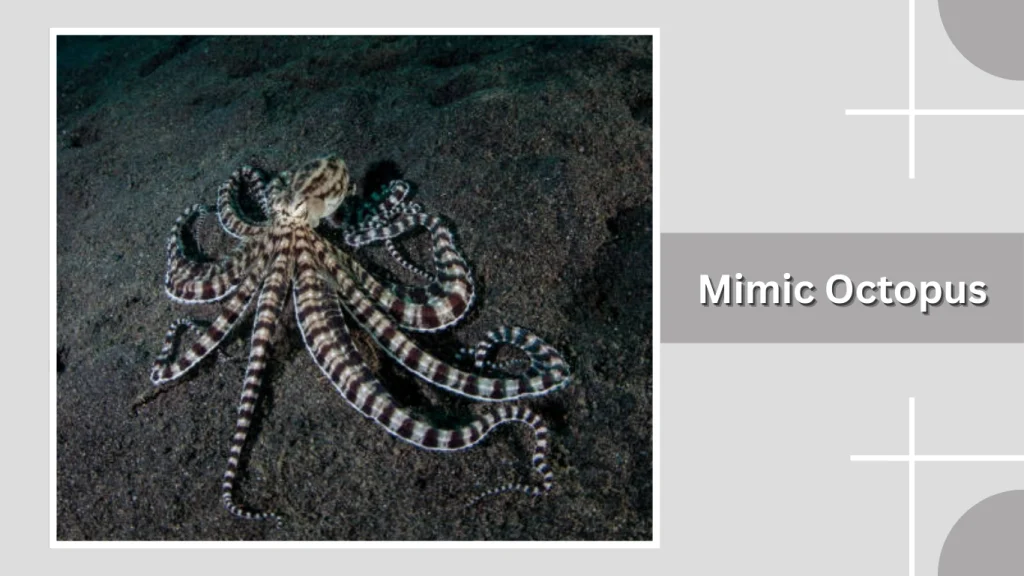
The mimic octopus is one of the most fascinating octopus species in the ocean, famous for its ability to imitate the appearance and movements of other marine animals. By changing its color, body shape, and behavior, it can resemble sea snakes, lionfish, flounders, and even jellyfish. This rare and intelligent octopus is mainly found in the warm, shallow waters of Southeast Asia.
Identification
- Slender body with long, thin arms
- Creamy white base color with bold brown or black stripes and patches
- Highly flexible arms used to copy the shapes of other sea creatures
- Excellent ability to rapidly change color, pattern, and posture
- Usually grows up to about 60 cm in total length
Habitat
The mimic octopus lives in shallow tropical seas, especially along muddy or sandy bottoms near river mouths and coastal flats. It is most commonly found in Indonesia, Malaysia, and surrounding regions. Unlike many octopus species that prefer rocky dens, the mimic octopus often lives in open, flat areas where it can quickly burrow into sand or use mimicry as its main defense.
Diet
The mimic octopus feeds on small fish, shrimp, crabs, and worms. It hunts by slowly crawling across the seafloor, probing holes and burrows with its arms. When it detects prey, it quickly strikes, using its arms and beak to capture and consume it. Its clever hunting techniques and deceptive movements help it approach prey without being noticed.
Lifecycle & Lifespan
After mating, the female lays strings of eggs inside a protected burrow and guards them until they hatch. She cleans and aerates the eggs continuously. Once the young emerge, they begin life as tiny planktonic larvae before settling on the seafloor. The mimic octopus has a short lifespan like most octopuses, usually living around 1 to 1.5 years.
4. Blue-Ringed Octopus (Hapalochlaena spp.)
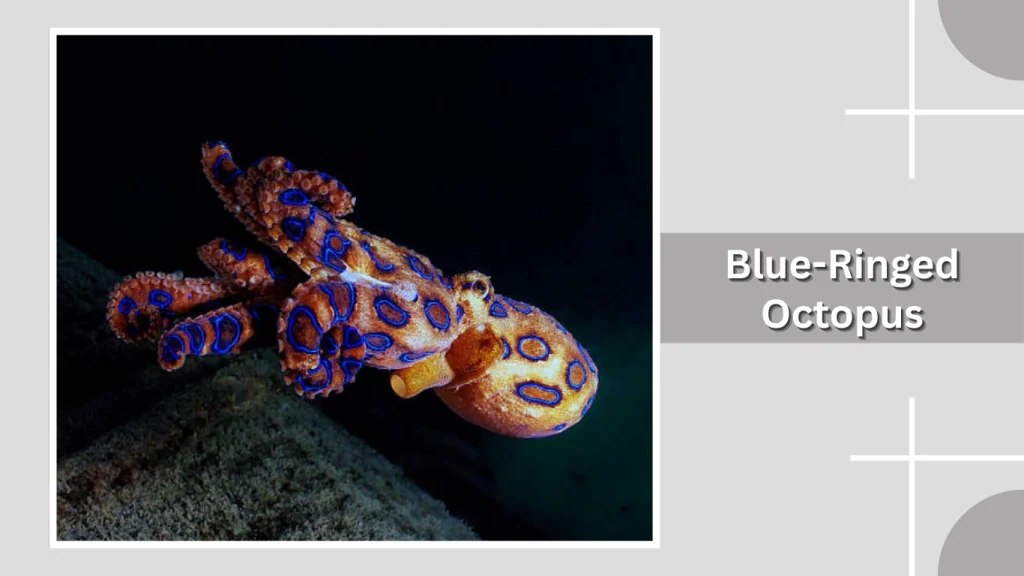
The blue-ringed octopus is a small but extremely dangerous octopus species, well known for the bright blue rings that appear on its body when it feels threatened. Despite its tiny size, it carries one of the most powerful natural venoms in the ocean. This striking octopus is native to the shallow coastal waters of the Indo-Pacific region.
Identification
- Small, compact body with short arms
- Yellowish or light brown skin covered with vivid blue and black rings
- Bright blue rings flash more intensely when the octopus is alarmed
- Smooth skin texture and relatively large eyes
- Usually grows only about 12–20 cm in total length
Habitat
Blue-ringed octopuses live in warm, shallow waters, especially in coral reefs, tide pools, and sandy or rocky seabeds. They are commonly found around Australia, Indonesia, the Philippines, and Japan. During the day, they often hide in shells, crevices, or under rocks, coming out to hunt mainly at night. They prefer environments with plenty of hiding places.
Diet
Their diet mainly consists of small crabs, shrimp, and other crustaceans. The blue-ringed octopus uses its powerful venom to quickly paralyze prey. Once the prey is immobilized, it pierces the shell with its beak and injects saliva to break down tissues before feeding. This venom is also used for defense against predators.
Lifecycle & Lifespan
After mating, the female lays eggs and carries them under her arms rather than attaching them to rocks. She protects and cleans them until they hatch. The young emerge as fully formed miniature octopuses. Like most octopus species, blue-ringed octopuses have a short lifespan, typically living around 1 to 2 years.
5. Coconut Octopus (Amphioctopus marginatus)
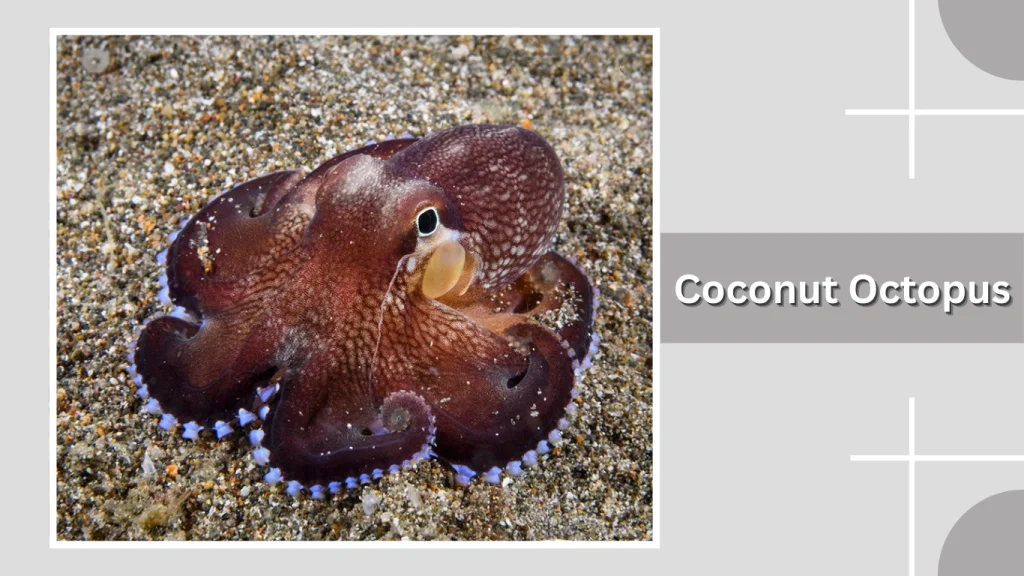
The coconut octopus is a highly intelligent species best known for using tools, especially coconut shells and discarded objects, as portable shelters. This behavior is rare among invertebrates and has made this octopus famous worldwide. It is a small to medium-sized octopus that lives on sandy seafloors, often seen carrying shells to protect itself from predators.
Identification
- Light brown, beige, or gray body with darker spots
- Medium-sized mantle with relatively long, flexible arms
- Smooth skin that can change color and texture
- Distinct dark stripe through the eye area
- Grows up to about 15 cm mantle length, with longer arm span
Habitat
Coconut octopuses are mainly found in the tropical waters of the Indo-Pacific region, including Indonesia, the Philippines, and northern Australia. They prefer sandy or muddy seabeds near coral reefs, seagrass beds, and coastal flats. Unlike reef-dwelling octopuses, this species often lives in open areas with little natural shelter, which is why it uses coconut shells, bottles, or shells as hiding places.
Diet
The coconut octopus feeds on small crabs, shrimp, clams, snails, and small fish. It hunts by crawling across the seafloor and probing into burrows and crevices. When prey is found, it quickly traps it with its arms and bites with its beak. Its saliva helps weaken prey and begin digestion before consumption.
Lifecycle & Lifespan
After mating, the female lays clusters of eggs inside a protected shelter, often inside a shell. She guards and cleans them continuously and usually stops feeding during this period. After the eggs hatch, the female dies shortly afterward. The hatchlings drift as plankton before settling on the bottom. The coconut octopus usually lives about 1 to 2 years.
6. Atlantic Pygmy Octopus (Octopus joubini)

The Atlantic pygmy octopus is one of the smallest octopus species, known for its secretive behavior and compact size. Despite being tiny, it is an active predator with strong camouflage abilities. This species is commonly studied because it adapts well to aquariums and has a very short but intense life cycle.
Identification
- Very small, rounded mantle with short, delicate arms
- Body color ranges from tan to dark brown with speckled patterns
- Large eyes compared to body size
- Excellent camouflage and texture-changing ability
- Usually measures only 2–4 cm in mantle length
Habitat
The Atlantic pygmy octopus is found in warm, shallow waters of the western Atlantic Ocean, especially in the Gulf of Mexico, Caribbean Sea, and around Florida. It lives in coral rubble, seagrass beds, oyster reefs, and sandy areas with shells. During the day, it hides inside empty shells or small holes and becomes more active at night.
Diet
This tiny octopus feeds mainly on small crustaceans such as amphipods, tiny crabs, shrimp, and occasionally small mollusks. It hunts by slowly creeping along the seafloor, using its arms to explore cracks and debris. When prey is detected, it quickly seizes and consumes it with its sharp beak.
Lifecycle & Lifespan
After mating, the female lays eggs inside a hidden shell or crevice and guards them closely. The eggs hatch into miniature versions of adults rather than long-drifting larvae. The Atlantic pygmy octopus has a very short lifespan, usually living only about 8 to 12 months.
7. Caribbean Reef Octopus (Octopus briareus)
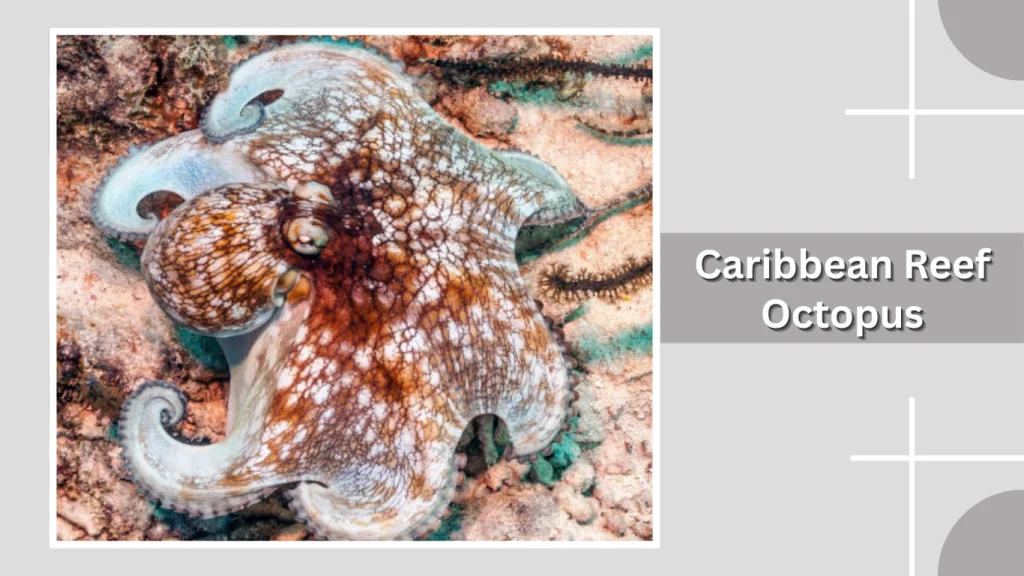
The Caribbean reef octopus is a colorful and graceful species known for its long arms, smooth movements, and strong intelligence. It is commonly seen by divers because it is active in shallow reef areas and often hunts in open spaces. This octopus can rapidly change its skin color and texture to blend perfectly with coral reefs and rocky surroundings.
Identification
- Slender body with very long, thin arms
- Skin color ranges from reddish-brown to green, blue, or purple
- Distinctive pale suckers that contrast with darker arms
- Smooth skin capable of dramatic color changes
- Arm span can reach over 1 meter
Habitat
This species lives in warm, shallow waters of the Caribbean Sea, Gulf of Mexico, and western Atlantic Ocean. It prefers coral reefs, rocky bottoms, and seagrass beds where there are plenty of hiding places. During the day, it hides in reef holes or crevices, often blocking the entrance with rocks or shells. It becomes more active at night when it leaves its den to hunt.
Diet
The Caribbean reef octopus feeds mainly on crabs, shrimp, lobsters, and small fish. It uses its long arms to probe reef cracks and flush prey into the open. Once captured, prey is pulled to the mouth where the beak and venomous saliva help subdue and digest it. It is a skilled and patient hunter.
Lifecycle & Lifespan
After mating, the female lays long strings of eggs inside a protected den and carefully guards them. She constantly cleans and aerates the eggs but does not leave to feed. Once the eggs hatch, the female usually dies soon after. The young drift in open water before settling. The Caribbean reef octopus typically lives about 1 to 1.5 years.
8. Day Octopus (Octopus cyanea)
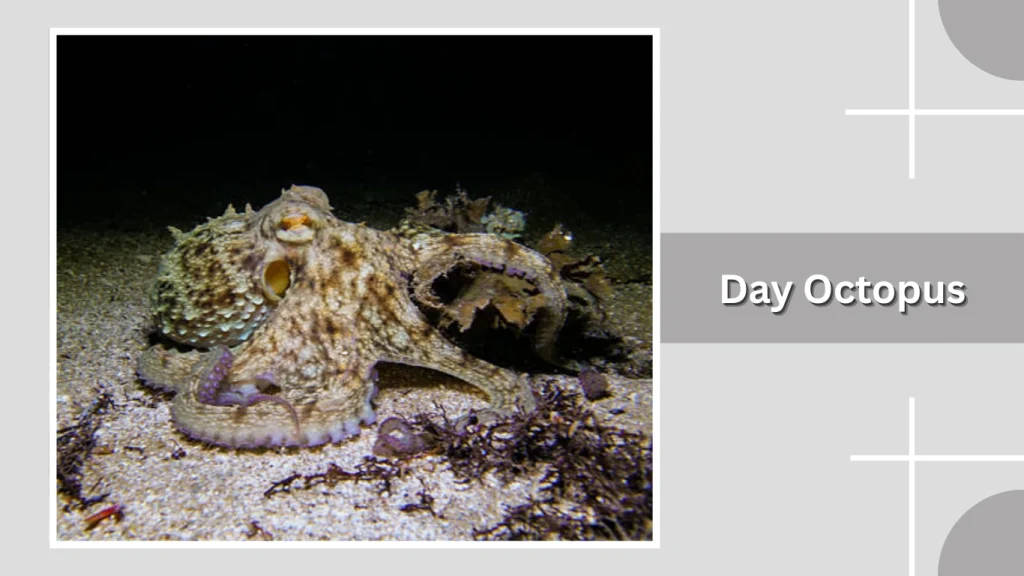
The day octopus is unusual because it is often active during daylight hours, unlike most octopus species. It is highly intelligent, fast-moving, and well known for its dynamic color displays. This species is frequently observed by snorkelers and divers in tropical reef environments.
Identification
- Medium to large body with long, powerful arms
- Bright and rapidly changing colors, including brown, red, white, and yellow
- Prominent eyes with excellent vision
- Strong suction cups arranged in two rows
- Can reach arm spans of about 1 meter
Habitat
The day octopus is found throughout the tropical Indo-Pacific region, including coral reefs around Hawaii, Southeast Asia, and East Africa. It prefers shallow reefs, rocky shorelines, and coral lagoons. It often shelters in reef crevices but actively roams the reef during the day to hunt, which makes it easier to observe than many other octopus species.
Diet
Its diet includes crabs, shrimp, snails, clams, and small fish. The day octopus is a fast and aggressive hunter, often pouncing on prey and trapping it under its webbed arms. It can also drill into shells using its beak and saliva to reach soft tissue inside.
Lifecycle & Lifespan
After mating, the female lays thousands of eggs inside a hidden den and guards them constantly. She stops feeding while caring for the eggs and dies shortly after they hatch. The larvae drift in the ocean before settling on reefs. The day octopus usually lives about 1 to 2 years.
9. Dumbo Octopus (Grimpoteuthis spp.)
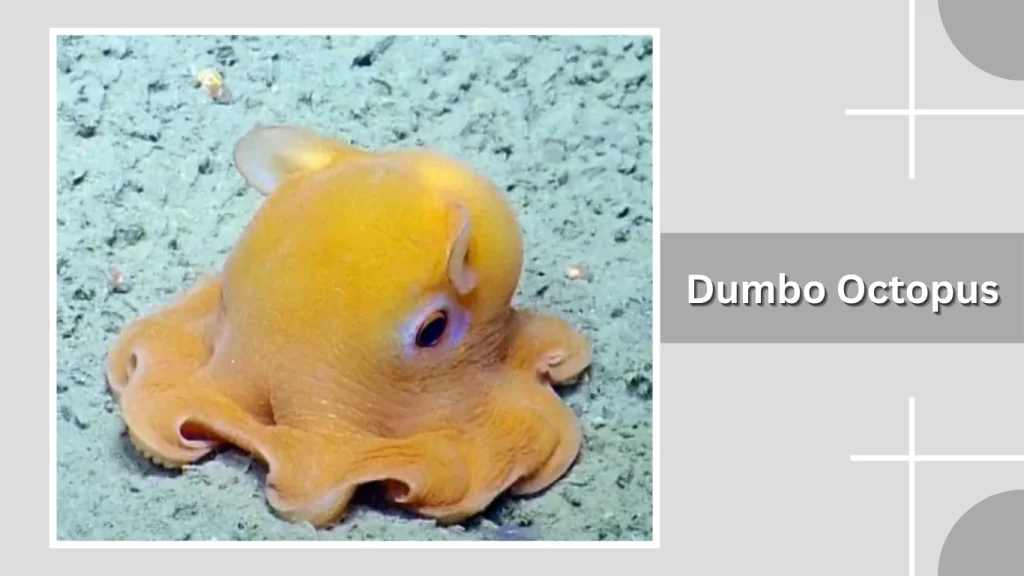
The dumbo octopus is a deep-sea species named for the ear-like fins on its head that resemble Disney’s Dumbo. Unlike most octopuses, it lives in the cold, dark depths of the ocean and uses its fins to gently flap through the water. It is one of the deepest-living octopus groups ever discovered and has a soft, delicate appearance.
Identification
- Rounded, jelly-like body with soft texture
- Two large ear-like fins above the eyes
- Short arms connected by a web of skin
- Pale pink, white, or light red coloration
- Usually small to medium in size, depending on species
Habitat
Dumbo octopuses inhabit the deep ocean, usually at depths between 1,000 and 4,000 meters. They are found in many oceans worldwide, including the Pacific, Atlantic, and Indian Oceans. They live just above the seafloor, drifting and swimming slowly. Because of extreme pressure and darkness, they are rarely seen and mostly studied using deep-sea submersibles.
Diet
Unlike shallow-water octopuses, dumbo octopuses feed on small deep-sea animals such as worms, copepods, amphipods, and tiny crustaceans. They drift above the seabed and use their arms to scoop prey into their mouth. They do not use venom and usually swallow prey whole.
Lifecycle & Lifespan
Dumbo octopuses have a different reproductive strategy from shallow-water species. Females can lay eggs at different times rather than all at once. The eggs are attached to deep-sea rocks and hatch into fully formed young. Because of the deep-sea environment, they are believed to live longer than most octopuses, possibly 3 to 5 years or more.
10. Blanket Octopus (Tremoctopus spp.)
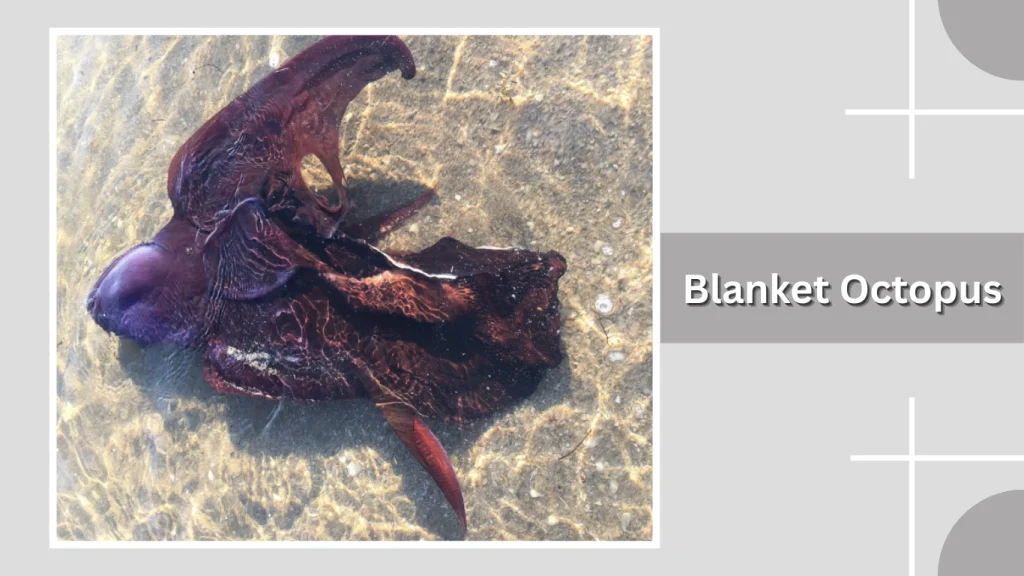
The blanket octopus is one of the most visually striking octopus species, especially the female, which has long, flowing webbing between its arms that looks like a colorful blanket. This species is also known for its unique defense behavior, tearing tentacles from venomous Portuguese man o’ war jellyfish and using them as weapons.
Identification
- Extreme size difference between males and females
- Females have long webbed arms forming a “blanket”
- Bright colors including silver, blue, and purple
- Smooth, soft body with large eyes
- Males are tiny compared to females
Habitat
Blanket octopuses live in warm, open ocean waters of tropical and subtropical seas worldwide. They are mostly pelagic, meaning they drift or swim in open water rather than staying on reefs. They are rarely seen but sometimes spotted near the surface, especially at night.
Diet
Their diet mainly includes jellyfish, small fish, and crustaceans. Blanket octopuses are known to prey on venomous jellyfish and store their stinging cells in their own arms for defense. They capture prey with their arms and webbing, pulling food toward the beak to eat.
Lifecycle & Lifespan
After mating, the female lays large numbers of eggs and releases them into the water. The young hatch as tiny planktonic octopuses. Like most octopus species, blanket octopuses have short lifespans, generally believed to be around 1 to 2 years, although deep-water forms may live slightly longer.
11. Veined Octopus (Amphioctopus marginatus)
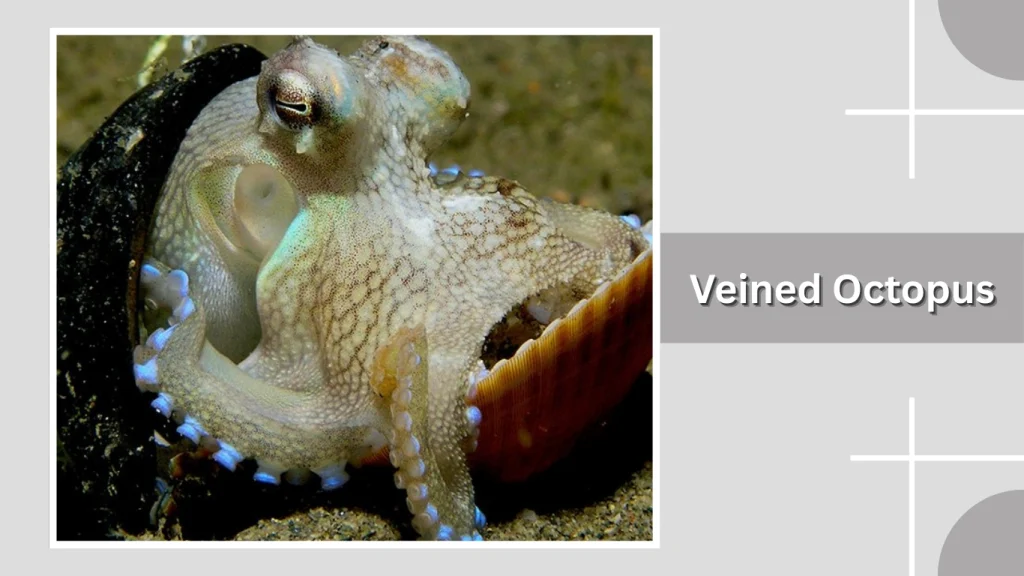
The veined octopus, also called the coconut octopus, is a highly intelligent and adaptable species famous for using tools and creating shelters from objects like coconut shells and seashells. It is known for its ability to “walk” across the seafloor and quickly bury itself in sand. This octopus is active, curious, and often observed in shallow tropical waters.
Identification
- Light brown to gray body with dark vein-like patterns
- Medium-sized mantle with long, flexible arms
- Highly developed camouflage and texture-changing ability
- Distinct dark lines running across the body
- Can reach about 40–60 cm in total length
Habitat
The veined octopus lives in the warm tropical waters of the Indo-Pacific region, including Indonesia, the Philippines, and northern Australia. It prefers sandy and muddy bottoms near coral reefs, seagrass beds, and coastal flats. It often inhabits open areas with few natural hiding places, which is why it collects shells and debris to build shelters.
Diet
This species feeds mainly on crabs, shrimp, snails, clams, and small fish. It hunts by slowly creeping across the seafloor, probing into burrows and trapping prey with its arms. The beak is strong enough to crack shells, and its saliva helps immobilize prey.
Lifecycle & Lifespan
After mating, the female lays eggs inside a protected shelter and guards them carefully. She cleans and aerates the eggs constantly and usually does not eat during this period. Once the eggs hatch, the female dies soon after. The young drift in the plankton before settling. The veined octopus generally lives about 1 to 2 years.
12. Two-Spot Octopus (Octopus bimaculatus)
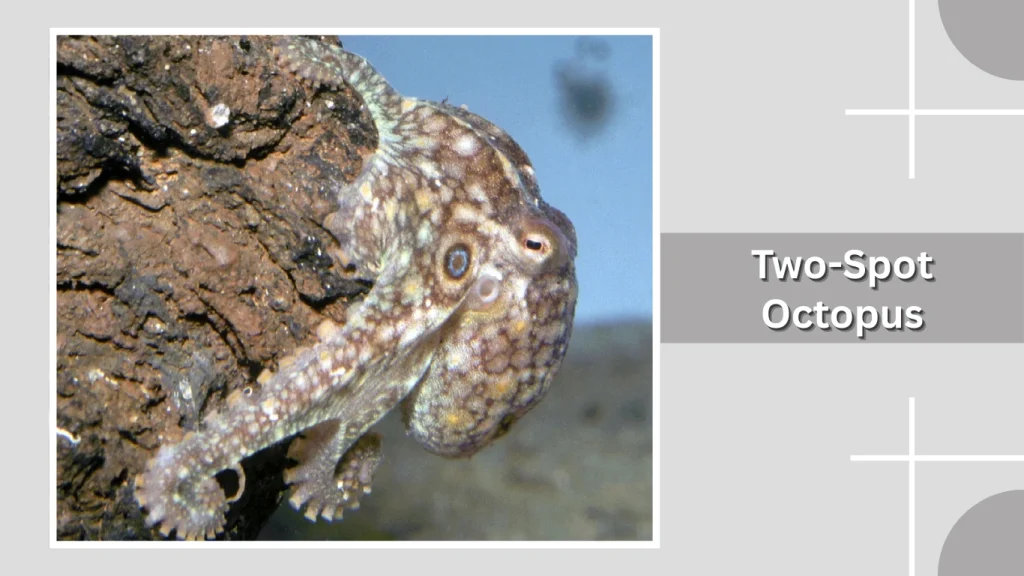
The two-spot octopus is named for the two distinctive blue-ringed eye spots located just below its eyes. It is a friendly-looking, intelligent species often found in shallow waters along the Pacific coast of North America. This octopus is frequently seen in tide pools and coastal reefs.
Identification
- Light brown or tan body with two bright blue eye spots
- Medium-sized mantle with moderately long arms
- Excellent color-changing ability for camouflage
- Smooth to slightly textured skin
- Usually grows up to about 60 cm in arm span
Habitat
Two-spot octopuses live along the eastern Pacific coast, from California to Mexico. They inhabit rocky reefs, kelp forests, and tide pools. They often hide in crevices, empty shells, or under rocks during the day and become more active at night, though some are seen hunting in daylight.
Diet
Their diet mainly consists of crabs, shrimp, snails, small fish, and clams. They use their arms to capture prey and their beak to drill into shells. Like other octopuses, they inject saliva to weaken prey before feeding.
Lifecycle & Lifespan
After mating, the female lays strings of eggs in a hidden den and guards them constantly. She stops eating while caring for the eggs and dies shortly after they hatch. The young hatch as planktonic larvae before settling on the seafloor. The two-spot octopus usually lives about 1 to 1.5 years.