




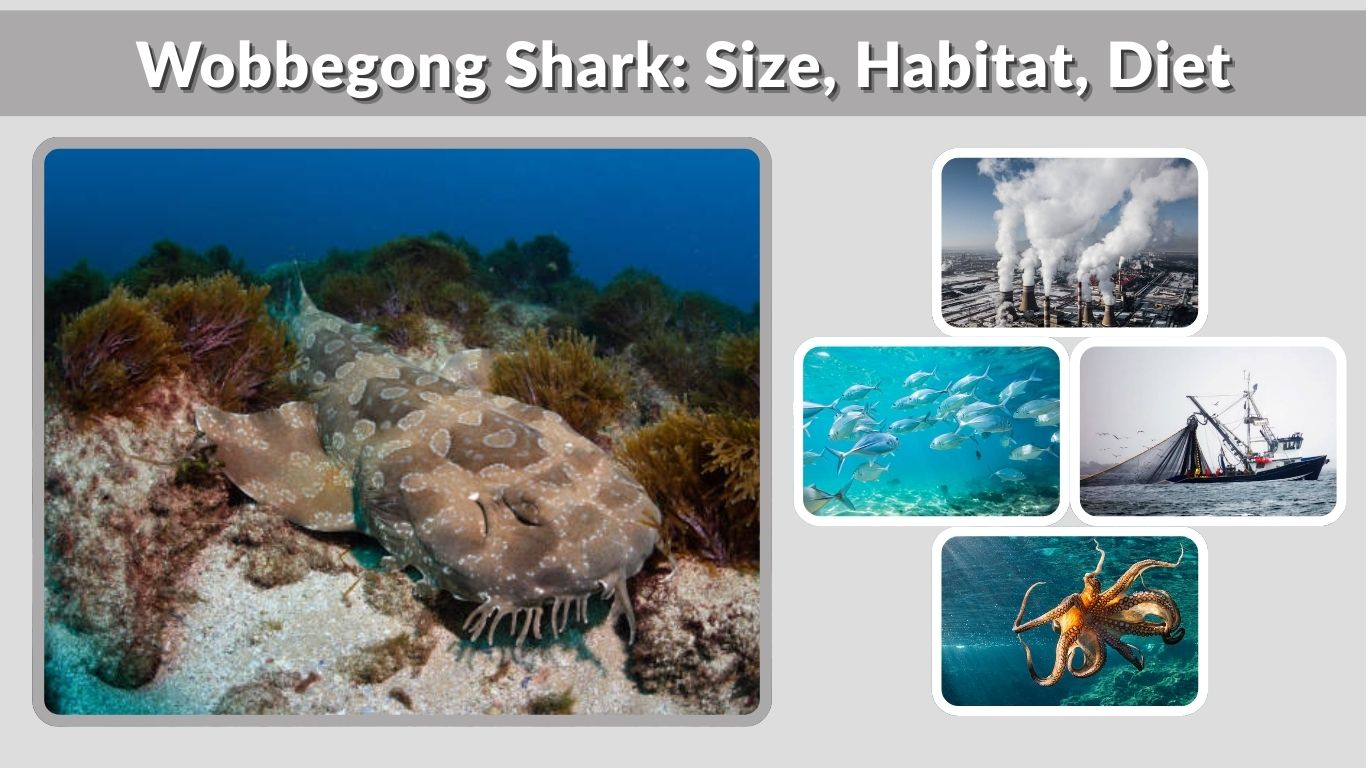
The wobbegong shark is one of the ocean’s most unusual and perfectly camouflaged predators. Often called a carpet shark, this bottom-dwelling species is famous for its flattened body, intricate patterns, and distinctive skin flaps around its mouth. Native primarily to Australian and Indo-Pacific waters, wobbegongs are ambush hunters that rely on stealth rather than speed. Despite their somewhat intimidating appearance, they are generally calm reef residents. In this guide, you’ll learn about wobbegong shark size, habitat, diet, behavior, and what makes them unique among sharks.
What Is a Wobbegong Shark?
Wobbegong sharks belong to the family Orectolobidae, a group of carpet sharks known for their ornate patterns and bottom-dwelling lifestyle. The word “wobbegong” is believed to come from an Aboriginal Australian term meaning “shaggy beard,” referring to the fleshy lobes that hang around their mouths.
Scientific Classification
- Family: Orectolobidae
- Order: Orectolobiformes
- Related to nurse sharks and whale sharks
- Around 12 recognized species
These sharks are primarily found in the Western Pacific, especially around Australia, where they are a common reef species.
Why Are They Called Carpet Sharks?
Wobbegongs are called carpet sharks because of their beautifully patterned skin, which resembles an ornate carpet. Their bodies are covered in complex arrangements of spots, blotches, and lines in shades of brown, tan, and gray.
Combined with their flattened body shape, this pattern allows them to blend seamlessly into coral reefs and rocky seabeds.
Types of Wobbegong Sharks
There are several species of wobbegongs, including:
- Spotted wobbegong (Orectolobus maculatus)
- Tasselled wobbegong (Eucrossorhinus dasypogon)
- Dwarf wobbegong (Orectolobus ornatus)
The tasselled wobbegong is especially distinctive due to its elaborate dermal lobes around the mouth, giving it an even more textured appearance.
Wobbegong Shark Size and Physical Features
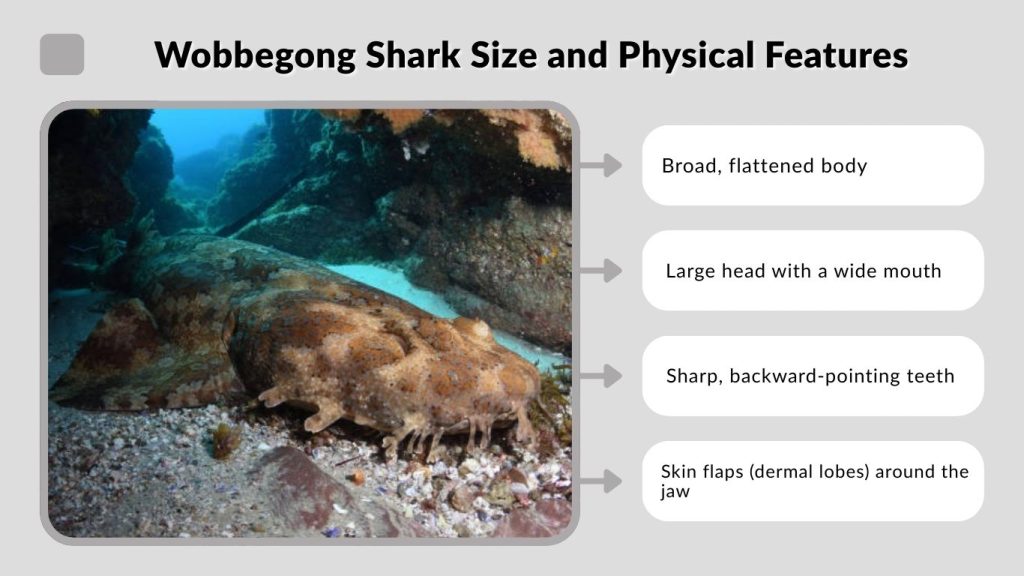
Wobbegongs vary in size depending on the species, but most are medium-sized reef sharks.
How Big Do Wobbegong Sharks Get?
- Average length: 4 to 5 feet (1.2–1.5 meters)
- Larger species: up to 10–12 feet (3 meters)
- Weight varies by species and age
The spotted wobbegong, one of the largest species, can grow significantly longer than most other carpet sharks.
Distinct Physical Characteristics
Wobbegongs have several unique features that set them apart:
- Broad, flattened body
- Large head with a wide mouth
- Sharp, backward-pointing teeth
- Skin flaps (dermal lobes) around the jaw
- Mottled coloration for camouflage
Their dermal lobes break up the outline of their head, making them nearly invisible against reef structures.
Camouflage and Adaptation
Camouflage is the wobbegong shark’s greatest defense and hunting tool. Their patterned skin allows them to blend perfectly into coral, rocks, and sand. When resting motionless on the ocean floor, they can be almost impossible to detect.
This camouflage protects them from larger predators and helps them ambush unsuspecting prey.
Wobbegong Shark Habitat and Distribution
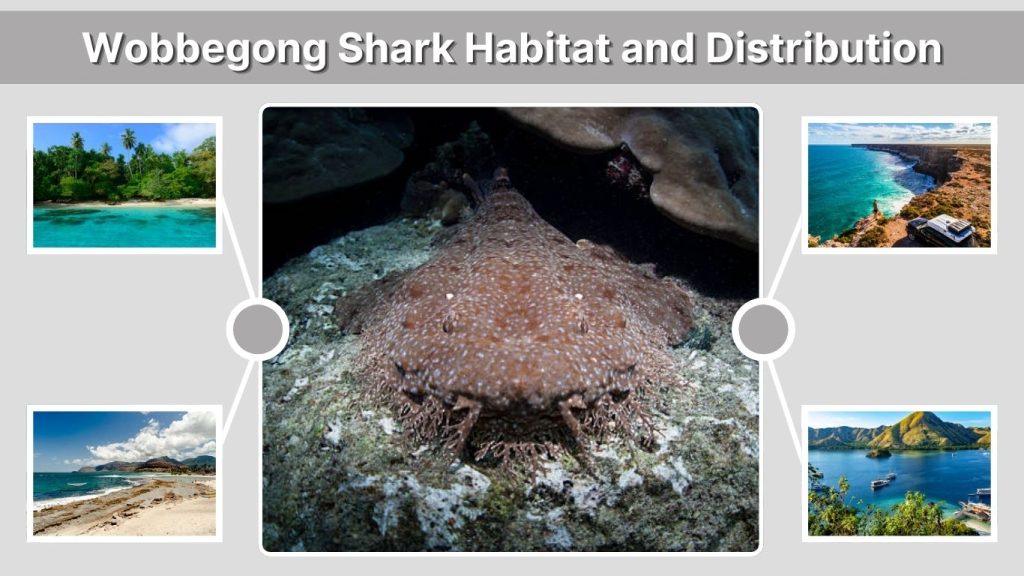
Wobbegong sharks are primarily found in warm temperate and tropical waters.
Where Do Wobbegong Sharks Live?
Their range includes:
- Eastern and southern Australia
- Indonesia
- Papua New Guinea
- Western Pacific coastal waters
Australia is considered the global hotspot for wobbegong diversity.
Preferred Environment
Wobbegongs prefer environments where they can remain concealed, such as:
- Coral reefs
- Rocky reefs
- Underwater caves
- Ledges and overhangs
- Coastal bays
They are bottom-dwellers and rarely venture far from the sea floor.
Depth and Water Conditions
Most wobbegongs inhabit shallow coastal waters but can be found at depths of up to 360 feet (110 meters). They prefer areas with stable temperatures and abundant reef life, which supports their ambush hunting strategy.
Juveniles often remain in shallower protected areas, while adults may occupy deeper reef zones.
Wobbegong Shark Diet: What Does a Wobbegong Shark Eat?

Wobbegong sharks are carnivorous ambush predators with a powerful feeding strategy.
Primary Food Sources
Their diet typically includes:
- Small reef fish
- Octopus
- Squid
- Crabs and other crustaceans
- Occasionally smaller sharks
They are capable of swallowing relatively large prey compared to their body size.
Ambush Hunting Strategy
Unlike fast-swimming sharks that chase prey, wobbegongs rely on stealth. They lie motionless on the reef floor, blending into their surroundings. When a fish swims too close, they launch a rapid suction strike.
Their jaws open quickly, creating strong suction that pulls prey directly into their mouth. This strike is extremely fast and difficult for prey to escape.
Feeding Behavior
Wobbegongs are primarily nocturnal hunters, meaning they are most active at night. During the day, they typically rest on the sea floor, conserving energy.
As mid-level predators, they help regulate reef fish populations and contribute to maintaining ecological balance within coral reef ecosystems.
Wobbegong Shark Behavior
Wobbegong sharks are known for their calm and sedentary lifestyle. Unlike many active shark species, they spend much of their time resting on the ocean floor.
Daily Activity Patterns
Wobbegongs are primarily nocturnal, meaning they hunt at night and rest during the day. Divers often spot them lying motionless under rocky ledges, inside caves, or directly on the reef floor.
During daylight hours, they conserve energy and rely on camouflage for protection. At night, they become more active and patrol short distances in search of prey.
Temperament
Although wobbegongs may look intimidating due to their wide mouths and sharp teeth, they are generally not aggressive. They prefer to remain still and avoid confrontation.
However, they can be defensive if provoked, especially if stepped on or handled. Because they rely heavily on camouflage, they may not swim away when approached, increasing the chance of accidental contact.
Interaction With Divers
Wobbegongs are popular among underwater photographers because of their unique patterns. However, their excellent camouflage means divers sometimes fail to notice them.
Most incidents occur when someone accidentally steps too close in shallow water. Maintaining awareness and distance greatly reduces any risk.
Are Wobbegong Sharks Dangerous?
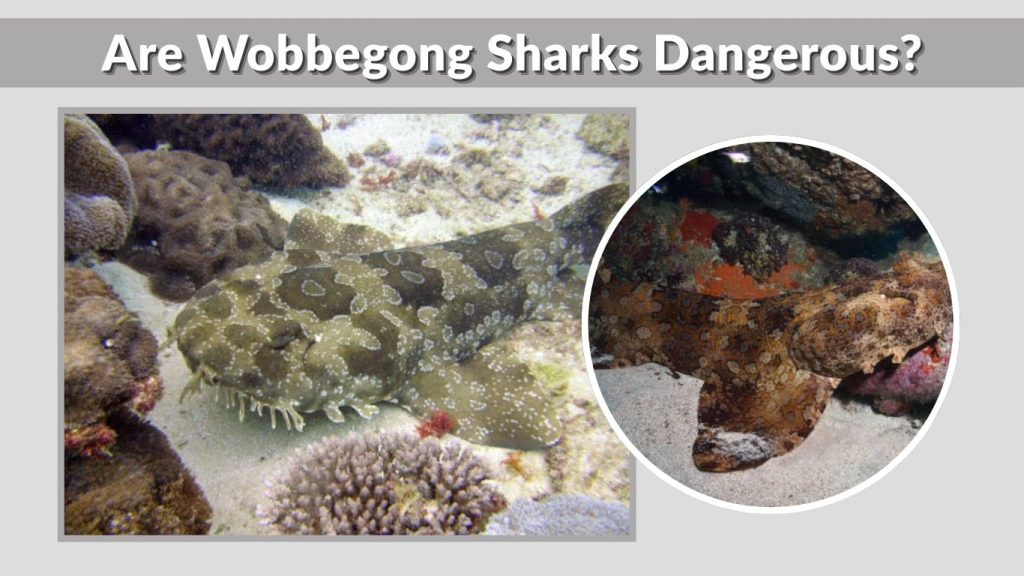
Wobbegong sharks are not considered highly dangerous, but they are among the few reef sharks known to have documented bite incidents.
Documented Wobbegong Shark Attacks
There have been rare cases of wobbegong shark bites, particularly in Australia. These incidents are usually defensive rather than predatory.
In most situations, the shark was stepped on, touched, or provoked before biting.
Why Bites Happen
Several factors explain why bites occur:
- Strong camouflage makes them difficult to see
- They remain motionless instead of swimming away
- They may react quickly if startled
- Their feeding reflex is powerful and rapid
Because of their ambush hunting strategy, their bite response can be sudden.
Safety Tips Around Wobbegongs
To stay safe:
- Watch where you place your hands and feet
- Avoid touching marine animals
- Keep a respectful distance
- Never attempt to provoke or feed them
When left undisturbed, wobbegongs pose little threat to humans.
Wobbegong Shark Life Cycle and Reproduction
Wobbegong sharks reproduce differently from many egg-laying shark species.
Reproductive Type
Wobbegongs are ovoviviparous, meaning the eggs develop inside the mother’s body. The embryos hatch internally, and the female gives birth to live young.
Mating Behavior
Mating usually involves the male biting the female gently to maintain position during copulation. Breeding seasons can vary by region and species.
Gestation and Birth
The gestation period can last several months, depending on the species. A female may give birth to a relatively large litter, sometimes up to 20 pups.
Newborn wobbegongs are fully formed miniatures of adults and are capable of hunting shortly after birth.
Growth and Lifespan
Young wobbegongs grow gradually and may take several years to reach sexual maturity. Their lifespan is estimated to be 20 years or more, though exact data varies among species.
Fascinating Wobbegong Shark Facts
- The name “wobbegong” comes from an Aboriginal Australian word meaning “shaggy beard.”
- Their dermal lobes help break up their body outline for camouflage.
- They can swallow prey nearly half their own size.
- They have flexible jaws that extend forward during feeding.
- Some species are found only in Australian waters.
- They are among the most uniquely patterned sharks in the ocean.
These adaptations make them one of the most visually distinctive reef sharks.
Conservation Status and Threats
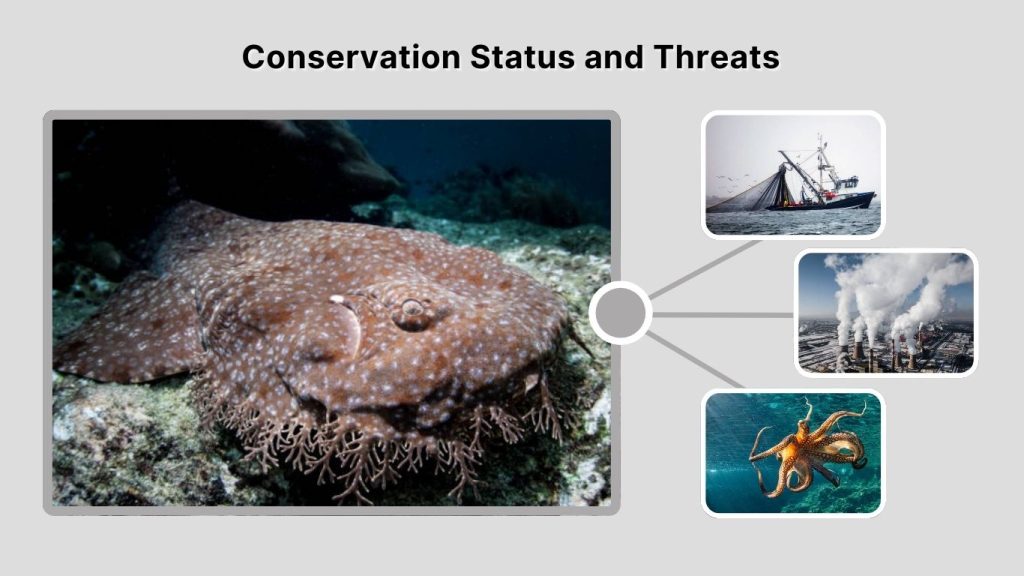
Wobbegong shark conservation status varies by species. While some populations remain stable, others face increasing pressure.
Fishing Pressure
Wobbegongs are sometimes caught intentionally for their meat and skin. They are also vulnerable to bycatch in commercial and recreational fisheries.
Because they spend time resting on the seafloor, they can be easily caught in nets.
Habitat Damage
Coral reef degradation, pollution, and coastal development reduce suitable habitats. Since wobbegongs depend on reef environments for hunting and shelter, habitat loss directly impacts their survival.
Conservation Efforts
In Australia, fishing regulations and marine protected areas help safeguard certain populations. Ongoing research and monitoring programs aim to better understand species distribution and population health.
Protecting coral reef ecosystems is essential for maintaining healthy wobbegong populations.
FAQs
How big is a wobbegong shark?
Most wobbegong sharks grow between 4 and 5 feet long, though larger species like the spotted wobbegong can reach up to 10–12 feet. Size varies depending on species and habitat conditions.
Are wobbegong sharks aggressive?
Wobbegongs are generally not aggressive. They are calm, bottom-dwelling sharks that rely on camouflage. However, they may bite defensively if stepped on or provoked.
Where do wobbegong sharks live?
They primarily live in Australian and Western Pacific waters, especially around coral reefs, rocky reefs, and coastal bays. Australia is considered their main stronghold.
What does a wobbegong shark eat?
Wobbegongs eat small fish, octopus, squid, and crustaceans. They use ambush tactics and suction feeding to capture prey that swims too close.
Has a wobbegong shark attacked a human?
There have been rare recorded bite incidents, mostly defensive in nature. Most cases involve accidental contact in shallow reef areas rather than intentional attacks.