




The zebra shark (Stegostoma tigrinum) is one of the most fascinating reef sharks in the world. Known for its dramatic pattern change from striped juveniles to spotted adults, this slow-moving species lives in warm Indo-Pacific waters. Despite their large size, zebra sharks are gentle bottom-dwellers that spend much of their time resting on coral reefs. In this guide, you’ll learn about zebra shark size, habitat, diet, physical traits, and what makes them unique among sharks.
What Is a Zebra Shark?
The zebra shark is a tropical, bottom-dwelling shark species commonly found around coral reefs. It is the only living member of the family Stegostomatidae, making it biologically unique among sharks.
Scientific Classification
- Scientific name: Stegostoma tigrinum
- Family: Stegostomatidae
- Common names: Zebra shark, leopard shark (in some regions)
Although sometimes called a leopard shark due to its spotted adult pattern, it should not be confused with the true leopard shark (Triakis semifasciata) found along the Pacific coast of North America.
Why Is It Called a Zebra Shark?
The name comes from the bold dark stripes seen on juveniles. Young zebra sharks have a striking pattern of white or yellowish stripes over a dark brown body. As they mature, these stripes gradually fade and transform into small dark spots, giving adults a leopard-like appearance.
This dramatic pattern change is one of the species’ most distinctive characteristics.
Physical Appearance
Zebra sharks have long, slender bodies with a flattened head and a rounded snout. One of their most noticeable features is their exceptionally long tail, which can make up nearly half of their total body length. They also have small barbels (whisker-like sensory organs) near their mouths that help them detect prey hidden in the sand.
Unlike fast-swimming pelagic sharks, zebra sharks are slow, flexible swimmers that move with an eel-like motion.
Zebra Shark Size and Physical Characteristics
Zebra sharks are considered medium to large reef sharks.
How Big Do Zebra Sharks Get?
- Average length: 6.5 to 8 feet (2 to 2.5 meters)
- Maximum length: Up to 11 feet (3.5 meters) in rare cases
- Weight: Can reach over 70 pounds (32 kilograms) or more
Their long tail gives them an elongated appearance compared to many other reef sharks.
Growth From Juvenile to Adult
At birth, zebra sharks measure around 8 to 12 inches (20–30 cm) long. They hatch from egg cases and immediately display their bold striped pattern.
As they grow, their stripes gradually break apart into spots. This transformation typically occurs during adolescence and is complete by adulthood. Along with the pattern change, their body becomes thicker and more robust.
Male vs Female Size Differences
Female zebra sharks are generally slightly larger than males. Sexual maturity is reached when they are approximately 5 to 6 feet (1.5–1.8 meters) long. Size differences are subtle but common among many shark species.
Zebra Shark Habitat and Distribution
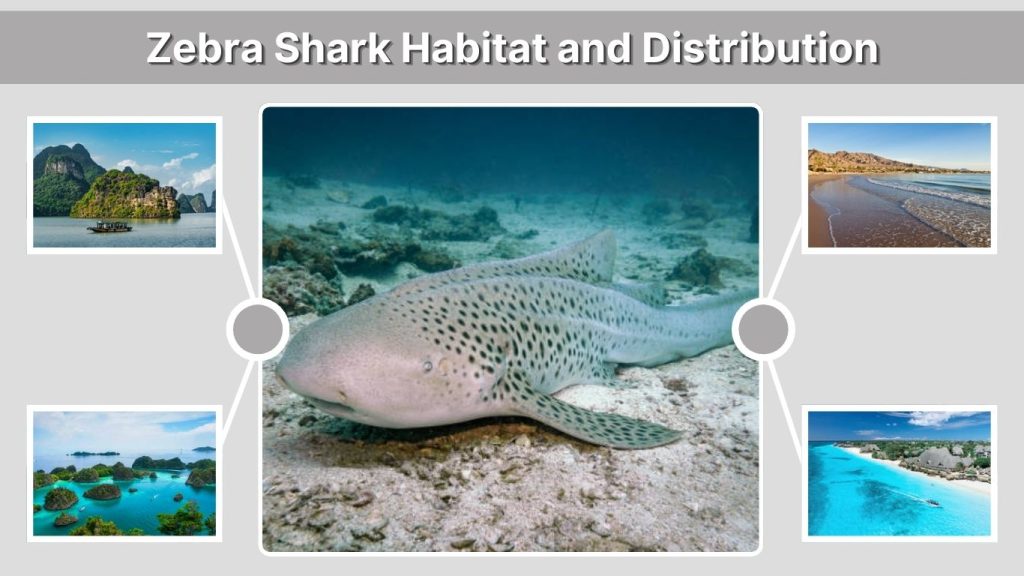
Zebra sharks inhabit warm tropical waters throughout the Indo-Pacific region.
Where Do Zebra Sharks Live?
They are commonly found in:
- The Red Sea
- East Africa
- India and Southeast Asia
- Indonesia
- Northern Australia
- The Philippines
- Southern Japan
Their wide distribution makes them a well-known species among divers in tropical reef systems.
Preferred Environment
Zebra sharks prefer:
- Coral reefs
- Sandy flats near reefs
- Seagrass beds
- Lagoons
They are bottom-dwellers and are often seen resting directly on the ocean floor during the day. Unlike many sharks, zebra sharks can pump water across their gills while stationary, allowing them to lie still for long periods.
Depth and Temperature Range
Zebra sharks are usually found in shallow coastal waters at depths of up to 200 feet (62 meters), though they are most common in much shallower reef areas. They thrive in warm waters typically ranging between 75–84°F (24–29°C).
Juveniles tend to stay in shallow protected reef areas, while adults may explore slightly deeper reef slopes.
Zebra Shark Diet: What Does a Zebra Shark Eat?

Zebra sharks are carnivorous predators that feed primarily on bottom-dwelling animals.
Main Food Sources
Their diet includes:
- Crabs
- Shrimp
- Lobsters
- Snails
- Bivalves
- Small fish
- Sea urchins
Their small but strong teeth are well-suited for crushing hard-shelled prey.
Hunting Behavior
Zebra sharks are mainly nocturnal feeders, meaning they hunt at night. During feeding, they use their flexible bodies to probe into reef crevices and sandy areas. Their barbels help them detect hidden prey.
They use suction to pull prey from tight spaces, demonstrating impressive flexibility and control. Unlike fast predatory sharks that chase fish in open water, zebra sharks rely on patience and precision.
Role in the Ecosystem
As predators of crustaceans and other invertebrates, zebra sharks help maintain balance within coral reef ecosystems. By controlling populations of bottom-dwelling species, they contribute to reef health and biodiversity.
Zebra Shark Life Cycle
Zebra sharks have a fascinating reproductive process and a relatively long lifespan compared to many reef fish.
Reproduction and Mating
Zebra sharks are oviparous, meaning they reproduce by laying eggs rather than giving birth to live young. During mating, the male grips the female’s fins with his teeth to maintain position. Fertilization occurs internally before the female lays her eggs.
In rare cases, zebra sharks in captivity have reproduced through parthenogenesis, a form of asexual reproduction where females produce offspring without a male. This unusual ability has attracted scientific interest.
Egg Cases (“Mermaid’s Purse”)
After mating, females lay large egg capsules often called “mermaid’s purses.” These tough, brownish egg cases are rectangular with long fibers at the corners that help anchor them to coral, rocks, or the seabed.
The incubation period typically lasts several months, depending on water temperature. Inside the case, the developing embryo feeds on a yolk sac until it is ready to hatch.
Juvenile Stage
When zebra sharks hatch, they are fully independent and measure about 8–12 inches long. Their dark bodies with bright stripes provide camouflage among reef shadows.
Juveniles tend to stay in shallow, protected reef habitats where food is abundant and predators are fewer. As they grow, their striped pattern gradually transforms into the spotted pattern seen in adults.
Lifespan and Maturity
Zebra sharks reach sexual maturity at around 5–7 years of age. In the wild, they are believed to live 20 to 30 years, though some individuals in captivity may live even longer under protected conditions.
Are Zebra Sharks Dangerous to Humans?

Despite their size, zebra sharks are generally considered harmless to humans.
Natural Temperament
Zebra sharks are calm, slow-moving, and non-aggressive. They spend much of the day resting on the ocean floor and are not known to actively pursue humans.
Unlike large predatory sharks, they lack the speed and behavior associated with aggressive encounters.
Human Interactions
Divers frequently encounter zebra sharks in reef environments, especially in Southeast Asia and Australia. These encounters are typically peaceful.
Bites are extremely rare and usually occur only if the shark is provoked, handled, or feels threatened.
Safety Around Zebra Sharks
As with all wildlife, zebra sharks should be treated with respect. Divers should:
- Avoid touching or harassing them
- Keep a safe distance
- Not block their path
When left undisturbed, zebra sharks pose little to no risk to humans.
Leopard Shark vs Zebra Shark

Because adult zebra sharks have spots, they are often confused with leopard sharks. However, these are entirely different species.
Key Physical Differences
- Zebra shark (juvenile): Dark body with bold white stripes
- Zebra shark (adult): Tan body with dark spots
- Leopard shark: Silver-gray body with dark saddle-like markings
Zebra sharks also have much longer tails and a more elongated body shape compared to leopard sharks.
Habitat Comparison
- Zebra sharks: Indo-Pacific coral reefs
- Leopard sharks: Eastern Pacific, especially along the California coast
Their geographic ranges do not overlap significantly.
Behavior and Size Differences
Zebra sharks grow larger, reaching up to 8 feet or more on average, while leopard sharks usually grow around 4–5 feet long.
Leopard sharks are more active swimmers in coastal waters, whereas zebra sharks are slow-moving reef dwellers.
Fascinating Zebra Shark Facts
- Zebra sharks change from stripes to spots as they age.
- Their tail can make up nearly half of their total body length.
- They can remain motionless while pumping water over their gills.
- They have been known to reproduce without males in captivity.
- They are popular in large public aquariums due to their calm nature.
- Despite their gentle reputation, they are classified as Endangered due to declining populations.
Conservation Status and Threats
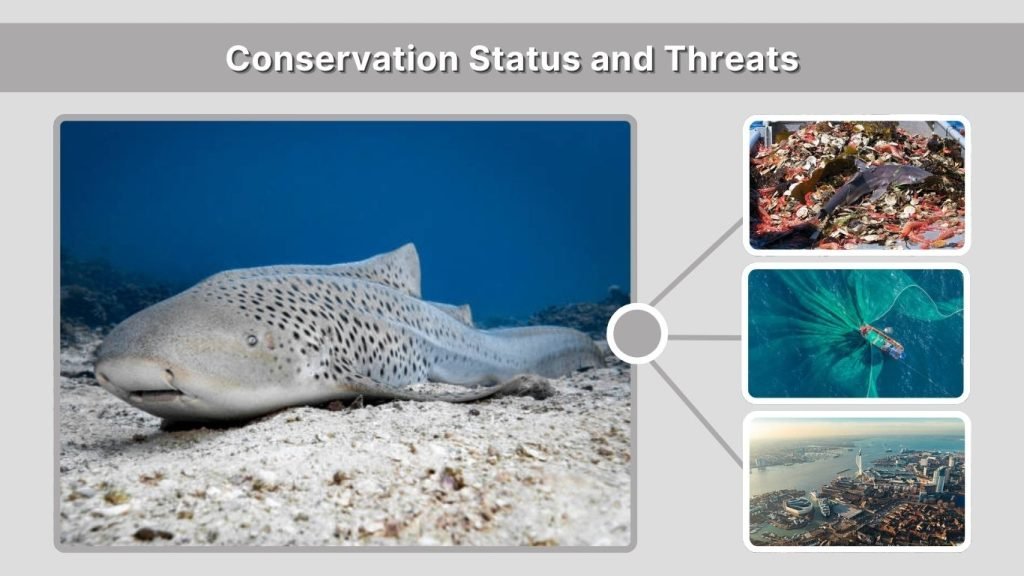
Zebra sharks face increasing threats in the wild.
Why Are Zebra Sharks Endangered?
The main threats include:
- Overfishing for meat and fins
- Bycatch in commercial fishing nets
- Habitat destruction from coral reef damage
- Coastal development
Because they reproduce relatively slowly, population recovery can take time.
Conservation Efforts
Efforts to protect zebra sharks include:
- Marine protected areas
- Sustainable fishing regulations
- Public education about reef conservation
- Captive breeding programs in aquariums
Protecting coral reef ecosystems is essential for the survival of zebra sharks and many other marine species.
FAQs
How big is a zebra shark?
Zebra sharks typically grow between 6.5 and 8 feet (2–2.5 meters) long, although some individuals can reach up to 11 feet in rare cases. Their long tail makes them appear even larger compared to many other reef sharks.
Where can zebra sharks be found?
Zebra sharks live in warm Indo-Pacific waters, including the Red Sea, Southeast Asia, Indonesia, northern Australia, and parts of Japan. They prefer coral reefs, sandy flats, and shallow coastal areas.
Are zebra sharks aggressive?
No, zebra sharks are generally non-aggressive and calm. They are slow-moving bottom dwellers and rarely interact negatively with humans. Most encounters with divers are peaceful when the sharks are not disturbed.
What do zebra sharks eat?
Zebra sharks mainly eat crustaceans such as crabs, shrimp, and lobsters, along with mollusks and small fish. They hunt primarily at night, using their barbels and suction feeding to capture prey hidden in reefs.
How long do zebra sharks live?
Zebra sharks can live around 20 to 30 years in the wild. In protected environments like aquariums, some individuals may live even longer under proper care.