

Cockroaches are among the most adaptable and ancient insects on Earth, having survived for over 300 million years. Known for their resilience, they thrive in a wide range of environments. While most cockroach species are small and go unnoticed, a few can grow to remarkable sizes that surprise even seasoned insect watchers.
In this article, we’ll explore the 10 biggest cockroach species by size, examining what makes them stand out in the world of bugs.
1. Megaloblatta longipennis
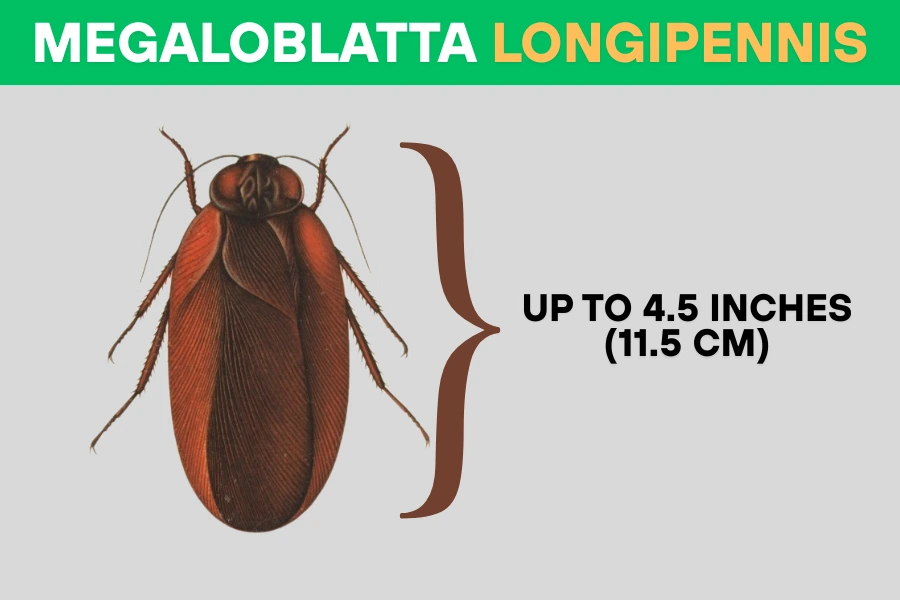
The Megaloblatta longipennis is widely recognized as the largest cockroach species in the world by wingspan and one of the longest by body length. Native to South America, particularly Peru and Ecuador, this massive insect can appear intimidating but is not considered dangerous to humans. Its enormous size and impressive gliding ability make it a fascinating subject of entomological interest.
Identification
- Length: Up to 4.5 inches (11.5 cm)
- Wingspan: Up to 8 inches (20 cm)
- Color: Reddish-brown to dark brown
- Distinctive Features:
- Very broad wings that cover the entire body
- Flattened body shape
- Long, thin antennae
- Very broad wings that cover the entire body
Habitat
Megaloblatta longipennis is typically found in humid, tropical forests. It prefers environments with high moisture levels and thick vegetation. These cockroaches often hide under logs, leaf litter, or bark during the day and emerge at night to feed.
Behavior
This species is nocturnal and not aggressive. Its large wings allow it to glide short distances, a rare ability among cockroaches. Despite its size, it is not fast-moving and relies more on hiding than fleeing when disturbed.
Diet
The Megaloblatta longipennis feeds primarily on decaying plant material, dead insects, and organic debris. It plays an essential role in the ecosystem by helping break down decomposing matter in forest habitats.
Interesting Facts
- It holds the record for the largest wingspan of any cockroach.
- Though enormous, it is harmless and not a household pest.
- Its gliding ability helps it evade predators in dense forest environments.
2. Macropanesthia rhinoceros (Giant Burrowing Cockroach)
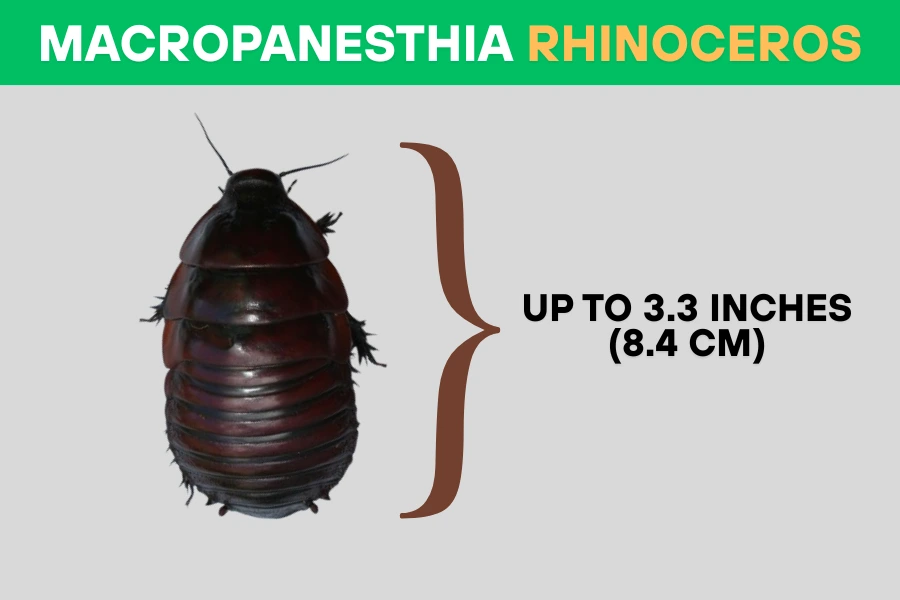
The Macropanesthia rhinoceros, also known as the rhinoceros cockroach or giant burrowing cockroach, is one of the heaviest cockroach species in the world. Native to Australia, this flightless insect lives underground and can live for up to 10 years, making it one of the longest-living cockroaches as well.
Identification
- Length: Up to 3.3 inches (8.4 cm)
- Color: Shiny dark brown or black
- Distinctive Features:
- Thick, rounded body
- No wings
- Short legs with strong digging claws
- Thick, rounded body
Habitat
This cockroach lives in sandy soils in dry forests and woodlands of Queensland, Australia. It creates deep burrows where it remains for most of its life, emerging occasionally to collect dry leaves for food.
Behavior
The Macropanesthia rhinoceros is non-aggressive and solitary. It is primarily active at night and uses its powerful legs to dig and push soil as it creates its underground tunnels.
Diet
This species feeds exclusively on dry, decaying leaves. It helps recycle nutrients back into the soil, contributing to forest health.
Interesting Facts
- Known as the “pet cockroach” in Australia due to its harmless nature.
- Can live for up to 10 years, making it a long-lived insect.
- Its heavy body and lack of wings set it apart from most cockroach species.
3. Blaberus giganteus (Giant Cave Cockroach)
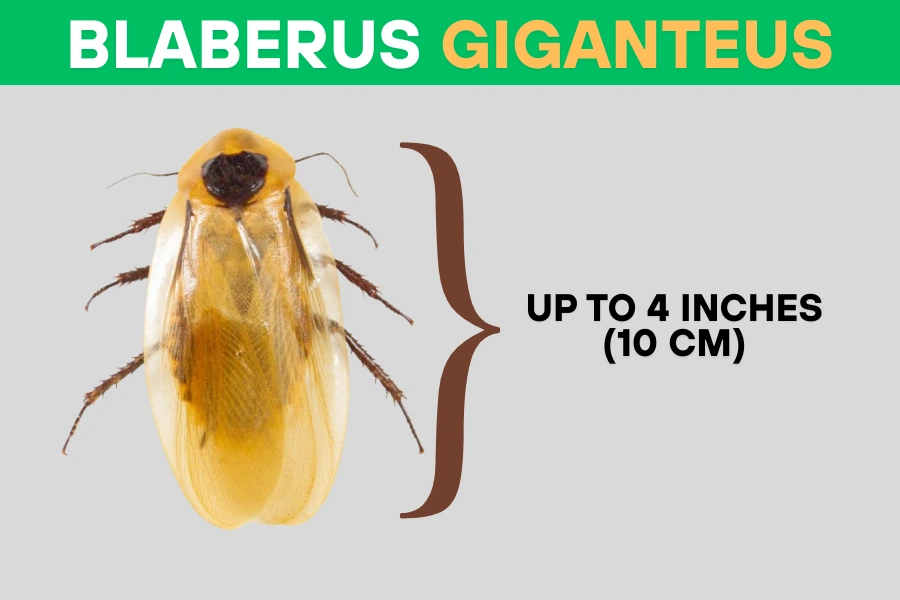
The Blaberus giganteus, or giant cave cockroach, is among the largest cockroaches by body length. It is native to Central and South America and is known for its broad wings and large, flat body. Despite its imposing appearance, it is not considered a pest.
Identification
- Length: Up to 4 inches (10 cm)
- Color: Light brown with a semi-transparent pronotum (shield over the head)
- Distinctive Features:
- Wide, flat body
- Long, veined wings
- Thin antennae
- Wide, flat body
Habitat
This species is commonly found in humid caves, tree trunks, and leaf litter in tropical rainforests. It prefers dark, moist environments where it can avoid predators.
Behavior
Blaberus giganteus is nocturnal and very shy. It rarely flies but may use its wings to glide short distances. It typically stays hidden during the day and comes out to scavenge at night.
Diet
Its diet consists of decaying leaves, wood, and dead insects. Like other cockroaches, it plays an important role in decomposition and nutrient cycling.
Interesting Facts
- Despite their size, they are gentle and often used in insect exhibits.
- They produce little to no odor and are non-invasive.
- Males are slightly smaller than females and have longer wings.
4. Gromphadorhina portentosa (Madagascar Hissing Cockroach)
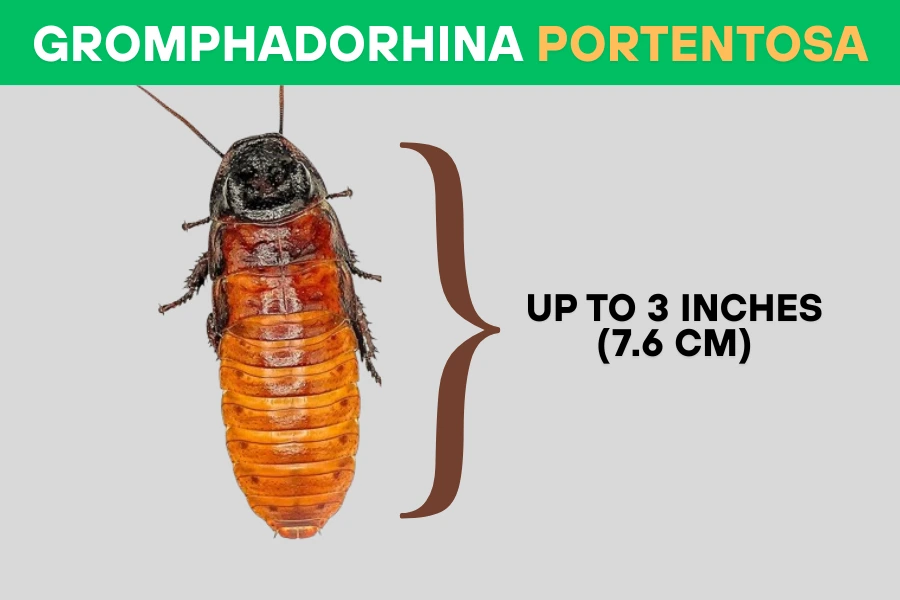
The Gromphadorhina portentosa, commonly known as the Madagascar hissing cockroach, is famous for its unique hissing sound. Native to Madagascar, this large, wingless cockroach is a favorite in educational displays and exotic pet collections due to its docile nature and striking appearance.
Identification
- Length: Up to 3 inches (7.6 cm)
- Color: Reddish-brown to dark brown
- Distinctive Features:
- Large, rounded body
- No wings
- Pronounced segments on the abdomen
- Males have horn-like bumps on their pronotum
- Large, rounded body
Habitat
They inhabit forest floors in Madagascar, often hiding under logs, leaves, or bark. These cockroaches thrive in warm, humid environments with plenty of organic debris.
Behavior
Known for their hissing, they produce sound by forcing air through small openings in their abdomen. The hiss is used for communication, mating displays, and defense. They are non-aggressive and very slow-moving.
Diet
Madagascar hissing cockroaches feed on decaying organic matter like dead plants and fallen leaves. They are key decomposers in their natural environment.
Interesting Facts
- One of the few insects that produce audible hissing sounds.
- Popular in classrooms and zoos for educational purposes.
- Live-bearing species—females carry eggs internally until they hatch.
5. Princisia vanwaerebeki
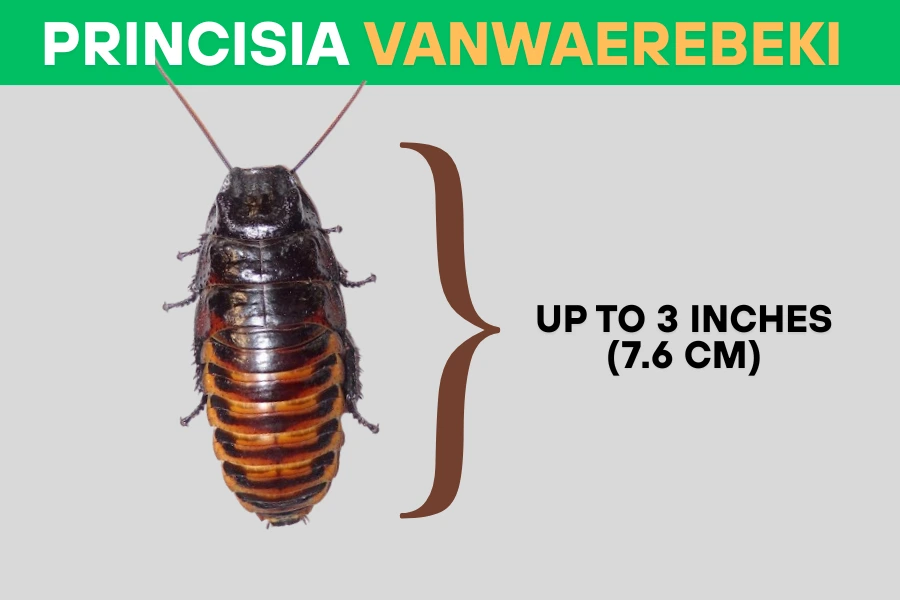
Often confused with its cousin the hissing cockroach, Princisia vanwaerebeki is another large, flightless species from Madagascar. It shares many similarities with Gromphadorhina but is generally darker and more robust in appearance.
Identification
- Length: Up to 3 inches (7.6 cm)
- Color: Dark brown to black with a shiny, smooth surface
- Distinctive Features:
- Wingless and large-bodied
- Males have thick “horns” on their pronotum
- Short, strong legs
- Wingless and large-bodied
Habitat
This cockroach is native to Madagascar and thrives in moist, dark environments such as forest floors or under leaf litter. It prefers temperatures above 75°F and high humidity.
Behavior
Princisia vanwaerebeki is quiet compared to the hissing cockroach, but still displays territorial behavior among males. It is not aggressive toward humans and is generally calm and slow.
Diet
It consumes rotting leaves, wood, and dead plant material. It contributes to breaking down organic waste and recycling nutrients into the soil.
Interesting Facts
- Rare in the wild but more commonly bred in captivity.
- It’s often mistaken for Gromphadorhina due to their resemblance.
- Very hardy and long-lived for a cockroach.
6. Archimandrita tessellata
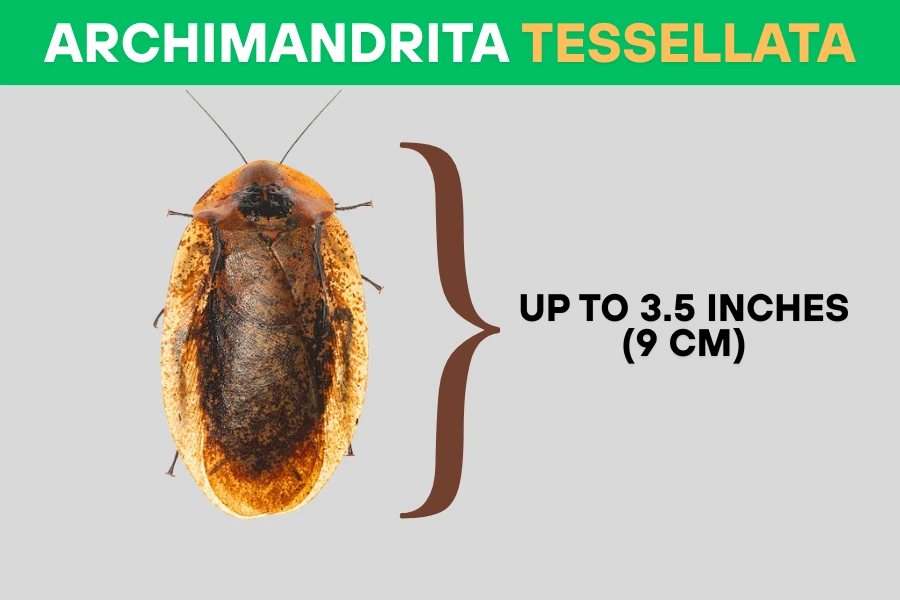
The Archimandrita tessellata, also known as the giant peppered roach, is one of the largest cockroaches in both length and mass. Native to Central and South America, this species is notable for its striking pattern and docile nature.
Identification
- Length: Up to 3.5 inches (9 cm)
- Color: Mottled brown and black, giving a “peppered” look
- Distinctive Features:
- Broad, flat wings covering the entire body
- Translucent edges on wings
- Large size and slow movements
- Broad, flat wings covering the entire body
Habitat
It typically inhabits rainforests, hiding under logs, bark, or in leaf litter. It prefers warm, humid environments with dense vegetation.
Behavior
Archimandrita tessellata is nocturnal and non-aggressive. It rarely flies but can flutter short distances. Males are slightly smaller and may show more activity during mating season.
Diet
This cockroach feeds on rotting plant material, fruit, and other decaying organic substances, playing a key role in decomposition in forest ecosystems.
Interesting Facts
- Females give birth to live young, unlike many cockroach species.
- Often kept in captivity as display pets due to their size and calm behavior.
- Has a longer lifespan than most cockroaches—up to 2 years.
7. Elliptorhina laevigata
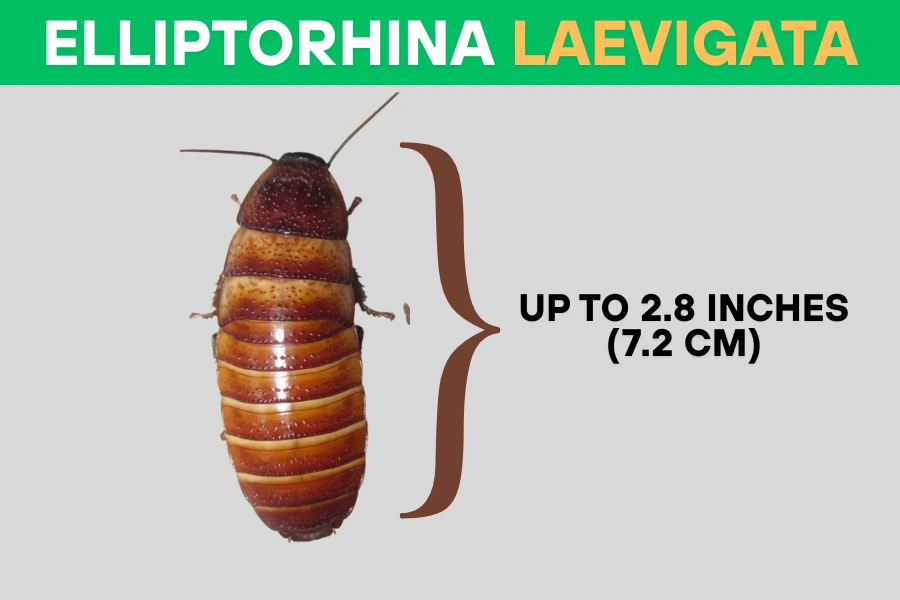
Elliptorhina laevigata is another large, wingless cockroach species native to Madagascar. It is closely related to the hissing cockroach group and is sometimes called the “smooth hissing roach” due to its polished body texture.
Identification
- Length: Up to 2.8 inches (7.2 cm)
- Color: Glossy dark brown to almost black
- Distinctive Features:
- Wingless and smooth-bodied
- Males have small ridges or bumps on their pronotum
- Strong, thick legs for crawling
- Wingless and smooth-bodied
Habitat
It inhabits forest floors in Madagascar and is usually found hiding under bark or rocks in warm, moist environments.
Behavior
Though quieter than some hissing cockroaches, it can make faint noises. It is calm and slow, not aggressive, and usually avoids confrontation.
Diet
It feeds on decomposing leaves, plant matter, and fallen fruit. Like its relatives, it contributes to organic recycling in the ecosystem.
Interesting Facts
- Often used in breeding programs and insectariums.
- Recognized for its sleek, polished look.
- Hardy and easy to care for in captivity.
8. Blaptica dubia (Dubia Roach)

The Blaptica dubia, commonly known as the Dubia roach or Guyana orange-spotted roach, is a medium-to-large cockroach species popular in the pet trade as feeder insects. Though not as long as some others on this list, their bulk and popularity make them noteworthy.
Identification
- Length: Up to 2 inches (5 cm)
- Color: Dark brown with lighter orange spots on the wings (males)
- Distinctive Features:
- Males have full wings; females have short wing stubs
- Rounded, soft body
- Relatively slow movement
- Males have full wings; females have short wing stubs
Habitat
Dubia roaches are native to Central and South America. In the wild, they prefer warm, humid environments and often reside in rotting wood or leaf litter.
Behavior
These cockroaches are docile, non-climbing, and non-aggressive. They are nocturnal and tend to cluster in dark, quiet areas.
Diet
They feed on fruits, vegetables, and decaying organic matter. In captivity, they are usually fed a protein- and calcium-rich diet to serve as food for reptiles and amphibians.
Interesting Facts
- Cannot climb smooth surfaces, making them easy to contain.
- Do not bite, sting, or cause infestations.
- Known for being odorless compared to other feeder insects.
9. Periplaneta americana (American Cockroach)
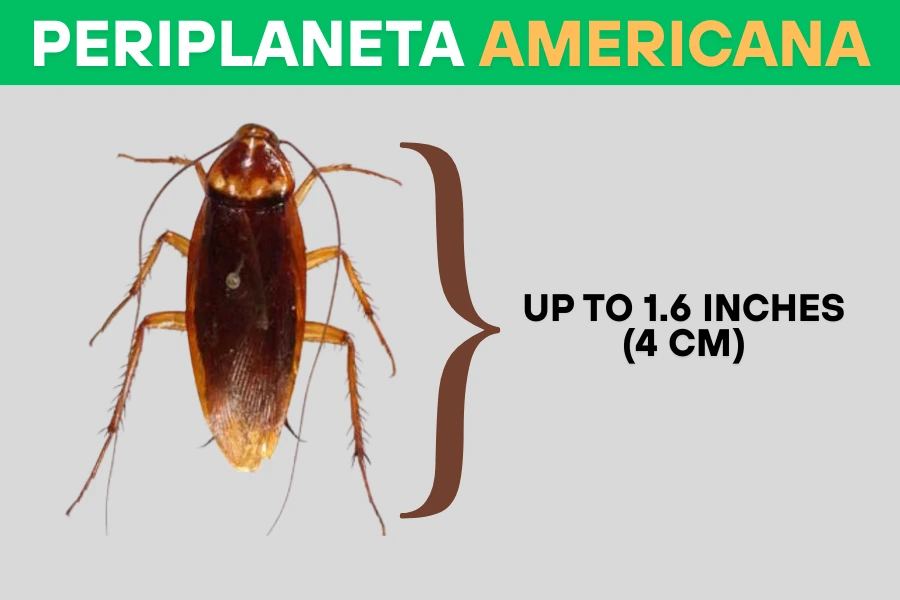
The Periplaneta americana, or American cockroach, is one of the most widespread and well-known cockroach species globally. Despite its name, it likely originated in Africa. Though smaller than some exotic species, it is still one of the largest household pests.
Identification
- Length: Up to 1.6 inches (4 cm)
- Color: Reddish-brown with a yellowish margin behind the head
- Distinctive Features:
- Long wings covering the entire body
- Slender antennae
- Fast runners and occasional flyers
- Long wings covering the entire body
Habitat
They thrive in warm, moist environments such as sewers, basements, and commercial kitchens. Outdoors, they can be found under mulch, wood piles, and drains.
Behavior
The American cockroach is fast, flight-capable, and highly resilient. It is active at night and prefers to flee when disturbed.
Diet
It is an opportunistic feeder that eats almost anything organic, including food scraps, glue, and even paper.
Interesting Facts
- Commonly infests homes and commercial buildings.
- Can live up to one month without food and a week without water.
- Known for being a disease-carrying pest due to its unsanitary habits.
10. Periplaneta australasiae (Australian Cockroach)
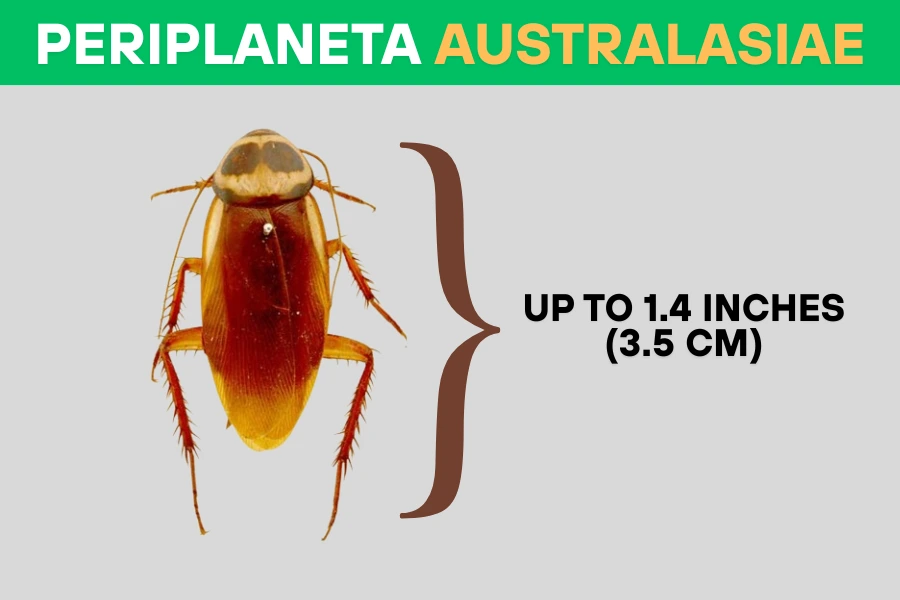
The Periplaneta australasiae, or Australian cockroach, is often mistaken for the American cockroach due to its similar appearance and behavior. However, this species is slightly smaller and marked with distinctive yellow patterns on its body. It is a fast-moving, flying cockroach often found in warm climates.
Identification
- Length: Up to 1.4 inches (3.5 cm)
- Color: Reddish-brown with prominent yellow markings on the thorax and wing edges
- Distinctive Features:
- Fully developed wings extending beyond the body
- Slender, fast-moving body
- Yellow outline on the pronotum and near wing bases
- Fully developed wings extending beyond the body
Habitat
This species prefers warm, humid environments and is often found outdoors in mulch, leaf litter, and around garbage. Indoors, they hide in bathrooms, kitchens, basements, and near drains.
Behavior
The Australian cockroach is quick, active at night, and capable of flying. It usually enters buildings in search of food or water, especially during warm weather or drought conditions.
Diet
It feeds on a variety of organic materials including food crumbs, dead insects, paper, and plant matter. It is an opportunistic scavenger and will eat nearly anything available.
Interesting Facts
- Despite the name, it is found worldwide in tropical and subtropical regions.
- It can survive short-term cold but prefers temperatures above 80°F (27°C).
- Moves faster than most common cockroach species when startled.
Why Some Cockroaches Grow So Large?
Some cockroaches grow large due to favorable environmental conditions like warm, humid climates and abundant food sources. Evolutionary advantages such as better defense, greater energy storage, and improved mating success also contribute. These large species often live in forest floors or caves, where size helps them thrive without the need to compete in harsh, exposed environments.
