

Silverfish are small, wingless insects commonly found in homes worldwide. Known for their silvery, fish-like appearance and quick movements, these pests thrive in dark, damp places and feed on starchy materials such as paper, glue, and fabric. Understanding the different types of silverfish, their habitats, and behaviors can help homeowners identify and manage infestations effectively. This article explores nine common silverfish species that invade houses and what makes each unique.
1. Common Silverfish

The Common Silverfish (Lepisma saccharinum) is one of the most frequently encountered silverfish species in homes worldwide. Known for its silvery, fish-like appearance and quick, darting movements, this insect thrives in dark, damp environments. It feeds on starchy materials like paper, glue, and fabric, making it a common household pest that can cause damage to books, wallpaper, and clothing.
Identification Features
- Silvery-gray color with a metallic sheen
- Flattened, elongated body about 12-19 mm long
- Covered in tiny scales giving a fish-like appearance
- Three long bristle-like tails at the rear end
- No wings, moves rapidly with a wiggling motion
Typical Habitats and Locations
Common Silverfish are often found in bathrooms, kitchens, basements, and other damp areas of the house. They prefer environments with high humidity and limited light, such as under sinks, behind wallpaper, inside cupboards, and cracks in walls or flooring.
Reasons for Nesting and Behavior
These silverfish tend to stay hidden during the day and become active at night, searching for food sources. They do not build traditional nests but often gather in areas that provide moisture and food. Their presence in groups is usually due to favorable living conditions rather than social behavior.
Additional Information
Common Silverfish can live for several years and are capable of surviving long periods without food. They reproduce by laying eggs in hidden, moist places. Though not harmful to humans directly, their feeding habits can cause significant damage to household items. Controlling humidity and sealing entry points are effective ways to reduce infestations.
2. Gray Silverfish

The Gray Silverfish (Ctenolepisma longicaudata) is a close relative of the common silverfish but tends to have a grayer color and is more adapted to cooler, drier indoor environments. It has become increasingly common in homes, especially in temperate regions, and is known for feeding on a wide variety of organic materials.
Identification Features
- Grayish or dull silver body with less metallic shine
- Long, slender, and flattened body about 12-15 mm long
- Three tail-like appendages at the rear
- Covered with fine scales and small bristles
- Moves quickly with a characteristic wriggling motion
Typical Habitats and Locations
Gray Silverfish are typically found in dry indoor areas such as living rooms, bedrooms, attics, and storage spaces. Unlike the common silverfish, they tolerate lower humidity levels and can survive in drier parts of the house.
Reasons for Nesting and Behavior
This species does not create nests but prefers dark cracks, crevices, and undisturbed storage areas to hide during the day. They forage at night and feed on paper, textiles, and even dust or dead insects, contributing to their persistence in homes.
Additional Information
Gray Silverfish are known to reproduce more slowly than common silverfish but can live longer. They can cause damage to books, wallpaper, and fabrics. Managing dust and reducing clutter helps limit their habitat.
3. Four-lined Silverfish

The Four-lined Silverfish (Ctenolepisma lineata) is distinguished by faint longitudinal lines along its body, giving it a slightly striped appearance. It is less common than the previous two species but still a notable household pest in some regions.
Identification Features
- Silvery-gray body with four faint dark lines running lengthwise
- Body length around 10-15 mm
- Elongated, flattened shape with three tail filaments
- Covered with tiny scales, giving a slightly shiny look
- Quick and agile movements similar to other silverfish
Typical Habitats and Locations
Four-lined Silverfish prefer damp environments like basements, bathrooms, and kitchens. They often hide in cracks, under floorboards, or behind wallpaper. Their preference for moisture means they are often found near plumbing or leaks.
Reasons for Nesting and Behavior
Like other silverfish, they do not build nests but seek shelter in humid, dark areas. Their activity is mostly nocturnal, feeding on carbohydrates and protein-containing materials like paper, glue, and textiles.
Additional Information
This species is also considered a nuisance due to its feeding habits, which can damage household items. Moisture control and regular cleaning help reduce infestations of Four-lined Silverfish.
4. Firebrat

The Firebrat (Thermobia domestica) is a silverfish-like insect that prefers warmer environments, often found in places with high temperatures such as near heating systems, ovens, or boilers. It is less common in typical household damp areas but can be a persistent pest in heated indoor spaces.
Identification Features
- Light brown to grayish color with mottled patterns
- Slightly shorter and stockier body compared to common silverfish, about 10-15 mm long
- Three long tail-like appendages at the rear
- Covered with fine scales giving a rough texture
- Moves quickly with a jerky, wriggling motion
Typical Habitats and Locations
Firebrats favor warm, humid areas often found in kitchens, near water heaters, furnaces, or boiler rooms. They thrive in temperatures between 32°C and 41°C (90°F–105°F), which is warmer than the preferred range of other silverfish species.
Reasons for Nesting and Behavior
Instead of building nests, firebrats cluster in warm crevices and feed on starchy materials like flour, paper, and glue. They are nocturnal and often go unnoticed due to their preference for hidden, warm spots.
Additional Information
Firebrats can cause damage to household goods similar to other silverfish but are more common in warmer climates or heated homes. Managing temperature and sealing cracks near heat sources can help control their presence.
5. Giant Silverfish

The Giant Silverfish (Ctenolepisma longicaudata var. grandis) is a larger variant of the gray silverfish species and is notable for its size. It has recently been identified as an emerging pest in some regions, causing concern due to its size and feeding habits.
Identification Features
- Larger body size, typically 15-25 mm long
- Grayish color with a slightly dull appearance
- Elongated, flattened body with three tail filaments
- Covered with fine scales
- Moves rapidly with a characteristic wriggling motion
Typical Habitats and Locations
Giant Silverfish are found in similar environments to gray silverfish, often in dry indoor areas such as storage rooms, attics, and behind furniture. They prefer undisturbed places with access to food sources.
Reasons for Nesting and Behavior
They do not build nests but hide in cracks and crevices. Their feeding habits include paper, textiles, and glue. Due to their larger size, they may be easier to spot but still prefer to remain hidden.
Additional Information
The Giant Silverfish’s larger size can cause more noticeable damage to household materials. Controlling dust and humidity and sealing entry points are effective management strategies.
6. Jumping Bristletail

The Jumping Bristletail (Order Archaeognatha) is a primitive, silverfish-like insect known for its ability to leap when disturbed. Though not a true silverfish, it shares many physical traits and is sometimes mistaken for one.
Identification Features
- Cylindrical, elongated body covered in scales
- Typically brownish or grayish color
- Three long tail-like appendages at the rear
- Large compound eyes that are more prominent than in silverfish
- Able to jump by flexing its abdomen rapidly
Typical Habitats and Locations
Jumping Bristletails are usually found outdoors in leaf litter, under rocks, or in damp soil, but occasionally they enter homes through cracks or basements. They prefer moist environments but avoid light.
Reasons for Nesting and Behavior
They do not make nests and are solitary by nature. Their jumping ability helps them escape predators. They feed on algae, lichens, and decaying plant matter rather than household items.
Additional Information
Jumping Bristletails are generally harmless to humans and do not damage household goods. Their presence indoors is typically accidental, often during wet weather.
7. Ctenolepisma Longicaudata (Gray Bristletail)

Ctenolepisma longicaudata, sometimes called the Gray Bristletail, is closely related to gray silverfish and has been recognized as an indoor pest in many homes. It shares similar habits but tends to tolerate drier conditions better.
Identification Features
- Grayish, flattened body about 12-15 mm long
- Three long tail filaments at the end of the abdomen
- Body covered in fine scales with a dull finish
- Moves quickly with a wiggling, fish-like motion
Typical Habitats and Locations
Gray Bristletails inhabit dry indoor environments such as living rooms, storage areas, and attics. They prefer places with less humidity but still need some moisture to survive.
Reasons for Nesting and Behavior
Like other silverfish, they do not create nests but hide in dark cracks and crevices. Their nocturnal behavior helps them avoid light and predators while they search for starchy food.
Additional Information
This species can cause damage to books, wallpaper, and textiles. Controlling indoor humidity and regular cleaning helps reduce their populations.
8. Urban Silverfish

The Urban Silverfish is a variant commonly found in modern buildings and urban environments. Adapted to indoor living, it thrives in places where food sources like paper and glue are abundant.
Identification Features
- Silvery-gray, slender body approximately 12-18 mm long
- Flattened, elongated shape with three tail filaments
- Covered with fine scales, giving a shiny appearance
- Moves rapidly with a characteristic wiggling motion
Typical Habitats and Locations
Urban Silverfish are frequently found in libraries, offices, basements, and storage rooms. They prefer dark, humid areas such as behind wallpaper, inside book bindings, and near plumbing fixtures.
Reasons for Nesting and Behavior
They do not form nests but congregate in areas rich in moisture and food. Their nocturnal activity helps them avoid detection, feeding mainly on starchy household materials.
Additional Information
Because of their diet, Urban Silverfish can cause significant damage to paper products and fabrics. Reducing humidity and clutter helps limit their presence indoors.
9. Tropical Firebrat (Thermobia domestica)
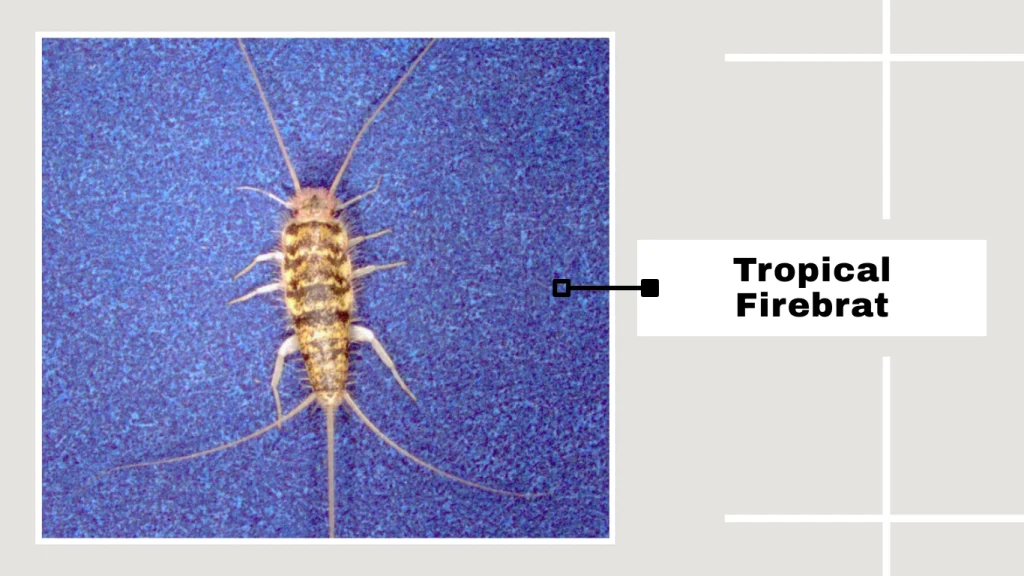
The Tropical Firebrat is a warm-loving insect similar to the common firebrat but typically found in tropical or subtropical climates. It prefers heated indoor areas and can be a persistent pest in such environments.
Identification Features
- Light brown to grayish body with mottled or speckled patterns
- Shorter and more robust body than common silverfish, around 10-15 mm long
- Three long tail-like filaments at the rear
- Covered in fine scales giving a rough texture
- Quick, jerky movements
Typical Habitats and Locations
Tropical Firebrats thrive in warm, humid locations such as kitchens, near ovens, boilers, and heating ducts. They prefer temperatures around 30°C to 40°C (86°F to 104°F).
Reasons for Nesting and Behavior
They do not build nests but gather in warm, dark crevices to hide during the day. Their nocturnal feeding habits include starches, paper, and glue.
Additional Information
These insects can cause damage similar to other silverfish species. Controlling indoor temperature and humidity, along with sealing entry points, can help prevent infestations.
How to Get Rid of Silverfish: Step-by-Step Guide
- Identify the Infestation
Search for silverfish in common hiding spots such as bathrooms, kitchens, basements, and storage areas. Look for signs like shed skins, yellow stains, or small holes in paper and fabric. - Reduce Humidity and Moisture
Silverfish thrive in damp environments. Use dehumidifiers, fix leaks, improve ventilation, and keep areas like bathrooms and basements dry. - Eliminate Food Sources
Remove or securely store starchy materials such as cardboard, paper, books, and fabrics. Clean up crumbs and spills regularly. - Seal Entry Points and Cracks
Inspect your home for cracks, gaps, and crevices around baseboards, windows, and doors. Use caulk or weatherstripping to seal these areas to prevent silverfish from entering or hiding. - Clean Thoroughly and Regularly
Vacuum floors, carpets, and upholstery frequently to remove eggs, larvae, and food particles. Pay attention to hidden and hard-to-reach areas. - Use Natural Remedies
Apply diatomaceous earth in corners, under furniture, and along baseboards. Essential oils like lavender or citrus can also repel silverfish. - Apply Chemical Treatments (If Needed)
Use insecticides labeled for silverfish control, such as sprays or baits, following the manufacturer’s instructions carefully. Focus on cracks, crevices, and infestation hotspots. - Monitor and Repeat
Keep monitoring the treated areas regularly. Repeat cleaning and treatments as necessary until silverfish disappear. - Call Professional Pest Control (If Infestation Persists)
For severe or persistent infestations, consult a professional pest control service for targeted treatment.
Following these steps methodically can help you effectively eliminate silverfish and prevent future infestations.
