

Ever spotted a shiny black beetle darting under a rock or crawling through your garden soil? That might be a ground beetle—one of nature’s hidden helpers. But what exactly are they? Are they harmful? Or helpful? Ground beetles are harmless predators that keep pests in check.
In this guide, you’ll learn how to spot them, where they hide, and meet 7 fascinating types you might find right in your backyard.
What Are Ground Beetles?
Ground beetles are a large family of insects known as Carabidae. They are one of the most common beetles found in gardens, forests, and farmlands. Most species are shiny black or metallic, and they have long legs with fast-moving bodies.
These beetles are helpful insects. Many people don’t notice them because they are active at night and often hide under leaves, stones, or logs during the day.
General Characteristics
Ground beetles have a flat, oval-shaped body with strong jaws. Most are dark-colored, but some have bright metallic shades like green, blue, or copper. Their long legs help them move quickly when hunting or escaping danger.
They cannot fly well, but they can run very fast.
Habitat and Lifestyle
Ground beetles live in many different places. You’ll often find them:
- In gardens
- Under rocks or mulch
- In forests or grassy fields
They like cool, moist areas and often hide during the day.
Most ground beetles are predators, meaning they eat other insects like caterpillars, slugs, and aphids.
Day vs. Night Activity
These beetles are nocturnal, which means they are active at night. They come out to hunt when it’s dark and quiet.
During the day, they rest in shady, hidden spots.
Are Ground Beetles Harmful?
No, ground beetles are not harmful to people or pets. They don’t bite or sting.
In fact, they are beneficial insects. They help control pests naturally, making them great helpers for farmers and gardeners.
7 Common Types of Ground Beetles
There are thousands of ground beetle species, but some are more common and easy to spot in gardens or forests. Below are seven types you might encounter, along with how to identify them.
1. Common Black Ground Beetle (Pterostichus melanarius)

Description and Identifying Features
This beetle has a smooth, shiny black body and long, strong legs built for running. It measures around 12 to 18 mm in length and has grooved wing covers. Its antennae are thin and slightly curved forward, helping it sense movement nearby.
Habitat
You can find this beetle in gardens, farmlands, compost piles, and under stones or logs. It prefers moist and shaded areas and usually comes out at night to hunt. During the day, it hides in soil or under leaf litter.
Role in Garden Ecosystems
The Common Black Ground Beetle is a natural pest controller. It feeds on slugs, caterpillars, root maggots, and other harmful insects. By doing this, it helps protect plants from damage. Many gardeners welcome this beetle because it reduces the need for chemical pesticides. Its presence is a sign of a healthy and balanced garden environment.
How to Identify:
- Shiny black, smooth body
- 12–18 mm long
- Long legs and thin, curved antennae
- Runs quickly when disturbed
- Usually found under rocks, compost, or mulch
2. Fiery Searcher (Calosoma scrutator)

Description and Identifying Features
The Fiery Searcher, also known as the Caterpillar Hunter, is a large and eye-catching beetle. It has a metallic green body with shiny blue and red edges. Some may appear almost rainbow-like in the right light. It can grow up to 35 mm long and has noticeable ridged wing covers.
Habitat
This beetle lives in wooded areas, gardens, and sometimes near farmlands. It prefers damp places with lots of leaf litter or fallen logs to hide under during the day. It becomes active in the evening and hunts at night.
Role in Garden Ecosystems
The Fiery Searcher is a valuable predator that helps control caterpillar populations, including harmful species like gypsy moth larvae. It doesn’t just attack one or two—it’s known to eat dozens in a short time. Its strong jaws make it a powerful ally in keeping your garden pest-free without the use of sprays or traps.
How to Identify:
- Metallic green with blue and red edges
- Large, about 30–35 mm long
- Ridged wing covers
- Very colorful and shiny
- Often found in wooded areas or near leaf litter
3. Golden Ground Beetle (Carabus auratus)
Description and Identifying Features
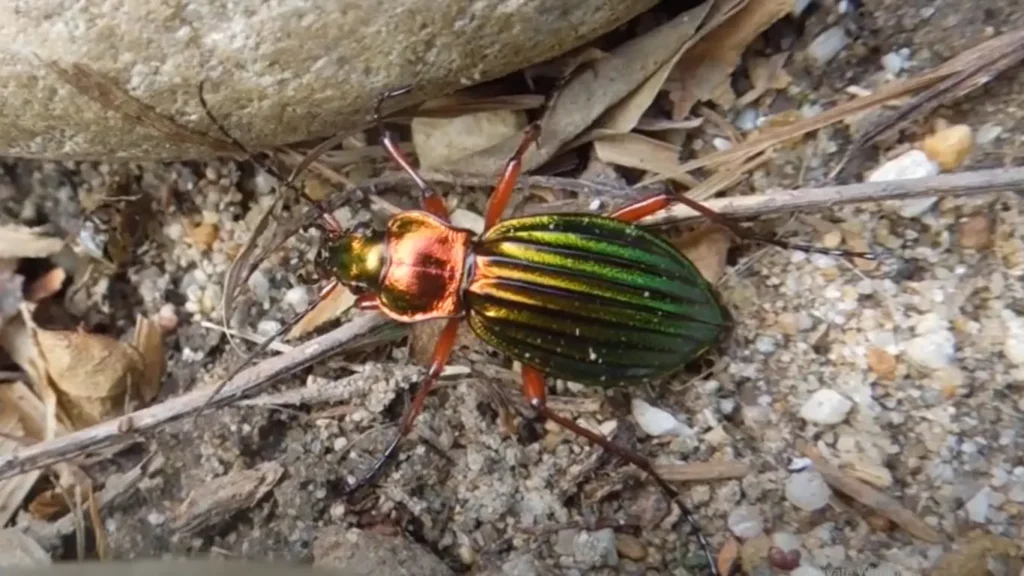
This stunning beetle is known for its metallic green or golden body with orange legs and long antennae. Its wing covers are lined with shallow grooves, and its overall look is hard to miss. The Golden Ground Beetle grows up to 20–25 mm in length and has a glossy, smooth appearance.
Habitat
Native to Europe, this beetle is often found in gardens, fields, and forest edges. It prefers moist soil and areas with plenty of shelter like rocks, mulch, or old wood piles. It hides during the day and comes out at night to hunt.
Role in Garden Ecosystems
Golden Ground Beetles are excellent natural pest controllers. They feed on caterpillars, worms, slugs, and other soft-bodied pests. Their presence is a good sign of a healthy garden. Since they are harmless to people and pets, they can be welcomed as an organic alternative to pesticides.
How to Identify:
- Bright metallic green or gold body
- Orange legs and antennae
- 20–25 mm long
- Grooved wing covers
- Active at night, hides in damp soil or under rocks
4. Bombardier Beetle (Brachinus spp.)

Description and Identifying Features
Bombardier Beetles are small, usually between 5 and 15 mm, but they’re famous for their defense. They have a reddish-orange head and thorax, with a shiny blue-black abdomen. What makes them special is their ability to spray a hot, chemical burst from their back end when threatened.
Habitat
These beetles are found in a variety of habitats, including forests, grasslands, and near water sources. They like hiding under stones, logs, or fallen leaves. While they are not aggressive, they’ll release their spray if disturbed.
Role in Garden Ecosystems
Bombardier Beetles are useful in the garden as they hunt and feed on small insects and larvae. Their unique defense keeps many predators away, helping them thrive in outdoor environments. Though they may look flashy and act tough, they are completely harmless to humans and pets.
How to Identify:
- Small, 5–15 mm in size
- Reddish-orange head and thorax
- Blue-black abdomen
- Will release a popping sound and chemical spray when threatened
- Found under stones and in grassy or damp areas
5. Violet Ground Beetle (Carabus violaceus)

Description and Identifying Features
The Violet Ground Beetle is a large, dark beetle with a deep purple or violet sheen around the edges of its wing covers. Its body is long and slightly ridged, growing up to 30 mm in length. The legs and antennae are also dark, giving it a bold appearance.
Habitat
This beetle prefers cool, damp environments. It is commonly found in gardens, under logs, stones, and in shaded woodland areas. It is most active at night and hides during the day.
Role in Garden Ecosystems
The Violet Ground Beetle is a great natural predator. It feeds on slugs, snails, caterpillars, and other small insects that can damage plants. Gardeners often welcome this beetle for its role in reducing pest numbers. It does not bite or harm humans, making it a safe and helpful garden guest.
How to Identify:
- Dark body with violet or purple edges
- Up to 30 mm long
- Ridged wing covers
- Often found under logs or stones
- Active mostly at night
6. Blue Ground Beetle (Carabus intricatus)

Description and Identifying Features
The Blue Ground Beetle is rare and beautiful, with a metallic blue or bluish-black body. It has long ridged wing covers and can grow up to 30 mm long. Its surface appears slightly rough or textured compared to smoother beetles.
Habitat
This beetle prefers old, damp woodlands with plenty of moss and decaying wood. It is nocturnal and tends to stay hidden in natural debris or under logs during the day. It is not commonly seen due to its shy nature and specific habitat needs.
Role in Garden Ecosystems
Though rare, the Blue Ground Beetle is beneficial in areas where it lives. It feeds mostly on slugs and soft insects. Because it is a protected species in some regions, it’s important to leave it undisturbed. Its presence indicates a healthy, untouched natural environment.
How to Identify:
- Metallic deep blue or bluish-black color
- Up to 30 mm long
- Textured wing covers, not very glossy
- Shy and rarely seen
- Found in old, damp, mossy woodlands
7. Hairy Ground Beetle (Harpalus rufipes)
Description and Identifying Features
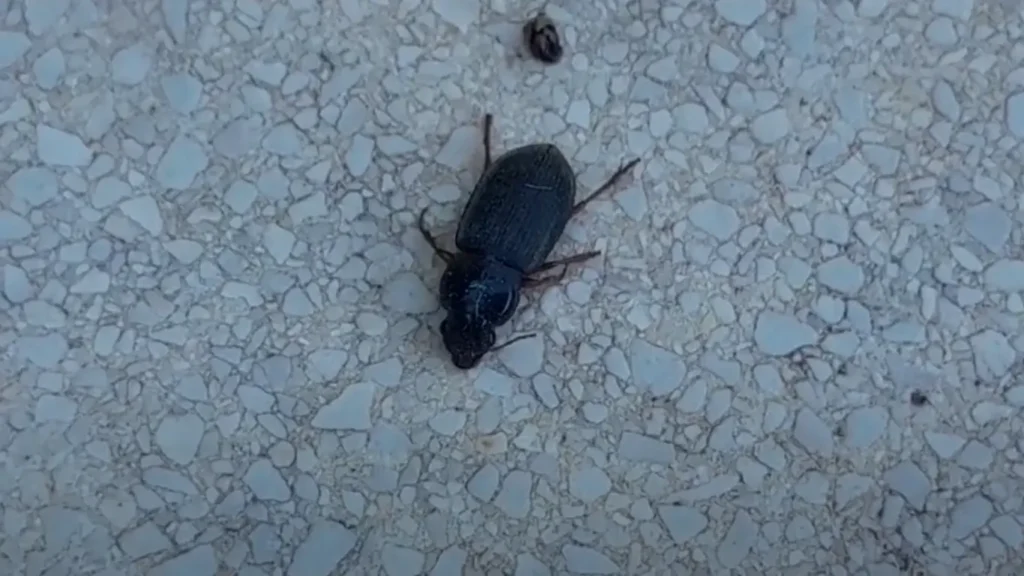
The Hairy Ground Beetle has a black or brownish body with slightly reddish legs and antennae. Its body surface is lightly covered with fine hairs, which sets it apart from shinier beetles. It is medium-sized, typically around 10 to 15 mm long.
Habitat
This beetle is often found in agricultural fields, gardens, and grassy areas. It prefers loose soil, where it can burrow or hide under crop debris. It is active both day and night but tends to avoid bright sunlight.
Role in Garden Ecosystems
Hairy Ground Beetles are known for eating weed seeds as well as insect pests. This makes them especially helpful in controlling both unwanted plants and bugs in gardens and farms. Their balanced diet makes them one of the most beneficial beetles for crop protection.
How to Identify:
- Black or brown body with reddish legs
- Fine hairs on body (visible up close)
- Medium-sized: 10–15 mm long
- Often seen in fields and gardens
- May be active both day and night
How to Identify Ground Beetles in Your Garden
Ground beetles are often overlooked because they hide well and move quickly. But once you know what to look for, spotting them becomes much easier. Here are a few simple tips to help you identify ground beetles in your garden:
Size, Color, and Movement
Most ground beetles range from 5 mm to 30 mm in length. They usually have flat, elongated bodies and long legs. Their colors can be black, brown, metallic green, violet, or even blue. Some have shiny bodies, while others look dull or slightly hairy.
They move quickly and don’t fly often. If you see a beetle running fast across the ground or hiding under leaves, it might be a ground beetle.
Day vs. Night Behavior
Ground beetles are nocturnal. They hunt at night and rest during the day. So, you’re more likely to see them in the evening or early morning.
Where to Look: Under Rocks, Mulch, and Logs
During the day, ground beetles hide in cool, dark places. Look under rocks, flower pots, logs, mulch, or even old wood. You might also find them in compost bins or moist soil near garden beds.
If you’re gardening and lift something from the ground—don’t be surprised if one scurries away!
Are Ground Beetles Beneficial or Harmful?
Many people worry when they see beetles crawling in the garden, but ground beetles are nothing to fear. In fact, they are one of the most helpful insects you can have outdoors.
Not Harmful to Humans or Pets
Ground beetles do not bite, sting, or carry diseases. They might look a bit scary, especially the larger ones, but they are completely harmless. Most will quickly run away if disturbed. They also don’t damage plants, wood, or your home.
Natural Pest Controllers
These beetles are predators, which means they feed on harmful insects and garden pests. Their diet includes slugs, aphids, caterpillars, and even weed seeds. Some species, like the Fiery Searcher and Hairy Ground Beetle, are especially good at reducing pest populations.
Because of this, gardeners and farmers often see ground beetles as natural allies. Encouraging them in your garden can lead to fewer problems—and less need for chemical pesticides.
