

Mayflies are well known for their massive swarms and their incredibly short adult lifespan. Because they often gather in huge numbers near lakes, rivers, and streetlights, many people worry about whether these insects can bite or sting. The good news is simple: mayflies are completely harmless to humans. They cannot bite, sting, or spread disease. Still, because they look similar to mosquitoes or other flying insects, confusion is common. Let’s explore everything you need to know.
What Are Mayflies?
Classification and Appearance
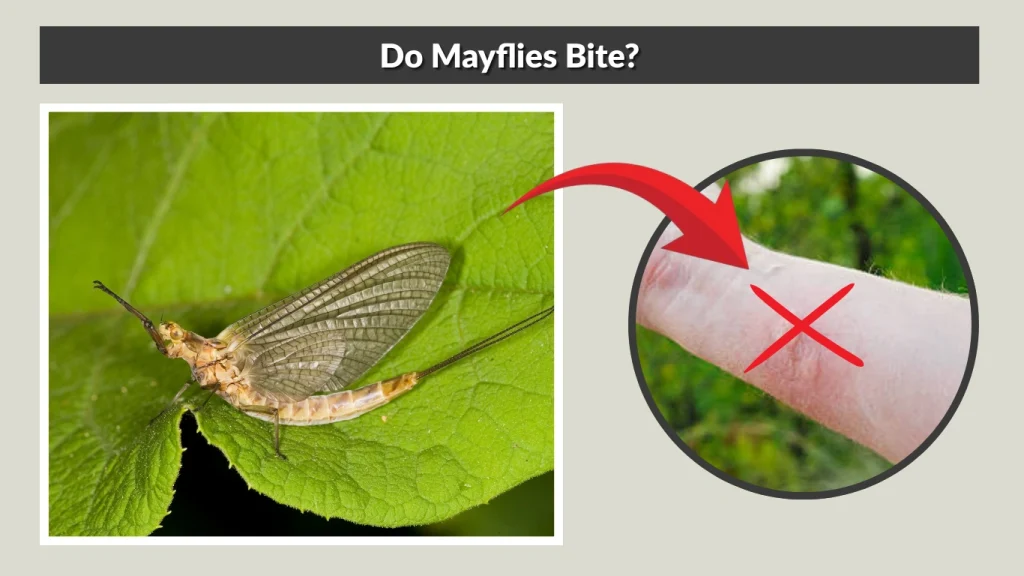
Mayflies belong to the insect order Ephemeroptera, a name that reflects their short-lived adult stage. They have slender bodies, large compound eyes, two or three long tail filaments, and delicate transparent wings that stand upright when at rest. Their fragile, fluttering flight often adds to the mistaken belief that they behave like biting insects.
Where Mayflies Are Found
These insects are closely tied to freshwater ecosystems. You’ll most often see them in spring and summer near rivers, streams, ponds, and lakes. They are especially famous for their mass emergences, when millions rise from the water at once, covering lights, bridges, and sometimes even cars. Such swarms can look intimidating, but they are harmless spectacles of nature.
Do Mayflies Bite?
Mouthparts and Feeding Ability
One key fact about mayflies is that adult individuals cannot bite because their mouthparts are underdeveloped. Unlike mosquitoes, they lack piercing or chewing structures. In fact, their digestive systems are non-functional in adulthood. This means they cannot feed at all—biting is simply impossible.
Harmless Nature
Because they cannot bite or sting, mayflies pose no threat to humans. They also do not carry or spread diseases the way mosquitoes and some flies do. The worst effect of a mayfly swarm is inconvenience, such as obscured windshields or outdoor lights being overwhelmed.
Why People Think Mayflies Bite
Confusion with Other Insects
A major reason behind the myth is mistaken identity. At a glance, mayflies can look like mosquitoes, midges, or even caddisflies. When mayflies gather around lights or hover in clouds, it’s easy to assume they are biting insects.
Sensation of Swarms
During large emergences, mayflies may land on people or brush against skin. This light touch sometimes feels like a nip or bite, especially if someone is already wary of insects. In reality, they are incapable of breaking the skin—what you feel is only the insect clinging briefly before flying away.
What Do Mayflies Eat?
Nymph Stage Feeding
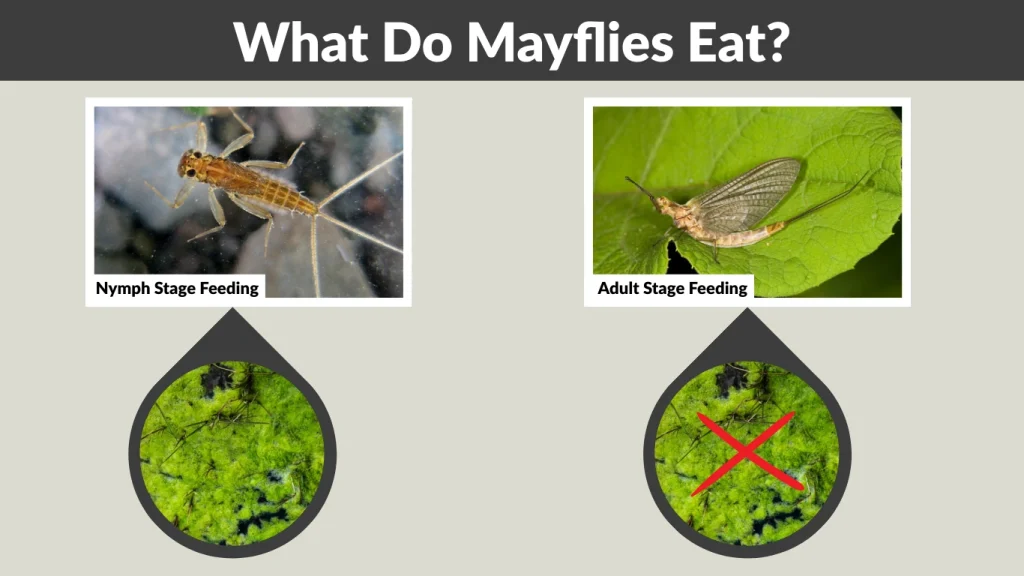
Mayflies spend most of their lives underwater as nymphs, where they feed on algae, detritus, and tiny microorganisms. By grazing on organic matter, they play a crucial role in recycling nutrients and keeping aquatic systems balanced.
Adult Stage
When they emerge as winged adults, mayflies stop eating altogether. Their energy comes entirely from the reserves stored during their long aquatic youth. This explains why their lifespan is so short—often just a few hours to a couple of days. Their sole purpose as adults is reproduction, not feeding.
Are Mayflies Dangerous?
To Humans
Mayflies are completely harmless to people. They don’t have stingers, venom, or biting mouthparts, so they cannot cause allergic reactions or skin irritation. The only inconvenience comes during mass swarms, which can make outdoor activities uncomfortable and messy.
To Pets and Livestock
Just like humans, pets and farm animals are safe around mayflies. Cats, dogs, and even livestock may chase or eat a few without any harm. Unlike certain insects that can bite or spread disease, mayflies pose no health risk to animals.
Mayflies and the Environment
Role in Ecosystem
Even though they cannot bite, mayflies are extremely important in nature. As aquatic nymphs, they feed on algae and organic matter, helping keep water clean. As adults, they serve as a seasonal feast for fish, frogs, birds, and bats. Entire food chains benefit from their brief but intense life cycle.
Swarm Impacts
When millions of mayflies emerge together, they can become a temporary nuisance. Dead mayflies often pile up on roads, sidewalks, or near bridges, creating slippery conditions. In some areas, large swarms have been known to cause accidents when windshields become coated. While inconvenient, these events highlight how abundant and healthy local freshwater systems are.
Common Myths About Mayflies
- Myth: Mayflies bite like mosquitoes.
Fact: They cannot bite because adults have no functional mouthparts. - Myth: Mayflies sting humans.
Fact: They do not possess stingers or venom. - Myth: Mayflies damage crops or gardens.
Fact: Adults do not feed, so they cannot harm plants. - Myth: Mayflies spread diseases.
Fact: They are not vectors of illness; in fact, their presence indicates a clean water environment.
FAQs
Can mayflies bite through human skin?
No. Mayflies lack the ability to bite or pierce skin. Any sensation you feel when they land is only their lightweight bodies brushing against you.
Do mayflies carry diseases?
No. Unlike mosquitoes, mayflies do not carry or transmit diseases to humans or animals.
Why do mayflies swarm around lights?
Mayflies are strongly attracted to light sources, especially during mass emergences at night. Streetlights, porch lights, and car headlights often draw them in.
Do mayflies harm gardens or crops?
No. Adult mayflies don’t eat at all. Their brief time above water is spent mating and laying eggs, not feeding.
What should you do if you encounter a mayfly swarm?
It’s best to turn off outdoor lights to reduce attraction, drive carefully near water during swarming events, and simply avoid outdoor activity in heavily affected areas until the swarm passes.
